Camera
Angles, Shots, Movement and
          Positions.
   Created by Hannah Scholefield
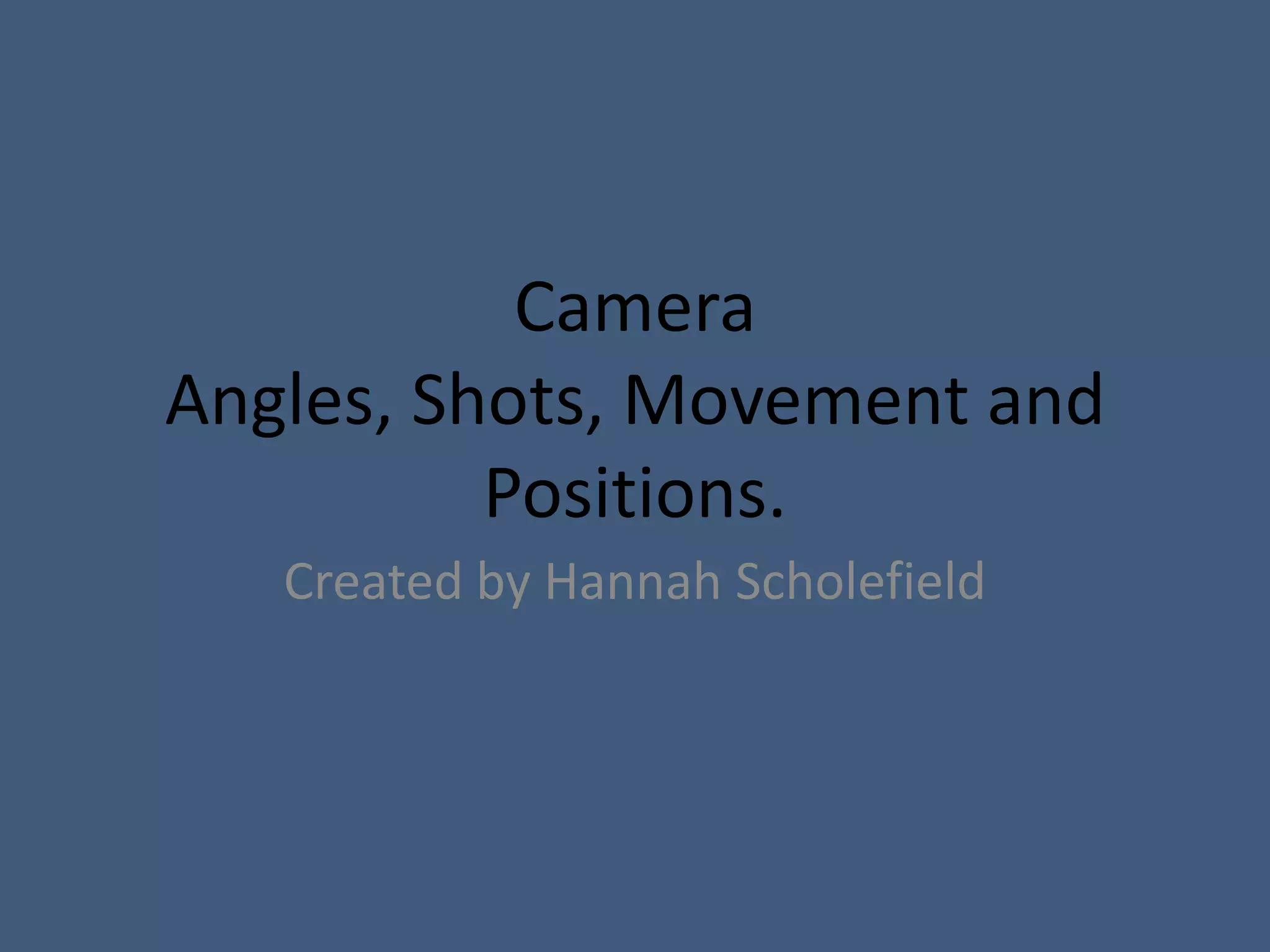
Establishing Shot


Establishes the context for a scene: showing
where and when the film is set.
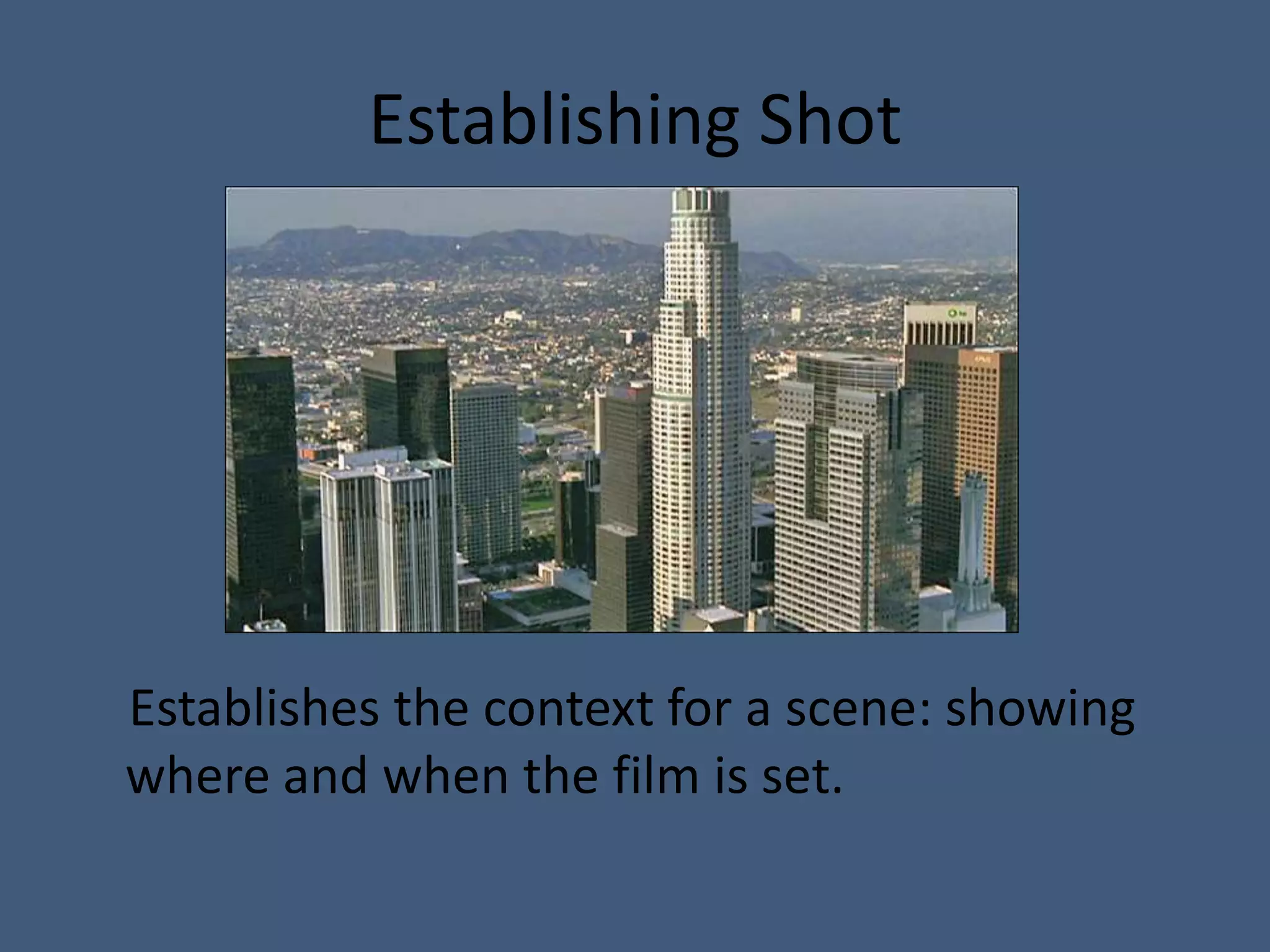
Low Angled Shot


A shot of an object from below looking up.
Used to increase the height of an
object, making it seem powerful and
threatening.
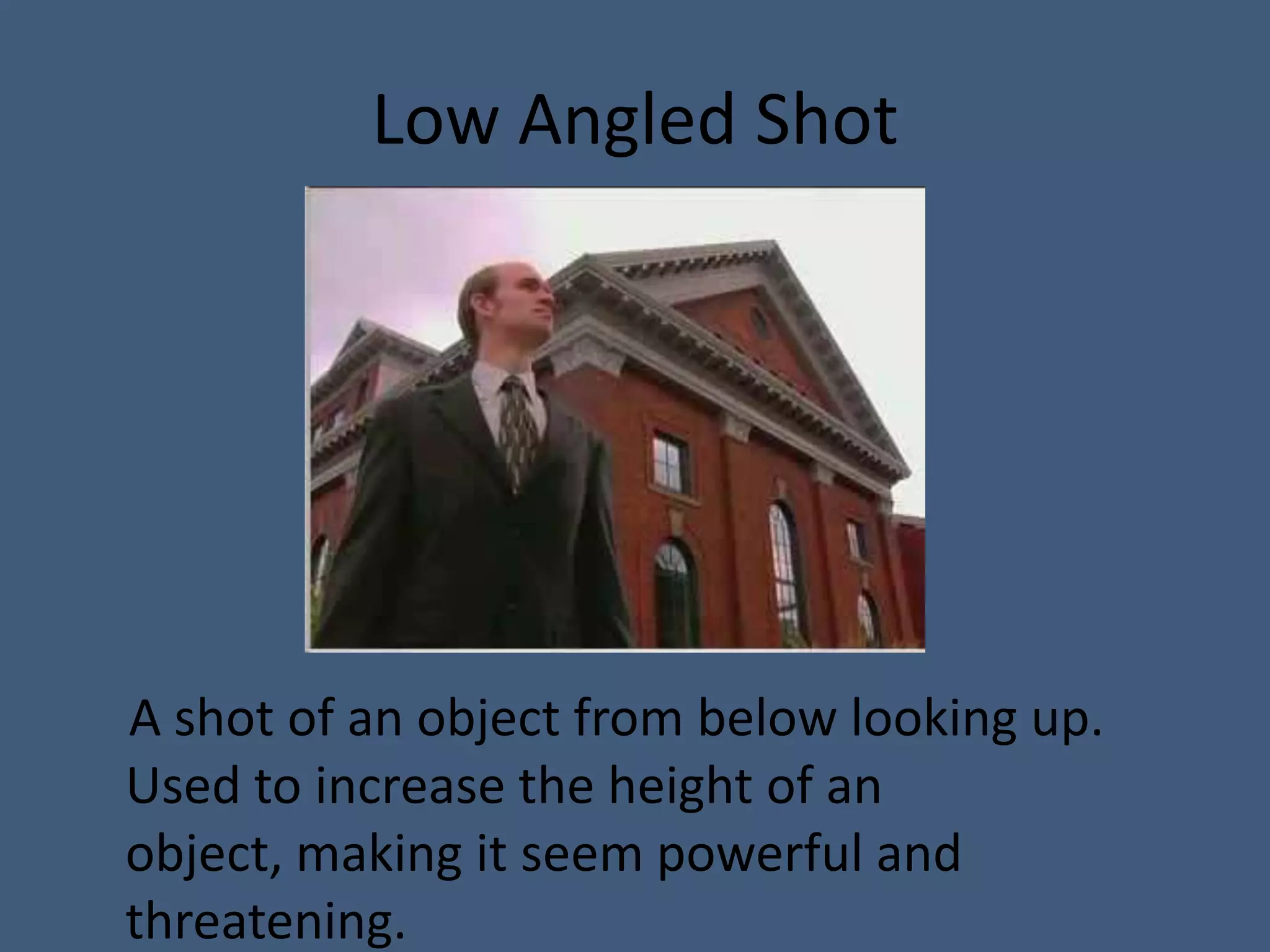
High Angled Shot


A shot of an object from above looking down.
Used to make an object seem smaller and/or
vulnerable.
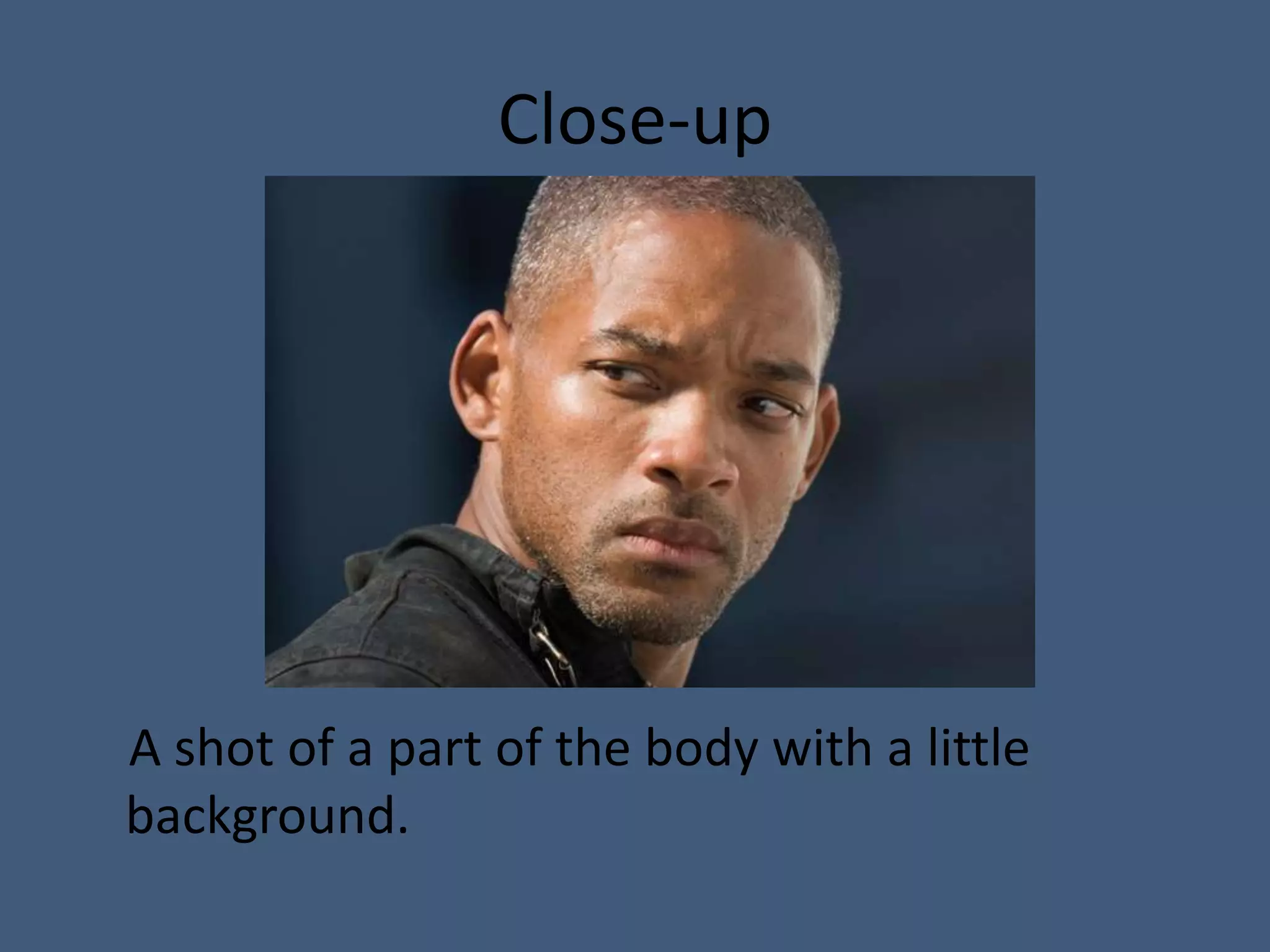
Close-up


A shot of a part of the body with a little
background.
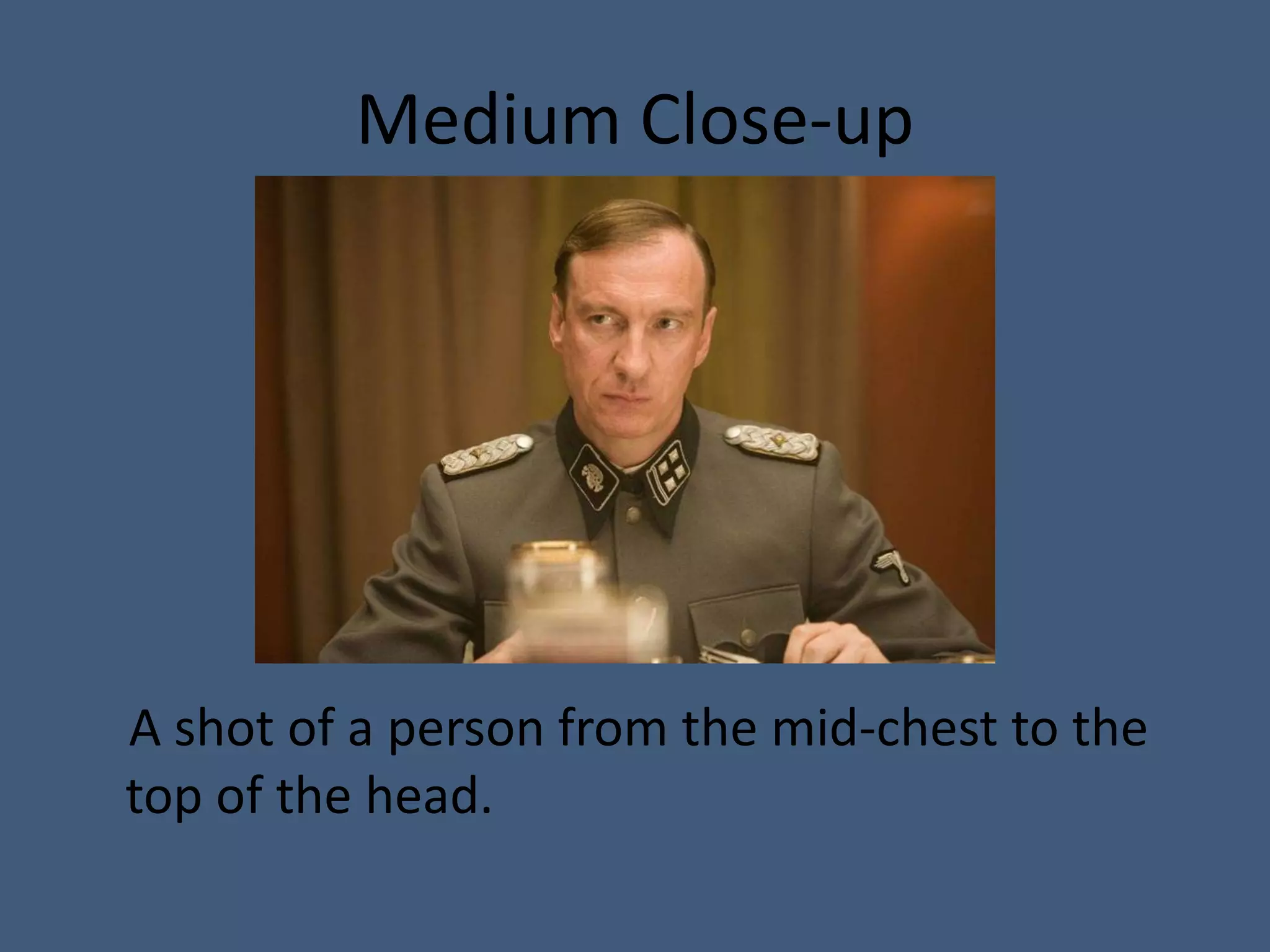
Medium Close-up


A shot of a person from the mid-chest to the
top of the head.
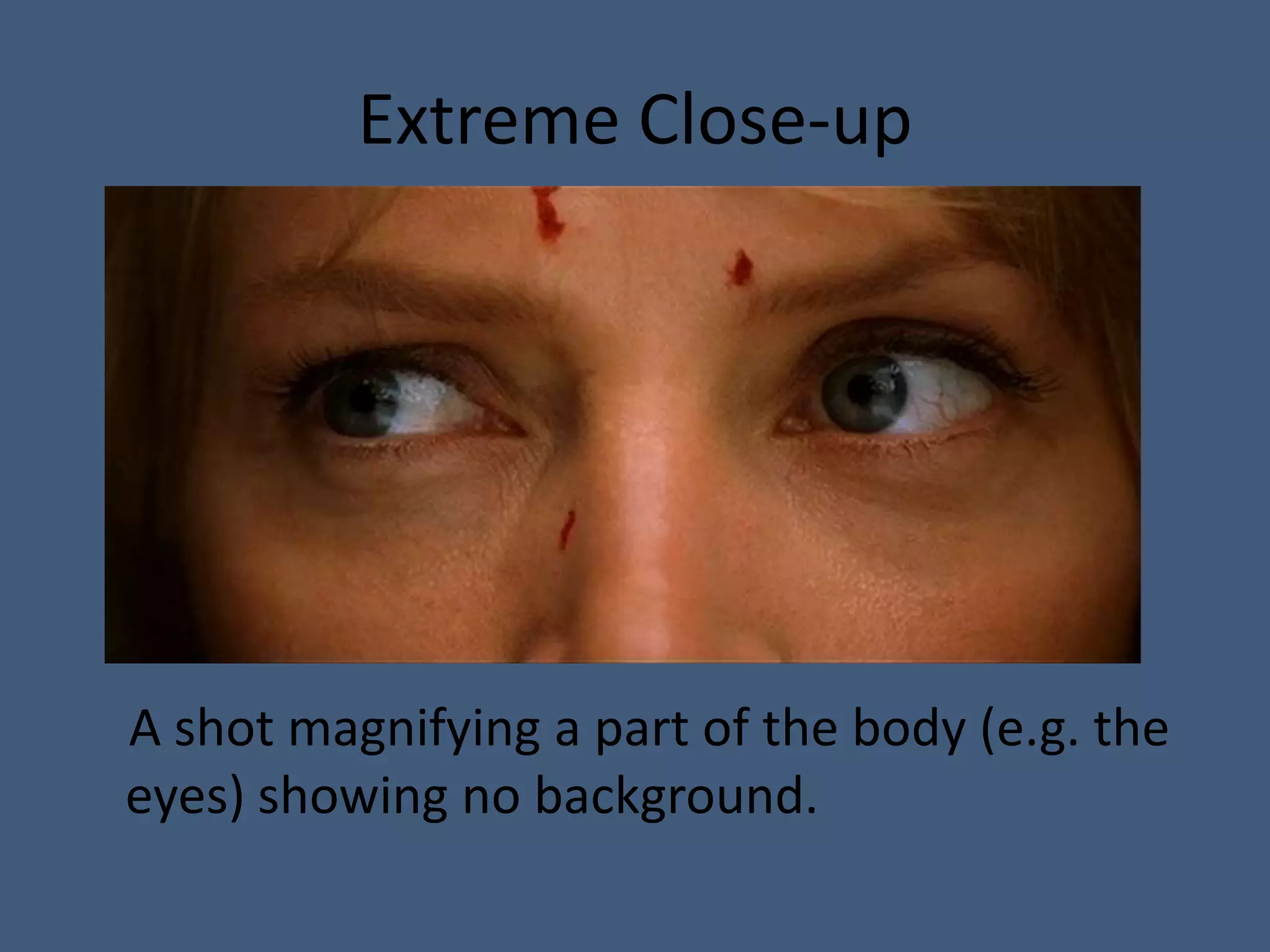
Extreme Close-up


A shot magnifying a part of the body (e.g. the
eyes) showing no background.
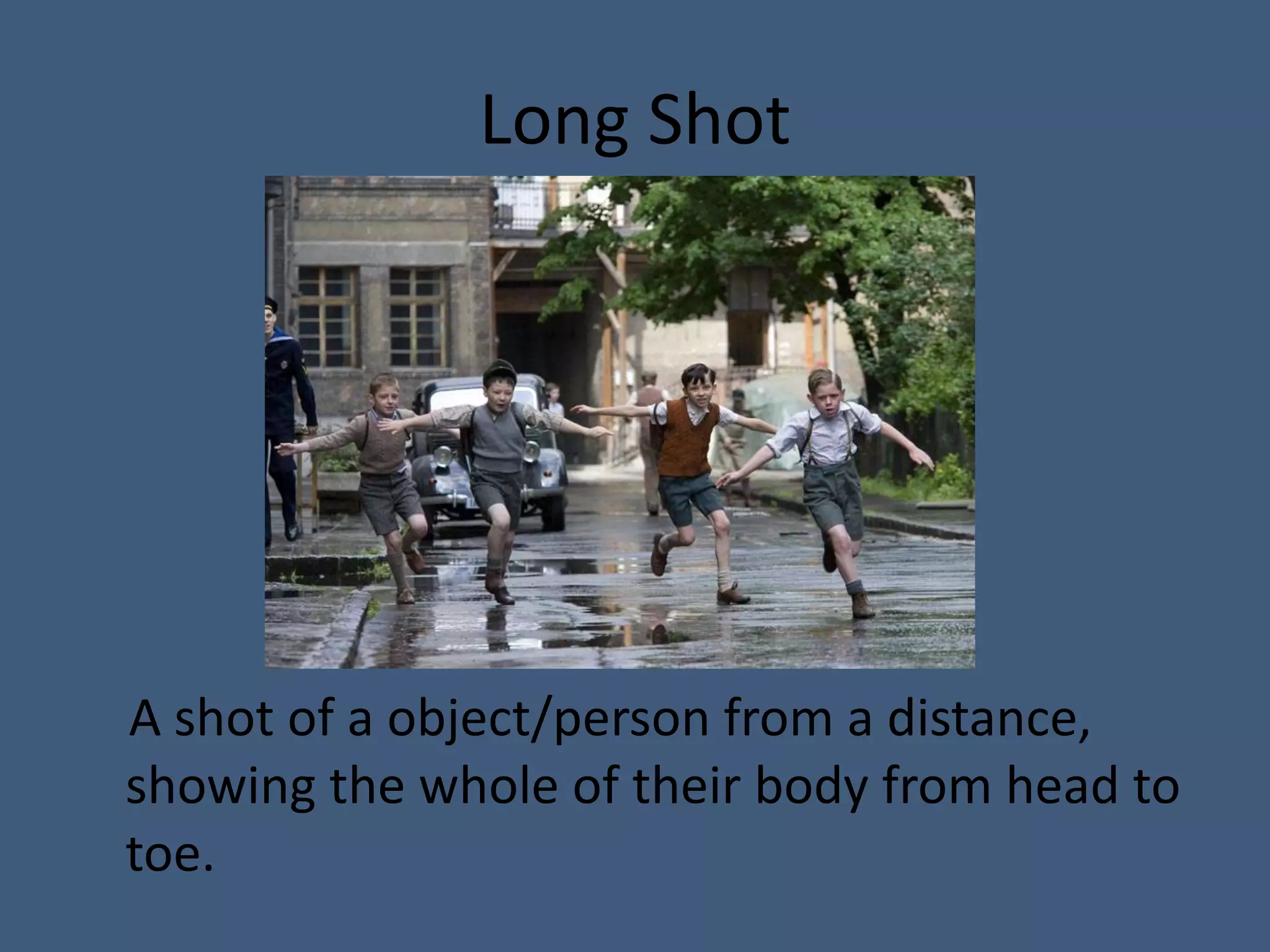
Long Shot


A shot of a object/person from a distance,
showing the whole of their body from head to
toe.
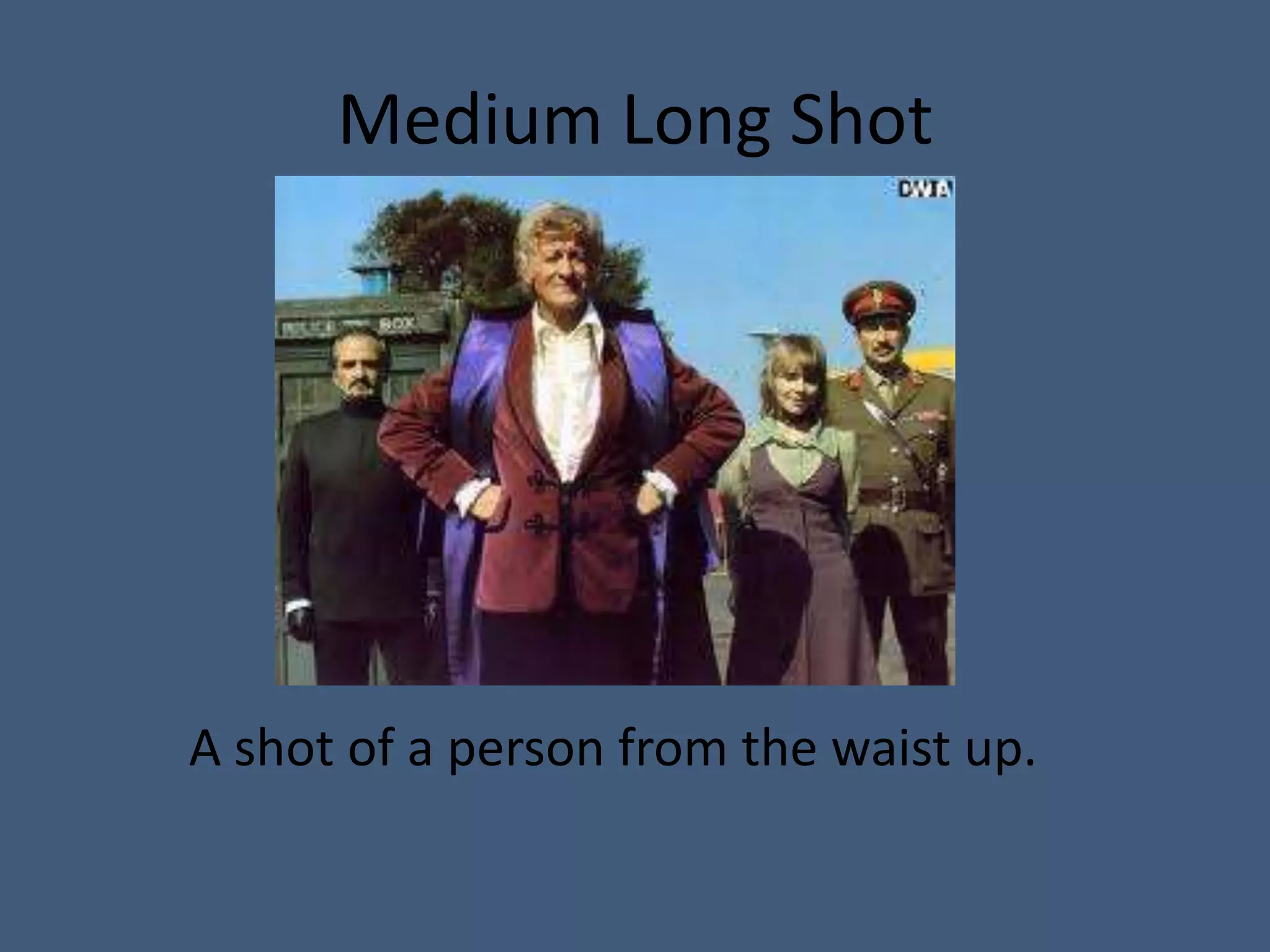
Medium Long Shot


A shot of a person from the waist up.
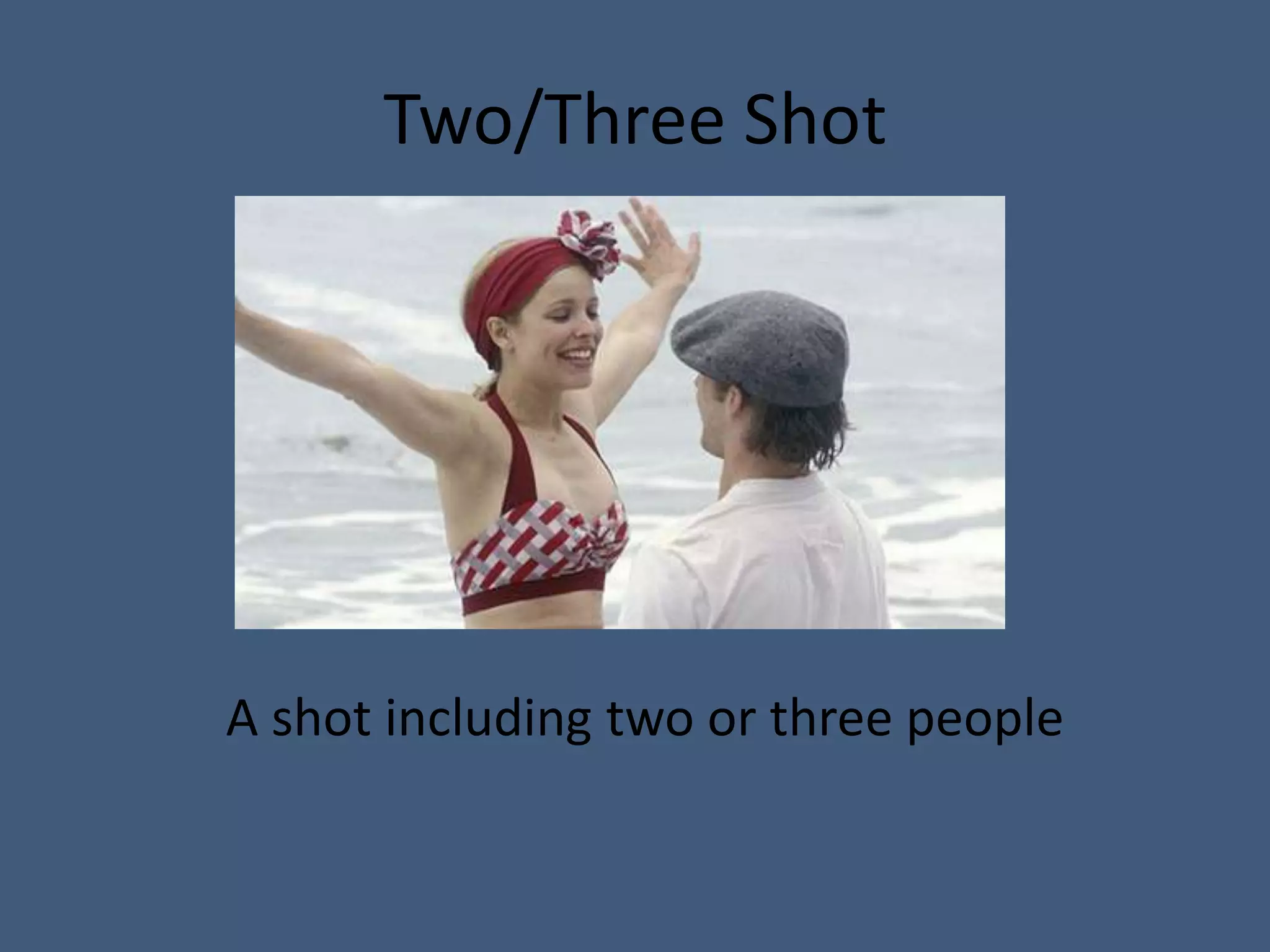
Two/Three Shot


A shot including two or three people
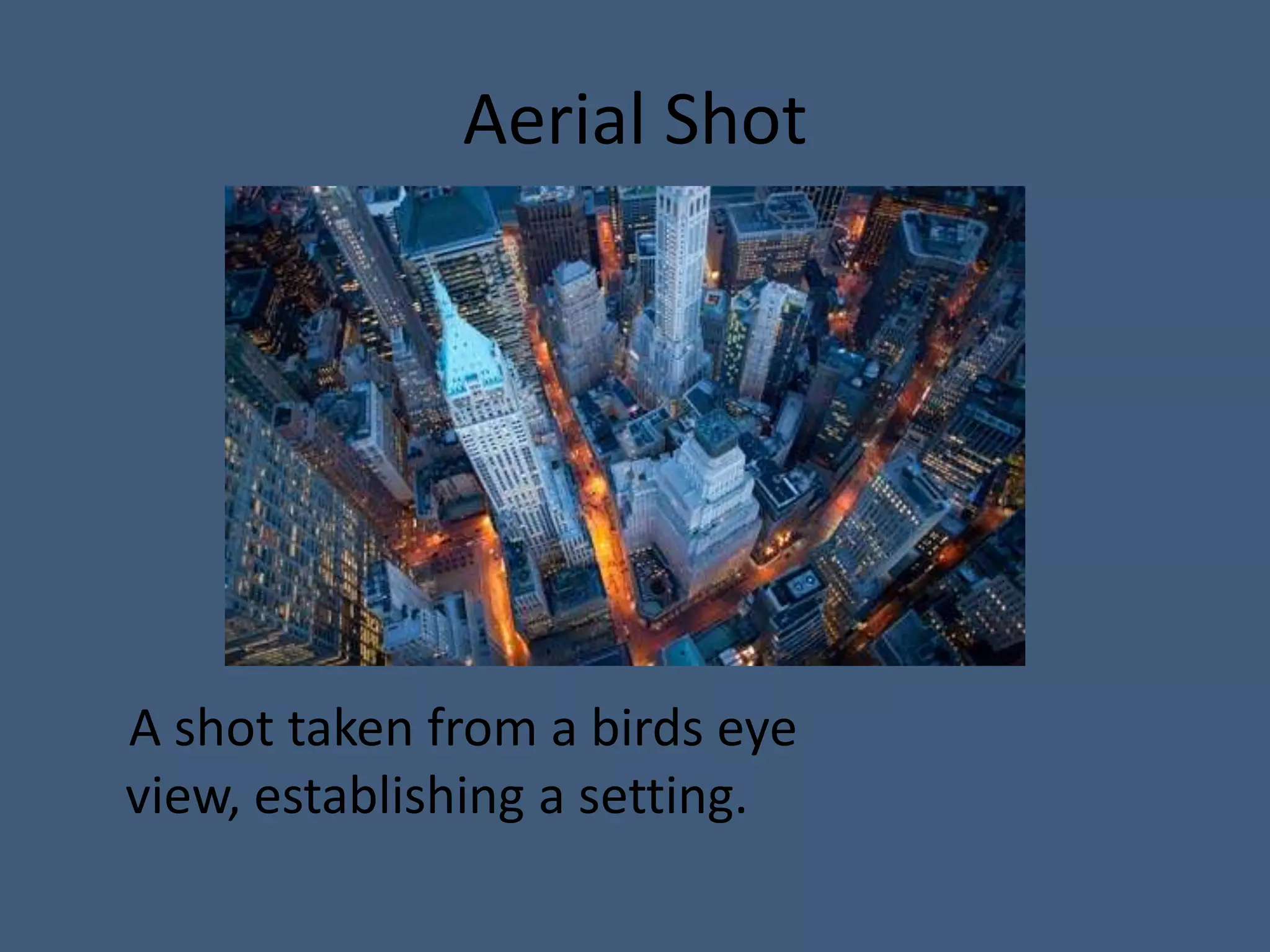
Aerial Shot


A shot taken from a birds eye
view, establishing a setting.
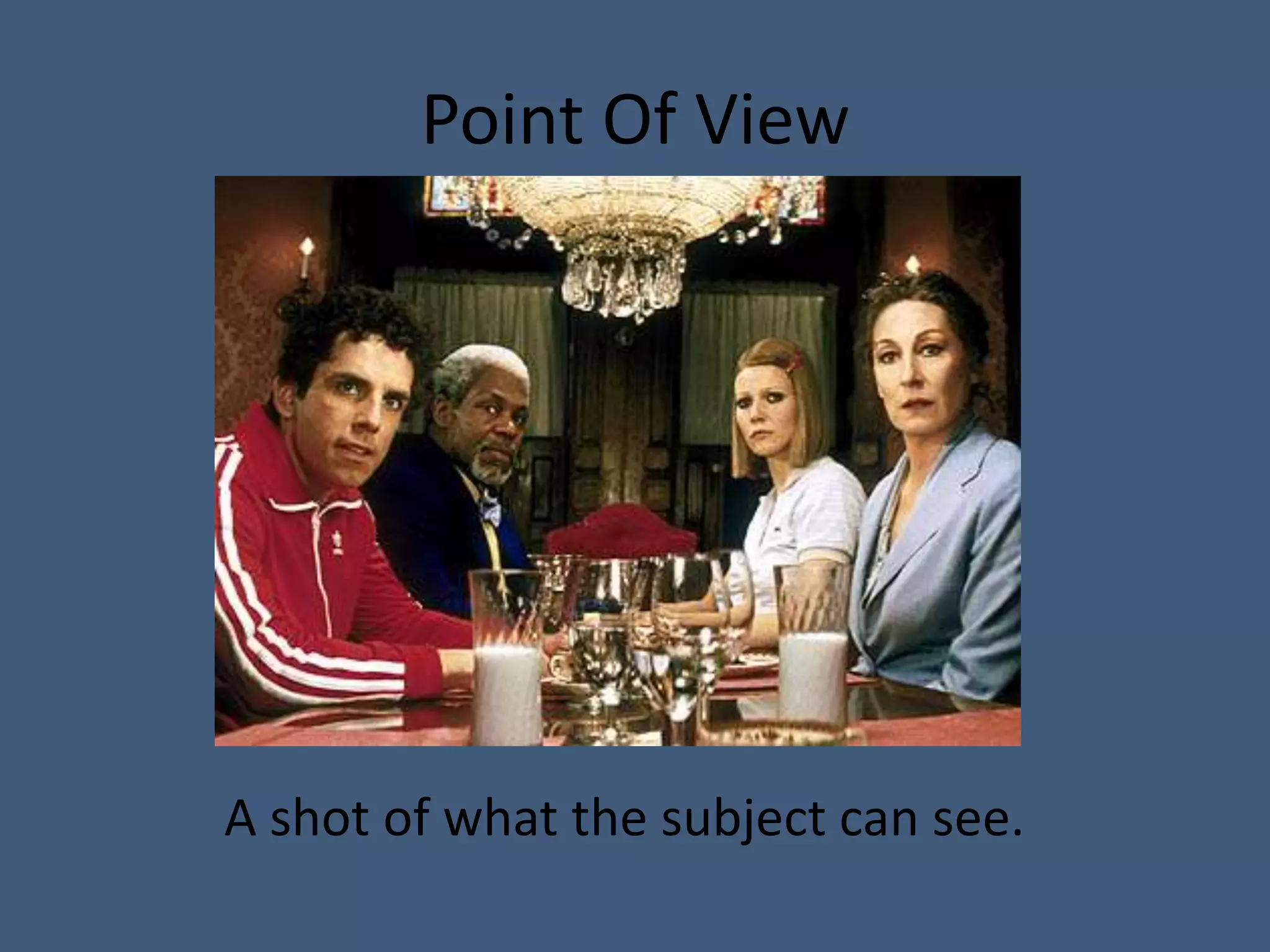
Point Of View


A shot of what the subject can see.
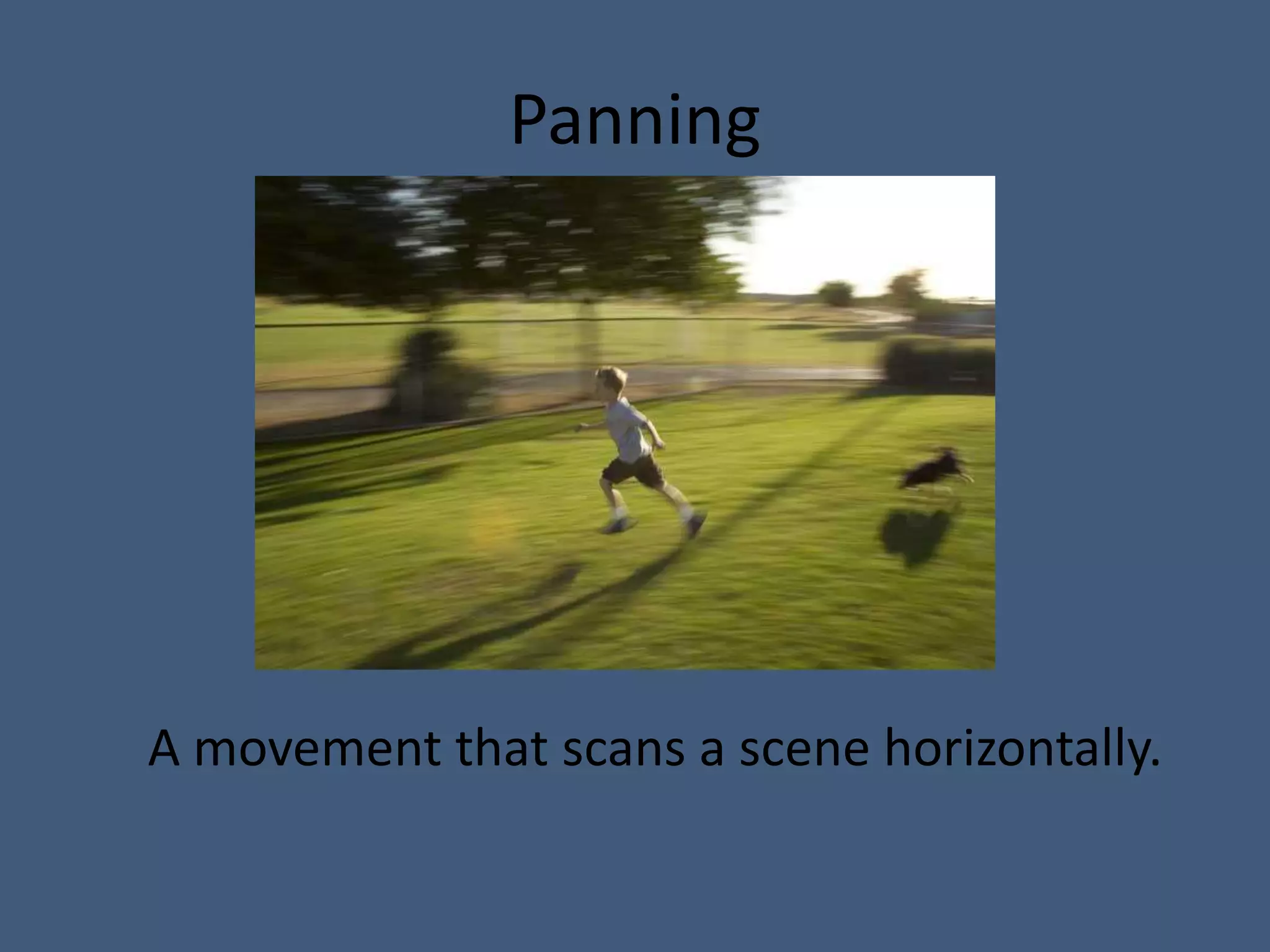
Panning


A movement that scans a scene horizontally.
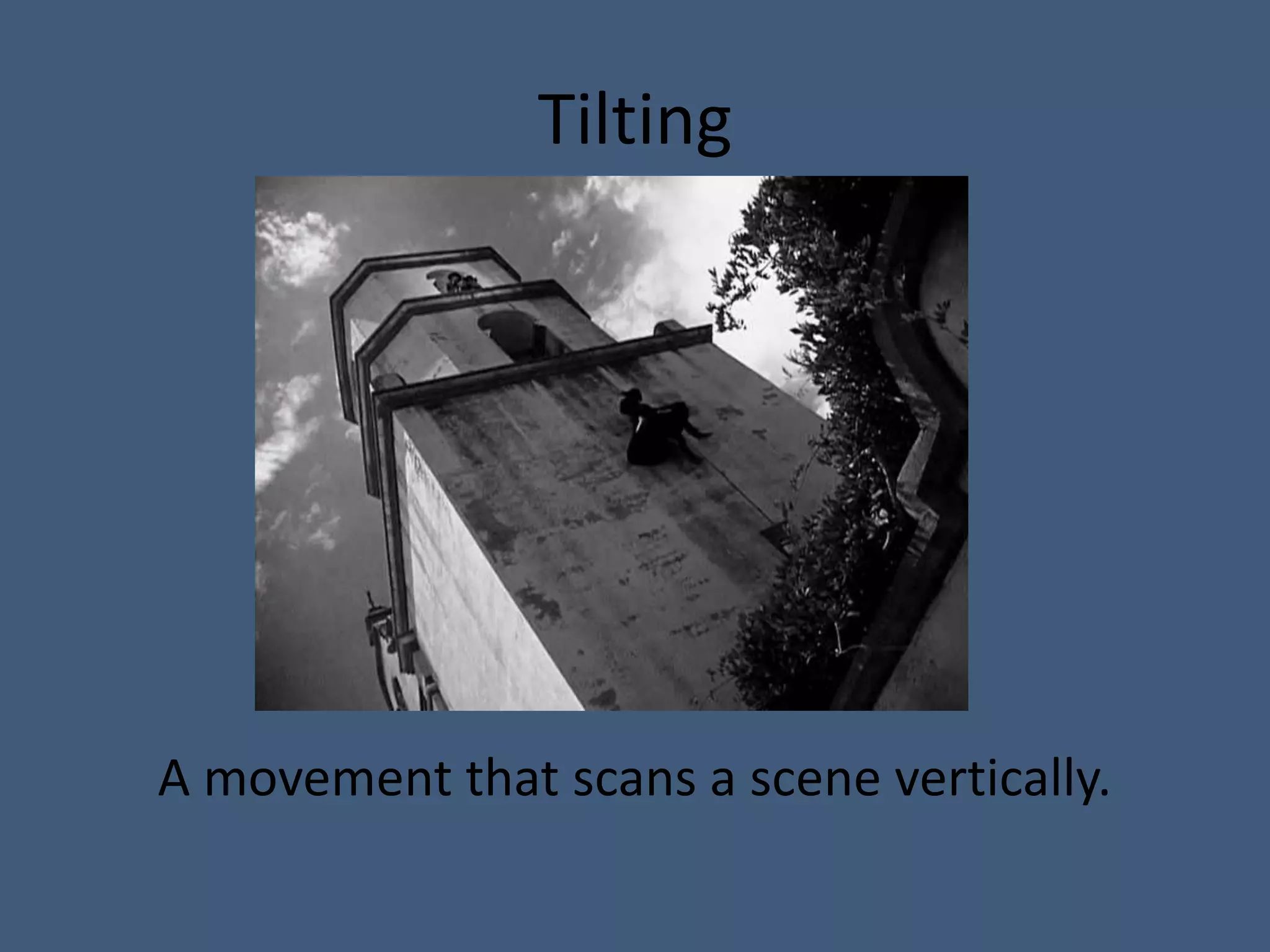
Tilting


A movement that scans a scene vertically.
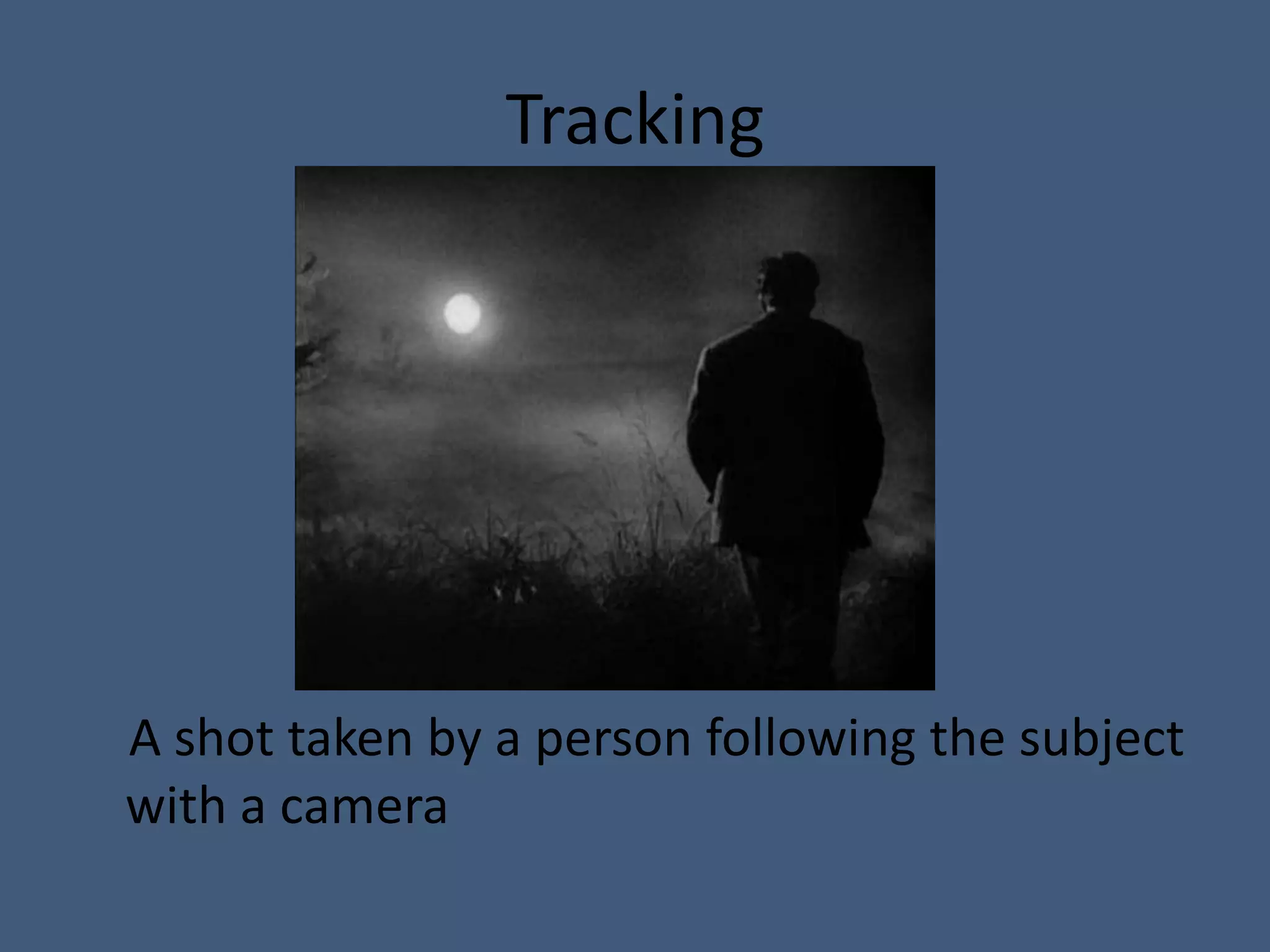
Tracking


A shot taken by a person following the subject
with a camera
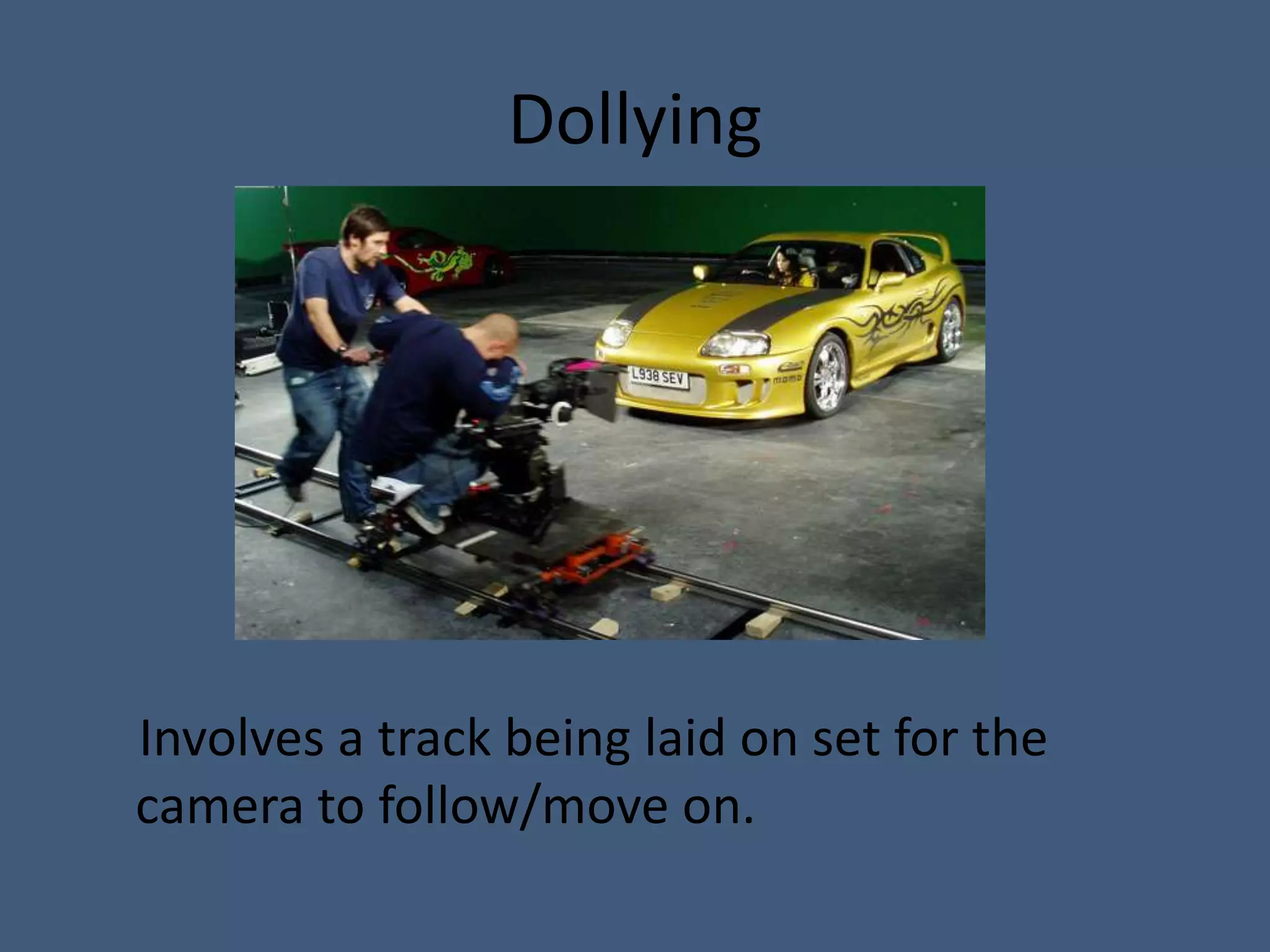
Dollying


Involves a track being laid on set for the
camera to follow/move on.
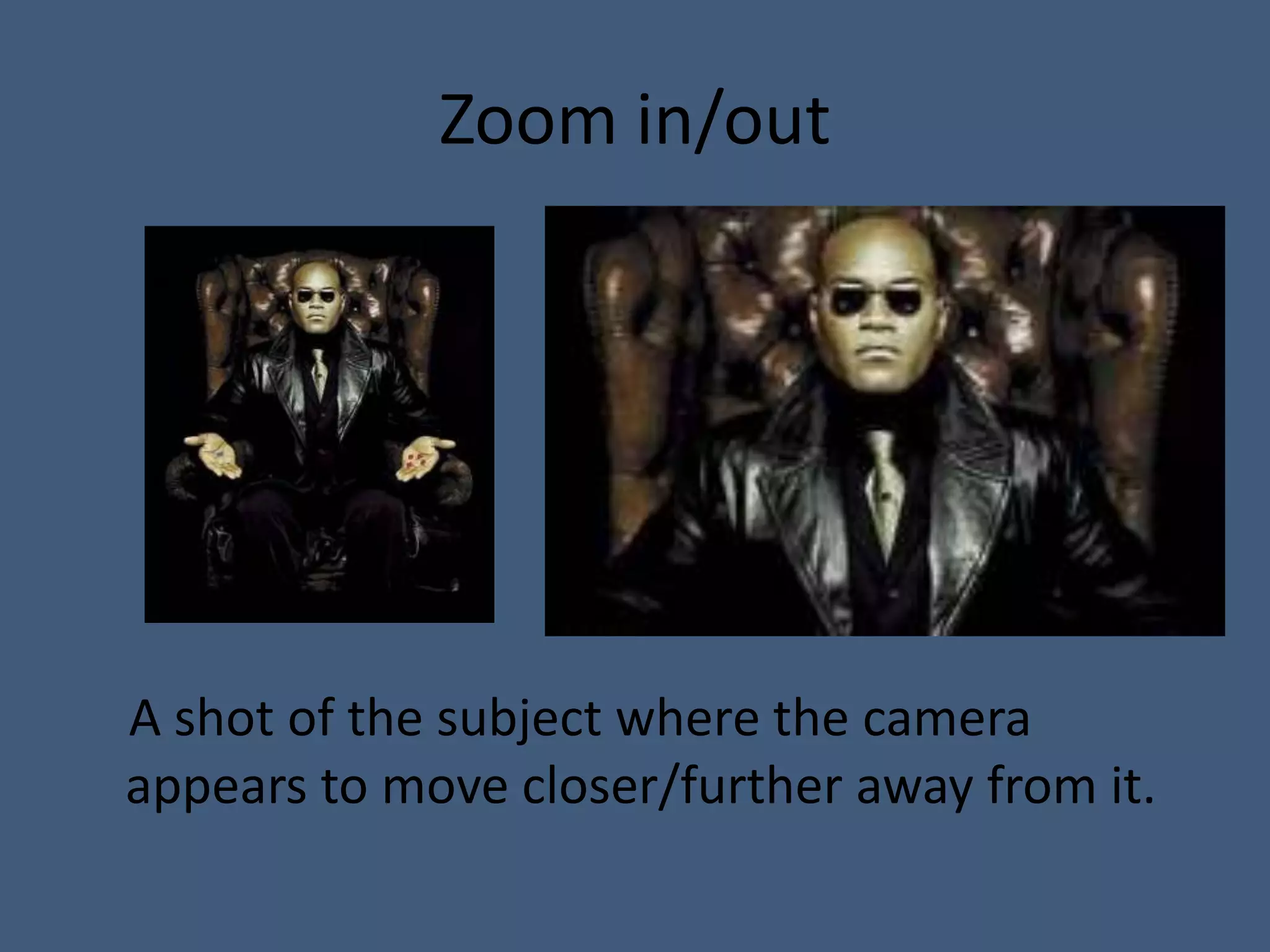
Zoom in/out


A shot of the subject where the camera
appears to move closer/further away from it.
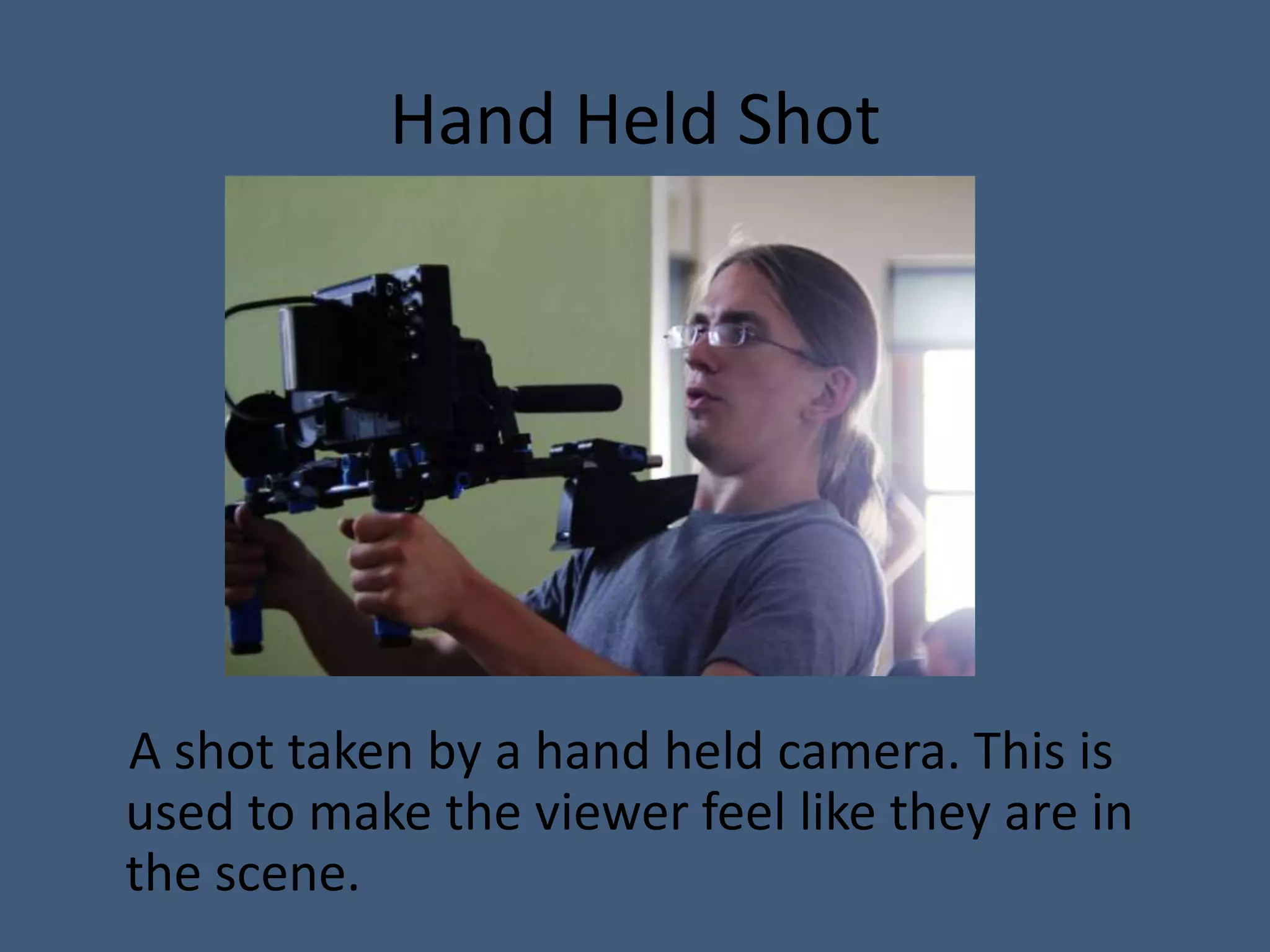
Hand Held Shot


A shot taken by a hand held camera. This is
used to make the viewer feel like they are in
the scene.
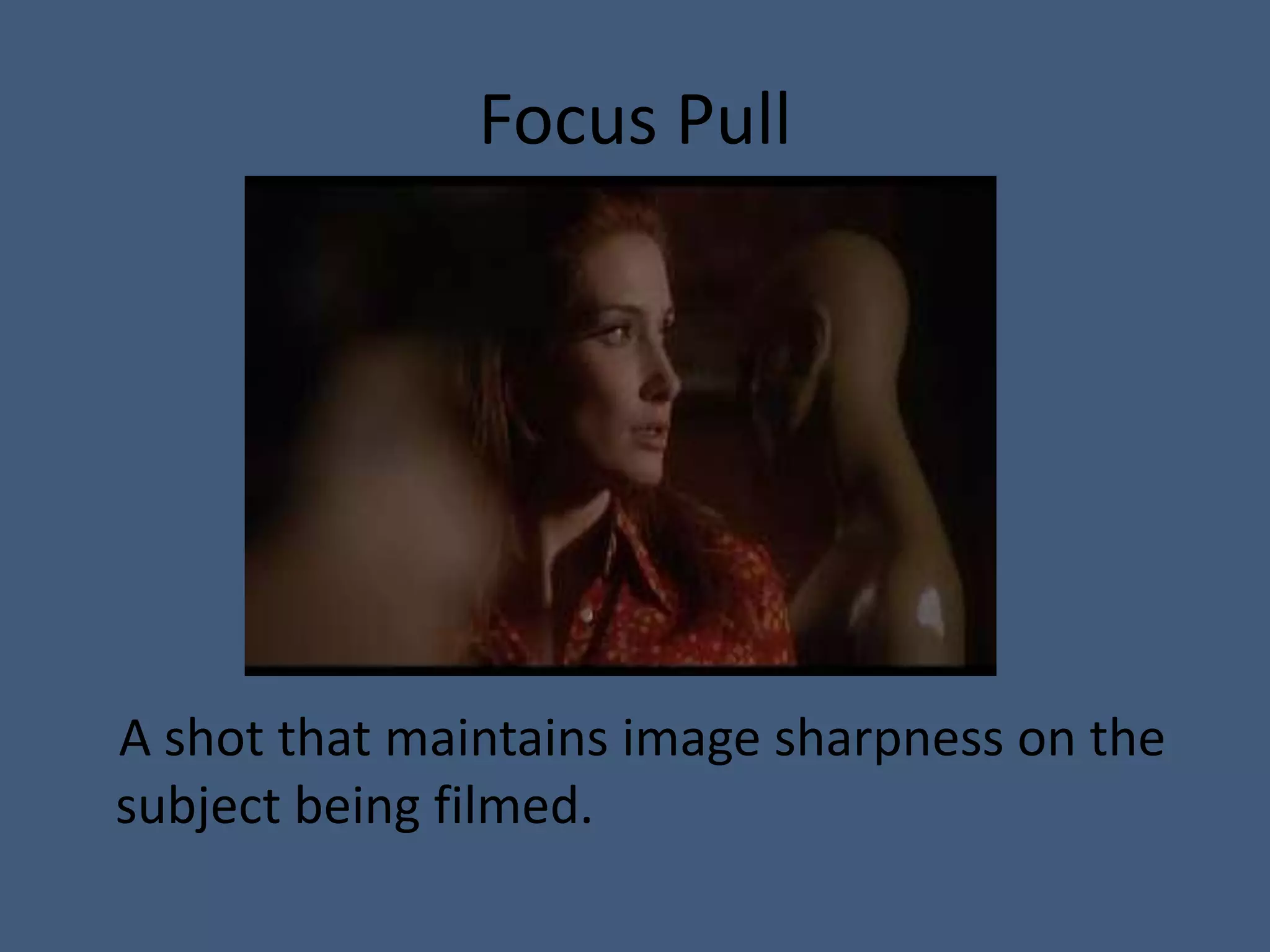
Focus Pull


A shot that maintains image sharpness on the
subject being filmed.
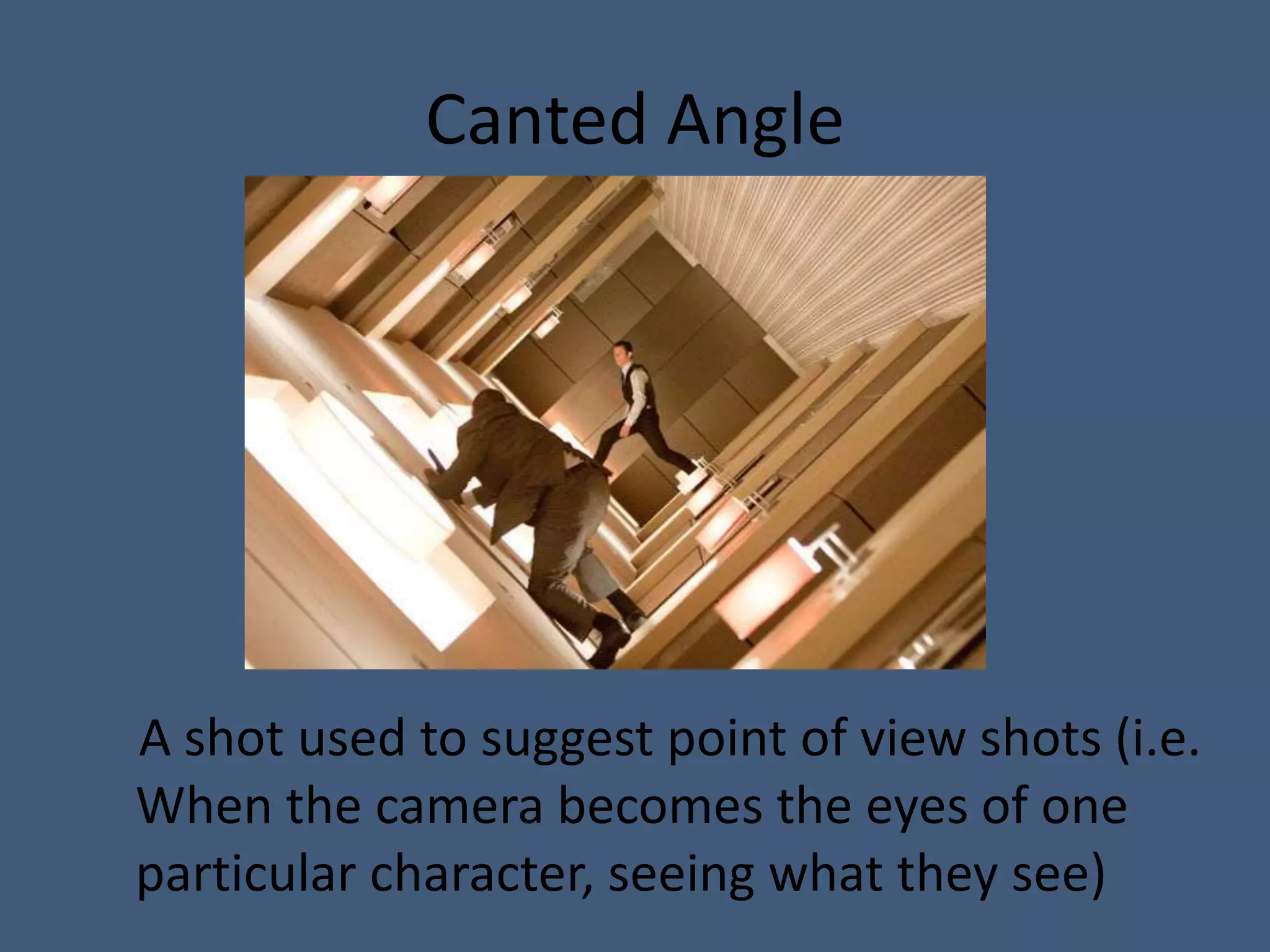
Canted Angle


A shot used to suggest point of view shots (i.e.
When the camera becomes the eyes of one
particular character, seeing what they see)
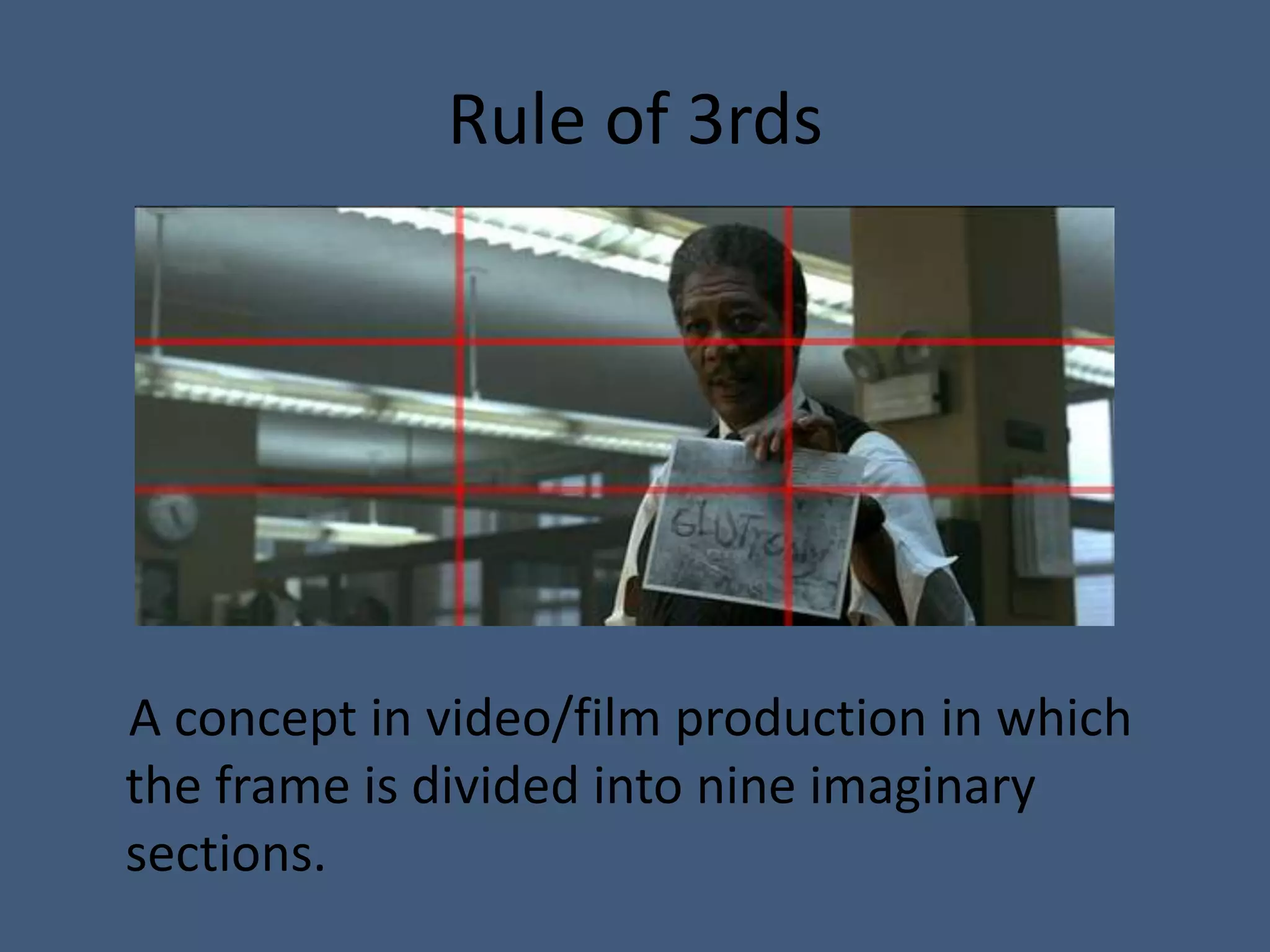
Rule of 3rds


A concept in video/film production in which
the frame is divided into nine imaginary
sections.

Camera angles, shots, movement and positions