WELCOM
E
Bacterial Leaf Blight
Diseases of Rice and their Management
MUHAMMAD AMMAR
BAGF14E216
UNIVERSITY COLLEGE OF AGRICULTURE
UNIVERSITY OF SARGODHA
RICE FACTS
Rice is the staple food of almost half of the world's
population
More than 90% of world’s rice is grown and consumed in
Asia.
Among the rice producing countries, Bangladesh rank
fourth to China, India and Indonesia both in acreage and
production (FAO, 2003).
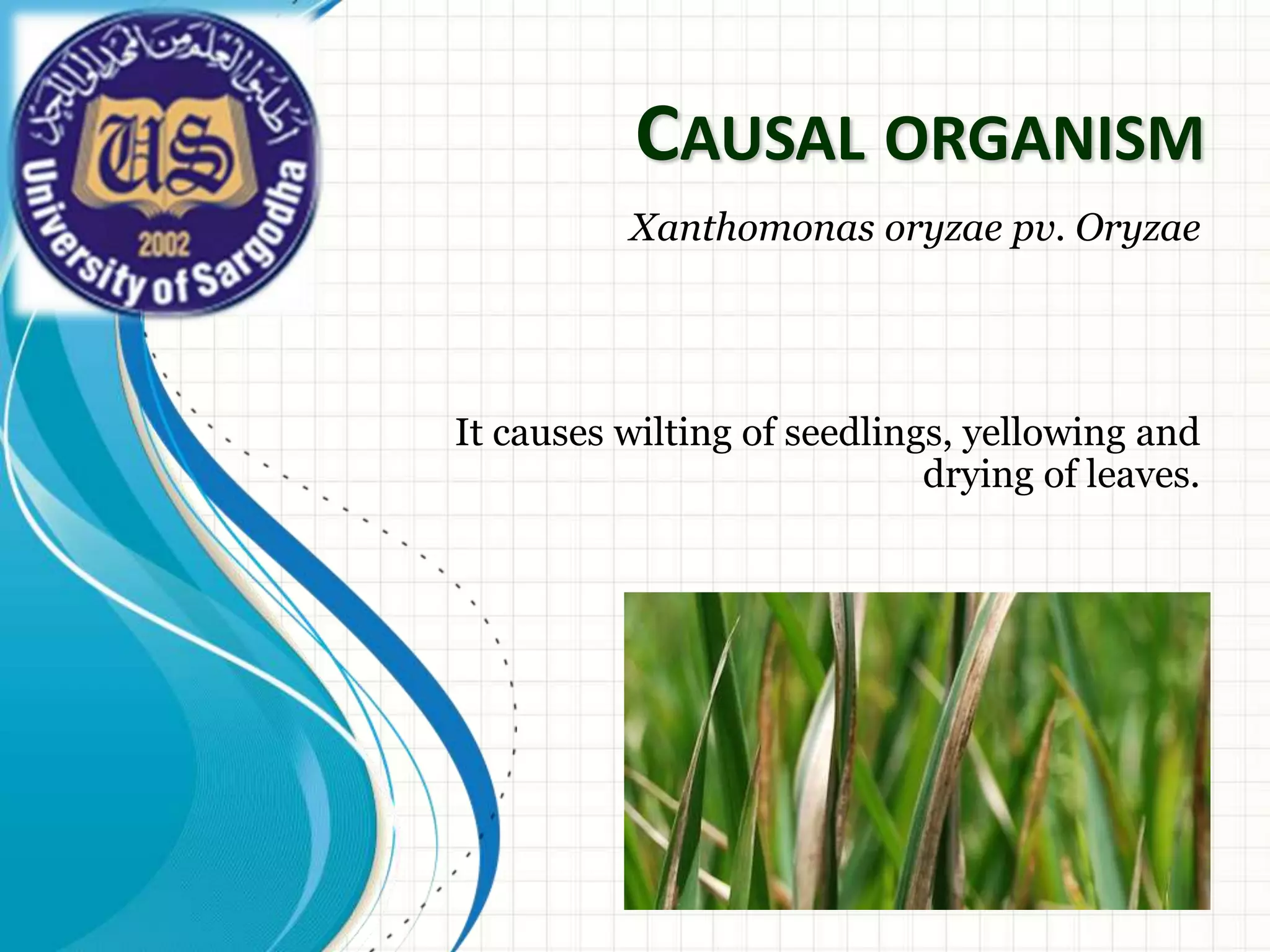
China
India
Indonesia
Bangladesh
Vietnam
Thailand
Myanmar
Philippines
The major rice growing countries are
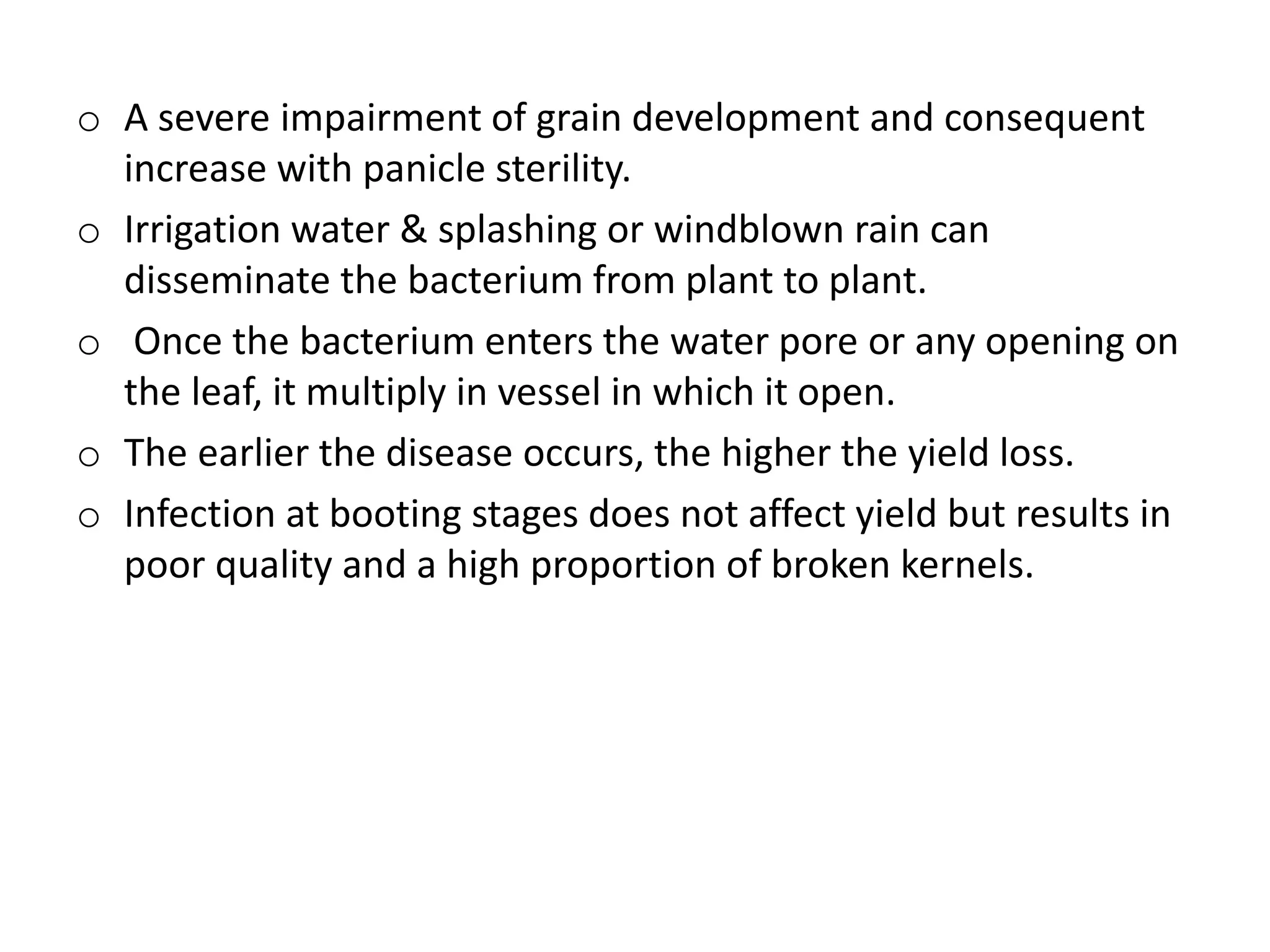
CAUSAL ORGANISM
Xanthomonas oryzae pv. Oryzae
It causes wilting of seedlings, yellowing and
drying of leaves.
Epidemiology:
o High relative humidity (83-93%) and moderate temperature (26-300C)
favour the disease development.
o The disease usually occurs during the early stage of planting from
maximum tillering to panicle initiation
o Older plants are more resistant to the disease.
o The disease is transmitted through seeds
o Infection occur through wounds and stomata
o Infected seeds present in the water or those surviving in the debris left
after harvest, are also sources of inoculums in the next planting
season.
o The disease also disperse and spread by wind and rain water.
o High dose of nitrogenous fertilizer, excessive shade and close planting
favour the disease.
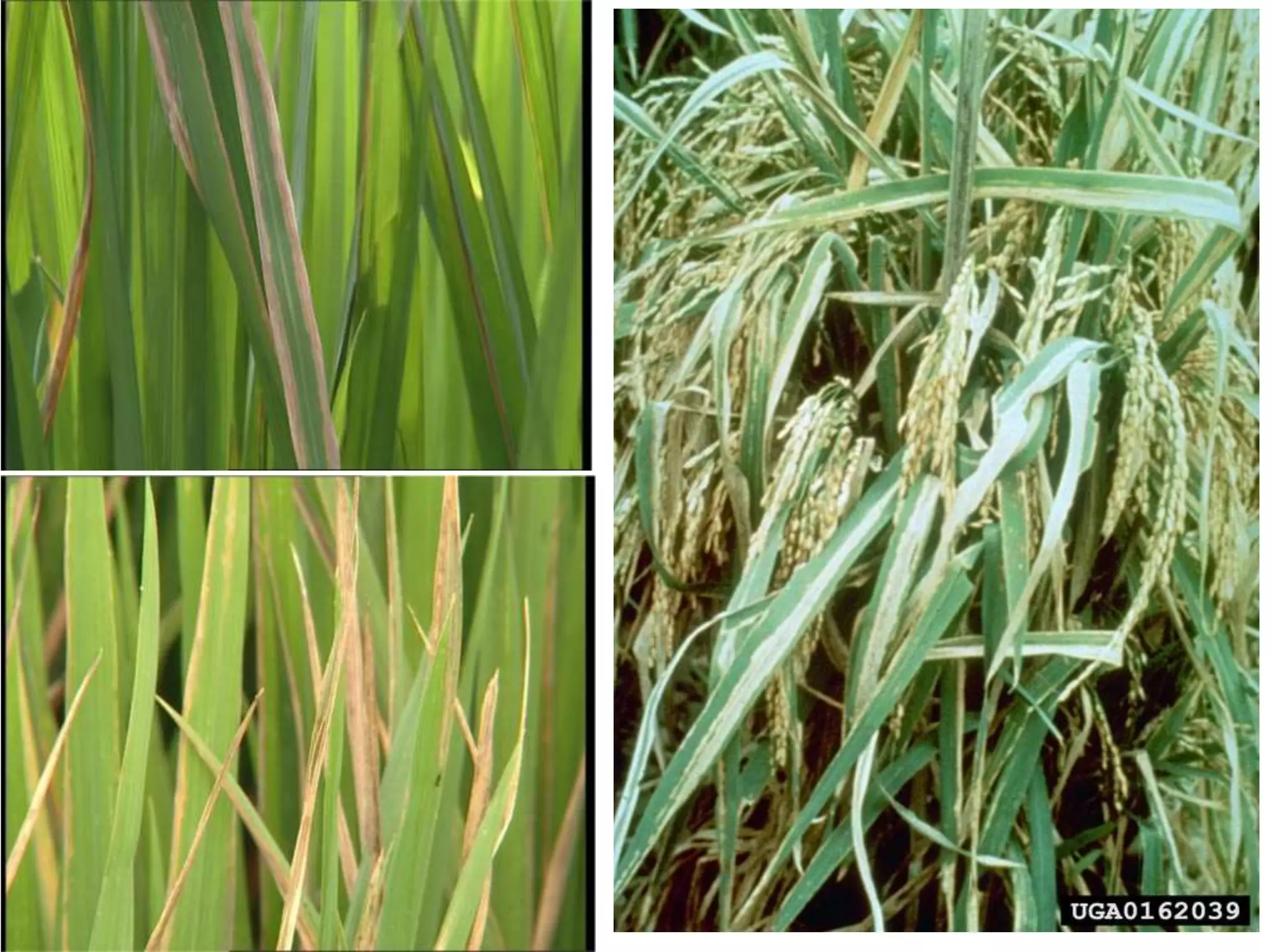
o On seedling, the infection appears tiny water soaked spot at the
margin on the leaves.
o On leaf blade, the infection begins at the margin as water socked
stripe.
o Resulting in the wavy margin and yellow leaf within few days.
o The lesion can cover the whole blade, turn white and later grayish
contaminated with various saprophytic fungi.
o A turbid ooze of the bacterium, streaming from the vascular bundle
can be observed on dipping the cut end of affected leaves in clear
water.
o Symptoms observed at the tillering stage.
o Seedling wilt can be observed in 1-3 weeks after transplanting.
Symptoms:
Bacterial Blight of Rice
o A severe impairment of grain development and consequent
increase with panicle sterility.
o Irrigation water & splashing or windblown rain can
disseminate the bacterium from plant to plant.
o Once the bacterium enters the water pore or any opening on
the leaf, it multiply in vessel in which it open.
o The earlier the disease occurs, the higher the yield loss.
o Infection at booting stages does not affect yield but results in
poor quality and a high proportion of broken kernels.
How To Manage:
o Planting resistant varieties is efficient way to control bacterial
blight.
o Use balanced amounts of plant nutrients, especially nitrogen.
o Ensure good drainage of fields and nurseries.
o Keep fields clean. Remove weed hosts and plow under rice stubble ,
straw which can serve as hosts of bacteria.
o Allow fallow fields to dry to suppress disease agents in the soil and
plant residues.
o Seed treatment with bleaching powder (100g/ml) and zinc sulphate
(2 per cent) reduce bacterial blight.
o Copper compounds and antibiotics.
o Application of streptocycline @.6% for spray.
10

Bacterial leaf blight of rice

  • 1.
    WELCOM E Bacterial Leaf Blight Diseasesof Rice and their Management MUHAMMAD AMMAR BAGF14E216 UNIVERSITY COLLEGE OF AGRICULTURE UNIVERSITY OF SARGODHA
  • 2.
    RICE FACTS Rice isthe staple food of almost half of the world's population More than 90% of world’s rice is grown and consumed in Asia. Among the rice producing countries, Bangladesh rank fourth to China, India and Indonesia both in acreage and production (FAO, 2003). China India Indonesia Bangladesh Vietnam Thailand Myanmar Philippines The major rice growing countries are
  • 3.
    CAUSAL ORGANISM Xanthomonas oryzaepv. Oryzae It causes wilting of seedlings, yellowing and drying of leaves.
  • 4.
    Epidemiology: o High relativehumidity (83-93%) and moderate temperature (26-300C) favour the disease development. o The disease usually occurs during the early stage of planting from maximum tillering to panicle initiation o Older plants are more resistant to the disease. o The disease is transmitted through seeds o Infection occur through wounds and stomata o Infected seeds present in the water or those surviving in the debris left after harvest, are also sources of inoculums in the next planting season. o The disease also disperse and spread by wind and rain water. o High dose of nitrogenous fertilizer, excessive shade and close planting favour the disease.
  • 5.
    o On seedling,the infection appears tiny water soaked spot at the margin on the leaves. o On leaf blade, the infection begins at the margin as water socked stripe. o Resulting in the wavy margin and yellow leaf within few days. o The lesion can cover the whole blade, turn white and later grayish contaminated with various saprophytic fungi. o A turbid ooze of the bacterium, streaming from the vascular bundle can be observed on dipping the cut end of affected leaves in clear water. o Symptoms observed at the tillering stage. o Seedling wilt can be observed in 1-3 weeks after transplanting. Symptoms:
  • 6.
  • 7.
    o A severeimpairment of grain development and consequent increase with panicle sterility. o Irrigation water & splashing or windblown rain can disseminate the bacterium from plant to plant. o Once the bacterium enters the water pore or any opening on the leaf, it multiply in vessel in which it open. o The earlier the disease occurs, the higher the yield loss. o Infection at booting stages does not affect yield but results in poor quality and a high proportion of broken kernels.
  • 9.
    How To Manage: oPlanting resistant varieties is efficient way to control bacterial blight. o Use balanced amounts of plant nutrients, especially nitrogen. o Ensure good drainage of fields and nurseries. o Keep fields clean. Remove weed hosts and plow under rice stubble , straw which can serve as hosts of bacteria. o Allow fallow fields to dry to suppress disease agents in the soil and plant residues. o Seed treatment with bleaching powder (100g/ml) and zinc sulphate (2 per cent) reduce bacterial blight. o Copper compounds and antibiotics. o Application of streptocycline @.6% for spray.
  • 10.