Metoclopramide
Name: Sayid Omar Ahmed Abdi
MBBS17A
Metoclopramide
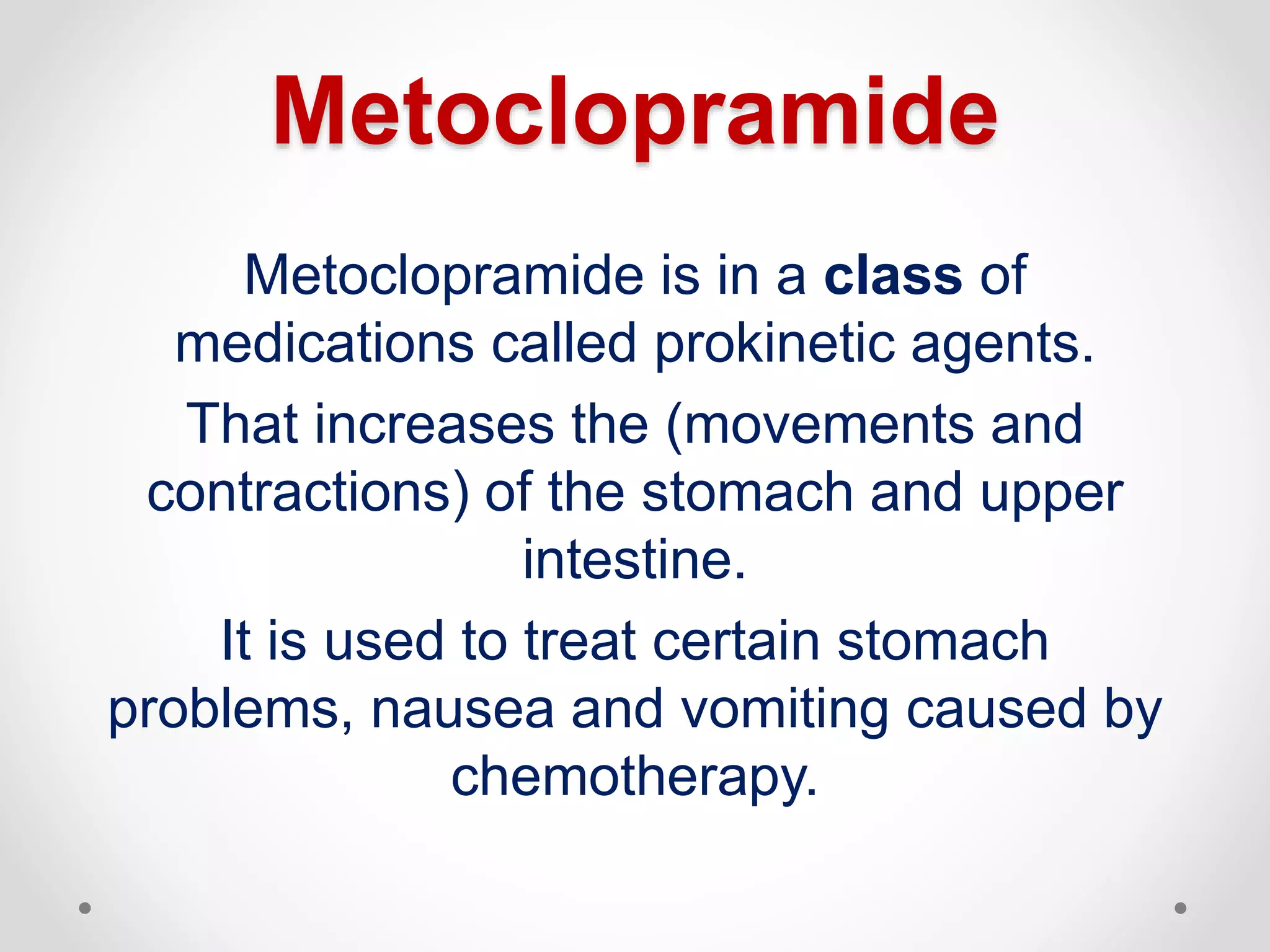
Metoclopramide is in a class of
medications called prokinetic agents.
That increases the (movements and
contractions) of the stomach and upper
intestine.
It is used to treat certain stomach
problems, nausea and vomiting caused by
chemotherapy.
Metoclopramide And also available
it is available 10mg tablet injection
My be oral solution
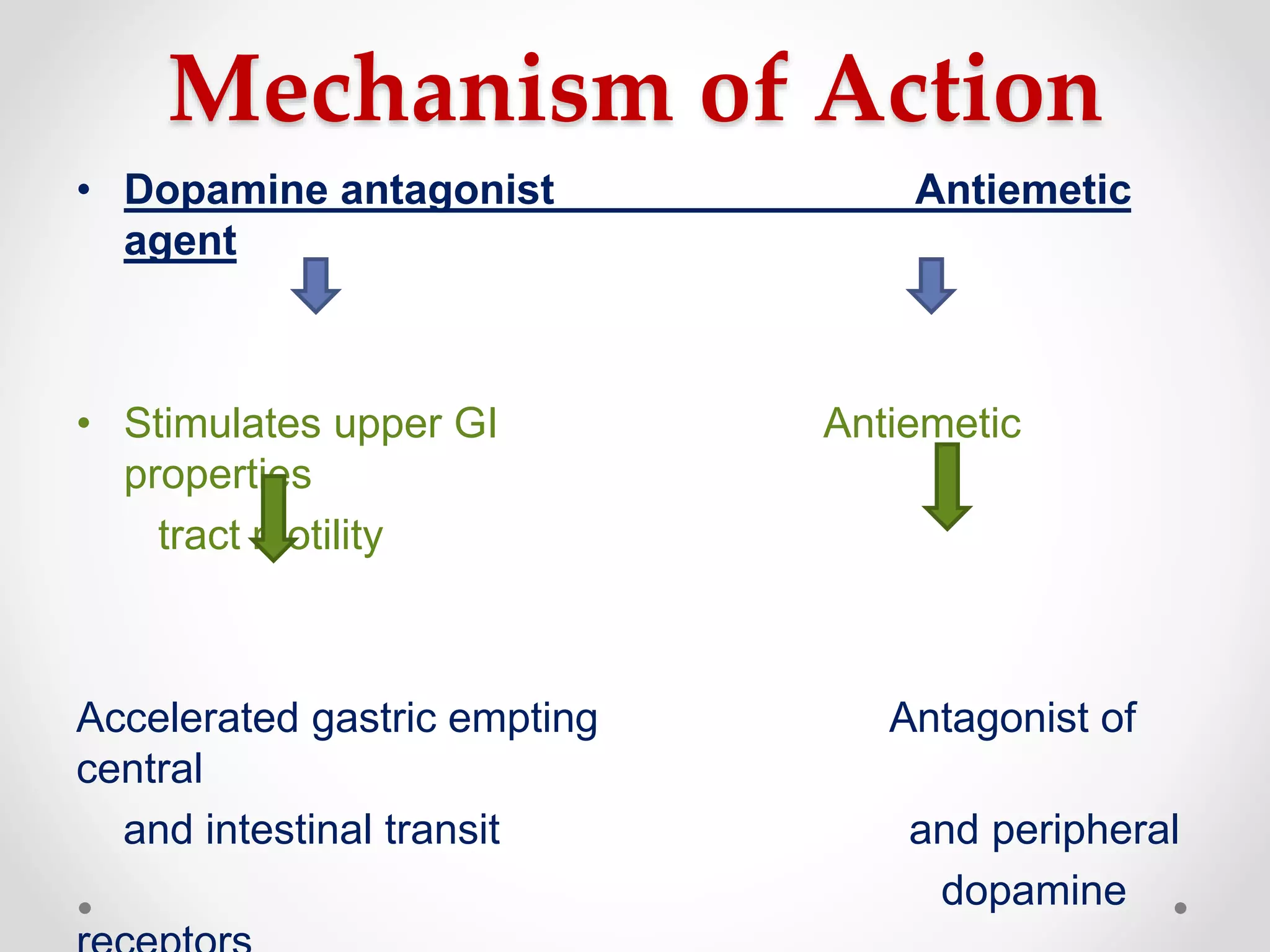
Mechanism of Action
• Dopamine antagonist Antiemetic
agent
• Stimulates upper GI Antiemetic
properties
tract motility
Accelerated gastric empting Antagonist of
central
and intestinal transit and peripheral
dopamine
Uses
Nausea and Vomiting in adult
 Diabetic gastroparesis
 GERD(GastroEsophageal Reflex Disease)
 Prophylaxis of postoperative nausea and vomiting (when
nasogastric suction is undesirable)
 Facilitation of small bowel intubation (Tube doesn't pass
pylorus with conventional maneuvers)
Usual Dose
 In adults under 60kg : 15mg/day in 3 divided doses
 In adults over 60kg : 30mg/day in 3 divided doses
 In the interval between each dose should be at least
6Hours
Contra-indication
• Patients in whom increase in GI motility could be
harmful:
 GI Hemorrhage
 Mechanical Obstruction
 Perforation Pheochromocytoma
 Epilepsy
WARNING
 DO NOT ADMISTER TO GILDREN < 18 YEARS OLD
 REDUCE THE THOSE BY HALF IN PATEINT
IMOAIRMENT
 MONITOER USE IN PATEINT >60 YEARS OLD
 IN PATEINT EPILEPSY OR PARKINSON`S DISEASE
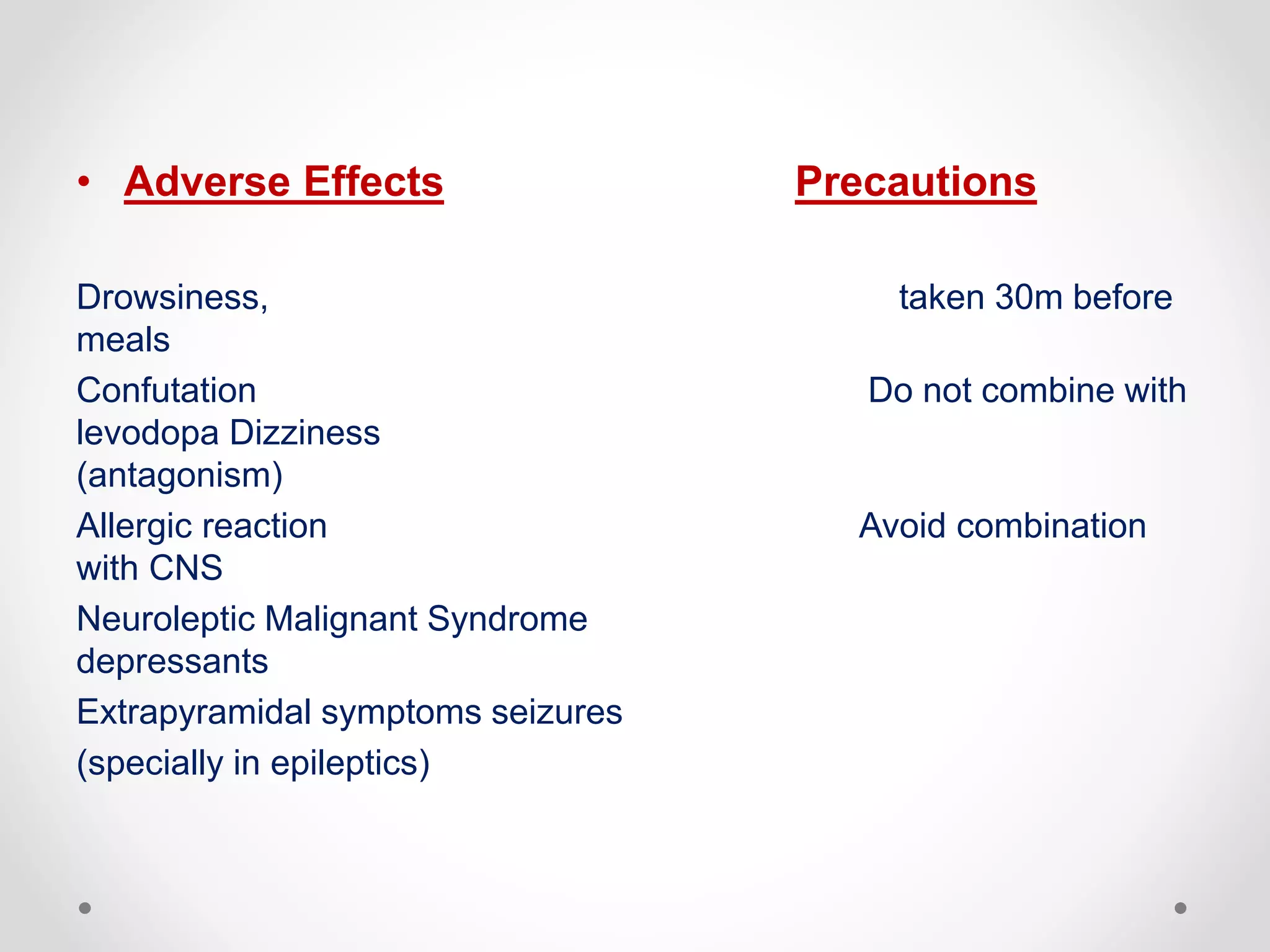
• Adverse Effects Precautions
Drowsiness, taken 30m before
meals
Confutation Do not combine with
levodopa Dizziness
(antagonism)
Allergic reaction Avoid combination
with CNS
Neuroleptic Malignant Syndrome
depressants
Extrapyramidal symptoms seizures
(specially in epileptics)
Storage
• Store metoclopramide at room temperature. Keep it
between (20°C up to 25°C).

Metoclopramide Midication

  • 1.
  • 2.
    Metoclopramide Metoclopramide is ina class of medications called prokinetic agents. That increases the (movements and contractions) of the stomach and upper intestine. It is used to treat certain stomach problems, nausea and vomiting caused by chemotherapy.
  • 3.
    Metoclopramide And alsoavailable it is available 10mg tablet injection My be oral solution
  • 4.
    Mechanism of Action •Dopamine antagonist Antiemetic agent • Stimulates upper GI Antiemetic properties tract motility Accelerated gastric empting Antagonist of central and intestinal transit and peripheral dopamine
  • 5.
    Uses Nausea and Vomitingin adult  Diabetic gastroparesis  GERD(GastroEsophageal Reflex Disease)  Prophylaxis of postoperative nausea and vomiting (when nasogastric suction is undesirable)  Facilitation of small bowel intubation (Tube doesn't pass pylorus with conventional maneuvers)
  • 6.
    Usual Dose  Inadults under 60kg : 15mg/day in 3 divided doses  In adults over 60kg : 30mg/day in 3 divided doses  In the interval between each dose should be at least 6Hours
  • 7.
    Contra-indication • Patients inwhom increase in GI motility could be harmful:  GI Hemorrhage  Mechanical Obstruction  Perforation Pheochromocytoma  Epilepsy
  • 8.
    WARNING  DO NOTADMISTER TO GILDREN < 18 YEARS OLD  REDUCE THE THOSE BY HALF IN PATEINT IMOAIRMENT  MONITOER USE IN PATEINT >60 YEARS OLD  IN PATEINT EPILEPSY OR PARKINSON`S DISEASE
  • 9.
    • Adverse EffectsPrecautions Drowsiness, taken 30m before meals Confutation Do not combine with levodopa Dizziness (antagonism) Allergic reaction Avoid combination with CNS Neuroleptic Malignant Syndrome depressants Extrapyramidal symptoms seizures (specially in epileptics)
  • 10.
    Storage • Store metoclopramideat room temperature. Keep it between (20°C up to 25°C).

Editor's Notes

  • #3 Prokinetic increases the frequency of small intestine contraction
  • #5 Dopamine antagonist blocks dopamine receptors , plays the role how we feel pleasure // antiemetic nausea and vomiting Couse sickness
  • #9 Parkinson's disease luck of dopamine