•Bains circuit (Mapelson D)
• Dr.zikrullah mallick
Breathing system
• An assembly of components,which connect the patients airway to the
anaesthetic machine creating an artificial atmosphere,from and into
which the patient breathes.
CLASSIFICATION
• Bidirectional flow
Afferent reservoir systems
• Mapelson A
• Mapelson B
• Mapelson C
• Efferent reservoir system
• Mapelson D
• Mapelson E
• Mapelson F
• Bain’s system
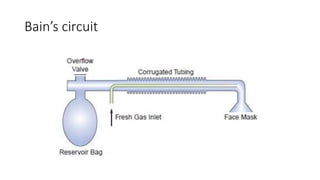
Bain’s circuit
• They have a 6 mm diameter tube as afferent and carries fresh gas
from machine end to patient end
• Reservoir bag is attached to efferent limb which is a wide bore
corrugated tube
APL valve is placed near the reservoir bag
In bain’s modification afferent and efferent limbs are
coaxially place
Inner tube 6mm
Outer tube 22 mm
Length 180 cm
Bain’s circuit
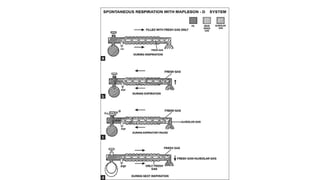
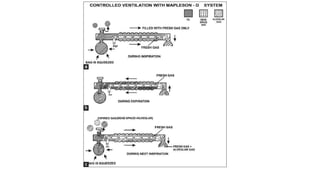
• During inspiration fresh gas from machine, reservoir
bag and corrugated tube flow to the tube
• During expiration, fresh gas to the system at the
patient and expired gas gets continuously mixed with
fresh gas as it flows back into corrugated tube and
reservoir bag
• Once the system is full, the excess gas is vented to the atmosphere
through the APL valve during expiratory pause fresh gas continues to
flow and fill the proximal portion of corrugated tube while mixed gas
is vented through the valve
• During next inspiration, patient breaths fresh gas and mixed gas
• During inspiration the patient gets ventilated with fresh gas flow from
the machine, corrugated tube and reservoir bag
• During expiration the expired gas gets mixed with the fresh gas that is
flowing into the system at patient end
• During expiratory pause the fresh gas continues to enter the system
and pushes the mixed gas towards reservoir bag
• When next ventilation is initiated patient gets ventilated with the gas
in the corrugated tube. As the pressure in the system increases APL
valve opens and contents of reservoir bag are released into the
atmosphere
FGF requirement
• Spontaneus : 1.5 to 3 times minute ventilation
• (100 to 300 ml/kg/min)
• Controlled : 1 to 2 times minute ventilation
Test for Mapelson D
• By occluding the patient end and closing APL valve, pressurizing the
system
• Open the APL valve
• Bag deflates easily
Tests for BAINS system
• Occlude the inner tube at the patient end after setting a low flow
oxygen
• If the inner tube is intact the flow meter indicator will fall
Pethick test
• Activate oxygen flush and observe the bag
• Venturi effect caused by high flow oxygen at the patient end will
create a negative pressure at the outer tube
• Bag deflates
Advantages
• Can be used in controlled / spontaneous respiration
• Adults and paediatrics
• Portable, light weight
• Scavenging of exhaled gases
Hazards
• Accidental disconnection of inner tube from machine end
• Double back itself and cause obstruction to fresh gas flow

Bain’s circuit (Mapelson D) by Zikrullah mallick

  • 1.
    •Bains circuit (MapelsonD) • Dr.zikrullah mallick
  • 2.
    Breathing system • Anassembly of components,which connect the patients airway to the anaesthetic machine creating an artificial atmosphere,from and into which the patient breathes.
  • 3.
    CLASSIFICATION • Bidirectional flow Afferentreservoir systems • Mapelson A • Mapelson B • Mapelson C • Efferent reservoir system • Mapelson D • Mapelson E • Mapelson F • Bain’s system
  • 4.
    Bain’s circuit • Theyhave a 6 mm diameter tube as afferent and carries fresh gas from machine end to patient end • Reservoir bag is attached to efferent limb which is a wide bore corrugated tube
  • 5.
    APL valve isplaced near the reservoir bag In bain’s modification afferent and efferent limbs are coaxially place Inner tube 6mm Outer tube 22 mm Length 180 cm
  • 7.
  • 9.
    • During inspirationfresh gas from machine, reservoir bag and corrugated tube flow to the tube • During expiration, fresh gas to the system at the patient and expired gas gets continuously mixed with fresh gas as it flows back into corrugated tube and reservoir bag
  • 10.
    • Once thesystem is full, the excess gas is vented to the atmosphere through the APL valve during expiratory pause fresh gas continues to flow and fill the proximal portion of corrugated tube while mixed gas is vented through the valve • During next inspiration, patient breaths fresh gas and mixed gas
  • 12.
    • During inspirationthe patient gets ventilated with fresh gas flow from the machine, corrugated tube and reservoir bag • During expiration the expired gas gets mixed with the fresh gas that is flowing into the system at patient end • During expiratory pause the fresh gas continues to enter the system and pushes the mixed gas towards reservoir bag
  • 13.
    • When nextventilation is initiated patient gets ventilated with the gas in the corrugated tube. As the pressure in the system increases APL valve opens and contents of reservoir bag are released into the atmosphere
  • 14.
    FGF requirement • Spontaneus: 1.5 to 3 times minute ventilation • (100 to 300 ml/kg/min) • Controlled : 1 to 2 times minute ventilation
  • 15.
    Test for MapelsonD • By occluding the patient end and closing APL valve, pressurizing the system • Open the APL valve • Bag deflates easily
  • 16.
    Tests for BAINSsystem • Occlude the inner tube at the patient end after setting a low flow oxygen • If the inner tube is intact the flow meter indicator will fall
  • 17.
    Pethick test • Activateoxygen flush and observe the bag • Venturi effect caused by high flow oxygen at the patient end will create a negative pressure at the outer tube • Bag deflates
  • 18.
    Advantages • Can beused in controlled / spontaneous respiration • Adults and paediatrics • Portable, light weight • Scavenging of exhaled gases
  • 19.
    Hazards • Accidental disconnectionof inner tube from machine end • Double back itself and cause obstruction to fresh gas flow