


Anesthetic Considerations
of Physiological Changes
During Pregnancy
Presented by: Dr.zikrullah mallick
2
OBJECTIVES
 Maternal physiology during
pregnancy.
 Uteroplacental circulation.
 Placental transfer of anesthetic
agents.
 Effect of labor on maternal
physiology.
3
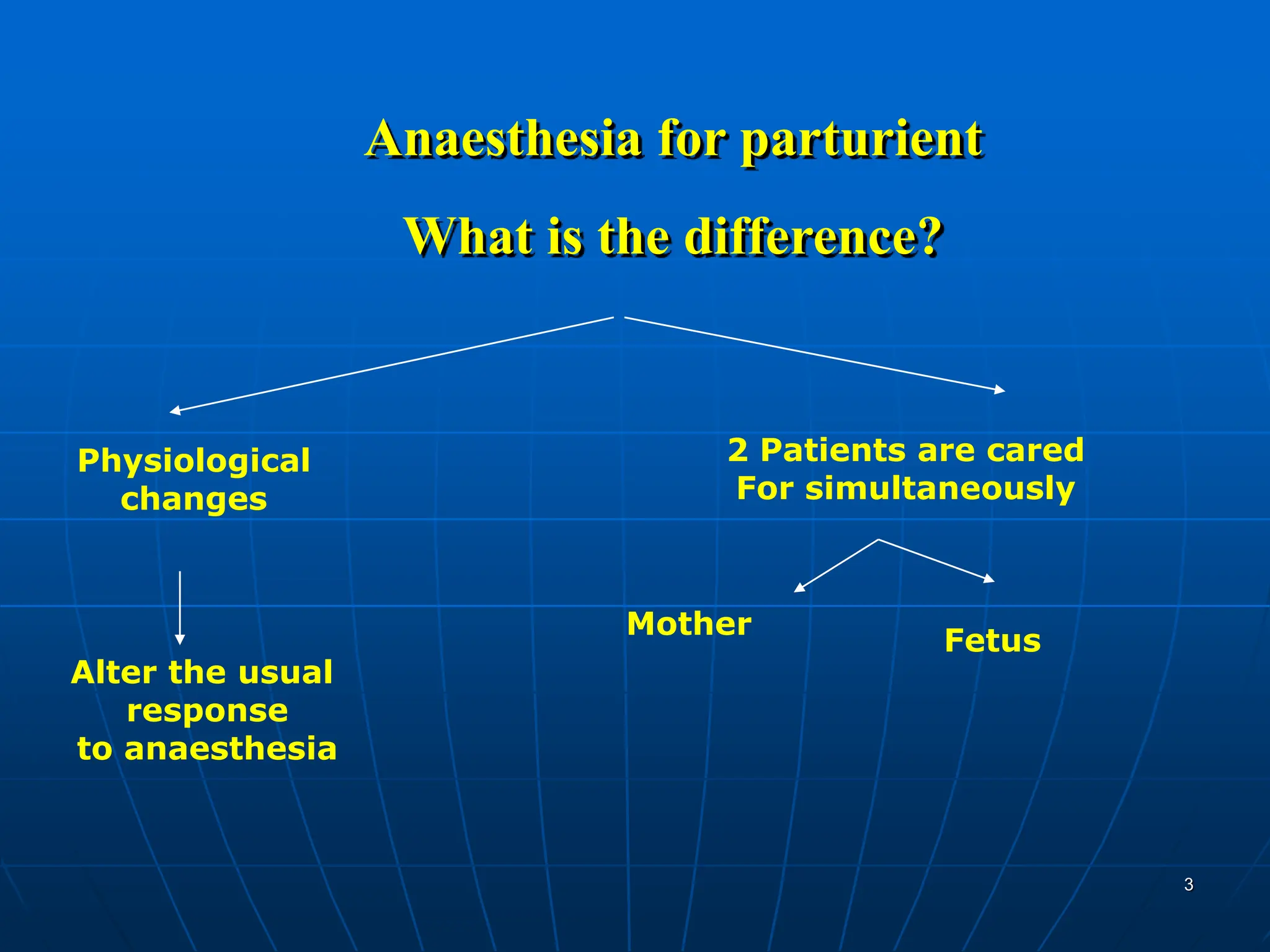
Anaesthesia for parturient
What is the difference?
Physiological
changes
Alter the usual
response
to anaesthesia
2 Patients are cared
For simultaneously
Mother
Fetus
4
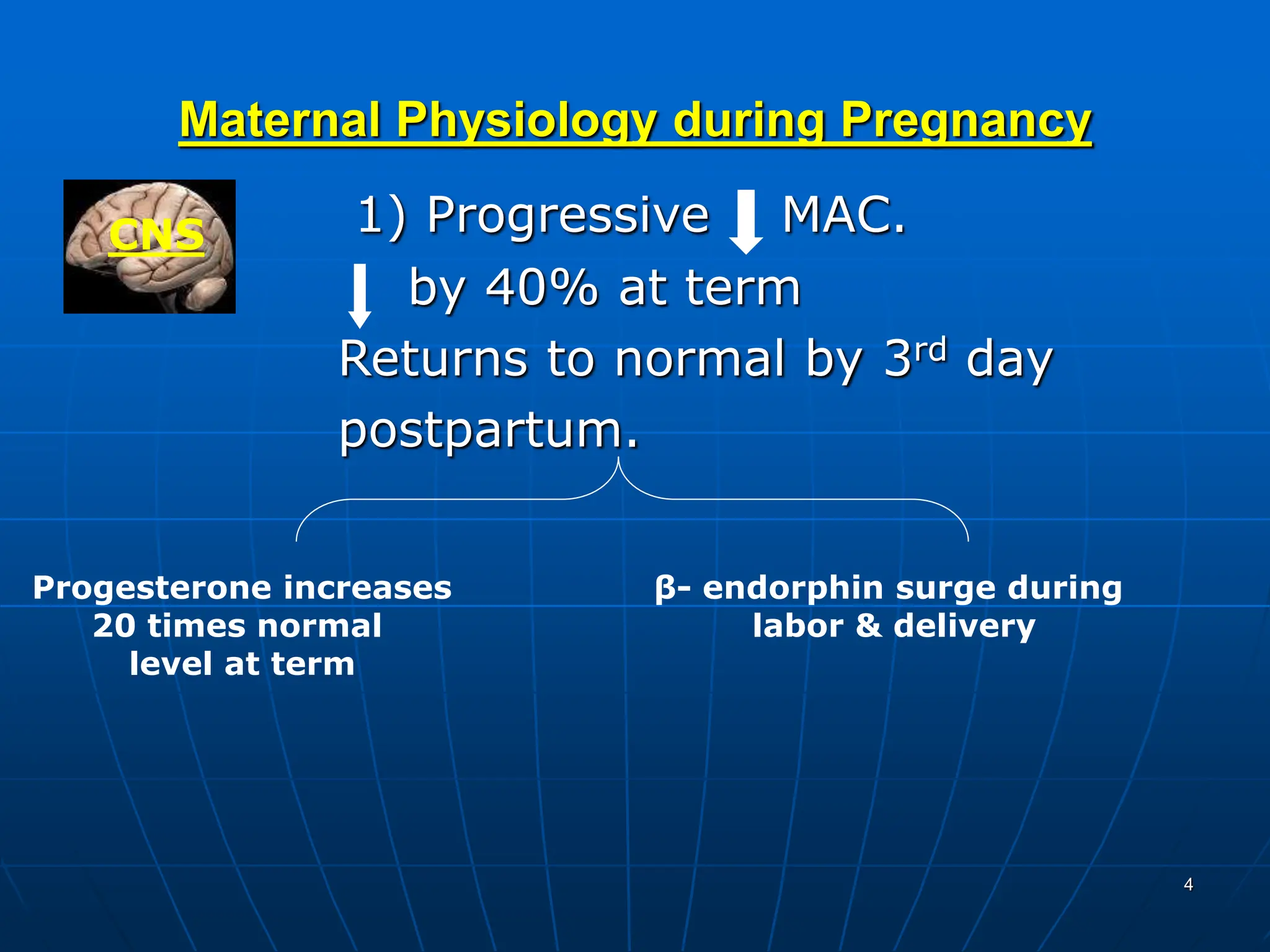
Maternal Physiology during Pregnancy
1) Progressive MAC.
by 40% at term
Returns to normal by 3rd day
postpartum.
CNS
Progesterone increases
20 times normal
level at term
β- endorphin surge during
labor & delivery
5
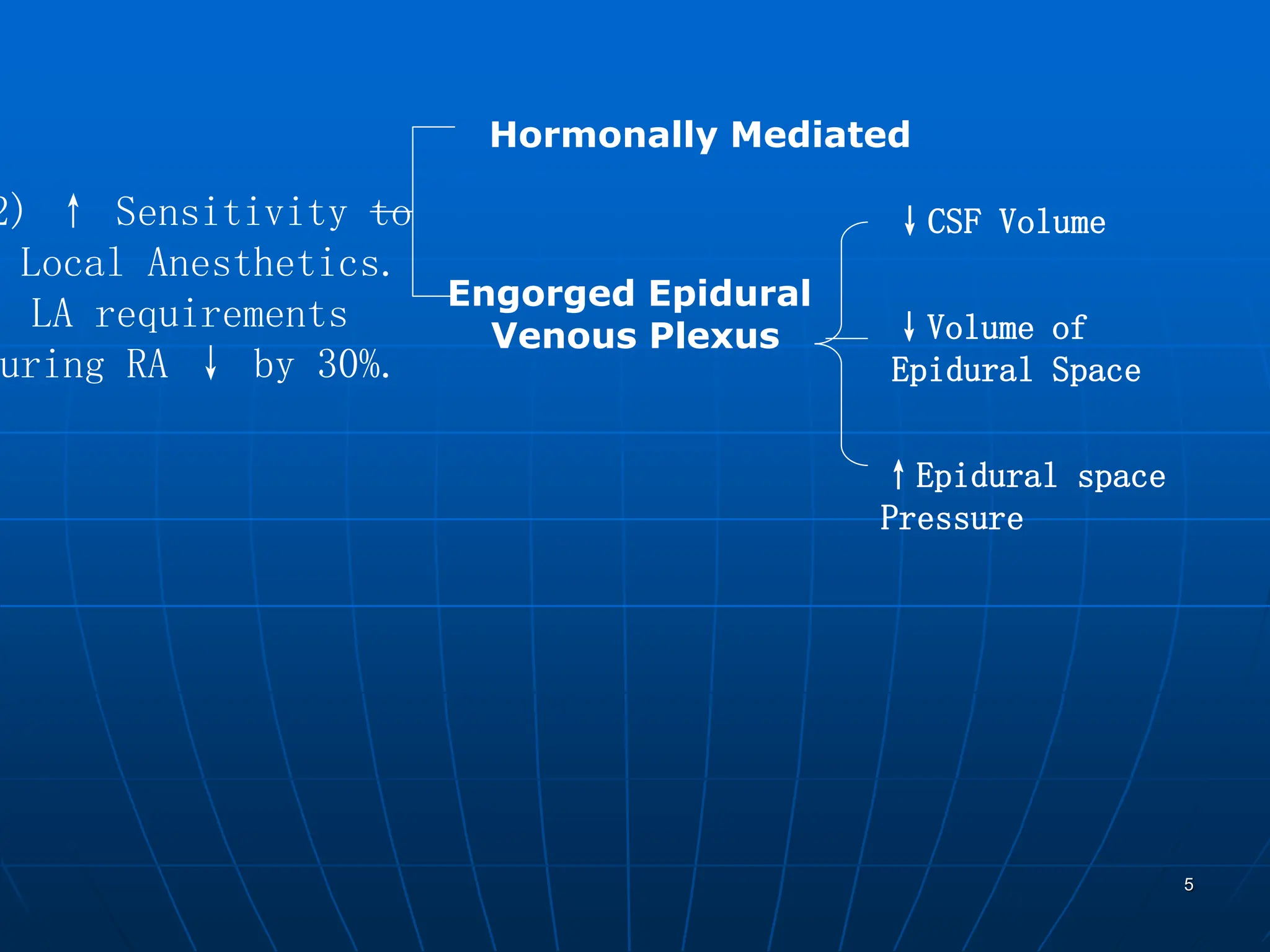
2) ↑ Sensitivity to
Local Anesthetics.
LA requirements
uring RA ↓ by 30%.
Hormonally Mediated
Engorged Epidural
Venous Plexus
↓CSF Volume
↓Volume of
Epidural Space
↑Epidural space
Pressure
6
ٌ
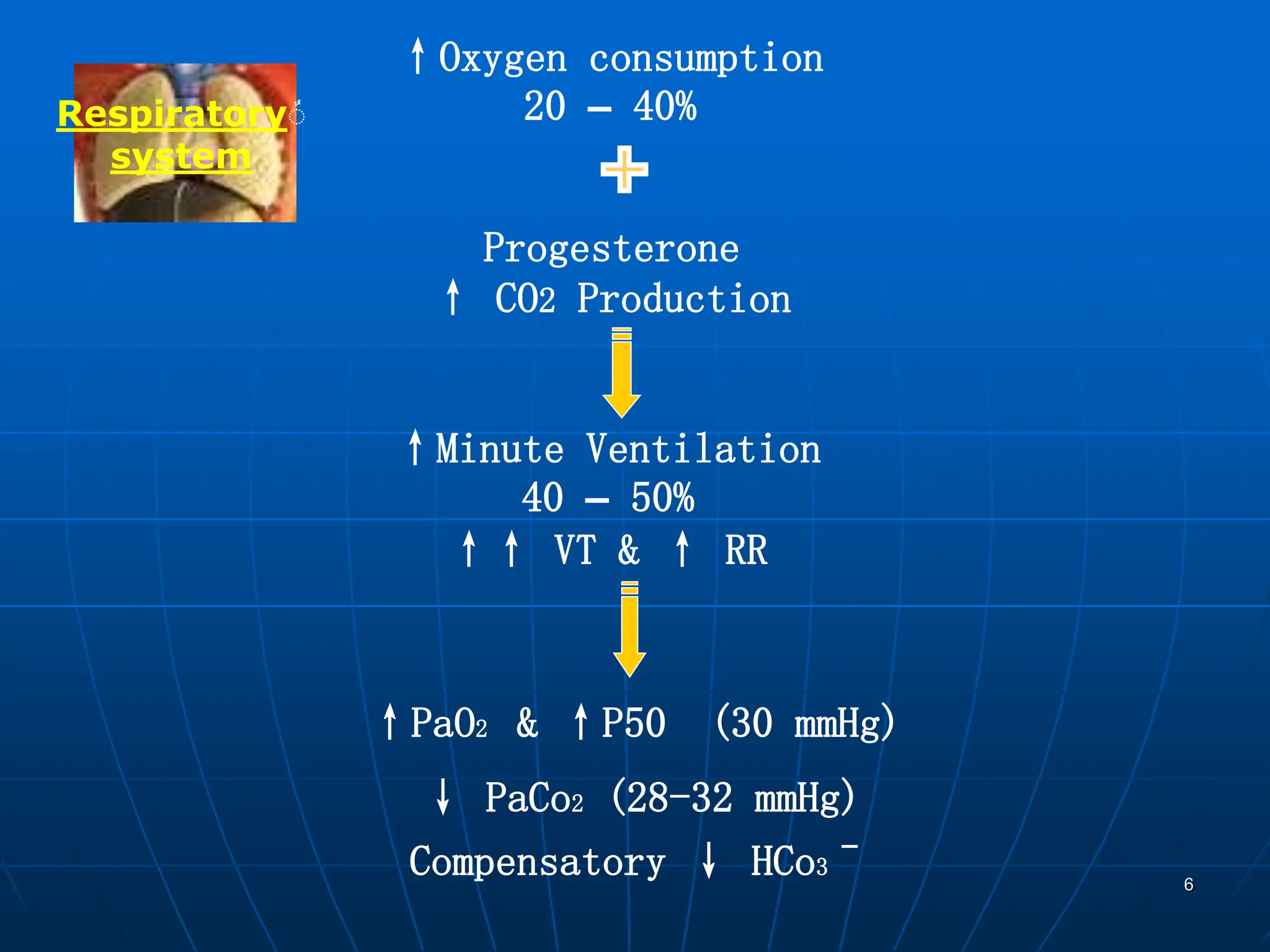
Respiratory
system
↑Oxygen consumption
20 – 40%
↑Minute Ventilation
40 – 50%
↑↑ VT & ↑ RR
& ↑P50 (30 mmHg)
↑PaO2
↓ PaCo2 (28-32 mmHg)
Compensatory ↓ HCo3ˉ
Progesterone
↑ CO2 Production
7
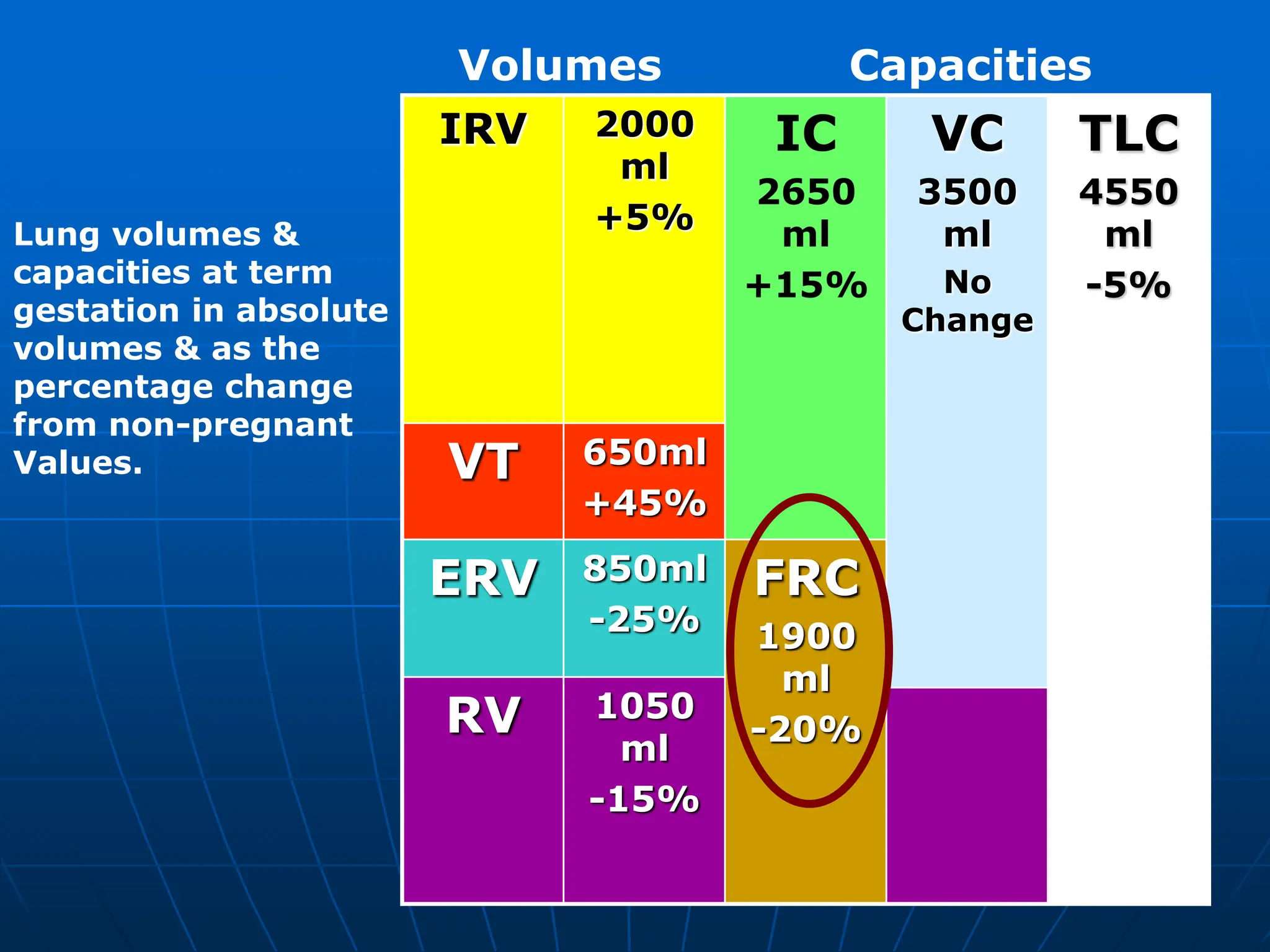
TLC
4550
ml
-5%
VC
3500
ml
No
Change
IC
2650
ml
+15%
2000
ml
+5%
IRV
650ml
+45%
VT
FRC
1900
ml
-20%
850ml
-25%
ERV
1050
ml
-15%
RV
Volumes Capacities
Lung volumes &
capacities at term
gestation in absolute
volumes & as the
percentage change
from non-pregnant
Values.
8
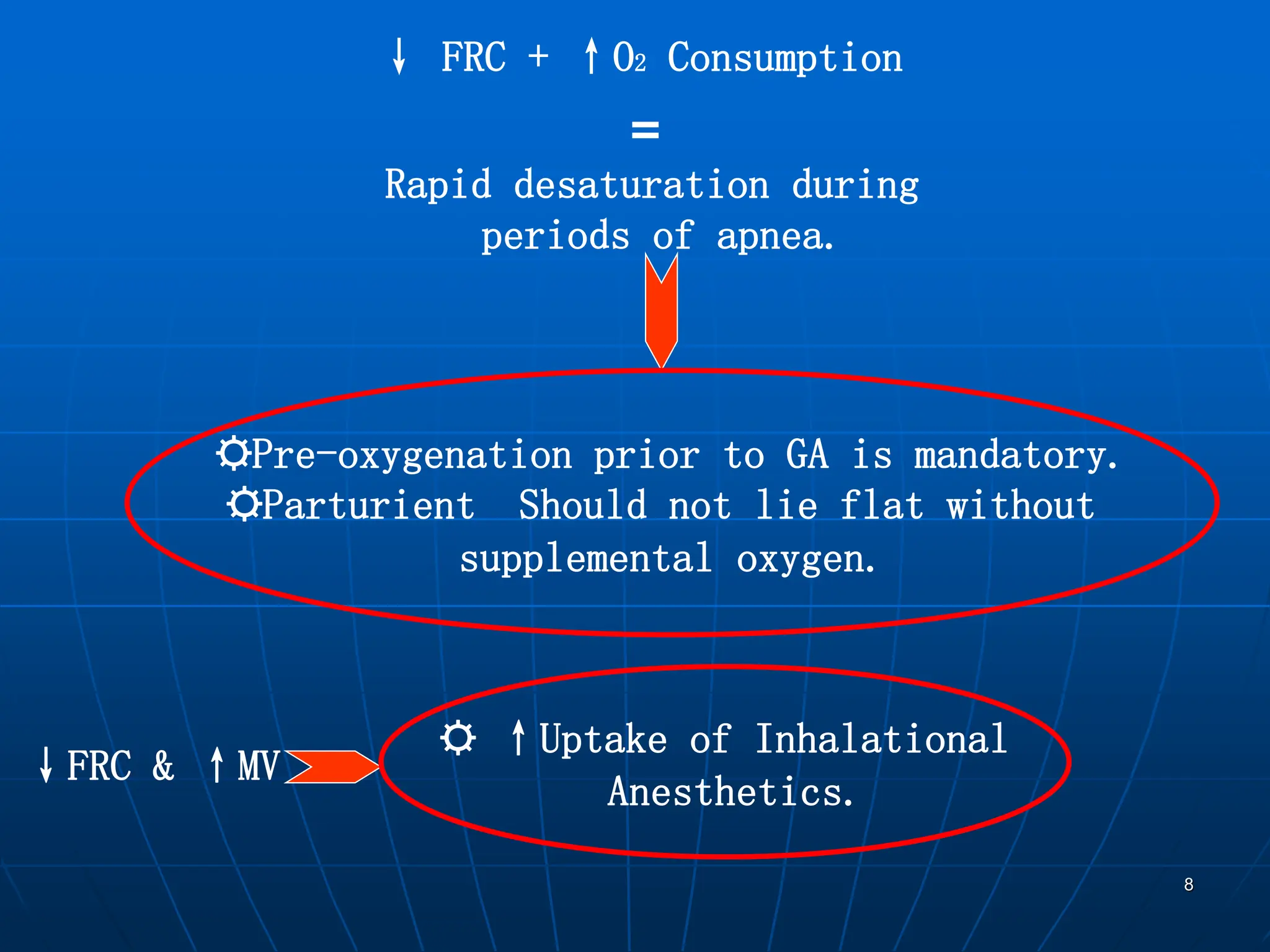
↓ FRC + ↑O2 Consumption
=
Rapid desaturation during
periods of apnea.
☼Pre-oxygenation prior to GA is mandatory.
☼Parturient Should not lie flat without
supplemental oxygen.
↓FRC & ↑MV
☼ ↑Uptake of Inhalational
Anesthetics.
9
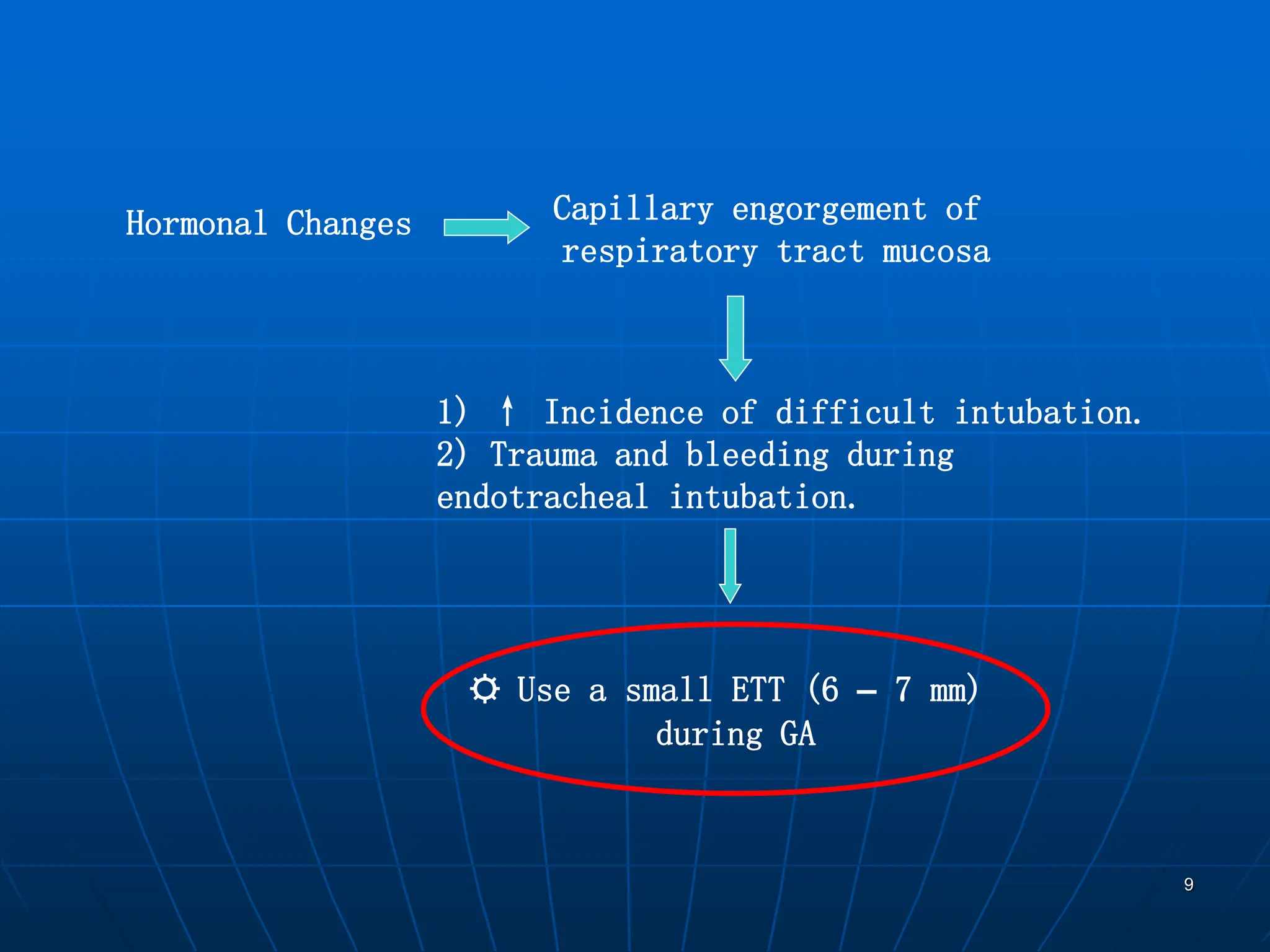
Hormonal Changes Capillary engorgement of
respiratory tract mucosa
1) ↑ Incidence of difficult intubation.
2) Trauma and bleeding during
endotracheal intubation.
☼ Use a small ETT (6 – 7 mm)
during GA
10
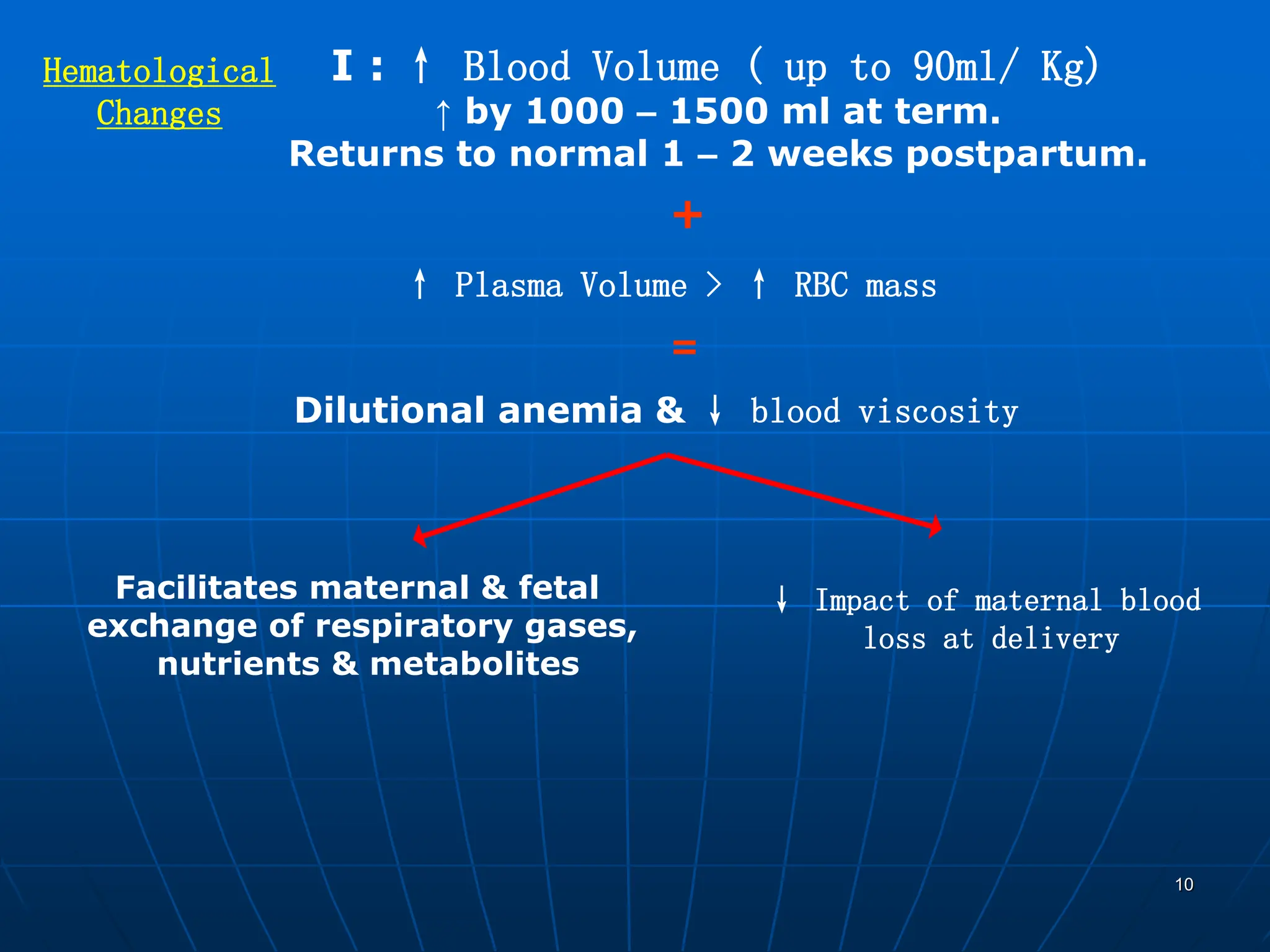
Hematological
Changes
I : ↑ Blood Volume ( up to 90ml/ Kg)
↑ by 1000 – 1500 ml at term.
Returns to normal 1 – 2 weeks postpartum.
↑ Plasma Volume > ↑ RBC mass
+
=
Dilutional anemia & ↓ blood viscosity
Facilitates maternal & fetal
exchange of respiratory gases,
nutrients & metabolites
↓ Impact of maternal blood
loss at delivery
11
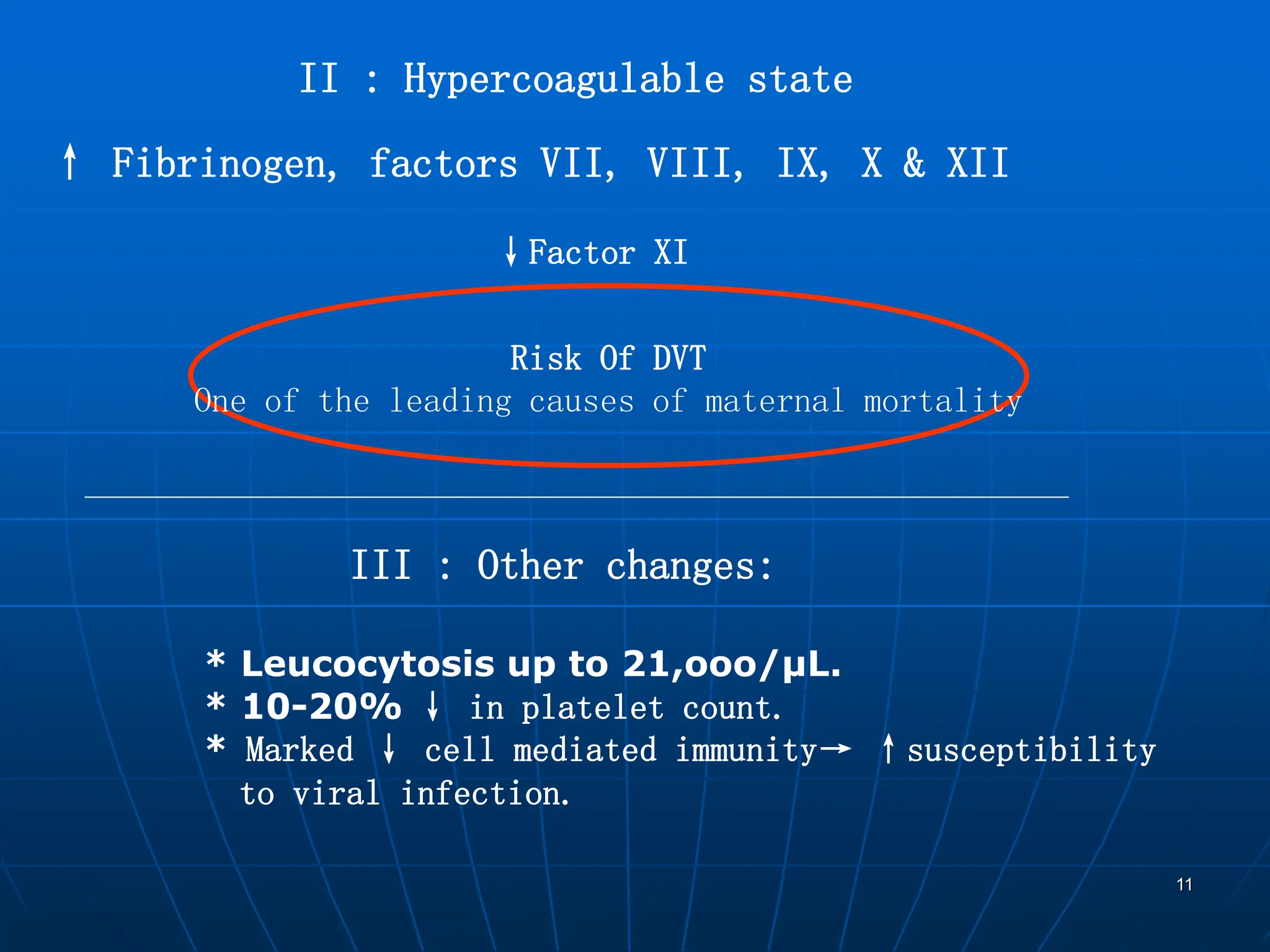
II : Hypercoagulable state
↑ Fibrinogen, factors VII, VIII, IX, X & XII
↓Factor XI
III : Other changes:
* Leucocytosis up to 21,ooo/µL.
* 10-20% ↓ in platelet count.
* Marked ↓ cell mediated immunity→ ↑susceptibility
to viral infection.
Risk Of DVT
One of the leading causes of maternal mortality
12
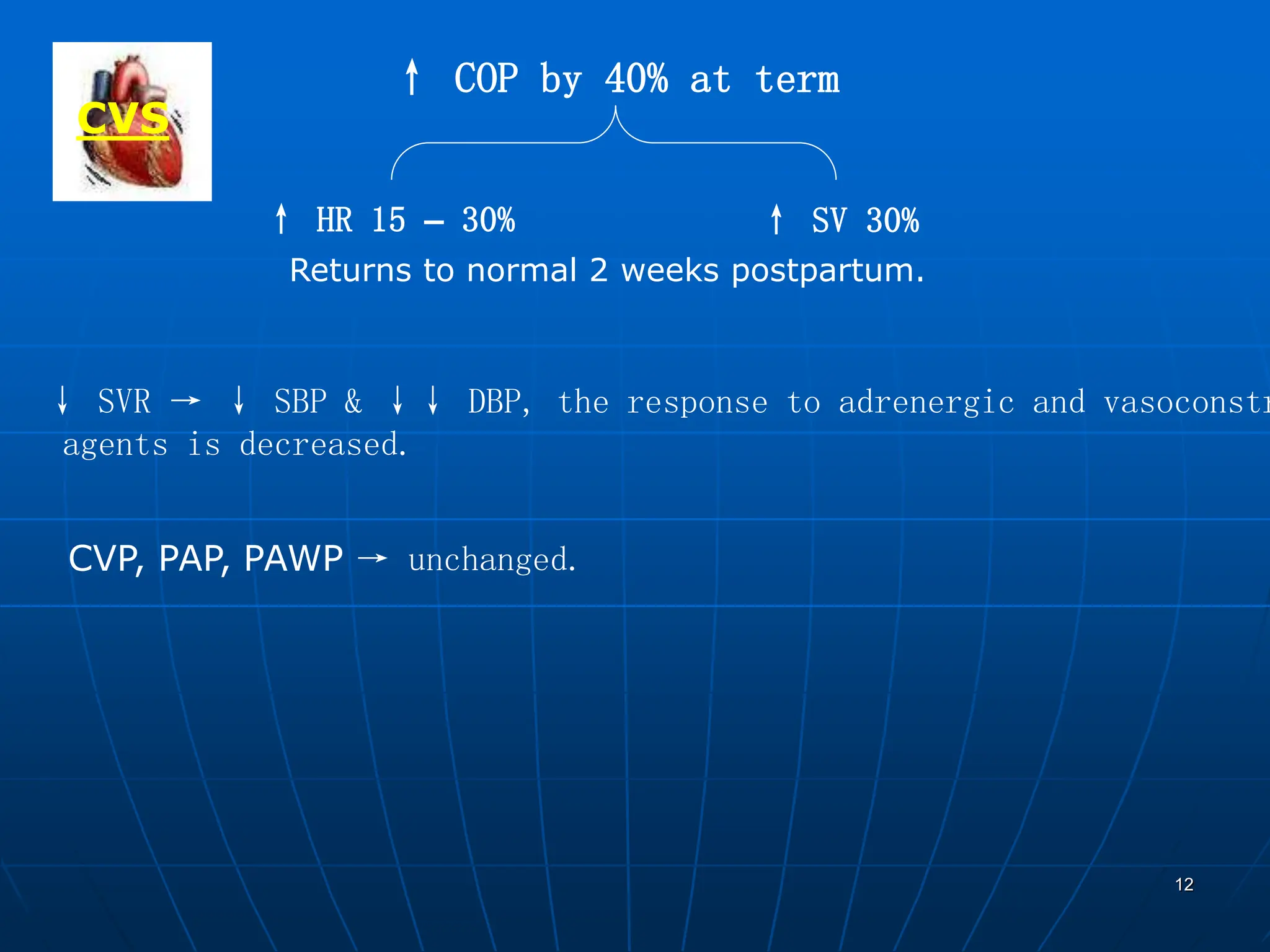
CVS
↑ COP by 40% at term
↑ HR 15 – 30% ↑ SV 30%
Returns to normal 2 weeks postpartum.
↓ SVR → ↓ SBP & ↓↓ DBP, the response to adrenergic and vasoconstr
agents is decreased.
CVP, PAP, PAWP → unchanged.
13
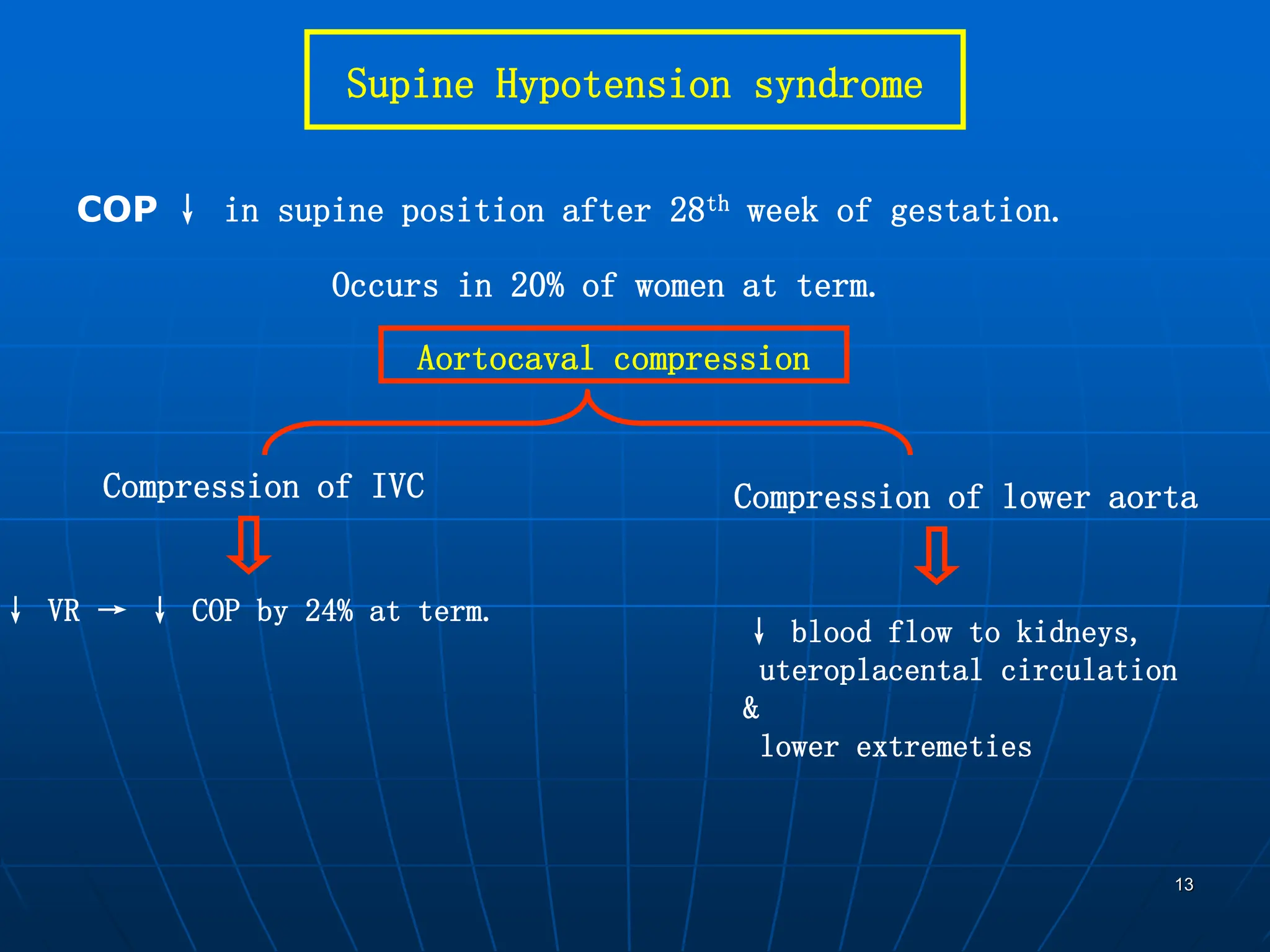
Supine Hypotension syndrome
COP ↓ in supine position after 28th week of gestation.
Occurs in 20% of women at term.
Compression of IVC Compression of lower aorta
Aortocaval compression
↓ blood flow to kidneys,
uteroplacental circulation
&
lower extremeties
↓ VR → ↓ COP by 24% at term.
14
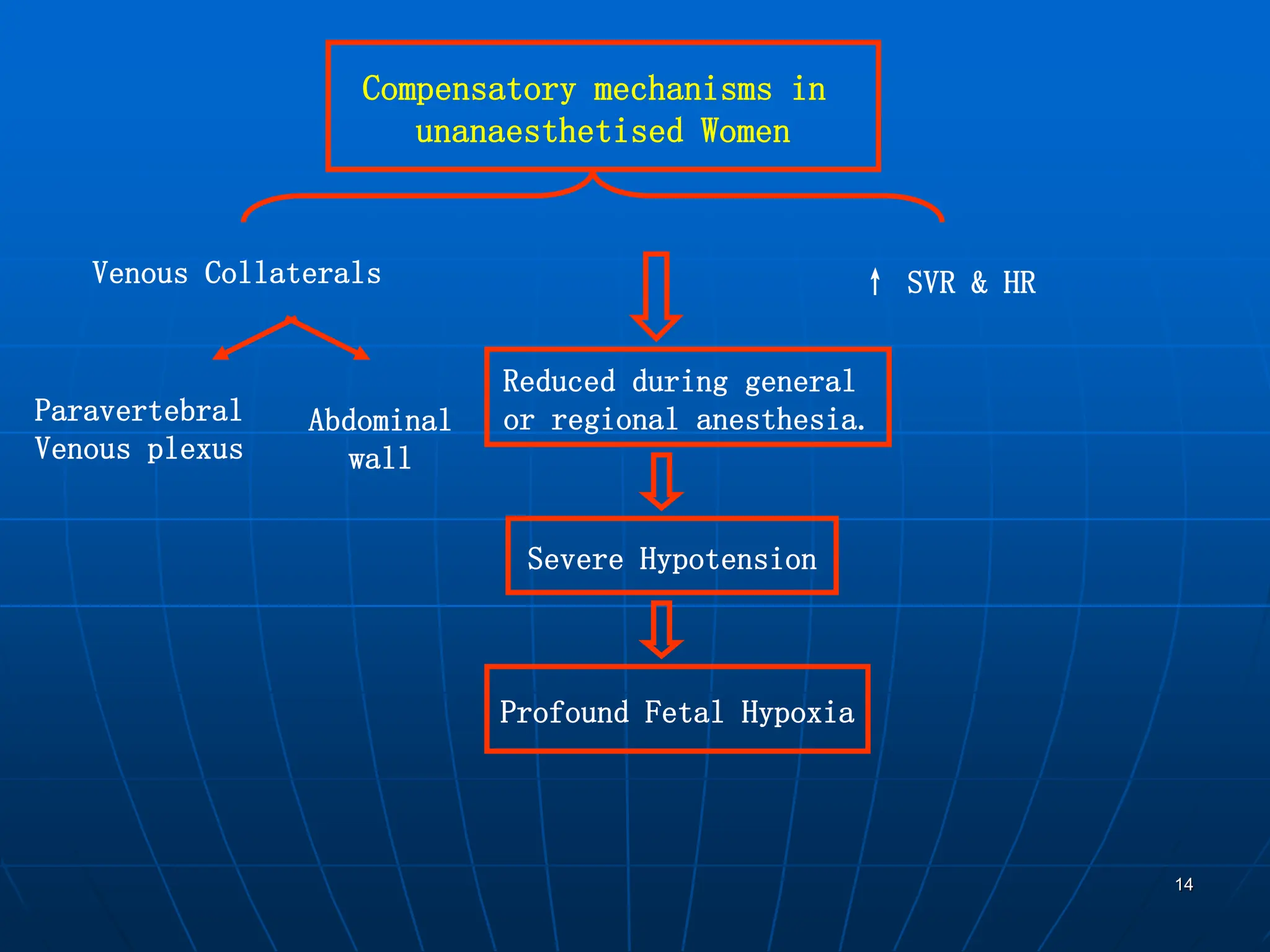
Compensatory mechanisms in
unanaesthetised Women
Venous Collaterals
Paravertebral
Venous plexus
Abdominal
wall
↑ SVR & HR
Reduced during general
or regional anesthesia.
Severe Hypotension
Profound Fetal Hypoxia
15
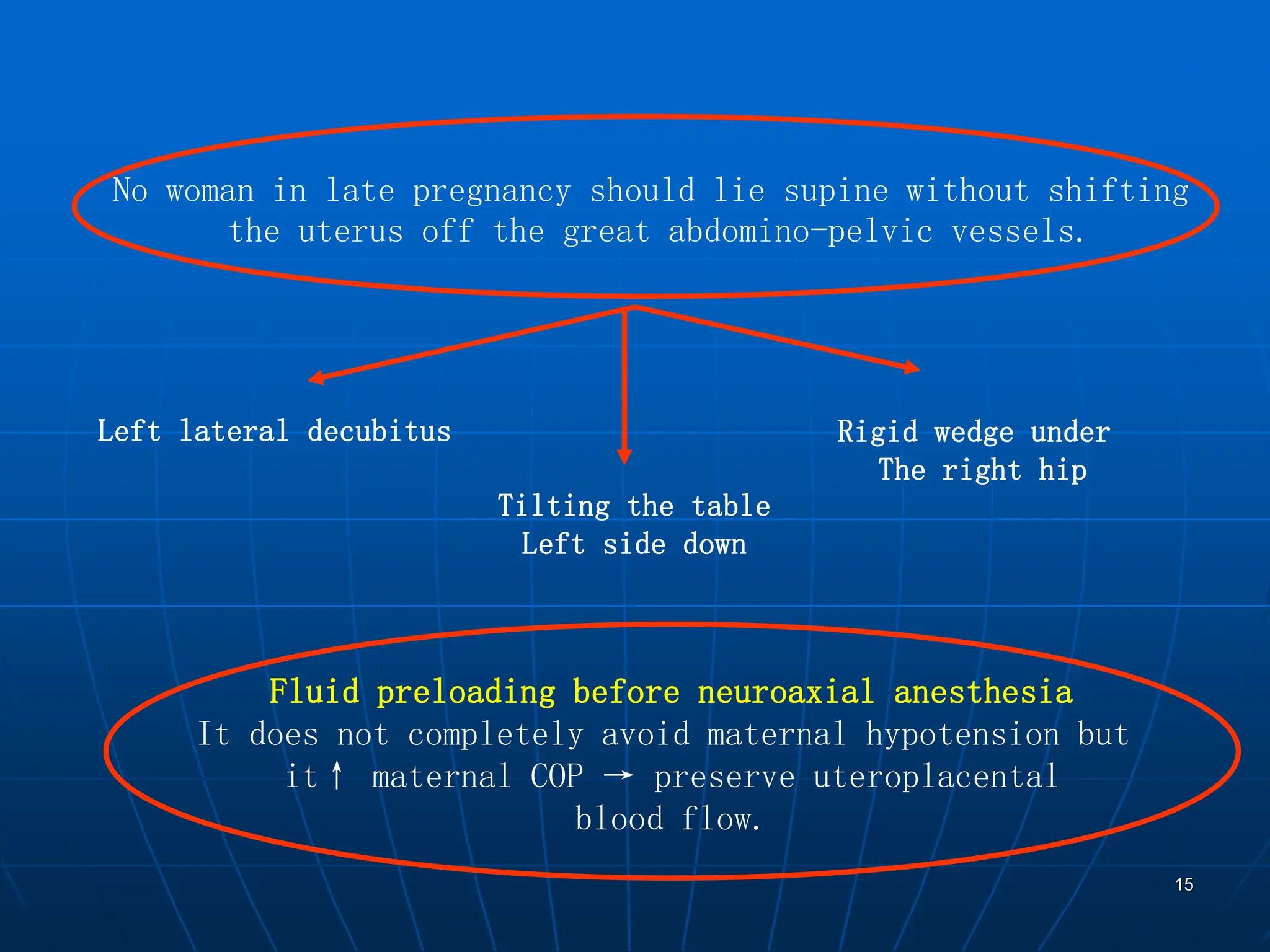
No woman in late pregnancy should lie supine without shifting
the uterus off the great abdomino-pelvic vessels.
Left lateral decubitus
Tilting the table
Left side down
Rigid wedge under
The right hip
Fluid preloading before neuroaxial anesthesia
It does not completely avoid maternal hypotension but
it↑ maternal COP → preserve uteroplacental
blood flow.
16
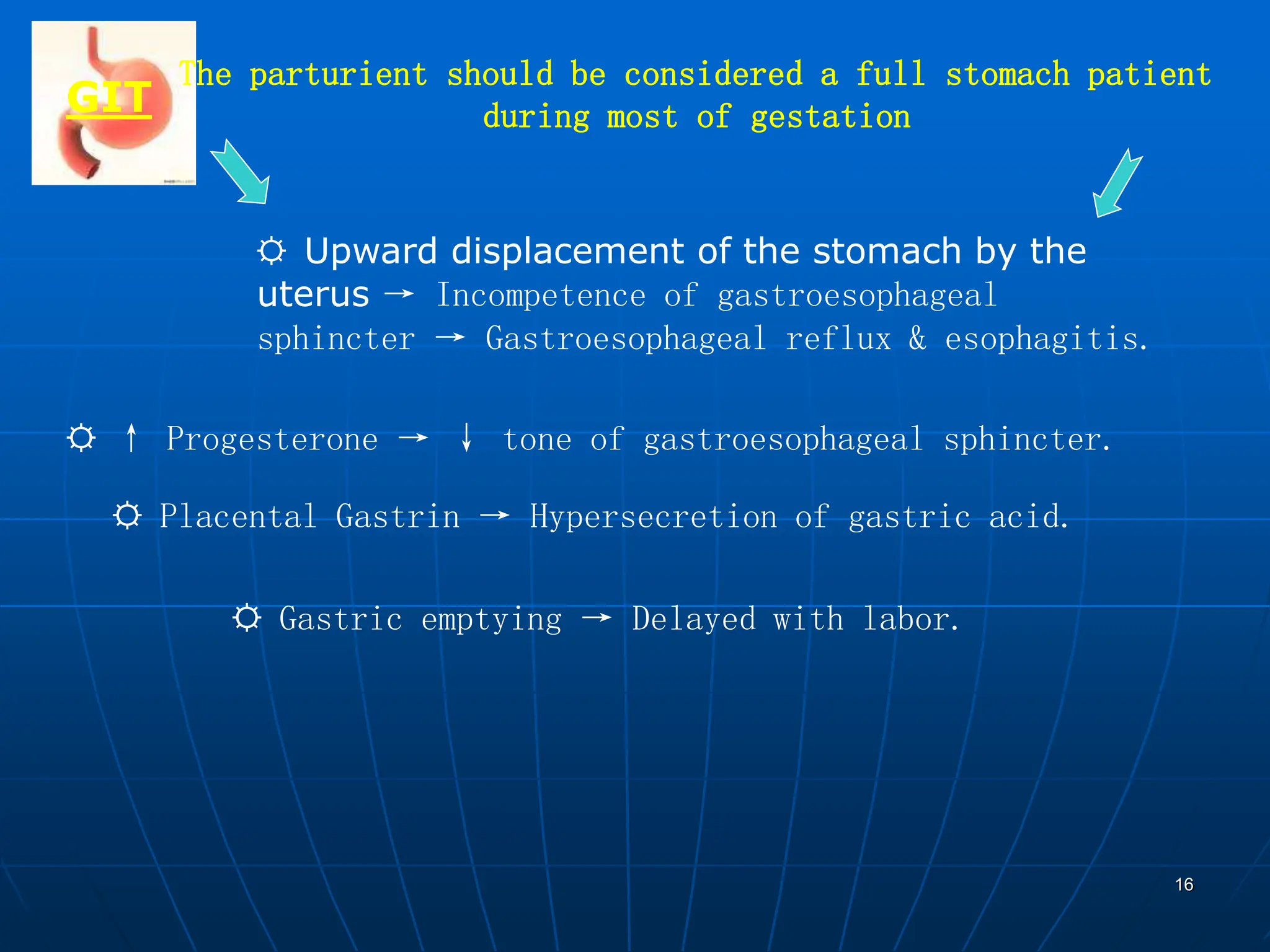
GIT
☼ Upward displacement of the stomach by the
uterus → Incompetence of gastroesophageal
sphincter → Gastroesophageal reflux & esophagitis.
The parturient should be considered a full stomach patient
during most of gestation
☼ ↑ Progesterone → ↓ tone of gastroesophageal sphincter.
☼ Placental Gastrin → Hypersecretion of gastric acid.
☼ Gastric emptying → Delayed with labor.
17
Pharmacological prophylaxis against aspiration.
No positive pressure ventilation before intubation
Rapid sequence induction.
Sellick’s maneouvre
For GA:
18
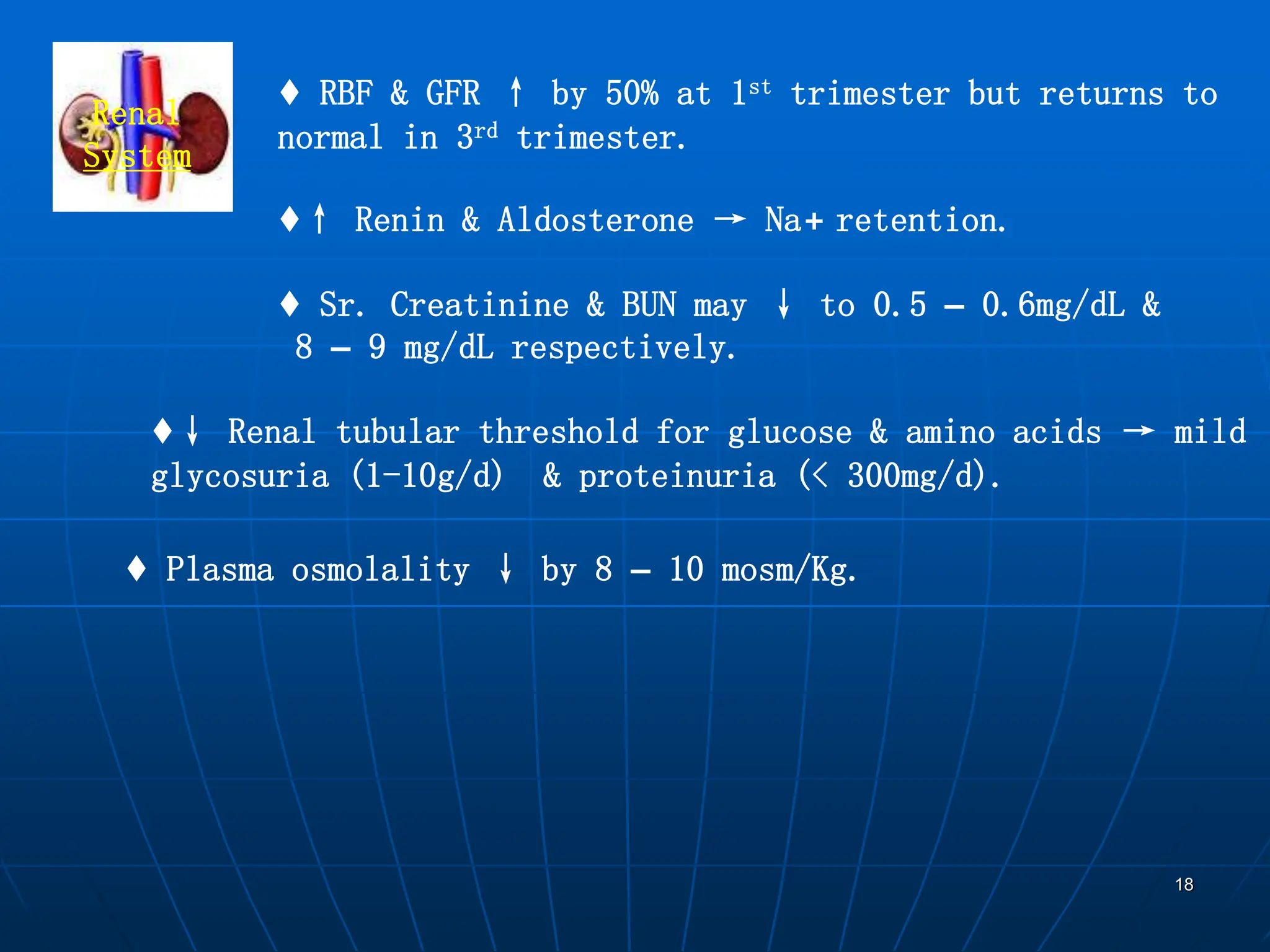
Renal
System
♦ RBF & GFR ↑ by 50% at 1st trimester but returns to
normal in 3rd trimester.
♦↑ Renin & Aldosterone → Na+ retention.
♦ Sr. Creatinine & BUN may ↓ to 0.5 – 0.6mg/dL &
8 – 9 mg/dL respectively.
♦↓ Renal tubular threshold for glucose & amino acids → mild
glycosuria (1-10g/d) & proteinuria (< 300mg/d).
♦ Plasma osmolality ↓ by 8 – 10 mosm/Kg.
19
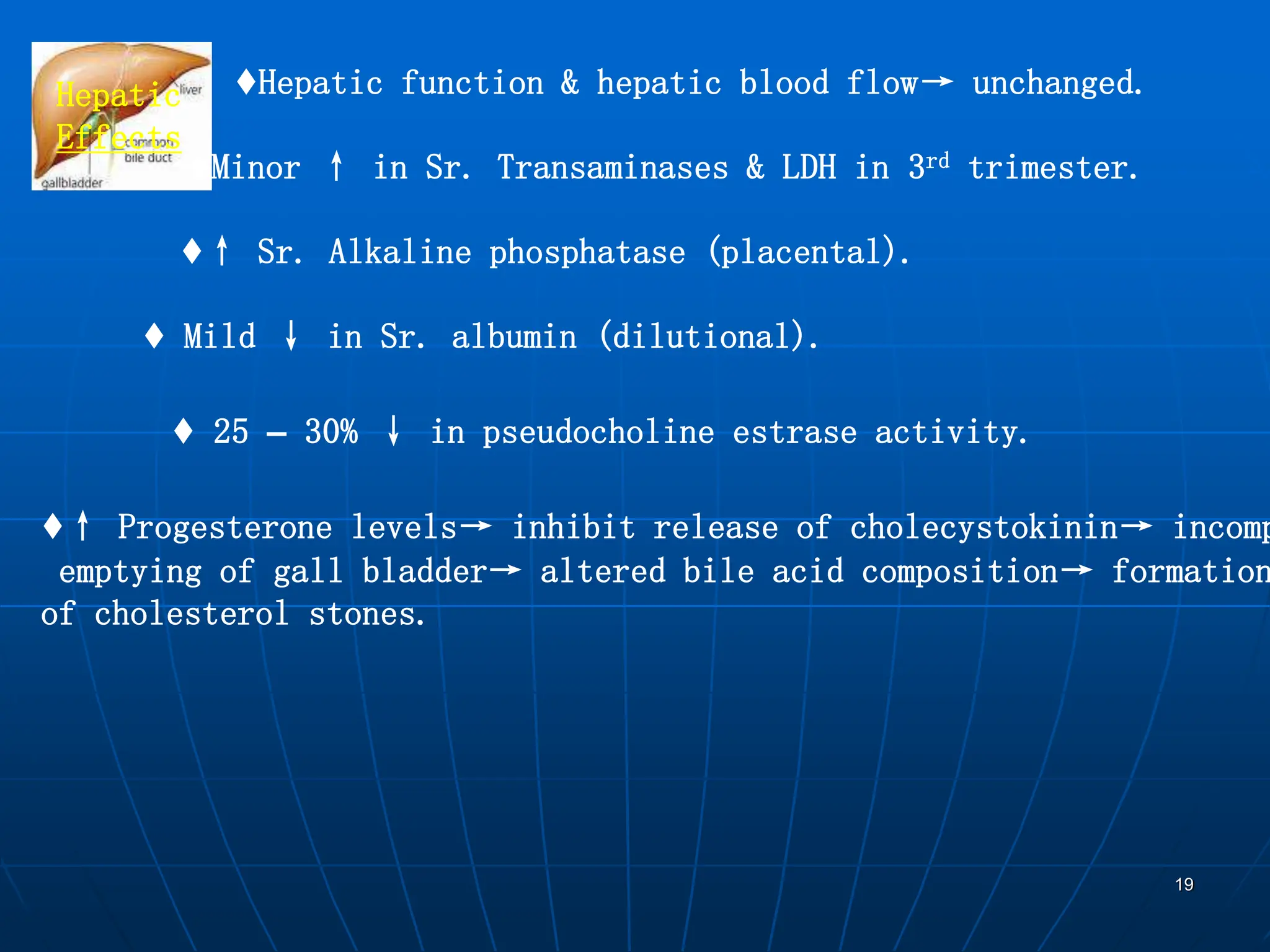
Hepatic
Effects
♦Hepatic function & hepatic blood flow→ unchanged.
♦Minor ↑ in Sr. Transaminases & LDH in 3rd trimester.
♦↑ Sr. Alkaline phosphatase (placental).
♦ Mild ↓ in Sr. albumin (dilutional).
♦ 25 – 30% ↓ in pseudocholine estrase activity.
♦↑ Progesterone levels→ inhibit release of cholecystokinin→ incomp
emptying of gall bladder→ altered bile acid composition→ formation
of cholesterol stones.
20
Metabolic
Effects
Pregnancy is Diabetogenic
Human Placental lactogen→ relative insulin resistance.
Starvation like state
↓ Blood Glucose & Amino Acid levels.
↑ Free Fatty Acids, Ketones & triglycerides.
↑ Estrogen levels→Thyroid gland hypertrohy→ ↑ T3 & T4
↑ TBG → Free T3, T4 & TSH remain normal
21
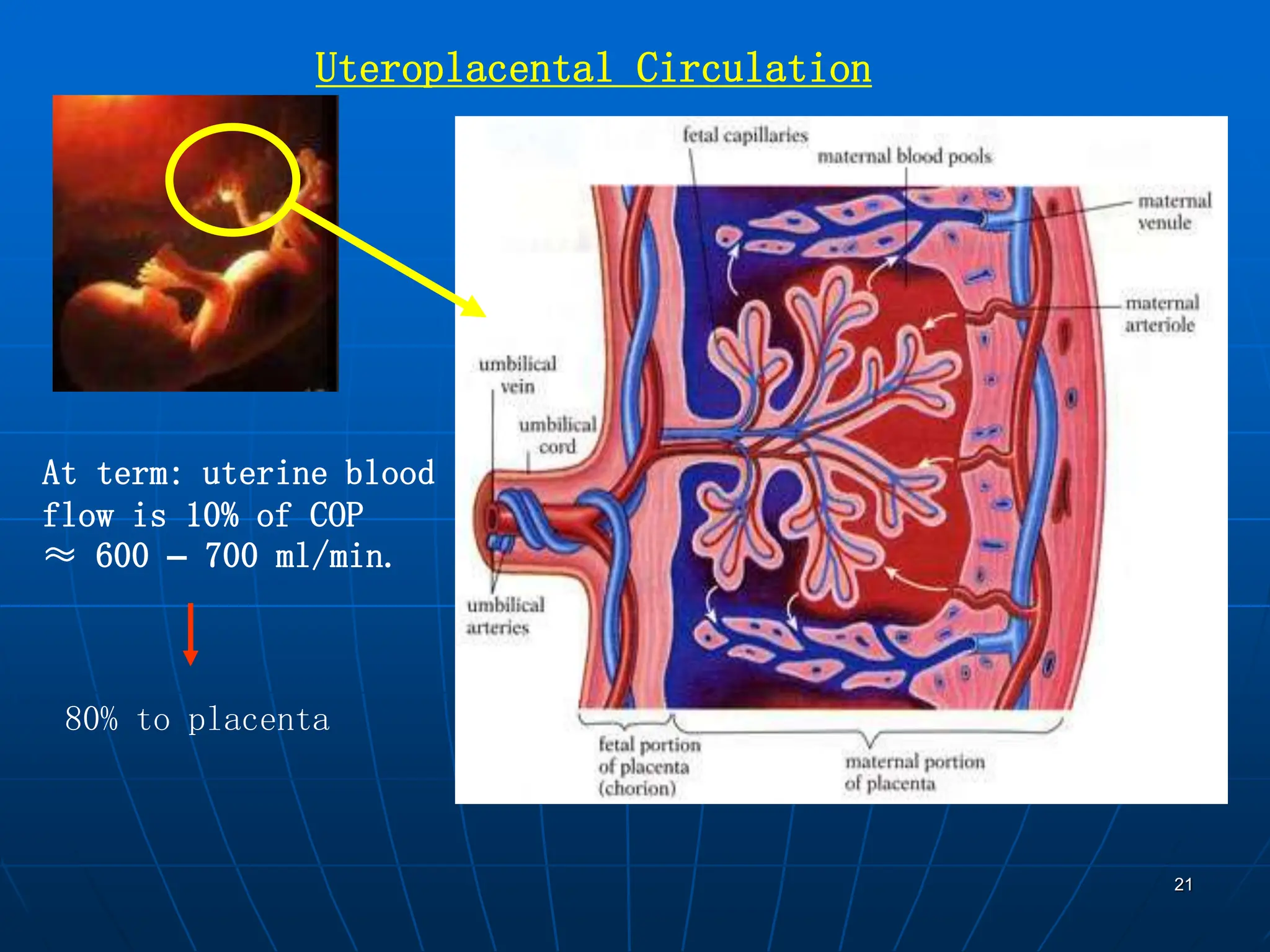
Uteroplacental Circulation
At term: uterine blood
flow is 10% of COP
≈ 600 – 700 ml/min.
80% to placenta
22
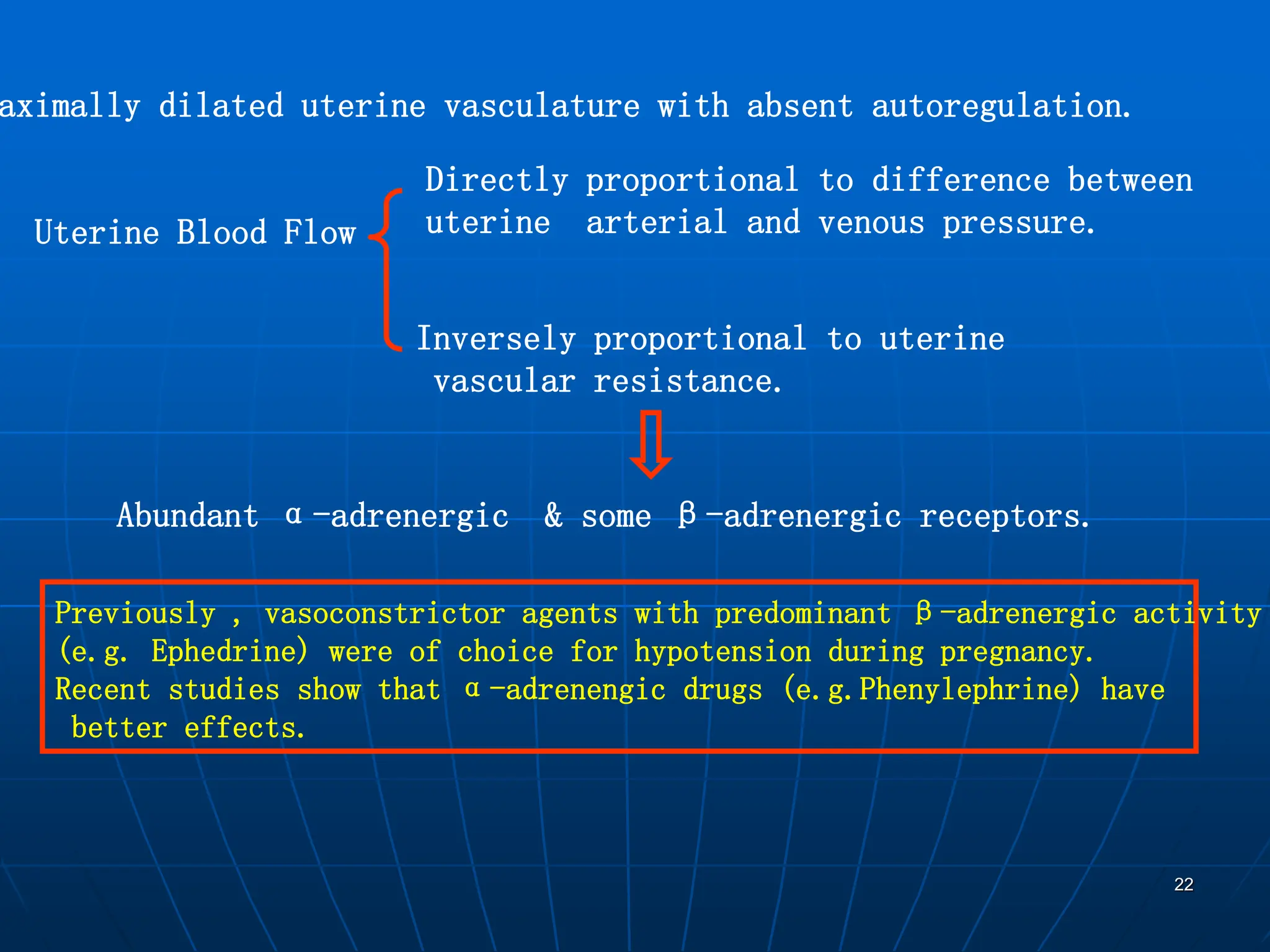
aximally dilated uterine vasculature with absent autoregulation.
Uterine Blood Flow
Directly proportional to difference between
uterine arterial and venous pressure.
Inversely proportional to uterine
vascular resistance.
Abundant α-adrenergic & some β-adrenergic receptors.
Previously , vasoconstrictor agents with predominant β-adrenergic activity
(e.g. Ephedrine) were of choice for hypotension during pregnancy.
Recent studies show that α-adrenengic drugs (e.g.Phenylephrine) have
better effects.
23
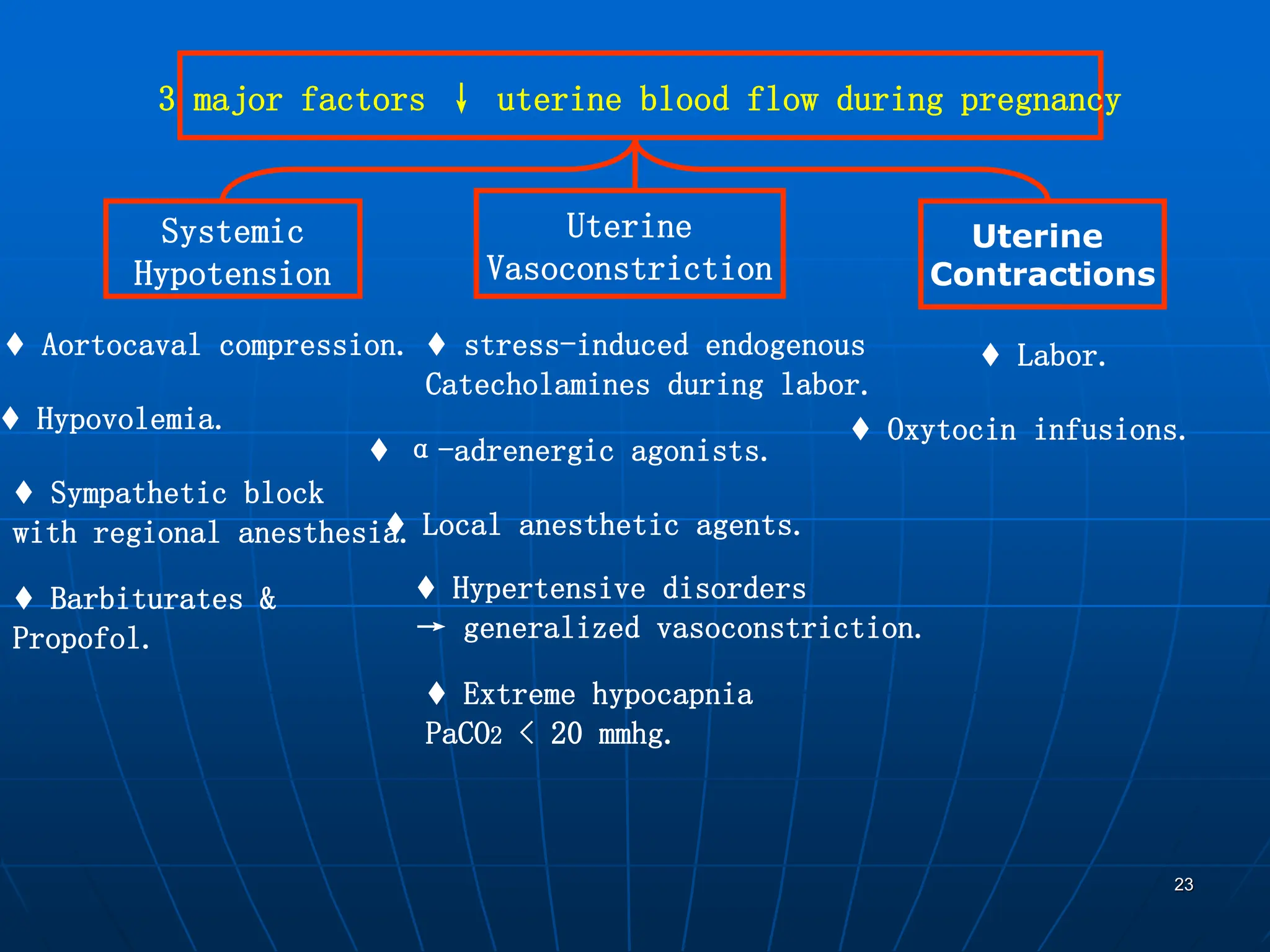
3 major factors ↓ uterine blood flow during pregnancy
Systemic
Hypotension
Uterine
Vasoconstriction
Uterine
Contractions
♦ Aortocaval compression.
♦ Hypovolemia.
♦ Sympathetic block
with regional anesthesia.
♦ stress-induced endogenous
Catecholamines during labor.
♦ α-adrenergic agonists.
♦ Local anesthetic agents.
♦ Hypertensive disorders
→ generalized vasoconstriction.
♦ Labor.
♦ Oxytocin infusions.
♦ Extreme hypocapnia
PaCO2 < 20 mmhg.
♦ Barbiturates &
Propofol.
24
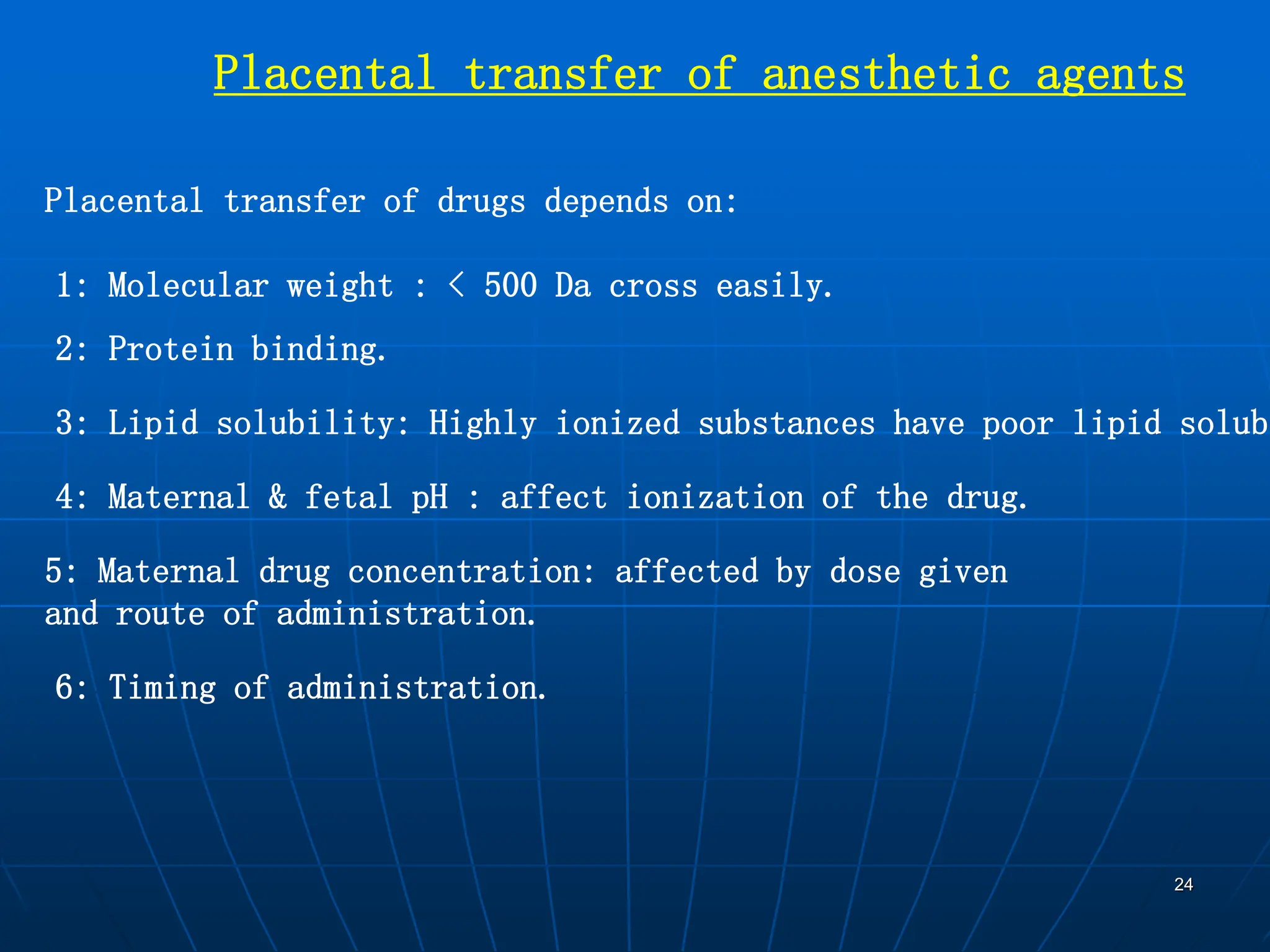
Placental transfer of anesthetic agents
Placental transfer of drugs depends on:
1: Molecular weight : < 500 Da cross easily.
2: Protein binding.
3: Lipid solubility: Highly ionized substances have poor lipid solubi
4: Maternal & fetal pH : affect ionization of the drug.
5: Maternal drug concentration: affected by dose given
and route of administration.
6: Timing of administration.
25
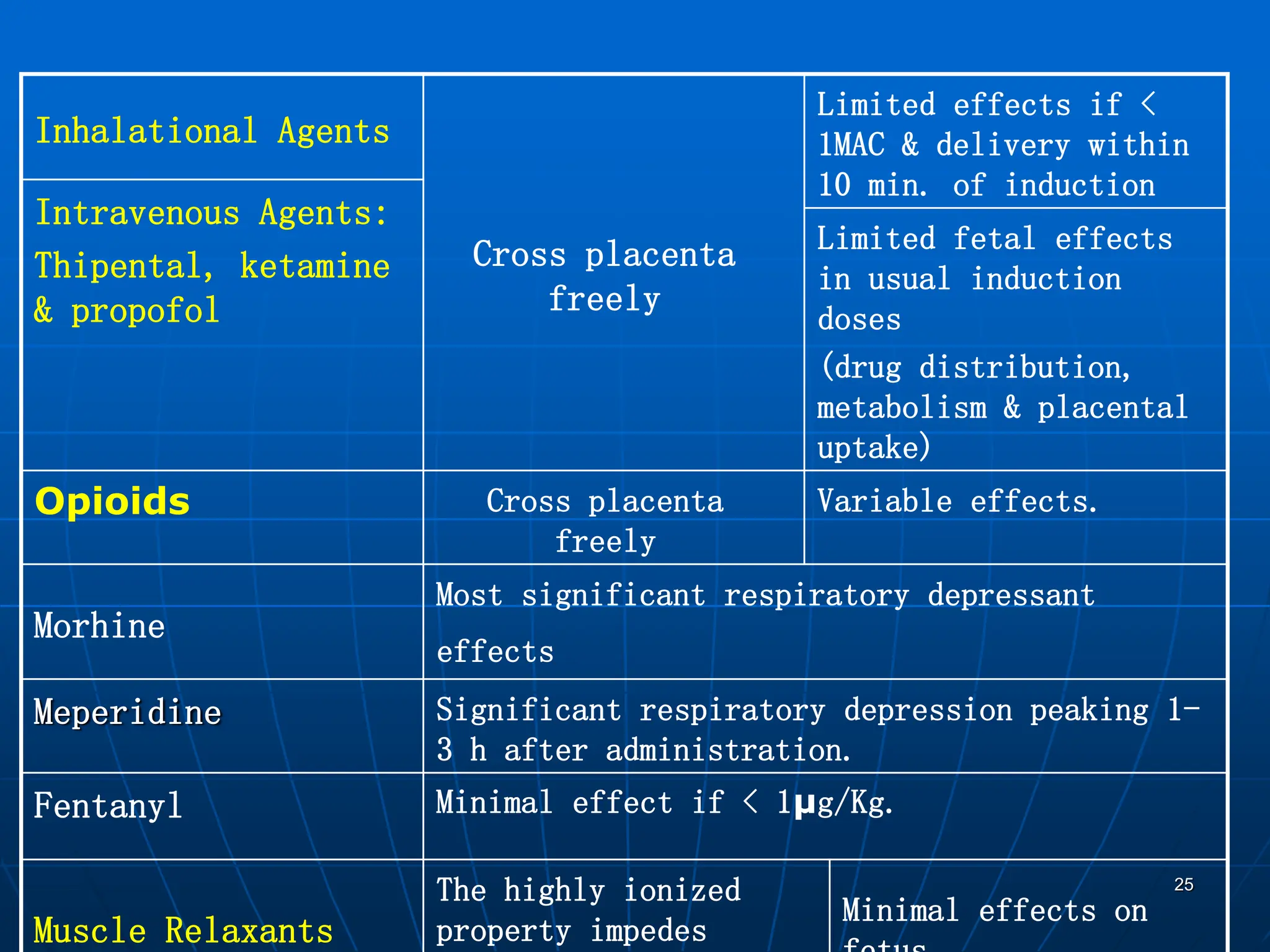
Limited effects if <
1MAC & delivery within
10 min. of induction
Cross placenta
freely
Inhalational Agents
Intravenous Agents:
Thipental, ketamine
& propofol
Limited fetal effects
in usual induction
doses
(drug distribution,
metabolism & placental
uptake)
Variable effects.
Cross placenta
freely
Opioids
Most significant respiratory depressant
effects
Morhine
Significant respiratory depression peaking 1-
3 h after administration.
Meperidine
Minimal effect if < 1µg/Kg.
Fentanyl
Minimal effects on
The highly ionized
property impedes
Muscle Relaxants
26
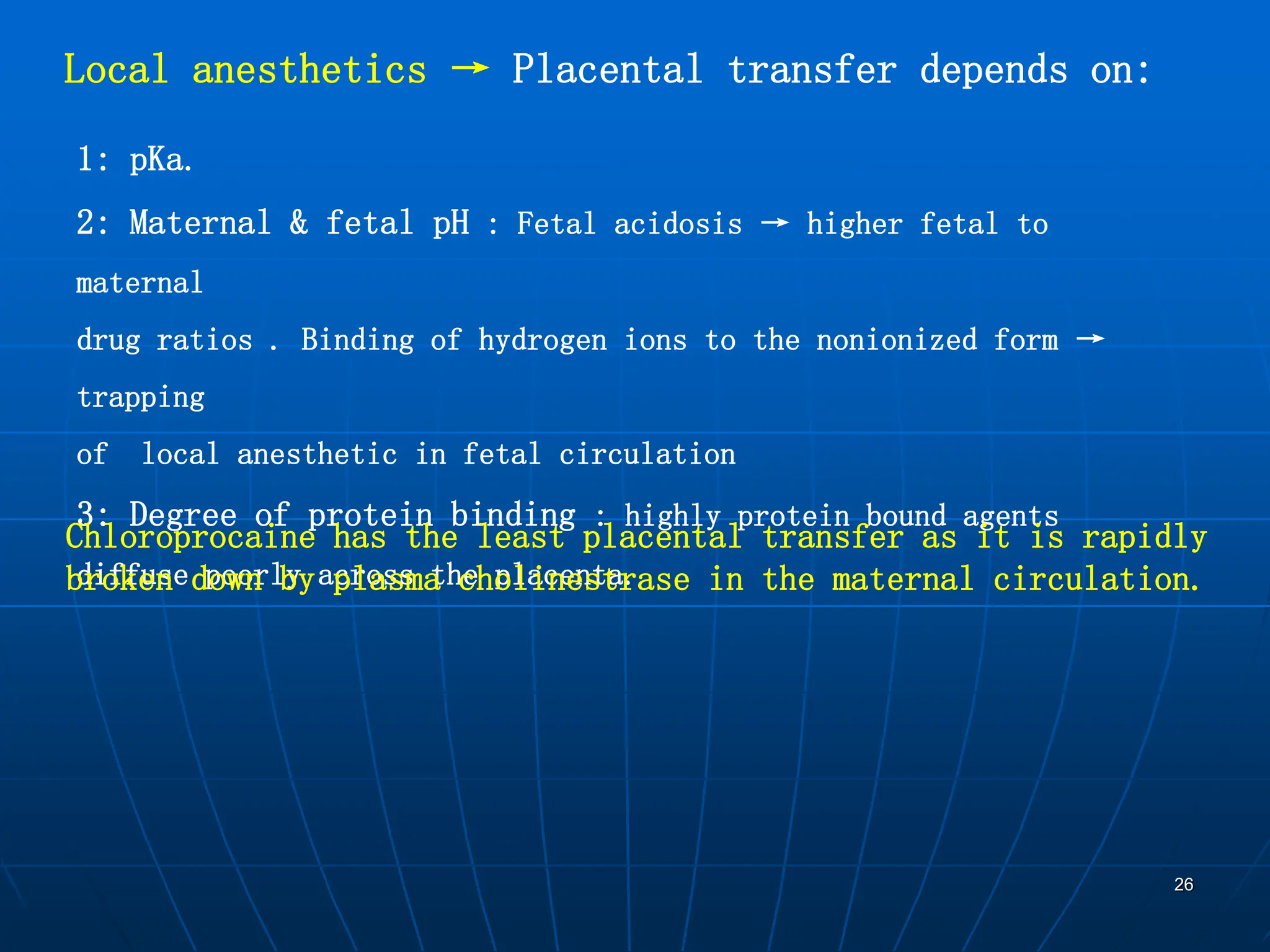
Local anesthetics → Placental transfer depends on:
1: pKa.
2: Maternal & fetal pH : Fetal acidosis → higher fetal to
maternal
drug ratios . Binding of hydrogen ions to the nonionized form →
trapping
of local anesthetic in fetal circulation
3: Degree of protein binding : highly protein bound agents
diffuse poorly across the placenta.
Chloroprocaine has the least placental transfer as it is rapidly
broken down by plasma cholinestrase in the maternal circulation.
27
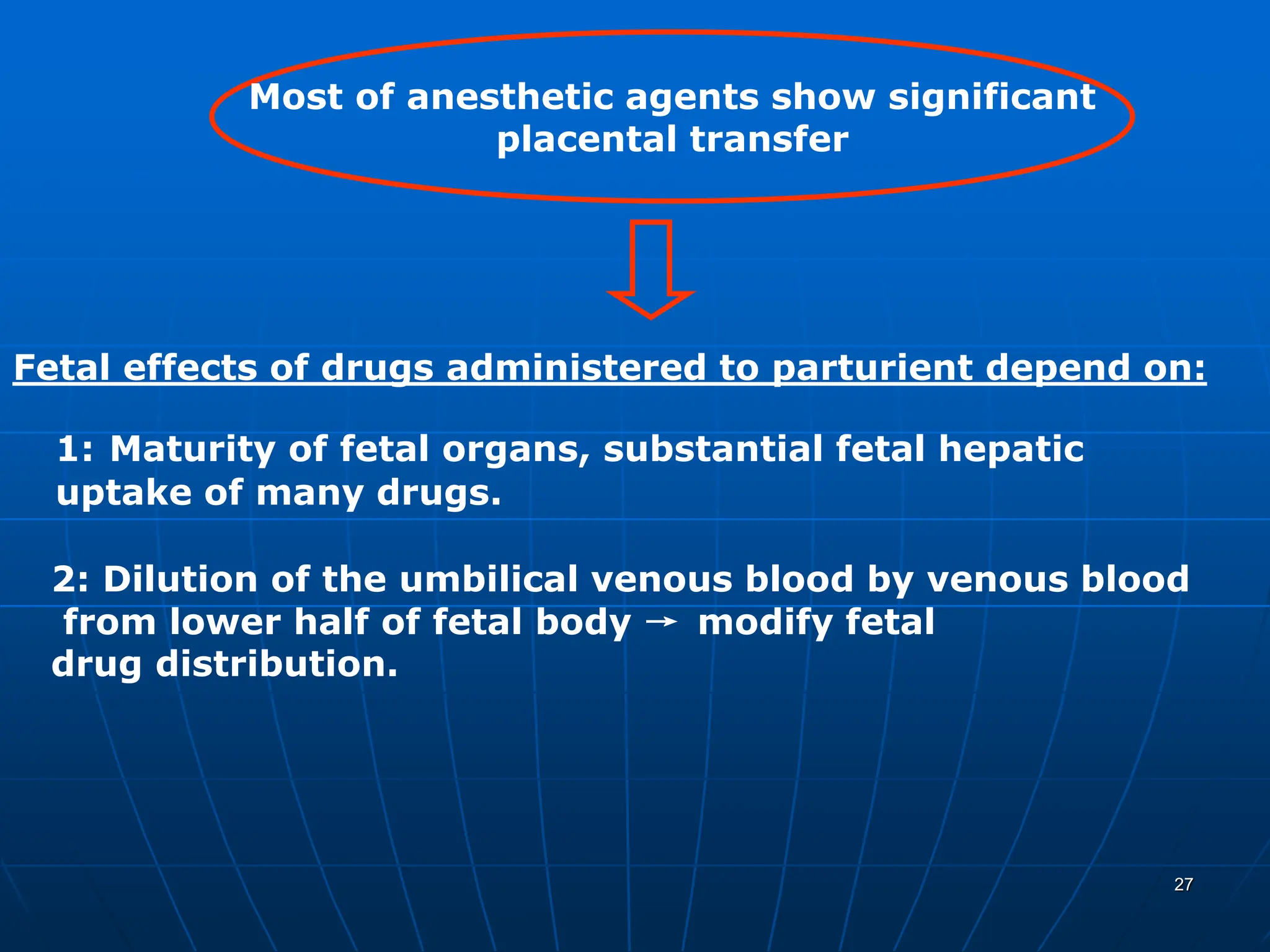
Most of anesthetic agents show significant
placental transfer
Fetal effects of drugs administered to parturient depend on:
1: Maturity of fetal organs, substantial fetal hepatic
uptake of many drugs.
2: Dilution of the umbilical venous blood by venous blood
from lower half of fetal body → modify fetal
drug distribution.
28
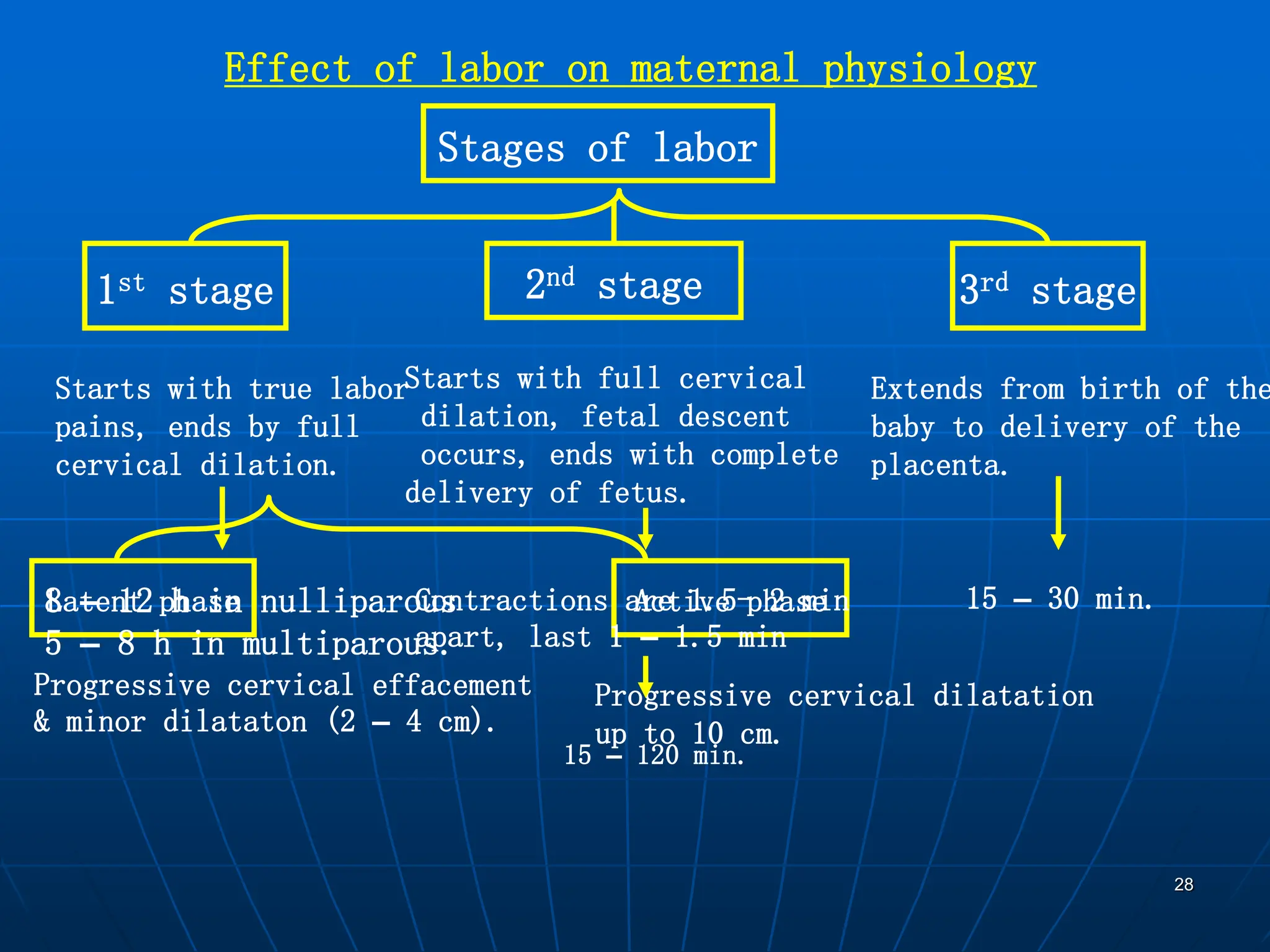
Effect of labor on maternal physiology
Stages of labor
1st stage 2nd stage 3rd stage
Starts with true labor
pains, ends by full
cervical dilation.
Starts with full cervical
dilation, fetal descent
occurs, ends with complete
delivery of fetus.
Extends from birth of the
baby to delivery of the
placenta.
Latent phase Active phase
Progressive cervical effacement
& minor dilataton (2 – 4 cm).
Progressive cervical dilatation
up to 10 cm.
8 – 12 h in nulliparous
5 – 8 h in multiparous.
Contractions are 1.5- 2 min
apart, last 1 – 1.5 min
15 – 120 min.
15 – 30 min.
29
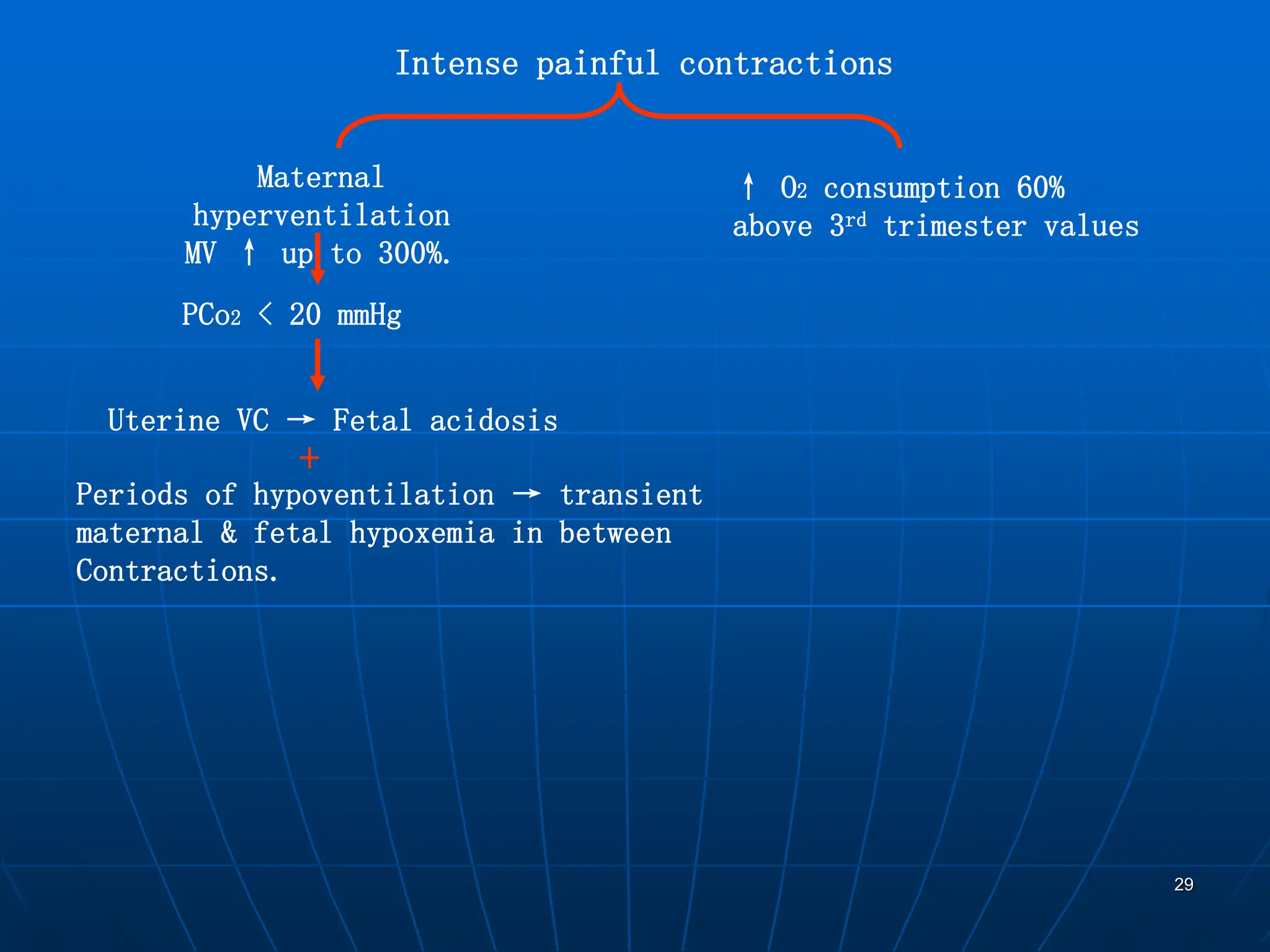
Intense painful contractions
Maternal
hyperventilation
MV ↑ up to 300%.
↑ O2 consumption 60%
above 3rd trimester values
PCo2 < 20 mmHg
Uterine VC → Fetal acidosis
+
Periods of hypoventilation → transient
maternal & fetal hypoxemia in between
Contractions.
30
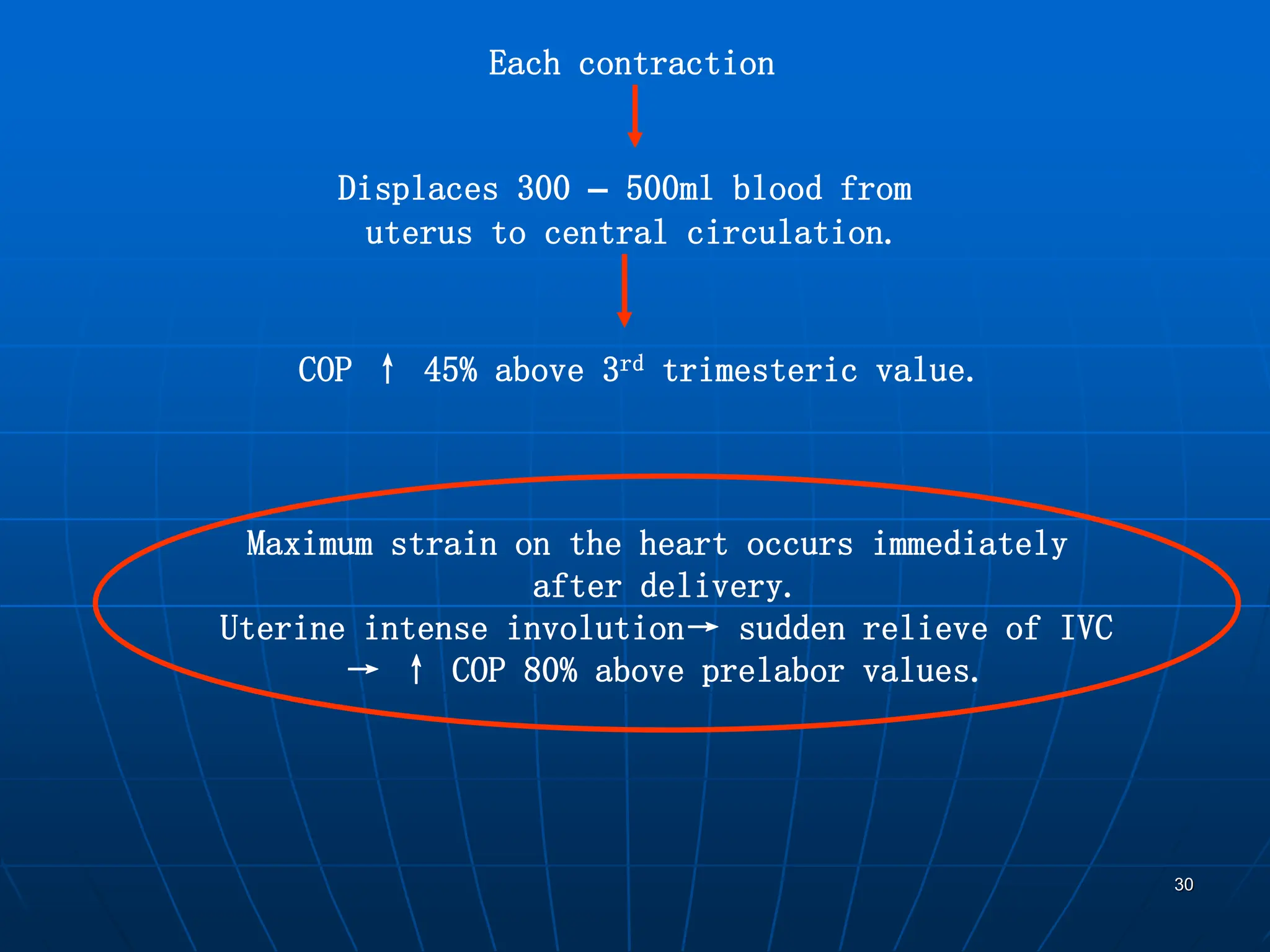
Each contraction
Displaces 300 – 500ml blood from
uterus to central circulation.
COP ↑ 45% above 3rd trimesteric value.
Maximum strain on the heart occurs immediately
after delivery.
Uterine intense involution→ sudden relieve of IVC
→ ↑ COP 80% above prelabor values.
31
Discussion
32
Questions
33
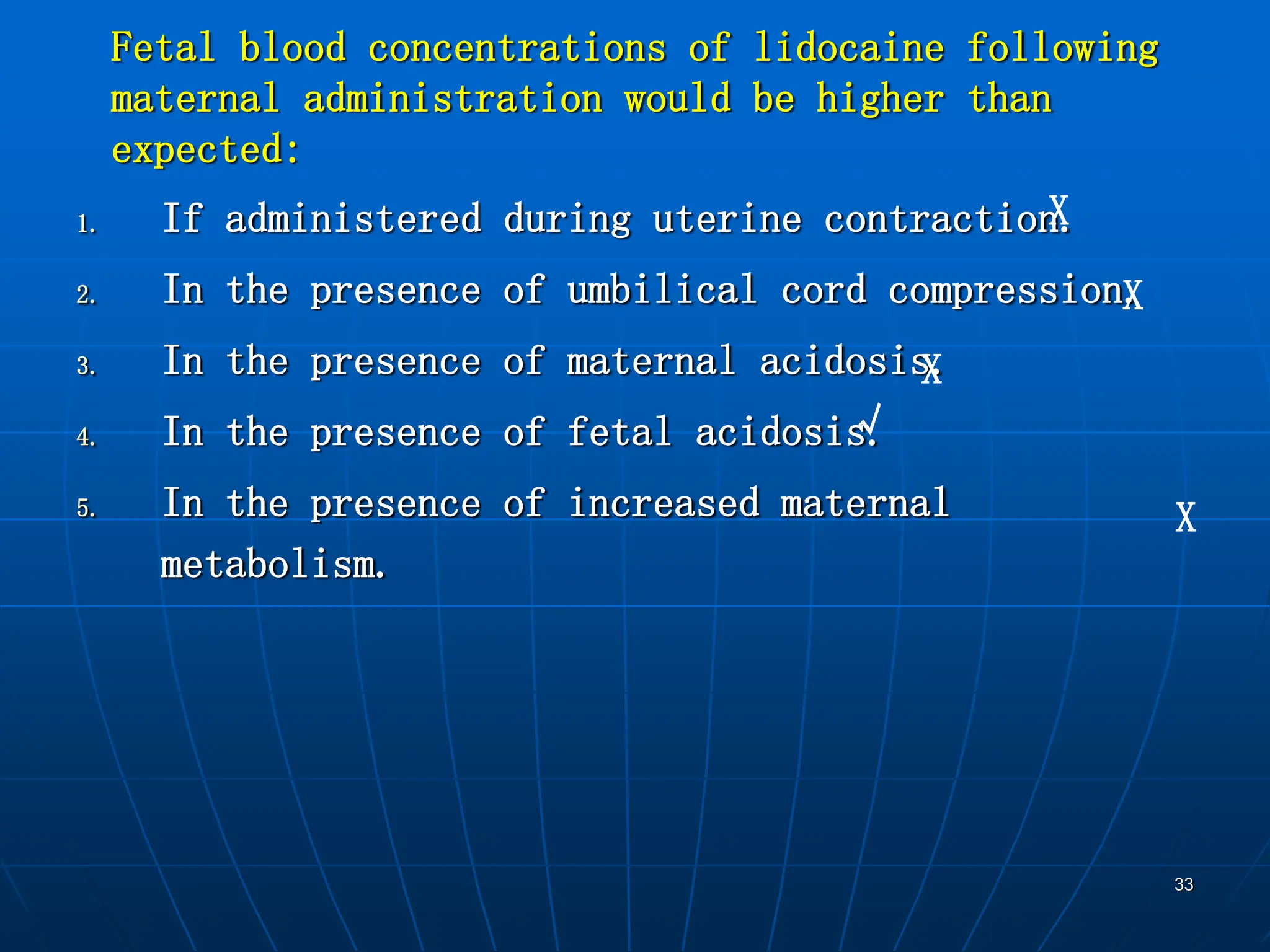
Fetal blood concentrations of lidocaine following
maternal administration would be higher than
expected:
1. If administered during uterine contraction.
2. In the presence of umbilical cord compression.
3. In the presence of maternal acidosis.
4. In the presence of fetal acidosis.
5. In the presence of increased maternal
metabolism.
X
X
X
√
X
34
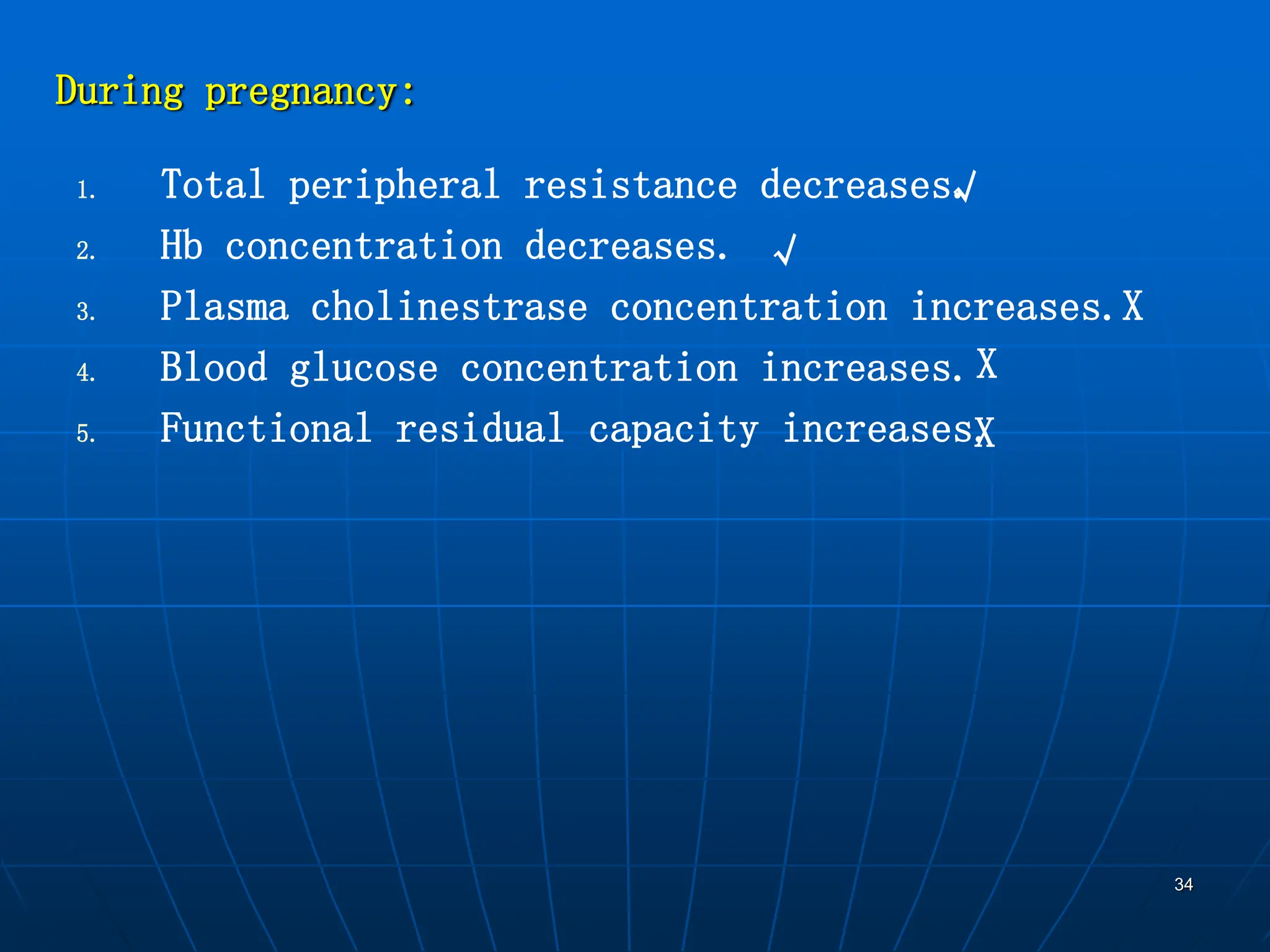
1. Total peripheral resistance decreases.
2. Hb concentration decreases.
3. Plasma cholinestrase concentration increases.
4. Blood glucose concentration increases.
5. Functional residual capacity increases.
During pregnancy:
√
√
X
X
X
35
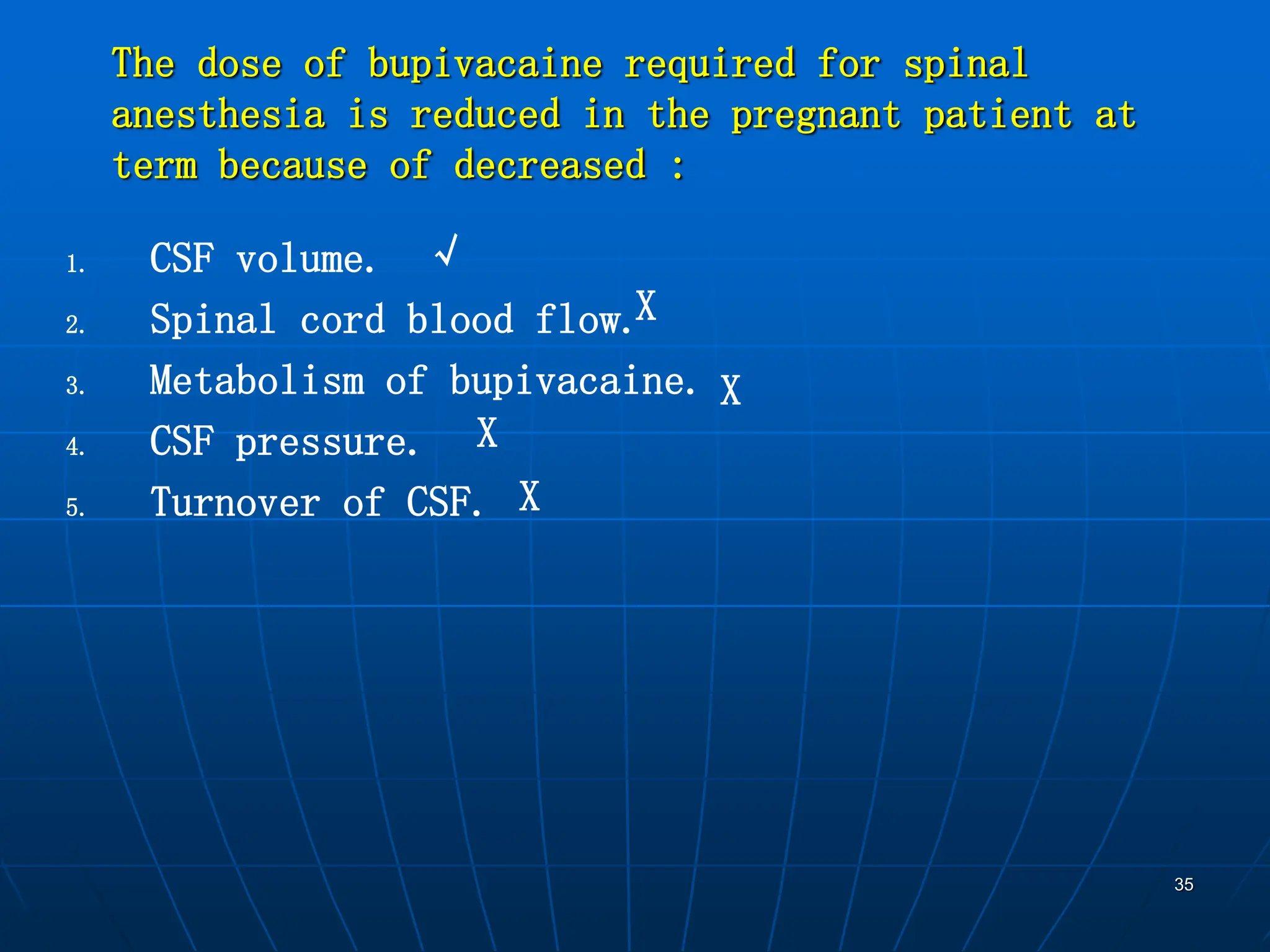
The dose of bupivacaine required for spinal
anesthesia is reduced in the pregnant patient at
term because of decreased :
1. CSF volume.
2. Spinal cord blood flow.
3. Metabolism of bupivacaine.
4. CSF pressure.
5. Turnover of CSF.
√
X
X
X
X
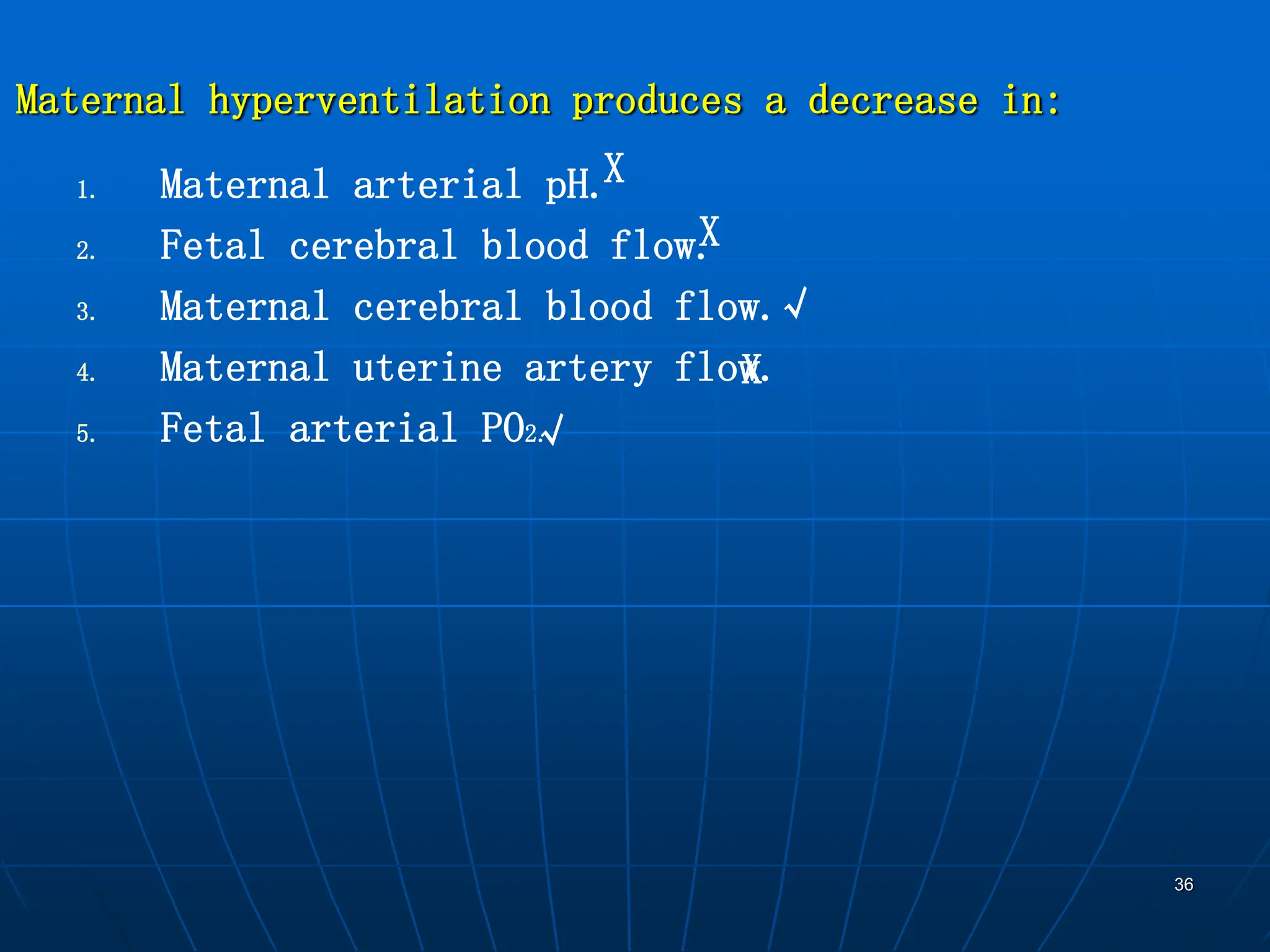
36
1. Maternal arterial pH.
2. Fetal cerebral blood flow.
3. Maternal cerebral blood flow.
4. Maternal uterine artery flow.
5. Fetal arterial PO2.
Maternal hyperventilation produces a decrease in:
X
X
√
X
√
37
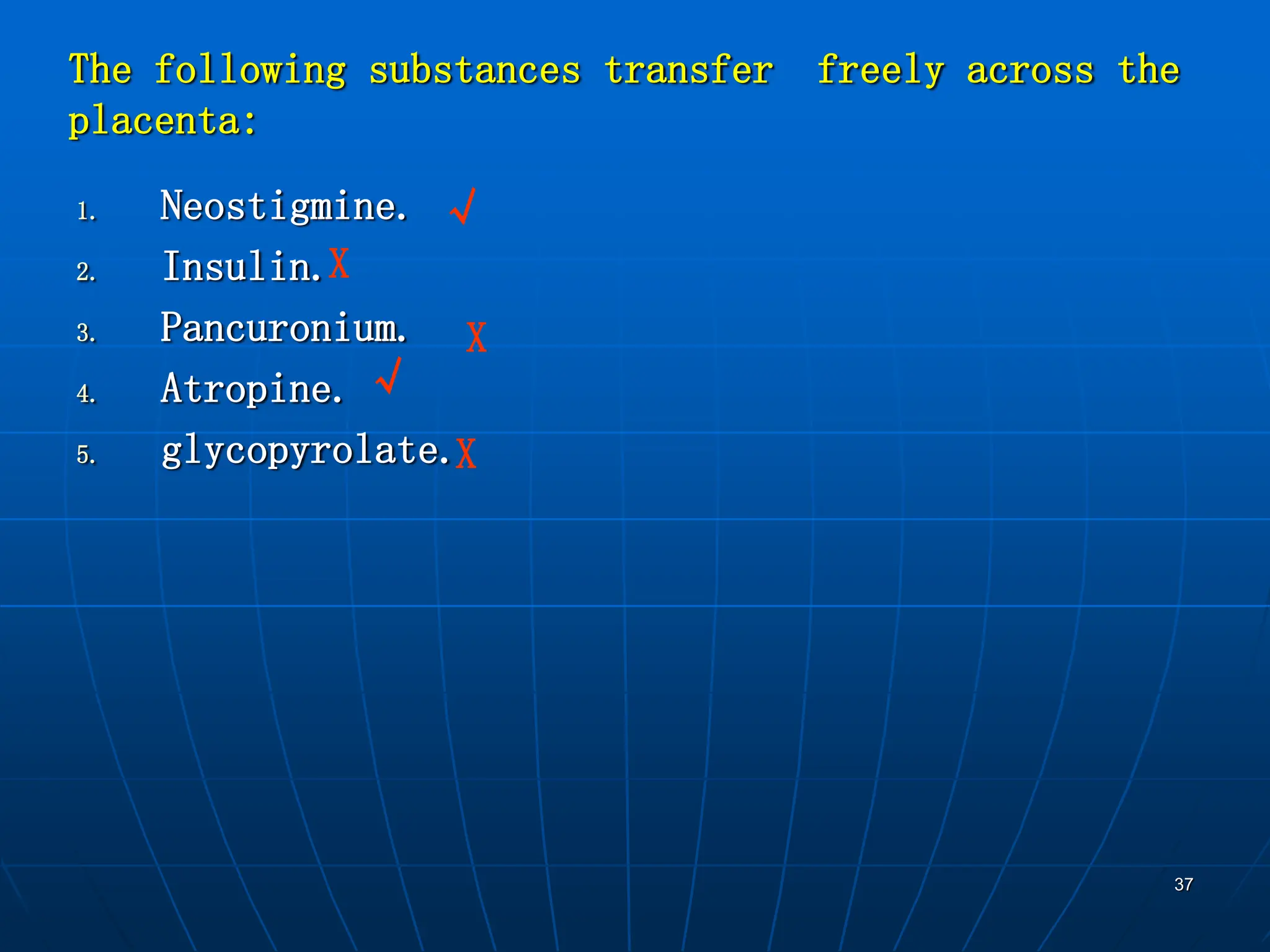
The following substances transfer freely across the
placenta:
1. Neostigmine.
2. Insulin.
3. Pancuronium.
4. Atropine.
5. glycopyrolate.X
√
X
X
√
38
Thank you

Anesthetic Considerations of Physiological Changes During Preg.ppt

  • 1.
    Anesthetic Considerations of PhysiologicalChanges During Pregnancy Presented by: Dr.zikrullah mallick
  • 2.
    2 OBJECTIVES  Maternal physiologyduring pregnancy.  Uteroplacental circulation.  Placental transfer of anesthetic agents.  Effect of labor on maternal physiology.
  • 3.
    3 Anaesthesia for parturient Whatis the difference? Physiological changes Alter the usual response to anaesthesia 2 Patients are cared For simultaneously Mother Fetus
  • 4.
    4 Maternal Physiology duringPregnancy 1) Progressive MAC. by 40% at term Returns to normal by 3rd day postpartum. CNS Progesterone increases 20 times normal level at term β- endorphin surge during labor & delivery
  • 5.
    5 2) ↑ Sensitivityto Local Anesthetics. LA requirements uring RA ↓ by 30%. Hormonally Mediated Engorged Epidural Venous Plexus ↓CSF Volume ↓Volume of Epidural Space ↑Epidural space Pressure
  • 6.
    6 ٌ Respiratory system ↑Oxygen consumption 20 –40% ↑Minute Ventilation 40 – 50% ↑↑ VT & ↑ RR & ↑P50 (30 mmHg) ↑PaO2 ↓ PaCo2 (28-32 mmHg) Compensatory ↓ HCo3ˉ Progesterone ↑ CO2 Production
  • 7.
  • 8.
    8 ↓ FRC +↑O2 Consumption = Rapid desaturation during periods of apnea. ☼Pre-oxygenation prior to GA is mandatory. ☼Parturient Should not lie flat without supplemental oxygen. ↓FRC & ↑MV ☼ ↑Uptake of Inhalational Anesthetics.
  • 9.
    9 Hormonal Changes Capillaryengorgement of respiratory tract mucosa 1) ↑ Incidence of difficult intubation. 2) Trauma and bleeding during endotracheal intubation. ☼ Use a small ETT (6 – 7 mm) during GA
  • 10.
    10 Hematological Changes I : ↑Blood Volume ( up to 90ml/ Kg) ↑ by 1000 – 1500 ml at term. Returns to normal 1 – 2 weeks postpartum. ↑ Plasma Volume > ↑ RBC mass + = Dilutional anemia & ↓ blood viscosity Facilitates maternal & fetal exchange of respiratory gases, nutrients & metabolites ↓ Impact of maternal blood loss at delivery
  • 11.
    11 II : Hypercoagulablestate ↑ Fibrinogen, factors VII, VIII, IX, X & XII ↓Factor XI III : Other changes: * Leucocytosis up to 21,ooo/µL. * 10-20% ↓ in platelet count. * Marked ↓ cell mediated immunity→ ↑susceptibility to viral infection. Risk Of DVT One of the leading causes of maternal mortality
  • 12.
    12 CVS ↑ COP by40% at term ↑ HR 15 – 30% ↑ SV 30% Returns to normal 2 weeks postpartum. ↓ SVR → ↓ SBP & ↓↓ DBP, the response to adrenergic and vasoconstr agents is decreased. CVP, PAP, PAWP → unchanged.
  • 13.
    13 Supine Hypotension syndrome COP↓ in supine position after 28th week of gestation. Occurs in 20% of women at term. Compression of IVC Compression of lower aorta Aortocaval compression ↓ blood flow to kidneys, uteroplacental circulation & lower extremeties ↓ VR → ↓ COP by 24% at term.
  • 14.
    14 Compensatory mechanisms in unanaesthetisedWomen Venous Collaterals Paravertebral Venous plexus Abdominal wall ↑ SVR & HR Reduced during general or regional anesthesia. Severe Hypotension Profound Fetal Hypoxia
  • 15.
    15 No woman inlate pregnancy should lie supine without shifting the uterus off the great abdomino-pelvic vessels. Left lateral decubitus Tilting the table Left side down Rigid wedge under The right hip Fluid preloading before neuroaxial anesthesia It does not completely avoid maternal hypotension but it↑ maternal COP → preserve uteroplacental blood flow.
  • 16.
    16 GIT ☼ Upward displacementof the stomach by the uterus → Incompetence of gastroesophageal sphincter → Gastroesophageal reflux & esophagitis. The parturient should be considered a full stomach patient during most of gestation ☼ ↑ Progesterone → ↓ tone of gastroesophageal sphincter. ☼ Placental Gastrin → Hypersecretion of gastric acid. ☼ Gastric emptying → Delayed with labor.
  • 17.
    17 Pharmacological prophylaxis againstaspiration. No positive pressure ventilation before intubation Rapid sequence induction. Sellick’s maneouvre For GA:
  • 18.
    18 Renal System ♦ RBF &GFR ↑ by 50% at 1st trimester but returns to normal in 3rd trimester. ♦↑ Renin & Aldosterone → Na+ retention. ♦ Sr. Creatinine & BUN may ↓ to 0.5 – 0.6mg/dL & 8 – 9 mg/dL respectively. ♦↓ Renal tubular threshold for glucose & amino acids → mild glycosuria (1-10g/d) & proteinuria (< 300mg/d). ♦ Plasma osmolality ↓ by 8 – 10 mosm/Kg.
  • 19.
    19 Hepatic Effects ♦Hepatic function &hepatic blood flow→ unchanged. ♦Minor ↑ in Sr. Transaminases & LDH in 3rd trimester. ♦↑ Sr. Alkaline phosphatase (placental). ♦ Mild ↓ in Sr. albumin (dilutional). ♦ 25 – 30% ↓ in pseudocholine estrase activity. ♦↑ Progesterone levels→ inhibit release of cholecystokinin→ incomp emptying of gall bladder→ altered bile acid composition→ formation of cholesterol stones.
  • 20.
    20 Metabolic Effects Pregnancy is Diabetogenic HumanPlacental lactogen→ relative insulin resistance. Starvation like state ↓ Blood Glucose & Amino Acid levels. ↑ Free Fatty Acids, Ketones & triglycerides. ↑ Estrogen levels→Thyroid gland hypertrohy→ ↑ T3 & T4 ↑ TBG → Free T3, T4 & TSH remain normal
  • 21.
    21 Uteroplacental Circulation At term:uterine blood flow is 10% of COP ≈ 600 – 700 ml/min. 80% to placenta
  • 22.
    22 aximally dilated uterinevasculature with absent autoregulation. Uterine Blood Flow Directly proportional to difference between uterine arterial and venous pressure. Inversely proportional to uterine vascular resistance. Abundant α-adrenergic & some β-adrenergic receptors. Previously , vasoconstrictor agents with predominant β-adrenergic activity (e.g. Ephedrine) were of choice for hypotension during pregnancy. Recent studies show that α-adrenengic drugs (e.g.Phenylephrine) have better effects.
  • 23.
    23 3 major factors↓ uterine blood flow during pregnancy Systemic Hypotension Uterine Vasoconstriction Uterine Contractions ♦ Aortocaval compression. ♦ Hypovolemia. ♦ Sympathetic block with regional anesthesia. ♦ stress-induced endogenous Catecholamines during labor. ♦ α-adrenergic agonists. ♦ Local anesthetic agents. ♦ Hypertensive disorders → generalized vasoconstriction. ♦ Labor. ♦ Oxytocin infusions. ♦ Extreme hypocapnia PaCO2 < 20 mmhg. ♦ Barbiturates & Propofol.
  • 24.
    24 Placental transfer ofanesthetic agents Placental transfer of drugs depends on: 1: Molecular weight : < 500 Da cross easily. 2: Protein binding. 3: Lipid solubility: Highly ionized substances have poor lipid solubi 4: Maternal & fetal pH : affect ionization of the drug. 5: Maternal drug concentration: affected by dose given and route of administration. 6: Timing of administration.
  • 25.
    25 Limited effects if< 1MAC & delivery within 10 min. of induction Cross placenta freely Inhalational Agents Intravenous Agents: Thipental, ketamine & propofol Limited fetal effects in usual induction doses (drug distribution, metabolism & placental uptake) Variable effects. Cross placenta freely Opioids Most significant respiratory depressant effects Morhine Significant respiratory depression peaking 1- 3 h after administration. Meperidine Minimal effect if < 1µg/Kg. Fentanyl Minimal effects on The highly ionized property impedes Muscle Relaxants
  • 26.
    26 Local anesthetics →Placental transfer depends on: 1: pKa. 2: Maternal & fetal pH : Fetal acidosis → higher fetal to maternal drug ratios . Binding of hydrogen ions to the nonionized form → trapping of local anesthetic in fetal circulation 3: Degree of protein binding : highly protein bound agents diffuse poorly across the placenta. Chloroprocaine has the least placental transfer as it is rapidly broken down by plasma cholinestrase in the maternal circulation.
  • 27.
    27 Most of anestheticagents show significant placental transfer Fetal effects of drugs administered to parturient depend on: 1: Maturity of fetal organs, substantial fetal hepatic uptake of many drugs. 2: Dilution of the umbilical venous blood by venous blood from lower half of fetal body → modify fetal drug distribution.
  • 28.
    28 Effect of laboron maternal physiology Stages of labor 1st stage 2nd stage 3rd stage Starts with true labor pains, ends by full cervical dilation. Starts with full cervical dilation, fetal descent occurs, ends with complete delivery of fetus. Extends from birth of the baby to delivery of the placenta. Latent phase Active phase Progressive cervical effacement & minor dilataton (2 – 4 cm). Progressive cervical dilatation up to 10 cm. 8 – 12 h in nulliparous 5 – 8 h in multiparous. Contractions are 1.5- 2 min apart, last 1 – 1.5 min 15 – 120 min. 15 – 30 min.
  • 29.
    29 Intense painful contractions Maternal hyperventilation MV↑ up to 300%. ↑ O2 consumption 60% above 3rd trimester values PCo2 < 20 mmHg Uterine VC → Fetal acidosis + Periods of hypoventilation → transient maternal & fetal hypoxemia in between Contractions.
  • 30.
    30 Each contraction Displaces 300– 500ml blood from uterus to central circulation. COP ↑ 45% above 3rd trimesteric value. Maximum strain on the heart occurs immediately after delivery. Uterine intense involution→ sudden relieve of IVC → ↑ COP 80% above prelabor values.
  • 31.
  • 32.
  • 33.
    33 Fetal blood concentrationsof lidocaine following maternal administration would be higher than expected: 1. If administered during uterine contraction. 2. In the presence of umbilical cord compression. 3. In the presence of maternal acidosis. 4. In the presence of fetal acidosis. 5. In the presence of increased maternal metabolism. X X X √ X
  • 34.
    34 1. Total peripheralresistance decreases. 2. Hb concentration decreases. 3. Plasma cholinestrase concentration increases. 4. Blood glucose concentration increases. 5. Functional residual capacity increases. During pregnancy: √ √ X X X
  • 35.
    35 The dose ofbupivacaine required for spinal anesthesia is reduced in the pregnant patient at term because of decreased : 1. CSF volume. 2. Spinal cord blood flow. 3. Metabolism of bupivacaine. 4. CSF pressure. 5. Turnover of CSF. √ X X X X
  • 36.
    36 1. Maternal arterialpH. 2. Fetal cerebral blood flow. 3. Maternal cerebral blood flow. 4. Maternal uterine artery flow. 5. Fetal arterial PO2. Maternal hyperventilation produces a decrease in: X X √ X √
  • 37.
    37 The following substancestransfer freely across the placenta: 1. Neostigmine. 2. Insulin. 3. Pancuronium. 4. Atropine. 5. glycopyrolate.X √ X X √
  • 38.