

PRESENTED BY
• SWAPNIL SINGH – IBM2012002
 A Brain Computer Interface (BCI) is a collaboration in
which a brain controls a mechanical device as a natural part
of its representation of the body.
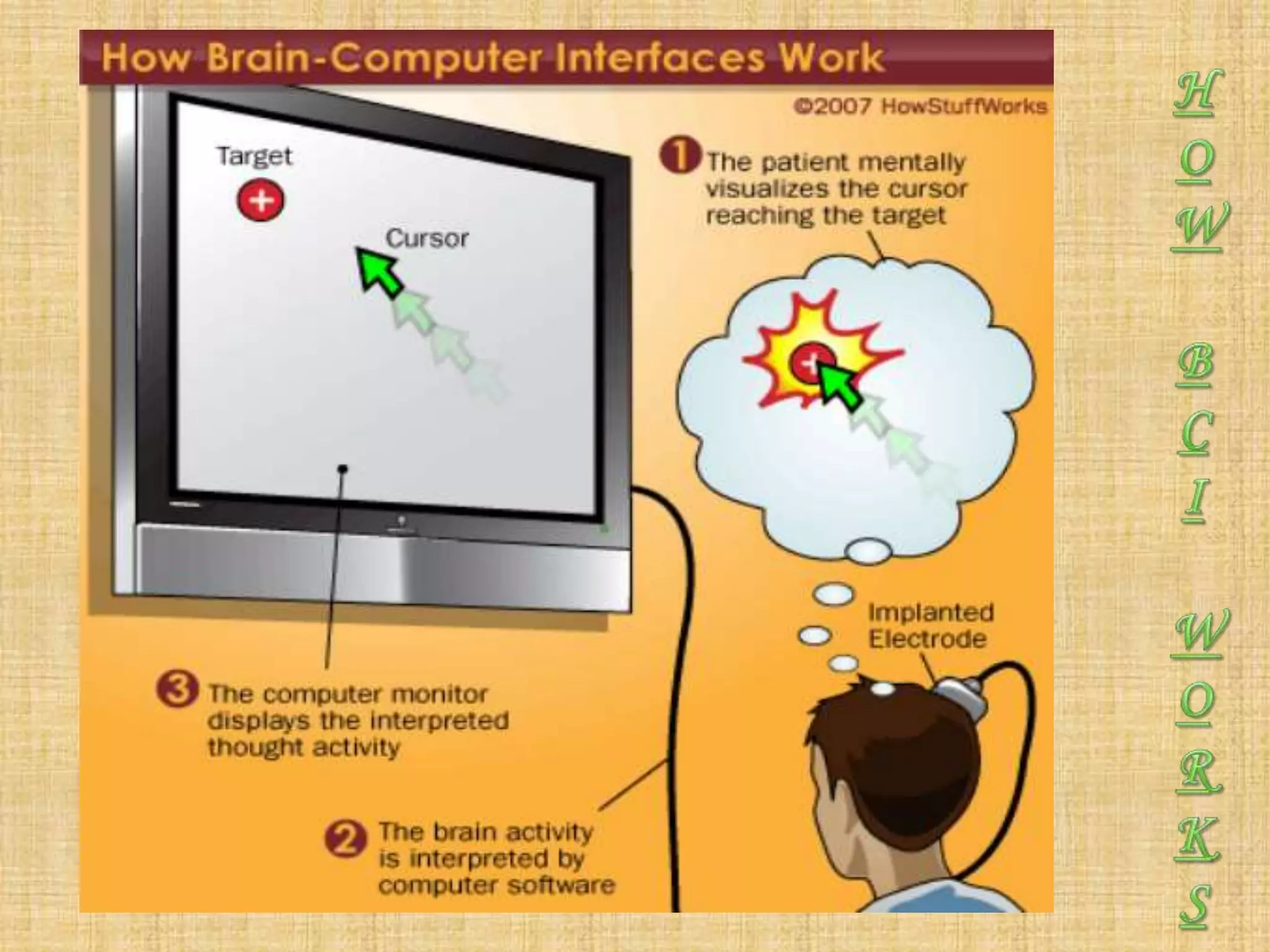
 Computer-brain interfaces are designed to restore
sensory function, transmit sensory information to the brain,
or stimulate the brain through artificially generated
electrical signals
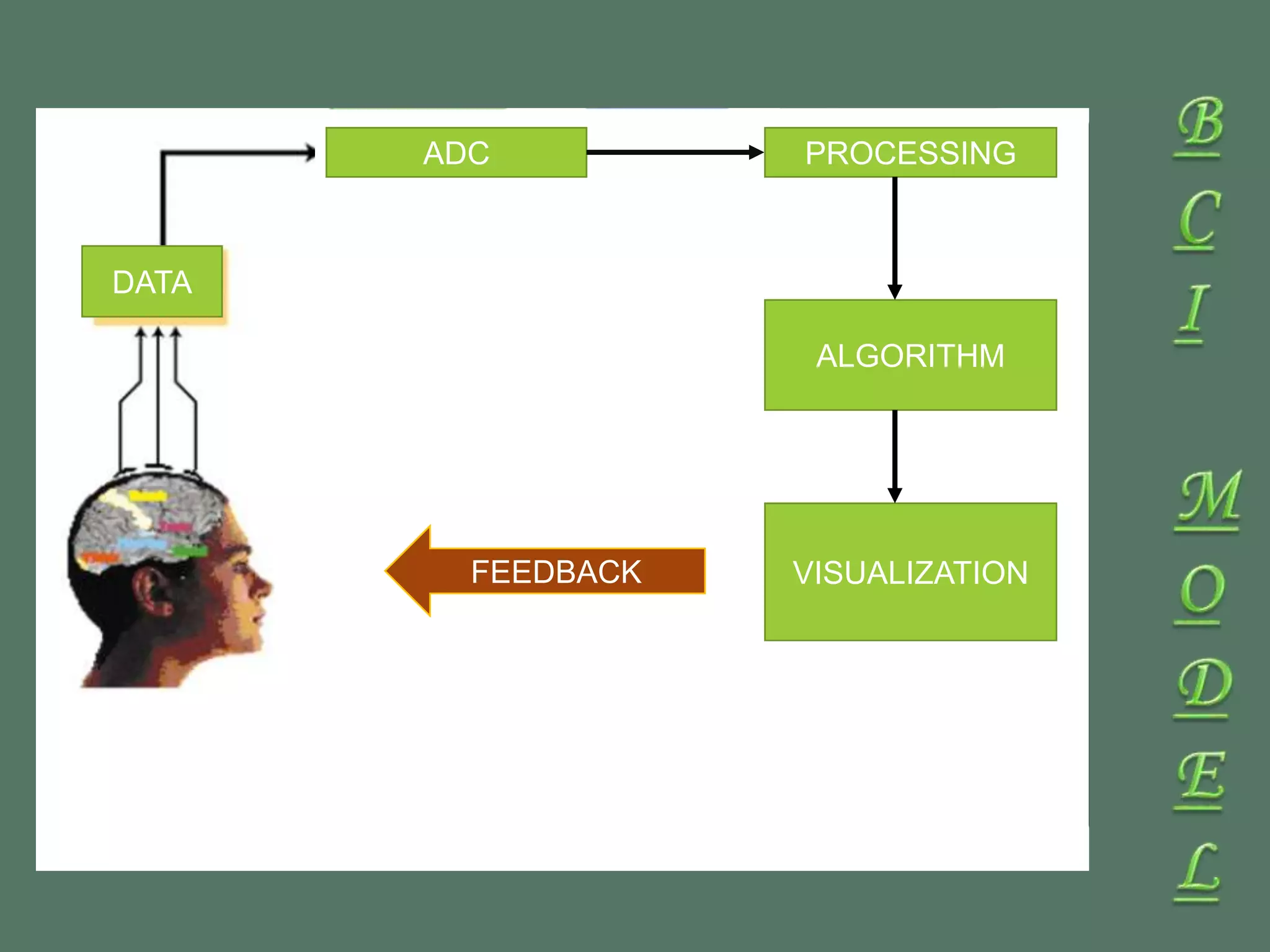
ADC
DATA
PROCESSING
ALGORITHM
VISUALIZATIONFEEDBACK
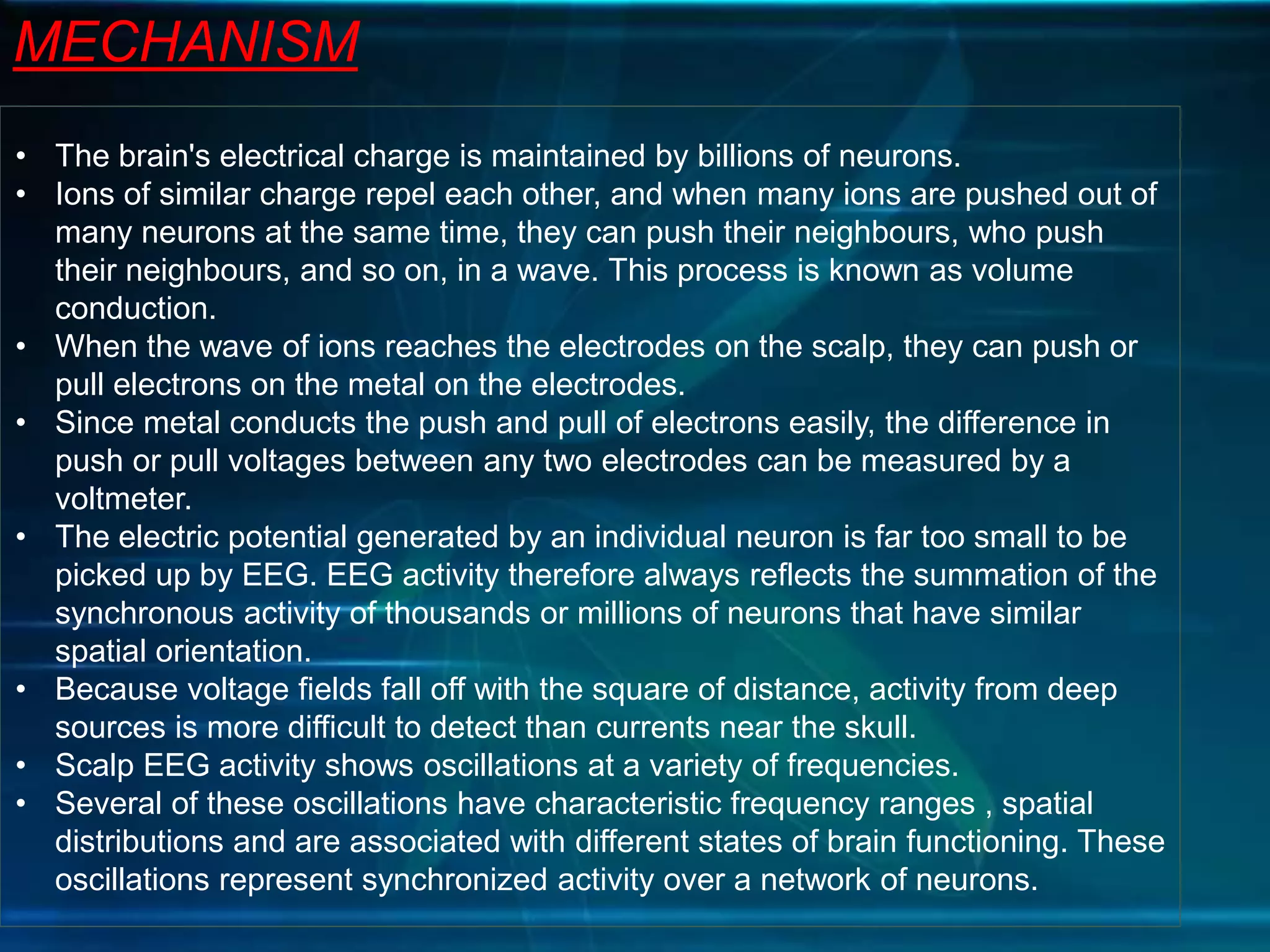
MECHANISM
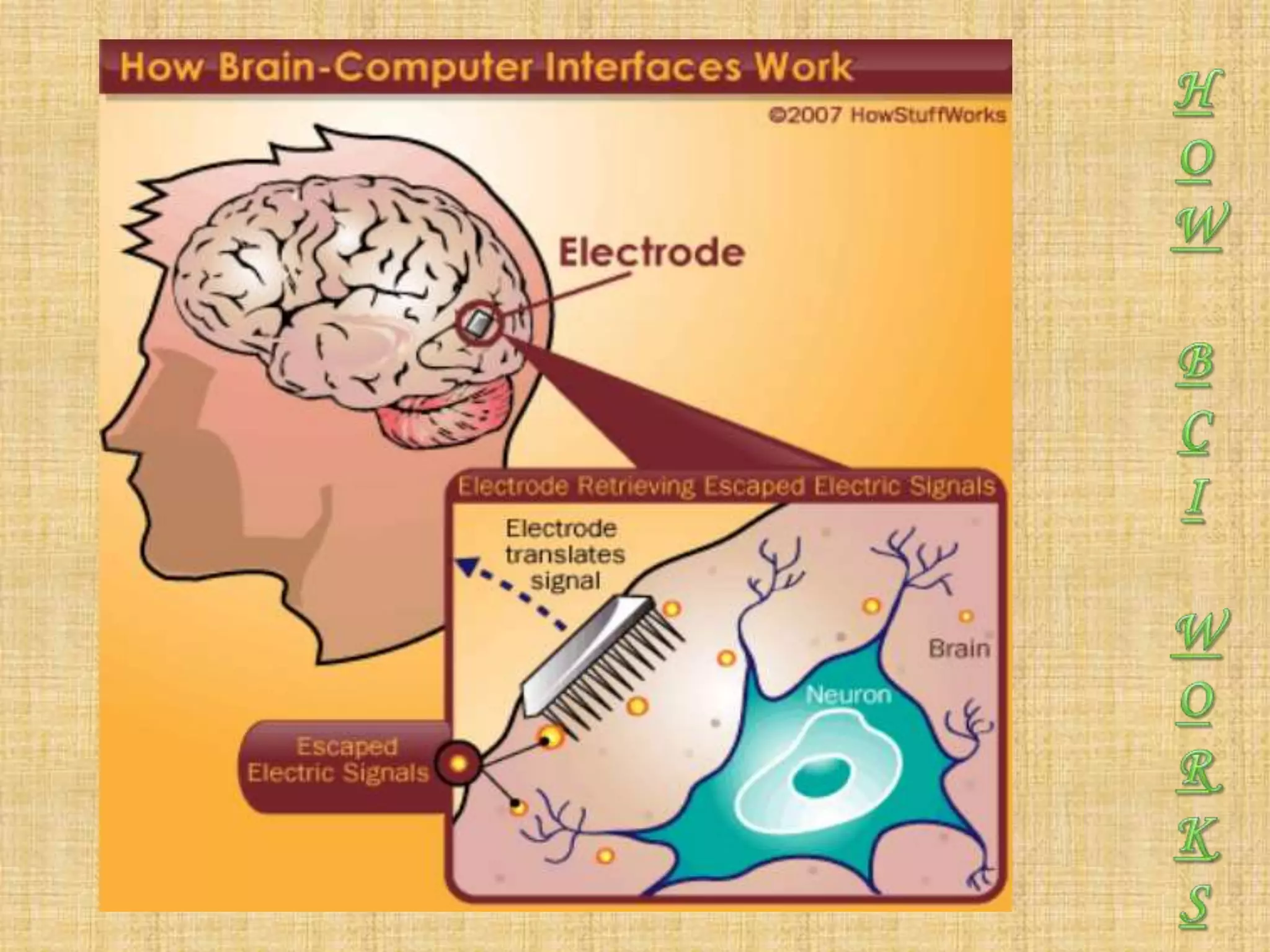
• The brain's electrical charge is maintained by billions of neurons.
• Ions of similar charge repel each other, and when many ions are pushed out of
many neurons at the same time, they can push their neighbours, who push
their neighbours, and so on, in a wave. This process is known as volume
conduction.
• When the wave of ions reaches the electrodes on the scalp, they can push or
pull electrons on the metal on the electrodes.
• Since metal conducts the push and pull of electrons easily, the difference in
push or pull voltages between any two electrodes can be measured by a
voltmeter.
• The electric potential generated by an individual neuron is far too small to be
picked up by EEG. EEG activity therefore always reflects the summation of the
synchronous activity of thousands or millions of neurons that have similar
spatial orientation.
• Because voltage fields fall off with the square of distance, activity from deep
sources is more difficult to detect than currents near the skull.
• Scalp EEG activity shows oscillations at a variety of frequencies.
• Several of these oscillations have characteristic frequency ranges , spatial
distributions and are associated with different states of brain functioning. These
oscillations represent synchronized activity over a network of neurons.
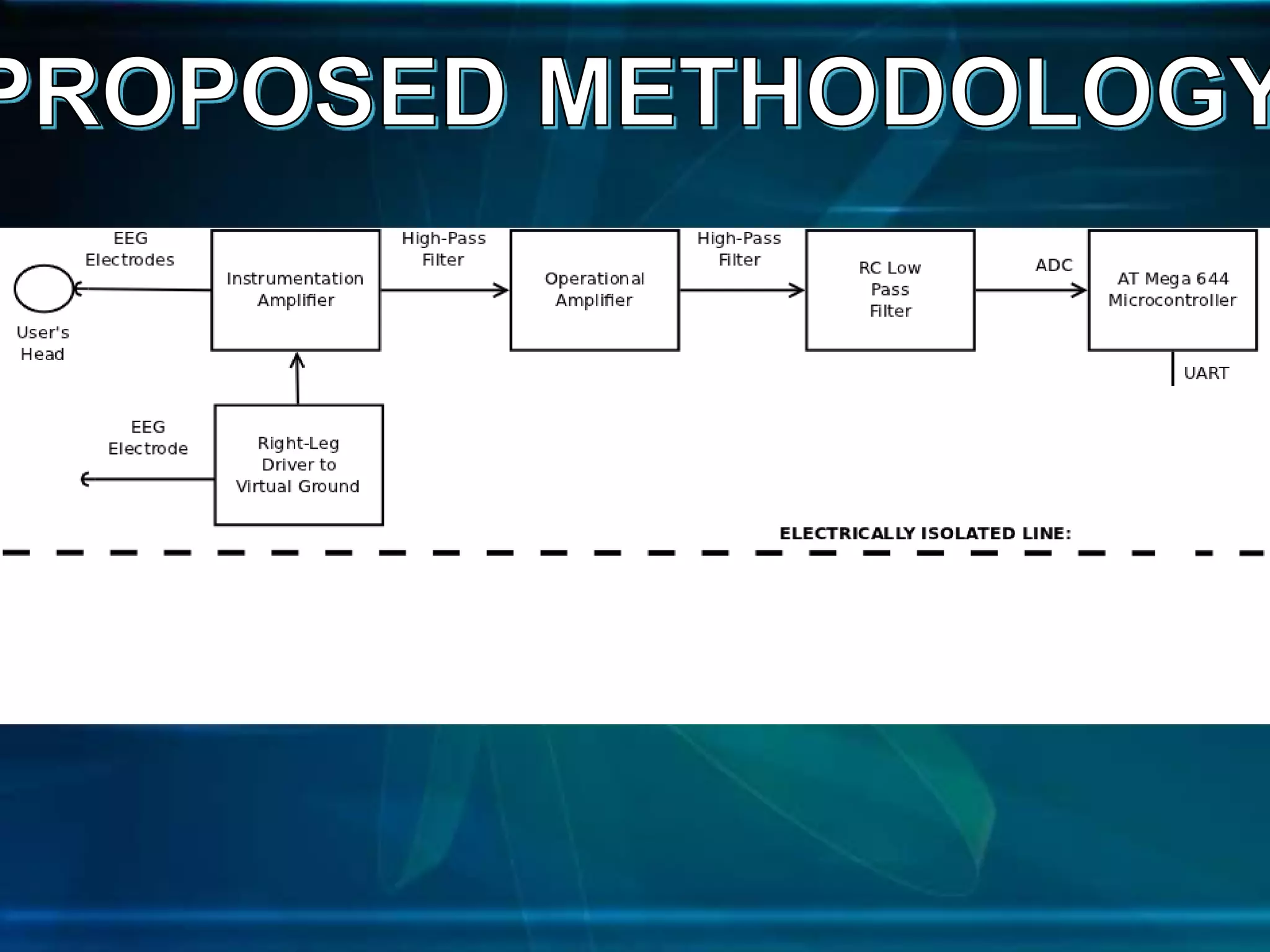
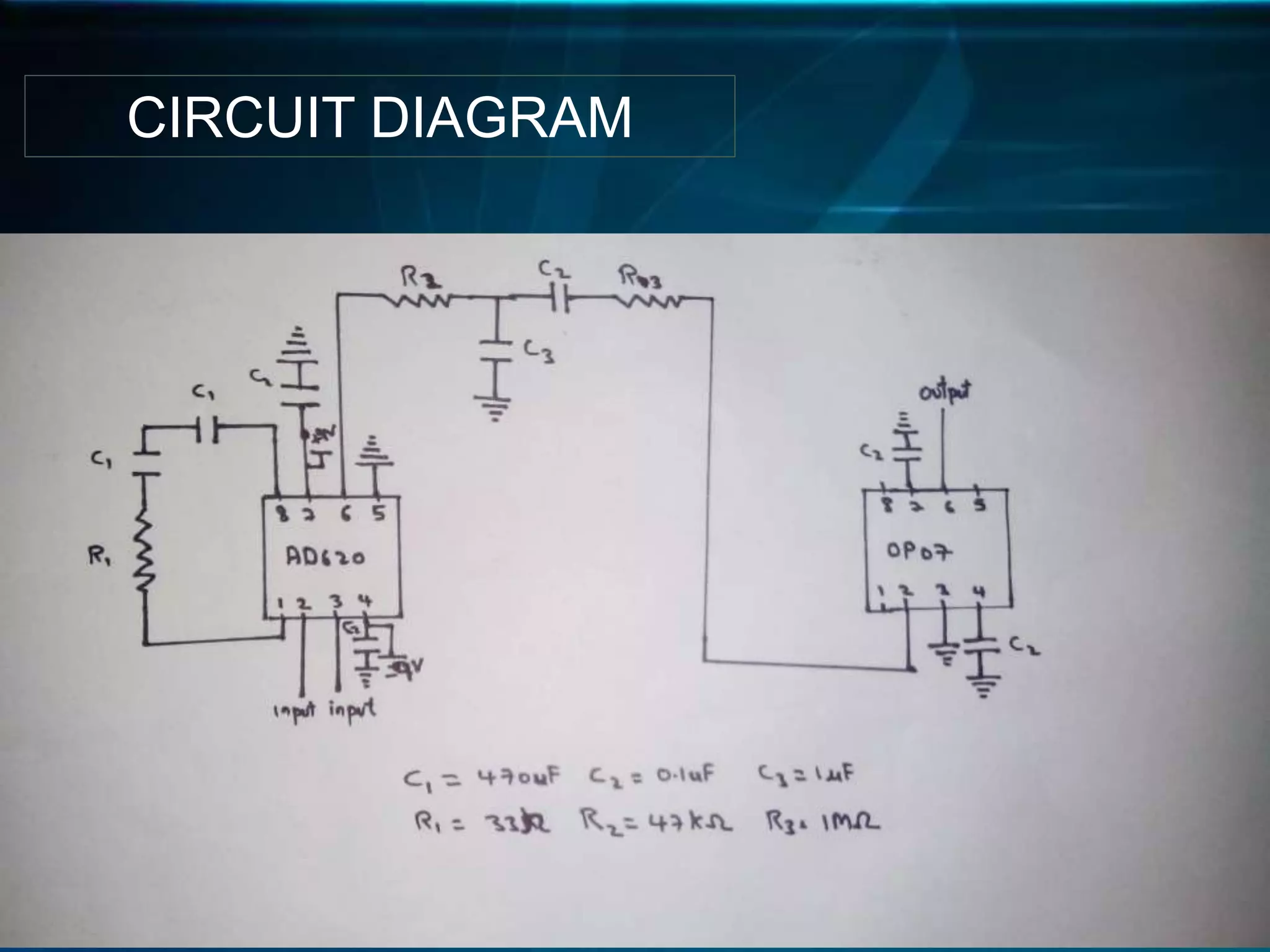
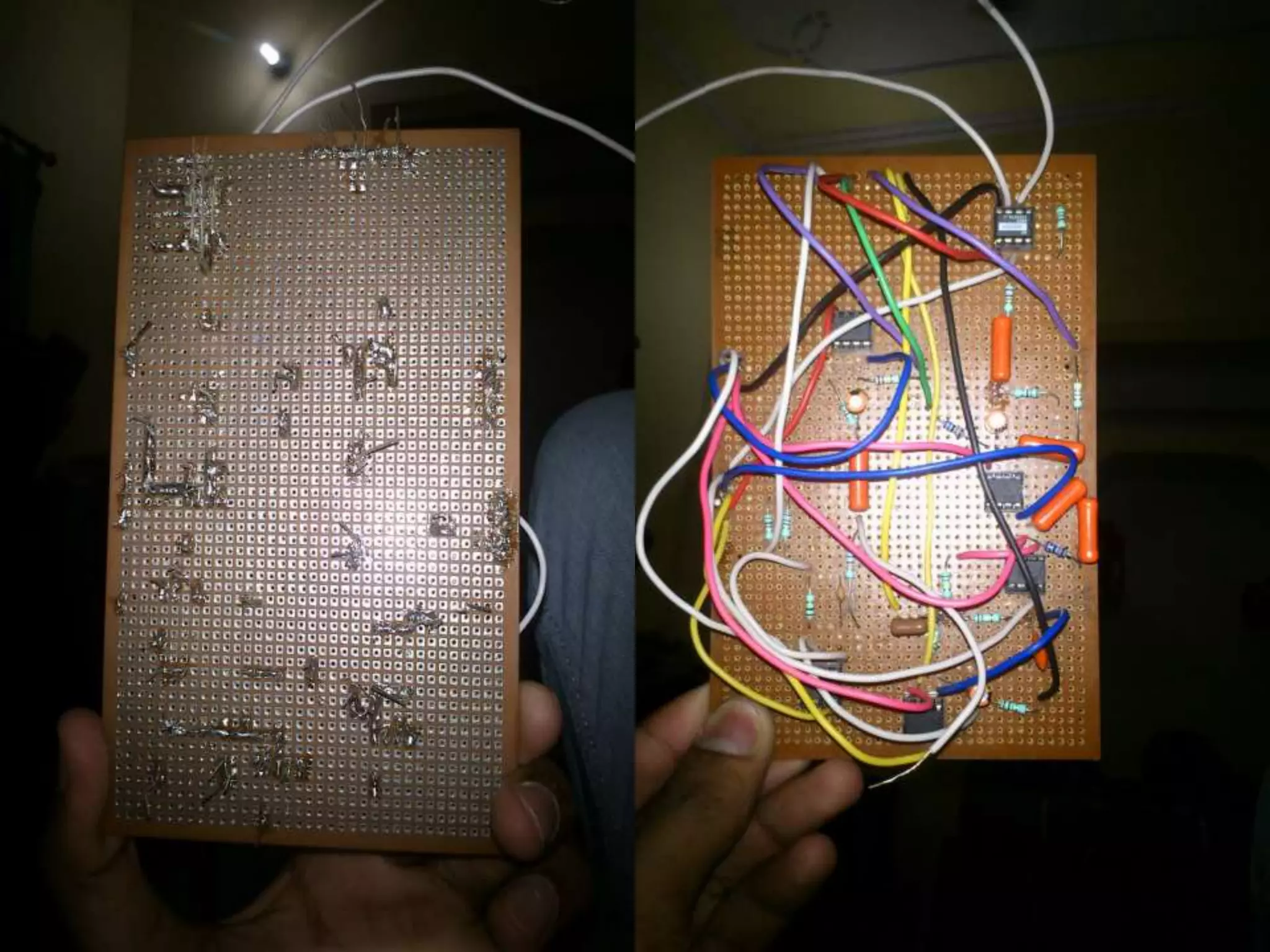
CIRCUIT DIAGRAM
METHOD
• In conventional scalp EEG, the recording is obtained by placing electrodes on the
scalp with a conductive gel or paste, usually after preparing the scalp area by
light abrasion to reduce impedance due to dead skin cells. Many systems
typically use electrodes, each of which is attached to an individual wire.
• In most clinical applications, 19 recording electrodes (plus ground and system
reference) are used.
• Each electrode is connected to one input of a differential amplifier (one amplifier
per pair of electrodes); a common system reference electrode is connected to the
other input of each differential amplifier.
• These amplifiers amplify the voltage between the active electrode and the
reference (typically 1,000–100,000 times, or 60–100 dB of voltage gain).
• Most EEG systems are digital, and the amplified signal is digitized via an analog-
to-digital converter, after being passed through an anti-aliasing filter. Analog-to-
digital sampling typically occurs at 256–512 Hz in clinical scalp EEG.
• During the recording, a series of activation procedures may be used. These
procedures may induce normal or abnormal EEG activity that might not otherwise
be seen. These procedures include hyperventilation, eye closure, mental activity,
sleep and sleep deprivation.
• Allow paralyzed people to control prosthetic limbs with
their mind
• Transmit visual images to the mind of a blind person,
allowing them to see
• Transmit auditory data to the mind of a deaf person,
allowing them to hear
• Allow gamers to control video games with their minds
• Allow a mute person to have their thoughts displayed and
spoken by a computer
• Research is still in beginning stages
• The current technology is crude
• Ethical issues may prevent its development
• Electrodes outside of the skull can detect very few
electric signals from the brain
• Electrodes placed inside the skull create scar tissue in
the brain
• A potential therapeutic tool.
• BCI is an advancing technology promising paradigm shift in
areas like Machine Control, Human Enhancement, Virtual
reality and etc. So, it’s potentially high impact technology.
• Several potential applications of BCI hold promise for
rehabilitation and improving performance, such as treating
emotional disorders (for example, depression or anxiety),
easing chronic pain, and overcoming movement disabilities
due to stroke.
• Will enable us to achieve singularity very soon.
• Intense R&D in future to attain intuitive efficiency.
Brain Control Interface using ELECTROENCEPHALOGRAPHY

Brain Control Interface using ELECTROENCEPHALOGRAPHY

  • 1.
    PRESENTED BY • SWAPNILSINGH – IBM2012002
  • 2.
     A BrainComputer Interface (BCI) is a collaboration in which a brain controls a mechanical device as a natural part of its representation of the body.  Computer-brain interfaces are designed to restore sensory function, transmit sensory information to the brain, or stimulate the brain through artificially generated electrical signals
  • 5.
  • 8.
    MECHANISM • The brain'selectrical charge is maintained by billions of neurons. • Ions of similar charge repel each other, and when many ions are pushed out of many neurons at the same time, they can push their neighbours, who push their neighbours, and so on, in a wave. This process is known as volume conduction. • When the wave of ions reaches the electrodes on the scalp, they can push or pull electrons on the metal on the electrodes. • Since metal conducts the push and pull of electrons easily, the difference in push or pull voltages between any two electrodes can be measured by a voltmeter. • The electric potential generated by an individual neuron is far too small to be picked up by EEG. EEG activity therefore always reflects the summation of the synchronous activity of thousands or millions of neurons that have similar spatial orientation. • Because voltage fields fall off with the square of distance, activity from deep sources is more difficult to detect than currents near the skull. • Scalp EEG activity shows oscillations at a variety of frequencies. • Several of these oscillations have characteristic frequency ranges , spatial distributions and are associated with different states of brain functioning. These oscillations represent synchronized activity over a network of neurons.
  • 10.
  • 12.
    METHOD • In conventionalscalp EEG, the recording is obtained by placing electrodes on the scalp with a conductive gel or paste, usually after preparing the scalp area by light abrasion to reduce impedance due to dead skin cells. Many systems typically use electrodes, each of which is attached to an individual wire. • In most clinical applications, 19 recording electrodes (plus ground and system reference) are used. • Each electrode is connected to one input of a differential amplifier (one amplifier per pair of electrodes); a common system reference electrode is connected to the other input of each differential amplifier. • These amplifiers amplify the voltage between the active electrode and the reference (typically 1,000–100,000 times, or 60–100 dB of voltage gain). • Most EEG systems are digital, and the amplified signal is digitized via an analog- to-digital converter, after being passed through an anti-aliasing filter. Analog-to- digital sampling typically occurs at 256–512 Hz in clinical scalp EEG. • During the recording, a series of activation procedures may be used. These procedures may induce normal or abnormal EEG activity that might not otherwise be seen. These procedures include hyperventilation, eye closure, mental activity, sleep and sleep deprivation.
  • 13.
    • Allow paralyzedpeople to control prosthetic limbs with their mind • Transmit visual images to the mind of a blind person, allowing them to see • Transmit auditory data to the mind of a deaf person, allowing them to hear • Allow gamers to control video games with their minds • Allow a mute person to have their thoughts displayed and spoken by a computer
  • 14.
    • Research isstill in beginning stages • The current technology is crude • Ethical issues may prevent its development • Electrodes outside of the skull can detect very few electric signals from the brain • Electrodes placed inside the skull create scar tissue in the brain
  • 15.
    • A potentialtherapeutic tool. • BCI is an advancing technology promising paradigm shift in areas like Machine Control, Human Enhancement, Virtual reality and etc. So, it’s potentially high impact technology. • Several potential applications of BCI hold promise for rehabilitation and improving performance, such as treating emotional disorders (for example, depression or anxiety), easing chronic pain, and overcoming movement disabilities due to stroke. • Will enable us to achieve singularity very soon. • Intense R&D in future to attain intuitive efficiency.