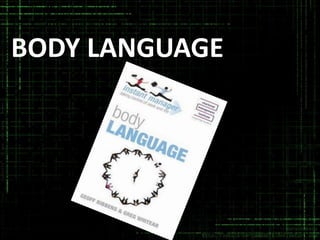


BODY LANGUAGE
ABSTRACT
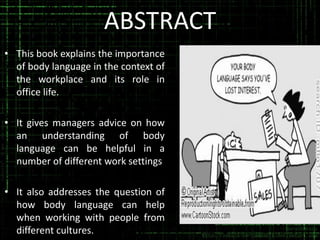
• This book explains the importance
of body language in the context of
the workplace and its role in
office life.
• It gives managers advice on how
an understanding of body
language can be helpful in a
number of different work settings

• It also addresses the question of
how body language can help
when working with people from
different cultures.
ABOUT THE AUTHORS
• GEOFF RIBBONS has over 30 years
experience in management education,
training and consultancy.
• For 21 years he has specialized in
organizational behaviour providing incompany management qualifications for
many large organizations.

• He has concentrated in recent years on
Performance
Management,
Team
Building, the Management of Change and
Coaching/Mentoring for senior managers
and directors, diagnosing business
leadership development and business
strategy needs
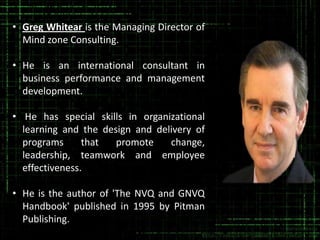
• Greg Whitear is the Managing Director of
Mind zone Consulting.
• He is an international consultant in
business performance and management
development.
• He has special skills in organizational
learning and the design and delivery of
programs
that
promote
change,
leadership, teamwork and employee
effectiveness.

• He is the author of 'The NVQ and GNVQ
Handbook' published in 1995 by Pitman
Publishing.
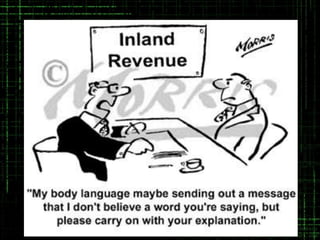
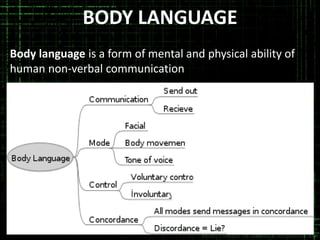
BODY LANGUAGE
Body language is a form of mental and physical ability of
human non-verbal communication
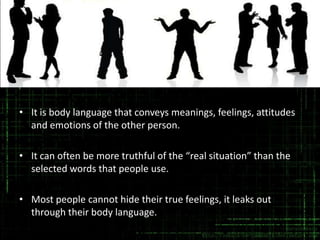
• It is body language that conveys meanings, feelings, attitudes
and emotions of the other person.
• It can often be more truthful of the “real situation” than the
selected words that people use.
• Most people cannot hide their true feelings, it leaks out
through their body language.
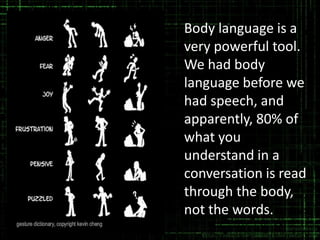
Body language is a
very powerful tool.
We had body
language before we
had speech, and
apparently, 80% of
what you
understand in a
conversation is read
through the body,
not the words.
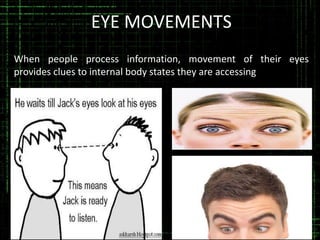
EYE MOVEMENTS
When people process information, movement of their eyes
provides clues to internal body states they are accessing
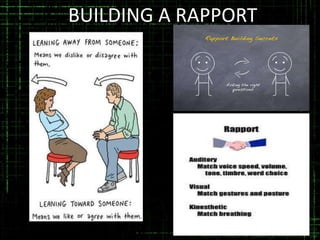
BUILDING A RAPPORT
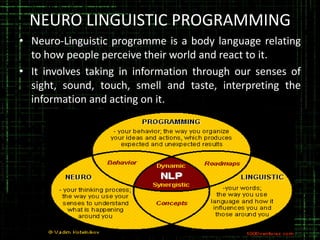
NEURO LINGUISTIC PROGRAMMING
• Neuro-Linguistic programme is a body language relating
to how people perceive their world and react to it.
• It involves taking in information through our senses of
sight, sound, touch, smell and taste, interpreting the
information and acting on it.
HHOW MANAGERS ACQUIRE AND USE
POWER
• Position Power: Their position in the organization
• Coercive Power: How tough they are, use of threats
• Reward Power: How supportive they are, rewards they give
their subordinates
• Expert Power: How informed they are, technically or
managerially
• Referent Power: How unique they are, personality and
charisma
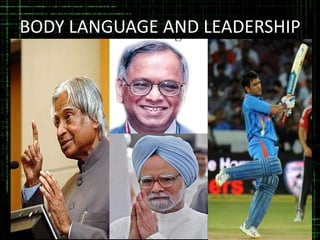
BODY LANGUAGE AND LEADERSHIP
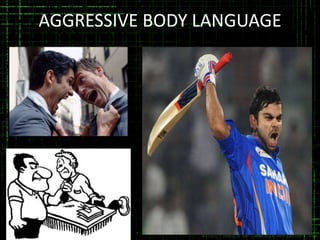
AGGRESSIVE BODY LANGUAGE
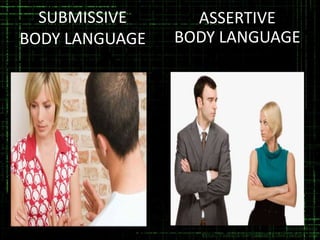
SUBMISSIVE
BODY LANGUAGE

ASSERTIVE
BODY LANGUAGE
AVOIDING OUTRIGHT LYING
•
•
•
•
•

Fail to answer the question asked
Pretend not to understand the question
Remain silent
Feign Emotion
Pretend they feel ill
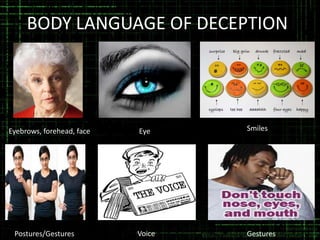
BODY LANGUAGE OF DECEPTION

Eyebrows, forehead, face

Postures/Gestures

Eye

Smiles

Voice

Gestures
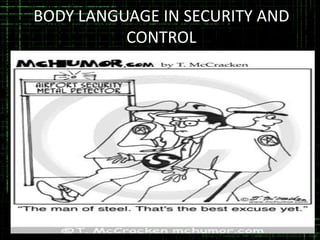
BODY LANGUAGE IN SECURITY AND
CONTROL
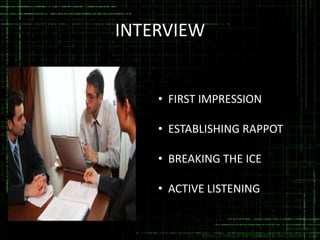
INTERVIEW

• FIRST IMPRESSION
• ESTABLISHING RAPPOT

• BREAKING THE ICE
• ACTIVE LISTENING
COUNSELLING
Body language gives us clues about “something is wrong”.
Characteristics of stressed individuals in terms of body
language.
• Hypersensitivity to mild situations
• Displaying tense posture
• Showing irritation
• Appearing restless
• Nervous laughter
• Tiredness, exhaustion and listlessness
• Tense muscles
FEEDBACK
Feedback is an interpersonal skill involving exchange of information,
a willingness to listen, to learn and to modify behavior to achieve the
outcome that is needed.
•
•
•
•
•
•
•
•
•
•

Readiness
Self-review
Own your feedback
Specific
Constructive
Achievable
Acceptable
Priorities
Time
Place
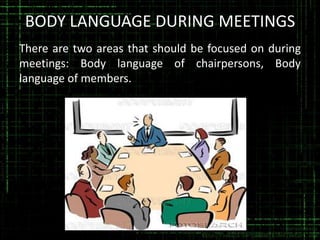
BODY LANGUAGE DURING MEETINGS
There are two areas that should be focused on during
meetings: Body language of chairpersons, Body
language of members.
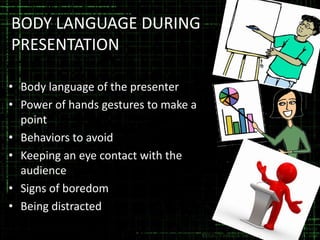
BODY LANGUAGE DURING
PRESENTATION
• Body language of the presenter
• Power of hands gestures to make a
point
• Behaviors to avoid
• Keeping an eye contact with the
audience
• Signs of boredom
• Being distracted
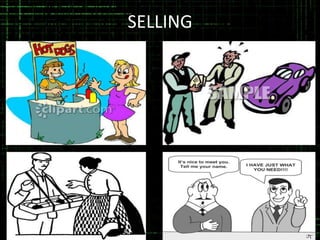
SELLING
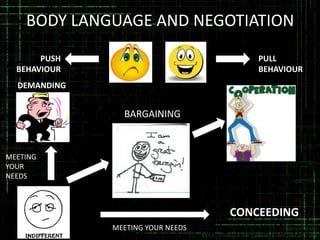
BODY LANGUAGE AND NEGOTIATION
PUSH
BEHAVIOUR

PULL
BEHAVIOUR

DEMANDING

BARGAINING

MEETING
YOUR
NEEDS

CONCEEDING
MEETING YOUR NEEDS
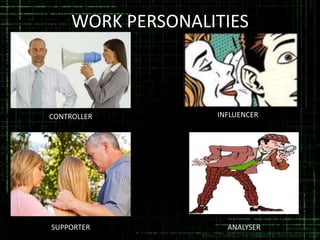
WORK PERSONALITIES

CONTROLLER

INFLUENCER

SUPPORTER

ANALYSER
GREETING OTHERS
APPEARANCE
CULTURAL DIVERSITY
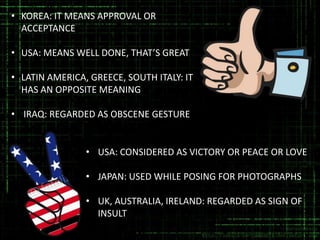
• KOREA: IT MEANS APPROVAL OR
ACCEPTANCE
• USA: MEANS WELL DONE, THAT’S GREAT

• LATIN AMERICA, GREECE, SOUTH ITALY: IT
HAS AN OPPOSITE MEANING
• IRAQ: REGARDED AS OBSCENE GESTURE

• USA: CONSIDERED AS VICTORY OR PEACE OR LOVE
• JAPAN: USED WHILE POSING FOR PHOTOGRAPHS
• UK, AUSTRALIA, IRELAND: REGARDED AS SIGN OF
INSULT
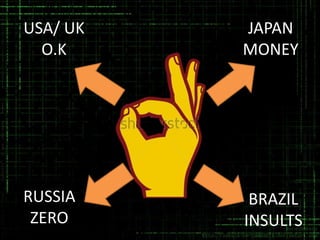
USA/ UK
O.K

JAPAN
MONEY

RUSSIA
ZERO

BRAZIL
INSULTS
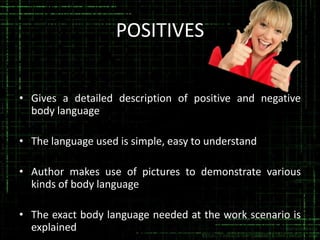
POSITIVES
• Gives a detailed description of positive and negative
body language

• The language used is simple, easy to understand
• Author makes use of pictures to demonstrate various
kinds of body language
• The exact body language needed at the work scenario is
explained
NEGATIVES
• The instances in the book do not represent the India
scenario.
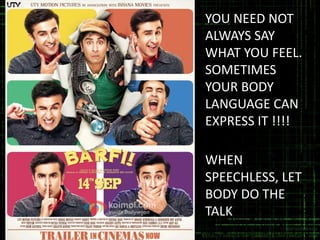
YOU NEED NOT
ALWAYS SAY
WHAT YOU FEEL.
SOMETIMES
YOUR BODY
LANGUAGE CAN
EXPRESS IT !!!!
WHEN
SPEECHLESS, LET
BODY DO THE
TALK
Book review   body language by GEOFF RIBBONS  and Greg Whitear

Book review body language by GEOFF RIBBONS and Greg Whitear

  • 1.
  • 3.
    ABSTRACT • This bookexplains the importance of body language in the context of the workplace and its role in office life. • It gives managers advice on how an understanding of body language can be helpful in a number of different work settings • It also addresses the question of how body language can help when working with people from different cultures.
  • 4.
    ABOUT THE AUTHORS •GEOFF RIBBONS has over 30 years experience in management education, training and consultancy. • For 21 years he has specialized in organizational behaviour providing incompany management qualifications for many large organizations. • He has concentrated in recent years on Performance Management, Team Building, the Management of Change and Coaching/Mentoring for senior managers and directors, diagnosing business leadership development and business strategy needs
  • 5.
    • Greg Whitearis the Managing Director of Mind zone Consulting. • He is an international consultant in business performance and management development. • He has special skills in organizational learning and the design and delivery of programs that promote change, leadership, teamwork and employee effectiveness. • He is the author of 'The NVQ and GNVQ Handbook' published in 1995 by Pitman Publishing.
  • 6.
    BODY LANGUAGE Body languageis a form of mental and physical ability of human non-verbal communication
  • 7.
    • It isbody language that conveys meanings, feelings, attitudes and emotions of the other person. • It can often be more truthful of the “real situation” than the selected words that people use. • Most people cannot hide their true feelings, it leaks out through their body language.
  • 8.
    Body language isa very powerful tool. We had body language before we had speech, and apparently, 80% of what you understand in a conversation is read through the body, not the words.
  • 9.
    EYE MOVEMENTS When peopleprocess information, movement of their eyes provides clues to internal body states they are accessing
  • 10.
  • 11.
    NEURO LINGUISTIC PROGRAMMING •Neuro-Linguistic programme is a body language relating to how people perceive their world and react to it. • It involves taking in information through our senses of sight, sound, touch, smell and taste, interpreting the information and acting on it.
  • 12.
    HHOW MANAGERS ACQUIREAND USE POWER • Position Power: Their position in the organization • Coercive Power: How tough they are, use of threats • Reward Power: How supportive they are, rewards they give their subordinates • Expert Power: How informed they are, technically or managerially • Referent Power: How unique they are, personality and charisma
  • 13.
  • 14.
  • 15.
  • 16.
    AVOIDING OUTRIGHT LYING • • • • • Failto answer the question asked Pretend not to understand the question Remain silent Feign Emotion Pretend they feel ill
  • 17.
    BODY LANGUAGE OFDECEPTION Eyebrows, forehead, face Postures/Gestures Eye Smiles Voice Gestures
  • 18.
    BODY LANGUAGE INSECURITY AND CONTROL
  • 20.
    INTERVIEW • FIRST IMPRESSION •ESTABLISHING RAPPOT • BREAKING THE ICE • ACTIVE LISTENING
  • 21.
    COUNSELLING Body language givesus clues about “something is wrong”. Characteristics of stressed individuals in terms of body language. • Hypersensitivity to mild situations • Displaying tense posture • Showing irritation • Appearing restless • Nervous laughter • Tiredness, exhaustion and listlessness • Tense muscles
  • 22.
    FEEDBACK Feedback is aninterpersonal skill involving exchange of information, a willingness to listen, to learn and to modify behavior to achieve the outcome that is needed. • • • • • • • • • • Readiness Self-review Own your feedback Specific Constructive Achievable Acceptable Priorities Time Place
  • 23.
    BODY LANGUAGE DURINGMEETINGS There are two areas that should be focused on during meetings: Body language of chairpersons, Body language of members.
  • 24.
    BODY LANGUAGE DURING PRESENTATION •Body language of the presenter • Power of hands gestures to make a point • Behaviors to avoid • Keeping an eye contact with the audience • Signs of boredom • Being distracted
  • 25.
  • 26.
    BODY LANGUAGE ANDNEGOTIATION PUSH BEHAVIOUR PULL BEHAVIOUR DEMANDING BARGAINING MEETING YOUR NEEDS CONCEEDING MEETING YOUR NEEDS
  • 27.
  • 28.
  • 29.
  • 30.
  • 31.
    • KOREA: ITMEANS APPROVAL OR ACCEPTANCE • USA: MEANS WELL DONE, THAT’S GREAT • LATIN AMERICA, GREECE, SOUTH ITALY: IT HAS AN OPPOSITE MEANING • IRAQ: REGARDED AS OBSCENE GESTURE • USA: CONSIDERED AS VICTORY OR PEACE OR LOVE • JAPAN: USED WHILE POSING FOR PHOTOGRAPHS • UK, AUSTRALIA, IRELAND: REGARDED AS SIGN OF INSULT
  • 32.
  • 33.
    POSITIVES • Gives adetailed description of positive and negative body language • The language used is simple, easy to understand • Author makes use of pictures to demonstrate various kinds of body language • The exact body language needed at the work scenario is explained
  • 34.
    NEGATIVES • The instancesin the book do not represent the India scenario.
  • 35.
    YOU NEED NOT ALWAYSSAY WHAT YOU FEEL. SOMETIMES YOUR BODY LANGUAGE CAN EXPRESS IT !!!! WHEN SPEECHLESS, LET BODY DO THE TALK