By 
Sandeepreddy
 
contents 
 What are gestures 
 Types of gestures 
 What is Gesture Recognition ? 
 Working 
 Types of Gesture Recognition 
 Types of Gesture Sensing Technology 
 Technology Behind It 
 Uses Of Gesture Recognition 
 Gesture Recognition Challenges 
 Conclusion
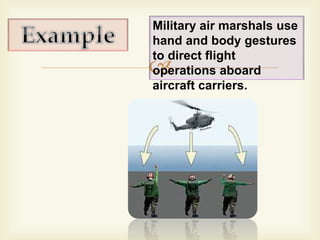
Military air marshals use 
hand and body gestures 
to direct flight 
operations aboard 
aircraft carriers. 

What is Gesture Recognition ? 
 
 Interface with computers using gestures of the 
human body, typically hand movements. 
 Gesture recognition is an important skill for robots 
that work closely with humans. 
 Gesture recognition is especially valuable in 
applications involving interaction human/robot for 
several reasons.
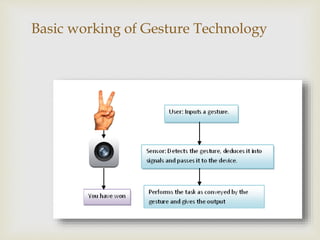
Basic working of Gesture Technology
Types of Gesture Recognition 
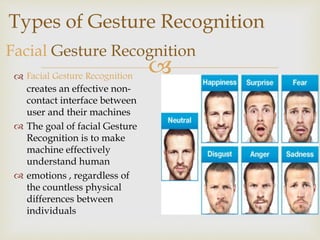
Facial Gesture Recognition 
 
 Facial Gesture Recognition 
creates an effective non-contact 
interface between 
user and their machines 
 The goal of facial Gesture 
Recognition is to make 
machine effectively 
understand human 
 emotions , regardless of 
the countless physical 
differences between 
individuals
Hand Gesture Recognition 
 
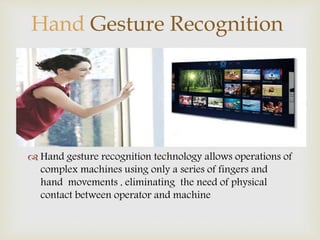
 Hand gesture recognition technology allows operations of 
complex machines using only a series of fingers and 
hand movements , eliminating the need of physical 
contact between operator and machine
Sign Language Recognition 
 
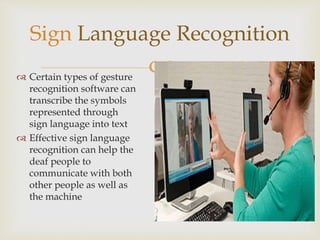
 Certain types of gesture 
recognition software can 
transcribe the symbols 
represented through 
sign language into text 
 Effective sign language 
recognition can help the 
deaf people to 
communicate with both 
other people as well as 
the machine
Types of Gesture Sensing Technology 
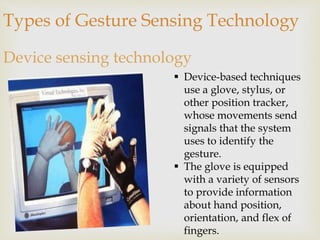
Device sensing technology 
 Device-based techniques 
use a glove, stylus, or 
other position tracker, 
whose movements send 
signals that the system 
uses to identify the 
gesture. 
 The glove is equipped 
with a variety of sensors 
to provide information 
about hand position, 
orientation, and flex of 
fingers.
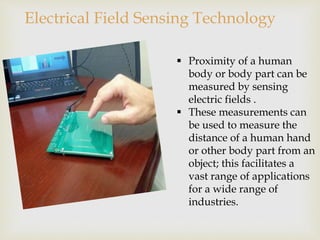
Electrical Field Sensing Technology 
 Proximity of a human 
body or body part can be 
measured by sensing 
electric fields . 
 These measurements can 
be used to measure the 
distance of a human hand 
or other body part from an 
object; this facilitates a 
vast range of applications 
for a wide range of 
industries.
Vision based technology 
There are two approaches to 
vision based gesture 
recognition: 
 Model based techniques: 
They try to create a three 
dimensional model of the 
users hand and use this for 
recognition. 
 Image based methods: 
Image-based techniques 
detect a gesture by 
capturing pictures of a 
user’s motions during the 
course of a gesture.
 
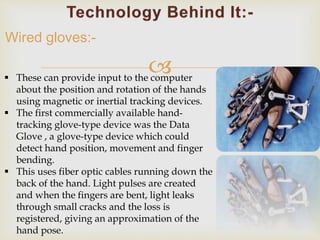
Wired gloves:- 
 These can provide input to the computer 
about the position and rotation of the hands 
using magnetic or inertial tracking devices. 
 The first commercially available hand-tracking 
glove-type device was the Data 
Glove , a glove-type device which could 
detect hand position, movement and finger 
bending. 
 This uses fiber optic cables running down the 
back of the hand. Light pulses are created 
and when the fingers are bent, light leaks 
through small cracks and the loss is 
registered, giving an approximation of the 
hand pose.
 
Stereo cameras:- 
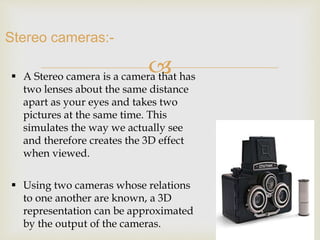
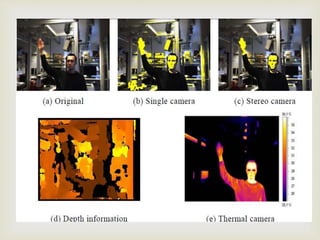
 A Stereo camera is a camera that has 
two lenses about the same distance 
apart as your eyes and takes two 
pictures at the same time. This 
simulates the way we actually see 
and therefore creates the 3D effect 
when viewed. 
 Using two cameras whose relations 
to one another are known, a 3D 
representation can be approximated 
by the output of the cameras.
Depth-aware cameras. 
 
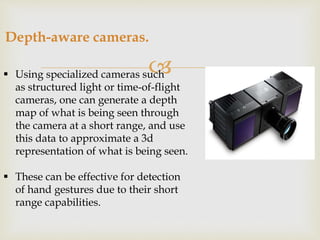
 Using specialized cameras such 
as structured light or time-of-flight 
cameras, one can generate a depth 
map of what is being seen through 
the camera at a short range, and use 
this data to approximate a 3d 
representation of what is being seen. 
 These can be effective for detection 
of hand gestures due to their short 
range capabilities.
Thermal cameras: 
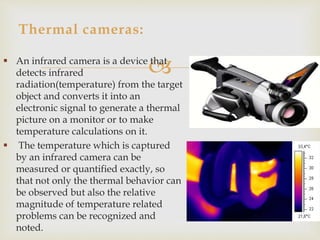
 An infrared camera is a device that 
detects infrared 
radiation(temperature) from the target 
object and converts it into an 
electronic signal to generate a thermal 
picture on a monitor or to make 
temperature calculations on it. 
 The temperature which is captured 
by an infrared camera can be 
measured or quantified exactly, so 
that not only the thermal behavior can 
be observed but also the relative 
magnitude of temperature related 
problems can be recognized and 
noted.

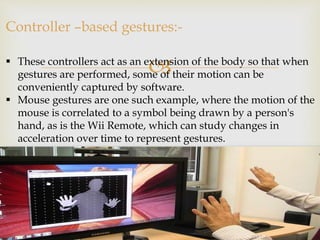
Controller –based gestures:- 
 These controllers act as an extension of the body so that when 
gestures are performed, some of their motion can be 
conveniently captured by software. 
 Mouse gestures are one such example, where the motion of the 
mouse is correlated to a symbol being drawn by a person's 
hand, as is the Wii Remote, which can study changes in 
acceleration over time to represent gestures.
 
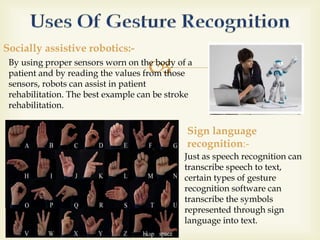
Socially assistive robotics:- 
By using proper sensors worn on the body of a 
patient and by reading the values from those 
sensors, robots can assist in patient 
rehabilitation. The best example can be stroke 
rehabilitation. 
Sign language 
recognition:- 
Just as speech recognition can 
transcribe speech to text, 
certain types of gesture 
recognition software can 
transcribe the symbols 
represented through sign 
language into text.
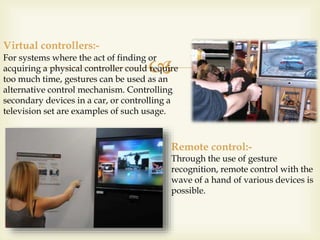
For systems where the act of finding or 
 
acquiring a physical controller could require 
too much time, gestures can be used as an 
alternative control mechanism. Controlling 
secondary devices in a car, or controlling a 
television set are examples of such usage. 
Virtual controllers:- 
Remote control:- 
Through the use of gesture 
recognition, remote control with the 
wave of a hand of various devices is 
possible.
Gesture Recognition Challenges 
 
 Lack of Gesture Language 
Different users make gestures differently, causing 
difficulty in identifying motions 
 Robustness 
Many gesture recognition systems do not read motions 
accurately or optimally due to factors like insufficient 
background light, high background noise etc
Conclusion 
 
 The importance of gesture recognition lies in 
building efficient human machine interaction. 
gesture recognition promises wide-ranging 
applications in fields from photojournalism through 
medical technology to biometrics.
 
Thank u

Finalgesture22

  • 1.
  • 2.
     contents What are gestures  Types of gestures  What is Gesture Recognition ?  Working  Types of Gesture Recognition  Types of Gesture Sensing Technology  Technology Behind It  Uses Of Gesture Recognition  Gesture Recognition Challenges  Conclusion
  • 3.
    Military air marshalsuse hand and body gestures to direct flight operations aboard aircraft carriers. 
  • 4.
    What is GestureRecognition ?   Interface with computers using gestures of the human body, typically hand movements.  Gesture recognition is an important skill for robots that work closely with humans.  Gesture recognition is especially valuable in applications involving interaction human/robot for several reasons.
  • 5.
    Basic working ofGesture Technology
  • 6.
    Types of GestureRecognition Facial Gesture Recognition   Facial Gesture Recognition creates an effective non-contact interface between user and their machines  The goal of facial Gesture Recognition is to make machine effectively understand human  emotions , regardless of the countless physical differences between individuals
  • 7.
    Hand Gesture Recognition   Hand gesture recognition technology allows operations of complex machines using only a series of fingers and hand movements , eliminating the need of physical contact between operator and machine
  • 8.
    Sign Language Recognition   Certain types of gesture recognition software can transcribe the symbols represented through sign language into text  Effective sign language recognition can help the deaf people to communicate with both other people as well as the machine
  • 9.
    Types of GestureSensing Technology Device sensing technology  Device-based techniques use a glove, stylus, or other position tracker, whose movements send signals that the system uses to identify the gesture.  The glove is equipped with a variety of sensors to provide information about hand position, orientation, and flex of fingers.
  • 10.
    Electrical Field SensingTechnology  Proximity of a human body or body part can be measured by sensing electric fields .  These measurements can be used to measure the distance of a human hand or other body part from an object; this facilitates a vast range of applications for a wide range of industries.
  • 11.
    Vision based technology There are two approaches to vision based gesture recognition:  Model based techniques: They try to create a three dimensional model of the users hand and use this for recognition.  Image based methods: Image-based techniques detect a gesture by capturing pictures of a user’s motions during the course of a gesture.
  • 12.
     Wired gloves:-  These can provide input to the computer about the position and rotation of the hands using magnetic or inertial tracking devices.  The first commercially available hand-tracking glove-type device was the Data Glove , a glove-type device which could detect hand position, movement and finger bending.  This uses fiber optic cables running down the back of the hand. Light pulses are created and when the fingers are bent, light leaks through small cracks and the loss is registered, giving an approximation of the hand pose.
  • 13.
     Stereo cameras:-  A Stereo camera is a camera that has two lenses about the same distance apart as your eyes and takes two pictures at the same time. This simulates the way we actually see and therefore creates the 3D effect when viewed.  Using two cameras whose relations to one another are known, a 3D representation can be approximated by the output of the cameras.
  • 14.
    Depth-aware cameras.   Using specialized cameras such as structured light or time-of-flight cameras, one can generate a depth map of what is being seen through the camera at a short range, and use this data to approximate a 3d representation of what is being seen.  These can be effective for detection of hand gestures due to their short range capabilities.
  • 15.
    Thermal cameras: An infrared camera is a device that detects infrared radiation(temperature) from the target object and converts it into an electronic signal to generate a thermal picture on a monitor or to make temperature calculations on it.  The temperature which is captured by an infrared camera can be measured or quantified exactly, so that not only the thermal behavior can be observed but also the relative magnitude of temperature related problems can be recognized and noted.
  • 16.
  • 17.
    Controller –based gestures:-  These controllers act as an extension of the body so that when gestures are performed, some of their motion can be conveniently captured by software.  Mouse gestures are one such example, where the motion of the mouse is correlated to a symbol being drawn by a person's hand, as is the Wii Remote, which can study changes in acceleration over time to represent gestures.
  • 18.
     Socially assistiverobotics:- By using proper sensors worn on the body of a patient and by reading the values from those sensors, robots can assist in patient rehabilitation. The best example can be stroke rehabilitation. Sign language recognition:- Just as speech recognition can transcribe speech to text, certain types of gesture recognition software can transcribe the symbols represented through sign language into text.
  • 19.
    For systems wherethe act of finding or  acquiring a physical controller could require too much time, gestures can be used as an alternative control mechanism. Controlling secondary devices in a car, or controlling a television set are examples of such usage. Virtual controllers:- Remote control:- Through the use of gesture recognition, remote control with the wave of a hand of various devices is possible.
  • 20.
    Gesture Recognition Challenges   Lack of Gesture Language Different users make gestures differently, causing difficulty in identifying motions  Robustness Many gesture recognition systems do not read motions accurately or optimally due to factors like insufficient background light, high background noise etc
  • 21.
    Conclusion  The importance of gesture recognition lies in building efficient human machine interaction. gesture recognition promises wide-ranging applications in fields from photojournalism through medical technology to biometrics.
  • 22.