Non-verbal Communication
Ferdinand C. Importado CPA, MBA
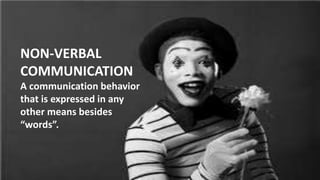
NON-VERBAL
COMMUNICATION
A communication behavior
that is expressed in any
other means besides
“words”.
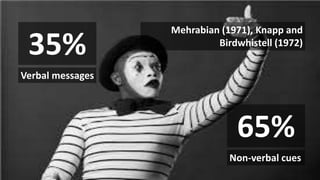
Verbal messages
35%
Non-verbal cues
65%
Mehrabian (1971), Knapp and
Birdwhistell (1972)
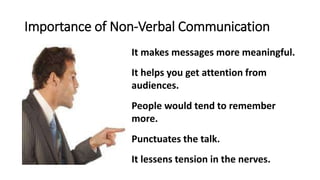
Importance of Non-Verbal Communication
It makes messages more meaningful.
It helps you get attention from
audiences.
People would tend to remember
more.
Punctuates the talk.
It lessens tension in the nerves.
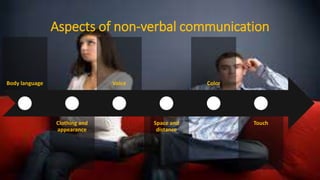
Aspects of non-verbal communication
Body language
Clothing and
appearance
Voice
Space and
distance
Color
Touch
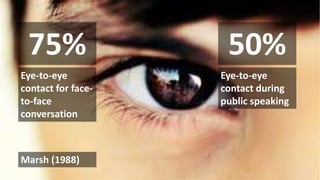
Eye-to-eye
contact for face-
to-face
conversation
75%
Eye-to-eye
contact during
public speaking
50%
Marsh (1988)
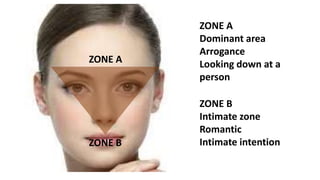
ZONE A
ZONE B
ZONE A
Dominant area
Arrogance
Looking down at a
person
ZONE B
Intimate zone
Romantic
Intimate intention
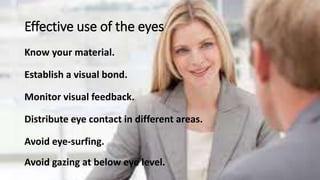
Effective use of the eyes
Know your material.
Establish a visual bond.
Monitor visual feedback.
Distribute eye contact in different areas.
Avoid eye-surfing.
Avoid gazing at below eye level.
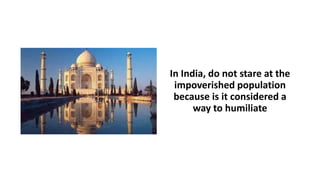
In India, do not stare at the
impoverished population
because is it considered a
way to humiliate
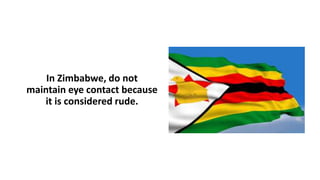
In Zimbabwe, do not
maintain eye contact because
it is considered rude.
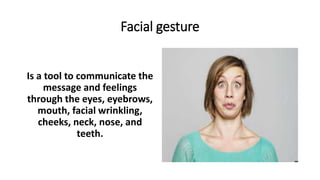
Facial gesture
Is a tool to communicate the
message and feelings
through the eyes, eyebrows,
mouth, facial wrinkling,
cheeks, neck, nose, and
teeth.
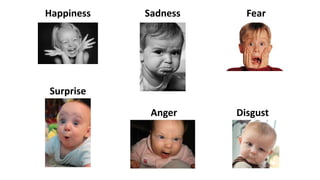
Happiness Sadness Fear
Surprise
Anger Disgust
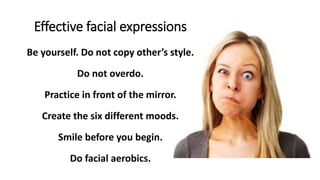
Effective facial expressions
Be yourself. Do not copy other’s style.
Do not overdo.
Practice in front of the mirror.
Create the six different moods.
Smile before you begin.
Do facial aerobics.
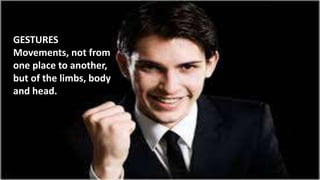
GESTURES
Movements, not from
one place to another,
but of the limbs, body
and head.
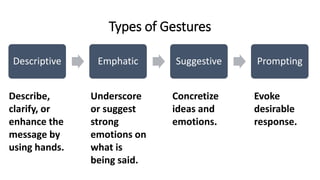
Descriptive Emphatic Suggestive Prompting
Describe,
clarify, or
enhance the
message by
using hands.
Underscore
or suggest
strong
emotions on
what is
being said.
Concretize
ideas and
emotions.
Evoke
desirable
response.
Types of Gestures
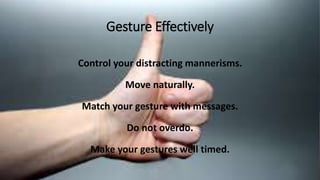
Gesture Effectively
Control your distracting mannerisms.
Move naturally.
Match your gesture with messages.
Do not overdo.
Make your gestures well timed.
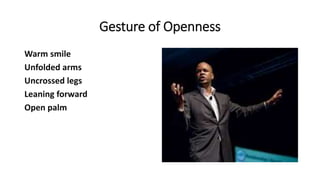
Gesture of Openness
Warm smile
Unfolded arms
Uncrossed legs
Leaning forward
Open palm
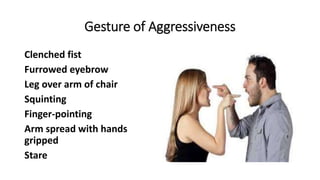
Gesture of Aggressiveness
Clenched fist
Furrowed eyebrow
Leg over arm of chair
Squinting
Finger-pointing
Arm spread with hands
gripped
Stare
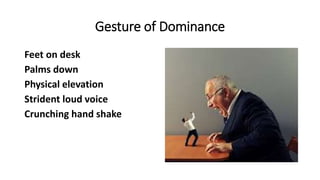
Gesture of Dominance
Feet on desk
Palms down
Physical elevation
Strident loud voice
Crunching hand shake
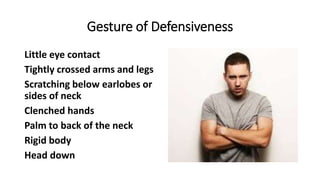
Gesture of Defensiveness
Little eye contact
Tightly crossed arms and legs
Scratching below earlobes or
sides of neck
Clenched hands
Palm to back of the neck
Rigid body
Head down
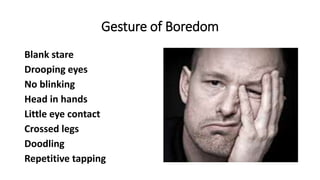
Gesture of Boredom
Blank stare
Drooping eyes
No blinking
Head in hands
Little eye contact
Crossed legs
Doodling
Repetitive tapping
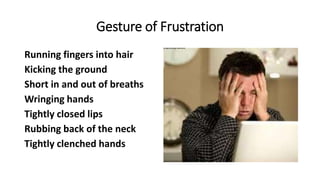
Gesture of Frustration
Running fingers into hair
Kicking the ground
Short in and out of breaths
Wringing hands
Tightly closed lips
Rubbing back of the neck
Tightly clenched hands
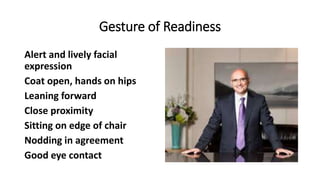
Gesture of Readiness
Alert and lively facial
expression
Coat open, hands on hips
Leaning forward
Close proximity
Sitting on edge of chair
Nodding in agreement
Good eye contact
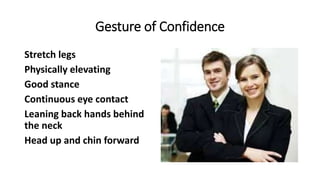
Gesture of Confidence
Stretch legs
Physically elevating
Good stance
Continuous eye contact
Leaning back hands behind
the neck
Head up and chin forward
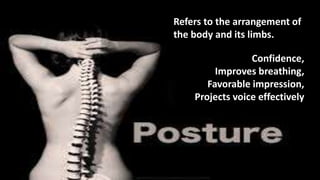
Refers to the arrangement of
the body and its limbs.
Confidence,
Improves breathing,
Favorable impression,
Projects voice effectively
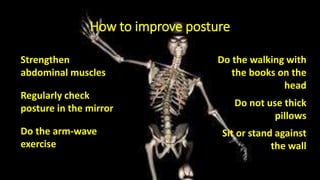
How to improve posture
Strengthen
abdominal muscles
Regularly check
posture in the mirror
Do the arm-wave
exercise
Do the walking with
the books on the
head
Do not use thick
pillows
Sit or stand against
the wall
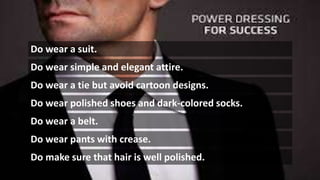
Do wear a suit.
Do wear simple and elegant attire.
Do wear a tie but avoid cartoon designs.
Do wear polished shoes and dark-colored socks.
Do wear a belt.
Do wear pants with crease.
Do make sure that hair is well polished.
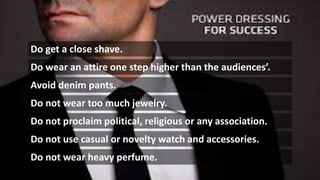
Do get a close shave.
Do wear an attire one step higher than the audiences’.
Avoid denim pants.
Do not wear too much jewelry.
Do not proclaim political, religious or any association.
Do not use casual or novelty watch and accessories.
Do not wear heavy perfume.
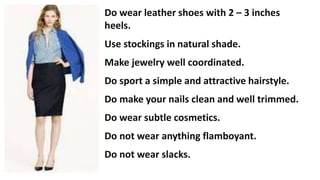
Do wear leather shoes with 2 – 3 inches
heels.
Use stockings in natural shade.
Make jewelry well coordinated.
Do sport a simple and attractive hairstyle.
Do make your nails clean and well trimmed.
Do wear subtle cosmetics.
Do not wear anything flamboyant.
Do not wear slacks.
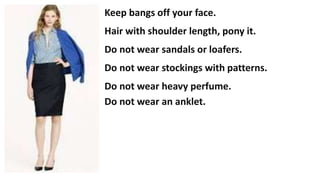
Keep bangs off your face.
Hair with shoulder length, pony it.
Do not wear sandals or loafers.
Do not wear stockings with patterns.
Do not wear heavy perfume.
Do not wear an anklet.
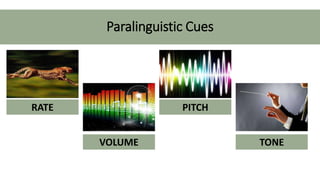
Paralinguistic Cues
RATE
VOLUME
PITCH
TONE
Interpretation of Vocal Cues
BREATHINESS
young, artistic,
feminine,
pretty
THINNESS
immature,
sense of humor
FLATNESS
masculine,
sluggish, cold
NASALITY
socially
undesirable
characteristics
TENSENESS
old, mature,
sophisticated,
lazy,
unemotional,
sluggish
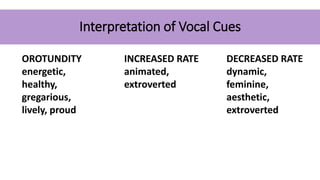
Interpretation of Vocal Cues
OROTUNDITY
energetic,
healthy,
gregarious,
lively, proud
INCREASED RATE
animated,
extroverted
DECREASED RATE
dynamic,
feminine,
aesthetic,
extroverted
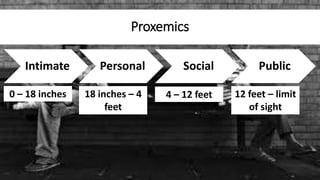
Proxemics
Intimate Personal Social Public
0 – 18 inches 18 inches – 4
feet
4 – 12 feet 12 feet – limit
of sight

Non verbal communications

  • 1.
  • 2.
    NON-VERBAL COMMUNICATION A communication behavior thatis expressed in any other means besides “words”.
  • 3.
    Verbal messages 35% Non-verbal cues 65% Mehrabian(1971), Knapp and Birdwhistell (1972)
  • 4.
    Importance of Non-VerbalCommunication It makes messages more meaningful. It helps you get attention from audiences. People would tend to remember more. Punctuates the talk. It lessens tension in the nerves.
  • 5.
    Aspects of non-verbalcommunication Body language Clothing and appearance Voice Space and distance Color Touch
  • 6.
  • 7.
    ZONE A ZONE B ZONEA Dominant area Arrogance Looking down at a person ZONE B Intimate zone Romantic Intimate intention
  • 8.
    Effective use ofthe eyes Know your material. Establish a visual bond. Monitor visual feedback. Distribute eye contact in different areas. Avoid eye-surfing. Avoid gazing at below eye level.
  • 9.
    In India, donot stare at the impoverished population because is it considered a way to humiliate
  • 10.
    In Zimbabwe, donot maintain eye contact because it is considered rude.
  • 11.
    Facial gesture Is atool to communicate the message and feelings through the eyes, eyebrows, mouth, facial wrinkling, cheeks, neck, nose, and teeth.
  • 12.
  • 13.
    Effective facial expressions Beyourself. Do not copy other’s style. Do not overdo. Practice in front of the mirror. Create the six different moods. Smile before you begin. Do facial aerobics.
  • 14.
    GESTURES Movements, not from oneplace to another, but of the limbs, body and head.
  • 15.
    Descriptive Emphatic SuggestivePrompting Describe, clarify, or enhance the message by using hands. Underscore or suggest strong emotions on what is being said. Concretize ideas and emotions. Evoke desirable response. Types of Gestures
  • 16.
    Gesture Effectively Control yourdistracting mannerisms. Move naturally. Match your gesture with messages. Do not overdo. Make your gestures well timed.
  • 17.
    Gesture of Openness Warmsmile Unfolded arms Uncrossed legs Leaning forward Open palm
  • 18.
    Gesture of Aggressiveness Clenchedfist Furrowed eyebrow Leg over arm of chair Squinting Finger-pointing Arm spread with hands gripped Stare
  • 19.
    Gesture of Dominance Feeton desk Palms down Physical elevation Strident loud voice Crunching hand shake
  • 20.
    Gesture of Defensiveness Littleeye contact Tightly crossed arms and legs Scratching below earlobes or sides of neck Clenched hands Palm to back of the neck Rigid body Head down
  • 21.
    Gesture of Boredom Blankstare Drooping eyes No blinking Head in hands Little eye contact Crossed legs Doodling Repetitive tapping
  • 22.
    Gesture of Frustration Runningfingers into hair Kicking the ground Short in and out of breaths Wringing hands Tightly closed lips Rubbing back of the neck Tightly clenched hands
  • 23.
    Gesture of Readiness Alertand lively facial expression Coat open, hands on hips Leaning forward Close proximity Sitting on edge of chair Nodding in agreement Good eye contact
  • 24.
    Gesture of Confidence Stretchlegs Physically elevating Good stance Continuous eye contact Leaning back hands behind the neck Head up and chin forward
  • 25.
    Refers to thearrangement of the body and its limbs. Confidence, Improves breathing, Favorable impression, Projects voice effectively
  • 26.
    How to improveposture Strengthen abdominal muscles Regularly check posture in the mirror Do the arm-wave exercise Do the walking with the books on the head Do not use thick pillows Sit or stand against the wall
  • 27.
    Do wear asuit. Do wear simple and elegant attire. Do wear a tie but avoid cartoon designs. Do wear polished shoes and dark-colored socks. Do wear a belt. Do wear pants with crease. Do make sure that hair is well polished.
  • 28.
    Do get aclose shave. Do wear an attire one step higher than the audiences’. Avoid denim pants. Do not wear too much jewelry. Do not proclaim political, religious or any association. Do not use casual or novelty watch and accessories. Do not wear heavy perfume.
  • 29.
    Do wear leathershoes with 2 – 3 inches heels. Use stockings in natural shade. Make jewelry well coordinated. Do sport a simple and attractive hairstyle. Do make your nails clean and well trimmed. Do wear subtle cosmetics. Do not wear anything flamboyant. Do not wear slacks.
  • 30.
    Keep bangs offyour face. Hair with shoulder length, pony it. Do not wear sandals or loafers. Do not wear stockings with patterns. Do not wear heavy perfume. Do not wear an anklet.
  • 31.
  • 32.
    Interpretation of VocalCues BREATHINESS young, artistic, feminine, pretty THINNESS immature, sense of humor FLATNESS masculine, sluggish, cold NASALITY socially undesirable characteristics TENSENESS old, mature, sophisticated, lazy, unemotional, sluggish
  • 33.
    Interpretation of VocalCues OROTUNDITY energetic, healthy, gregarious, lively, proud INCREASED RATE animated, extroverted DECREASED RATE dynamic, feminine, aesthetic, extroverted
  • 34.
    Proxemics Intimate Personal SocialPublic 0 – 18 inches 18 inches – 4 feet 4 – 12 feet 12 feet – limit of sight