METHODS CONCLUSION 
MEANING USES 
AGENDA 
DEFINITION IMPORTANCE 
TYPES
METHODS OF 
COMMUNICATION 
VERBAL 
COMMUNICATION 
It refers to the form of 
communication message is 
transmitted verbally. 
NON-VERBAL 
COMMUNICATION: 
Non-verbal communication is 
the transfer of meaningful 
information by means of 
elements and behaviors.
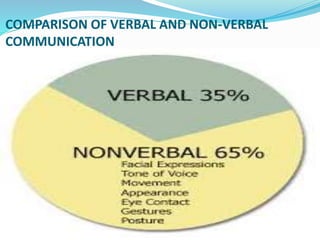
COMPARISON OF VERBAL AND NON-VERBAL 
COMMUNICATION
BODY LANGUAGE 
 Body language is a type of communication used to 
describe a whole set of non verbal means of 
communication. 
 For e.g: Postures , gestures , facial expressions , eye 
movements etc
DEFINITION 
 Body language is something that evolved 
over time to answer human social needs. 
Scientists still study which gestures 
developed and to what propose. 
 So the answer is: "it depends". For 
example, nobody taught you how to 
scowl in anger – you're born 
'programmed' in your brain to response 
that way when angry.
Amusement Embarrassment 
ELEMENTS 
Relief Satisfaction
VIDEO
TYPES OF BODY LANGUAGE 
Facial expression 
Eye contact 
Gestures 
Postures
Facial expression 
 This may be one of the most noticeable form of 
non-verbal communication. 
 The human face is developed as an organ of 
expression than any other animal. 
 Yes people always examine each others face 
trying to get some information or meaning out 
of it.
FACIAL EXPRESSION
Eye contact 
An essential tool in non-verbal communication 
as it makes other person feel heard, respected 
and important. 
 Eye contact can elevate a persons status as great 
conversationalist. 
 In America ,looking away is considered as 
avoidance, where as in some culture it signifies 
rudeness.
EYE CONTACT
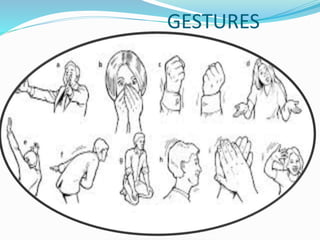
Gestures An art which can add warmth and personality 
to a conversation. 
 Failing to use the gesture may make the person 
loose interest in your subject. 
 A lively speaking style always attracts listener’s 
attention. 
 For e.g: Hand gestures, nodding etc
GESTURES
Postures 
 The most important aspect in non-verbal 
communication as your posture sends 
numerous messages to others. 
A comfortable and confident person will stand 
or sit in relaxed manner and will have fluid 
smooth movements. 
Not facing the listener should be avoided as it 
communicates dishonesty. 
 Posture is always easy to understand.
POSTURES
ACTIVITY
IMPORTANCE 
Body language is a part of communication that 
very few actually study yet it makes up most of 
what we use to communicate and is generally 
much more accurate a judge of meaning than are 
the words we use.
PIE DIAGRAM
HOW TO IMPROVE 
 Always keep your head up. 
 Don’t cross your legs and arms. 
When its difficult to control your body, force 
yourself to smile. 
Talk more with your hands. 
 Think before you speak. 
 Don’t touch your face. 
 The most important one practice.
CONCLUSION 
 From the activity we can conclude how 
influential is BODY LANGUAGE in our day to day 
life. 
Non-verbal behavior was perceived by teachers as 
important to student success. 
 Everyone has a body language, one is born with it. 
 It is expressed differently from culture to culture
PRESENTATION BY 
SONIYA 
KAJAL 
KARTHIK 
MITHUN
THANK YOU

Body language

  • 2.
    METHODS CONCLUSION MEANINGUSES AGENDA DEFINITION IMPORTANCE TYPES
  • 3.
    METHODS OF COMMUNICATION VERBAL COMMUNICATION It refers to the form of communication message is transmitted verbally. NON-VERBAL COMMUNICATION: Non-verbal communication is the transfer of meaningful information by means of elements and behaviors.
  • 4.
    COMPARISON OF VERBALAND NON-VERBAL COMMUNICATION
  • 5.
    BODY LANGUAGE Body language is a type of communication used to describe a whole set of non verbal means of communication.  For e.g: Postures , gestures , facial expressions , eye movements etc
  • 6.
    DEFINITION  Bodylanguage is something that evolved over time to answer human social needs. Scientists still study which gestures developed and to what propose.  So the answer is: "it depends". For example, nobody taught you how to scowl in anger – you're born 'programmed' in your brain to response that way when angry.
  • 7.
  • 8.
  • 9.
    TYPES OF BODYLANGUAGE Facial expression Eye contact Gestures Postures
  • 10.
    Facial expression This may be one of the most noticeable form of non-verbal communication.  The human face is developed as an organ of expression than any other animal.  Yes people always examine each others face trying to get some information or meaning out of it.
  • 11.
  • 12.
    Eye contact Anessential tool in non-verbal communication as it makes other person feel heard, respected and important.  Eye contact can elevate a persons status as great conversationalist.  In America ,looking away is considered as avoidance, where as in some culture it signifies rudeness.
  • 13.
  • 14.
    Gestures An artwhich can add warmth and personality to a conversation.  Failing to use the gesture may make the person loose interest in your subject.  A lively speaking style always attracts listener’s attention.  For e.g: Hand gestures, nodding etc
  • 15.
  • 16.
    Postures  Themost important aspect in non-verbal communication as your posture sends numerous messages to others. A comfortable and confident person will stand or sit in relaxed manner and will have fluid smooth movements. Not facing the listener should be avoided as it communicates dishonesty.  Posture is always easy to understand.
  • 17.
  • 18.
  • 19.
    IMPORTANCE Body languageis a part of communication that very few actually study yet it makes up most of what we use to communicate and is generally much more accurate a judge of meaning than are the words we use.
  • 20.
  • 21.
    HOW TO IMPROVE  Always keep your head up.  Don’t cross your legs and arms. When its difficult to control your body, force yourself to smile. Talk more with your hands.  Think before you speak.  Don’t touch your face.  The most important one practice.
  • 22.
    CONCLUSION  Fromthe activity we can conclude how influential is BODY LANGUAGE in our day to day life. Non-verbal behavior was perceived by teachers as important to student success.  Everyone has a body language, one is born with it.  It is expressed differently from culture to culture
  • 23.
    PRESENTATION BY SONIYA KAJAL KARTHIK MITHUN
  • 24.