
Body Language
What are Soft Skills??
            
 A cluster of skills that ‘influence’ how we interact
  with one another.

 Ability to relate and connect with people.
Soft Skills : Importance of
       Body Language
                        
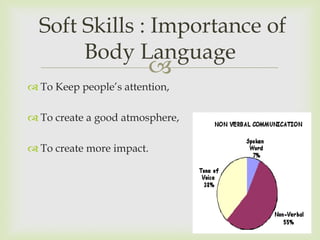
 To Keep people’s attention,

 To create a good atmosphere,

 To create more impact.
Soft Skills : Body Language
               
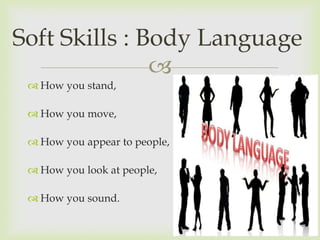
  How you stand,

  How you move,

  How you appear to people,

  How you look at people,

  How you sound.
How you Stand
               
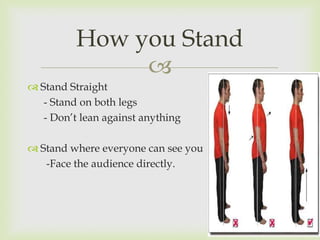
 Stand Straight
   - Stand on both legs
   - Don’t lean against anything

 Stand where everyone can see you
   -Face the audience directly.
How you Move
               
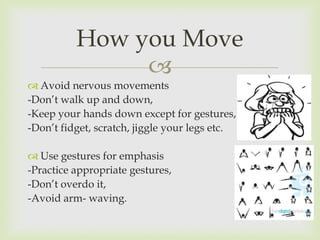
 Avoid nervous movements
-Don’t walk up and down,
-Keep your hands down except for gestures,
-Don’t fidget, scratch, jiggle your legs etc.

 Use gestures for emphasis
-Practice appropriate gestures,
-Don’t overdo it,
-Avoid arm- waving.
How you appear to
 people :Look Energetic
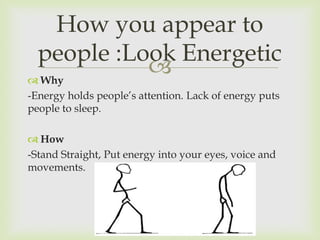
 Why
           
-Energy holds people’s attention. Lack of energy puts
people to sleep.

 How
-Stand Straight, Put energy into your eyes, voice and
movements.
How you look at people
      :Look Relaxed
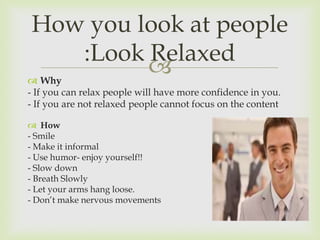
 Why
            
- If you can relax people will have more confidence in you.
- If you are not relaxed people cannot focus on the content

 How
- Smile
- Make it informal
- Use humor- enjoy yourself!!
- Slow down
- Breath Slowly
- Let your arms hang loose.
- Don’t make nervous movements
Look Confident
                
 Don’t say sorry,

 Don’t make excuses,

 Don’t be afraid of the audience,

 Don’t be too modest,

 Be prepared for problems.
Points to Remember for Discussion
   Forums & General Interviews
                      
Do’s
 Walk in Confidently
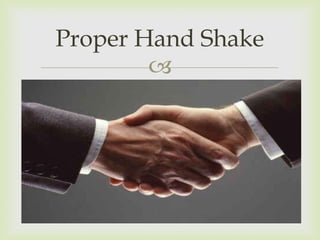
 Deliver a firm handshake
 Sit up Straight
 Keep eye contact
 Smile
 Watch your hands (no excessive movements)
Points to Remember for Discussion
   Forums & General Interviews
                        
Don’ts
 Be overconfident
 Offer a weak handshake
 Slouch (lazy posture)
 Stare
 Play with pen/hair
 Fidget (small movements of hand or legs caused by
  nervousness)
Few
         Body Postures
              
Keep it in Mind :
o During Presentations.

o During Group Discussions & Interviews.

o During Open Forum Discussions/Conferences.

o During Daily Interaction with seniors/colleagues
  in office.
Proper Hand Shake
        
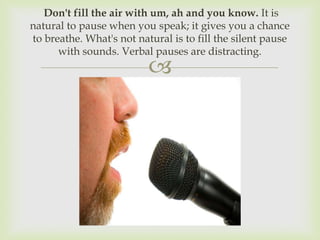
Don't fill the air with um, ah and you know. It is
natural to pause when you speak; it gives you a chance
to breathe. What's not natural is to fill the silent pause
      with sounds. Verbal pauses are distracting.
                          
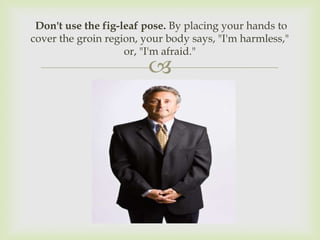
Don't use the fig-leaf pose. By placing your hands to
cover the groin region, your body says, "I'm harmless,"
                    or, "I'm afraid."
                         
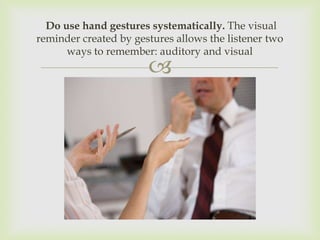
Do use hand gestures systematically. The visual
reminder created by gestures allows the listener two
      ways to remember: auditory and visual
                       
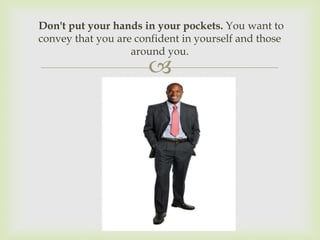
Don't put your hands in your pockets. You want to
convey that you are confident in yourself and those
                   around you.
                      
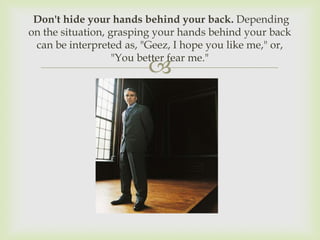
Don't hide your hands behind your back. Depending
on the situation, grasping your hands behind your back
 can be interpreted as, "Geez, I hope you like me," or,
                   "You better fear me."
                         
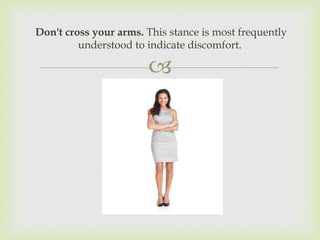
Don't cross your arms. This stance is most frequently
         understood to indicate discomfort.

                       
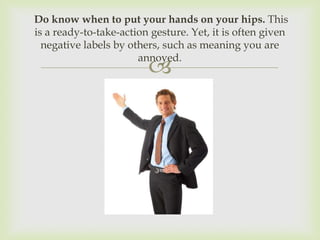
Do know when to put your hands on your hips. This
is a ready-to-take-action gesture. Yet, it is often given
  negative labels by others, such as meaning you are
                       annoyed.
                         
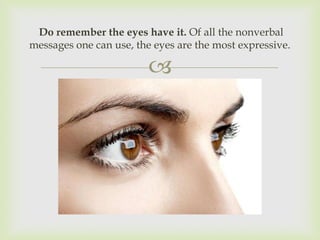
Do remember the eyes have it. Of all the nonverbal
messages one can use, the eyes are the most expressive.

                         
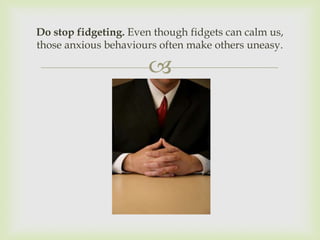
Do stop fidgeting. Even though fidgets can calm us,
those anxious behaviours often make others uneasy.

                       
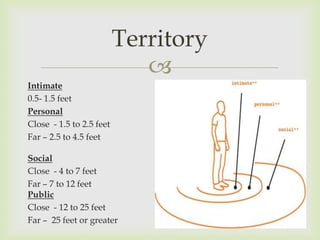
Territory
                             
Intimate
0.5- 1.5 feet
Personal
Close - 1.5 to 2.5 feet
Far – 2.5 to 4.5 feet

Social
Close - 4 to 7 feet
Far – 7 to 12 feet
Public
Close - 12 to 25 feet
Far – 25 feet or greater
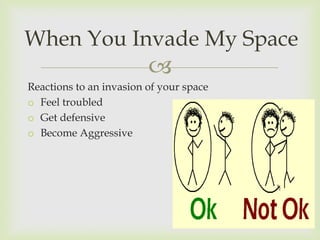
When You Invade My Space
                         
Reactions to an invasion of your space
o Feel troubled
o Get defensive
o Become Aggressive
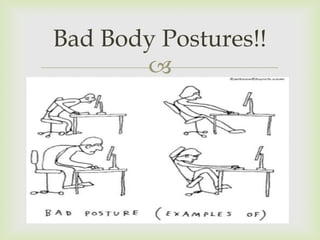
Bad Body Postures!!
       


Body Language

  • 1.
  • 2.
    What are SoftSkills??   A cluster of skills that ‘influence’ how we interact with one another.  Ability to relate and connect with people.
  • 3.
    Soft Skills :Importance of Body Language   To Keep people’s attention,  To create a good atmosphere,  To create more impact.
  • 4.
    Soft Skills :Body Language   How you stand,  How you move,  How you appear to people,  How you look at people,  How you sound.
  • 5.
    How you Stand   Stand Straight - Stand on both legs - Don’t lean against anything  Stand where everyone can see you -Face the audience directly.
  • 6.
    How you Move   Avoid nervous movements -Don’t walk up and down, -Keep your hands down except for gestures, -Don’t fidget, scratch, jiggle your legs etc.  Use gestures for emphasis -Practice appropriate gestures, -Don’t overdo it, -Avoid arm- waving.
  • 7.
    How you appearto people :Look Energetic  Why  -Energy holds people’s attention. Lack of energy puts people to sleep.  How -Stand Straight, Put energy into your eyes, voice and movements.
  • 8.
    How you lookat people :Look Relaxed  Why  - If you can relax people will have more confidence in you. - If you are not relaxed people cannot focus on the content  How - Smile - Make it informal - Use humor- enjoy yourself!! - Slow down - Breath Slowly - Let your arms hang loose. - Don’t make nervous movements
  • 9.
    Look Confident   Don’t say sorry,  Don’t make excuses,  Don’t be afraid of the audience,  Don’t be too modest,  Be prepared for problems.
  • 10.
    Points to Rememberfor Discussion Forums & General Interviews  Do’s  Walk in Confidently  Deliver a firm handshake  Sit up Straight  Keep eye contact  Smile  Watch your hands (no excessive movements)
  • 11.
    Points to Rememberfor Discussion Forums & General Interviews  Don’ts  Be overconfident  Offer a weak handshake  Slouch (lazy posture)  Stare  Play with pen/hair  Fidget (small movements of hand or legs caused by nervousness)
  • 12.
    Few Body Postures  Keep it in Mind : o During Presentations. o During Group Discussions & Interviews. o During Open Forum Discussions/Conferences. o During Daily Interaction with seniors/colleagues in office.
  • 13.
  • 14.
    Don't fill theair with um, ah and you know. It is natural to pause when you speak; it gives you a chance to breathe. What's not natural is to fill the silent pause with sounds. Verbal pauses are distracting. 
  • 15.
    Don't use thefig-leaf pose. By placing your hands to cover the groin region, your body says, "I'm harmless," or, "I'm afraid." 
  • 16.
    Do use handgestures systematically. The visual reminder created by gestures allows the listener two ways to remember: auditory and visual 
  • 17.
    Don't put yourhands in your pockets. You want to convey that you are confident in yourself and those around you. 
  • 18.
    Don't hide yourhands behind your back. Depending on the situation, grasping your hands behind your back can be interpreted as, "Geez, I hope you like me," or, "You better fear me." 
  • 19.
    Don't cross yourarms. This stance is most frequently understood to indicate discomfort. 
  • 20.
    Do know whento put your hands on your hips. This is a ready-to-take-action gesture. Yet, it is often given negative labels by others, such as meaning you are annoyed. 
  • 21.
    Do remember theeyes have it. Of all the nonverbal messages one can use, the eyes are the most expressive. 
  • 22.
    Do stop fidgeting.Even though fidgets can calm us, those anxious behaviours often make others uneasy. 
  • 23.
    Territory  Intimate 0.5- 1.5 feet Personal Close - 1.5 to 2.5 feet Far – 2.5 to 4.5 feet Social Close - 4 to 7 feet Far – 7 to 12 feet Public Close - 12 to 25 feet Far – 25 feet or greater
  • 24.
    When You InvadeMy Space  Reactions to an invasion of your space o Feel troubled o Get defensive o Become Aggressive
  • 25.
  • 26.