
PAPER-XIII(b)
TEACHER EDUCATION INSTITUTIONS AND
FIELD WORK
SANA FATIMA
M.ED (SEM-III)
GHULAM AHMED COLLEGE OF
EDUCATION, BANJARA HILLS,
UNIT-4 LEARNING OBJECTIVES OF
BIOLOGICAL SCIENCES
TOPIC- BLOOM’S TAXONOMY V/S
ANDERSON KRATHWOHL’S
TAXONOMY
SUBJECT:PEDAGOGY OF
BIOLOGICAL SCIENCES
Benjamin. S. Bloom classified domains of
human learning into three parts:
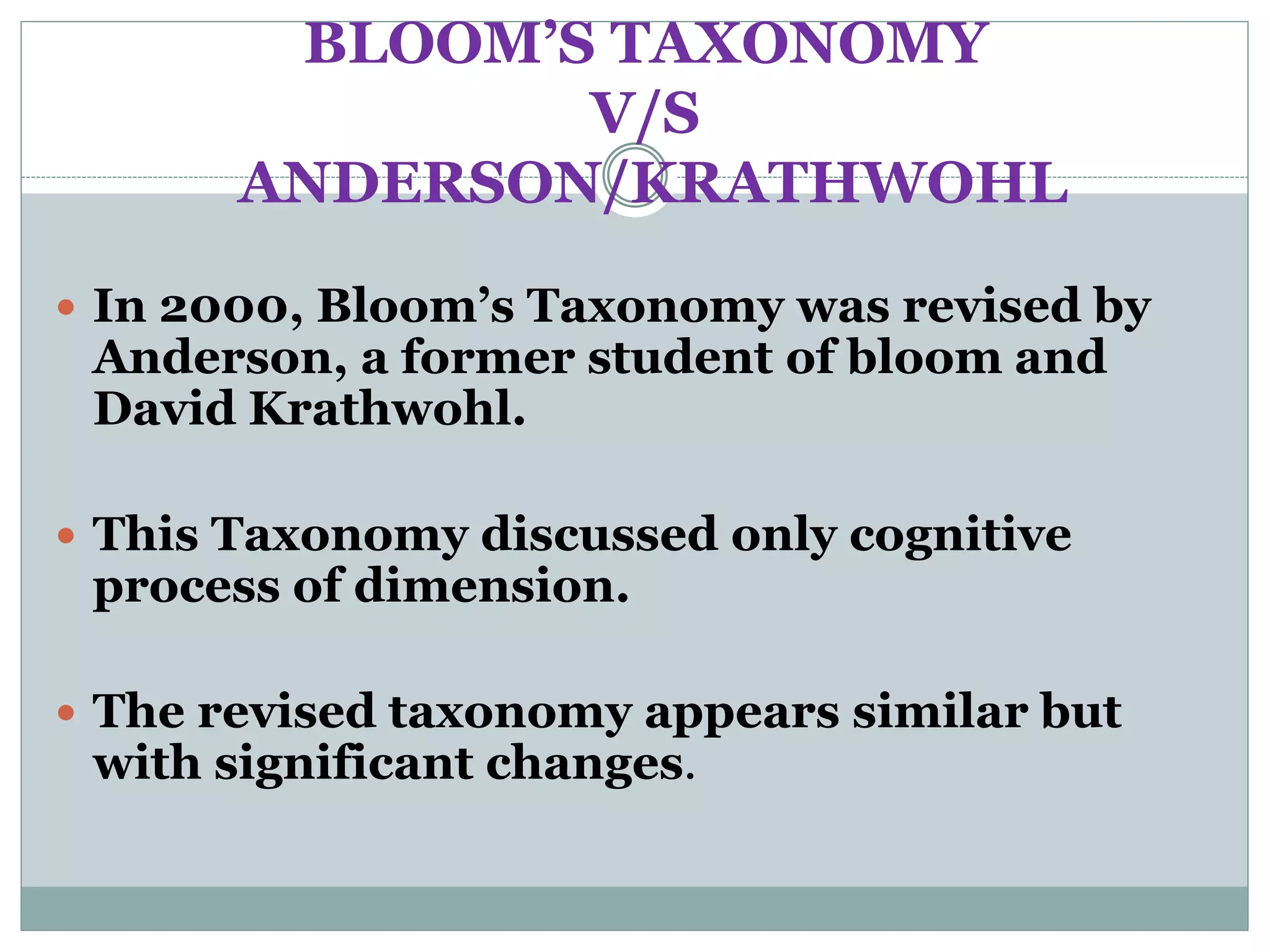
BLOOM’S TAXONOMY
V/S
ANDERSON/KRATHWOHL
 In 2000, Bloom’s Taxonomy was revised by
Anderson, a former student of bloom and
David Krathwohl.
 This Taxonomy discussed only cognitive
process of dimension.
 The revised taxonomy appears similar but
with significant changes.
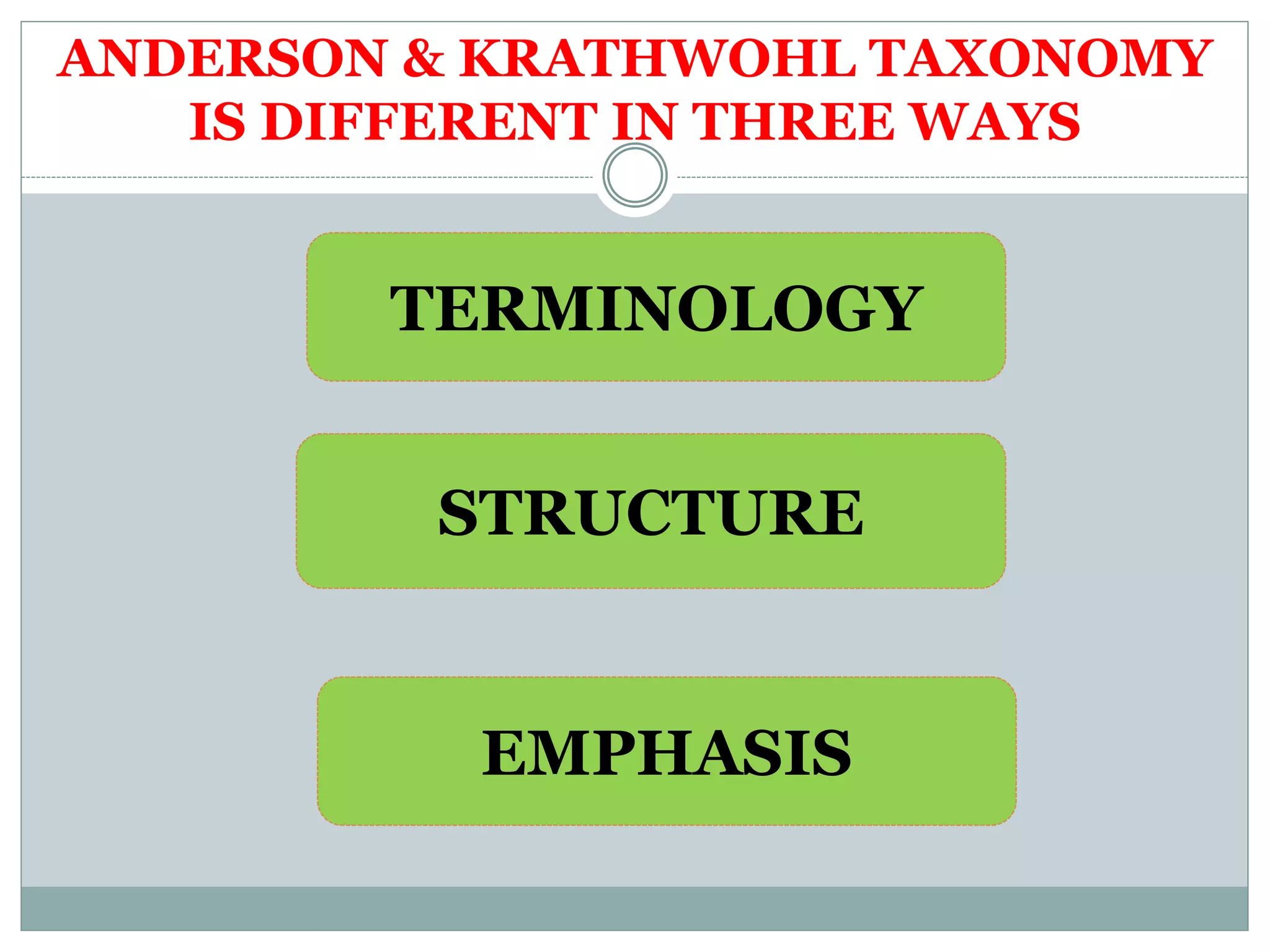
ANDERSON & KRATHWOHL TAXONOMY
IS DIFFERENT IN THREE WAYS
STRUCTURE
TERMINOLOGY
EMPHASIS
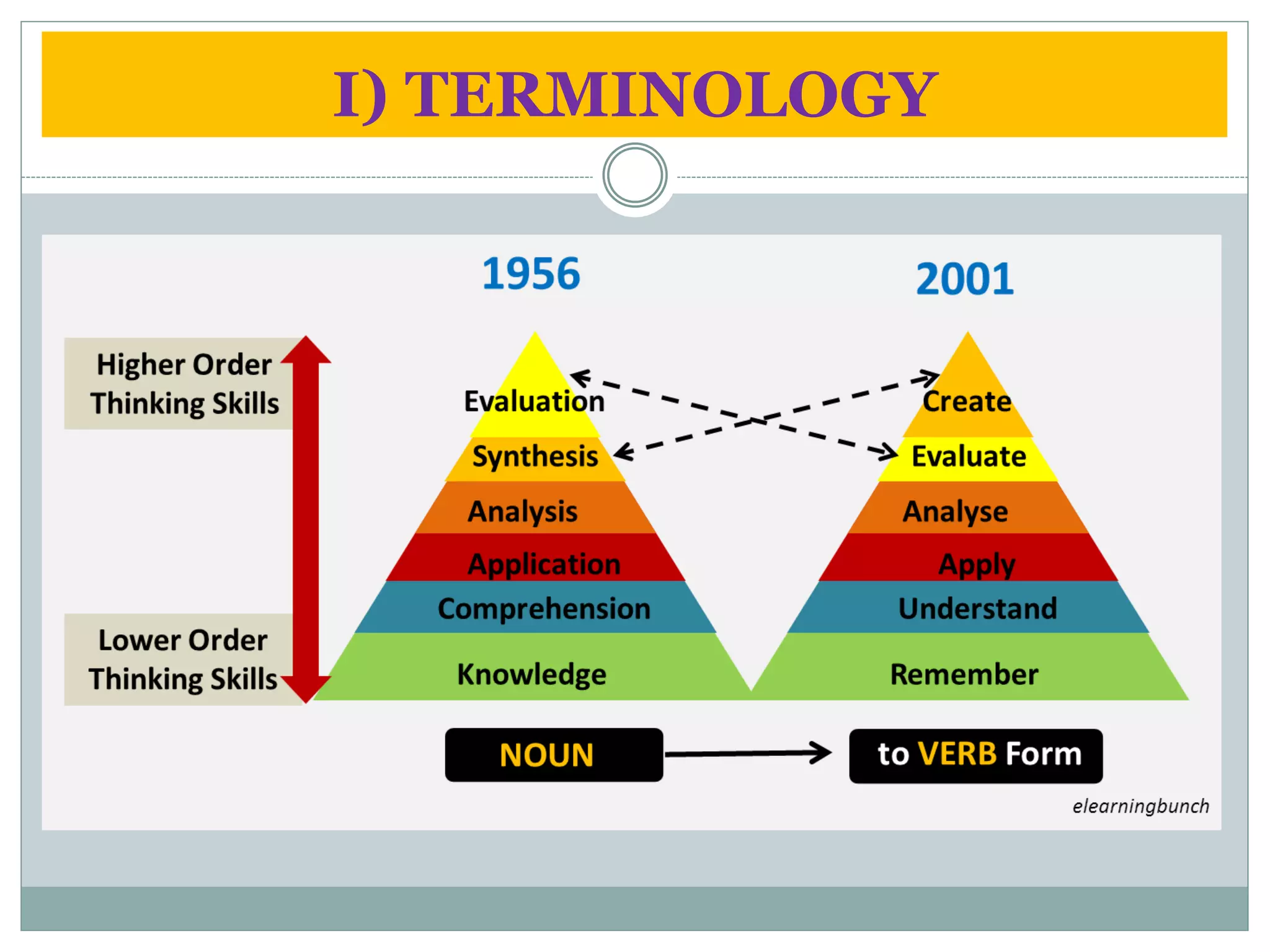
I) TERMINOLOGY
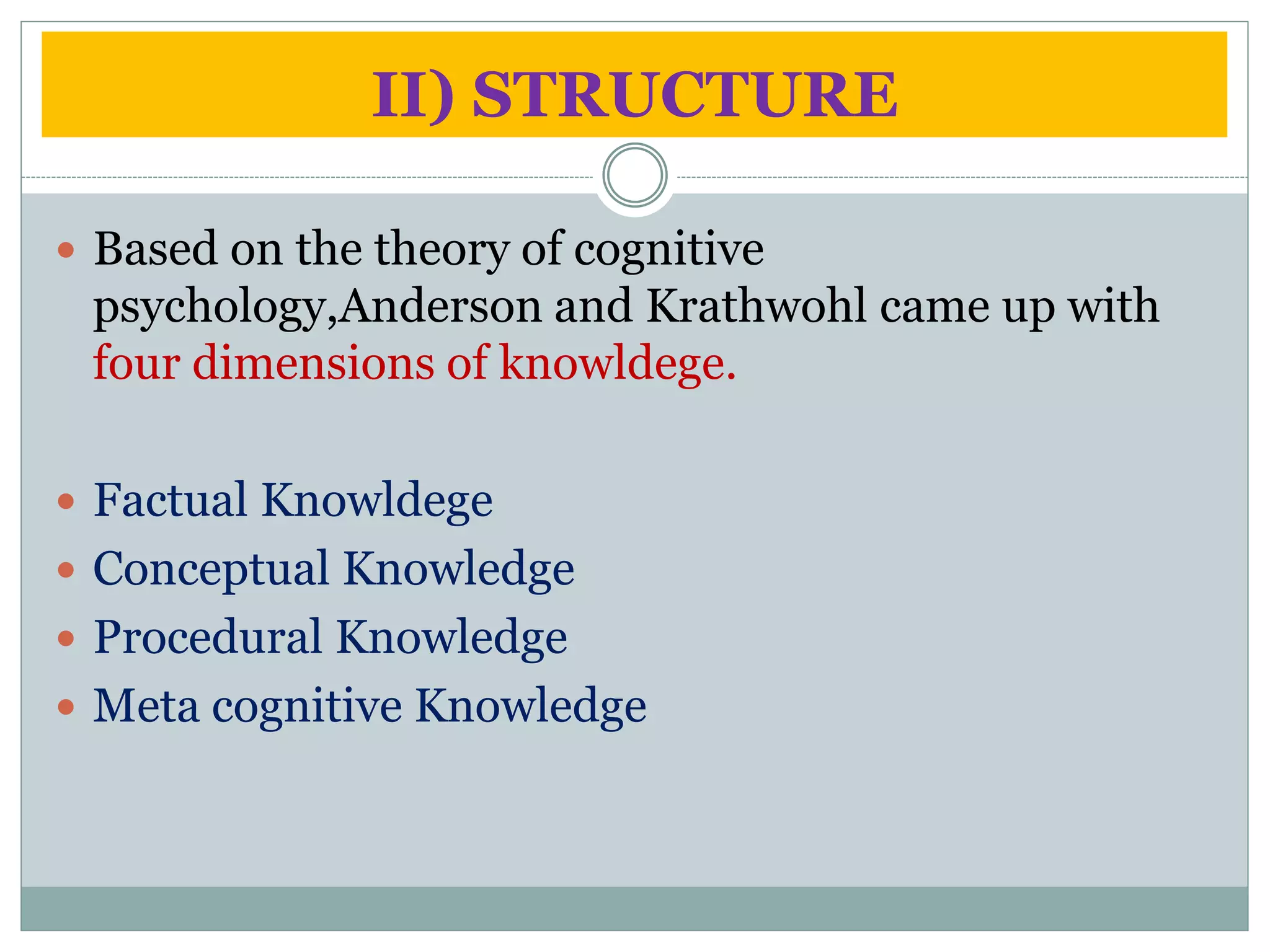
II) STRUCTURE
 Based on the theory of cognitive
psychology,Anderson and Krathwohl came up with
four dimensions of knowldege.
 Factual Knowldege
 Conceptual Knowledge
 Procedural Knowledge
 Meta cognitive Knowledge
Factual Knowledge
 The basic elements that student must know to be
aquainted with a discipline or solve problems in it
 Knowledge of terminology
 Knowledge of specific details and elements.
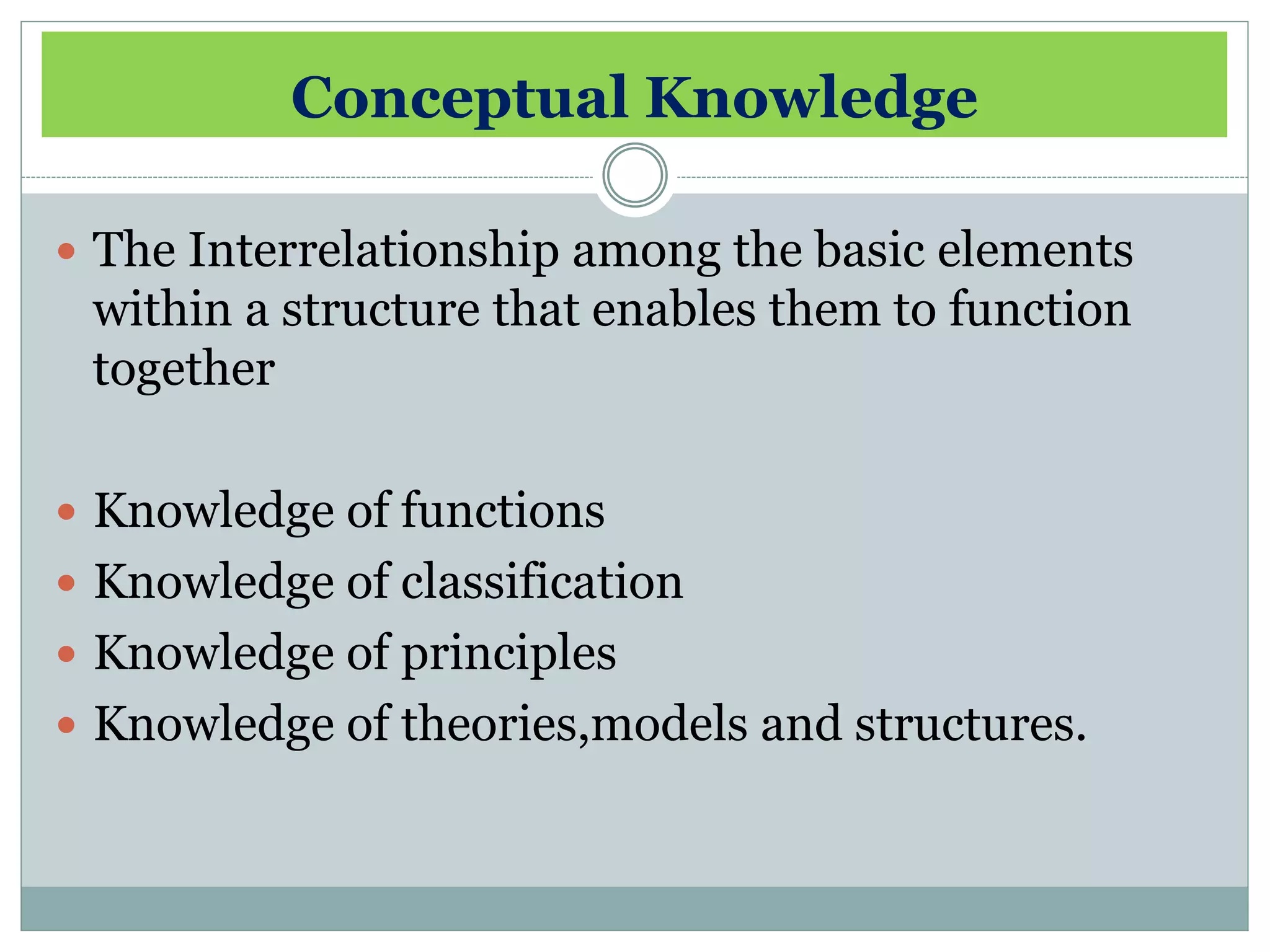
Conceptual Knowledge
 The Interrelationship among the basic elements
within a structure that enables them to function
together
 Knowledge of functions
 Knowledge of classification
 Knowledge of principles
 Knowledge of theories,models and structures.
Procedural Knowledge
 It deals with how to do something.
 Methods of enquiry
 Criteria for using skills, techniques and methods.
 Knowledge of techniques and methods.
 Knowledge of criteria for determining when to use
appropriate procedures.
Meta cognitive Knowledge
 Knowledge of cognition in general as well as
awareness of one’s own cognition.
 Strategic knowledge.
 Cognitive tasks, including appropriate contextual
and conditional knowledge.
 Self-knowledge.
STRUCTURAL DIFFERENCES
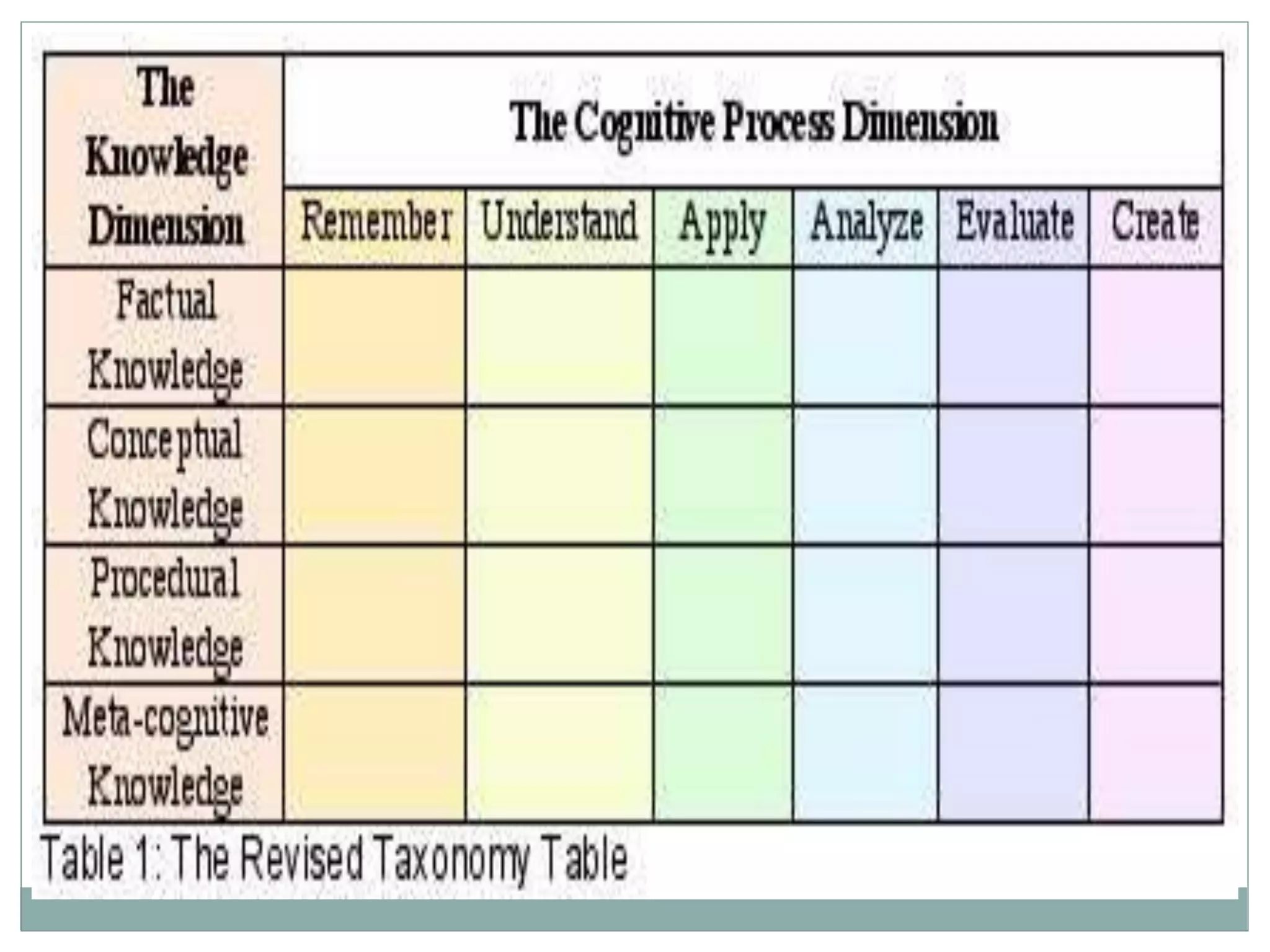
 (a) One dimensional taxonomy is revised in two
dimensional forms.
 (b) The order of synthesis and evaluation is
interchanged and Creating replaced synthesis.
 (c) In Bloom’s taxonomy, evaluation was the upper
most level of thinking. In the revised taxonomy
creating is at the top of the hierarchy.
III) EMPHASIS
 The revised taxonomy is more authentic tool for
curriculum planning, developing materials for
teaching-learning and assessment process.
 It can easily be used for higher levels also.
 Emphasis is more on the description of the
subcategories of learning.
BLOOM’S TAXONOMY V/S ANDERSON KRATHWOHL’S TAXONOMY

BLOOM’S TAXONOMY V/S ANDERSON KRATHWOHL’S TAXONOMY

  • 1.
    PAPER-XIII(b) TEACHER EDUCATION INSTITUTIONSAND FIELD WORK SANA FATIMA M.ED (SEM-III) GHULAM AHMED COLLEGE OF EDUCATION, BANJARA HILLS,
  • 2.
    UNIT-4 LEARNING OBJECTIVESOF BIOLOGICAL SCIENCES TOPIC- BLOOM’S TAXONOMY V/S ANDERSON KRATHWOHL’S TAXONOMY SUBJECT:PEDAGOGY OF BIOLOGICAL SCIENCES
  • 3.
    Benjamin. S. Bloomclassified domains of human learning into three parts:
  • 4.
    BLOOM’S TAXONOMY V/S ANDERSON/KRATHWOHL  In2000, Bloom’s Taxonomy was revised by Anderson, a former student of bloom and David Krathwohl.  This Taxonomy discussed only cognitive process of dimension.  The revised taxonomy appears similar but with significant changes.
  • 5.
    ANDERSON & KRATHWOHLTAXONOMY IS DIFFERENT IN THREE WAYS STRUCTURE TERMINOLOGY EMPHASIS
  • 6.
  • 7.
    II) STRUCTURE  Basedon the theory of cognitive psychology,Anderson and Krathwohl came up with four dimensions of knowldege.  Factual Knowldege  Conceptual Knowledge  Procedural Knowledge  Meta cognitive Knowledge
  • 9.
    Factual Knowledge  Thebasic elements that student must know to be aquainted with a discipline or solve problems in it  Knowledge of terminology  Knowledge of specific details and elements.
  • 10.
    Conceptual Knowledge  TheInterrelationship among the basic elements within a structure that enables them to function together  Knowledge of functions  Knowledge of classification  Knowledge of principles  Knowledge of theories,models and structures.
  • 11.
    Procedural Knowledge  Itdeals with how to do something.  Methods of enquiry  Criteria for using skills, techniques and methods.  Knowledge of techniques and methods.  Knowledge of criteria for determining when to use appropriate procedures.
  • 12.
    Meta cognitive Knowledge Knowledge of cognition in general as well as awareness of one’s own cognition.  Strategic knowledge.  Cognitive tasks, including appropriate contextual and conditional knowledge.  Self-knowledge.
  • 13.
    STRUCTURAL DIFFERENCES  (a)One dimensional taxonomy is revised in two dimensional forms.  (b) The order of synthesis and evaluation is interchanged and Creating replaced synthesis.  (c) In Bloom’s taxonomy, evaluation was the upper most level of thinking. In the revised taxonomy creating is at the top of the hierarchy.
  • 14.
    III) EMPHASIS  Therevised taxonomy is more authentic tool for curriculum planning, developing materials for teaching-learning and assessment process.  It can easily be used for higher levels also.  Emphasis is more on the description of the subcategories of learning.