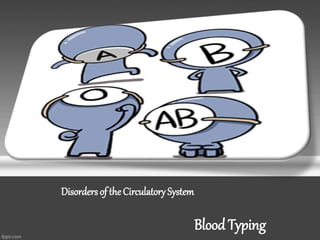
Blood Typing
Disorders of the Circulatory System
Disorders and Diseases
1. Bacterial endocarditis
- inflammation of the inner lining of the heart
due to bacterial infection
- flaps of certain valves become swollen,
when healed the flaps become distorted
resulting to a noisy, abnormal heart sounds
called heart murmur
2. Hypertension vs. Hypotension
Normotension
- a state relative constancy or homeostasis
of blood pressure within its normal range
Hypertension vs. Hypotension
hypotension
- a condition of below normal or deficient
blood pressure
- blood pressure significantly less than
100/60 mmHg
- the person may easily faint, if severe it
may be a circulatory shock/ coma
Hypertension vs. Hypotension
hypertension
- an excessive or above normal blood
pressure
- blood pressure significantly above the
upper normal limit of 140/90 mmHg
- causes heart to overwork
- may overstretch and thin out the walls of
arteries creating aneurysms
Arteriosclerosis
- is an abnormal condition of hardening of
the walls of an artery
- a condition in which fatty deposits called
plaques build up in the artery walls and
eventually cause the arteries to stiffen.
- plaques bulge into the center of a vessel
and restricting blood flow to heart muscle
Stroke
- sudden death of brain cells when their
blood supply is interrupted
- some are caused by a blood clot that
blocks a blood vessel in the brain
- can also occur if a weak blood vessel
breaks and causes bleeding in the brain
Sickle Cell Anemia
Anemia
- is a disease of the blood
- red blood cells are sickle shaped
- cause them to clog blood vessels
- break a part easily
- do not have as much hemoglobin
- a disease that you are born with
Blood Typing
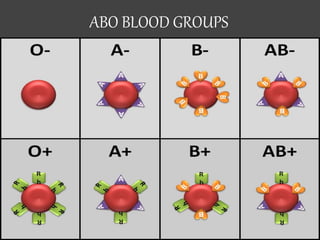
ABO BLOOD GROUPS
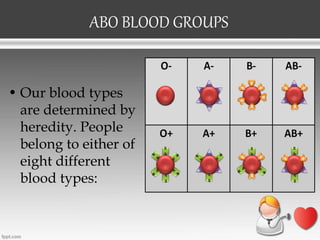
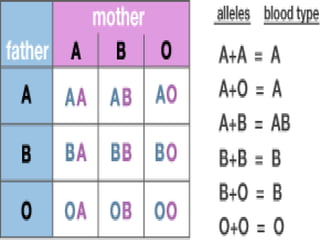
• Our blood types
are determined by
heredity. People
belong to either of
eight different
blood types:
ABO BLOOD GROUPS
• The ABO blood type classification system
uses the presence or absence of these
molecules (A and B) to categorize blood
types.
• Presence or absence of the Rh protein.
Each blood type is either positive "+" (has
the Rh protein) or negative "-" (no Rh
protein)
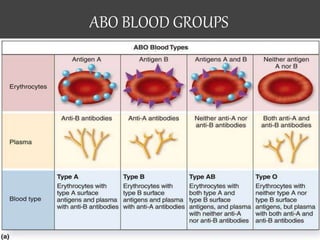
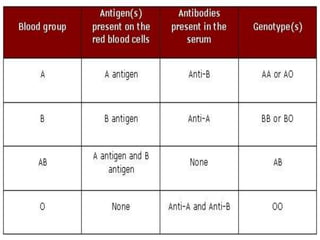
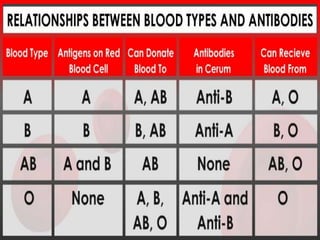
• Antigens on the surface of the red blood cells
Antigen - any substance that can stimulate the
production of antibodies and combine specifically with
them.
• The A and B antigens are sugars and the Rh
antigens are proteins.
• The antigens expressed in the red blood cells
determine an individual's blood type.
ABO BLOOD GROUPS
ABO BLOOD GROUPS
• combination of some other molecules
floating around in the blood plasma called
as antibodies.
• You can have A or/and B or/and Rh antigens or
none of them.
• You can have A or/and B or/and Rh antibodies or
none of them.
ABO BLOOD GROUPS
ABO BLOOD GROUPS
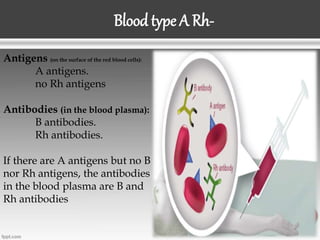
Blood type A Rh-
Antigens (on the surface of the red blood cells):
A antigens.
no Rh antigens
Antibodies (in the blood plasma):
B antibodies.
Rh antibodies.
If there are A antigens but no B
nor Rh antigens, the antibodies
in the blood plasma are B and
Rh antibodies
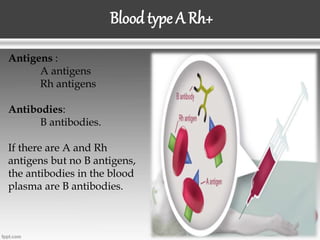
Blood type A Rh+
Antigens :
A antigens
Rh antigens
Antibodies:
B antibodies.
If there are A and Rh
antigens but no B antigens,
the antibodies in the blood
plasma are B antibodies.
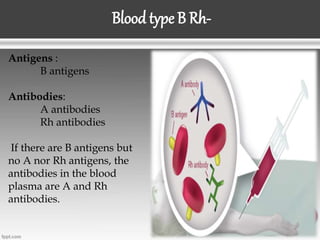
Blood type B Rh-
Antigens :
B antigens
Antibodies:
A antibodies
Rh antibodies
If there are B antigens but
no A nor Rh antigens, the
antibodies in the blood
plasma are A and Rh
antibodies.
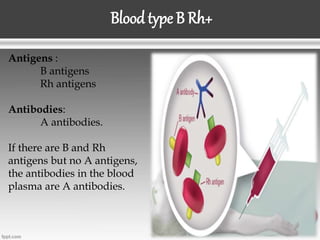
Blood type B Rh+
Antigens :
B antigens
Rh antigens
Antibodies:
A antibodies.
If there are B and Rh
antigens but no A antigens,
the antibodies in the blood
plasma are A antibodies.
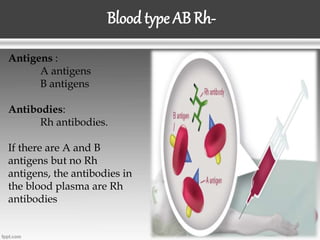
Blood type AB Rh-
Antigens :
A antigens
B antigens
Antibodies:
Rh antibodies.
If there are A and B
antigens but no Rh
antigens, the antibodies in
the blood plasma are Rh
antibodies
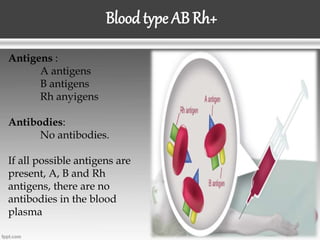
Blood type AB Rh+
Antigens :
A antigens
B antigens
Rh anyigens
Antibodies:
No antibodies.
If all possible antigens are
present, A, B and Rh
antigens, there are no
antibodies in the blood
plasma
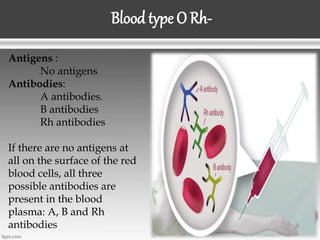
Blood type O Rh-
Antigens :
No antigens
Antibodies:
A antibodies.
B antibodies
Rh antibodies
If there are no antigens at
all on the surface of the red
blood cells, all three
possible antibodies are
present in the blood
plasma: A, B and Rh
antibodies
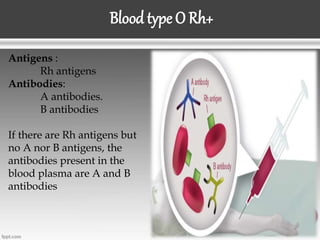
Blood type O Rh+
Antigens :
Rh antigens
Antibodies:
A antibodies.
B antibodies
If there are Rh antigens but
no A nor B antigens, the
antibodies present in the
blood plasma are A and B
antibodies
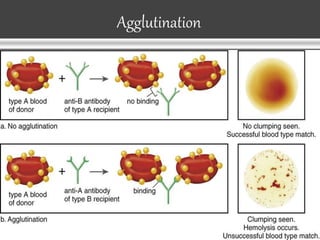
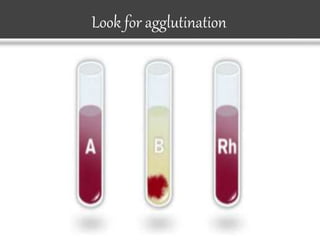
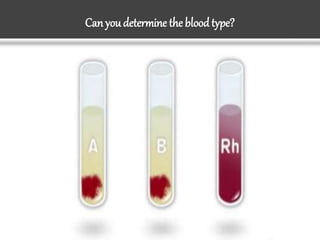
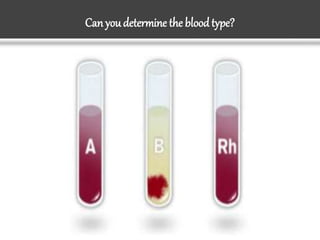
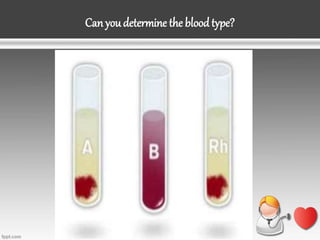
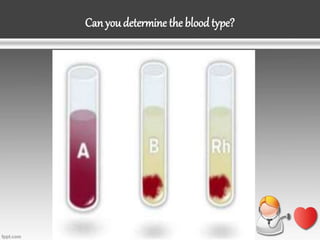
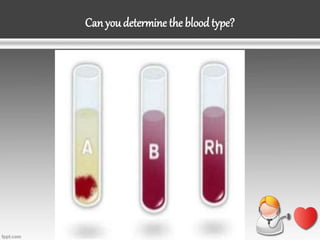
- indicates that the blood has reacted with a
certain antibody and is therefore not
compatible with blood containing that
kind of antibody.
- If the blood does not agglutinate, it
indicates that the blood does not have the
antigens binding the special antibody in
the reagent.
Agglutination or Clumping
Agglutination
What has happened when the blood agglutinates?
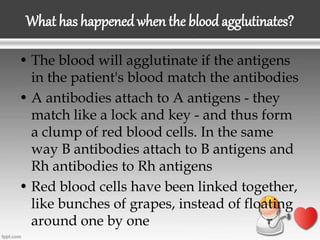
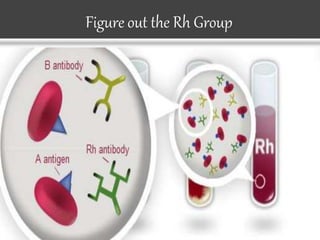
• The blood will agglutinate if the antigens
in the patient's blood match the antibodies
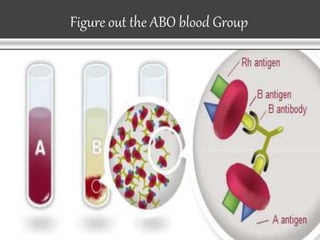
• A antibodies attach to A antigens - they
match like a lock and key - and thus form
a clump of red blood cells. In the same
way B antibodies attach to B antigens and
Rh antibodies to Rh antigens
• Red blood cells have been linked together,
like bunches of grapes, instead of floating
around one by one
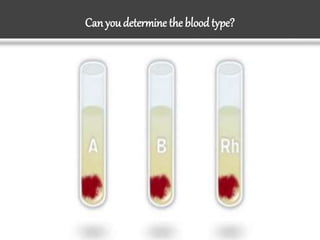
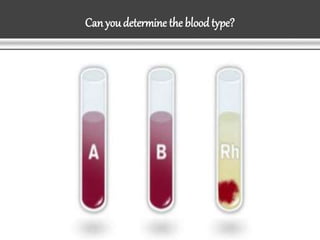
Look for agglutination
Figure out the ABO blood Group
Figure out the Rh Group
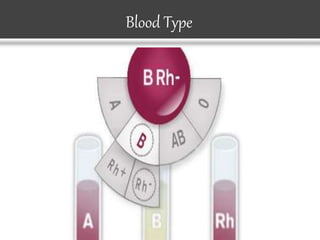
Blood Type
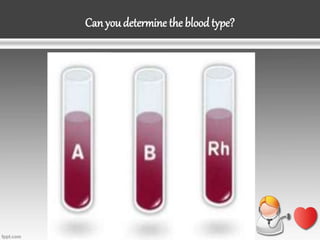
Can youdetermine the blood type?
- involves taking blood from one person (a
donor) and giving it to another (receiver)
to replace blood lost in major accidents, or
during life-saving operations, for instance.
- is the process of receiving blood products
into one's circulation
- are usually given through a tiny tube that
is inserted into a vein with a small needle
Blood transfusion
- If the blood is not compatible in a blood
transfusion, then the red blood cells from the
donated blood will clump or agglutinate.
- The agglutinated red cells can clog blood vessels
and stop the circulation of the blood to various
parts of the body.
- The agglutinated red blood cells may also crack
and their contents leak out in the body.
- The red blood cells contain hemoglobin which
becomes toxic when outside the cell. This can
have fatal consequences for the patient.
What happens if you get the wrong bloodin a transfusion?
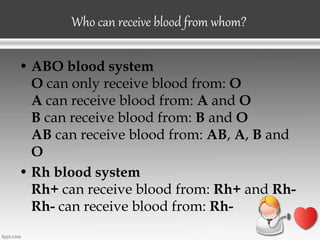
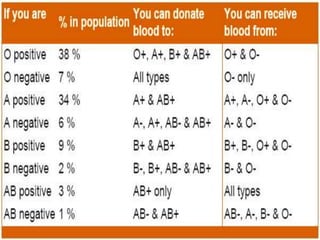
Who can receive blood from whom?
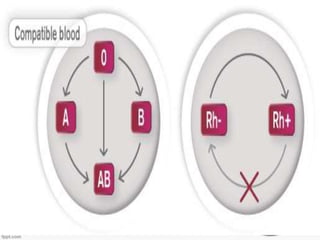
• ABO blood system
O can only receive blood from: O
A can receive blood from: A and O
B can receive blood from: B and O
AB can receive blood from: AB, A, B and
O
• Rh blood system
Rh+ can receive blood from: Rh+ and Rh-
Rh- can receive blood from: Rh-
Blood typing
Blood typing
Blood typing
Blood typing

Blood typing

  • 1.
    Blood Typing Disorders ofthe Circulatory System
  • 2.
    Disorders and Diseases 1.Bacterial endocarditis - inflammation of the inner lining of the heart due to bacterial infection - flaps of certain valves become swollen, when healed the flaps become distorted resulting to a noisy, abnormal heart sounds called heart murmur
  • 3.
    2. Hypertension vs.Hypotension Normotension - a state relative constancy or homeostasis of blood pressure within its normal range
  • 4.
    Hypertension vs. Hypotension hypotension -a condition of below normal or deficient blood pressure - blood pressure significantly less than 100/60 mmHg - the person may easily faint, if severe it may be a circulatory shock/ coma
  • 5.
    Hypertension vs. Hypotension hypertension -an excessive or above normal blood pressure - blood pressure significantly above the upper normal limit of 140/90 mmHg - causes heart to overwork - may overstretch and thin out the walls of arteries creating aneurysms
  • 6.
    Arteriosclerosis - is anabnormal condition of hardening of the walls of an artery - a condition in which fatty deposits called plaques build up in the artery walls and eventually cause the arteries to stiffen. - plaques bulge into the center of a vessel and restricting blood flow to heart muscle
  • 7.
    Stroke - sudden deathof brain cells when their blood supply is interrupted - some are caused by a blood clot that blocks a blood vessel in the brain - can also occur if a weak blood vessel breaks and causes bleeding in the brain
  • 8.
    Sickle Cell Anemia Anemia -is a disease of the blood - red blood cells are sickle shaped - cause them to clog blood vessels - break a part easily - do not have as much hemoglobin - a disease that you are born with
  • 9.
  • 10.
    ABO BLOOD GROUPS •Our blood types are determined by heredity. People belong to either of eight different blood types:
  • 11.
    ABO BLOOD GROUPS •The ABO blood type classification system uses the presence or absence of these molecules (A and B) to categorize blood types. • Presence or absence of the Rh protein. Each blood type is either positive "+" (has the Rh protein) or negative "-" (no Rh protein)
  • 12.
    • Antigens onthe surface of the red blood cells Antigen - any substance that can stimulate the production of antibodies and combine specifically with them. • The A and B antigens are sugars and the Rh antigens are proteins. • The antigens expressed in the red blood cells determine an individual's blood type. ABO BLOOD GROUPS
  • 13.
    ABO BLOOD GROUPS •combination of some other molecules floating around in the blood plasma called as antibodies. • You can have A or/and B or/and Rh antigens or none of them. • You can have A or/and B or/and Rh antibodies or none of them.
  • 14.
  • 15.
  • 16.
    Blood type ARh- Antigens (on the surface of the red blood cells): A antigens. no Rh antigens Antibodies (in the blood plasma): B antibodies. Rh antibodies. If there are A antigens but no B nor Rh antigens, the antibodies in the blood plasma are B and Rh antibodies
  • 17.
    Blood type ARh+ Antigens : A antigens Rh antigens Antibodies: B antibodies. If there are A and Rh antigens but no B antigens, the antibodies in the blood plasma are B antibodies.
  • 18.
    Blood type BRh- Antigens : B antigens Antibodies: A antibodies Rh antibodies If there are B antigens but no A nor Rh antigens, the antibodies in the blood plasma are A and Rh antibodies.
  • 19.
    Blood type BRh+ Antigens : B antigens Rh antigens Antibodies: A antibodies. If there are B and Rh antigens but no A antigens, the antibodies in the blood plasma are A antibodies.
  • 20.
    Blood type ABRh- Antigens : A antigens B antigens Antibodies: Rh antibodies. If there are A and B antigens but no Rh antigens, the antibodies in the blood plasma are Rh antibodies
  • 21.
    Blood type ABRh+ Antigens : A antigens B antigens Rh anyigens Antibodies: No antibodies. If all possible antigens are present, A, B and Rh antigens, there are no antibodies in the blood plasma
  • 22.
    Blood type ORh- Antigens : No antigens Antibodies: A antibodies. B antibodies Rh antibodies If there are no antigens at all on the surface of the red blood cells, all three possible antibodies are present in the blood plasma: A, B and Rh antibodies
  • 23.
    Blood type ORh+ Antigens : Rh antigens Antibodies: A antibodies. B antibodies If there are Rh antigens but no A nor B antigens, the antibodies present in the blood plasma are A and B antibodies
  • 26.
    - indicates thatthe blood has reacted with a certain antibody and is therefore not compatible with blood containing that kind of antibody. - If the blood does not agglutinate, it indicates that the blood does not have the antigens binding the special antibody in the reagent. Agglutination or Clumping
  • 27.
  • 28.
    What has happenedwhen the blood agglutinates? • The blood will agglutinate if the antigens in the patient's blood match the antibodies • A antibodies attach to A antigens - they match like a lock and key - and thus form a clump of red blood cells. In the same way B antibodies attach to B antigens and Rh antibodies to Rh antigens • Red blood cells have been linked together, like bunches of grapes, instead of floating around one by one
  • 29.
  • 30.
    Figure out theABO blood Group
  • 31.
  • 32.
  • 33.
  • 34.
  • 35.
  • 36.
  • 37.
  • 38.
  • 39.
  • 40.
  • 41.
    - involves takingblood from one person (a donor) and giving it to another (receiver) to replace blood lost in major accidents, or during life-saving operations, for instance. - is the process of receiving blood products into one's circulation - are usually given through a tiny tube that is inserted into a vein with a small needle Blood transfusion
  • 42.
    - If theblood is not compatible in a blood transfusion, then the red blood cells from the donated blood will clump or agglutinate. - The agglutinated red cells can clog blood vessels and stop the circulation of the blood to various parts of the body. - The agglutinated red blood cells may also crack and their contents leak out in the body. - The red blood cells contain hemoglobin which becomes toxic when outside the cell. This can have fatal consequences for the patient. What happens if you get the wrong bloodin a transfusion?
  • 43.
    Who can receiveblood from whom? • ABO blood system O can only receive blood from: O A can receive blood from: A and O B can receive blood from: B and O AB can receive blood from: AB, A, B and O • Rh blood system Rh+ can receive blood from: Rh+ and Rh- Rh- can receive blood from: Rh-