BLOOD SPECIMEN COLLECTION AND
STANDARD OPERATING PROCEDURE FOR
DISPOSAL OF SHARP OBJECTS
Prepared by: Gianne T. Gregorio RN
OBJECTIVES:
 To review Policy and Procedure in obtaining blood
samples in KFCH.
 To obtain blood samples correctly.
 To avoid needle prick injuries.
OUTLINE
 Definition of Blood Specimen Collection
 Policy for Blood specimen collection
 Types of collection tubes
 Nursing responsibilities for Blood specimen
collection
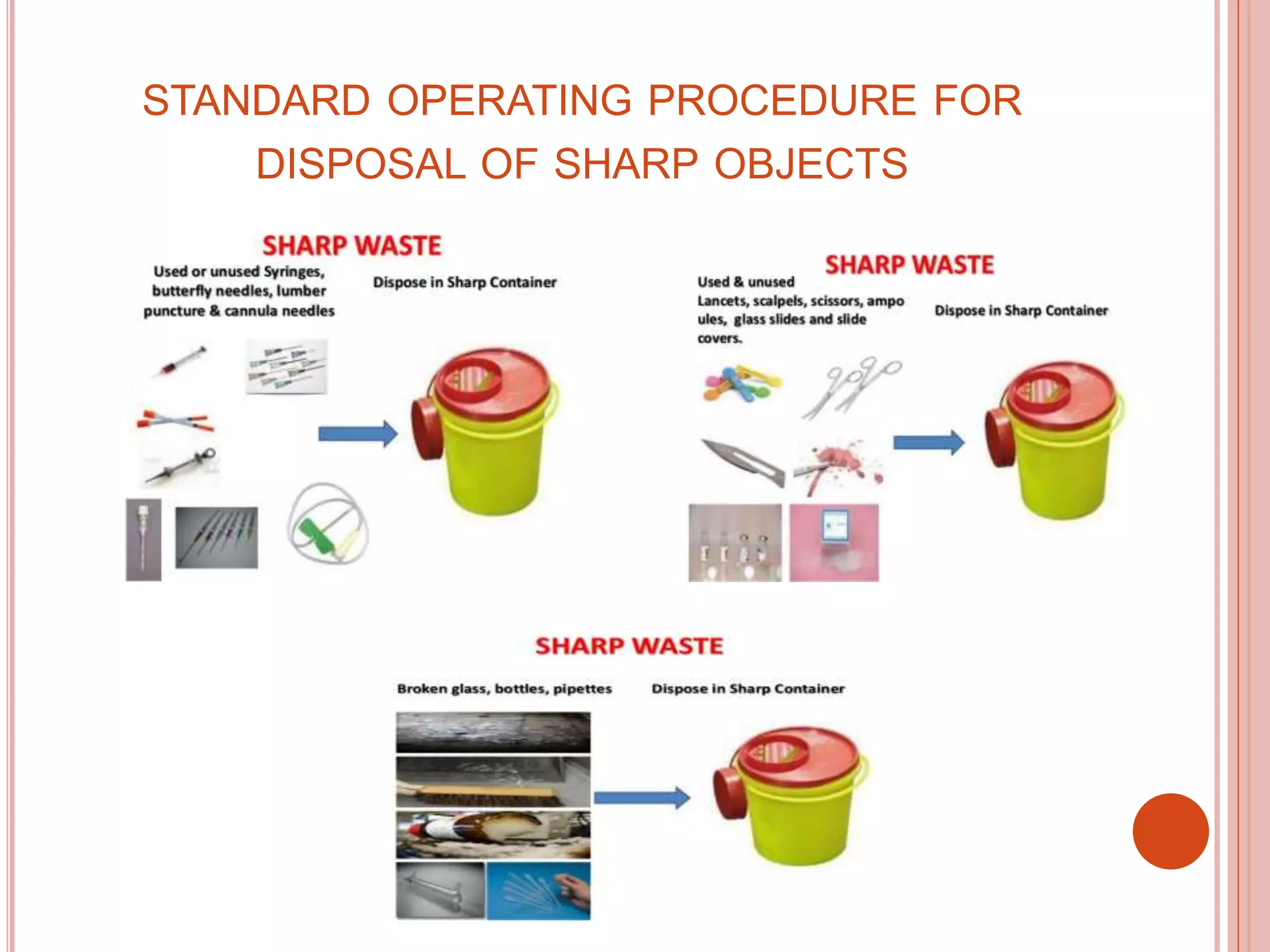
 Standard operating procedure for disposal of sharp
objects
 Recommendations
 References
BLOOD SPECIMEN COLLECTION
POLICY NO. NSP 048 – V03
Definition:
Venipuncture involves puncture a with a needle and
collecting blood in a syringe or evacuated tube. It is
performed using the antecubital fossa, vein of the
wrist, the dorsum of the hand of foot or other
accessible location.
POLICY
Peripheral vein blood collection may be
performed by a nurse with a written order
from a Physician.
A staff nurse may perform the procedure
with a Phycisian’s order.
Proper hand washing and gloving should
be observed.
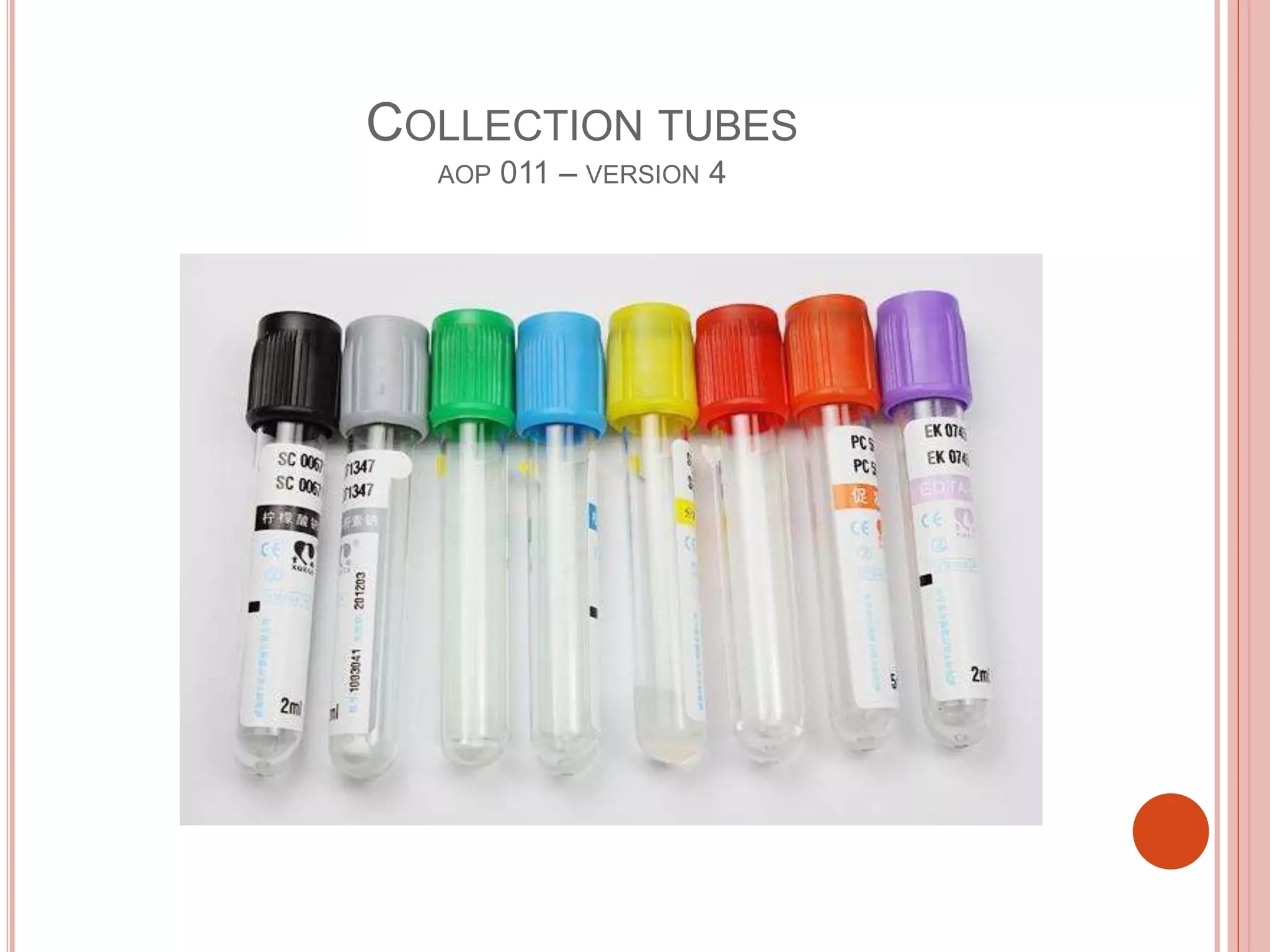
 Evacuated tube with lavender or green tops contain
anticoagulants. At least ¼ or more of the tube must
be filled with blood. If the specimen is inadequate
the ratio of the anticoagulants to blood will be too
high and test result can be altered.
 Blue and gray tops also contain liquid
anticoagulant. They must be filled to the level
determined by the tube vacuum, which is usually
1cm for the tube stopper. Simply allow the tube to
fill its own level.
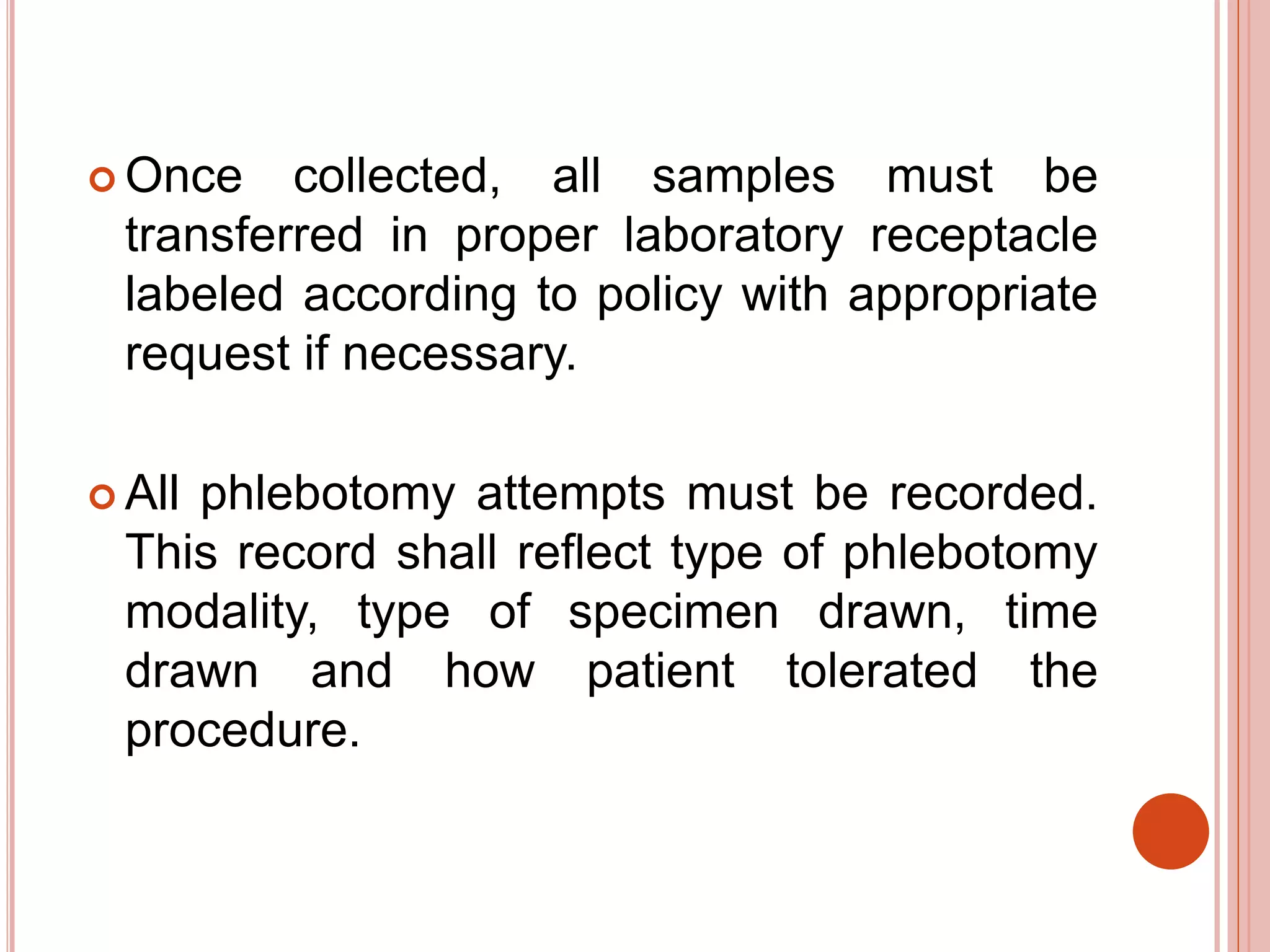
 Once collected, all samples must be
transferred in proper laboratory receptacle
labeled according to policy with appropriate
request if necessary.
 All phlebotomy attempts must be recorded.
This record shall reflect type of phlebotomy
modality, type of specimen drawn, time
drawn and how patient tolerated the
procedure.
COLLECTION TUBES
AOP 011 – VERSION 4
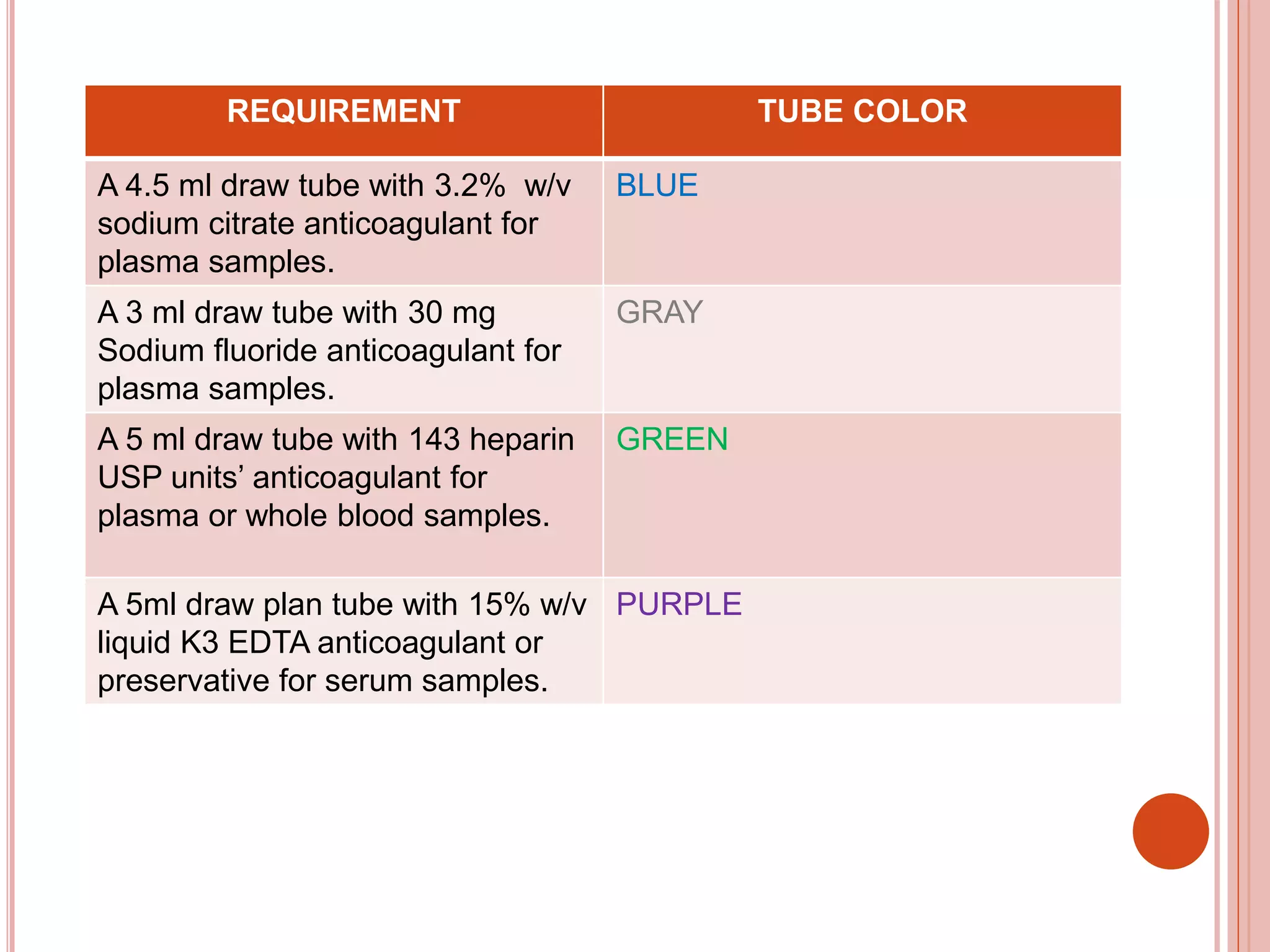
REQUIREMENT TUBE COLOR
A 4.5 ml draw tube with 3.2% w/v
sodium citrate anticoagulant for
plasma samples.
BLUE
A 3 ml draw tube with 30 mg
Sodium fluoride anticoagulant for
plasma samples.
GRAY
A 5 ml draw tube with 143 heparin
USP units’ anticoagulant for
plasma or whole blood samples.
GREEN
A 5ml draw plan tube with 15% w/v
liquid K3 EDTA anticoagulant or
preservative for serum samples.
PURPLE
REQUIREMENT TUBE COLOR
A 5 ml draw plan tube with no
anticoagulant or preservative for
serum samples.
RED
A 6 ml tube with SST polymer
separation gel and clot activator
for serum sample.
YELLOW
A 6ml draw tube with K2 EDTA
anticoagulant for
immunohematology samples.
PINK
NURSING RESPONSIBILITIES
 Wash hand thoroughly and don gloves
 Identify patient correctly and explain the
procedure, and to parents for small babies.
 Position the patient comfortably and assess
the patient’s vein.
 Tie a torniquet proximal to the area chosen
for venipuncture.
 Clean the venipuncture site with alcohol
swabs.
* Don’t wipe off the antiseptic solution
with alcohol.
*Wipe in circular motion, spiraling
outward from the site.
 Position the syringe, insert the needle into
the vein, and withdraw the blood slowly,
pulling the plunger of the syringe gently.
 Remove the torniquet as soon as blood
flows adequately.
 After sample has been extracted, remove
the needle from the vein gently, then apply
gentle pressure to the punctured site until
bleeding stops and apply adhesive
bandage.
 Transfer the sample to a collection tube that
is correctly labeled, being careful to avoid
foaming.
 Asses venipuncture site for oozing, bleeding
or evidence of hematoma.
 Record the date and time of blood sample
collection, the name of the test, the amount
of blood collected and any adverse reaction
to the procedure.
STANDARD OPERATING PROCEDURE FOR
DISPOSAL OF SHARP OBJECTS
WASTE DISPOSAL POLICY
AOP 007-V01
5.1.3.2 Sharp waste
 Infected sharp object such as: needles, syringes,
lancet or any broken glass are put in a special
sharp container.
 OSHA requires sharp collection container to be
non-penetrating like plastic, closable, leak proof
which is labeled biohazardous.
 When sharp box reaches ¾ full close, tape, date
and discard box as biochemical waste.
 Housekeepers should securely fasten the
cover of filled container before transport to
the incinerator.
 Do not re-sheath needles.
 Do not remove needles from disposable
syringes.
 Do not shear, bend, break or clip needles.
 Avoid manipulation of needles as much as
possible.
RECOMMENDATIONS
 Ensure safety (for staff & patient) by strictly
following the policy for blood specimen
collection.
 Strictly adhere to Infection control policy
regarding waste disposal not only for sharps
but for all types of clinical wastes.
REFERENCES:
 Policy no. NSP 048 – V03
 AOP 007-v01
 AOP 011 – version 4

Blood specimen collection

  • 1.
    BLOOD SPECIMEN COLLECTIONAND STANDARD OPERATING PROCEDURE FOR DISPOSAL OF SHARP OBJECTS Prepared by: Gianne T. Gregorio RN
  • 2.
    OBJECTIVES:  To reviewPolicy and Procedure in obtaining blood samples in KFCH.  To obtain blood samples correctly.  To avoid needle prick injuries.
  • 3.
    OUTLINE  Definition ofBlood Specimen Collection  Policy for Blood specimen collection  Types of collection tubes  Nursing responsibilities for Blood specimen collection  Standard operating procedure for disposal of sharp objects  Recommendations  References
  • 4.
    BLOOD SPECIMEN COLLECTION POLICYNO. NSP 048 – V03 Definition: Venipuncture involves puncture a with a needle and collecting blood in a syringe or evacuated tube. It is performed using the antecubital fossa, vein of the wrist, the dorsum of the hand of foot or other accessible location.
  • 5.
    POLICY Peripheral vein bloodcollection may be performed by a nurse with a written order from a Physician. A staff nurse may perform the procedure with a Phycisian’s order. Proper hand washing and gloving should be observed.
  • 6.
     Evacuated tubewith lavender or green tops contain anticoagulants. At least ¼ or more of the tube must be filled with blood. If the specimen is inadequate the ratio of the anticoagulants to blood will be too high and test result can be altered.  Blue and gray tops also contain liquid anticoagulant. They must be filled to the level determined by the tube vacuum, which is usually 1cm for the tube stopper. Simply allow the tube to fill its own level.
  • 7.
     Once collected,all samples must be transferred in proper laboratory receptacle labeled according to policy with appropriate request if necessary.  All phlebotomy attempts must be recorded. This record shall reflect type of phlebotomy modality, type of specimen drawn, time drawn and how patient tolerated the procedure.
  • 8.
  • 9.
    REQUIREMENT TUBE COLOR A4.5 ml draw tube with 3.2% w/v sodium citrate anticoagulant for plasma samples. BLUE A 3 ml draw tube with 30 mg Sodium fluoride anticoagulant for plasma samples. GRAY A 5 ml draw tube with 143 heparin USP units’ anticoagulant for plasma or whole blood samples. GREEN A 5ml draw plan tube with 15% w/v liquid K3 EDTA anticoagulant or preservative for serum samples. PURPLE
  • 10.
    REQUIREMENT TUBE COLOR A5 ml draw plan tube with no anticoagulant or preservative for serum samples. RED A 6 ml tube with SST polymer separation gel and clot activator for serum sample. YELLOW A 6ml draw tube with K2 EDTA anticoagulant for immunohematology samples. PINK
  • 11.
  • 12.
     Wash handthoroughly and don gloves  Identify patient correctly and explain the procedure, and to parents for small babies.  Position the patient comfortably and assess the patient’s vein.  Tie a torniquet proximal to the area chosen for venipuncture.  Clean the venipuncture site with alcohol swabs. * Don’t wipe off the antiseptic solution with alcohol. *Wipe in circular motion, spiraling outward from the site.
  • 13.
     Position thesyringe, insert the needle into the vein, and withdraw the blood slowly, pulling the plunger of the syringe gently.  Remove the torniquet as soon as blood flows adequately.  After sample has been extracted, remove the needle from the vein gently, then apply gentle pressure to the punctured site until bleeding stops and apply adhesive bandage.  Transfer the sample to a collection tube that is correctly labeled, being careful to avoid foaming.
  • 14.
     Asses venipuncturesite for oozing, bleeding or evidence of hematoma.  Record the date and time of blood sample collection, the name of the test, the amount of blood collected and any adverse reaction to the procedure.
  • 15.
    STANDARD OPERATING PROCEDUREFOR DISPOSAL OF SHARP OBJECTS
  • 16.
    WASTE DISPOSAL POLICY AOP007-V01 5.1.3.2 Sharp waste  Infected sharp object such as: needles, syringes, lancet or any broken glass are put in a special sharp container.  OSHA requires sharp collection container to be non-penetrating like plastic, closable, leak proof which is labeled biohazardous.  When sharp box reaches ¾ full close, tape, date and discard box as biochemical waste.
  • 17.
     Housekeepers shouldsecurely fasten the cover of filled container before transport to the incinerator.  Do not re-sheath needles.  Do not remove needles from disposable syringes.  Do not shear, bend, break or clip needles.  Avoid manipulation of needles as much as possible.
  • 18.
    RECOMMENDATIONS  Ensure safety(for staff & patient) by strictly following the policy for blood specimen collection.  Strictly adhere to Infection control policy regarding waste disposal not only for sharps but for all types of clinical wastes.
  • 19.
    REFERENCES:  Policy no.NSP 048 – V03  AOP 007-v01  AOP 011 – version 4