HISTORY
• Discovered by Kral landsteiner
• Discovered the ABO blood grouping system in 1901.
• He and his five co-workers began mixing each others
red cells and serum together and inadvertently
performed the first forward and reverse ABO
groupings
HISTORY
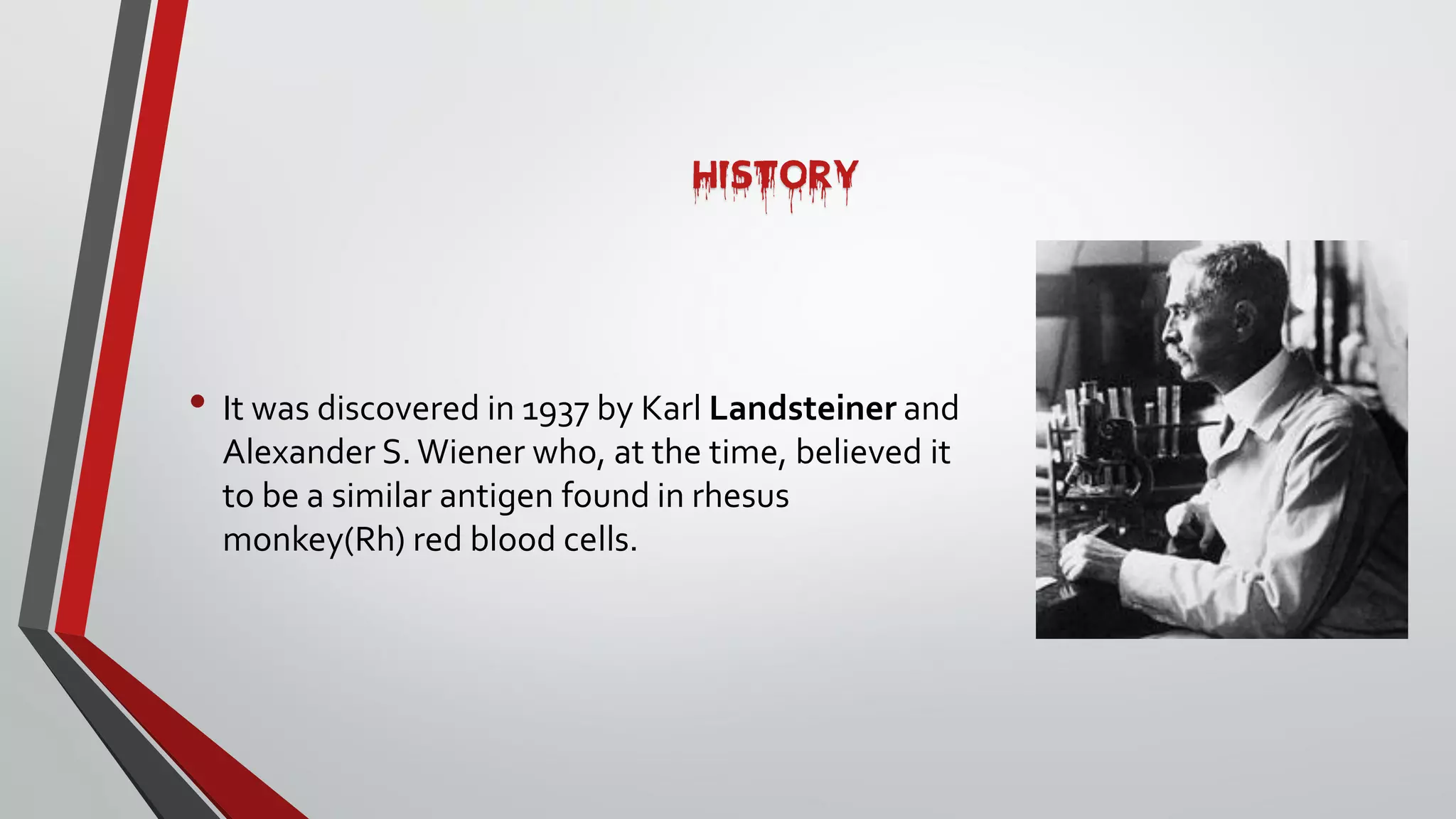
• It was discovered in 1937 by Karl Landsteiner and
Alexander S.Wiener who, at the time, believed it
to be a similar antigen found in rhesus
monkey(Rh) red blood cells.
LANDSTEINER’S RULE
• Individual’s will form immune antibodies to
ABO blood group antigens they do not possess.
• Critical for understanding compatibility
between ABO blood groups.
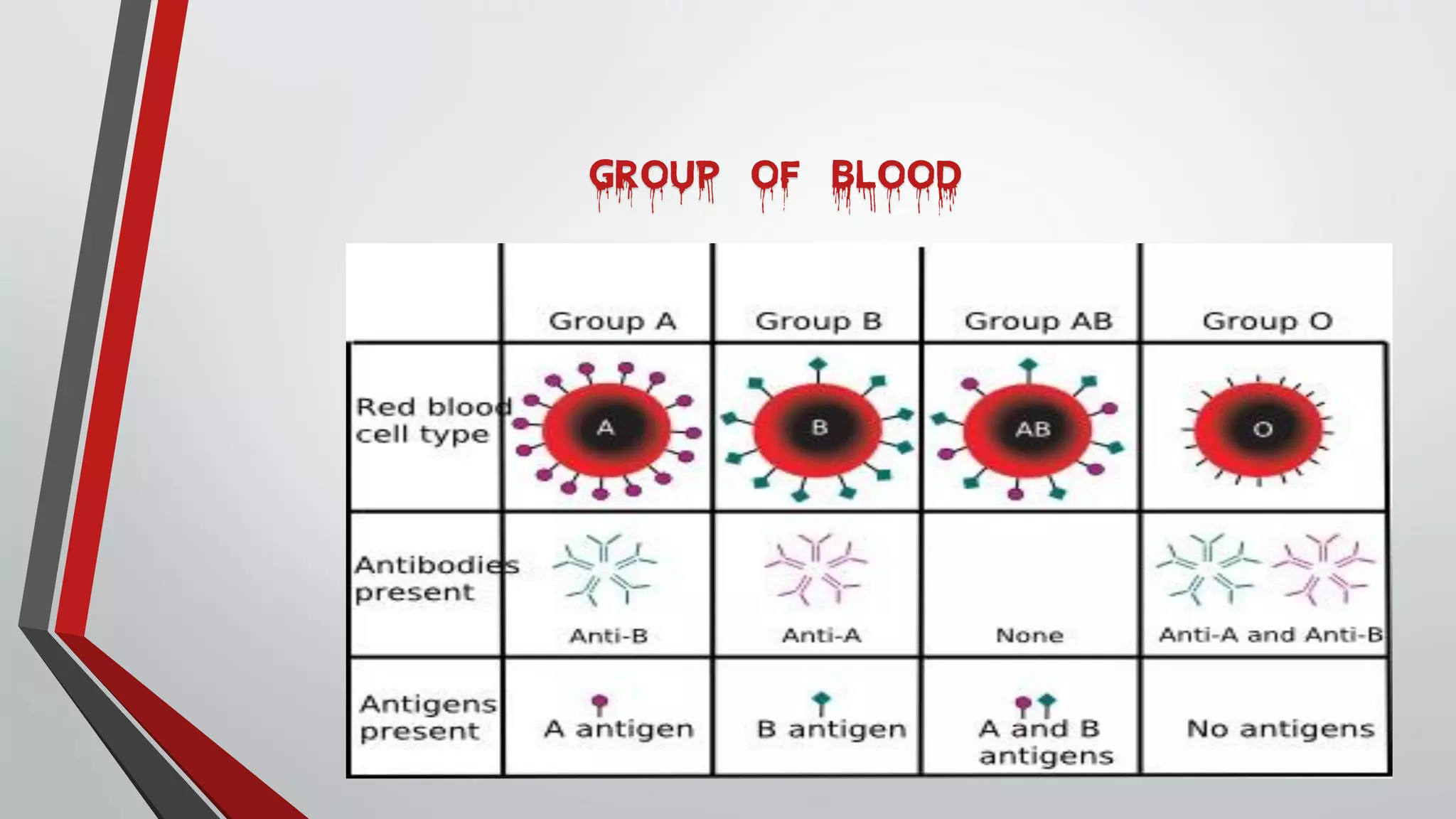
GROUP OF BLOOD
• Type AB:
(Universal Recipient)
• RBC’s have both A and B antigens.
• Cen receive from A, B, AB, and O types.
• Can donate to AB type only.
• Type O: (Universal Donor)
• RBC’s have NO antigens.
• Can receive from O type only.
• Can donate to A, B, AB and O types.
GROUP OF BLOOD
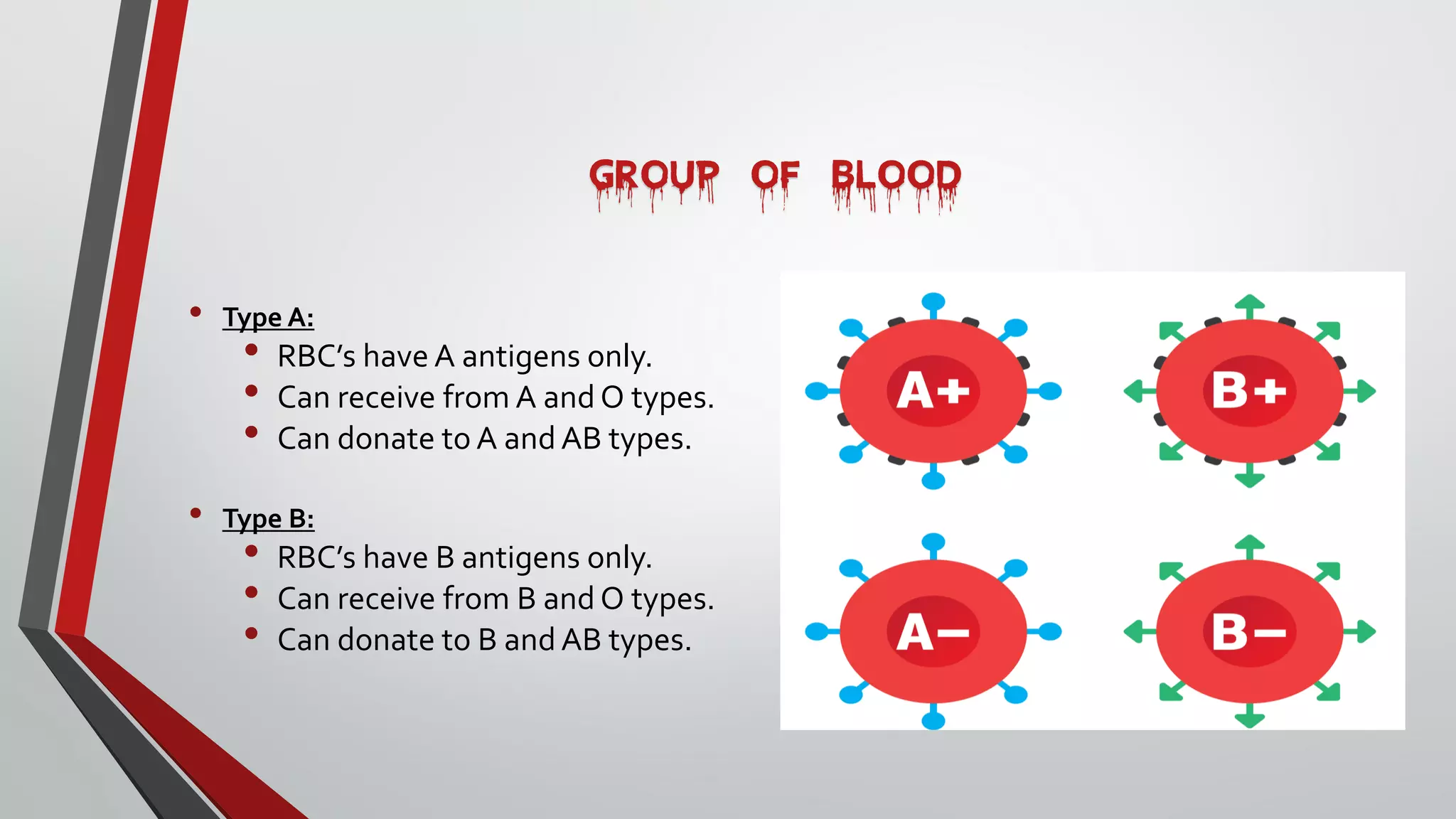
• Type A:
• RBC’s have A antigens only.
• Can receive from A and O types.
• Can donate to A and AB types.
• Type B:
• RBC’s have B antigens only.
• Can receive from B and O types.
• Can donate to B and AB types.
GROUP OF BLOOD
ANTIGENS & ANTIBODIES
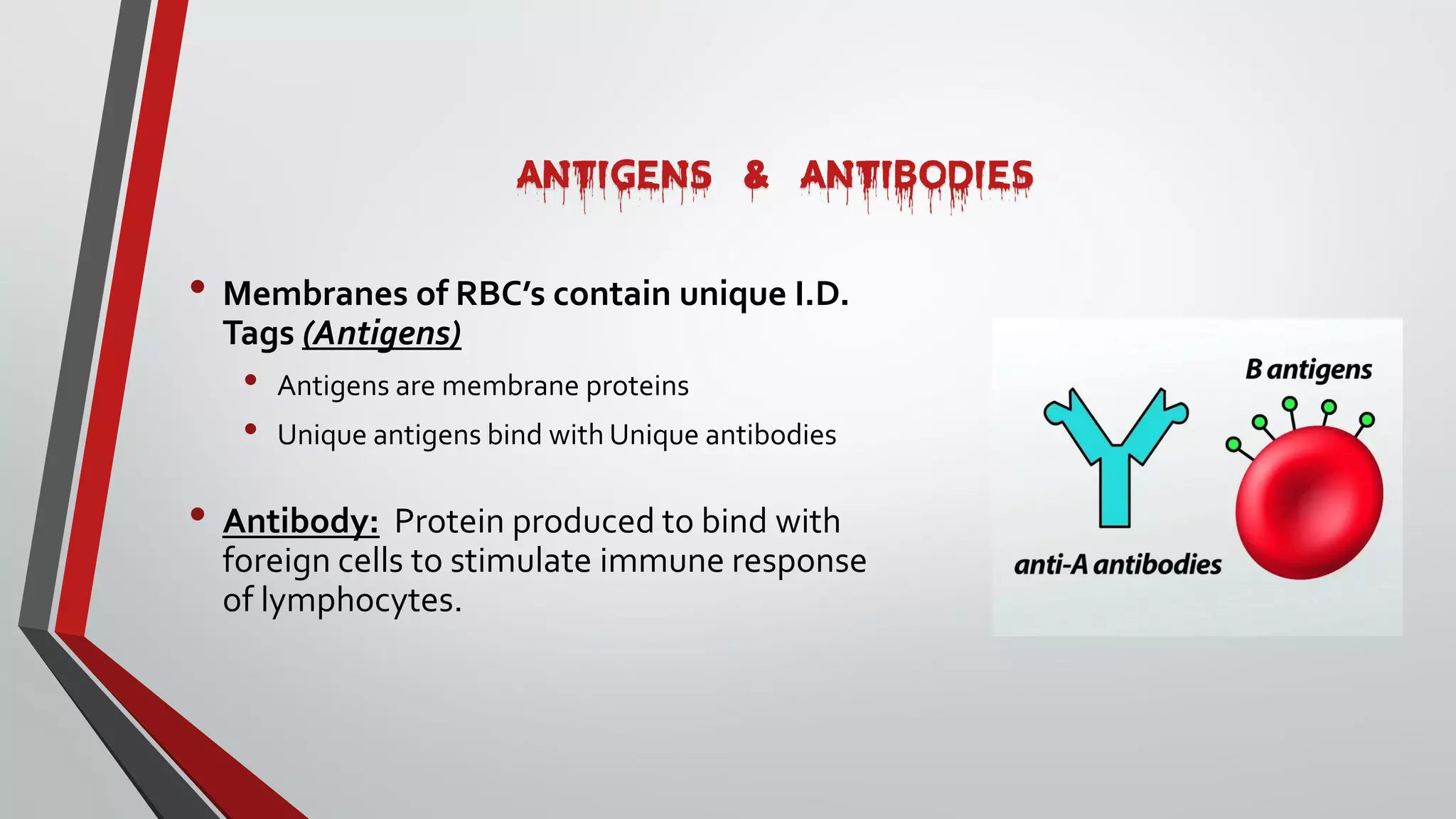
• Membranes of RBC’s contain unique I.D.
Tags (Antigens)
• Antigens are membrane proteins
• Unique antigens bind with Unique antibodies
• Antibody: Protein produced to bind with
foreign cells to stimulate immune response
of lymphocytes.
H-ANTIGEN
• The H gene codes for an enzyme that adds
the sugar fucose to the terminal sugar of a
precursor substance (PS)
• The precursor substance (proteins and
lipids) is formed on an oligosaccharide
chain (the basic structure)
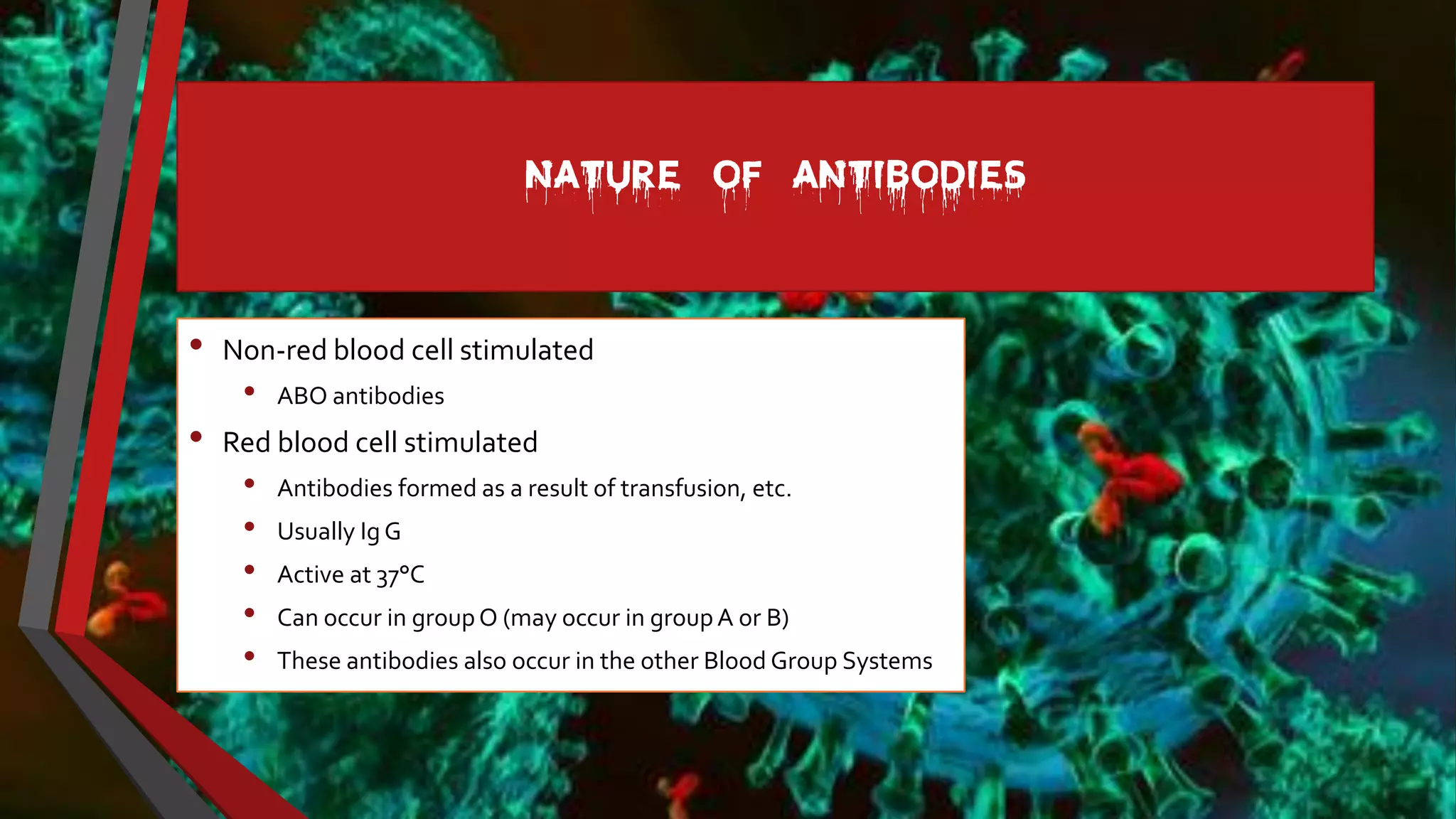
NATURE OF ANTIBODIES
• Non-red blood cell stimulated
• ABO antibodies
• Red blood cell stimulated
• Antibodies formed as a result of transfusion, etc.
• Usually Ig G
• Active at 37°C
• Can occur in groupO (may occur in groupA or B)
• These antibodies also occur in the other Blood Group Systems
AGGLUTINATION
• Agglutination - Binding of antigens with
antibodies.
• Causes a clumping of factors.
• Looks like a thickening of blood.
• When blood-cell antigens bind with their
matching antibodies….. AGGLUTINATION!
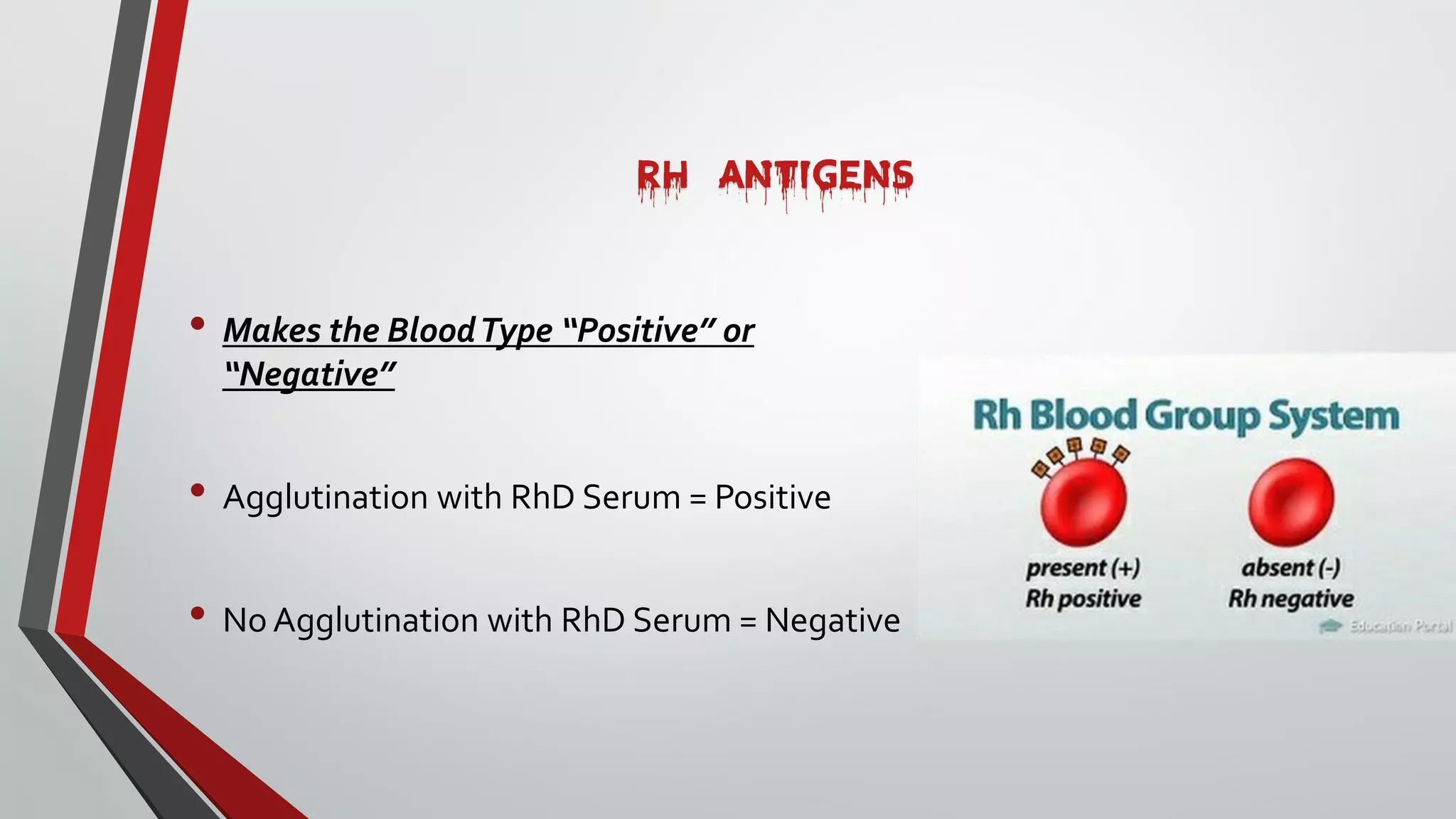
Rh ANTIGENS
• Makes the BloodType “Positive” or
“Negative”
• Agglutination with RhD Serum = Positive
• No Agglutination with RhD Serum = Negative
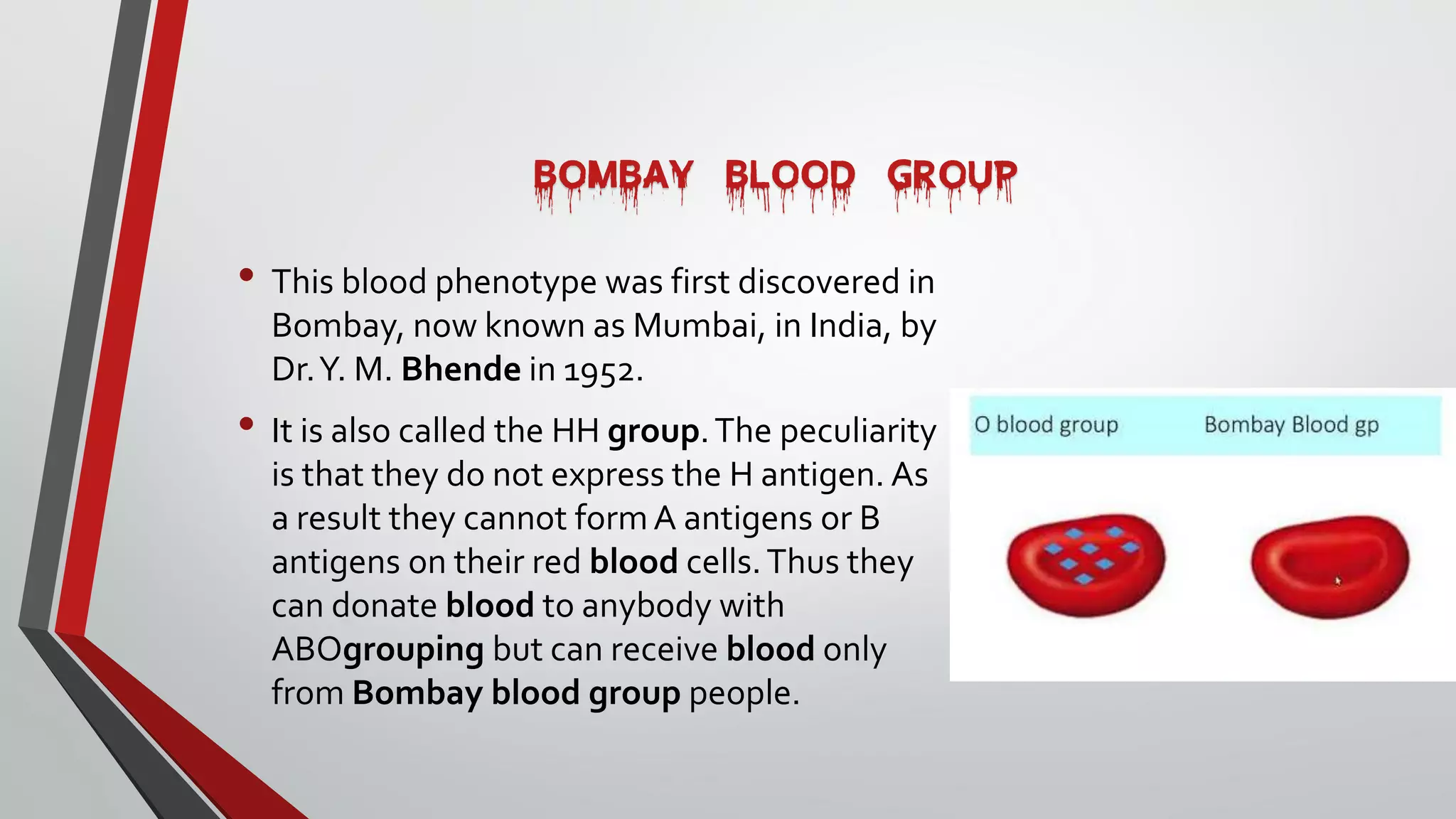
BOMBAY BLOOD GROUP
• This blood phenotype was first discovered in
Bombay, now known as Mumbai, in India, by
Dr.Y. M. Bhende in 1952.
• It is also called the HH group.The peculiarity
is that they do not express the H antigen. As
a result they cannot formA antigens or B
antigens on their red blood cells.Thus they
can donate blood to anybody with
ABOgrouping but can receive blood only
from Bombay blood group people.
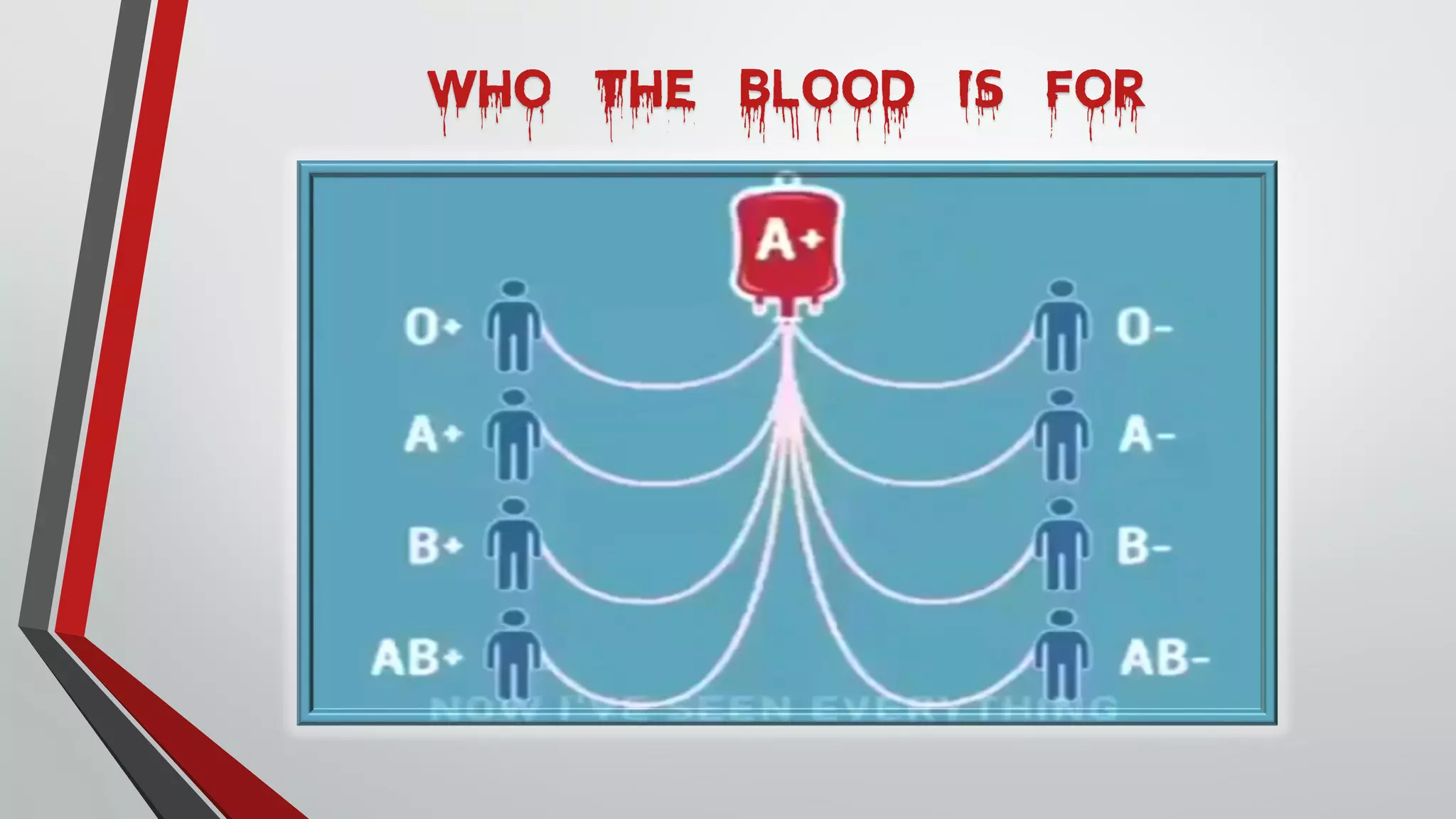
Who the blood is for
Blood grouping

Blood grouping

  • 2.
    HISTORY • Discovered byKral landsteiner • Discovered the ABO blood grouping system in 1901. • He and his five co-workers began mixing each others red cells and serum together and inadvertently performed the first forward and reverse ABO groupings
  • 3.
    HISTORY • It wasdiscovered in 1937 by Karl Landsteiner and Alexander S.Wiener who, at the time, believed it to be a similar antigen found in rhesus monkey(Rh) red blood cells.
  • 4.
    LANDSTEINER’S RULE • Individual’swill form immune antibodies to ABO blood group antigens they do not possess. • Critical for understanding compatibility between ABO blood groups.
  • 5.
    GROUP OF BLOOD •Type AB: (Universal Recipient) • RBC’s have both A and B antigens. • Cen receive from A, B, AB, and O types. • Can donate to AB type only. • Type O: (Universal Donor) • RBC’s have NO antigens. • Can receive from O type only. • Can donate to A, B, AB and O types.
  • 6.
    GROUP OF BLOOD •Type A: • RBC’s have A antigens only. • Can receive from A and O types. • Can donate to A and AB types. • Type B: • RBC’s have B antigens only. • Can receive from B and O types. • Can donate to B and AB types.
  • 7.
  • 8.
    ANTIGENS & ANTIBODIES •Membranes of RBC’s contain unique I.D. Tags (Antigens) • Antigens are membrane proteins • Unique antigens bind with Unique antibodies • Antibody: Protein produced to bind with foreign cells to stimulate immune response of lymphocytes.
  • 9.
    H-ANTIGEN • The Hgene codes for an enzyme that adds the sugar fucose to the terminal sugar of a precursor substance (PS) • The precursor substance (proteins and lipids) is formed on an oligosaccharide chain (the basic structure)
  • 10.
    NATURE OF ANTIBODIES •Non-red blood cell stimulated • ABO antibodies • Red blood cell stimulated • Antibodies formed as a result of transfusion, etc. • Usually Ig G • Active at 37°C • Can occur in groupO (may occur in groupA or B) • These antibodies also occur in the other Blood Group Systems
  • 11.
    AGGLUTINATION • Agglutination -Binding of antigens with antibodies. • Causes a clumping of factors. • Looks like a thickening of blood. • When blood-cell antigens bind with their matching antibodies….. AGGLUTINATION!
  • 12.
    Rh ANTIGENS • Makesthe BloodType “Positive” or “Negative” • Agglutination with RhD Serum = Positive • No Agglutination with RhD Serum = Negative
  • 13.
    BOMBAY BLOOD GROUP •This blood phenotype was first discovered in Bombay, now known as Mumbai, in India, by Dr.Y. M. Bhende in 1952. • It is also called the HH group.The peculiarity is that they do not express the H antigen. As a result they cannot formA antigens or B antigens on their red blood cells.Thus they can donate blood to anybody with ABOgrouping but can receive blood only from Bombay blood group people.
  • 14.