Present by:
Asweshvaran R.
1st M. Sc., Microbiology,
Department of microbiology,
Indian academy degree
college – Autonomous,
Bangalore.
Microbiology
Microbial and Fermented foods
Introduction
• Definition - The dead, dried cells of microorganisms such as Bacteria, Fungi,
Yeasts, Algae that are grown in large scale culture systems as proteins for human
or animal consumption are collectively known as” Single Cell Proteins”.
• In ~50% world population suffer ‘Kwashiorkor’ disease (Protein deficiency),
children with poor protein are victims of this disease.
• The expression single-cell protein (SCP) was coined at the Massachusetts Institute
of Technology around 1966 to depict the idea of microorganisms as food sources.
• The term, ‘Single Cell Protein’ was firstly used by Carol Wilson in 1967 by
replacing the less aesthetic terminology, ‘petro protein’ , ‘microbial protein’
• It is estimated that SCP fermenters covering one third of a square mile can provide
10% of the World’s protein requirement
• The protein advisory group of UNO has approved SCP as an animal feed
supplement and as a human dietary constituent.
Sources of microorganisms and the selection
criteria
• The basis for their selection are:
• Ability to utilize carbon and nitrogen sources
• Moderate growth conditions
• Tolerance to pH, temperature, and mineral concentrations
• Resistance against viral infection
• Non-toxicity
• Non-pathogenicity
• Acceptable nutritive value of cell mass
• Among algae, Spirulina is used most extensively
• Biomass from Chlorella, Senedesmus and
Dunalliella used on large scale
• Main problems for SCP from algae are their foul
odor and tastelessness
• Fungi species, such as Aspergillus, Fusarium,
Candida, Chaetomium, Trihoderma, Penicillium
etc. are good candidates for SCP production, due
to:
• Wide range of substrate utilization
• Ability to withstand abiotic conditions
• Bacteria, such as Bacillus, Lactobacillus,
Pseudomonas, Aesonomas are used for SCP but the
success is not so encouraging
• Mixed cultures have shown better results with
respect to stability and resistance to contamination
GROUP Microorganism Protein % Substrate
Bacteria
Methylophilus
methlyotropus
72 Methanol
Methylomonas sp. 70 Methanol
Pseudomonas sp. 5401 62 n-paraffins,fuel oil
Actinom
ycetes
Nocardia spp. 50-55 n-alkanes
Thermoonospora 50-55 Cellulose pulp
Yeasts
Torulopsis sp. 50 Methanol
Candida utilis 54 Molasses, milk whey
Saccharomyces cerevisiae 53 Molasses
Molds
Fusarim graminarium 50 Hydrolyzed starch
Trichoderma viride 54 Straw, starch
Penicillium cyclopium 55 Cheese whey
Agaricus campestris Glucose
Algae
Chlorella pyrenoidosa 50 CO2, sunlight
Spirulina maxima 60 Mineral medium,
sunlight
Spirulina platensis 63 Mineral medium,
sunlight
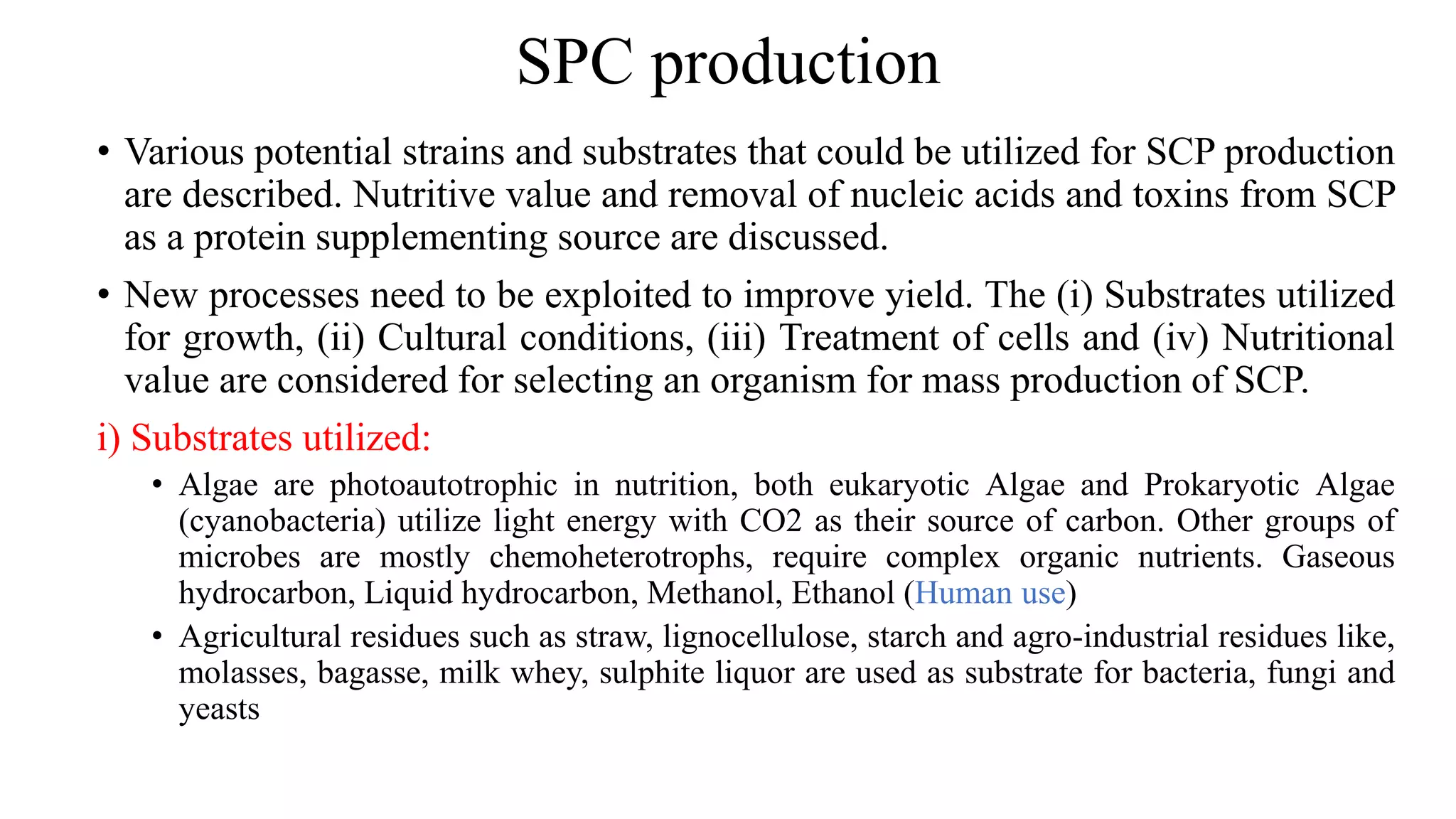
SPC production
• Various potential strains and substrates that could be utilized for SCP production
are described. Nutritive value and removal of nucleic acids and toxins from SCP
as a protein supplementing source are discussed.
• New processes need to be exploited to improve yield. The (i) Substrates utilized
for growth, (ii) Cultural conditions, (iii) Treatment of cells and (iv) Nutritional
value are considered for selecting an organism for mass production of SCP.
i) Substrates utilized:
• Algae are photoautotrophic in nutrition, both eukaryotic Algae and Prokaryotic Algae
(cyanobacteria) utilize light energy with CO2 as their source of carbon. Other groups of
microbes are mostly chemoheterotrophs, require complex organic nutrients. Gaseous
hydrocarbon, Liquid hydrocarbon, Methanol, Ethanol (Human use)
• Agricultural residues such as straw, lignocellulose, starch and agro-industrial residues like,
molasses, bagasse, milk whey, sulphite liquor are used as substrate for bacteria, fungi and
yeasts
ii) Cultural conditions for mass production:
• The pH of the medium is generally made acid for yeasts (4.5 -5.5), neutral for bacteria (6.0-
7.5) and alkaline for algae (8.0 - 11.0).
• Blue green alga, Spirulina grows optimally in pH range of 9-11 and there is least chance of
contamination of other microbes. The production of algae is feasible only in regions where
there is bright sunlight and ambient temperature (25-35°C).
• Should use clean water for Spirulina cultivation at food grade specifications for Spirulina in
Standard No. IS 12895 amended in June, 1991 according to the BIS
iii) Treatment of cells:
• Treatment of cells is directed towards removal of cell wall and reduction of nucleic acid
content of microbes to make them suitable for human consumption. The low digestibility of
SCP is connected with the cell wall fraction, which comprises 20% of the dry weight.
• Spirulina has a thin cell wall. Drying of cells and extraction of protein increase the
digestibility of SCP. Microbial cells may contain 8 to 25 g nucleic acids per 100 g of protein.
• During evolution man has lost the ability to synthesize the uricase enzyme that digest the
nucleic acid product, uric acid to Allontoin.
• Accumulation of excess uric acid in blood leads to many pathological conditions. The
concentration of nucleic acids is always below 5% of dry weight for spirulina.
Nutritional & therapeutic importance
• Nutritional values vary with microorganisms and substrates used
• For assessment amino acid, protein, carbohydrate and lipid profiles, minerals and vitamins
contents are important
• Palatability, allergies and gastrointestinal effects are also seen
• Long-term feeding trials, Toxicological and Carcinogenisis effects are to be monitored
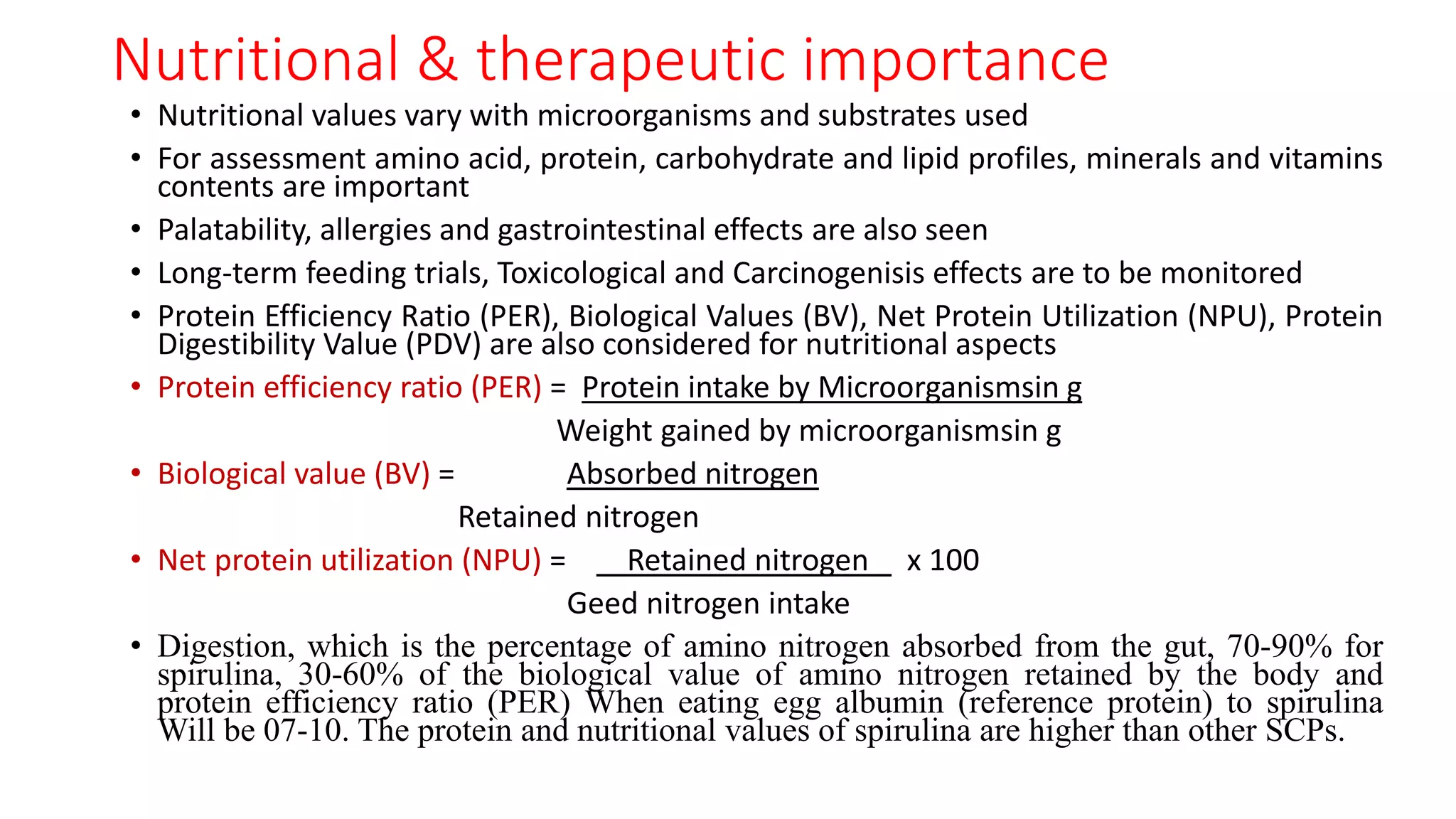
• Protein Efficiency Ratio (PER), Biological Values (BV), Net Protein Utilization (NPU), Protein
Digestibility Value (PDV) are also considered for nutritional aspects
• Protein efficiency ratio (PER) = Protein intake by Microorganismsin g
Weight gained by microorganismsin g
• Biological value (BV) = Absorbed nitrogen
Retained nitrogen
• Net protein utilization (NPU) = Retained nitrogen x 100
Geed nitrogen intake
• Digestion, which is the percentage of amino nitrogen absorbed from the gut, 70-90% for
spirulina, 30-60% of the biological value of amino nitrogen retained by the body and
protein efficiency ratio (PER) When eating egg albumin (reference protein) to spirulina
Will be 07-10. The protein and nutritional values ​​of spirulina are higher than other SCPs.
• Algae are rich in Proteins (40 – 60%), Fats (5 – 20% ), Vitamins A, B, C, D, E;
Minerals (7%), Nucleic acid (4 – 6 %), Loaded with naturally chelated minerals
including iron. Contain essential fatty acid gamma linolenic acid and antioxidants.
• Egg albumin is a well balanced source of essential amino acids for human nutrition
and the Spirulina protein compares well except that it contains less of Sulphur
containing amino acids, Methionine and Cystine.
• The high amount of protein in Spirulina is unusual even in the microbial world,
being surpassed only by species of Cellulomonas, which may attain a protein level of
80%.
• Fungi contains the High B-complex group of vitamins, and the amino acid content is
reasonably high
• Dry yeast contains about 50% proteins and 20% non-proteins. Yeasts contain Lysine,
Thiamine, Biotin, Riviflavin, Niacin, Folic acid, but deficient in Methionine
• Recently report that unspecified marine yeast in prawn shell wastes 61-70 % of
protein at 2017
• Aspergillus niger is well balanced and at par with the standard prescribed by WHO
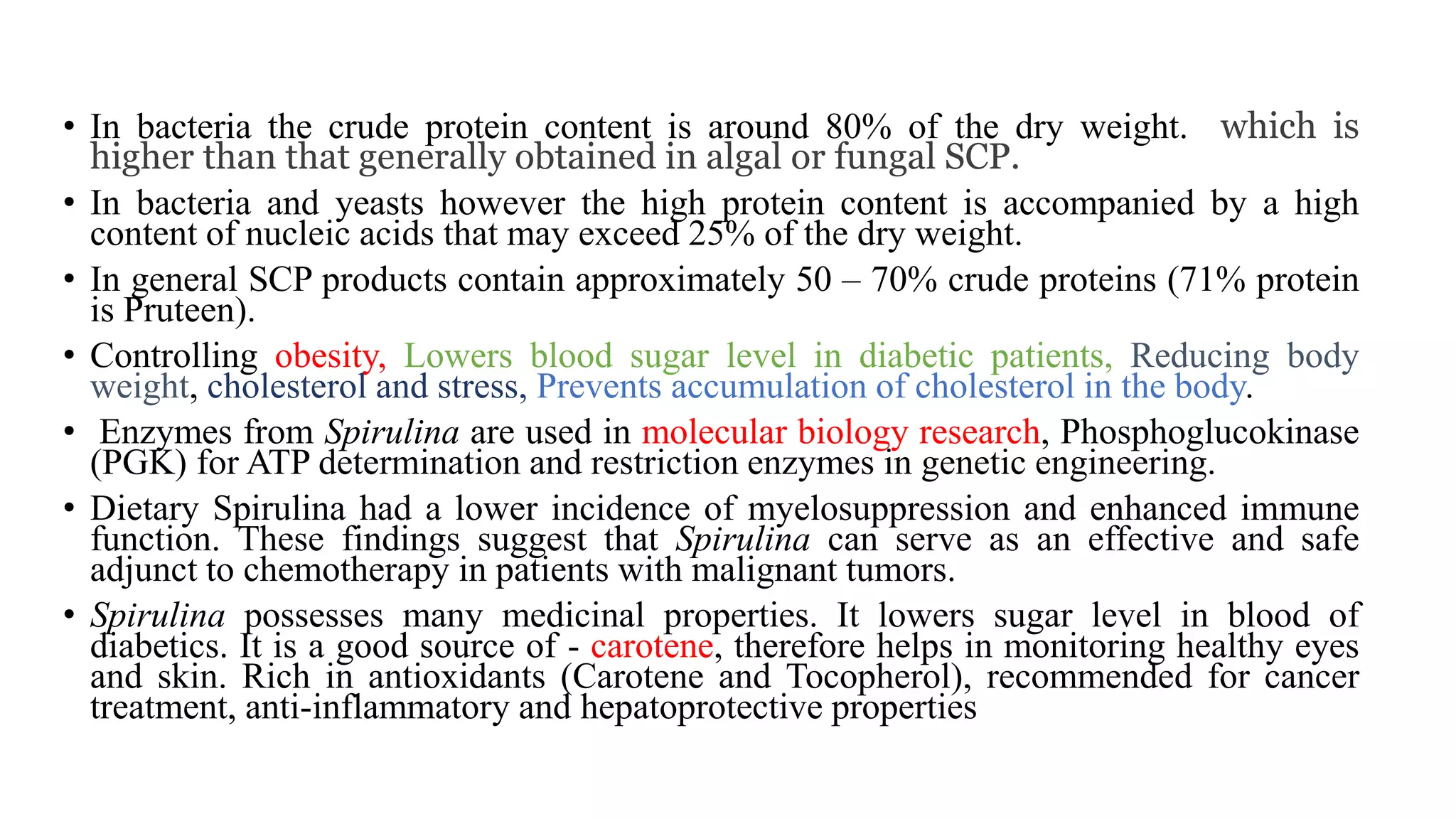
• In bacteria the crude protein content is around 80% of the dry weight. which is
higher than that generally obtained in algal or fungal SCP.
• In bacteria and yeasts however the high protein content is accompanied by a high
content of nucleic acids that may exceed 25% of the dry weight.
• In general SCP products contain approximately 50 – 70% crude proteins (71% protein
is Pruteen).
• Controlling obesity, Lowers blood sugar level in diabetic patients, Reducing body
weight, cholesterol and stress, Prevents accumulation of cholesterol in the body.
• Enzymes from Spirulina are used in molecular biology research, Phosphoglucokinase
(PGK) for ATP determination and restriction enzymes in genetic engineering.
• Dietary Spirulina had a lower incidence of myelosuppression and enhanced immune
function. These findings suggest that Spirulina can serve as an effective and safe
adjunct to chemotherapy in patients with malignant tumors.
• Spirulina possesses many medicinal properties. It lowers sugar level in blood of
diabetics. It is a good source of - carotene, therefore helps in monitoring healthy eyes
and skin. Rich in antioxidants (Carotene and Tocopherol), recommended for cancer
treatment, anti-inflammatory and hepatoprotective properties
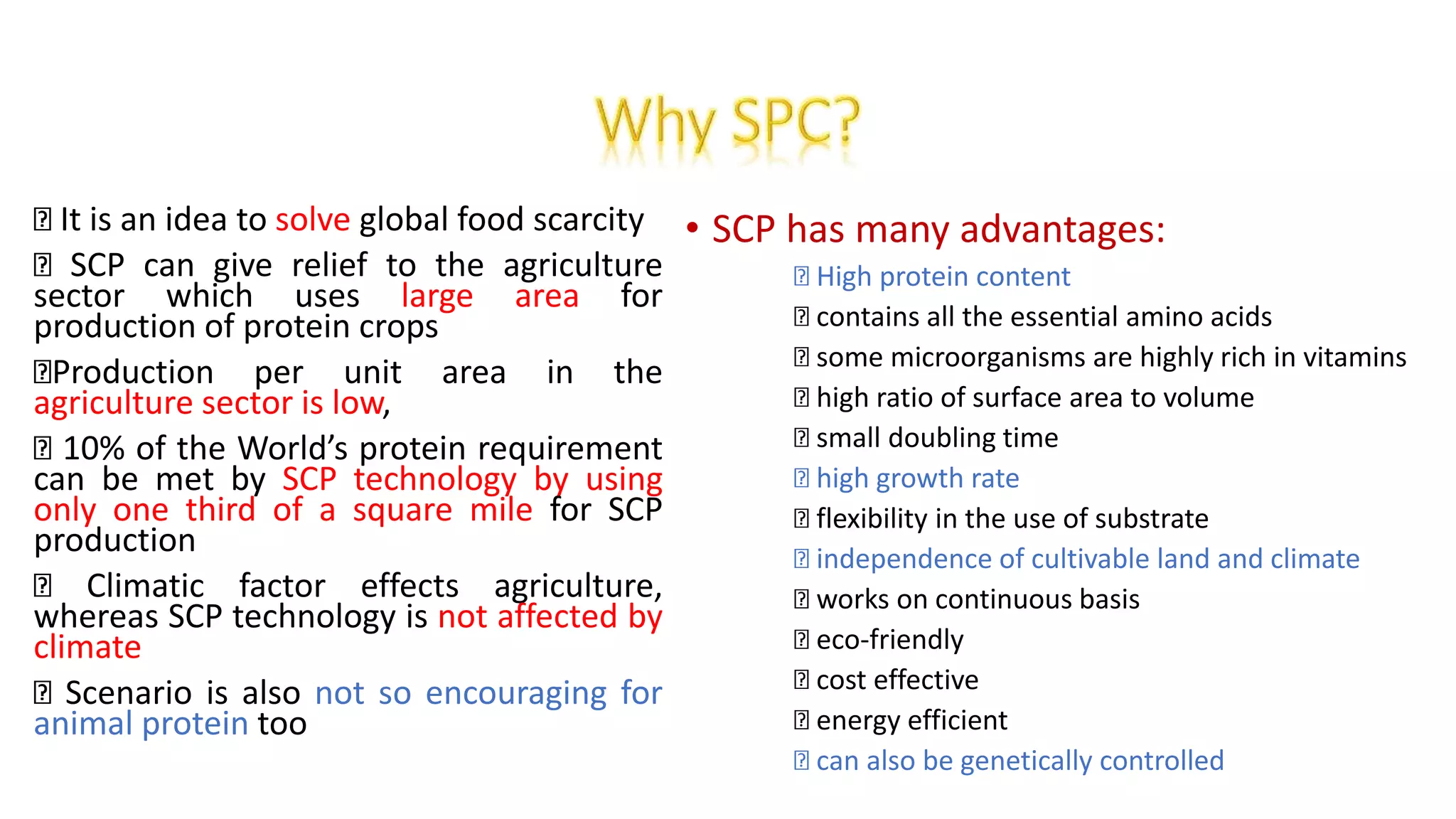
• SCP has many advantages:
High protein content
contains all the essential amino acids
some microorganisms are highly rich in vitamins
high ratio of surface area to volume
small doubling time
high growth rate
flexibility in the use of substrate
independence of cultivable land and climate
works on continuous basis
eco-friendly
cost effective
energy efficient
can also be genetically controlled
It is an idea to solve global food scarcity
SCP can give relief to the agriculture
sector which uses large area for
production of protein crops
Production per unit area in the
agriculture sector is low,
10% of the World’s protein requirement
can be met by SCP technology by using
only one third of a square mile for SCP
production
Climatic factor effects agriculture,
whereas SCP technology is not affected by
climate
Scenario is also not so encouraging for
animal protein too

Single Cell Proteins

  • 1.
    Present by: Asweshvaran R. 1stM. Sc., Microbiology, Department of microbiology, Indian academy degree college – Autonomous, Bangalore. Microbiology Microbial and Fermented foods
  • 2.
    Introduction • Definition -The dead, dried cells of microorganisms such as Bacteria, Fungi, Yeasts, Algae that are grown in large scale culture systems as proteins for human or animal consumption are collectively known as” Single Cell Proteins”. • In ~50% world population suffer ‘Kwashiorkor’ disease (Protein deficiency), children with poor protein are victims of this disease. • The expression single-cell protein (SCP) was coined at the Massachusetts Institute of Technology around 1966 to depict the idea of microorganisms as food sources. • The term, ‘Single Cell Protein’ was firstly used by Carol Wilson in 1967 by replacing the less aesthetic terminology, ‘petro protein’ , ‘microbial protein’ • It is estimated that SCP fermenters covering one third of a square mile can provide 10% of the World’s protein requirement • The protein advisory group of UNO has approved SCP as an animal feed supplement and as a human dietary constituent.
  • 3.
    Sources of microorganismsand the selection criteria • The basis for their selection are: • Ability to utilize carbon and nitrogen sources • Moderate growth conditions • Tolerance to pH, temperature, and mineral concentrations • Resistance against viral infection • Non-toxicity • Non-pathogenicity • Acceptable nutritive value of cell mass
  • 4.
    • Among algae,Spirulina is used most extensively • Biomass from Chlorella, Senedesmus and Dunalliella used on large scale • Main problems for SCP from algae are their foul odor and tastelessness • Fungi species, such as Aspergillus, Fusarium, Candida, Chaetomium, Trihoderma, Penicillium etc. are good candidates for SCP production, due to: • Wide range of substrate utilization • Ability to withstand abiotic conditions • Bacteria, such as Bacillus, Lactobacillus, Pseudomonas, Aesonomas are used for SCP but the success is not so encouraging • Mixed cultures have shown better results with respect to stability and resistance to contamination GROUP Microorganism Protein % Substrate Bacteria Methylophilus methlyotropus 72 Methanol Methylomonas sp. 70 Methanol Pseudomonas sp. 5401 62 n-paraffins,fuel oil Actinom ycetes Nocardia spp. 50-55 n-alkanes Thermoonospora 50-55 Cellulose pulp Yeasts Torulopsis sp. 50 Methanol Candida utilis 54 Molasses, milk whey Saccharomyces cerevisiae 53 Molasses Molds Fusarim graminarium 50 Hydrolyzed starch Trichoderma viride 54 Straw, starch Penicillium cyclopium 55 Cheese whey Agaricus campestris Glucose Algae Chlorella pyrenoidosa 50 CO2, sunlight Spirulina maxima 60 Mineral medium, sunlight Spirulina platensis 63 Mineral medium, sunlight
  • 5.
    SPC production • Variouspotential strains and substrates that could be utilized for SCP production are described. Nutritive value and removal of nucleic acids and toxins from SCP as a protein supplementing source are discussed. • New processes need to be exploited to improve yield. The (i) Substrates utilized for growth, (ii) Cultural conditions, (iii) Treatment of cells and (iv) Nutritional value are considered for selecting an organism for mass production of SCP. i) Substrates utilized: • Algae are photoautotrophic in nutrition, both eukaryotic Algae and Prokaryotic Algae (cyanobacteria) utilize light energy with CO2 as their source of carbon. Other groups of microbes are mostly chemoheterotrophs, require complex organic nutrients. Gaseous hydrocarbon, Liquid hydrocarbon, Methanol, Ethanol (Human use) • Agricultural residues such as straw, lignocellulose, starch and agro-industrial residues like, molasses, bagasse, milk whey, sulphite liquor are used as substrate for bacteria, fungi and yeasts
  • 6.
    ii) Cultural conditionsfor mass production: • The pH of the medium is generally made acid for yeasts (4.5 -5.5), neutral for bacteria (6.0- 7.5) and alkaline for algae (8.0 - 11.0). • Blue green alga, Spirulina grows optimally in pH range of 9-11 and there is least chance of contamination of other microbes. The production of algae is feasible only in regions where there is bright sunlight and ambient temperature (25-35°C). • Should use clean water for Spirulina cultivation at food grade specifications for Spirulina in Standard No. IS 12895 amended in June, 1991 according to the BIS iii) Treatment of cells: • Treatment of cells is directed towards removal of cell wall and reduction of nucleic acid content of microbes to make them suitable for human consumption. The low digestibility of SCP is connected with the cell wall fraction, which comprises 20% of the dry weight. • Spirulina has a thin cell wall. Drying of cells and extraction of protein increase the digestibility of SCP. Microbial cells may contain 8 to 25 g nucleic acids per 100 g of protein. • During evolution man has lost the ability to synthesize the uricase enzyme that digest the nucleic acid product, uric acid to Allontoin. • Accumulation of excess uric acid in blood leads to many pathological conditions. The concentration of nucleic acids is always below 5% of dry weight for spirulina.
  • 7.
    Nutritional & therapeuticimportance • Nutritional values vary with microorganisms and substrates used • For assessment amino acid, protein, carbohydrate and lipid profiles, minerals and vitamins contents are important • Palatability, allergies and gastrointestinal effects are also seen • Long-term feeding trials, Toxicological and Carcinogenisis effects are to be monitored • Protein Efficiency Ratio (PER), Biological Values (BV), Net Protein Utilization (NPU), Protein Digestibility Value (PDV) are also considered for nutritional aspects • Protein efficiency ratio (PER) = Protein intake by Microorganismsin g Weight gained by microorganismsin g • Biological value (BV) = Absorbed nitrogen Retained nitrogen • Net protein utilization (NPU) = Retained nitrogen x 100 Geed nitrogen intake • Digestion, which is the percentage of amino nitrogen absorbed from the gut, 70-90% for spirulina, 30-60% of the biological value of amino nitrogen retained by the body and protein efficiency ratio (PER) When eating egg albumin (reference protein) to spirulina Will be 07-10. The protein and nutritional values ​​of spirulina are higher than other SCPs.
  • 8.
    • Algae arerich in Proteins (40 – 60%), Fats (5 – 20% ), Vitamins A, B, C, D, E; Minerals (7%), Nucleic acid (4 – 6 %), Loaded with naturally chelated minerals including iron. Contain essential fatty acid gamma linolenic acid and antioxidants. • Egg albumin is a well balanced source of essential amino acids for human nutrition and the Spirulina protein compares well except that it contains less of Sulphur containing amino acids, Methionine and Cystine. • The high amount of protein in Spirulina is unusual even in the microbial world, being surpassed only by species of Cellulomonas, which may attain a protein level of 80%. • Fungi contains the High B-complex group of vitamins, and the amino acid content is reasonably high • Dry yeast contains about 50% proteins and 20% non-proteins. Yeasts contain Lysine, Thiamine, Biotin, Riviflavin, Niacin, Folic acid, but deficient in Methionine • Recently report that unspecified marine yeast in prawn shell wastes 61-70 % of protein at 2017 • Aspergillus niger is well balanced and at par with the standard prescribed by WHO
  • 9.
    • In bacteriathe crude protein content is around 80% of the dry weight. which is higher than that generally obtained in algal or fungal SCP. • In bacteria and yeasts however the high protein content is accompanied by a high content of nucleic acids that may exceed 25% of the dry weight. • In general SCP products contain approximately 50 – 70% crude proteins (71% protein is Pruteen). • Controlling obesity, Lowers blood sugar level in diabetic patients, Reducing body weight, cholesterol and stress, Prevents accumulation of cholesterol in the body. • Enzymes from Spirulina are used in molecular biology research, Phosphoglucokinase (PGK) for ATP determination and restriction enzymes in genetic engineering. • Dietary Spirulina had a lower incidence of myelosuppression and enhanced immune function. These findings suggest that Spirulina can serve as an effective and safe adjunct to chemotherapy in patients with malignant tumors. • Spirulina possesses many medicinal properties. It lowers sugar level in blood of diabetics. It is a good source of - carotene, therefore helps in monitoring healthy eyes and skin. Rich in antioxidants (Carotene and Tocopherol), recommended for cancer treatment, anti-inflammatory and hepatoprotective properties
  • 10.
    • SCP hasmany advantages: High protein content contains all the essential amino acids some microorganisms are highly rich in vitamins high ratio of surface area to volume small doubling time high growth rate flexibility in the use of substrate independence of cultivable land and climate works on continuous basis eco-friendly cost effective energy efficient can also be genetically controlled It is an idea to solve global food scarcity SCP can give relief to the agriculture sector which uses large area for production of protein crops Production per unit area in the agriculture sector is low, 10% of the World’s protein requirement can be met by SCP technology by using only one third of a square mile for SCP production Climatic factor effects agriculture, whereas SCP technology is not affected by climate Scenario is also not so encouraging for animal protein too