Downloaded 649 times


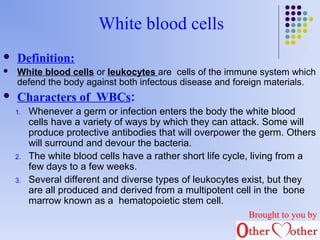

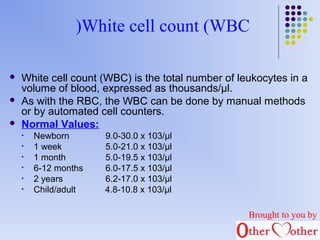

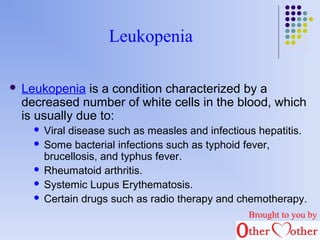

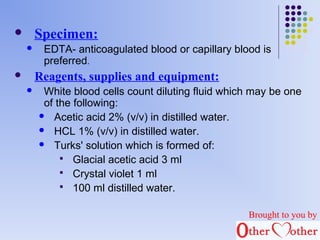

















White blood cells (WBCs), also known as leukocytes, are cells of the immune system that defend the body against infection and foreign substances. WBCs are produced in the bone marrow and found throughout the body, including in blood and lymph nodes. They have various roles like producing antibodies, surrounding and destroying bacteria, and have short lifecycles of a few days to weeks. A WBC count is used to measure the number of WBCs in the blood and can indicate conditions like infection, leukemia, or pregnancy.


