ABO Blood Grouping System 
Dr. Niaz Ahammed A. 
1st yr M.D.S 
Dpt of Prosthodontics
Contents 
• Introduction 
• Classification of blood groups 
• Agglutinogens and Agglutinins 
• Landsteiner’s Laws 
• ABO blood grouping sysytem 
• ABO antigens 
• ABO antibodies 
• Types of ABO blood groups 
• ABO inheritance 
• Determination of blood groups 
• References
Introduction 
• In 1901 Karl Landsteiner published his 
discovery of a blood group system and he 
grouped red cells into three categories; A,B 
and O 
• A fourth blood group , AB was discovered later 
by Decastello and Sturli. 
• Based on the type of antigen present or 
absent, various blood grouping systems are 
known
Classification 
• Major blood grouping systems: 
- ABO blood grouping system 
- Rh (CDE) blood grouping system 
• Minor blood grouping systems: 
- MNS blood group system 
- P blood group system 
• Familial blood group systems: 
- Only in a few families. Ex: Kell, Duffy, Lutheran, 
Lewis, Deigo, Kidd etc.
Agglutinogens and Agglutinins 
• Agglutinogens refer to antigens present on the 
cell membranes of RBCs 
• Agglutinins: antibodies against the 
agglutinogens, are present in plasma 
• Approximately 300 red cell antigens have now 
been identified 
• 18 blood group systems have been recognized
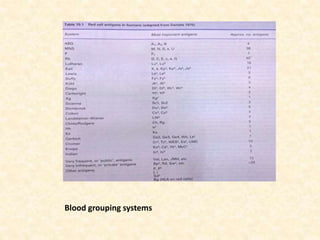
Blood grouping systems
Landsteiner law 
• If an agglutinogen is present on the red cell 
membrane of an individual the corresponding 
agglutinin must be absent in the plasma 
• If an agglutinogen is absent from the cell 
membrane of RBCs of an individual, the 
corresponding agglutinin must be present in 
the plasma
ABO blood grouping system 
• It was the first to be recognized and most 
important 
• Based on the presence of antigens called A and B 
agglutinogens on the cell membrane of RBCs 
• H antigen is also present usually in all individuals 
but it is non- antigenic 
• Almost everybody over the age of 6 months has 
clinically significant anti-A and/or anti-B in their 
serum
ABO antigens 
• A,B and H antigens are glycoproteins and the differences in 
terminal sugars determine the specificity of these antigens 
L- fucose for H 
L- fucose + N- acetyl-D- galactosamine for A 
L- fucose + D- galactose for B 
• 15 amino acids make up the protein backbone and four 
sugars form side chains off this backbone 
• A & B antigens are also present in many other tissues like 
salivary glands, pancreas, kidneys, liver, lungs and testis and 
in body fluids like saliva, semen and amniotic fluid 
• H antigen- non antigenic
α- L – fucosyl transferase produced by H gene, attaches fucose and 
yields H activity (group O) 
α –N- acetyl- galactosaminyl transferase produced by A gene transfers 
N-acetylgalactosamine and results in A activity 
α- galactosyl transferase produced by B gene attaches galactose and 
confers B activity
• Expression of ABH antigens on red cells is 
controlled by genes that reside at two loci 
• ABH antigens results from action of enzymes 
(tranferases) on the appropriate precursor 
substance 
• The substrate is a product of H gene 
(chromosome 19) and converted to A or B by 
the action of A or B- transferases 
(chromosome 9)
Variants of A and B antigens 
• The principal sub groups of A are A1 and A2 
• A1 constitute 80% of those in gp A 
• A1 individuals agglutinated by Dolichos 
biflorus lectin but not agglutinated by anti-H 
lectin, Ulex europaeus 
• A2 individuals are agglutinated by Ulex 
europaeus 
• Variants of B are less common, but are 
recognized
ABO antibodies 
• Individuals develop antibodies or agglutinins against A or B 
antigen missing from their red blood cells 
• Anti A /α agglutinin and Anti B/β agglutinins are present in 
the plasma 
• O people also possess an antibody referred to as anti-A,B 
which reacts with either A or B red blood cells 
• Bacteria with similar sugar moieties that confer A,B and H 
reactivity provide antigenic stimulus 
• Anti A and anti B are globulins of IgM type 
• In individuals in O group, antibodies are of both IgM and 
IgG classes 
• α and β agglutinins act best at low temperature ( 5- 20 
degrees Celsius) and are called as cold antibodies
• Two kinds of Anti-H also exist – Oh (Bombay) 
group and other in group A1 and A1B 
individuals 
• ‘Bombay’ blood is very rare but the antibody 
is active at 37 degree Celsius and only 
‘Bombay’ blood can be transfused
Types of ABO blood groups 
• Group A: A agglutinogen - B agglutinin 
-A1 and A2 sub groups 
• Group B: B agglutinogen- A agglutinin 
• Group AB: A and B agglutinogen 
- A1B and A2B sub groups 
• Group O: both anti A and anti B in plasma
ABO inheritance 
• The inheritance pattern of ABO genes follows 
Mendalian autosomal genetics 
• Four major alleles are located at the ABO locus on 
chromosome 9 
• 6 common phenotypes described- A1, A2,B, 
A1B,A2B and O 
• Most blood group genes are co-dominant (A and 
B) 
• O gene is a silent allele or amorph, with no 
obervable expression
Co dominance: A state in which two diffrent alleles are 
equally expressed 
Silent genes or amorphs: those with no observable 
expression
Determination of ABO blood grouping 
• ABO blood group can be 
determined by mixing one drop of 
suspension of red cells with 
a drop each of anti serum A 
and antiserum B seperately on 
a glass slide 
• Anti serum A will cause agglutination of RBCs having 
antigen A and anti serum B will cause agglutination 
of RBCs having B antigen
Population distribution of Blood groups in India 
A group 
B group 
AB group 
O group
References 
• Berne and Levy Physiology- Koeppan, Stanten 
• Guyton and Hall text book of medical 
physiology- Hall 
• Text book of Physiology- A.K.Jain 
• Haematology clinical and lab practise – Bick, 
Bennet, Bynes, Cline 
• Wintrobe’s clinical haematology- Less, Foester
Thank you

Abo blood grp

  • 1.
    ABO Blood GroupingSystem Dr. Niaz Ahammed A. 1st yr M.D.S Dpt of Prosthodontics
  • 2.
    Contents • Introduction • Classification of blood groups • Agglutinogens and Agglutinins • Landsteiner’s Laws • ABO blood grouping sysytem • ABO antigens • ABO antibodies • Types of ABO blood groups • ABO inheritance • Determination of blood groups • References
  • 3.
    Introduction • In1901 Karl Landsteiner published his discovery of a blood group system and he grouped red cells into three categories; A,B and O • A fourth blood group , AB was discovered later by Decastello and Sturli. • Based on the type of antigen present or absent, various blood grouping systems are known
  • 4.
    Classification • Majorblood grouping systems: - ABO blood grouping system - Rh (CDE) blood grouping system • Minor blood grouping systems: - MNS blood group system - P blood group system • Familial blood group systems: - Only in a few families. Ex: Kell, Duffy, Lutheran, Lewis, Deigo, Kidd etc.
  • 5.
    Agglutinogens and Agglutinins • Agglutinogens refer to antigens present on the cell membranes of RBCs • Agglutinins: antibodies against the agglutinogens, are present in plasma • Approximately 300 red cell antigens have now been identified • 18 blood group systems have been recognized
  • 6.
  • 7.
    Landsteiner law •If an agglutinogen is present on the red cell membrane of an individual the corresponding agglutinin must be absent in the plasma • If an agglutinogen is absent from the cell membrane of RBCs of an individual, the corresponding agglutinin must be present in the plasma
  • 8.
    ABO blood groupingsystem • It was the first to be recognized and most important • Based on the presence of antigens called A and B agglutinogens on the cell membrane of RBCs • H antigen is also present usually in all individuals but it is non- antigenic • Almost everybody over the age of 6 months has clinically significant anti-A and/or anti-B in their serum
  • 9.
    ABO antigens •A,B and H antigens are glycoproteins and the differences in terminal sugars determine the specificity of these antigens L- fucose for H L- fucose + N- acetyl-D- galactosamine for A L- fucose + D- galactose for B • 15 amino acids make up the protein backbone and four sugars form side chains off this backbone • A & B antigens are also present in many other tissues like salivary glands, pancreas, kidneys, liver, lungs and testis and in body fluids like saliva, semen and amniotic fluid • H antigen- non antigenic
  • 10.
    α- L –fucosyl transferase produced by H gene, attaches fucose and yields H activity (group O) α –N- acetyl- galactosaminyl transferase produced by A gene transfers N-acetylgalactosamine and results in A activity α- galactosyl transferase produced by B gene attaches galactose and confers B activity
  • 11.
    • Expression ofABH antigens on red cells is controlled by genes that reside at two loci • ABH antigens results from action of enzymes (tranferases) on the appropriate precursor substance • The substrate is a product of H gene (chromosome 19) and converted to A or B by the action of A or B- transferases (chromosome 9)
  • 12.
    Variants of Aand B antigens • The principal sub groups of A are A1 and A2 • A1 constitute 80% of those in gp A • A1 individuals agglutinated by Dolichos biflorus lectin but not agglutinated by anti-H lectin, Ulex europaeus • A2 individuals are agglutinated by Ulex europaeus • Variants of B are less common, but are recognized
  • 13.
    ABO antibodies •Individuals develop antibodies or agglutinins against A or B antigen missing from their red blood cells • Anti A /α agglutinin and Anti B/β agglutinins are present in the plasma • O people also possess an antibody referred to as anti-A,B which reacts with either A or B red blood cells • Bacteria with similar sugar moieties that confer A,B and H reactivity provide antigenic stimulus • Anti A and anti B are globulins of IgM type • In individuals in O group, antibodies are of both IgM and IgG classes • α and β agglutinins act best at low temperature ( 5- 20 degrees Celsius) and are called as cold antibodies
  • 14.
    • Two kindsof Anti-H also exist – Oh (Bombay) group and other in group A1 and A1B individuals • ‘Bombay’ blood is very rare but the antibody is active at 37 degree Celsius and only ‘Bombay’ blood can be transfused
  • 15.
    Types of ABOblood groups • Group A: A agglutinogen - B agglutinin -A1 and A2 sub groups • Group B: B agglutinogen- A agglutinin • Group AB: A and B agglutinogen - A1B and A2B sub groups • Group O: both anti A and anti B in plasma
  • 17.
    ABO inheritance •The inheritance pattern of ABO genes follows Mendalian autosomal genetics • Four major alleles are located at the ABO locus on chromosome 9 • 6 common phenotypes described- A1, A2,B, A1B,A2B and O • Most blood group genes are co-dominant (A and B) • O gene is a silent allele or amorph, with no obervable expression
  • 19.
    Co dominance: Astate in which two diffrent alleles are equally expressed Silent genes or amorphs: those with no observable expression
  • 20.
    Determination of ABOblood grouping • ABO blood group can be determined by mixing one drop of suspension of red cells with a drop each of anti serum A and antiserum B seperately on a glass slide • Anti serum A will cause agglutination of RBCs having antigen A and anti serum B will cause agglutination of RBCs having B antigen
  • 21.
    Population distribution ofBlood groups in India A group B group AB group O group
  • 22.
    References • Berneand Levy Physiology- Koeppan, Stanten • Guyton and Hall text book of medical physiology- Hall • Text book of Physiology- A.K.Jain • Haematology clinical and lab practise – Bick, Bennet, Bynes, Cline • Wintrobe’s clinical haematology- Less, Foester
  • 23.