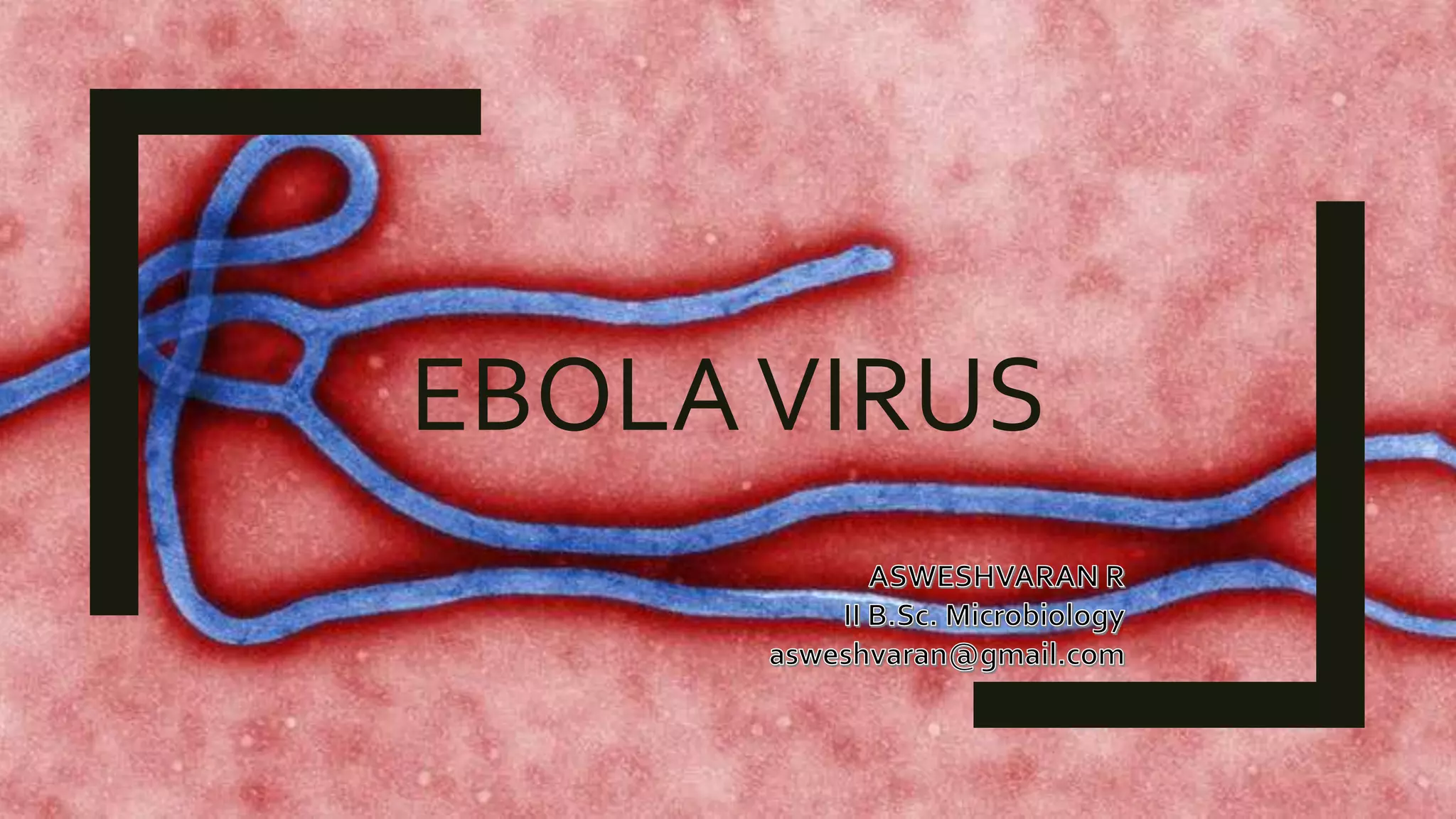
EBOLAVIRUS
History of Ebola:
■ The Ebola virus is a severe infectious often fatal disease in human and primates.
■ First appeared in1976 at Nzara in Sudan and atYambuku in the democratic republic of
Congo near the Ebola river in Africa.
■ Second appeared in Africa 1989 in Reston.
■ Third appeared in 2014West Africa affecting Guinea, Sierra, Leone, Liberia and Nigeria.
■ Ebola virus is called as hemorrhagic because bleeding will occur during the course of illness.
■ Ebola virus causes bleeding inside and out side the body.
■ Ebola strikes mainly in villages of central and west Africa but it has also spread to African
cities too.
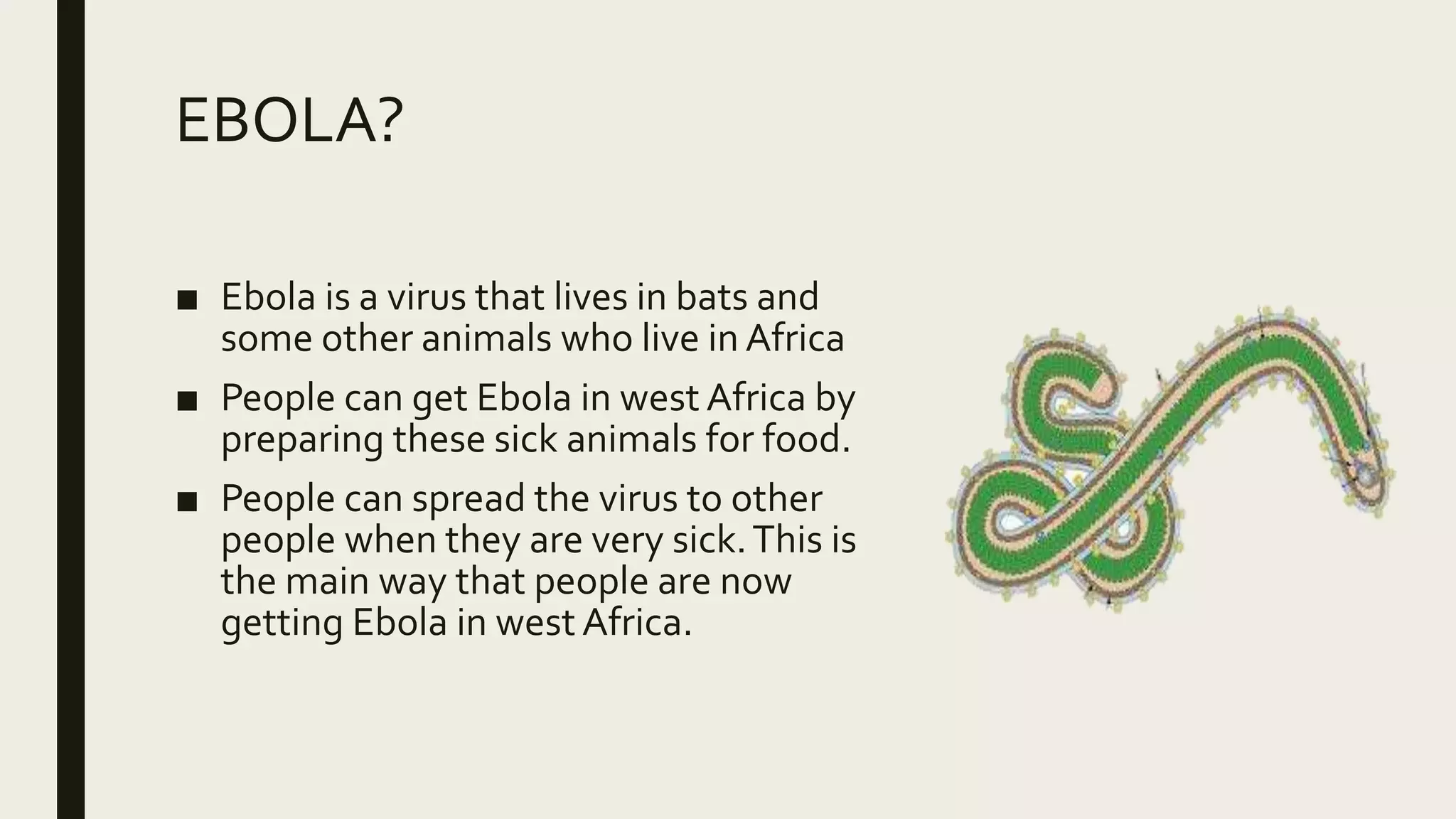
EBOLA?
■ Ebola is a virus that lives in bats and
some other animals who live in Africa
■ People can get Ebola in west Africa by
preparing these sick animals for food.
■ People can spread the virus to other
people when they are very sick.This is
the main way that people are now
getting Ebola in west Africa.
STRUCTURE
■ Genome 19kb long.
■ Diameter 80nm; length 960nm to 1200nm.
■ Four viral proteins:
1. polymerase (L),
2. nucleoprotein,
3. proteinVP35,
4. proteinVP30.
■ Spikes formed by GP1/GP2 Complexes (envelope glycoprotein).
■ VP24 (membrane protein) associated with envelope.
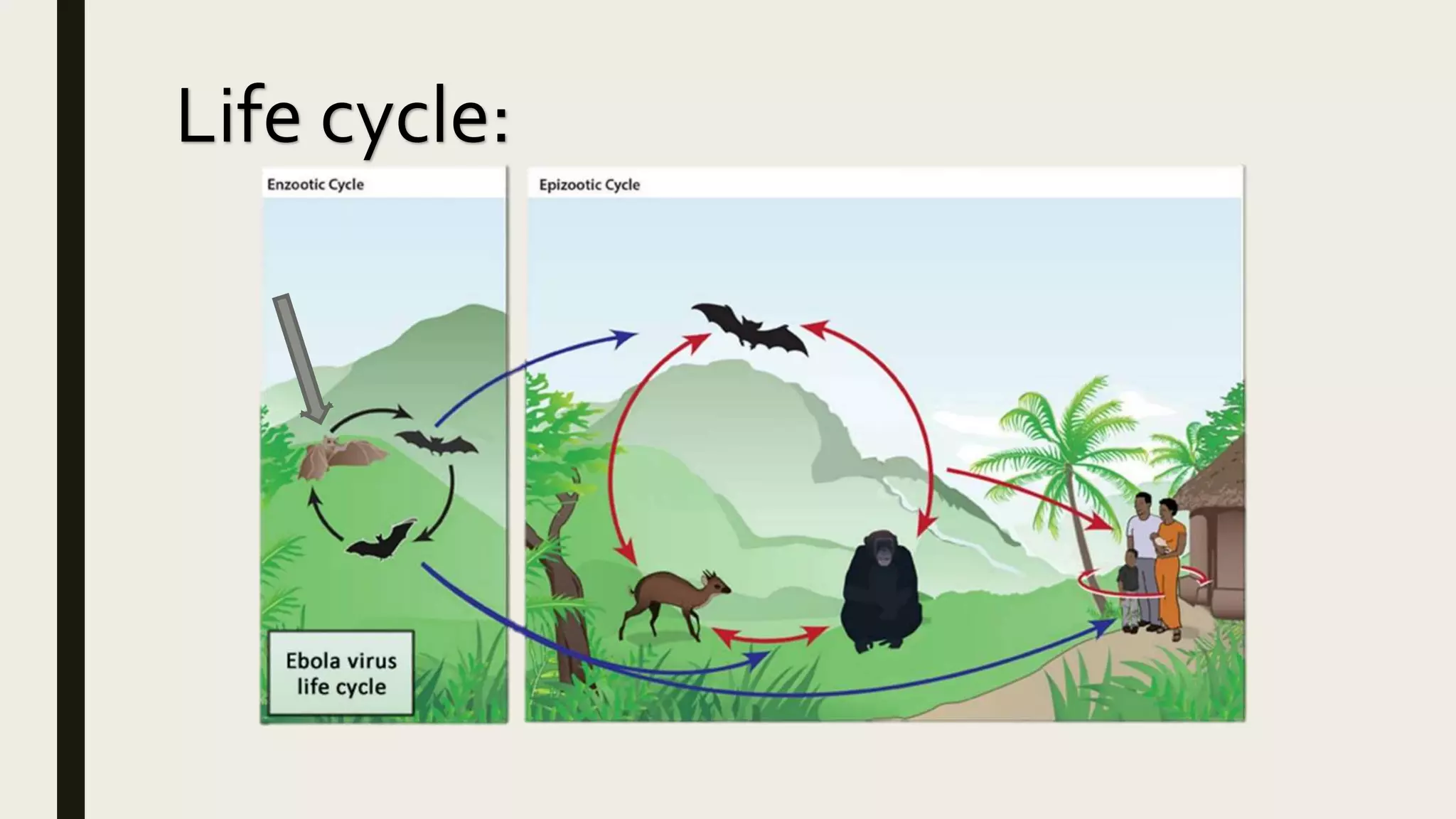
Life cycle:
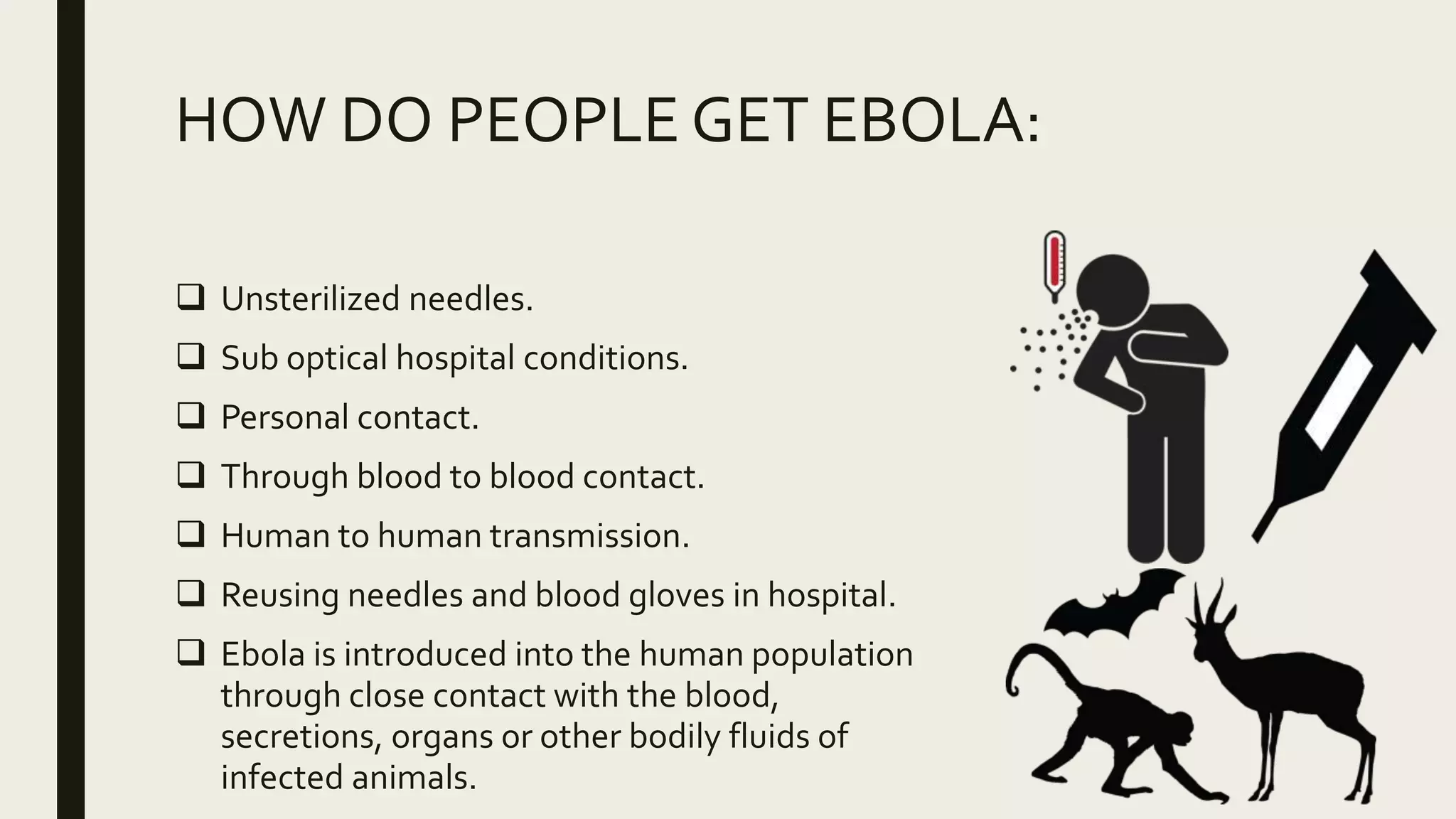
HOW DO PEOPLE GET EBOLA:
 Unsterilized needles.
 Sub optical hospital conditions.
 Personal contact.
 Through blood to blood contact.
 Human to human transmission.
 Reusing needles and blood gloves in hospital.
 Ebola is introduced into the human population
through close contact with the blood,
secretions, organs or other bodily fluids of
infected animals.
SYMPTOMS:
■ Fever
■ Headache
■ Tiredness
■ Weakness
■ Diarrhea
■ Vomiting
■ Stomach pain
■ Muscle pain
■ Unexplained bleeding or Bruising
DIAGNOSIS:
■ Diagnosing Ebola can be difficult at first since early symptoms, such as fever, are
nonspecific to Ebola infection.
■ Samples from the patient can then be collected and tested to confirm infection are:
1. Antibody-capture enzyme-linked immunosorbent assay (ELISA).
2. Antigen-capture detection tests.
3. Serum neutralization test.
4. Reverse transcriptase polymarase chain reaction (RT-PCR) assay.
5. Electron microscopy.
6.Virus isolation by cell culture.
TREATMENT
■ There are no licensed specific treatment.
■ Patients are Frequently dehydrated and requires oral Rehydration with solution
containing electrolyte.
■ New drug therapies are being evaluated.
■ However there have been very recent development in preventative medication.
Ebola virus

Ebola virus

  • 1.
  • 2.
    History of Ebola: ■The Ebola virus is a severe infectious often fatal disease in human and primates. ■ First appeared in1976 at Nzara in Sudan and atYambuku in the democratic republic of Congo near the Ebola river in Africa. ■ Second appeared in Africa 1989 in Reston. ■ Third appeared in 2014West Africa affecting Guinea, Sierra, Leone, Liberia and Nigeria. ■ Ebola virus is called as hemorrhagic because bleeding will occur during the course of illness. ■ Ebola virus causes bleeding inside and out side the body. ■ Ebola strikes mainly in villages of central and west Africa but it has also spread to African cities too.
  • 3.
    EBOLA? ■ Ebola isa virus that lives in bats and some other animals who live in Africa ■ People can get Ebola in west Africa by preparing these sick animals for food. ■ People can spread the virus to other people when they are very sick.This is the main way that people are now getting Ebola in west Africa.
  • 4.
    STRUCTURE ■ Genome 19kblong. ■ Diameter 80nm; length 960nm to 1200nm. ■ Four viral proteins: 1. polymerase (L), 2. nucleoprotein, 3. proteinVP35, 4. proteinVP30. ■ Spikes formed by GP1/GP2 Complexes (envelope glycoprotein). ■ VP24 (membrane protein) associated with envelope.
  • 5.
  • 6.
    HOW DO PEOPLEGET EBOLA:  Unsterilized needles.  Sub optical hospital conditions.  Personal contact.  Through blood to blood contact.  Human to human transmission.  Reusing needles and blood gloves in hospital.  Ebola is introduced into the human population through close contact with the blood, secretions, organs or other bodily fluids of infected animals.
  • 7.
    SYMPTOMS: ■ Fever ■ Headache ■Tiredness ■ Weakness ■ Diarrhea ■ Vomiting ■ Stomach pain ■ Muscle pain ■ Unexplained bleeding or Bruising
  • 8.
    DIAGNOSIS: ■ Diagnosing Ebolacan be difficult at first since early symptoms, such as fever, are nonspecific to Ebola infection. ■ Samples from the patient can then be collected and tested to confirm infection are: 1. Antibody-capture enzyme-linked immunosorbent assay (ELISA). 2. Antigen-capture detection tests. 3. Serum neutralization test. 4. Reverse transcriptase polymarase chain reaction (RT-PCR) assay. 5. Electron microscopy. 6.Virus isolation by cell culture.
  • 9.
    TREATMENT ■ There areno licensed specific treatment. ■ Patients are Frequently dehydrated and requires oral Rehydration with solution containing electrolyte. ■ New drug therapies are being evaluated. ■ However there have been very recent development in preventative medication.