BLOOD
• Blood has four important functions:
1. Carrying oxygen from lungs to all body cells, and
carbon dioxide to the lungs to be exhaled
2. Carrying waste products from the cells to the
kidneys for removal
3. Transporting nutrients to body cells
4. Fighting infections and healing wounds
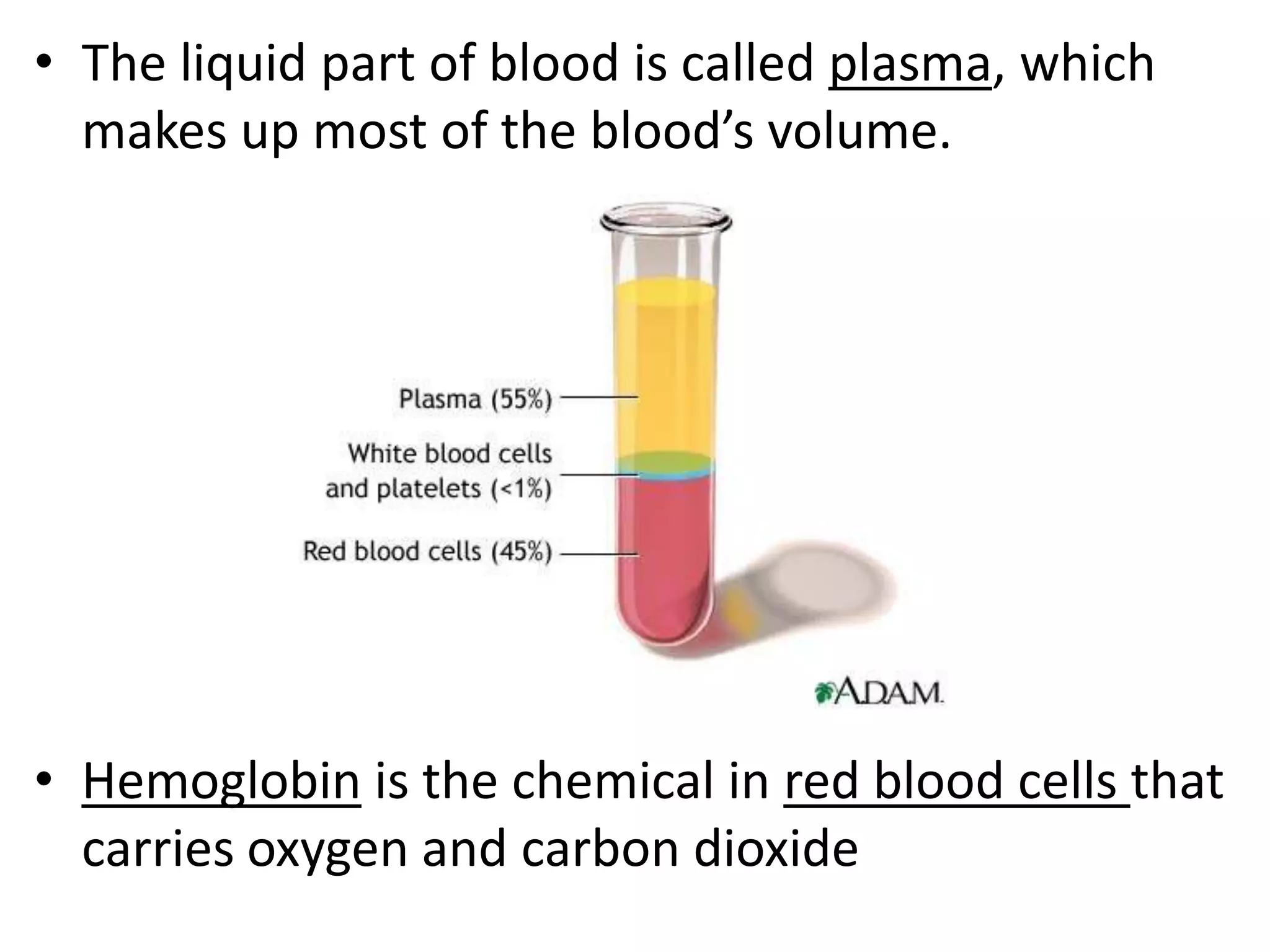
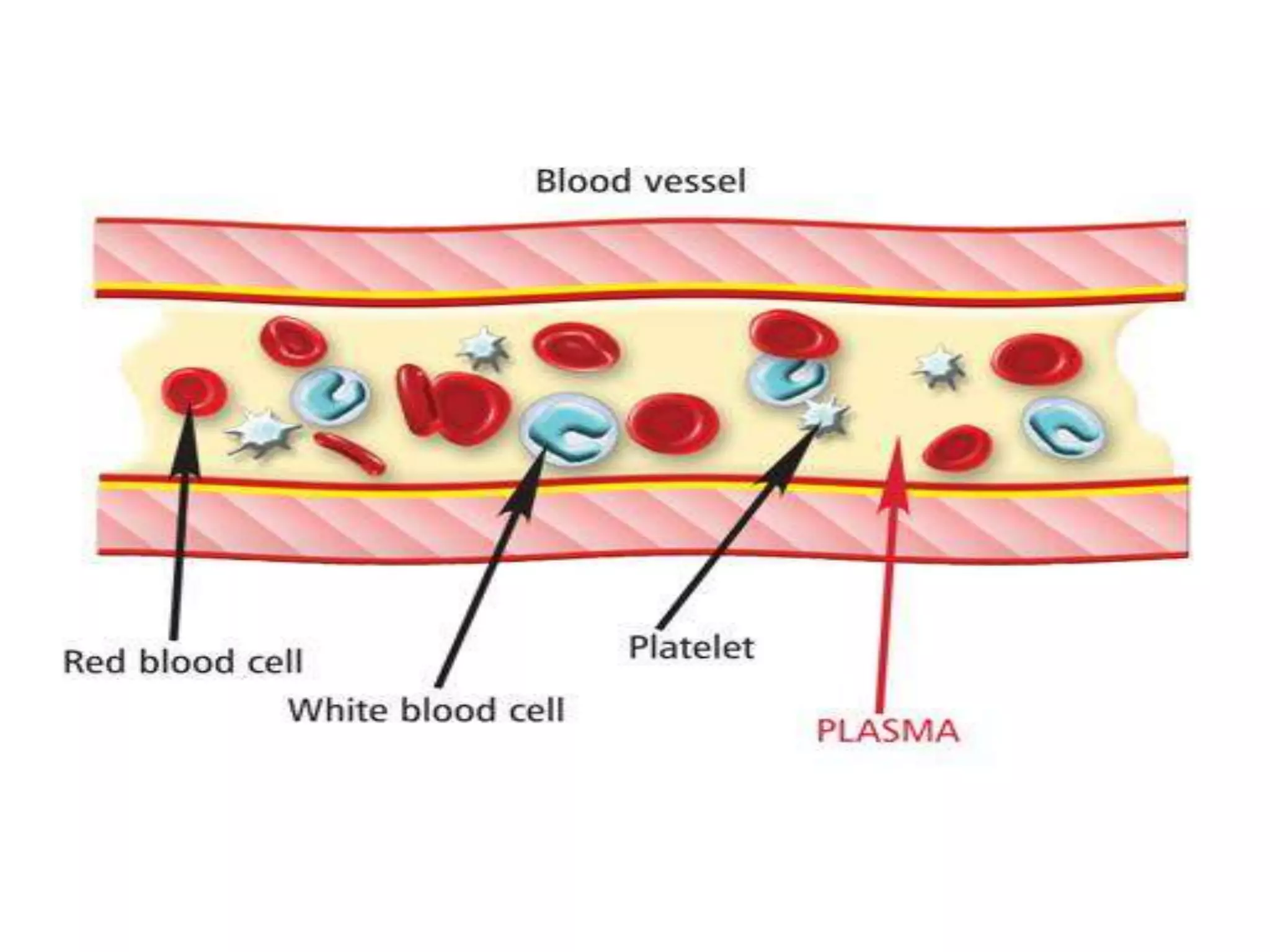
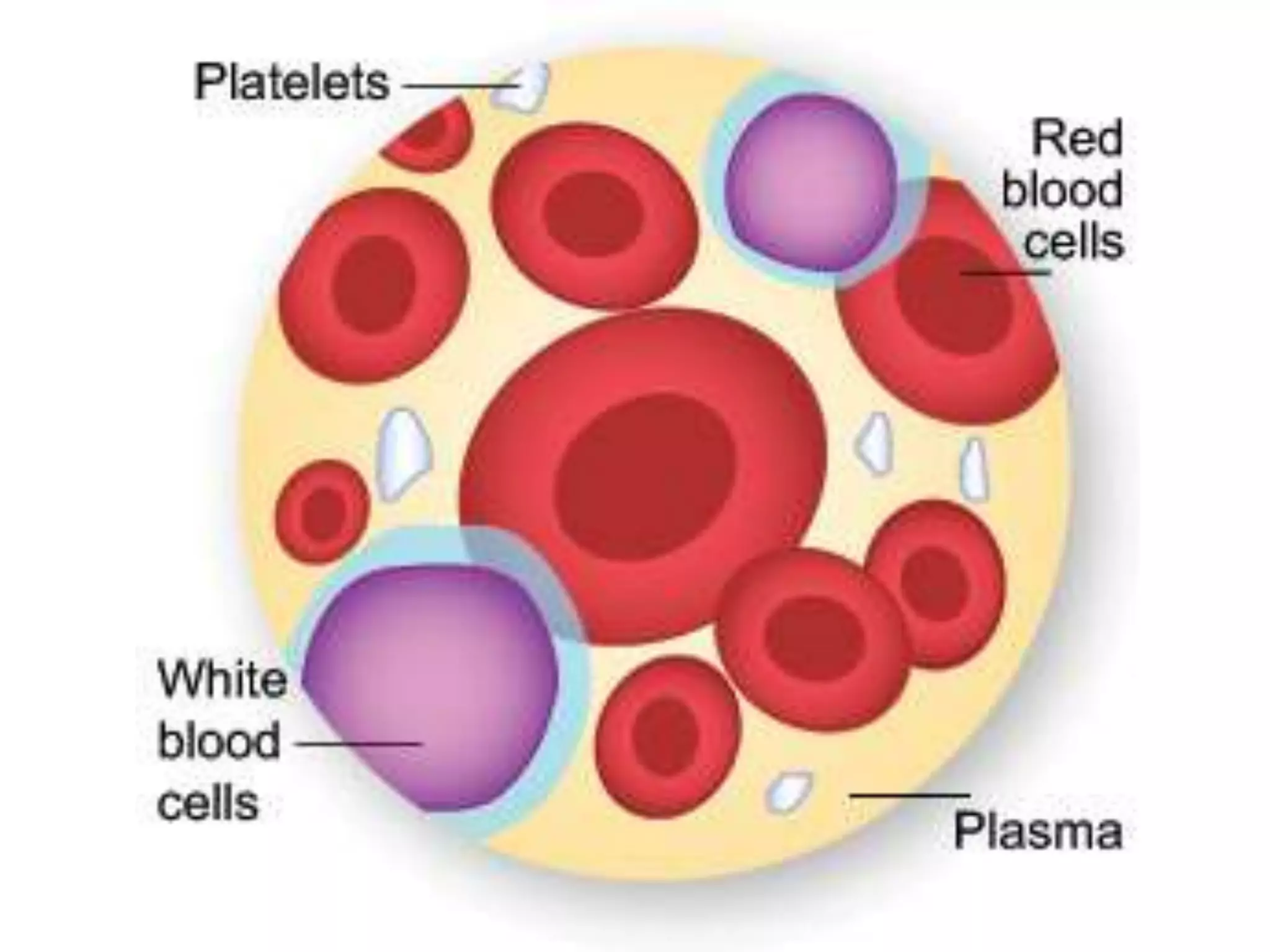
• The liquid part of blood is called plasma, which
makes up most of the blood’s volume.
• Hemoglobin is the chemical in red blood cells that
carries oxygen and carbon dioxide
• Hemoglobin is made of an iron compound that
gives blood its red color
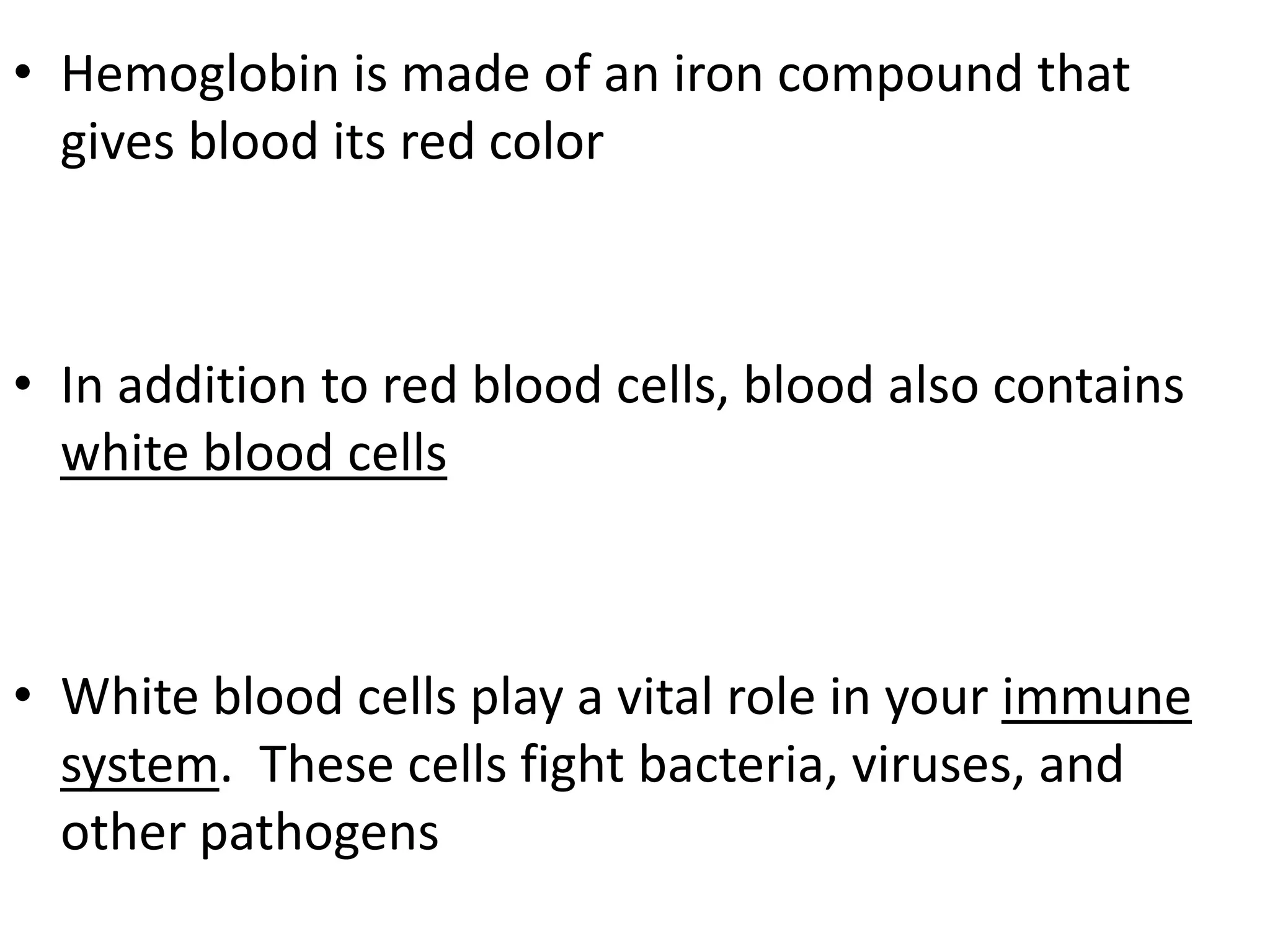
• In addition to red blood cells, blood also contains
white blood cells
• White blood cells play a vital role in your immune
system. These cells fight bacteria, viruses, and
other pathogens
• Platelets are irregularly shaped cell fragments that
help blood to clot.
• Clotting keeps you from losing too much blood
when you get an injury
• A blood clot acts like a bandage, plugging the
wound
• People with the genetic disorder hemophilia do not
have this clotting factor. A minor cut can be life
threatening for these people
• People inherit one of four blood types
• Blood type is determined based on the kind of
antigen present
• Antigens induce the production of antibodies for
immune response
• The four
blood types are:
- A
- B
- AB
- O
• Certain blood types cannot be mixed during a
blood transfusion
• People with type O blood
are called universal donors
because type O can be
received safely by all other
blood types
• Most people also contain an antigen in red blood
cells called the Rh factor. Most people are Rh
positive.
• O positive = the most common type of blood
• AB negative = the least common
DISEASES OF THE BLOOD
• Anemia – a condition in which there is a deficiency of
red blood cells. This can be caused by blood loss or
iron deficiency
• Sickle-cell anemia is an inherited form of anemia and is
caused by abnormal structure of red blood cells
• Leukemia is a disease in which white blood cells are
made in excess numbers. These cells are
underdeveloped and do not fight infection well.
- These cells fill bone marrow and crowd out normal cells
THE LYMPHATIC SYSTEM
- Lymph is a fluid that contains white blood cells
called lymphocytes
- The lymphatic system carries lymph through
contractions of smooth muscles
- Before lymph enters the blood, it passes through
lymph nodes, bean-shaped organs found
throughout the body
• Lymph nodes filter out foreign materials and
lymphocytes, which are important for fighting
infection.
• Other lymphatic organs include tonsils, thymus,
and spleen
• One disease of the lymphatic system is AIDS,
caused by a virus called HIV (human
immunodeficiency virus)
• A person infected with this virus cannot fight off
diseases
Blood and lymphatic system

Blood and lymphatic system

  • 1.
  • 2.
    • Blood hasfour important functions: 1. Carrying oxygen from lungs to all body cells, and carbon dioxide to the lungs to be exhaled 2. Carrying waste products from the cells to the kidneys for removal 3. Transporting nutrients to body cells 4. Fighting infections and healing wounds
  • 4.
    • The liquidpart of blood is called plasma, which makes up most of the blood’s volume. • Hemoglobin is the chemical in red blood cells that carries oxygen and carbon dioxide
  • 5.
    • Hemoglobin ismade of an iron compound that gives blood its red color • In addition to red blood cells, blood also contains white blood cells • White blood cells play a vital role in your immune system. These cells fight bacteria, viruses, and other pathogens
  • 7.
    • Platelets areirregularly shaped cell fragments that help blood to clot. • Clotting keeps you from losing too much blood when you get an injury • A blood clot acts like a bandage, plugging the wound • People with the genetic disorder hemophilia do not have this clotting factor. A minor cut can be life threatening for these people
  • 9.
    • People inheritone of four blood types • Blood type is determined based on the kind of antigen present • Antigens induce the production of antibodies for immune response
  • 10.
    • The four bloodtypes are: - A - B - AB - O
  • 12.
    • Certain bloodtypes cannot be mixed during a blood transfusion • People with type O blood are called universal donors because type O can be received safely by all other blood types
  • 13.
    • Most peoplealso contain an antigen in red blood cells called the Rh factor. Most people are Rh positive. • O positive = the most common type of blood • AB negative = the least common
  • 15.
    DISEASES OF THEBLOOD • Anemia – a condition in which there is a deficiency of red blood cells. This can be caused by blood loss or iron deficiency • Sickle-cell anemia is an inherited form of anemia and is caused by abnormal structure of red blood cells • Leukemia is a disease in which white blood cells are made in excess numbers. These cells are underdeveloped and do not fight infection well. - These cells fill bone marrow and crowd out normal cells
  • 16.
    THE LYMPHATIC SYSTEM -Lymph is a fluid that contains white blood cells called lymphocytes - The lymphatic system carries lymph through contractions of smooth muscles - Before lymph enters the blood, it passes through lymph nodes, bean-shaped organs found throughout the body
  • 18.
    • Lymph nodesfilter out foreign materials and lymphocytes, which are important for fighting infection. • Other lymphatic organs include tonsils, thymus, and spleen • One disease of the lymphatic system is AIDS, caused by a virus called HIV (human immunodeficiency virus) • A person infected with this virus cannot fight off diseases