Download to read offline


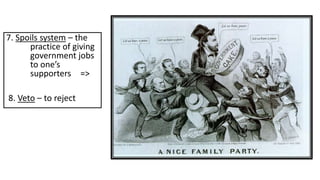
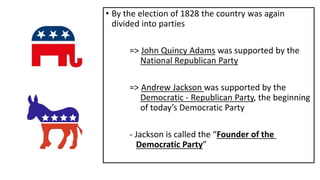
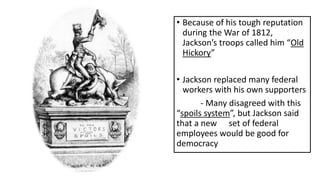



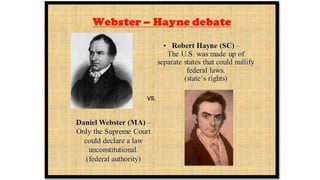


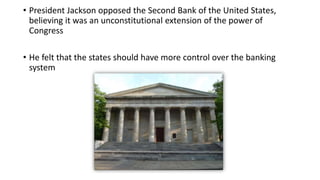





Andrew Jackson was elected president in 1828 as the candidate of the newly emerging Democratic Party. He won in a landslide due to expanded voting rights. As president, Jackson faced the Nullification Crisis over states' rights but was able to negotiate a compromise. He also opposed the renewal of the Second Bank of the United States' charter and removed federal funds to weaken it. Jackson's presidency expanded presidential power and common man's role in government but also contributed to economic instability.


