The biotic components include all 
living organisms present in the 
environmental system. From 
nutrition point of view, the biotic 
components can be grouped into 
two basic components : 
 AUTOTROPHIC COMPONENTS AND 
 HETEROTROPHIC COMPONENTS
The autotrophic components include all 
green plants which fix the radiant energy of 
sun and manufacture food from inorganic 
substances. The heterotrophic components 
include non green plants and all animals 
which take food from autotrophs. So biotic 
components of an ecosystem can be 
described under the following three heads : 
i. Producers 
ii. Consumers and 
iii. Decomposers or reducers and transformers
1. PRODUCERS 
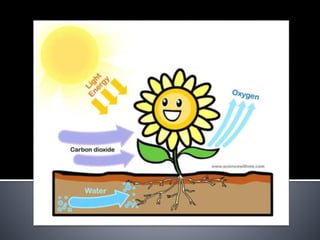
Producers are the autotrophic elements – chiefly 
green plants. They use radiant energy of sun in 
photosynthetic process whereby carbon dioxide is 
assimilated and the light energy is converted into 
chemical energy. The chemical energy is actually 
locked up in the energy rich carbon compounds. 
Oxygen is evolved as by product in the 
photosynthesis process. This is used in respiration 
by all living things. 
Producers are also known as “converters” or 
“transducers”. 
Eg : Grasses of the field, trees of the forest etc.
2. CONSUMERS 
Those living members of ecosystem which consume 
the food synthesized by producers are called 
consumers. Under this category are included all 
kinds of animals that are found in an ecosystem. 
There are different classes or categories of 
consumers such as : 
a. Primary or first order consumers 
b. Secondary or second order consumers 
c. Tertiary or third order consumers and 
d. Parasites, scavengers and saprobes.
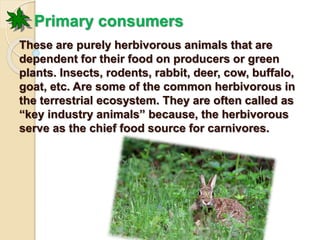
Primary consumers 
These are purely herbivorous animals that are 
dependent for their food on producers or green 
plants. Insects, rodents, rabbit, deer, cow, buffalo, 
goat, etc. Are some of the common herbivorous in 
the terrestrial ecosystem. They are often called as 
“key industry animals” because, the herbivorous 
serve as the chief food source for carnivores.
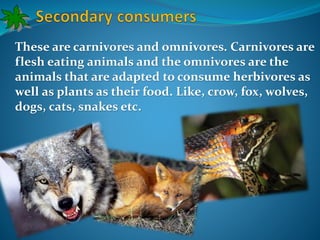
These are carnivores and omnivores. Carnivores are 
flesh eating animals and the omnivores are the 
animals that are adapted to consume herbivores as 
well as plants as their food. Like, crow, fox, wolves, 
dogs, cats, snakes etc.
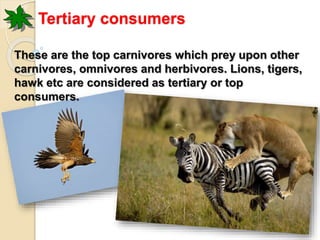
Tertiary consumers 
These are the top carnivores which prey upon other 
carnivores, omnivores and herbivores. Lions, tigers, 
hawk etc are considered as tertiary or top 
consumers.
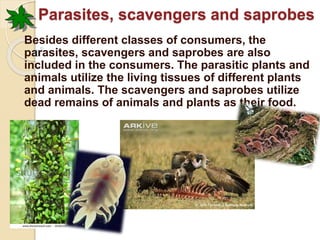
Parasites, scavengers and saprobes 
Besides different classes of consumers, the 
parasites, scavengers and saprobes are also 
included in the consumers. The parasitic plants and 
animals utilize the living tissues of different plants 
and animals. The scavengers and saprobes utilize 
dead remains of animals and plants as their food.
These are the living components of the ecosystem 
and they are fungi and bacteria. Decomposers 
attack the dead remains of producers and 
consumers and degrade the complex organic 
substances into simpler compounds. The simple 
organic matters are then attacked by another 
kind of bacteria, the transformers which change 
these organic compounds into inorganic forms 
that are suitable for reuse by producers or green 
plants.
Biotic components

Biotic components

  • 2.
    The biotic componentsinclude all living organisms present in the environmental system. From nutrition point of view, the biotic components can be grouped into two basic components :  AUTOTROPHIC COMPONENTS AND  HETEROTROPHIC COMPONENTS
  • 3.
    The autotrophic componentsinclude all green plants which fix the radiant energy of sun and manufacture food from inorganic substances. The heterotrophic components include non green plants and all animals which take food from autotrophs. So biotic components of an ecosystem can be described under the following three heads : i. Producers ii. Consumers and iii. Decomposers or reducers and transformers
  • 4.
    1. PRODUCERS Producersare the autotrophic elements – chiefly green plants. They use radiant energy of sun in photosynthetic process whereby carbon dioxide is assimilated and the light energy is converted into chemical energy. The chemical energy is actually locked up in the energy rich carbon compounds. Oxygen is evolved as by product in the photosynthesis process. This is used in respiration by all living things. Producers are also known as “converters” or “transducers”. Eg : Grasses of the field, trees of the forest etc.
  • 6.
    2. CONSUMERS Thoseliving members of ecosystem which consume the food synthesized by producers are called consumers. Under this category are included all kinds of animals that are found in an ecosystem. There are different classes or categories of consumers such as : a. Primary or first order consumers b. Secondary or second order consumers c. Tertiary or third order consumers and d. Parasites, scavengers and saprobes.
  • 7.
    Primary consumers Theseare purely herbivorous animals that are dependent for their food on producers or green plants. Insects, rodents, rabbit, deer, cow, buffalo, goat, etc. Are some of the common herbivorous in the terrestrial ecosystem. They are often called as “key industry animals” because, the herbivorous serve as the chief food source for carnivores.
  • 8.
    These are carnivoresand omnivores. Carnivores are flesh eating animals and the omnivores are the animals that are adapted to consume herbivores as well as plants as their food. Like, crow, fox, wolves, dogs, cats, snakes etc.
  • 9.
    Tertiary consumers Theseare the top carnivores which prey upon other carnivores, omnivores and herbivores. Lions, tigers, hawk etc are considered as tertiary or top consumers.
  • 10.
    Parasites, scavengers andsaprobes Besides different classes of consumers, the parasites, scavengers and saprobes are also included in the consumers. The parasitic plants and animals utilize the living tissues of different plants and animals. The scavengers and saprobes utilize dead remains of animals and plants as their food.
  • 11.
    These are theliving components of the ecosystem and they are fungi and bacteria. Decomposers attack the dead remains of producers and consumers and degrade the complex organic substances into simpler compounds. The simple organic matters are then attacked by another kind of bacteria, the transformers which change these organic compounds into inorganic forms that are suitable for reuse by producers or green plants.