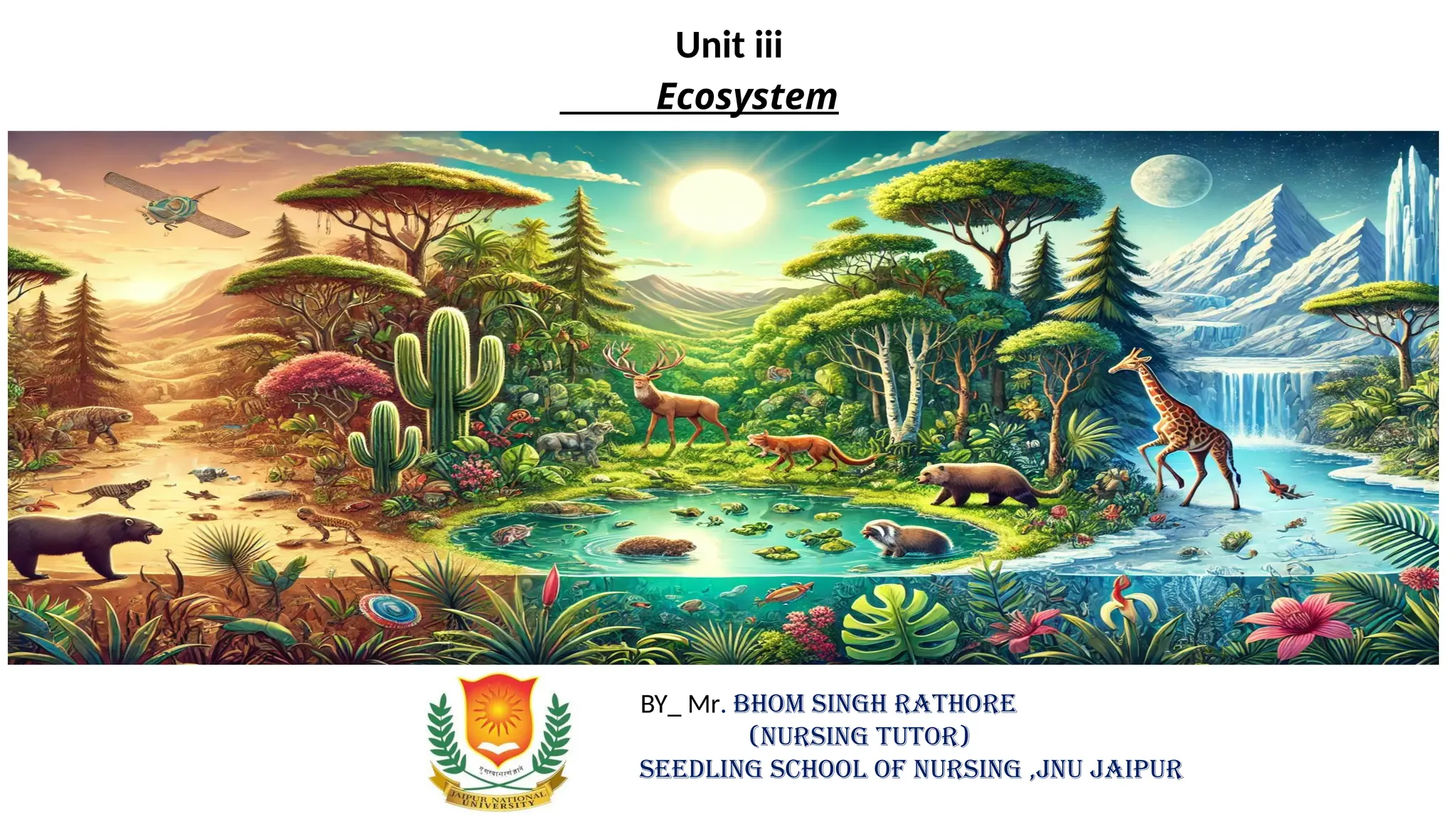
Unit iii
Ecosystem
BY_ Mr. Bhom Singh Rathore
(Nursing Tutor)
Seedling School of Nursing ,JNU Jaipur
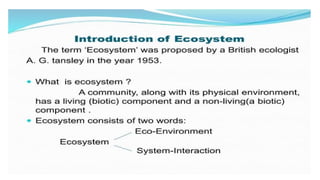
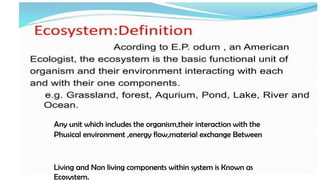
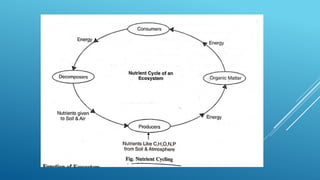
Any unit which includes the organism,their interaction with the
Phusical environment ,energy flow,material exchange Between
(ii)
Living and Non living components within system is Known as
Ecosystem.
&
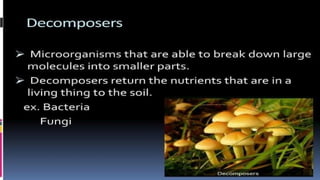
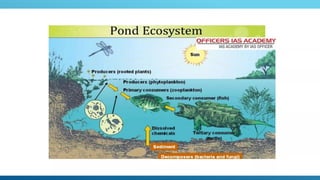
Decomposers
& Decomposers
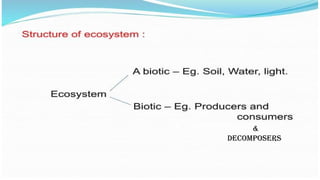
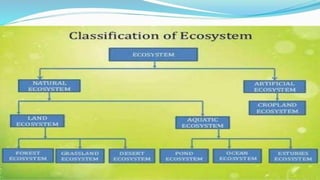
Structure of Ecosystem
There are two components of the Ecosystem _
• Biotic components
•Living things within an ecosystem, such as plants, animals, fungi, bacteria,
and protists
*Abiotic Components
•Non-living components of an ecosystem, such as water, soil, air, sunlight,
temperature,
• .
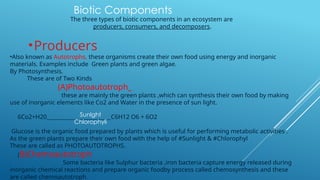
The three types of biotic components in an ecosystem are
producers, consumers, and decomposers.
•Producers
•Also known as Autotrophs, these organisms create their own food using energy and inorganic
materials. Examples include Green plants and green algae.
By Photosynthesis.
These are of Two Kinds
(A)Photoautotroph_
these are mainly the green plants ,which can synthesis their own food by making
use of inorganic elements like Co2 and Water in the presence of sun light.
6Co2+H20________________________C6H12 O6 + 6O2
Glucose is the organic food prepared by plants which is useful for performing metabolic activities .
As the green plants prepare their own food with the help of #Sunlight & #Chlorophyl
These are called as PHOTOAUTOTROPHS.
(B)Chemoautotroph
Some bacteria like Sulphur bacteria ,iron bacteria capture energy released during
inorganic chemical reactions and prepare organic foodby process called chemosynthesis and these
are called chemoautotroph
Biotic Components
Sunlght
Chlorophyli
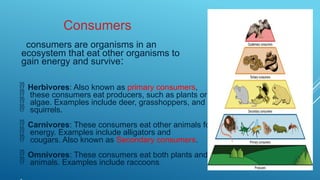
Consumers
consumers are organisms in an
ecosystem that eat other organisms to
gain energy and survive:
 Herbivores: Also known as primary consumers,
 these consumers eat producers, such as plants or
 algae. Examples include deer, grasshoppers, and
 squirrels.
 Carnivores: These consumers eat other animals for
 energy. Examples include alligators and
 cougars. Also known as Secondary consumers.
 Omnivores: These consumers eat both plants and
 animals. Examples include raccoons.
Abiotic Components
Abiotic components of an ecosystem are non-living factors
that can be classified into three categories:
•Climatic factors: These include light, temperature, soil ,
atmospheric humidity, and wind,rainfall ,
•Organic factors: These include
carbohydrates ,Lipids ,Nucleic acid ,proteins some of the
organic substances present in organism which upon death
are broken down by Decomposers in to Organic substances
for their cycle.
•
•Inorganic factors: These include carbon ,Nitrogen,
phosphorus , oxygene ,calcium and their compounds
Eagle)
B.s. rathore
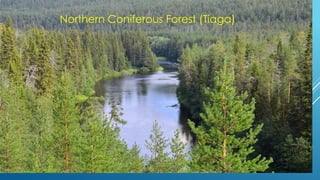
Northern Coniferous Forest (Tiaga)
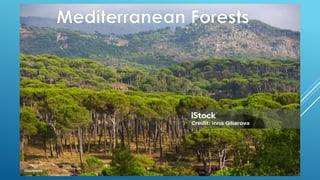
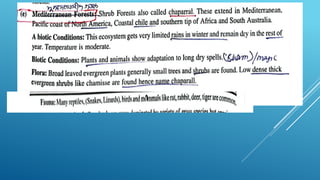
Mediterranean Forests
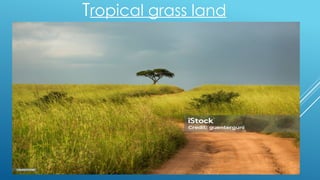
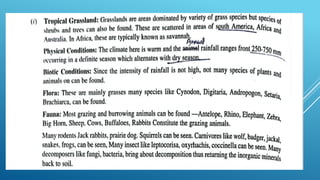
Tropical grass land
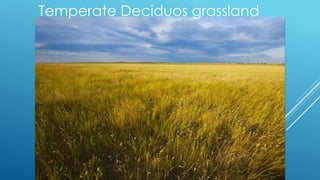
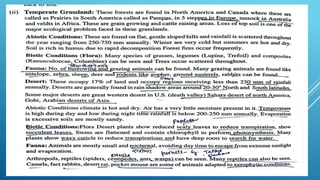
Temperate Deciduos grassland
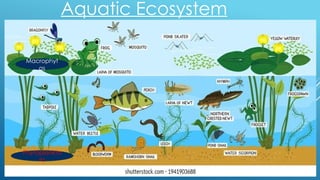
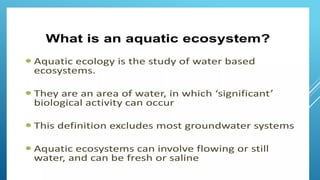
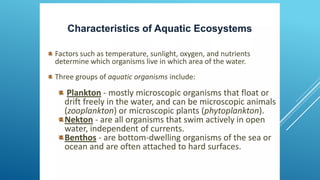
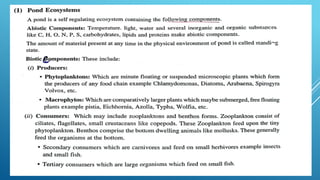
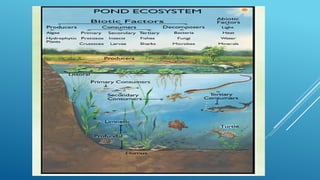
Aquatic Ecosystem
Phytoplankto
ns
Macrophyt
os
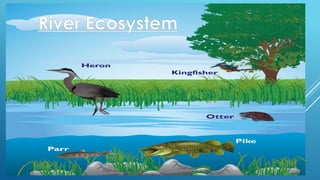
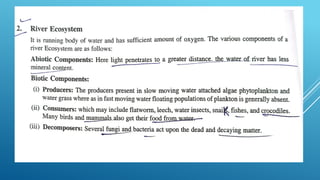
River Ecosystem
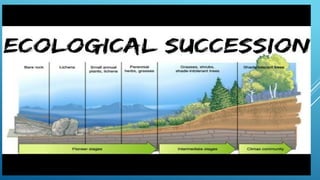
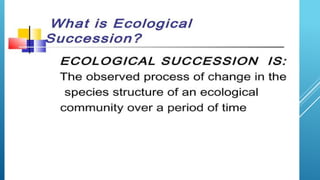
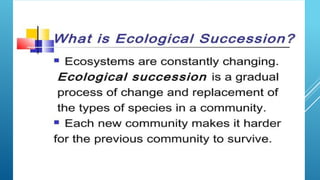
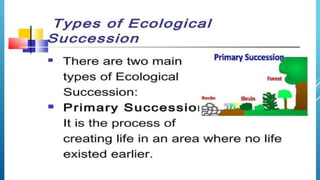
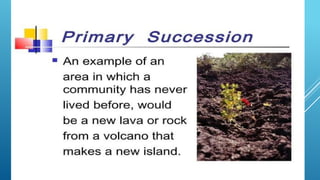
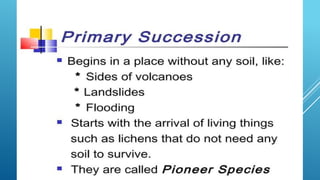
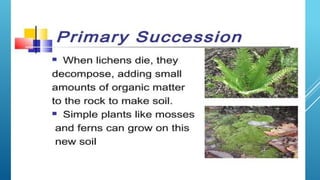
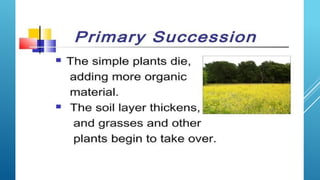
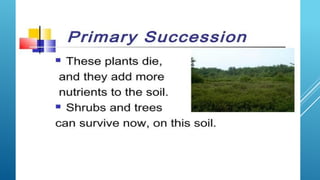
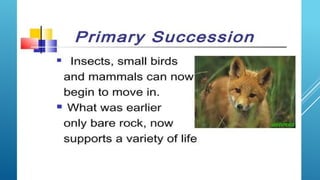
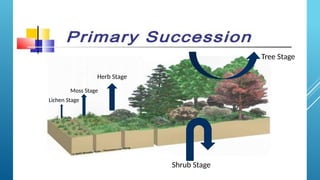
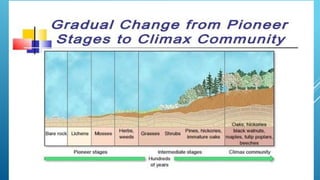
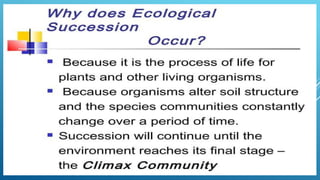
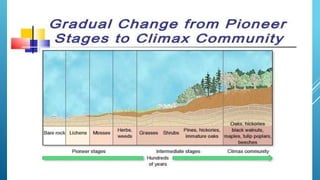
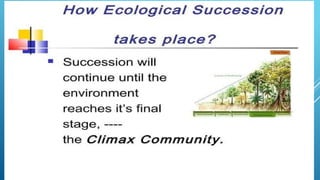
ECOLOGICAL SUCCESSION _
The Progressive Changes in the Species
Composition of an Ecosystem
is Called Ecological Succession
Lichen Stage
Moss Stage
Herb Stage
Shrub Stage
Tree Stage
THANK YOU

EVS UNIT 3 PPT (ECOSYSTEM).pptx Str.&Functions

  • 1.
    Unit iii Ecosystem BY_ Mr.Bhom Singh Rathore (Nursing Tutor) Seedling School of Nursing ,JNU Jaipur
  • 3.
    Any unit whichincludes the organism,their interaction with the Phusical environment ,energy flow,material exchange Between (ii) Living and Non living components within system is Known as Ecosystem.
  • 4.
  • 5.
    Structure of Ecosystem Thereare two components of the Ecosystem _ • Biotic components •Living things within an ecosystem, such as plants, animals, fungi, bacteria, and protists *Abiotic Components •Non-living components of an ecosystem, such as water, soil, air, sunlight, temperature, • .
  • 6.
    The three typesof biotic components in an ecosystem are producers, consumers, and decomposers. •Producers •Also known as Autotrophs, these organisms create their own food using energy and inorganic materials. Examples include Green plants and green algae. By Photosynthesis. These are of Two Kinds (A)Photoautotroph_ these are mainly the green plants ,which can synthesis their own food by making use of inorganic elements like Co2 and Water in the presence of sun light. 6Co2+H20________________________C6H12 O6 + 6O2 Glucose is the organic food prepared by plants which is useful for performing metabolic activities . As the green plants prepare their own food with the help of #Sunlight & #Chlorophyl These are called as PHOTOAUTOTROPHS. (B)Chemoautotroph Some bacteria like Sulphur bacteria ,iron bacteria capture energy released during inorganic chemical reactions and prepare organic foodby process called chemosynthesis and these are called chemoautotroph Biotic Components Sunlght Chlorophyli
  • 7.
    Consumers consumers are organismsin an ecosystem that eat other organisms to gain energy and survive:  Herbivores: Also known as primary consumers,  these consumers eat producers, such as plants or  algae. Examples include deer, grasshoppers, and  squirrels.  Carnivores: These consumers eat other animals for  energy. Examples include alligators and  cougars. Also known as Secondary consumers.  Omnivores: These consumers eat both plants and  animals. Examples include raccoons.
  • 9.
    Abiotic Components Abiotic componentsof an ecosystem are non-living factors that can be classified into three categories: •Climatic factors: These include light, temperature, soil , atmospheric humidity, and wind,rainfall , •Organic factors: These include carbohydrates ,Lipids ,Nucleic acid ,proteins some of the organic substances present in organism which upon death are broken down by Decomposers in to Organic substances for their cycle. • •Inorganic factors: These include carbon ,Nitrogen, phosphorus , oxygene ,calcium and their compounds
  • 23.
  • 38.
  • 57.
  • 59.
  • 61.
  • 63.
  • 67.
  • 73.
  • 78.
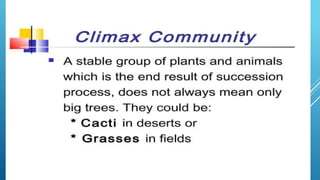
    ECOLOGICAL SUCCESSION _ TheProgressive Changes in the Species Composition of an Ecosystem is Called Ecological Succession
  • 87.
    Lichen Stage Moss Stage HerbStage Shrub Stage Tree Stage
  • 100.