: Biotic components and their relationship with food chains:
Biotic components:
Biotic components are the living things that shape an ecosystem.
Every living thing needs energy. Energy in an ecosystem passes from one organism to
another. The basic source of energy on earth is Sunlight.
Following are the types of organisms in our ecosystem:
1. Producers.
2. Consumers.
3. Decomposers.
1. Producers :
Producers can use sunlight to get energy and make their food through a process called
photosynthesis. (E.g. plants)
2. Consumers:
They have to eat producers or other consumers to get their energy. There are three
types of consumers which are as follow:
a. Herbivores: They can eat plants only. (E.g. Cow, Grasshopper etc.)
b. Carnivores: They can eat Animals only or herbivores. (E.g. Lion, Owl etc.)
c. Omnivores:An animal or person that eats both plant and animals. (E.g.
Humans, Bears, Chickens etc.)
3. Decomposers:
They can get their energy from eating dead consumers and producers. (Bacteria’s)
Foodchain:
The feeding relationship among organisms is called Food chain.
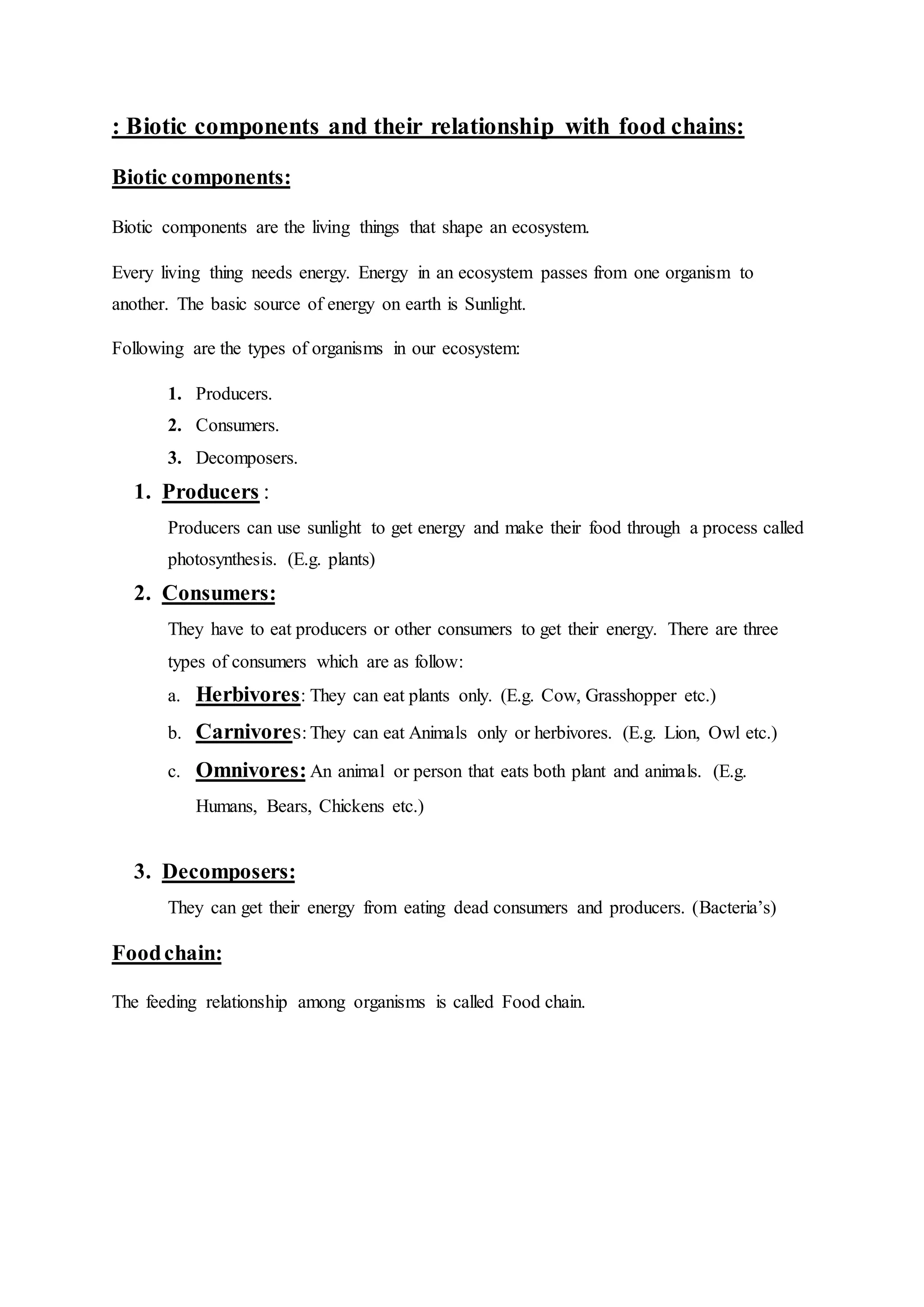
Most of food chains starts with producers like:
Trophic level:
A particular position occupied by a group of organisms in a food chain (primary producer,
primary consumer, secondary consumer, or tertiary consumer)
Green plants are producers so they are the first in most food chains. Animals that feeds on
plants are second or they are called primary consumers. Animals that eats primary consumers
are called secondary consumers .Animals that eats secondary consumers are known as
tertiary consumers.
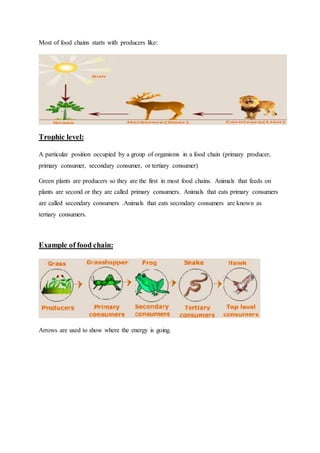
Example of food chain:
Arrows are used to show where the energy is going.
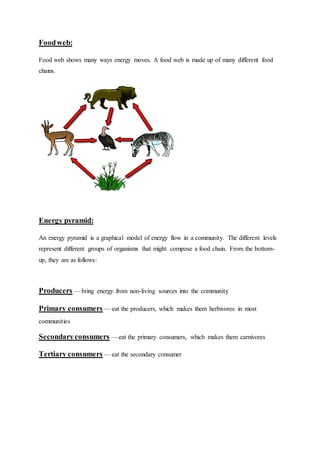
Foodweb:
Food web shows many ways energy moves. A food web is made up of many different food
chains.
Energy pyramid:
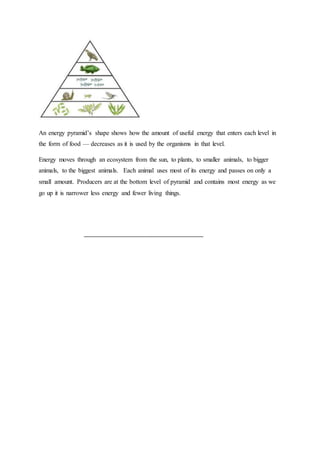
An energy pyramid is a graphical model of energy flow in a community. The different levels
represent different groups of organisms that might compose a food chain. From the bottom-
up, they are as follows:
Producers — bring energy from non-living sources into the community
Primary consumers — eat the producers, which makes them herbivores in most
communities
Secondaryconsumers — eat the primary consumers, which makes them carnivores
Tertiary consumers — eat the secondary consumer
An energy pyramid’s shape shows how the amount of useful energy that enters each level in
the form of food — decreases as it is used by the organisms in that level.
Energy moves through an ecosystem from the sun, to plants, to smaller animals, to bigger
animals, to the biggest animals. Each animal uses most of its energy and passes on only a
small amount. Producers are at the bottom level of pyramid and contains most energy as we
go up it is narrower less energy and fewer living things.
_____________________________________
final document

final document

  • 1.
    : Biotic componentsand their relationship with food chains: Biotic components: Biotic components are the living things that shape an ecosystem. Every living thing needs energy. Energy in an ecosystem passes from one organism to another. The basic source of energy on earth is Sunlight. Following are the types of organisms in our ecosystem: 1. Producers. 2. Consumers. 3. Decomposers. 1. Producers : Producers can use sunlight to get energy and make their food through a process called photosynthesis. (E.g. plants) 2. Consumers: They have to eat producers or other consumers to get their energy. There are three types of consumers which are as follow: a. Herbivores: They can eat plants only. (E.g. Cow, Grasshopper etc.) b. Carnivores: They can eat Animals only or herbivores. (E.g. Lion, Owl etc.) c. Omnivores:An animal or person that eats both plant and animals. (E.g. Humans, Bears, Chickens etc.) 3. Decomposers: They can get their energy from eating dead consumers and producers. (Bacteria’s) Foodchain: The feeding relationship among organisms is called Food chain.
  • 2.
    Most of foodchains starts with producers like: Trophic level: A particular position occupied by a group of organisms in a food chain (primary producer, primary consumer, secondary consumer, or tertiary consumer) Green plants are producers so they are the first in most food chains. Animals that feeds on plants are second or they are called primary consumers. Animals that eats primary consumers are called secondary consumers .Animals that eats secondary consumers are known as tertiary consumers. Example of food chain: Arrows are used to show where the energy is going.
  • 3.
    Foodweb: Food web showsmany ways energy moves. A food web is made up of many different food chains. Energy pyramid: An energy pyramid is a graphical model of energy flow in a community. The different levels represent different groups of organisms that might compose a food chain. From the bottom- up, they are as follows: Producers — bring energy from non-living sources into the community Primary consumers — eat the producers, which makes them herbivores in most communities Secondaryconsumers — eat the primary consumers, which makes them carnivores Tertiary consumers — eat the secondary consumer
  • 4.
    An energy pyramid’sshape shows how the amount of useful energy that enters each level in the form of food — decreases as it is used by the organisms in that level. Energy moves through an ecosystem from the sun, to plants, to smaller animals, to bigger animals, to the biggest animals. Each animal uses most of its energy and passes on only a small amount. Producers are at the bottom level of pyramid and contains most energy as we go up it is narrower less energy and fewer living things. _____________________________________