Types of ecosystem


Presented by,
        Priyanka Chowksey
        DAIMSR
Contents

•   Ecosystem
•   Major four types
•   Grassland Ecosystem
•   Aquatic Ecosystem
•   Forest Ecosystem
•   Desert Ecosystem
Ecosystem
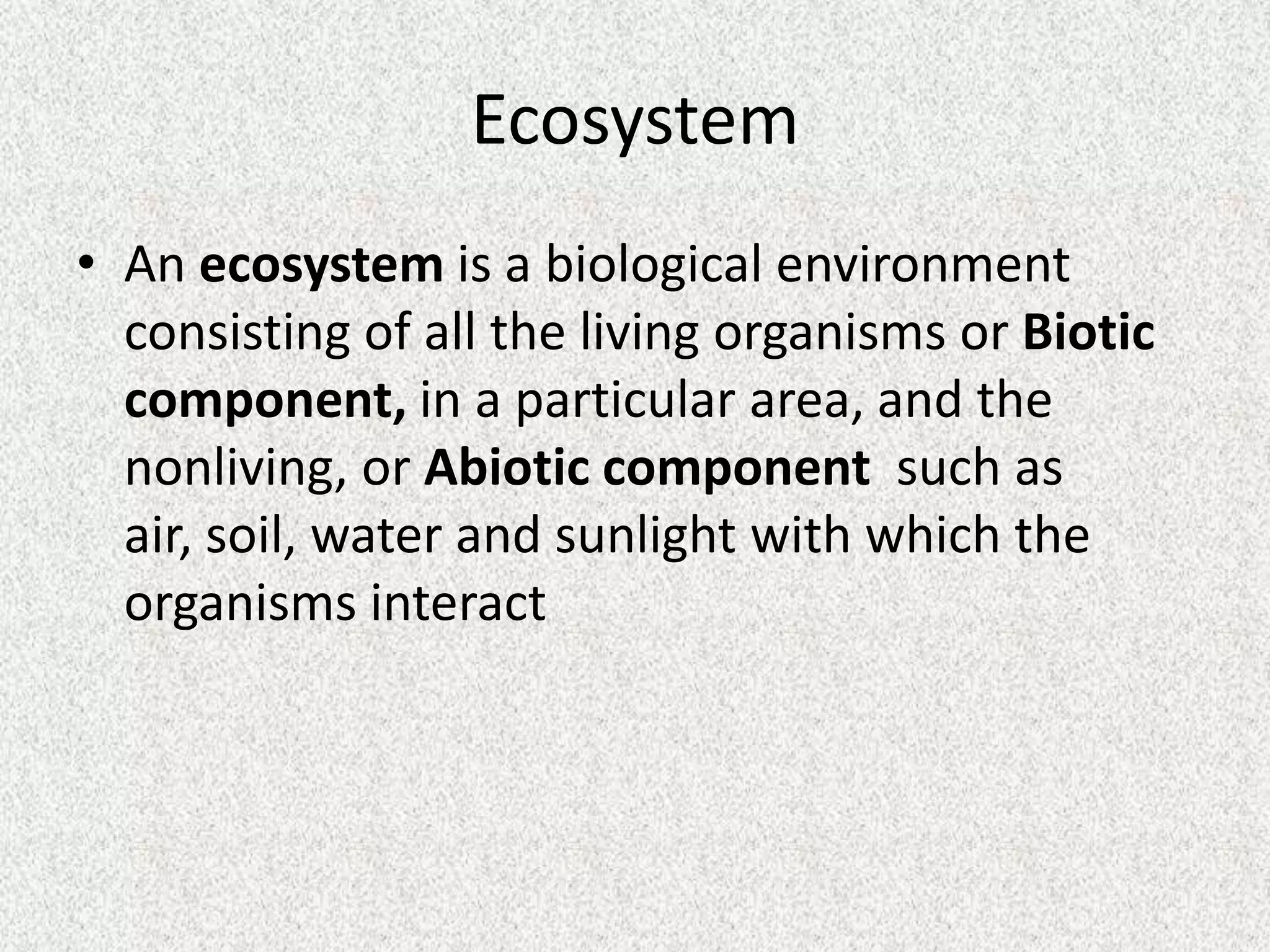
• An ecosystem is a biological environment
  consisting of all the living organisms or Biotic
  component, in a particular area, and the
  nonliving, or Abiotic component such as
  air, soil, water and sunlight with which the
  organisms interact
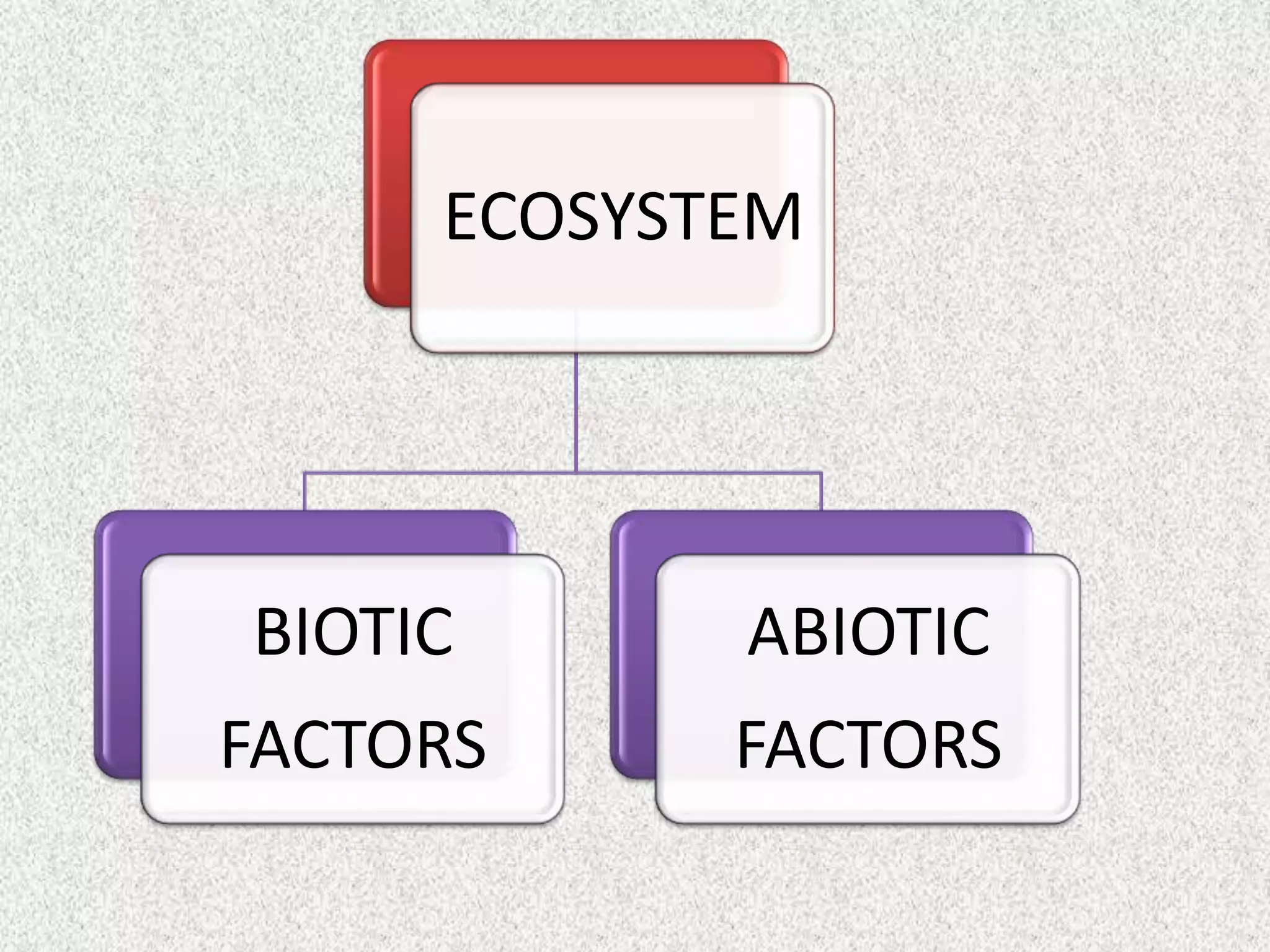
ECOSYSTEM


BIOTIC      ABIOTIC
FACTORS     FACTORS
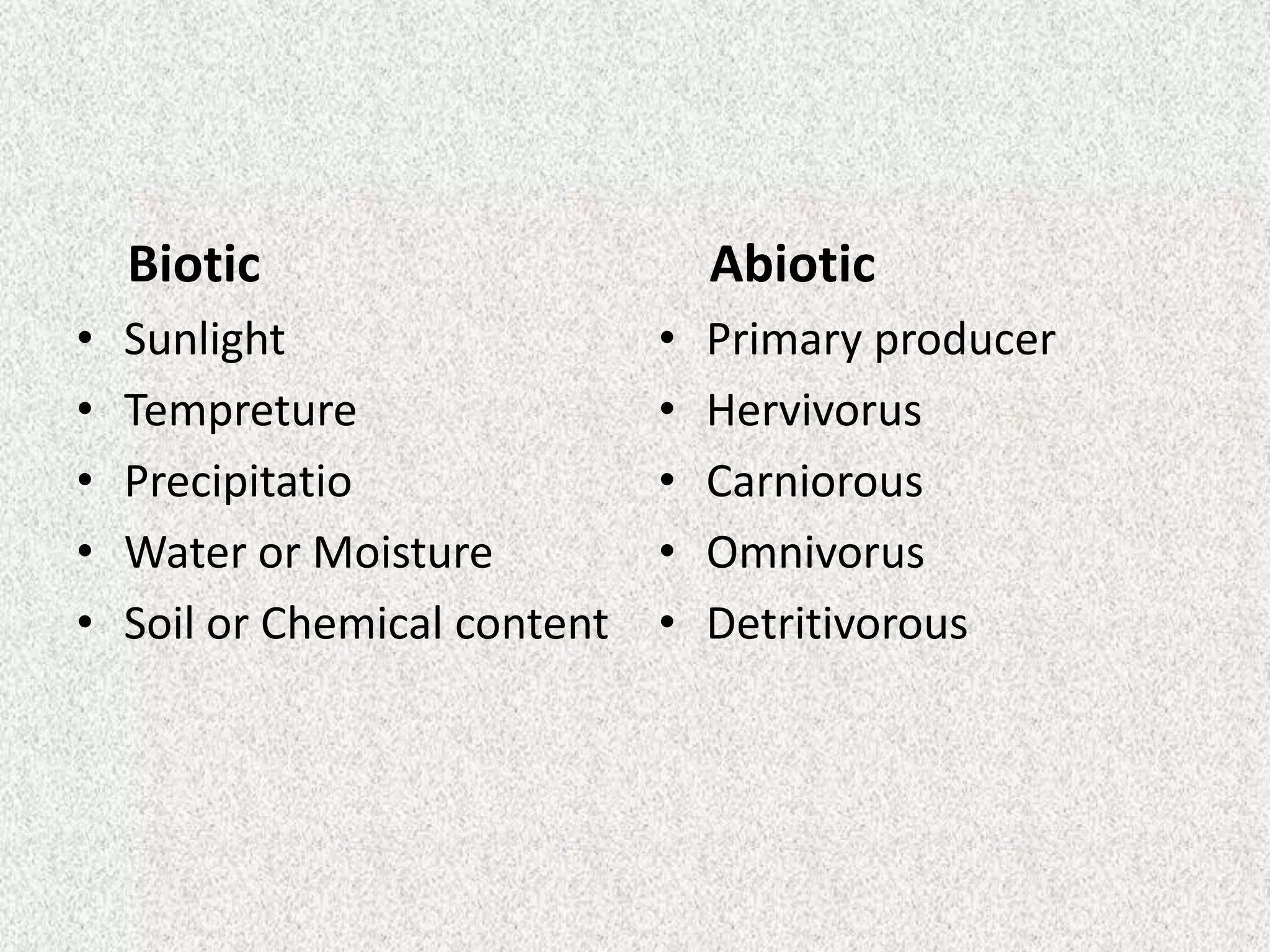
Biotic                         Abiotic
•   Sunlight                   •   Primary producer
•   Tempreture                 •   Hervivorus
•   Precipitatio               •   Carniorous
•   Water or Moisture          •   Omnivorus
•   Soil or Chemical content   •   Detritivorous
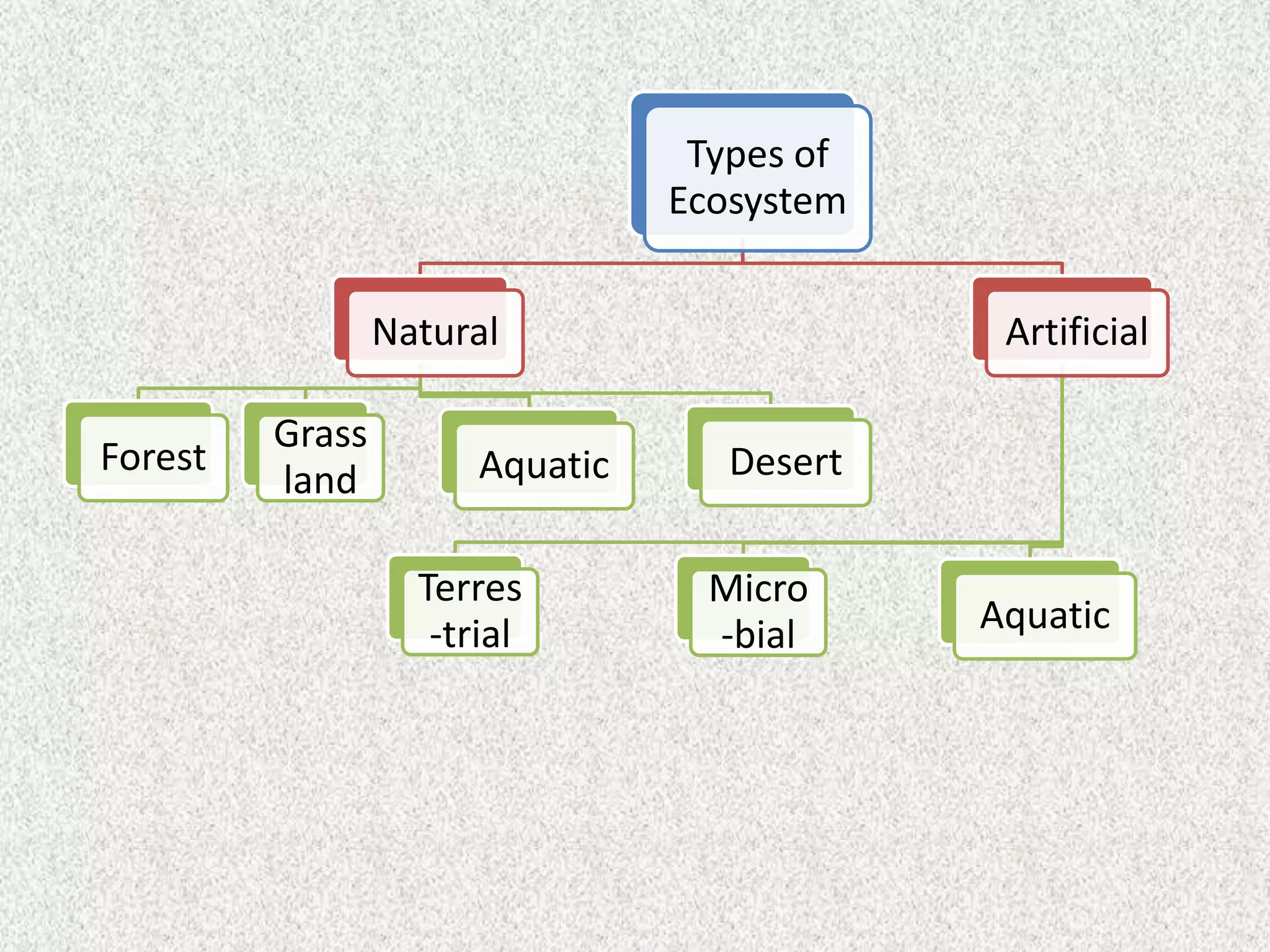
Types of
                                 Ecosystem


                 Natural                      Artificial

         Grass
Forest                 Aquatic      Desert
         land

                   Terres          Micro
                    -trial         -bial     Aquatic
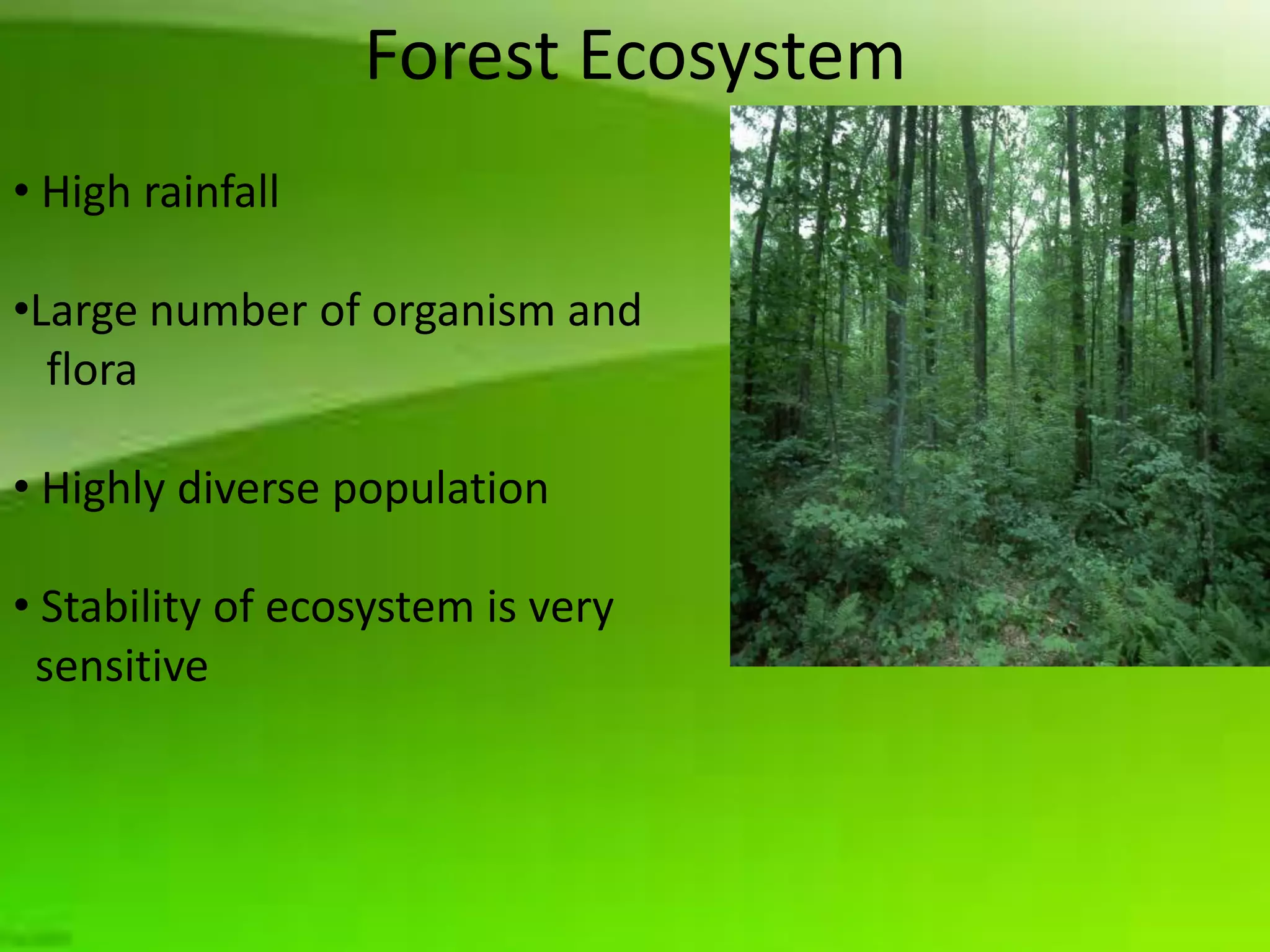
Forest Ecosystem
• High rainfall

•Large number of organism and
  flora

• Highly diverse population

• Stability of ecosystem is very
 sensitive
Types of Forest
•   Tropical evergreen forest
•   Tropical deciduous forest
•   Temperate evergreen forest
•   Temperate deciduous forest
•   Taiga
Features of Forest Ecosystem
• Forest canopy

• Forest floor

• Forest soil
Funtion of forest ecosystem
•   Watershed Protection
•   Atmospheric regulation
•   Soil Erosion Control
•   Wind Erosion Control
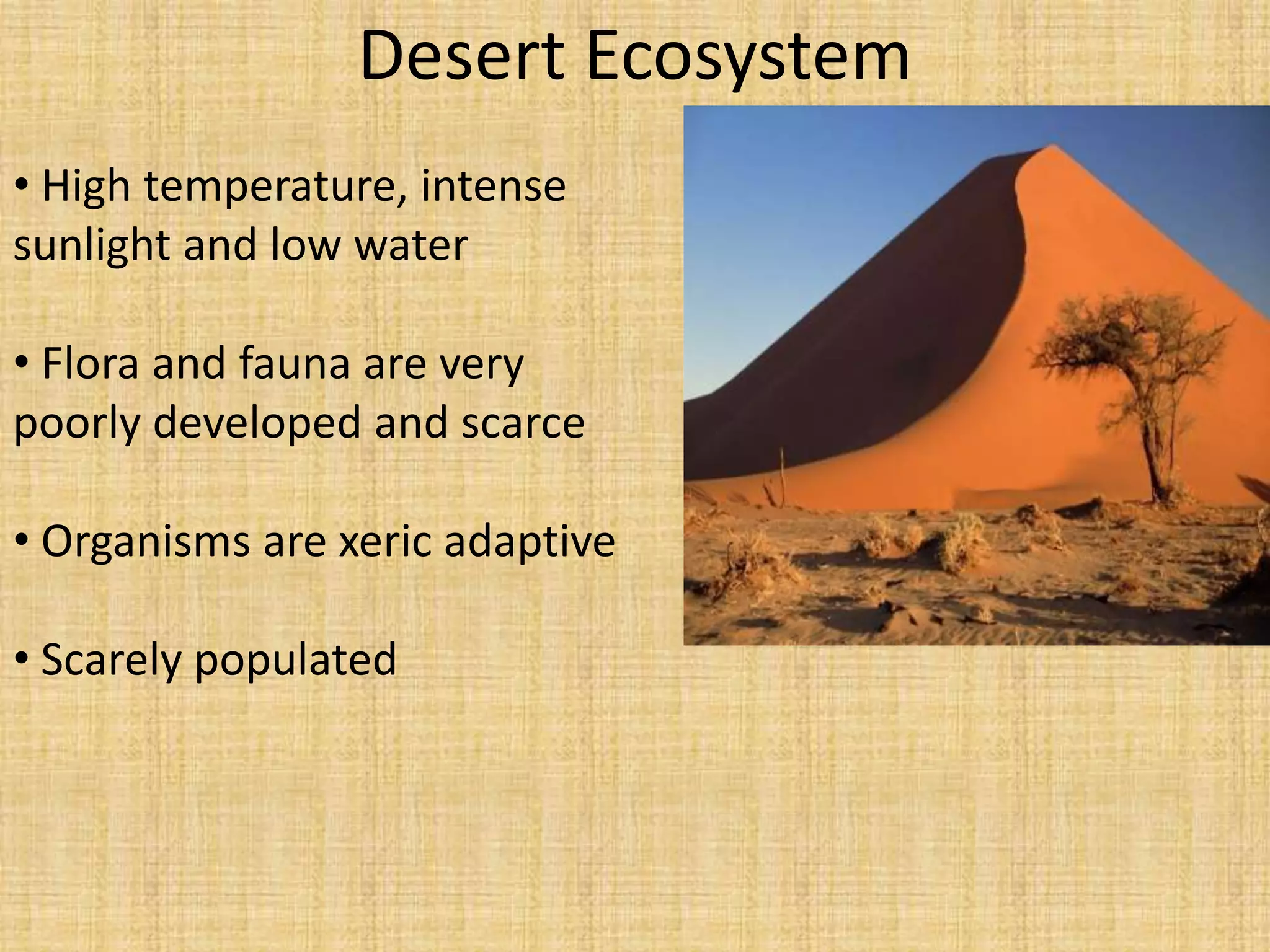
Desert Ecosystem
• High temperature, intense
sunlight and low water

• Flora and fauna are very
poorly developed and scarce

• Organisms are xeric adaptive

• Scarely populated
Types of desert

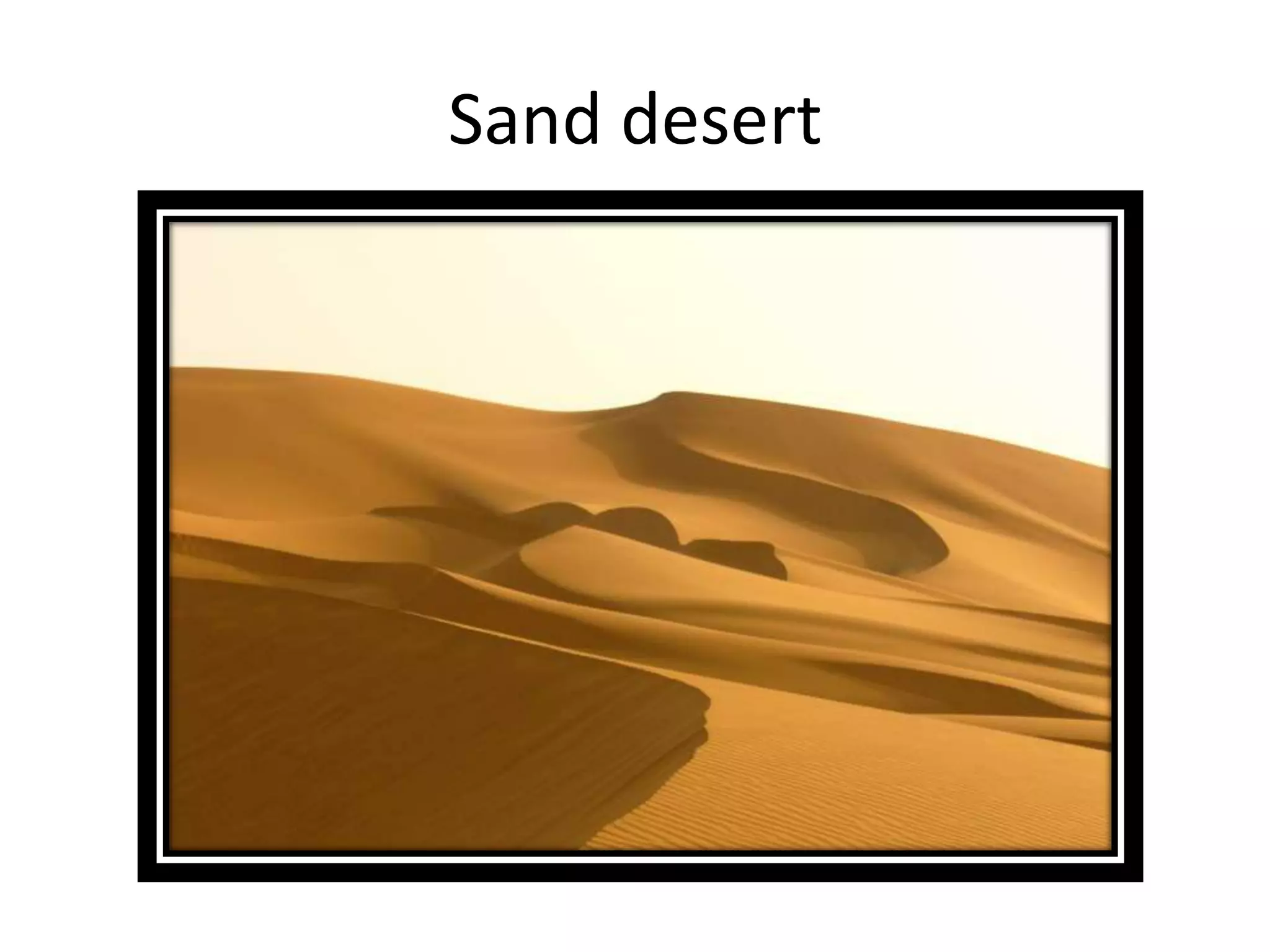
•   Sand desert
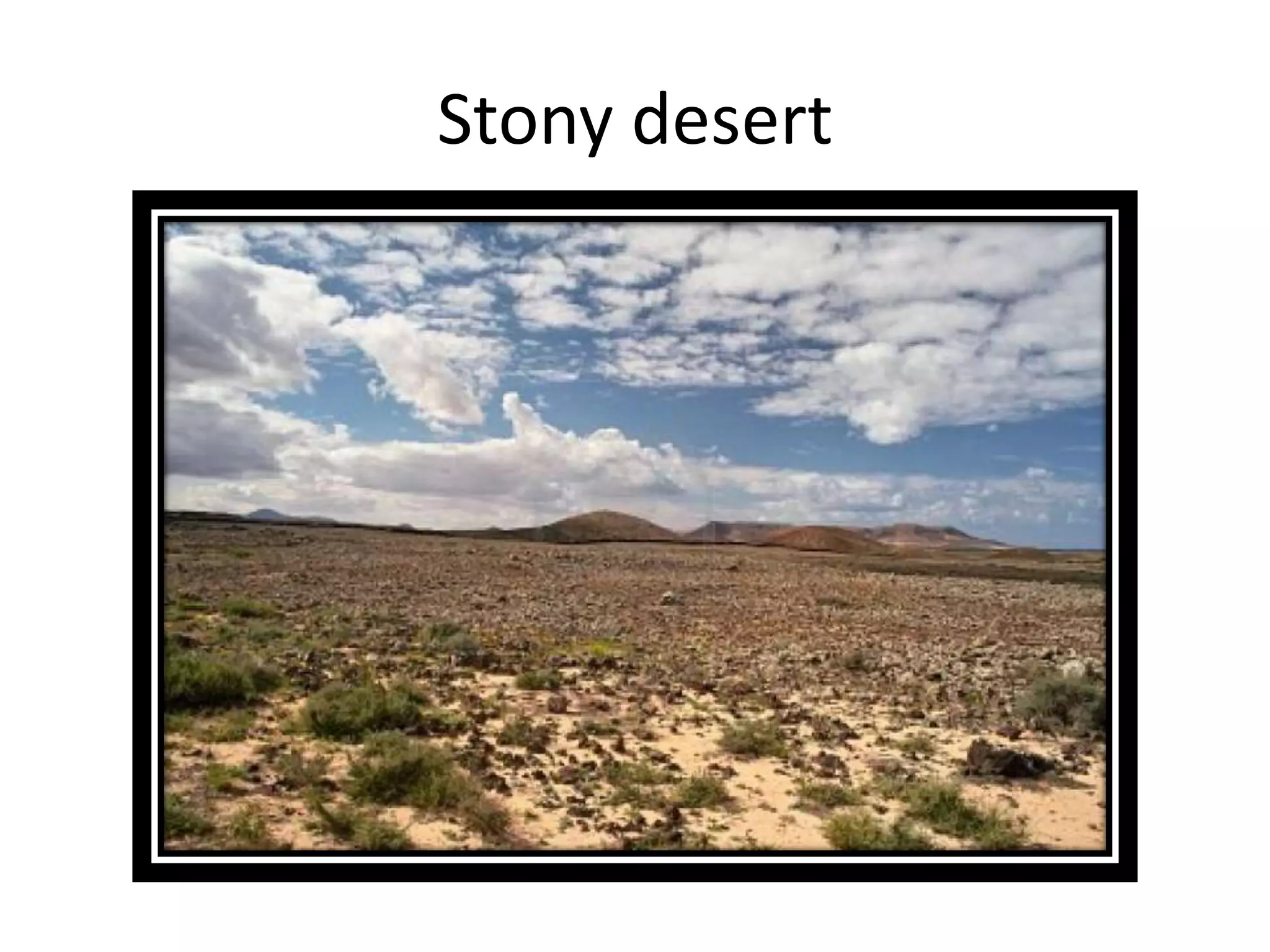
•   Stony desert
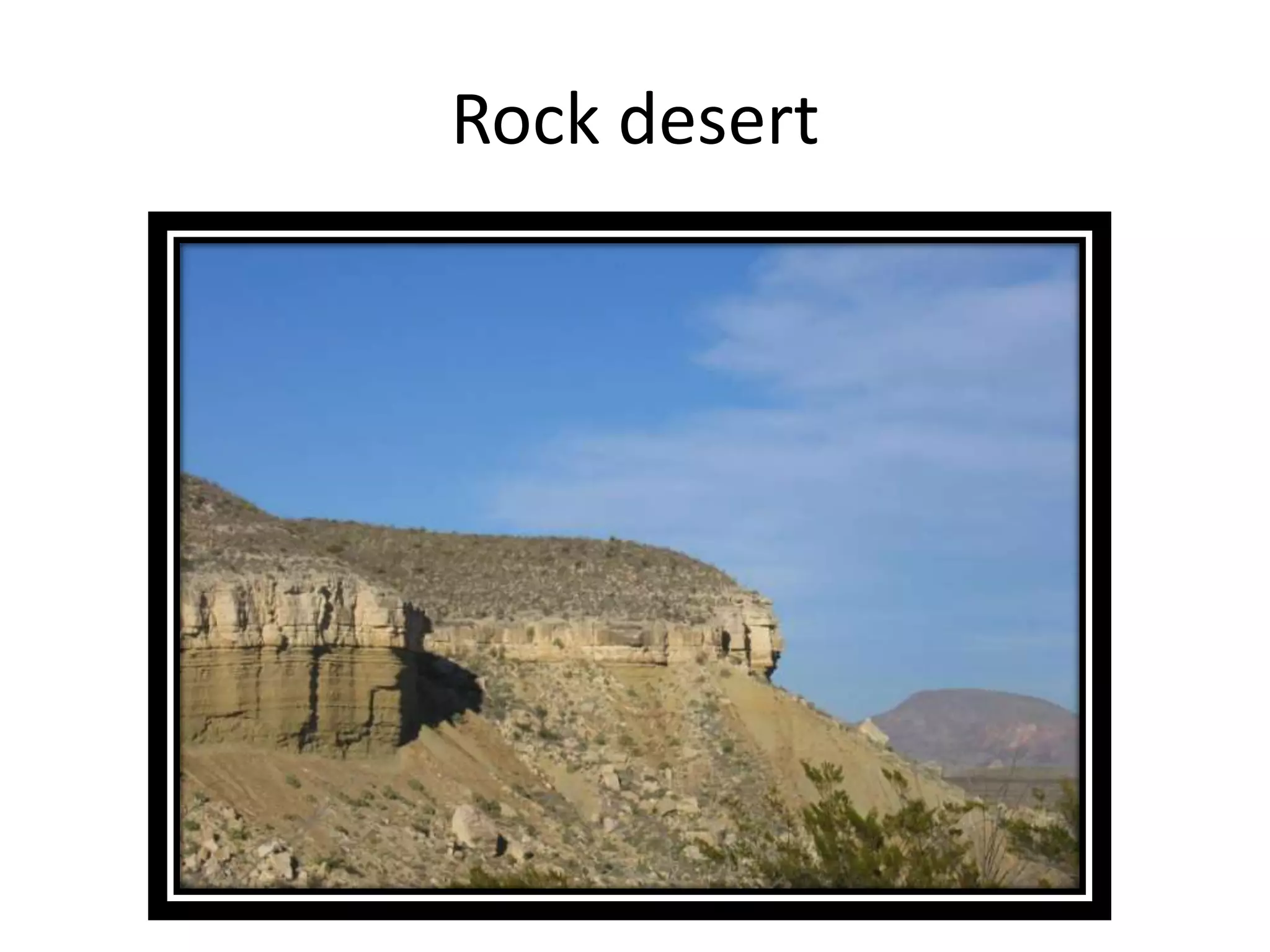
•   Rock desert
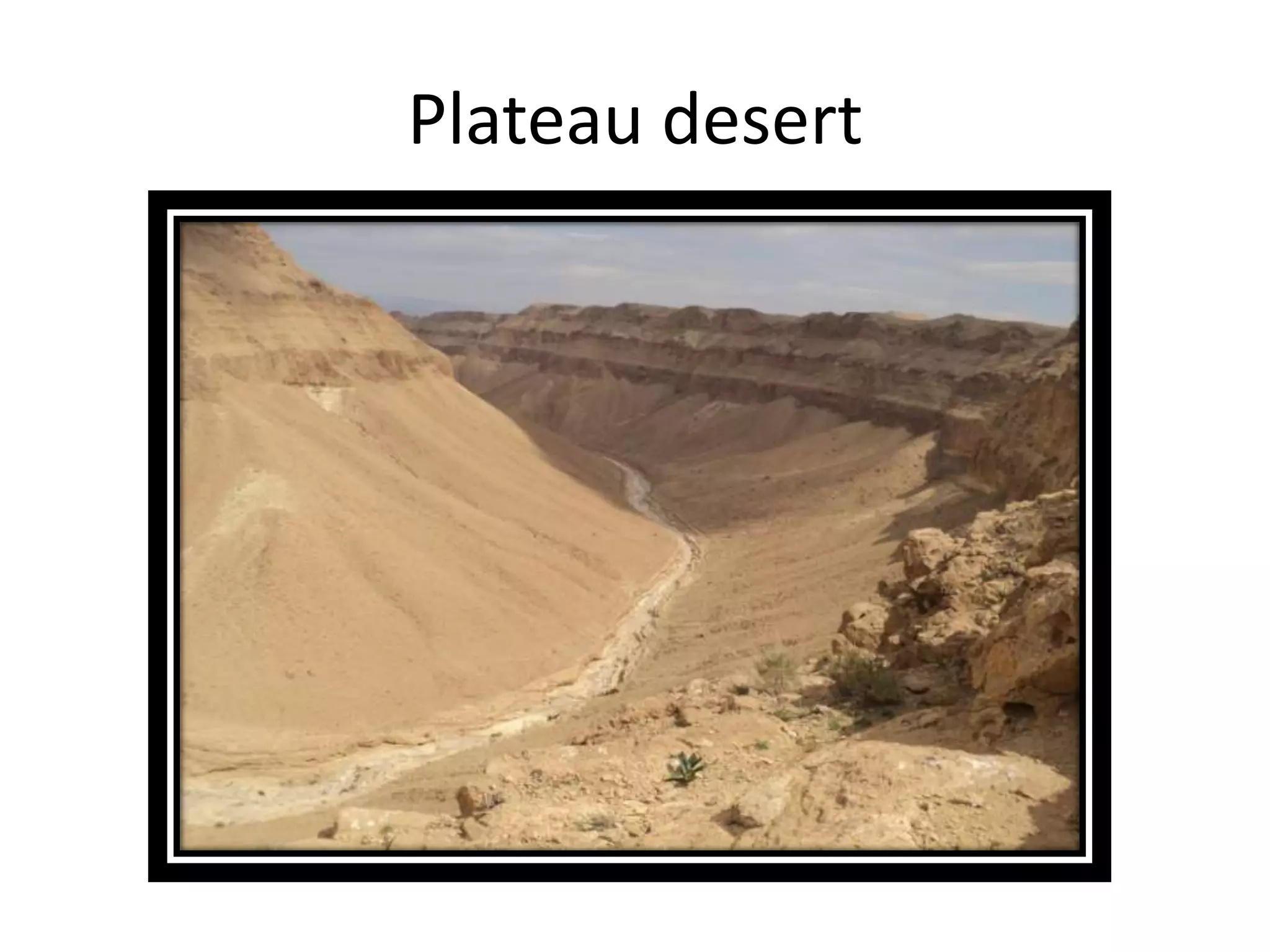
•   Plateau desert
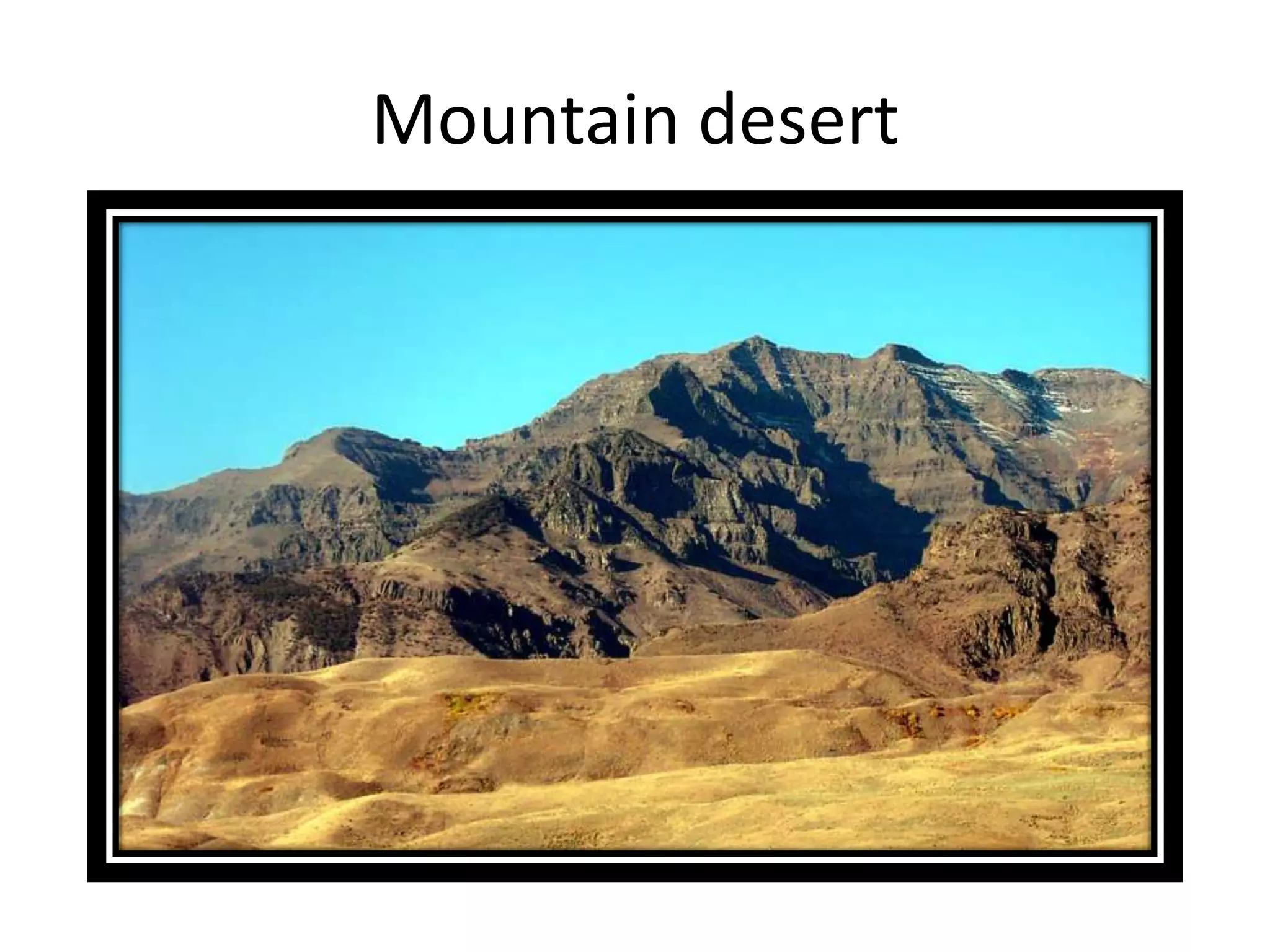
•   Mountain desert
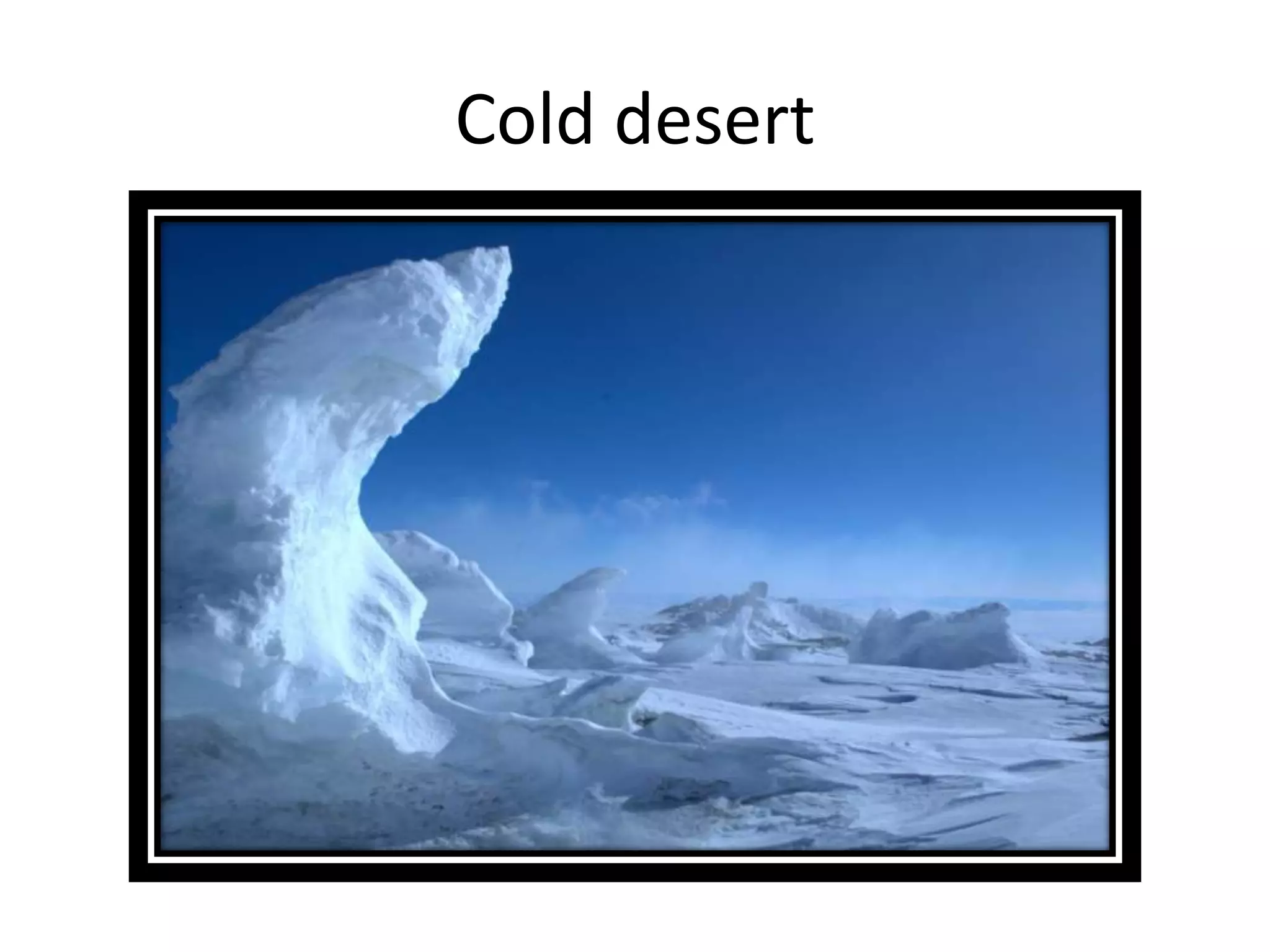
•   Cold desert
Sand desert
Rock desert
Stony desert
Plateau desert
Mountain desert
Cold desert
Features of desert ecosystem
•   Rainfall
•   Temperature
•   Soil
•   light
•   Plants and animals are adapted to live in
    extremities
Funtion of desert ecosystem
• Solar energy resource
• Mineral resource
Grassland Ecosystem
•   Marginal rainfall
•   Vegetation is dominated by grasses
•   Unimproved wild-plant communities
•   Densely populated
Types of Grassland Ecosystem
• Tropical grassland
• Temperate grassland
• Others
Features of grassland ecosystem
•   Temperature
•   Precipitation
•   Humidity
•   Topography
•   Unadaptive plants and animals
Funtion of grassland ecosystem
• Grassland provide food
• Grasslands Are Breeding Areas
• Human habitat
Aquatic Ecosystem
•   Low temperature and sunlight
•   Soil and vegitation is submerged
•   Flora and fauna had adapted
•   Densely populated.
Types of Aquatic ecosystem
•   Ocean
•   Lotic
•   Lentic
•   Wetland
Features of aquatic ecosystem
•   Light and temperature
•   Current
•   Chemistry
•   Competitive organism
Funtion of Aquatic Ecosystem
•   Recycles nutrients
•   Purify water
•   Resposible for proper rainfall
•   Attenuate floods
•   Recharge ground water
Types of ecosystem

Types of ecosystem

  • 1.
    Types of ecosystem Presentedby, Priyanka Chowksey DAIMSR
  • 2.
    Contents • Ecosystem • Major four types • Grassland Ecosystem • Aquatic Ecosystem • Forest Ecosystem • Desert Ecosystem
  • 3.
    Ecosystem • An ecosystemis a biological environment consisting of all the living organisms or Biotic component, in a particular area, and the nonliving, or Abiotic component such as air, soil, water and sunlight with which the organisms interact
  • 4.
    ECOSYSTEM BIOTIC ABIOTIC FACTORS FACTORS
  • 5.
    Biotic Abiotic • Sunlight • Primary producer • Tempreture • Hervivorus • Precipitatio • Carniorous • Water or Moisture • Omnivorus • Soil or Chemical content • Detritivorous
  • 6.
    Types of Ecosystem Natural Artificial Grass Forest Aquatic Desert land Terres Micro -trial -bial Aquatic
  • 7.
    Forest Ecosystem • Highrainfall •Large number of organism and flora • Highly diverse population • Stability of ecosystem is very sensitive
  • 8.
    Types of Forest • Tropical evergreen forest • Tropical deciduous forest • Temperate evergreen forest • Temperate deciduous forest • Taiga
  • 9.
    Features of ForestEcosystem • Forest canopy • Forest floor • Forest soil
  • 10.
    Funtion of forestecosystem • Watershed Protection • Atmospheric regulation • Soil Erosion Control • Wind Erosion Control
  • 11.
    Desert Ecosystem • Hightemperature, intense sunlight and low water • Flora and fauna are very poorly developed and scarce • Organisms are xeric adaptive • Scarely populated
  • 12.
    Types of desert • Sand desert • Stony desert • Rock desert • Plateau desert • Mountain desert • Cold desert
  • 13.
  • 14.
  • 15.
  • 16.
  • 17.
  • 18.
  • 19.
    Features of desertecosystem • Rainfall • Temperature • Soil • light • Plants and animals are adapted to live in extremities
  • 20.
    Funtion of desertecosystem • Solar energy resource • Mineral resource
  • 21.
    Grassland Ecosystem • Marginal rainfall • Vegetation is dominated by grasses • Unimproved wild-plant communities • Densely populated
  • 22.
    Types of GrasslandEcosystem • Tropical grassland • Temperate grassland • Others
  • 23.
    Features of grasslandecosystem • Temperature • Precipitation • Humidity • Topography • Unadaptive plants and animals
  • 24.
    Funtion of grasslandecosystem • Grassland provide food • Grasslands Are Breeding Areas • Human habitat
  • 25.
    Aquatic Ecosystem • Low temperature and sunlight • Soil and vegitation is submerged • Flora and fauna had adapted • Densely populated.
  • 26.
    Types of Aquaticecosystem • Ocean • Lotic • Lentic • Wetland
  • 27.
    Features of aquaticecosystem • Light and temperature • Current • Chemistry • Competitive organism
  • 28.
    Funtion of AquaticEcosystem • Recycles nutrients • Purify water • Resposible for proper rainfall • Attenuate floods • Recharge ground water