
Dr. Pulipati Sowjanya
Professor & Head
Dept. of Pharmaceutical Biotechnology
VIGNAN PHARMACY COLLEGE
Vadlamudi – 522 213, Guntur (Dt.), Andhra Pradesh, INDIA
PRESENTED BY
BIOSENSORS
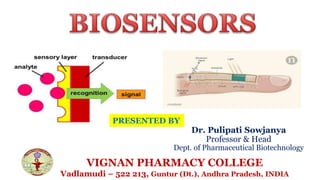
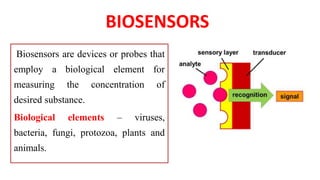
Biosensors are devices or probes that
employ a biological element for
measuring the concentration of
desired substance.
Biological elements – viruses,
bacteria, fungi, protozoa, plants and
animals.
PRINCIPLES OF BIOSENSORS
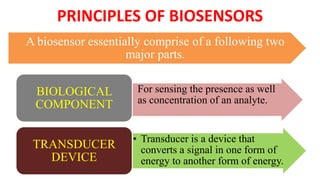
• For sensing the presence as well
as concentration of an analyte.
BIOLOGICAL
COMPONENT
• Transducer is a device that
converts a signal in one form of
energy to another form of energy.
TRANSDUCER
DEVICE
A biosensor essentially comprise of a following two
major parts.
COMPONENTS OF A BIOSENSOR
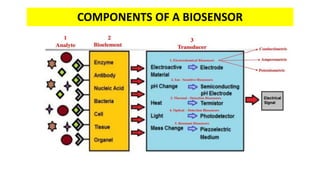
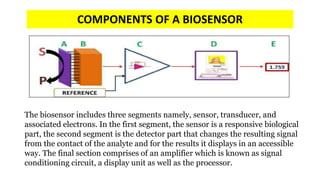
The biosensor includes three segments namely, sensor, transducer, and
associated electrons. In the first segment, the sensor is a responsive biological
part, the second segment is the detector part that changes the resulting signal
from the contact of the analyte and for the results it displays in an accessible
way. The final section comprises of an amplifier which is known as signal
conditioning circuit, a display unit as well as the processor.
COMPONENTS OF A BIOSENSOR
WORKING OF BIOSENSORS
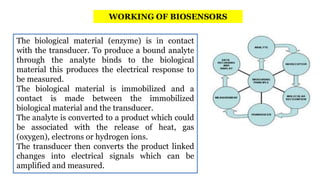
The biological material (enzyme) is in contact
with the transducer. To produce a bound analyte
through the analyte binds to the biological
material this produces the electrical response to
be measured.
The biological material is immobilized and a
contact is made between the immobilized
biological material and the transducer.
The analyte is converted to a product which could
be associated with the release of heat, gas
(oxygen), electrons or hydrogen ions.
The transducer then converts the product linked
changes into electrical signals which can be
amplified and measured.
METHODOLOGY
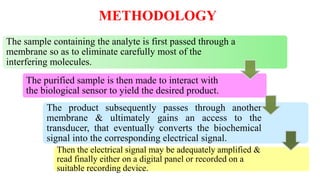
The sample containing the analyte is first passed through a
membrane so as to eliminate carefully most of the
interfering molecules.
The purified sample is then made to interact with
the biological sensor to yield the desired product.
The product subsequently passes through another
membrane & ultimately gains an access to the
transducer, that eventually converts the biochemical
signal into the corresponding electrical signal.
Then the electrical signal may be adequately amplified &
read finally either on a digital panel or recorded on a
suitable recording device.
CLASSIFICATION
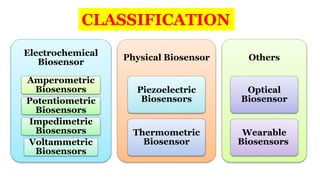
Electrochemical
Biosensor
Amperometric
Biosensors
Potentiometric
Biosensors
Impedimetric
Biosensors
Voltammetric
Biosensors
Physical Biosensor
Piezoelectric
Biosensors
Thermometric
Biosensor
Others
Optical
Biosensor
Wearable
Biosensors
Electrochemical Biosensor
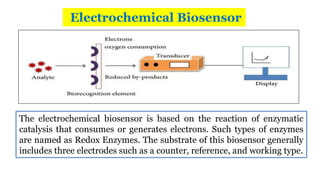
The electrochemical biosensor is based on the reaction of enzymatic
catalysis that consumes or generates electrons. Such types of enzymes
are named as Redox Enzymes. The substrate of this biosensor generally
includes three electrodes such as a counter, reference, and working type.
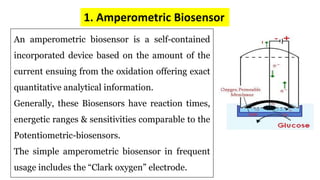
1. Amperometric Biosensor
An amperometric biosensor is a self-contained
incorporated device based on the amount of the
current ensuing from the oxidation offering exact
quantitative analytical information.
Generally, these Biosensors have reaction times,
energetic ranges & sensitivities comparable to the
Potentiometric-biosensors.
The simple amperometric biosensor in frequent
usage includes the “Clark oxygen” electrode.
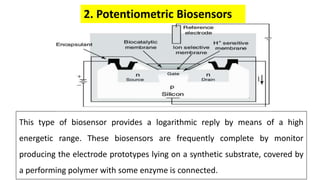
2. Potentiometric Biosensors
This type of biosensor provides a logarithmic reply by means of a high
energetic range. These biosensors are frequently complete by monitor
producing the electrode prototypes lying on a synthetic substrate, covered by
a performing polymer with some enzyme is connected.
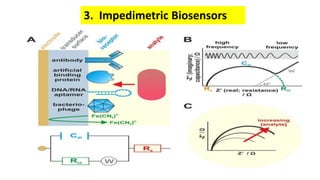
3. Impedimetric Biosensors
4. Voltammetric Biosensor
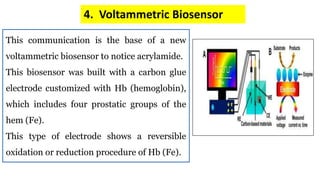
This communication is the base of a new
voltammetric biosensor to notice acrylamide.
This biosensor was built with a carbon glue
electrode customized with Hb (hemoglobin),
which includes four prostatic groups of the
hem (Fe).
This type of electrode shows a reversible
oxidation or reduction procedure of Hb (Fe).
Physical Biosensor
Physical biosensors are the most fundamental as well as broadly used
sensors.
PRINCIPLE: The intelligence of hearing, sight, touch is to react on the
exterior physical stimuli, therefore any detecting device that offers
reaction to the physical possessions of the medium was named as a
physical biosensor.
The physical biosensors are classified into two types namely
Piezoelectric biosensor
Thermometric biosensor
Piezoelectric Biosensors
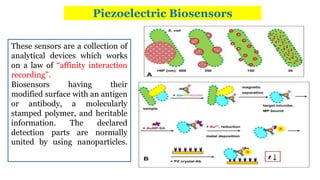
These sensors are a collection of
analytical devices which works
on a law of “affinity interaction
recording”.
Biosensors having their
modified surface with an antigen
or antibody, a molecularly
stamped polymer, and heritable
information. The declared
detection parts are normally
united by using nanoparticles.
Thermometric Biosensor
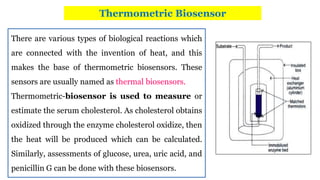
There are various types of biological reactions which
are connected with the invention of heat, and this
makes the base of thermometric biosensors. These
sensors are usually named as thermal biosensors.
Thermometric-biosensor is used to measure or
estimate the serum cholesterol. As cholesterol obtains
oxidized through the enzyme cholesterol oxidize, then
the heat will be produced which can be calculated.
Similarly, assessments of glucose, urea, uric acid, and
penicillin G can be done with these biosensors.
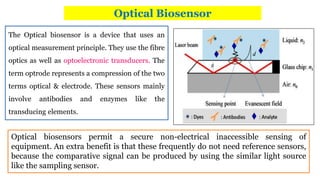
Optical Biosensor
Optical biosensors permit a secure non-electrical inaccessible sensing of
equipment. An extra benefit is that these frequently do not need reference sensors,
because the comparative signal can be produced by using the similar light source
like the sampling sensor.
The Optical biosensor is a device that uses an
optical measurement principle. They use the fibre
optics as well as optoelectronic transducers. The
term optrode represents a compression of the two
terms optical & electrode. These sensors mainly
involve antibodies and enzymes like the
transducing elements.
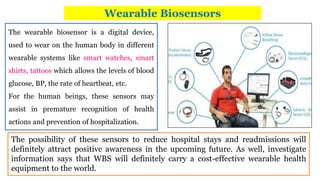
Wearable Biosensors
The possibility of these sensors to reduce hospital stays and readmissions will
definitely attract positive awareness in the upcoming future. As well, investigate
information says that WBS will definitely carry a cost-effective wearable health
equipment to the world.
The wearable biosensor is a digital device,
used to wear on the human body in different
wearable systems like smart watches, smart
shirts, tattoos which allows the levels of blood
glucose, BP, the rate of heartbeat, etc.
For the human beings, these sensors may
assist in premature recognition of health
actions and prevention of hospitalization.
ADVANTAGES OF BIOSENSORS
 Rapid and Continuous measurement
High specificity
Very less usage of reagents required for calibration
Fast response time
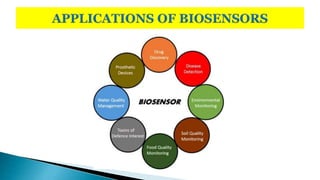
 In food industry, biosensors are used to monitor the freshness of
food.
 Drug discovery and evaluation of biological activity of new
compounds.
 Potentiometric biosensors are intended primarily for monitoring
levels of carbon dioxide, ammonia, and other gases dissolved in
blood and other liquids.
 Environmental applications e.g. the detection of pesticides and
river water contaminants.
continue…
 Determination of drug residues in food, such as antibiotics and
growth promoters.
 Glucose monitoring in diabetes patients.
 Analytical measurement of folic acid, biotin, vitamin B12 and
pantothenic acid.
 Enzyme-based biosensors are used for continuous monitoring
of compounds such as methanol, acetonitrile, phenolics in
process streams, effluents and groundwater.
Biosensors

Biosensors

  • 1.
    Dr. Pulipati Sowjanya Professor& Head Dept. of Pharmaceutical Biotechnology VIGNAN PHARMACY COLLEGE Vadlamudi – 522 213, Guntur (Dt.), Andhra Pradesh, INDIA PRESENTED BY
  • 2.
    BIOSENSORS Biosensors are devicesor probes that employ a biological element for measuring the concentration of desired substance. Biological elements – viruses, bacteria, fungi, protozoa, plants and animals.
  • 3.
    PRINCIPLES OF BIOSENSORS •For sensing the presence as well as concentration of an analyte. BIOLOGICAL COMPONENT • Transducer is a device that converts a signal in one form of energy to another form of energy. TRANSDUCER DEVICE A biosensor essentially comprise of a following two major parts.
  • 4.
    COMPONENTS OF ABIOSENSOR
  • 5.
    The biosensor includesthree segments namely, sensor, transducer, and associated electrons. In the first segment, the sensor is a responsive biological part, the second segment is the detector part that changes the resulting signal from the contact of the analyte and for the results it displays in an accessible way. The final section comprises of an amplifier which is known as signal conditioning circuit, a display unit as well as the processor. COMPONENTS OF A BIOSENSOR
  • 6.
    WORKING OF BIOSENSORS Thebiological material (enzyme) is in contact with the transducer. To produce a bound analyte through the analyte binds to the biological material this produces the electrical response to be measured. The biological material is immobilized and a contact is made between the immobilized biological material and the transducer. The analyte is converted to a product which could be associated with the release of heat, gas (oxygen), electrons or hydrogen ions. The transducer then converts the product linked changes into electrical signals which can be amplified and measured.
  • 7.
    METHODOLOGY The sample containingthe analyte is first passed through a membrane so as to eliminate carefully most of the interfering molecules. The purified sample is then made to interact with the biological sensor to yield the desired product. The product subsequently passes through another membrane & ultimately gains an access to the transducer, that eventually converts the biochemical signal into the corresponding electrical signal. Then the electrical signal may be adequately amplified & read finally either on a digital panel or recorded on a suitable recording device.
  • 8.
  • 9.
    Electrochemical Biosensor The electrochemicalbiosensor is based on the reaction of enzymatic catalysis that consumes or generates electrons. Such types of enzymes are named as Redox Enzymes. The substrate of this biosensor generally includes three electrodes such as a counter, reference, and working type.
  • 10.
    1. Amperometric Biosensor Anamperometric biosensor is a self-contained incorporated device based on the amount of the current ensuing from the oxidation offering exact quantitative analytical information. Generally, these Biosensors have reaction times, energetic ranges & sensitivities comparable to the Potentiometric-biosensors. The simple amperometric biosensor in frequent usage includes the “Clark oxygen” electrode.
  • 11.
    2. Potentiometric Biosensors Thistype of biosensor provides a logarithmic reply by means of a high energetic range. These biosensors are frequently complete by monitor producing the electrode prototypes lying on a synthetic substrate, covered by a performing polymer with some enzyme is connected.
  • 12.
  • 13.
    4. Voltammetric Biosensor Thiscommunication is the base of a new voltammetric biosensor to notice acrylamide. This biosensor was built with a carbon glue electrode customized with Hb (hemoglobin), which includes four prostatic groups of the hem (Fe). This type of electrode shows a reversible oxidation or reduction procedure of Hb (Fe).
  • 14.
    Physical Biosensor Physical biosensorsare the most fundamental as well as broadly used sensors. PRINCIPLE: The intelligence of hearing, sight, touch is to react on the exterior physical stimuli, therefore any detecting device that offers reaction to the physical possessions of the medium was named as a physical biosensor. The physical biosensors are classified into two types namely Piezoelectric biosensor Thermometric biosensor
  • 15.
    Piezoelectric Biosensors These sensorsare a collection of analytical devices which works on a law of “affinity interaction recording”. Biosensors having their modified surface with an antigen or antibody, a molecularly stamped polymer, and heritable information. The declared detection parts are normally united by using nanoparticles.
  • 16.
    Thermometric Biosensor There arevarious types of biological reactions which are connected with the invention of heat, and this makes the base of thermometric biosensors. These sensors are usually named as thermal biosensors. Thermometric-biosensor is used to measure or estimate the serum cholesterol. As cholesterol obtains oxidized through the enzyme cholesterol oxidize, then the heat will be produced which can be calculated. Similarly, assessments of glucose, urea, uric acid, and penicillin G can be done with these biosensors.
  • 17.
    Optical Biosensor Optical biosensorspermit a secure non-electrical inaccessible sensing of equipment. An extra benefit is that these frequently do not need reference sensors, because the comparative signal can be produced by using the similar light source like the sampling sensor. The Optical biosensor is a device that uses an optical measurement principle. They use the fibre optics as well as optoelectronic transducers. The term optrode represents a compression of the two terms optical & electrode. These sensors mainly involve antibodies and enzymes like the transducing elements.
  • 18.
    Wearable Biosensors The possibilityof these sensors to reduce hospital stays and readmissions will definitely attract positive awareness in the upcoming future. As well, investigate information says that WBS will definitely carry a cost-effective wearable health equipment to the world. The wearable biosensor is a digital device, used to wear on the human body in different wearable systems like smart watches, smart shirts, tattoos which allows the levels of blood glucose, BP, the rate of heartbeat, etc. For the human beings, these sensors may assist in premature recognition of health actions and prevention of hospitalization.
  • 19.
    ADVANTAGES OF BIOSENSORS Rapid and Continuous measurement High specificity Very less usage of reagents required for calibration Fast response time
  • 21.
     In foodindustry, biosensors are used to monitor the freshness of food.  Drug discovery and evaluation of biological activity of new compounds.  Potentiometric biosensors are intended primarily for monitoring levels of carbon dioxide, ammonia, and other gases dissolved in blood and other liquids.  Environmental applications e.g. the detection of pesticides and river water contaminants. continue…
  • 22.
     Determination ofdrug residues in food, such as antibiotics and growth promoters.  Glucose monitoring in diabetes patients.  Analytical measurement of folic acid, biotin, vitamin B12 and pantothenic acid.  Enzyme-based biosensors are used for continuous monitoring of compounds such as methanol, acetonitrile, phenolics in process streams, effluents and groundwater.