INTRODUCTION TO
BIOMECHANICS
VCE PE Unit 1
WHAT IS BIOMECHANICS?
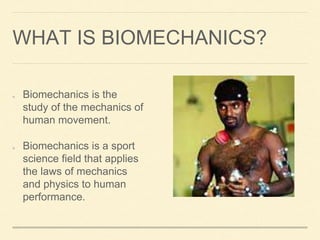
Biomechanics is the
study of the mechanics of
human movement.
Biomechanics is a sport
science field that applies
the laws of mechanics
and physics to human
performance.
ROLE OF A BIOMECHANIST
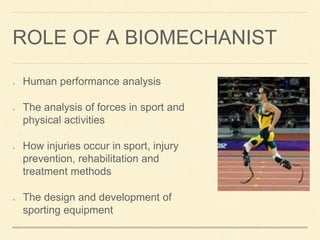
Human performance analysis
The analysis of forces in sport and
physical activities
How injuries occur in sport, injury
prevention, rehabilitation and
treatment methods
The design and development of
sporting equipment
THE TOOLS OF A
BIOMECHANIST
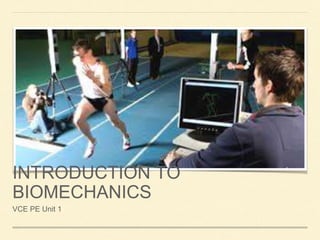
Biomechanists use a range of technologies and equipment in their field
of study. Examples of modern day techniques include:
Cinematography such as high speed/slow motion video and computer
generated video
Computer and digital analysis, which is used to investigate concepts such as
the centre of gravity, speed and the range of motion of body parts.
Force platforms, which measure force application, impulse, acceleration and
deceleration during activities such as shot-put, sprint start, high jump take off
and discus spin.
Wind tunnels, which are used for streamlining the body position and in
equipment for sports such as cycling, downhill skiing and tobogganing.
BENEFITS OF BIOMECHANICS
Optimisation of sports performance by developing the most efficient and effective
technique
Prevention and reduction of injuries through understanding of injury causes and the
development and application of proper techniques
The design and development of improved equipment and materials to maximise
sport performance
The transference of skills from practice field to playing field - example, batting tees,
ball throwing machines and video software that allows athletes to enhance
techniques in practice and apply in competition
The development and modification of sports equipment to widen participation e.g.
junior sizes, cheaper more durable equipment
Biomechanics

Biomechanics

  • 1.
  • 2.
    WHAT IS BIOMECHANICS? Biomechanicsis the study of the mechanics of human movement. Biomechanics is a sport science field that applies the laws of mechanics and physics to human performance.
  • 3.
    ROLE OF ABIOMECHANIST Human performance analysis The analysis of forces in sport and physical activities How injuries occur in sport, injury prevention, rehabilitation and treatment methods The design and development of sporting equipment
  • 4.
    THE TOOLS OFA BIOMECHANIST Biomechanists use a range of technologies and equipment in their field of study. Examples of modern day techniques include: Cinematography such as high speed/slow motion video and computer generated video Computer and digital analysis, which is used to investigate concepts such as the centre of gravity, speed and the range of motion of body parts. Force platforms, which measure force application, impulse, acceleration and deceleration during activities such as shot-put, sprint start, high jump take off and discus spin. Wind tunnels, which are used for streamlining the body position and in equipment for sports such as cycling, downhill skiing and tobogganing.
  • 5.
    BENEFITS OF BIOMECHANICS Optimisationof sports performance by developing the most efficient and effective technique Prevention and reduction of injuries through understanding of injury causes and the development and application of proper techniques The design and development of improved equipment and materials to maximise sport performance The transference of skills from practice field to playing field - example, batting tees, ball throwing machines and video software that allows athletes to enhance techniques in practice and apply in competition The development and modification of sports equipment to widen participation e.g. junior sizes, cheaper more durable equipment