ROHIT J NABARIYA
SURENDRA KUMAR
Biomechanics
INTRODUCTION
 Mechanics-study of forces and motions produced by their
action.
 Biomechanics is the study of the structure and function of
biological systems by means of the methods of
“mechanics.”
 Biomechanics-apply that to the structure and function of
the human body.
 Mechanics
 Study of physical actions and forces
 Kinematics:
 Description of motion (e.g: how fast, how high, etc.)
without consideration given to its mass or the forces
acting on it.
 Kinetics:
 The study of forces associated with motion.
 Example: Pushing on the table may or may not move the
table, depending upon the strength and direction of the
push
Reasons for Studying Biomechanics
 Better understanding of the human body and the various
internal and external forces that affect movement.
 Offers scientific knowledge that can improve performance
 To improve sport techniques, equipment, and safety
 To design and conduct programs to enhance individual
movement skills (Adapted PE)
AREAS OF BIOMECHANICS
 Developmental biomechanics
 Studies movement patterns and how they change
across the lifespan and varying disabilities.
 Biomechanics of exercise
 To maximize the benefits of exercise and reduce the
chances of injury.
 Rehabilitation mechanics
 Study of the movement patterns of people who are
injured or who have a disability.
 Equipment design
 Increases in performance through the change of
equipment.
Biomechanical Terms
 Velocity
 Speed and direction of the body
 Acceleration
 Change in velocity involving the speed or direction
 Angular velocity
 Angle that is rotated in a given unit of time
 Angular acceleration
 Change of angular velocity for a unit of time
 Mass
 Amount of matter possessed by an object
 Force
 Any action that changes or tends to change the
motion of an object
 Pressure
 Ratio of force to the area over which force is applied
 Gravity
 Natural force that pulls all objects toward the center
of the earth
 Center of gravity
 Friction
 Force that occurs when surfaces come in
contact and results from the sliding of one
surface on the other
• Simple Machines
 4 types of Machines
 Lever
 Wheel and Axle
 Inclined plane
 The pulley
LEVER
 Lever is a rigid bar that can rotate about a fixed
point when a force is applied to overcome
resistance.
TERMS INVOVLED IN LEVERS:
 The axis (joint), force (muscle insertion point),
and the resistance (weight, etc.)
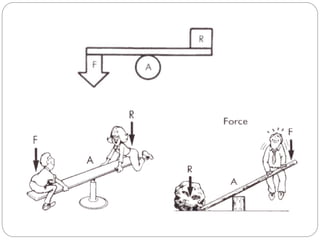
 First-class lever
 Axis is located between the force and the
resistance.
 Balance
 Examples
Crow bar
Seesaw
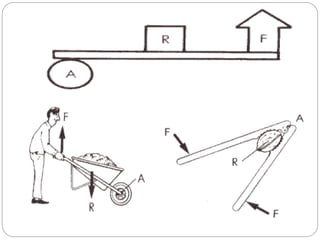
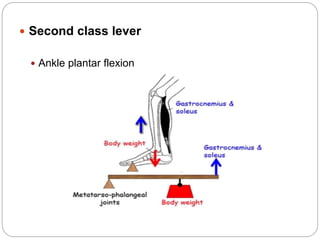
• Second Class Lever
Has the axis at one end, the resistance in the
middle, and force at the other end.
• Examples
Wheelbarrow
Nutcracker
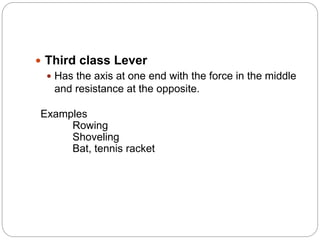
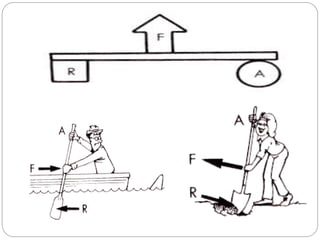
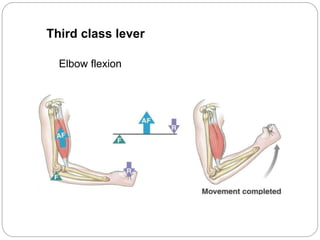
 Third class Lever
 Has the axis at one end with the force in the middle
and resistance at the opposite.
Examples
Rowing
Shoveling
Bat, tennis racket
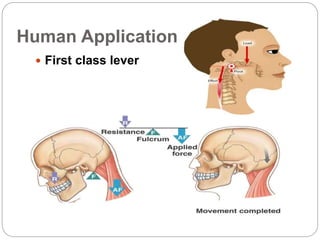
Human Application
 First class lever
 Second class lever
 Ankle plantar flexion
Third class lever
Elbow flexion
APPLICATION IN SPORTS
 Sports biomechanics is a quantitative based study and analysis
of professional athletes and sports activities in general. It can
simply be described as the Physics of Sports.
 Sport biomechanics studies the effects of forces and motion on
sport performance.
 Using laws and principles grounded in physics that apply to
human movement, athletes and coaches can make sound
decisions for developing efficient sport techniques.
 The key to success is finding effective instructional
cues that help the athlete achieve correct mechanical
technique.
 Coaches with a command of mental training
tools and sports training principles can help athletes
make amazing things happen on the field.
COACHES/TRAINERS can:
 Analyze sport movements,
 Select the best training exercises,
 Reduce or prevent injuries,
 Design or choose the sport equipment that best
matches athletes' personal needs.
 Maximize economy and efficiency of movements.
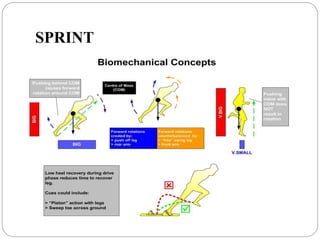
SPRINT
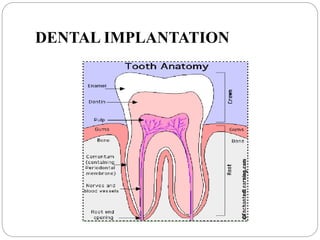
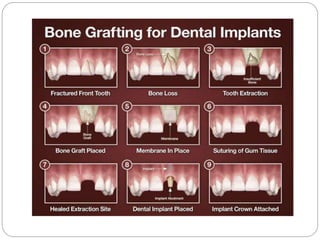
DENTAL IMPLANTATION
 According to the National Institutes of Health, by
age 50, the average person has lost 12 teeth, and
by 70, half of us are
toothless altogether.
 WHY IMPLANT???????????
• More permanent than dentures
• The butt-joint method does not rely on
neighboring teeth for support
• More natural looking than dentures.
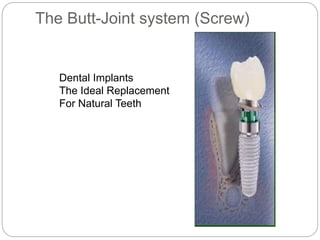
The Butt-Joint system (Screw)
Dental Implants
The Ideal Replacement
For Natural Teeth
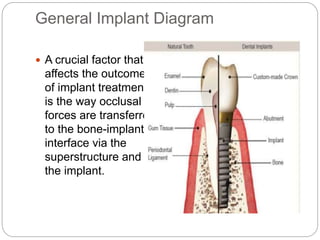
General Implant Diagram
 A crucial factor that
affects the outcome
of implant treatment
is the way occlusal
forces are transferred
to the bone-implant
interface via the
superstructure and
the implant.
REFERENCES
 Wikipedia
 Hatze, Herbert (1974). "The meaning of the term
biomechanics". Journal of Biomechanics
 Bartlett, Roger (1997). Introduction to sports
biomechanics
THANK YOU

BIO-MECHANICS

  • 1.
    ROHIT J NABARIYA SURENDRAKUMAR Biomechanics
  • 2.
    INTRODUCTION  Mechanics-study offorces and motions produced by their action.  Biomechanics is the study of the structure and function of biological systems by means of the methods of “mechanics.”  Biomechanics-apply that to the structure and function of the human body.
  • 3.
     Mechanics  Studyof physical actions and forces  Kinematics:  Description of motion (e.g: how fast, how high, etc.) without consideration given to its mass or the forces acting on it.  Kinetics:  The study of forces associated with motion.  Example: Pushing on the table may or may not move the table, depending upon the strength and direction of the push
  • 4.
    Reasons for StudyingBiomechanics  Better understanding of the human body and the various internal and external forces that affect movement.  Offers scientific knowledge that can improve performance  To improve sport techniques, equipment, and safety  To design and conduct programs to enhance individual movement skills (Adapted PE)
  • 5.
    AREAS OF BIOMECHANICS Developmental biomechanics  Studies movement patterns and how they change across the lifespan and varying disabilities.  Biomechanics of exercise  To maximize the benefits of exercise and reduce the chances of injury.  Rehabilitation mechanics  Study of the movement patterns of people who are injured or who have a disability.  Equipment design  Increases in performance through the change of equipment.
  • 6.
    Biomechanical Terms  Velocity Speed and direction of the body  Acceleration  Change in velocity involving the speed or direction  Angular velocity  Angle that is rotated in a given unit of time  Angular acceleration  Change of angular velocity for a unit of time
  • 7.
     Mass  Amountof matter possessed by an object  Force  Any action that changes or tends to change the motion of an object  Pressure  Ratio of force to the area over which force is applied  Gravity  Natural force that pulls all objects toward the center of the earth  Center of gravity
  • 8.
     Friction  Forcethat occurs when surfaces come in contact and results from the sliding of one surface on the other • Simple Machines  4 types of Machines  Lever  Wheel and Axle  Inclined plane  The pulley
  • 9.
    LEVER  Lever isa rigid bar that can rotate about a fixed point when a force is applied to overcome resistance. TERMS INVOVLED IN LEVERS:  The axis (joint), force (muscle insertion point), and the resistance (weight, etc.)
  • 10.
     First-class lever Axis is located between the force and the resistance.  Balance  Examples Crow bar Seesaw
  • 12.
    • Second ClassLever Has the axis at one end, the resistance in the middle, and force at the other end. • Examples Wheelbarrow Nutcracker
  • 14.
     Third classLever  Has the axis at one end with the force in the middle and resistance at the opposite. Examples Rowing Shoveling Bat, tennis racket
  • 16.
  • 17.
     Second classlever  Ankle plantar flexion
  • 18.
  • 19.
    APPLICATION IN SPORTS Sports biomechanics is a quantitative based study and analysis of professional athletes and sports activities in general. It can simply be described as the Physics of Sports.  Sport biomechanics studies the effects of forces and motion on sport performance.  Using laws and principles grounded in physics that apply to human movement, athletes and coaches can make sound decisions for developing efficient sport techniques.
  • 20.
     The keyto success is finding effective instructional cues that help the athlete achieve correct mechanical technique.  Coaches with a command of mental training tools and sports training principles can help athletes make amazing things happen on the field.
  • 21.
    COACHES/TRAINERS can:  Analyzesport movements,  Select the best training exercises,  Reduce or prevent injuries,  Design or choose the sport equipment that best matches athletes' personal needs.  Maximize economy and efficiency of movements.
  • 22.
  • 23.
  • 24.
     According tothe National Institutes of Health, by age 50, the average person has lost 12 teeth, and by 70, half of us are toothless altogether.  WHY IMPLANT??????????? • More permanent than dentures • The butt-joint method does not rely on neighboring teeth for support • More natural looking than dentures.
  • 25.
    The Butt-Joint system(Screw) Dental Implants The Ideal Replacement For Natural Teeth
  • 26.
    General Implant Diagram A crucial factor that affects the outcome of implant treatment is the way occlusal forces are transferred to the bone-implant interface via the superstructure and the implant.
  • 28.
    REFERENCES  Wikipedia  Hatze,Herbert (1974). "The meaning of the term biomechanics". Journal of Biomechanics  Bartlett, Roger (1997). Introduction to sports biomechanics
  • 29.