The Scope of
Physiotherapy
Practice
Dilhan Jayamanne
Janath Kasthuriarachchi
Physiotherapy
- University Trained, Allied Health
- Can be referred via EPC (now known as Chronic Disease
Management Item)
- Use techniques such as acupuncture, exercise, massage,
mobilisation and manipulation
- Minimum 20 hours of CPD per a year to stay accredited
- Regulated by the Physiotherapists Board of Australia
- Membership group Australian Physiotherapy Association
Involves the assessment, diagnosis and treatment of general musculoskeletal
injuries that occur during our activities of daily living often due to overuse,
lifting, trauma, bad posture or ‘wear and tear’ of the joints.
• Low back and neck pain • Rotator cuff tear
• Knee pain • Plantar
fascitis/heel pain
• Shoulder impingement • Arthritis and joint pain
• Whiplash related disorders • Tennis elbow
General Musculoskeletal
Sports Physiotherapy
Sports Physiotherapy deals with injuries and issues related to sports people.
Sports injuries do differ to everyday injuries. Athletes normally require high
level performance and demand placed upon their body, which stresses their
muscles, joints and bones to the limit.
- Acute and Chronic injuries - Recurrent
injuries
- Preventative Physiotherapy
- Common Injuries include:
- Ankle Sprains
- Muscle Strains
- Patella Femoral Joint Pain
Post Operative Physiotherapy
Post-operative rehabilitation involves the care of patients with musculoskeletal
problems who have undergone surgery to fix their injury. It is a specialty that
focuses on improving the functional outcomes for individuals by combining
biomechanics and biology as well as incorporating protocols set out by
orthopaedic surgeons.
• Knee replacement • Hip
replacement
• Rotator cuff repair •
Shoulder stabilisation
Chest Physiotherapy
Chest physiotherapy is the term for a group of treatments designed to
improve respiratory efficiency, promote expansion of the lungs, strengthen
respiratory muscles, and eliminate secretions from the respiratory system.
Common conditions treatable for physiotherapy include
- Bronchiectasis
- Pneumonia
- Cystic fibrosis
- Emphysema
Paediatric Physiotherapy
Paediatric physiotherapy relates to physiotherapy treatments for children
aged between 0- 18 years. It involves working with parents and children of
varying ages from premature babies to adolescents to ensure optimal physical
function and development.
Common conditions in infants:
- Torticollis
- Gross motor delays (crawling, walking, etc)
In school aged children
- Toe walking - Knock Knees
- Osgood Schlatters - Flat Feet
- Severs -
Perthes Disease
- Post Surgical
WorkCover Physiotherapy
- WorkCover approved physiotherapists are trained to treat injured workers
in a compensation environment with a focus on achieving a safe and
durable recovery at work.
- Our duties include liasing with Doctors, Surgeons, Case Managers, and
other Allied Health Professionals, to achieve the best outcome possible for
the patient
- Also includes report writing and attending case conferences
- Common conditions include:
- Chronic and acute back
- Slips and falls at work
- Twisted ankles
- Injuries caused by repetitive work and/or poor posture
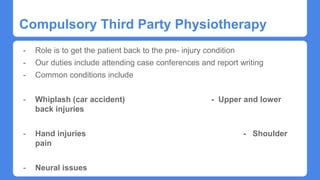
Compulsory Third Party Physiotherapy
- Role is to get the patient back to the pre- injury condition
- Our duties include attending case conferences and report writing
- Common conditions include
- Whiplash (car accident) - Upper and lower
back injuries
- Hand injuries - Shoulder
pain
- Neural issues

Scope of Physiotherapy Practice

  • 1.
    The Scope of Physiotherapy Practice DilhanJayamanne Janath Kasthuriarachchi
  • 2.
    Physiotherapy - University Trained,Allied Health - Can be referred via EPC (now known as Chronic Disease Management Item) - Use techniques such as acupuncture, exercise, massage, mobilisation and manipulation - Minimum 20 hours of CPD per a year to stay accredited - Regulated by the Physiotherapists Board of Australia - Membership group Australian Physiotherapy Association
  • 3.
    Involves the assessment,diagnosis and treatment of general musculoskeletal injuries that occur during our activities of daily living often due to overuse, lifting, trauma, bad posture or ‘wear and tear’ of the joints. • Low back and neck pain • Rotator cuff tear • Knee pain • Plantar fascitis/heel pain • Shoulder impingement • Arthritis and joint pain • Whiplash related disorders • Tennis elbow General Musculoskeletal
  • 4.
    Sports Physiotherapy Sports Physiotherapydeals with injuries and issues related to sports people. Sports injuries do differ to everyday injuries. Athletes normally require high level performance and demand placed upon their body, which stresses their muscles, joints and bones to the limit. - Acute and Chronic injuries - Recurrent injuries - Preventative Physiotherapy - Common Injuries include: - Ankle Sprains - Muscle Strains - Patella Femoral Joint Pain
  • 5.
    Post Operative Physiotherapy Post-operativerehabilitation involves the care of patients with musculoskeletal problems who have undergone surgery to fix their injury. It is a specialty that focuses on improving the functional outcomes for individuals by combining biomechanics and biology as well as incorporating protocols set out by orthopaedic surgeons. • Knee replacement • Hip replacement • Rotator cuff repair • Shoulder stabilisation
  • 6.
    Chest Physiotherapy Chest physiotherapyis the term for a group of treatments designed to improve respiratory efficiency, promote expansion of the lungs, strengthen respiratory muscles, and eliminate secretions from the respiratory system. Common conditions treatable for physiotherapy include - Bronchiectasis - Pneumonia - Cystic fibrosis - Emphysema
  • 7.
    Paediatric Physiotherapy Paediatric physiotherapyrelates to physiotherapy treatments for children aged between 0- 18 years. It involves working with parents and children of varying ages from premature babies to adolescents to ensure optimal physical function and development. Common conditions in infants: - Torticollis - Gross motor delays (crawling, walking, etc) In school aged children - Toe walking - Knock Knees - Osgood Schlatters - Flat Feet - Severs - Perthes Disease - Post Surgical
  • 8.
    WorkCover Physiotherapy - WorkCoverapproved physiotherapists are trained to treat injured workers in a compensation environment with a focus on achieving a safe and durable recovery at work. - Our duties include liasing with Doctors, Surgeons, Case Managers, and other Allied Health Professionals, to achieve the best outcome possible for the patient - Also includes report writing and attending case conferences - Common conditions include: - Chronic and acute back - Slips and falls at work - Twisted ankles - Injuries caused by repetitive work and/or poor posture
  • 9.
    Compulsory Third PartyPhysiotherapy - Role is to get the patient back to the pre- injury condition - Our duties include attending case conferences and report writing - Common conditions include - Whiplash (car accident) - Upper and lower back injuries - Hand injuries - Shoulder pain - Neural issues