RECOVERY AND FATIGUE
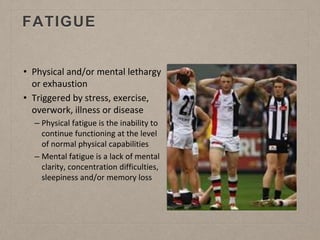
FATIGUE
• Physical and/or mental lethargy
or exhaustion
• Triggered by stress, exercise,
overwork, illness or disease
– Physical fatigue is the inability to
continue functioning at the level
of normal physical capabilities
– Mental fatigue is a lack of mental
clarity, concentration difficulties,
sleepiness and/or memory loss
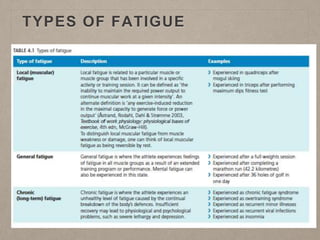
TYPES OF FATIGUE
MUSCULAR FATIGUE
• Not just a build-up of lactic acid
• Involves muscular and central nervous system
fatigue
• Depends on the following:
–Type/duration/intensity exercise
–Muscle fibre type
–Fitness/Training status
–Nutritional status
–Mental state athlete
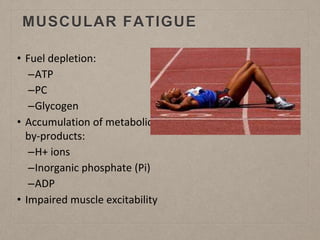
MUSCULAR FATIGUE
• Fuel depletion:
–ATP
–PC
–Glycogen
• Accumulation of metabolic
by-products:
–H+ ions
–Inorganic phosphate (Pi)
–ADP
• Impaired muscle excitability
BODY TEMPERATURE AND
FATIGUE
• Performance decreases when core body temperature
increases
• Blood supply is redirected to the skin & away from the
muscles
• Dehydration: excess fluid loss also associated with
electrolyte loss decreases blood plasma
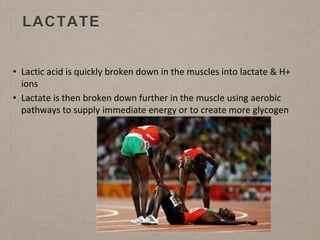
LACTATE
• Lactic acid is quickly broken down in the muscles into lactate & H+
ions
• Lactate is then broken down further in the muscle using aerobic
pathways to supply immediate energy or to create more glycogen
LACTATE
• Onset of Blood Lactate Accumulation (OBLA):
– Point during exercise where blood lactate
accumulates above resting levels
–Non athletes at 50-60% VO2 max
–Trained athletes at 70-80% VO2 max
• Lactate Inflection Point (LIP):
–Point beyond which intensity and power cannot
be maintained without rapid accumulation of H+
ions
RECOVERY
RECOVERY
• Overcoming or reversal of fatigue
• Body systems repair damaged tissues and replenish
energy stores
• Insufficient recovery can lead to overtraining or long
term (chronic) fatigue
• Includes a number of different processes…
COOL DOWN/ACTIVE RECOVERY
• First step post session
• Low intensity (60-70% MHR)
• 5-10 mins
• Aerobic
• Maintains adequate blood flow to muscles
• EPOC
• Prevents venous pooling
• Return to resting levels
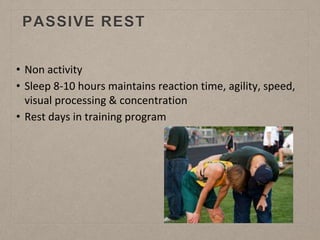
PASSIVE REST
• Non activity
• Sleep 8-10 hours maintains reaction time, agility, speed,
visual processing & concentration
• Rest days in training program
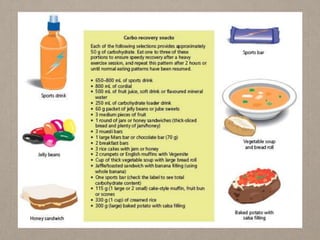
REPLENISH ENERGY STORES
• Replenish glycogen stores (CHO) (65% diet)
–Should be replenished in first 15-30 mins with high
GI foods
• Protein to repair muscle fibres (15% diet)
• Fats to restore energy & supply vitamins (20% diet)
• PC stores replenish 70% in 30 secs and the remainder
in 3 mins
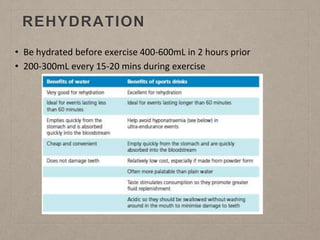
REHYDRATION
• Be hydrated before exercise 400-600mL in 2 hours prior
• 200-300mL every 15-20 mins during exercise
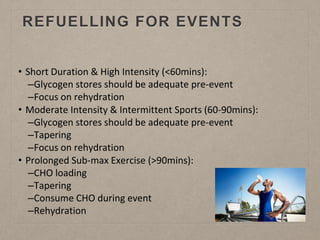
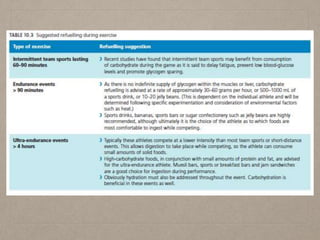
REFUELLING FOR EVENTS
• Short Duration & High Intensity (<60mins):
–Glycogen stores should be adequate pre-event
–Focus on rehydration
• Moderate Intensity & Intermittent Sports (60-90mins):
–Glycogen stores should be adequate pre-event
–Tapering
–Focus on rehydration
• Prolonged Sub-max Exercise (>90mins):
–CHO loading
–Tapering
–Consume CHO during event
–Rehydration
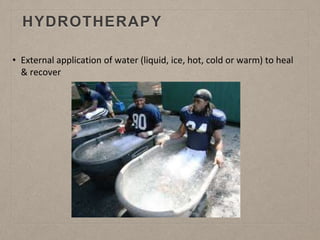
HYDROTHERAPY
• External application of water (liquid, ice, hot, cold or warm) to heal
& recover
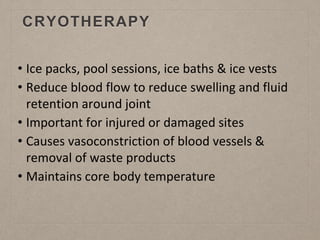
CRYOTHERAPY
• Ice packs, pool sessions, ice baths & ice vests
• Reduce blood flow to reduce swelling and fluid
retention around joint
• Important for injured or damaged sites
• Causes vasoconstriction of blood vessels &
removal of waste products
• Maintains core body temperature
HOT AND COLD CONTRAST
THERAPY
• Alternate between hot/cold shower, spa/plunge
pool or water immersion
• Relaxes muscles
• Assists neurological recovery
• Change between vasodilation and
vasoconstriction to remove waste products &
deliver nutrients
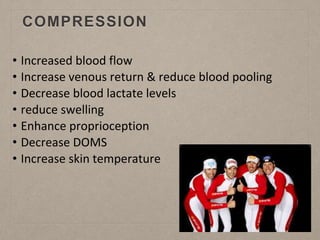
COMPRESSION
• Increased blood flow
• Increase venous return & reduce blood pooling
• Decrease blood lactate levels
• reduce swelling
• Enhance proprioception
• Decrease DOMS
• Increase skin temperature
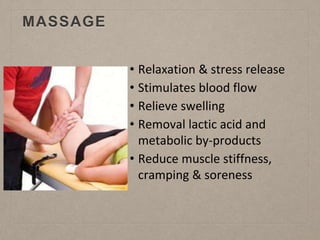
MASSAGE
• Relaxation & stress release
• Stimulates blood flow
• Relieve swelling
• Removal lactic acid and
metabolic by-products
• Reduce muscle stiffness,
cramping & soreness
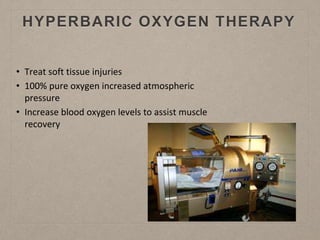
HYPERBARIC OXYGEN THERAPY
• Treat soft tissue injuries
• 100% pure oxygen increased atmospheric
pressure
• Increase blood oxygen levels to assist muscle
recovery
SPECIALISTS
• Physiotherapist: Musculoskeletal, neurological &
cardiothoracic injuries
• Myotherapist: Treat soft tissue & joint injuries, includes
massage & needling
• Osteopath: Treat musculoskeletal imbalances & mobility
• Sport Psychologist: Assist with mental preparation, stress
& anxiety
• Nutritionist: Provide advice on diet/hydration
pre/during/post training & competition
• Chiropractor: Treat musculoskeletal injuries, particularly
concerning the spine
• Podiatrist: Treat foot related injuries
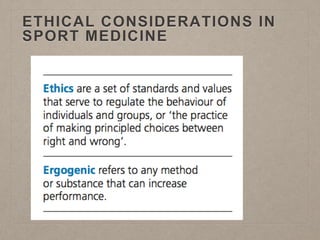
ETHICAL CONSIDERATIONS IN
SPORT MEDICINE
ETHICAL CONSIDERATIONS IN
SPORT MEDICINE
Recovery and fatigue

Recovery and fatigue

  • 1.
  • 2.
    FATIGUE • Physical and/ormental lethargy or exhaustion • Triggered by stress, exercise, overwork, illness or disease – Physical fatigue is the inability to continue functioning at the level of normal physical capabilities – Mental fatigue is a lack of mental clarity, concentration difficulties, sleepiness and/or memory loss
  • 3.
  • 4.
    MUSCULAR FATIGUE • Notjust a build-up of lactic acid • Involves muscular and central nervous system fatigue • Depends on the following: –Type/duration/intensity exercise –Muscle fibre type –Fitness/Training status –Nutritional status –Mental state athlete
  • 5.
    MUSCULAR FATIGUE • Fueldepletion: –ATP –PC –Glycogen • Accumulation of metabolic by-products: –H+ ions –Inorganic phosphate (Pi) –ADP • Impaired muscle excitability
  • 6.
    BODY TEMPERATURE AND FATIGUE •Performance decreases when core body temperature increases • Blood supply is redirected to the skin & away from the muscles • Dehydration: excess fluid loss also associated with electrolyte loss decreases blood plasma
  • 7.
    LACTATE • Lactic acidis quickly broken down in the muscles into lactate & H+ ions • Lactate is then broken down further in the muscle using aerobic pathways to supply immediate energy or to create more glycogen
  • 8.
    LACTATE • Onset ofBlood Lactate Accumulation (OBLA): – Point during exercise where blood lactate accumulates above resting levels –Non athletes at 50-60% VO2 max –Trained athletes at 70-80% VO2 max • Lactate Inflection Point (LIP): –Point beyond which intensity and power cannot be maintained without rapid accumulation of H+ ions
  • 9.
  • 10.
    RECOVERY • Overcoming orreversal of fatigue • Body systems repair damaged tissues and replenish energy stores • Insufficient recovery can lead to overtraining or long term (chronic) fatigue • Includes a number of different processes…
  • 11.
    COOL DOWN/ACTIVE RECOVERY •First step post session • Low intensity (60-70% MHR) • 5-10 mins • Aerobic • Maintains adequate blood flow to muscles • EPOC • Prevents venous pooling • Return to resting levels
  • 12.
    PASSIVE REST • Nonactivity • Sleep 8-10 hours maintains reaction time, agility, speed, visual processing & concentration • Rest days in training program
  • 13.
    REPLENISH ENERGY STORES •Replenish glycogen stores (CHO) (65% diet) –Should be replenished in first 15-30 mins with high GI foods • Protein to repair muscle fibres (15% diet) • Fats to restore energy & supply vitamins (20% diet) • PC stores replenish 70% in 30 secs and the remainder in 3 mins
  • 15.
    REHYDRATION • Be hydratedbefore exercise 400-600mL in 2 hours prior • 200-300mL every 15-20 mins during exercise
  • 16.
    REFUELLING FOR EVENTS •Short Duration & High Intensity (<60mins): –Glycogen stores should be adequate pre-event –Focus on rehydration • Moderate Intensity & Intermittent Sports (60-90mins): –Glycogen stores should be adequate pre-event –Tapering –Focus on rehydration • Prolonged Sub-max Exercise (>90mins): –CHO loading –Tapering –Consume CHO during event –Rehydration
  • 18.
    HYDROTHERAPY • External applicationof water (liquid, ice, hot, cold or warm) to heal & recover
  • 19.
    CRYOTHERAPY • Ice packs,pool sessions, ice baths & ice vests • Reduce blood flow to reduce swelling and fluid retention around joint • Important for injured or damaged sites • Causes vasoconstriction of blood vessels & removal of waste products • Maintains core body temperature
  • 20.
    HOT AND COLDCONTRAST THERAPY • Alternate between hot/cold shower, spa/plunge pool or water immersion • Relaxes muscles • Assists neurological recovery • Change between vasodilation and vasoconstriction to remove waste products & deliver nutrients
  • 21.
    COMPRESSION • Increased bloodflow • Increase venous return & reduce blood pooling • Decrease blood lactate levels • reduce swelling • Enhance proprioception • Decrease DOMS • Increase skin temperature
  • 22.
    MASSAGE • Relaxation &stress release • Stimulates blood flow • Relieve swelling • Removal lactic acid and metabolic by-products • Reduce muscle stiffness, cramping & soreness
  • 23.
    HYPERBARIC OXYGEN THERAPY •Treat soft tissue injuries • 100% pure oxygen increased atmospheric pressure • Increase blood oxygen levels to assist muscle recovery
  • 24.
    SPECIALISTS • Physiotherapist: Musculoskeletal,neurological & cardiothoracic injuries • Myotherapist: Treat soft tissue & joint injuries, includes massage & needling • Osteopath: Treat musculoskeletal imbalances & mobility • Sport Psychologist: Assist with mental preparation, stress & anxiety • Nutritionist: Provide advice on diet/hydration pre/during/post training & competition • Chiropractor: Treat musculoskeletal injuries, particularly concerning the spine • Podiatrist: Treat foot related injuries
  • 25.
  • 26.