Physically Active
Lifestyles
Unit 2 SAC 2
Physical Activity &
Sedentary Behaviour
Physical Activity (PA): Any movement
of the body produced by skeletal
muscles, resulting in energy
expenditure
Sedentary Behaviour (SB): involves
activities requiring little or no
movement.
Dimensions of PAType: What the activity is
Frequency: How many times per week the activity is
undertaken
Duration: how long the activity goes for per day or
week
Intensity: the effort placed into the activity
Low: can sing while being active <50%MHR
Moderate: can carry a conversation 50-70% MHR
Vigorous: cannot talk 70-85% MHR
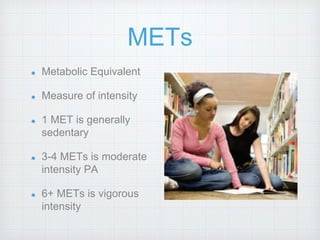
METs
Metabolic Equivalent
Measure of intensity
1 MET is generally
sedentary
3-4 METs is moderate
intensity PA
6+ METs is vigorous
intensity
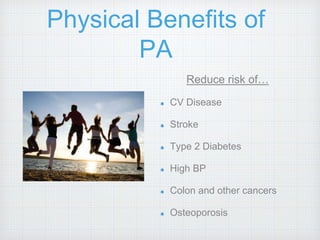
Physical Benefits of
PA
Reduce risk of…
CV Disease
Stroke
Type 2 Diabetes
High BP
Colon and other cancers
Osteoporosis
Can assist to:
Build & maintain healthy bones, muscles & joints
Improve posture
Achieve & maintain healthy body weight
Protect against musculoskeletal injuries in children
Lower blood cholesterol and triglycerides
Increase good cholesterol
Keep older adults physically strong and prevent fatigue
Physical Benefits of
PA
Social Benefits of PA
Make new friends
Strengthen existing relationships
Provide opportunities for social interaction
Build community support networks
Reduce social isolation & exclusion
Reduce workplace absence due to illness
Increase independence in older adults
Mental Benefits of PA
Improved mood
Reduce incidence of depression, anxiety & stress
Improved self-esteem
Improved ability for people with chronic illness to participate in daily
activities
Improved sleep
Greater energy
Improved perception of self & identity
Improved cognitive function
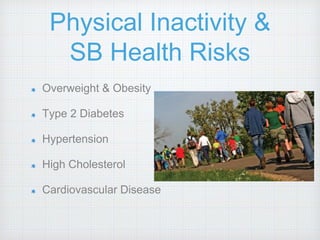
Physical Inactivity &
SB Health Risks
Overweight & Obesity
Type 2 Diabetes
Hypertension
High Cholesterol
Cardiovascular Disease
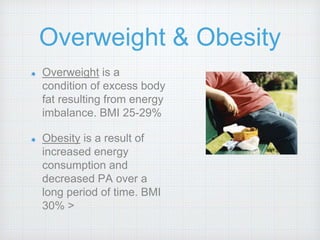
Overweight & Obesity
Overweight is a
condition of excess body
fat resulting from energy
imbalance. BMI 25-29%
Obesity is a result of
increased energy
consumption and
decreased PA over a
long period of time. BMI
30% >
Type 2 Diabetes
Diabetes is a disease
that causes high blood-
glucose levels
People do not produce
insulin or it does not
work effectively
Type 2 Diabetes means
the person is insulin
resistant
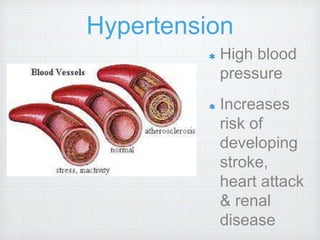
Hypertension
High blood
pressure
Increases
risk of
developing
stroke,
heart attack
& renal
disease
High Cholesterol
Cholesterol is a fat-like, waxy substance found in body cells
High-density lipoprotein (HDL): carry cholesterol in
the blood to the liver to be removed (GOOD)
Low-density lipoprotein (LDL): carry most of the cholesterol
in the blood but cause fatty deposits on artery walls
(BAD)
Triglycerides: found in the blood and stored in fat
cells, high levels increase risk of heart disease
High cholesterol narrows arteries making the heart work
harder
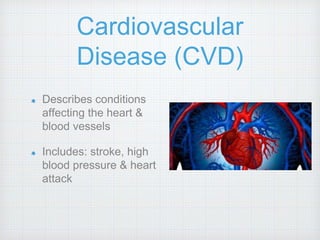
Cardiovascular
Disease (CVD)
Describes conditions
affecting the heart &
blood vessels
Includes: stroke, high
blood pressure & heart
attack

Physically active lifestyles

  • 1.
  • 2.
    Physical Activity & SedentaryBehaviour Physical Activity (PA): Any movement of the body produced by skeletal muscles, resulting in energy expenditure Sedentary Behaviour (SB): involves activities requiring little or no movement.
  • 3.
    Dimensions of PAType:What the activity is Frequency: How many times per week the activity is undertaken Duration: how long the activity goes for per day or week Intensity: the effort placed into the activity Low: can sing while being active <50%MHR Moderate: can carry a conversation 50-70% MHR Vigorous: cannot talk 70-85% MHR
  • 4.
    METs Metabolic Equivalent Measure ofintensity 1 MET is generally sedentary 3-4 METs is moderate intensity PA 6+ METs is vigorous intensity
  • 5.
    Physical Benefits of PA Reducerisk of… CV Disease Stroke Type 2 Diabetes High BP Colon and other cancers Osteoporosis
  • 6.
    Can assist to: Build& maintain healthy bones, muscles & joints Improve posture Achieve & maintain healthy body weight Protect against musculoskeletal injuries in children Lower blood cholesterol and triglycerides Increase good cholesterol Keep older adults physically strong and prevent fatigue Physical Benefits of PA
  • 7.
    Social Benefits ofPA Make new friends Strengthen existing relationships Provide opportunities for social interaction Build community support networks Reduce social isolation & exclusion Reduce workplace absence due to illness Increase independence in older adults
  • 8.
    Mental Benefits ofPA Improved mood Reduce incidence of depression, anxiety & stress Improved self-esteem Improved ability for people with chronic illness to participate in daily activities Improved sleep Greater energy Improved perception of self & identity Improved cognitive function
  • 9.
    Physical Inactivity & SBHealth Risks Overweight & Obesity Type 2 Diabetes Hypertension High Cholesterol Cardiovascular Disease
  • 10.
    Overweight & Obesity Overweightis a condition of excess body fat resulting from energy imbalance. BMI 25-29% Obesity is a result of increased energy consumption and decreased PA over a long period of time. BMI 30% >
  • 11.
    Type 2 Diabetes Diabetesis a disease that causes high blood- glucose levels People do not produce insulin or it does not work effectively Type 2 Diabetes means the person is insulin resistant
  • 12.
  • 13.
    High Cholesterol Cholesterol isa fat-like, waxy substance found in body cells High-density lipoprotein (HDL): carry cholesterol in the blood to the liver to be removed (GOOD) Low-density lipoprotein (LDL): carry most of the cholesterol in the blood but cause fatty deposits on artery walls (BAD) Triglycerides: found in the blood and stored in fat cells, high levels increase risk of heart disease High cholesterol narrows arteries making the heart work harder
  • 14.
    Cardiovascular Disease (CVD) Describes conditions affectingthe heart & blood vessels Includes: stroke, high blood pressure & heart attack