



By;
Surendra Bam
Presentation Outline:

1. Energy and its Linkages

2. Sources of Energy in Nepal

3. Sources of Biomass Energy
4. Application of biomass energy technology

5. Some facts about biomass energy promotion in
Nepal
6. Benefits of biomass energy
7. Conclusions
8. Recommendations
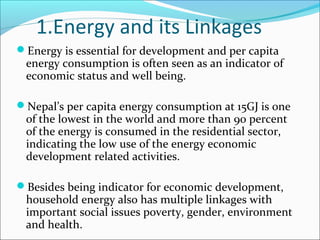
1.Energy and its Linkages
Energy is essential for development and per capita
 energy consumption is often seen as an indicator of
 economic status and well being.

Nepal’s per capita energy consumption at 15GJ is one
 of the lowest in the world and more than 90 percent
 of the energy is consumed in the residential sector,
 indicating the low use of the energy economic
 development related activities.

Besides being indicator for economic development,
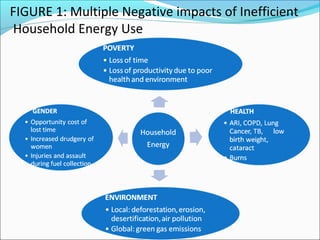
 household energy also has multiple linkages with
 important social issues poverty, gender, environment
 and health.
FIGURE 1: Multiple Negative impacts of Inefficient
Household Energy Use
2. Sources of Energy in Nepal
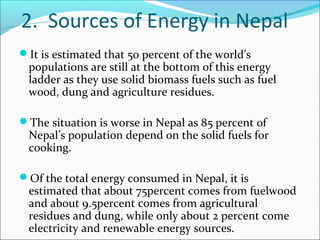
It is estimated that 50 percent of the world’s
 populations are still at the bottom of this energy
 ladder as they use solid biomass fuels such as fuel
 wood, dung and agriculture residues.

The situation is worse in Nepal as 85 percent of
 Nepal’s population depend on the solid fuels for
 cooking.

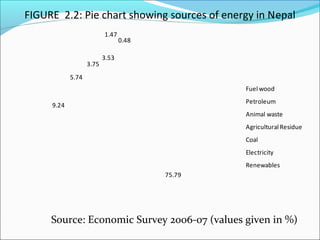
Of the total energy consumed in Nepal, it is
 estimated that about 75percent comes from fuelwood
 and about 9.5percent comes from agricultural
 residues and dung, while only about 2 percent come
 electricity and renewable energy sources.
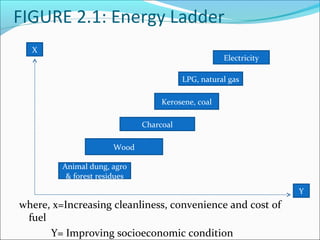
FIGURE 2.1: Energy Ladder
  X
                                                    Electricity

                                         LPG, natural gas

                                   Kerosene, coal

                              Charcoal

                       Wood

         Animal dung, agro
          & forest residues
                                                                  Y
where, x=Increasing cleanliness, convenience and cost of
 fuel
      Y= Improving socioeconomic condition
FIGURE 2.2: Pie chart showing sources of energy in Nepal
                          1.47
                                 0.48

                          3.53
                   3.75
            5.74
                                                Fuel wood
                                                Petroleum
     9.24
                                                Animal waste
                                                Agricultural Residue
                                                Coal
                                                Electricity
                                                Renewables
                                        75.79


     Source: Economic Survey 2006-07 (values given in %)
3. Sources of Biomass Energy
Biomass energy is defined as energy from plant and animal origins
  such as woody biomass (stems, branches, and twigs), non-woody
  biomass (stalks, leaves, grass), agriculture residue (rice husk, straw),
  oil seeds, industrial residue (molasses) and animal and human faces.

 The main sources of biomass energy that are currently in use in Nepal
  are fuelwood, cattle dung and agricultural residues.

Other potential biomass energy sources in Nepal are:
   - oil bearing plants such as Nageshwor or Mesua ferrea (77% oil), and
  Sajiwan or Jatropha curcass (45-56% oil) which can be used to
  produce biodiesel.
   - resin from pine trees, which can be used to produce bio-
  hydrocarbon.
   - molasses from sugar industry that can be used to produce ethanol.
   - organic waste that can be used to produce briquettes or biogas.
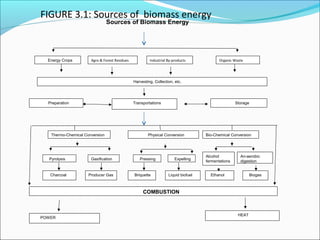
FIGURE 3.1: Sources of biomass energy
                                Sources of Biomass Energy


  Energy Crops        Agro & Forest Residues            Industrial By-products             Organic Waste


                                               Harvesting, Collection, etc.


  Preparation                                  Transportations                                      Storage


   Thermo-Chemical Conversion                          Physical Conversion          Bio-Chemical Conversion


                                                                                    Alcohol           An-aerobic
  Pyrolysis           Gasification                Pressing             Expelling
                                                                                    fermentations     digestion


   Charcoal          Producer Gas              Briquette           Liquid biofuel     Ethanol                 Biogas


                                                    COMBUSTION


                                                                                                     HEAT
POWER
4. Application of biomass energy
technology
The following processes can be used to process biomass
 resources into different forms:
Thermo- chemical conversion- In this process, biomass
 is burned in the absence of oxygen (pyrolysis) to from
 char or partially burned in a gasifier to produce a
 combustible gas.
 Bio-chemical conversion- This process includes
 digestion of biomass in aerobic conditions to produces
 biogas in aerobic or fermentation to produce ethanol.
 Physical conversion- By applying physical pressure,
 biomass may be densified, as in the case of briquettes, or
 expelled to extract oil from plants. The extracted oil may
 be treated to remove heavy particles.
5. Some facts about biomass energy promotion in Nepal
•Direct use biomass in various types of improved cook stoves
(ICS) and processing of biomass in household biogas plant has
been found to be very promising technologies and have been
promoted extensively by various organizations, including
AEPC/ESAP.

• ICS and Biogas were introduced in Nepal in the 1950s and
currently there is well established system for promoting these
technologies through the coordinated effort of government,
local bodies, NGOs, private sector and community groups.

•Currently more than 200,000 households have installed ICS and
more than 160,000 households have installed biogas plants in
Nepal.
6. Benefits of biomass energy
•Reduction in deforestation

•Reduction in indoor air pollution and hence smoke-
related diseases

•Reduction in women’s drudgery and cooking time

•Improved sanitation from better management of
animal dung and human faeces

•Improvement in soil fertility because of the use of
slurry from biogas plant as biofertilizer
Benefits contd….
•Reduced dependence on chemical fertilizer

•Reduction in green gas emissions

•Contributions to local economy, through
better utilization of local resources

•Preventions of fire hazards

•Cleaner kitchen environment
7. Conclusions:
• Because biomass continues to be the main
source of energy in Nepal and use of biomass is
often associated with major environmental
problems such as deforestation and indoor air
pollution, there is urgent need to introduce and
popularize technologies that will make use of
these of the energy resources more efficient,
convenient, and cost effective and environment
friendly. This requires further research and
development as well as promotional activities.
Conclusion Contd….

•Consider these numbers: one Nepalese
model reduces CO2 by 4.7 tons per year
and the trade-in for 1 ton is up to $10.

• Using the stated fact that Nepal has
now commissioned their 100,000th biogas
plant they would have made as much as
$4,700,000 per year from the trading of
reduced CO2.
8. Recommendations:
•Nepal is faced with a double-edged sword when
dealing with the issue of energy. The amount of fuel
wood is diminishing while the demand for more
energy is increasing. Eventually, there will be a time
when Nepal’s resources are gone. Alternate methods
of deriving fuel and energy will be necessary in the
near future. Biogas is one of the more efficient ways
of supplying energy resources to Nepal.

• Biomass systems release next to nothing as far as
carbon dioxide and the Kyoto Protocol would make it
possible for Nepal to trade CO2 emissions to
countries that release too much of it.
Recommendations Contd…

The Kyoto Protocol is an issue that is still being
debated. In order for this to go into effect, the nations
that account for more than 55% of the emissions have
to be approved. As the situation now stands, the
United States is at a stand still and is not concerning
themselves with the subject. Therefore, Nepal must
place their hope in other countries that have high
emission rates such and Russia and Japan. These
countries are not in any hurry to approve the Kyoto
Protocol, but it seems that they are more ready to
approve than the US.
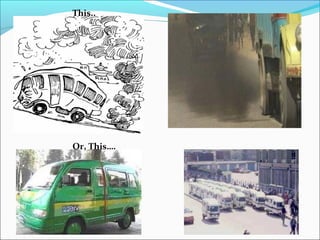
This..


Or, This….
Use Safa Tempoo
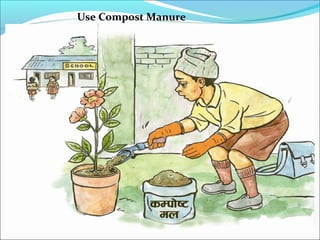
Use Compost Manure
Let us help each
other
Biomass energy

Biomass energy

  • 1.
  • 2.
    Presentation Outline: 1. Energyand its Linkages 2. Sources of Energy in Nepal 3. Sources of Biomass Energy 4. Application of biomass energy technology 5. Some facts about biomass energy promotion in Nepal 6. Benefits of biomass energy 7. Conclusions 8. Recommendations
  • 3.
    1.Energy and itsLinkages Energy is essential for development and per capita energy consumption is often seen as an indicator of economic status and well being. Nepal’s per capita energy consumption at 15GJ is one of the lowest in the world and more than 90 percent of the energy is consumed in the residential sector, indicating the low use of the energy economic development related activities. Besides being indicator for economic development, household energy also has multiple linkages with important social issues poverty, gender, environment and health.
  • 4.
    FIGURE 1: MultipleNegative impacts of Inefficient Household Energy Use
  • 5.
    2. Sources ofEnergy in Nepal It is estimated that 50 percent of the world’s populations are still at the bottom of this energy ladder as they use solid biomass fuels such as fuel wood, dung and agriculture residues. The situation is worse in Nepal as 85 percent of Nepal’s population depend on the solid fuels for cooking. Of the total energy consumed in Nepal, it is estimated that about 75percent comes from fuelwood and about 9.5percent comes from agricultural residues and dung, while only about 2 percent come electricity and renewable energy sources.
  • 6.
    FIGURE 2.1: EnergyLadder X Electricity LPG, natural gas Kerosene, coal Charcoal Wood Animal dung, agro & forest residues Y where, x=Increasing cleanliness, convenience and cost of fuel Y= Improving socioeconomic condition
  • 7.
    FIGURE 2.2: Piechart showing sources of energy in Nepal 1.47 0.48 3.53 3.75 5.74 Fuel wood Petroleum 9.24 Animal waste Agricultural Residue Coal Electricity Renewables 75.79 Source: Economic Survey 2006-07 (values given in %)
  • 8.
    3. Sources ofBiomass Energy Biomass energy is defined as energy from plant and animal origins such as woody biomass (stems, branches, and twigs), non-woody biomass (stalks, leaves, grass), agriculture residue (rice husk, straw), oil seeds, industrial residue (molasses) and animal and human faces.  The main sources of biomass energy that are currently in use in Nepal are fuelwood, cattle dung and agricultural residues. Other potential biomass energy sources in Nepal are: - oil bearing plants such as Nageshwor or Mesua ferrea (77% oil), and Sajiwan or Jatropha curcass (45-56% oil) which can be used to produce biodiesel. - resin from pine trees, which can be used to produce bio- hydrocarbon. - molasses from sugar industry that can be used to produce ethanol. - organic waste that can be used to produce briquettes or biogas.
  • 9.
    FIGURE 3.1: Sourcesof biomass energy Sources of Biomass Energy Energy Crops Agro & Forest Residues Industrial By-products Organic Waste Harvesting, Collection, etc. Preparation Transportations Storage Thermo-Chemical Conversion Physical Conversion Bio-Chemical Conversion Alcohol An-aerobic Pyrolysis Gasification Pressing Expelling fermentations digestion Charcoal Producer Gas Briquette Liquid biofuel Ethanol Biogas COMBUSTION HEAT POWER
  • 10.
    4. Application ofbiomass energy technology The following processes can be used to process biomass resources into different forms: Thermo- chemical conversion- In this process, biomass is burned in the absence of oxygen (pyrolysis) to from char or partially burned in a gasifier to produce a combustible gas.  Bio-chemical conversion- This process includes digestion of biomass in aerobic conditions to produces biogas in aerobic or fermentation to produce ethanol.  Physical conversion- By applying physical pressure, biomass may be densified, as in the case of briquettes, or expelled to extract oil from plants. The extracted oil may be treated to remove heavy particles.
  • 11.
    5. Some factsabout biomass energy promotion in Nepal •Direct use biomass in various types of improved cook stoves (ICS) and processing of biomass in household biogas plant has been found to be very promising technologies and have been promoted extensively by various organizations, including AEPC/ESAP. • ICS and Biogas were introduced in Nepal in the 1950s and currently there is well established system for promoting these technologies through the coordinated effort of government, local bodies, NGOs, private sector and community groups. •Currently more than 200,000 households have installed ICS and more than 160,000 households have installed biogas plants in Nepal.
  • 12.
    6. Benefits ofbiomass energy •Reduction in deforestation •Reduction in indoor air pollution and hence smoke- related diseases •Reduction in women’s drudgery and cooking time •Improved sanitation from better management of animal dung and human faeces •Improvement in soil fertility because of the use of slurry from biogas plant as biofertilizer
  • 13.
    Benefits contd…. •Reduced dependenceon chemical fertilizer •Reduction in green gas emissions •Contributions to local economy, through better utilization of local resources •Preventions of fire hazards •Cleaner kitchen environment
  • 14.
    7. Conclusions: • Becausebiomass continues to be the main source of energy in Nepal and use of biomass is often associated with major environmental problems such as deforestation and indoor air pollution, there is urgent need to introduce and popularize technologies that will make use of these of the energy resources more efficient, convenient, and cost effective and environment friendly. This requires further research and development as well as promotional activities.
  • 15.
    Conclusion Contd…. •Consider thesenumbers: one Nepalese model reduces CO2 by 4.7 tons per year and the trade-in for 1 ton is up to $10. • Using the stated fact that Nepal has now commissioned their 100,000th biogas plant they would have made as much as $4,700,000 per year from the trading of reduced CO2.
  • 16.
    8. Recommendations: •Nepal isfaced with a double-edged sword when dealing with the issue of energy. The amount of fuel wood is diminishing while the demand for more energy is increasing. Eventually, there will be a time when Nepal’s resources are gone. Alternate methods of deriving fuel and energy will be necessary in the near future. Biogas is one of the more efficient ways of supplying energy resources to Nepal. • Biomass systems release next to nothing as far as carbon dioxide and the Kyoto Protocol would make it possible for Nepal to trade CO2 emissions to countries that release too much of it.
  • 17.
    Recommendations Contd… The KyotoProtocol is an issue that is still being debated. In order for this to go into effect, the nations that account for more than 55% of the emissions have to be approved. As the situation now stands, the United States is at a stand still and is not concerning themselves with the subject. Therefore, Nepal must place their hope in other countries that have high emission rates such and Russia and Japan. These countries are not in any hurry to approve the Kyoto Protocol, but it seems that they are more ready to approve than the US.
  • 18.
  • 19.
  • 20.
  • 21.
    Let us helpeach other