BIOFUELSAN ALTERNATIVE ENERGY
Presented By: Mohammad Fahim Tahmid
16-02-05-037
WHAT IS BIOFUEL
Biofuel is a fuel that is produced
through contemporary biological
processes
For example, a crop of plants used to
produce a barrel of biofuel will absorb
exactly the same amount of Carbon
Dioxide as emitted from burning the
barrel produced
WHY BIOFUELS
To reduce dependence on fossil fuel
To lower emissions of greenhouse
gases
To reduce reliance on foreign oil
BIOFUEL CARBON DIOXIDE CYCLE
SOURCES OF BIOFUEL
Agricultural Waste Sugarcane Corn
Algae Animal Fat Soybean
COMMON TYPES OF BIOFUEL
Biofuels
Bioethanol
Biogas
Biobutanol Biodiesel
BIOETHANOL
 Bioethanol is produced by the fermentation
of carbohydrate rich source which includes
sugar cane, sugar beet, corn etc.
 It is colorless and clear liquid
 One of the widely used alternative
automotive fuel in the world
APPLICATIONS OF BIOETHANOL
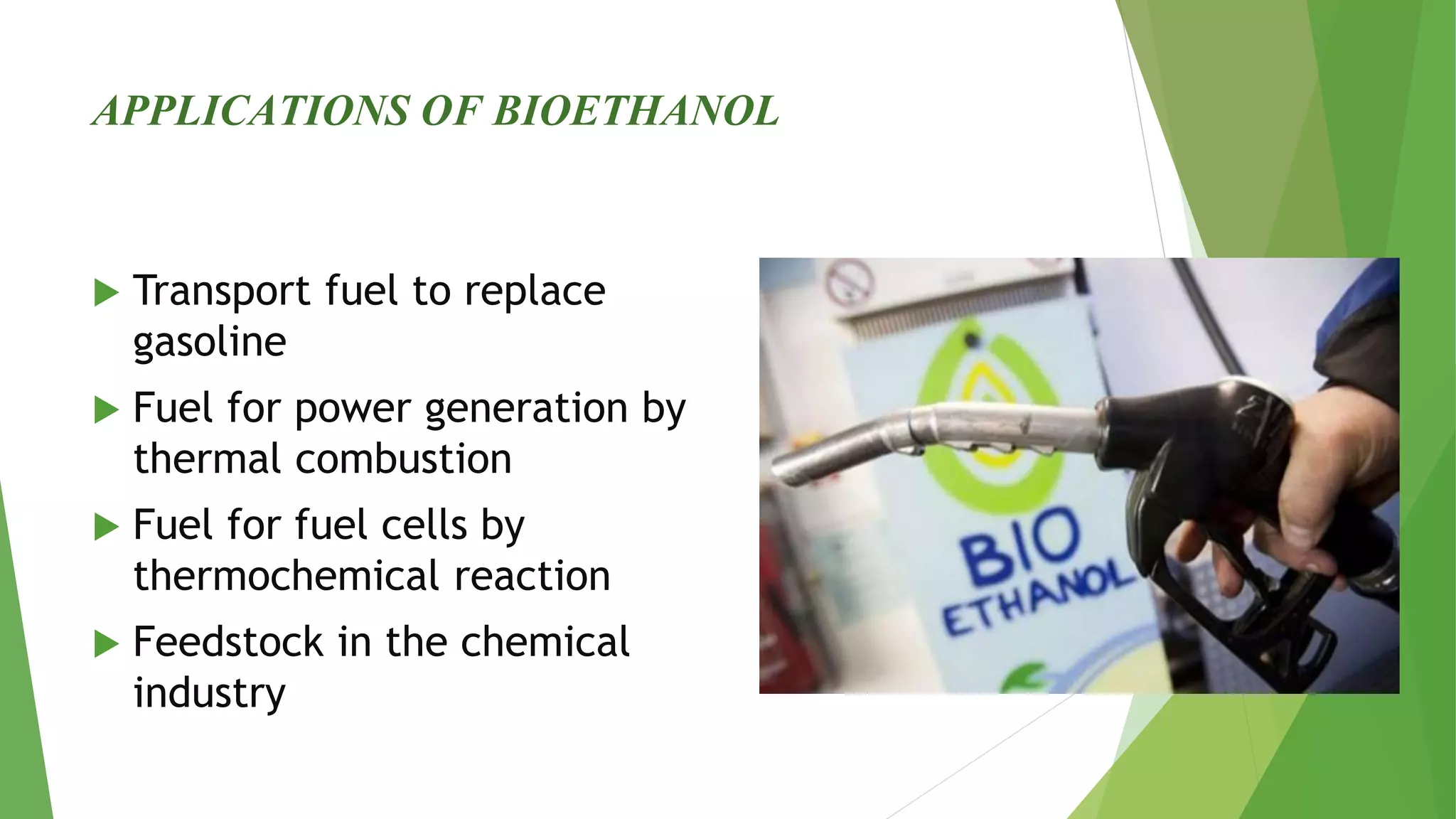
 Transport fuel to replace
gasoline
 Fuel for power generation by
thermal combustion
 Fuel for fuel cells by
thermochemical reaction
 Feedstock in the chemical
industry
AD-DISADVANTAGES OF BIOETHANOL
ADVANTAGES DISADVANTAGES
Ethanol is a renewable
resource
Large amounts leading to
problems such as soil erosion,
deforestation.
Ethanol burns more cleanly in
air than petroleum
Typical current engines would
require modification
The use of ethanol reduce
carbon dioxide emissions
Expensive
BIODIESEL
 Biodiesel is a variety of ester-based oxygenated fuels
derived from natural, renewable biological sources such
as vegetable oils.
 Biodiesel operates in compression ignition engines like
petroleum diesel thereby requiring no essential engine
modifications.
 Unlike fossil diesel, pure biodiesel is biodegradable, non-
toxic and essentially free of Sulphur and aromatics.
APPLICATIONS OF BIODIESEL
 Cars and Trucks: Diesel cars and trucks can run
on biodiesel.
 Off-Road Equipment: A large percentage of off-
road equipment such as vehicles used in
agriculture, mining, forestry, construction, and
power and heat production use diesel fuel,
making this equipment suitable for biodiesel use
AD-DISADVANTAGES OF BIOFUEL
ADVANTAGES DISADVANTAGES
Biodiesel has shorter ignition delay
compared to standard diesel
Biodiesel can release nitrogen oxide
which can lead to the formation of
smog.
Biodiesel has no sulfur content, and
so it doesn't contribute to acid rain
formation
Pure biodiesel has significant
problems with low temperatures
Biodiesel has good lubricating
properties better than standard
diesel
Food Shortage can be occurred
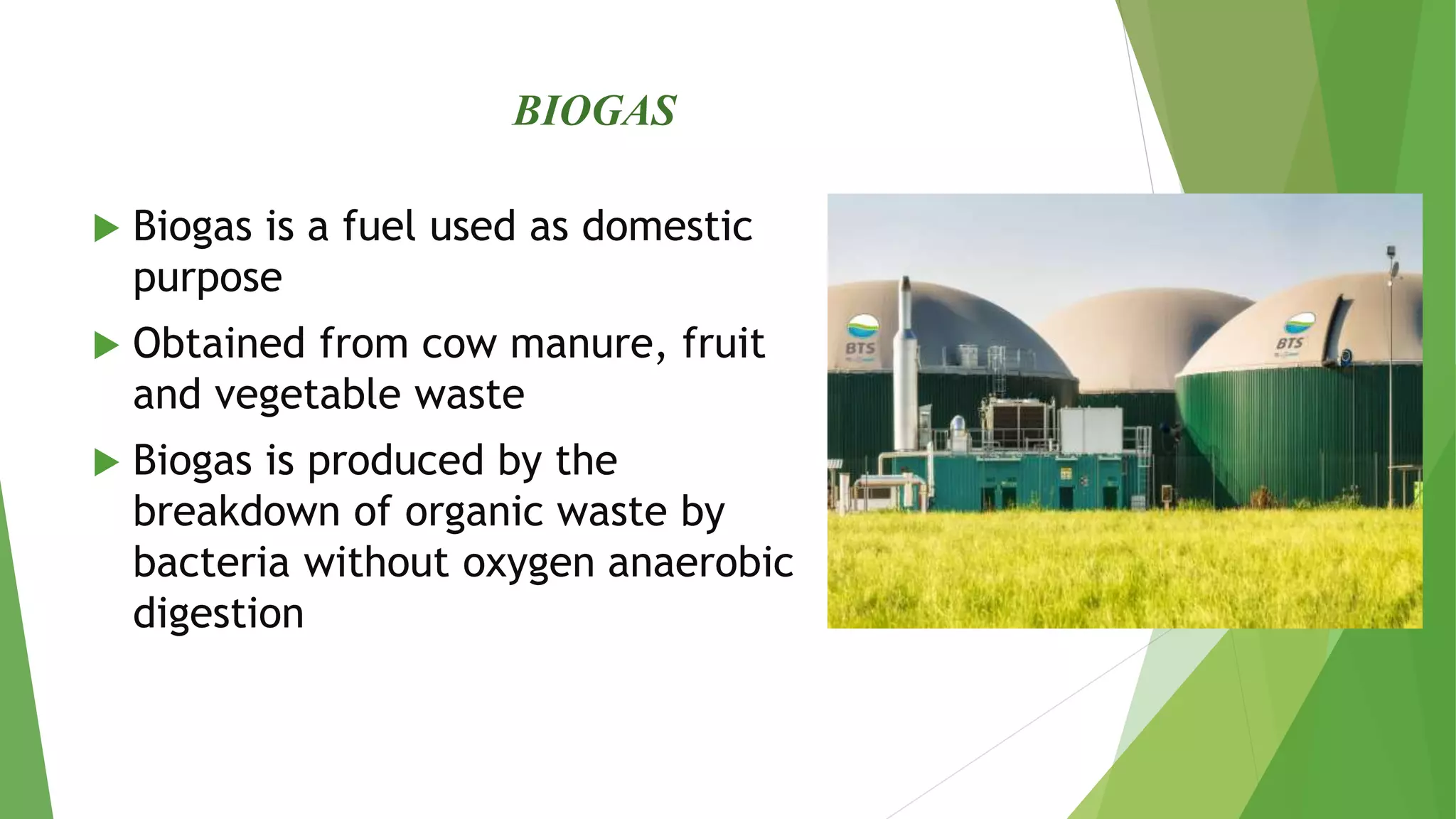
BIOGAS
 Biogas is a fuel used as domestic
purpose
 Obtained from cow manure, fruit
and vegetable waste
 Biogas is produced by the
breakdown of organic waste by
bacteria without oxygen anaerobic
digestion
APPLICATIONS OF BIOGAS
Cooking
Water heating
Vehicle
transportation
ADVANTAGES OF BIOGAS
 Reduce air and water pollution
 Reduced greenhouse gas
emissions
 Concerns about waste
management in the agriculture
and food industry
 Energy security
ADVANTAGES OF BIOFUEL
 Cost: Biofuels have the potential to be significantly less expensive than
gasoline and other fossil fuels.
 Source material: Whereas oil is a limited resource that comes from
specific materials, biofuels can be manufactured from a wide range of
materials including crop waste, manure, and other byproducts. This makes
it an efficient step in recycling.
 Renewability: It takes a very long time for fossil fuels to be produced,
but biofuels are much more easily renewable as new crops are grown and
waste material is collected.
 Lower carbon emissions: When biofuels are burned, they produce
significantly less carbon output and fewer toxins, making them a safer
alternative to preserve atmospheric quality and lower air pollution.
DISADVANTAGES OF BIOFUEL
 High cost: To refine biofuels to more efficient energy outputs,
and to build the necessary manufacturing plants to increase biofuel
quantities, a high initial investment is often required.
 Food prices: As demand for food crops such as corn grows for
biofuel production, it could also raise prices for necessary staple
food crops.
 Food shortages: There is concern that using valuable cropland
to grow fuel crops could have an impact on the cost of food and
could possibly lead to food shortages.
FOOD VS. FUEL
CONCLUSION
Reduce wastes
Cleaner air
New agricultural markets
Global warming reduction
Benefit developing
nations
THANKS TO ALL

Biofuels

  • 1.
    BIOFUELSAN ALTERNATIVE ENERGY PresentedBy: Mohammad Fahim Tahmid 16-02-05-037
  • 2.
    WHAT IS BIOFUEL Biofuelis a fuel that is produced through contemporary biological processes For example, a crop of plants used to produce a barrel of biofuel will absorb exactly the same amount of Carbon Dioxide as emitted from burning the barrel produced
  • 3.
    WHY BIOFUELS To reducedependence on fossil fuel To lower emissions of greenhouse gases To reduce reliance on foreign oil
  • 4.
  • 5.
    SOURCES OF BIOFUEL AgriculturalWaste Sugarcane Corn Algae Animal Fat Soybean
  • 6.
    COMMON TYPES OFBIOFUEL Biofuels Bioethanol Biogas Biobutanol Biodiesel
  • 7.
    BIOETHANOL  Bioethanol isproduced by the fermentation of carbohydrate rich source which includes sugar cane, sugar beet, corn etc.  It is colorless and clear liquid  One of the widely used alternative automotive fuel in the world
  • 8.
    APPLICATIONS OF BIOETHANOL Transport fuel to replace gasoline  Fuel for power generation by thermal combustion  Fuel for fuel cells by thermochemical reaction  Feedstock in the chemical industry
  • 9.
    AD-DISADVANTAGES OF BIOETHANOL ADVANTAGESDISADVANTAGES Ethanol is a renewable resource Large amounts leading to problems such as soil erosion, deforestation. Ethanol burns more cleanly in air than petroleum Typical current engines would require modification The use of ethanol reduce carbon dioxide emissions Expensive
  • 10.
    BIODIESEL  Biodiesel isa variety of ester-based oxygenated fuels derived from natural, renewable biological sources such as vegetable oils.  Biodiesel operates in compression ignition engines like petroleum diesel thereby requiring no essential engine modifications.  Unlike fossil diesel, pure biodiesel is biodegradable, non- toxic and essentially free of Sulphur and aromatics.
  • 11.
    APPLICATIONS OF BIODIESEL Cars and Trucks: Diesel cars and trucks can run on biodiesel.  Off-Road Equipment: A large percentage of off- road equipment such as vehicles used in agriculture, mining, forestry, construction, and power and heat production use diesel fuel, making this equipment suitable for biodiesel use
  • 12.
    AD-DISADVANTAGES OF BIOFUEL ADVANTAGESDISADVANTAGES Biodiesel has shorter ignition delay compared to standard diesel Biodiesel can release nitrogen oxide which can lead to the formation of smog. Biodiesel has no sulfur content, and so it doesn't contribute to acid rain formation Pure biodiesel has significant problems with low temperatures Biodiesel has good lubricating properties better than standard diesel Food Shortage can be occurred
  • 13.
    BIOGAS  Biogas isa fuel used as domestic purpose  Obtained from cow manure, fruit and vegetable waste  Biogas is produced by the breakdown of organic waste by bacteria without oxygen anaerobic digestion
  • 14.
    APPLICATIONS OF BIOGAS Cooking Waterheating Vehicle transportation
  • 15.
    ADVANTAGES OF BIOGAS Reduce air and water pollution  Reduced greenhouse gas emissions  Concerns about waste management in the agriculture and food industry  Energy security
  • 16.
    ADVANTAGES OF BIOFUEL Cost: Biofuels have the potential to be significantly less expensive than gasoline and other fossil fuels.  Source material: Whereas oil is a limited resource that comes from specific materials, biofuels can be manufactured from a wide range of materials including crop waste, manure, and other byproducts. This makes it an efficient step in recycling.  Renewability: It takes a very long time for fossil fuels to be produced, but biofuels are much more easily renewable as new crops are grown and waste material is collected.  Lower carbon emissions: When biofuels are burned, they produce significantly less carbon output and fewer toxins, making them a safer alternative to preserve atmospheric quality and lower air pollution.
  • 17.
    DISADVANTAGES OF BIOFUEL High cost: To refine biofuels to more efficient energy outputs, and to build the necessary manufacturing plants to increase biofuel quantities, a high initial investment is often required.  Food prices: As demand for food crops such as corn grows for biofuel production, it could also raise prices for necessary staple food crops.  Food shortages: There is concern that using valuable cropland to grow fuel crops could have an impact on the cost of food and could possibly lead to food shortages.
  • 18.
  • 19.
    CONCLUSION Reduce wastes Cleaner air Newagricultural markets Global warming reduction Benefit developing nations
  • 20.