Downloaded 4,983 times

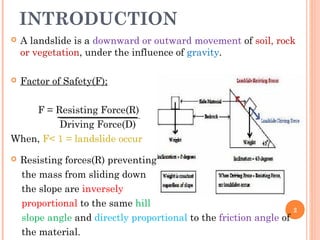
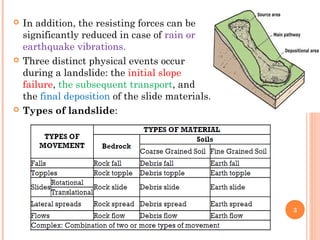
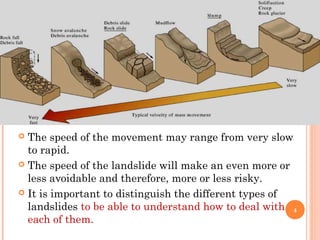
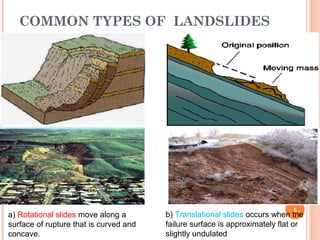
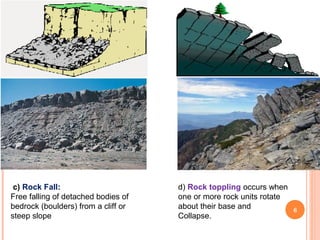
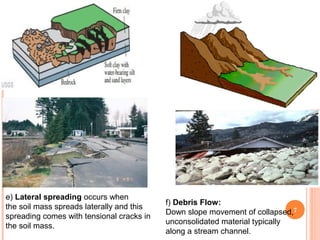
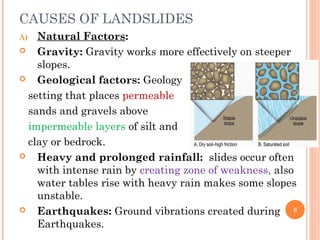
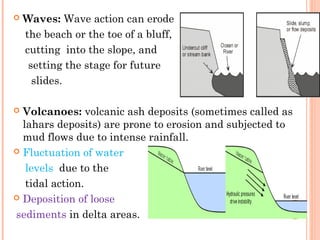
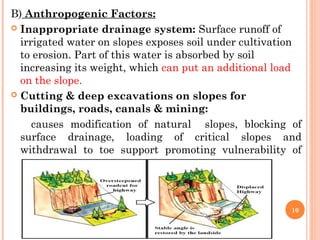
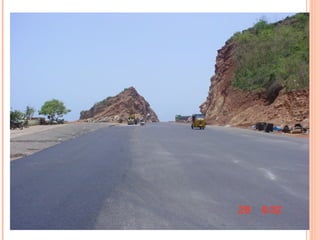
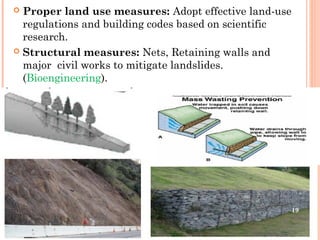
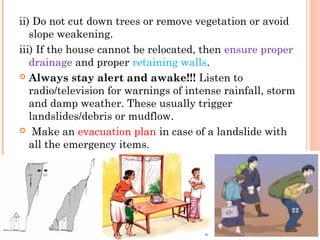
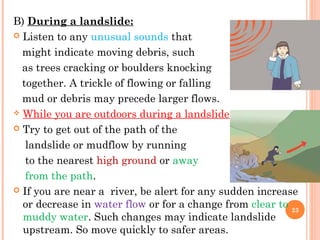
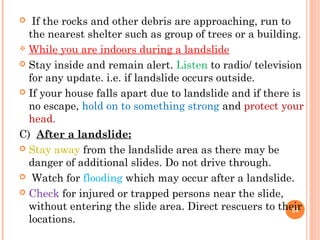
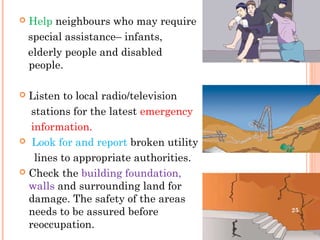


This document discusses landslides, including their causes, types, effects, indicators, prevention, and safety measures. It defines landslides as the downward movement of soil, rock, and vegetation under gravity. Key points include that landslides occur when resisting forces are less than driving forces, and can be triggered by heavy rainfall, earthquakes, erosion, deforestation, and human activities like excavation. The document outlines common landslide types and describes their impacts, such as damage to infrastructure, loss of life, and secondary hazards like flooding. It provides guidance on landslide hazard mapping, mitigation strategies, and safety precautions during landslide events.


