UNIT 5. ECOSYSTEMS
UNIT OBJECTIVES
 To learn about ecosystems and how it works
 To study how abiotic factors influence the
biocenosis
 To understand the relationships in the biocenosis
 To learn about trophic levels, chains and webs
 To learn about aquatic and terrestrial ecosystems
COMPONENTS OF AN ECOSYSTEM
ECOSYSTEM
It’s a place, the living things that
inhabit it and the interactions
between them.
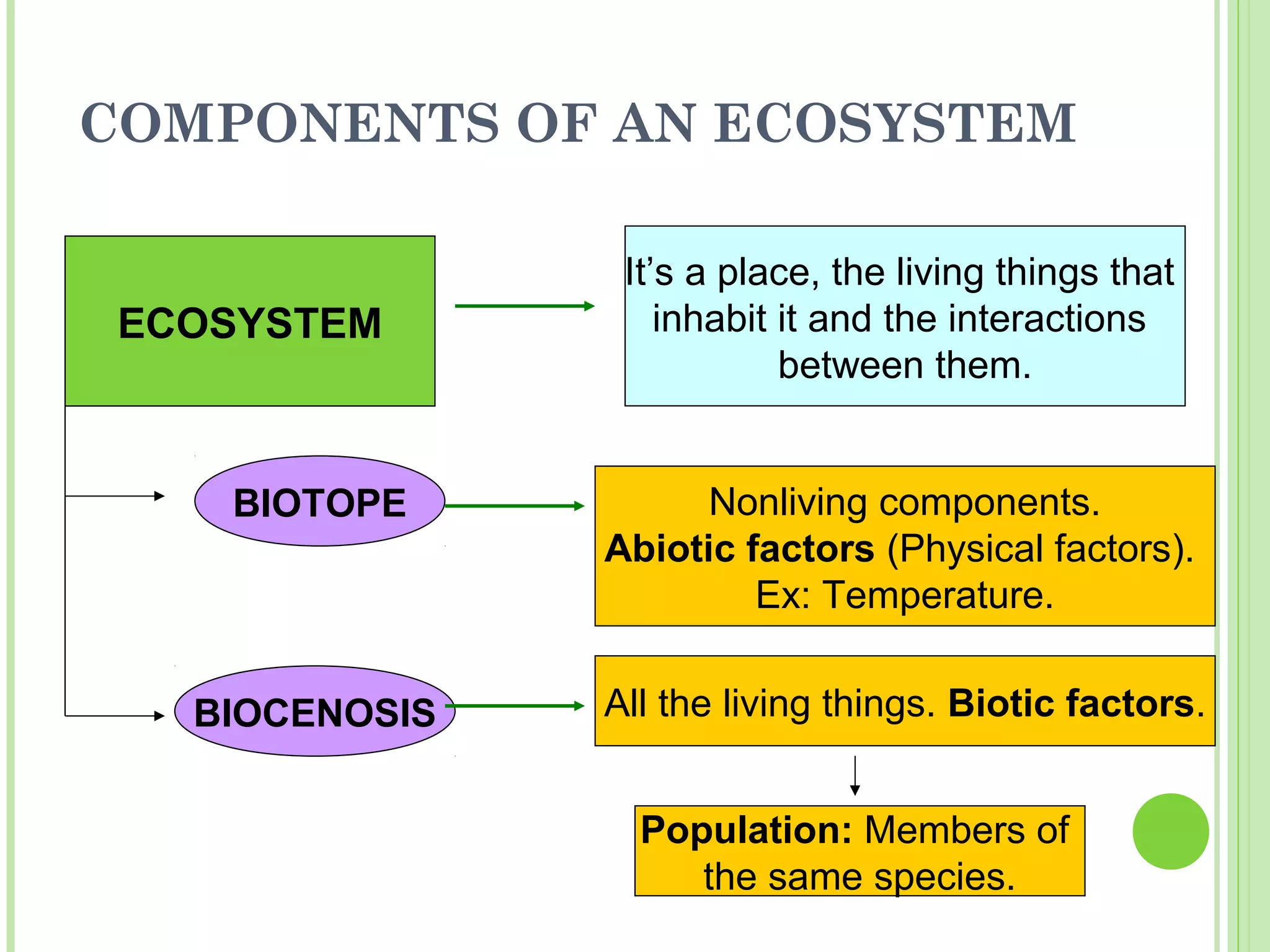
BIOTOPE
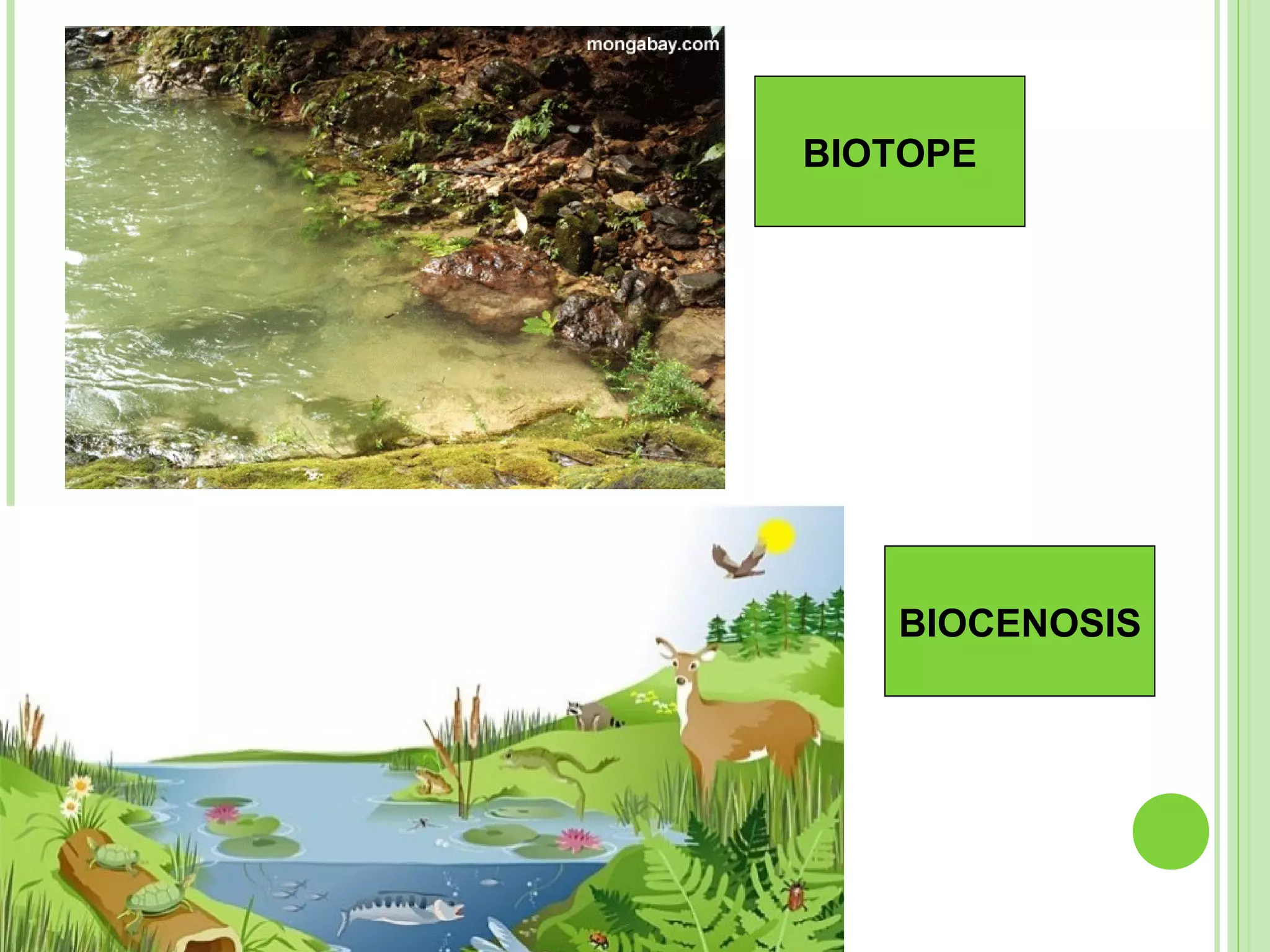
BIOCENOSIS
Nonliving components.
Abiotic factors (Physical factors).
Ex: Temperature.
All the living things. Biotic factors.
Population: Members of
the same species.
BIOTOPE
BIOCENOSIS
ACTIVITIES
1. What’s the difference between biocenosis
and biotope?
2. Write down three examples of biocenosis
and three examples of biotope.
3. Complete: An ecosystem is made up of all living
things called_________, the places where they
live called__________ and the ____________
between them.
4. Are they true or false?
a)All the organism of an ecosystem make up the
population.
b)The population is made up of all the organism of the
same species that inhabit a certain area.
c)The biocenosis consists of all living things in the
planet.
d)The biotope consists of the nonliving components of
the ecosystem.
5. Classify the following words in the corroct
column: water, temperature, oak tree, oxygen, fox,
sparrow, caterpillar, ground, rocks.
BIOTIC FACTORS:
ABIOTIC FACTORS:
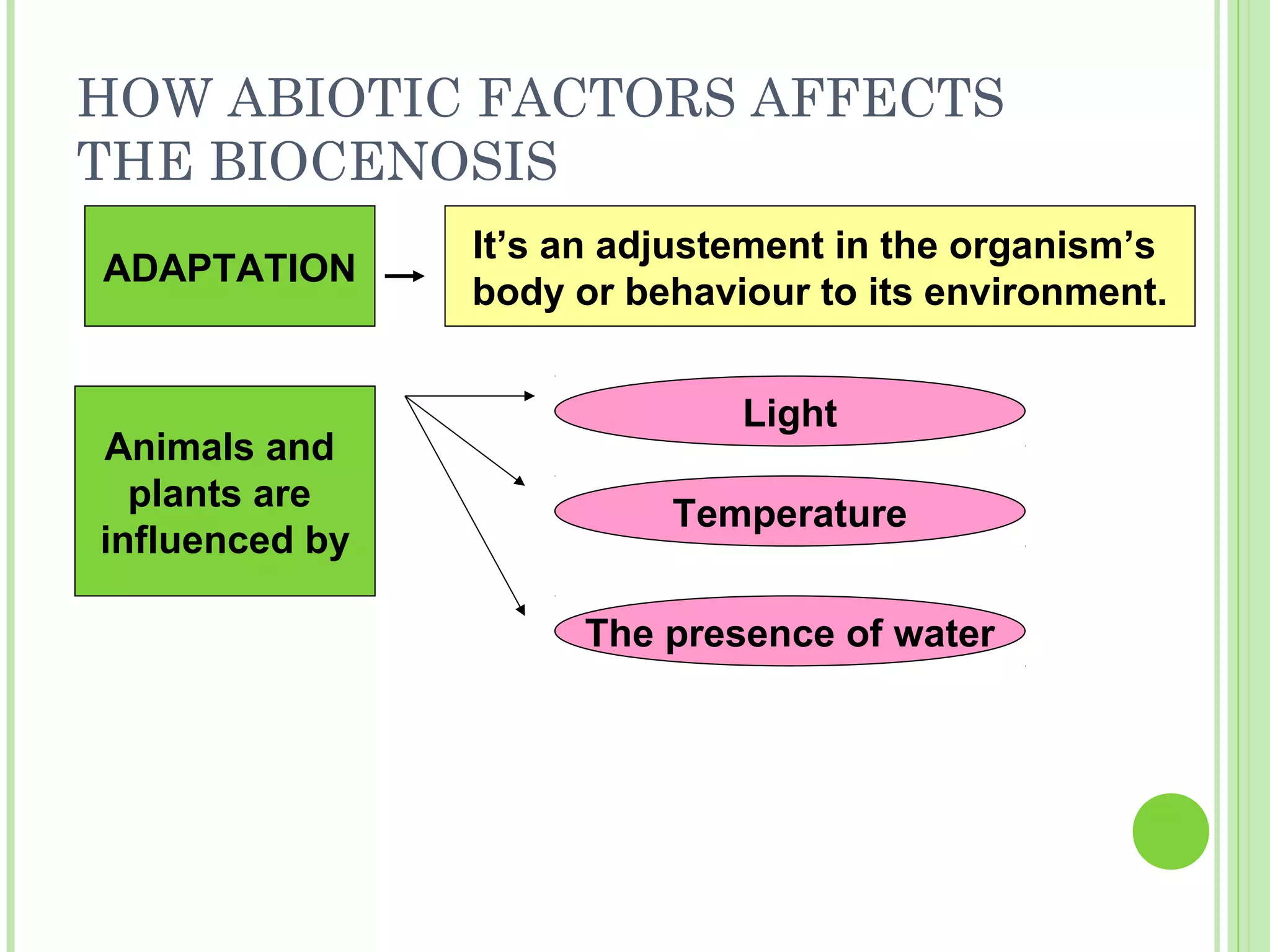
HOW ABIOTIC FACTORS AFFECTS
THE BIOCENOSIS
ADAPTATION
It’s an adjustement in the organism’s
body or behaviour to its environment.
Animals and
plants are
influenced by
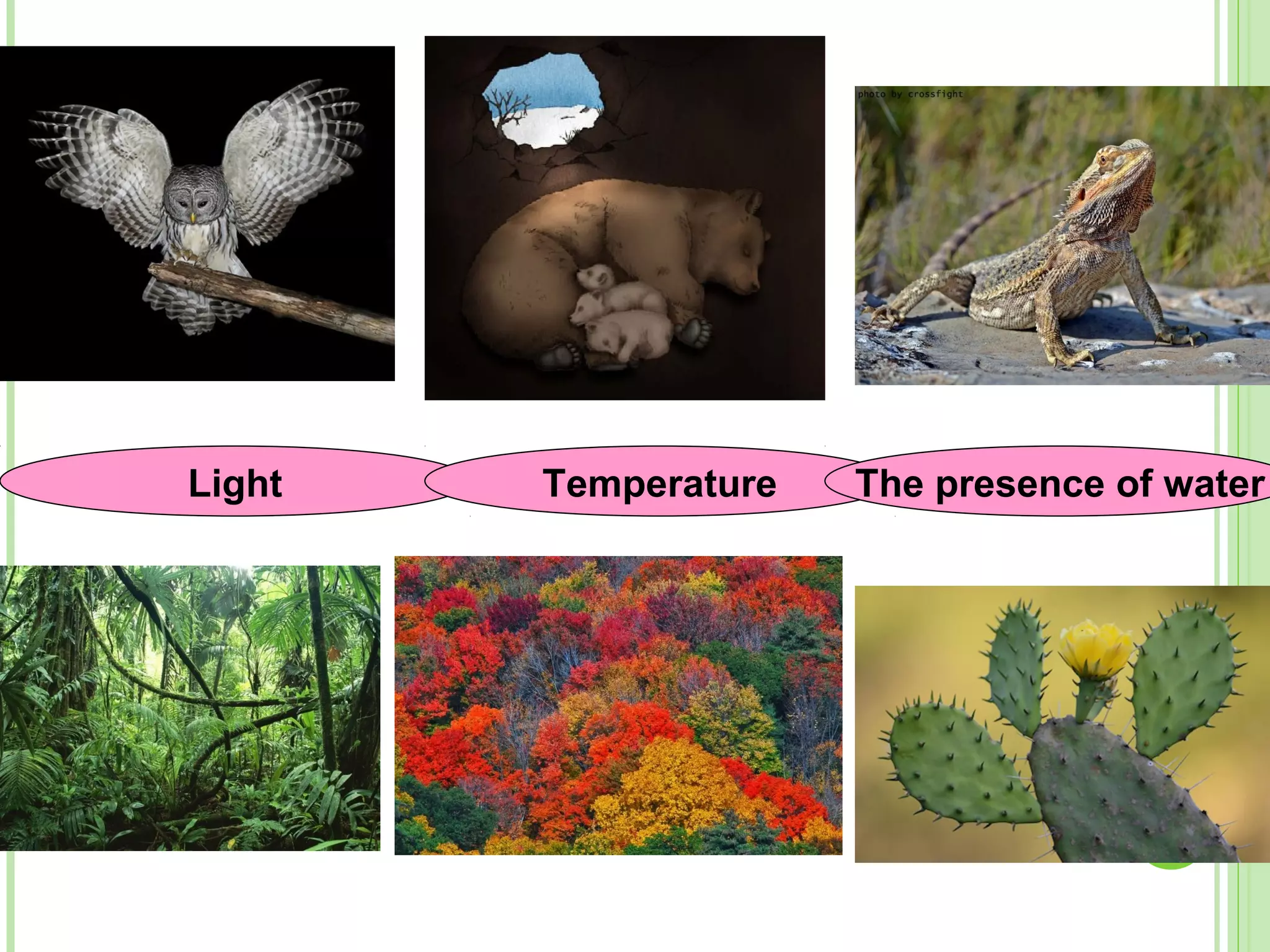
Light
Temperature
The presence of water
Light Temperature The presence of water
ACTIVITIES
6. True or false? Correct them.
a) The depths of the oceans contain
photosynthesizing organism because a lot of
sunlight can be found there.
b) Many animals have to emigrate or hibernate
when the heat comes.
c) Desert plants develop very big leaves which
protect them from losing water.
7. The following organisms have adaptations.
Which was the abiotic factor that produced them?
a) Plants that accumulate water in their stems:________
b) A bear hibernating:_____________
c) A tree which loses its leaves in autumn:____________
d) The exoskeleton of insects:_____________
e) Bird migration:______________
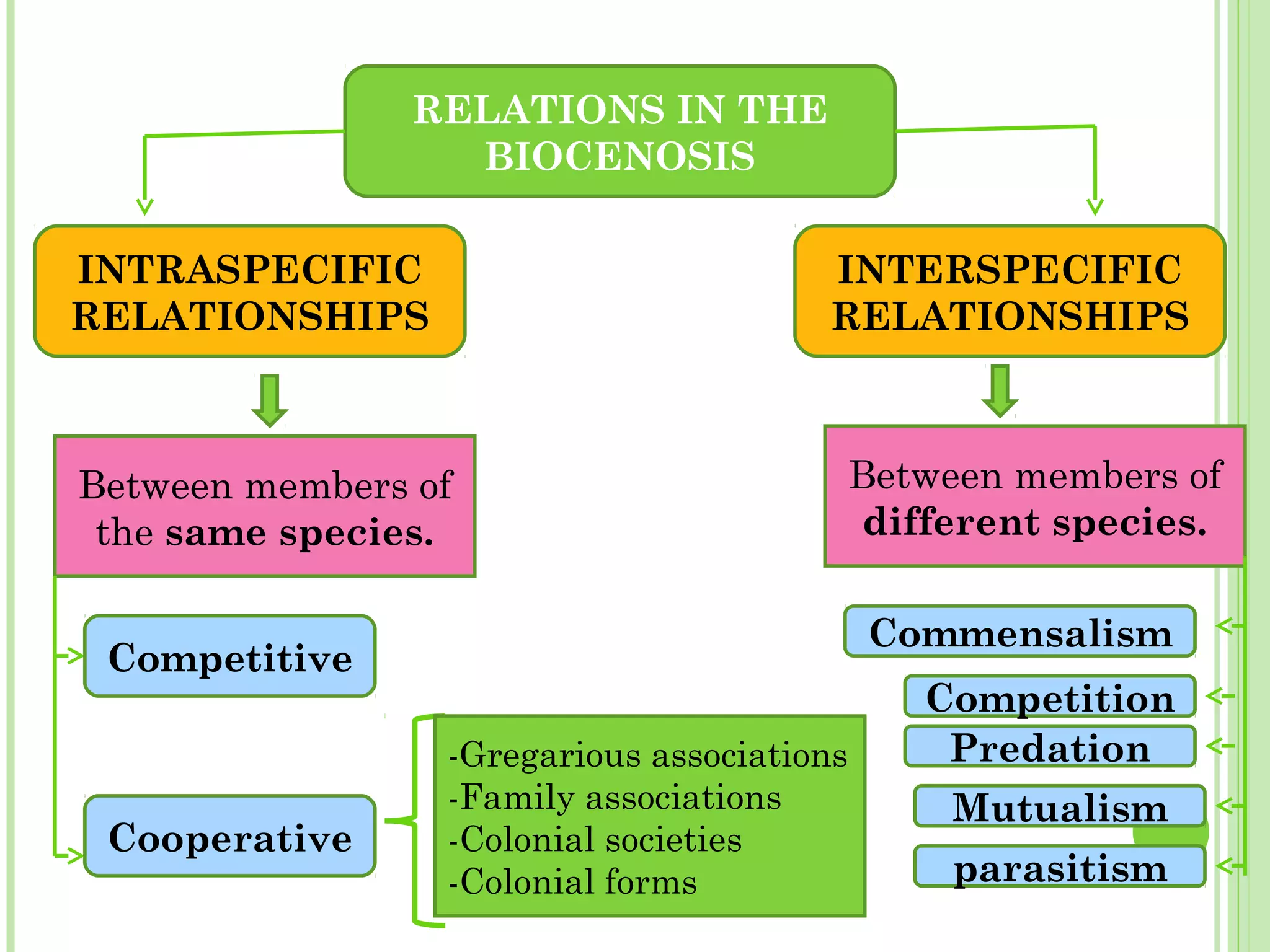
RELATIONS IN THE
BIOCENOSIS
INTRASPECIFIC
RELATIONSHIPS
INTERSPECIFIC
RELATIONSHIPS
Between members of
the same species.
Between members of
different species.
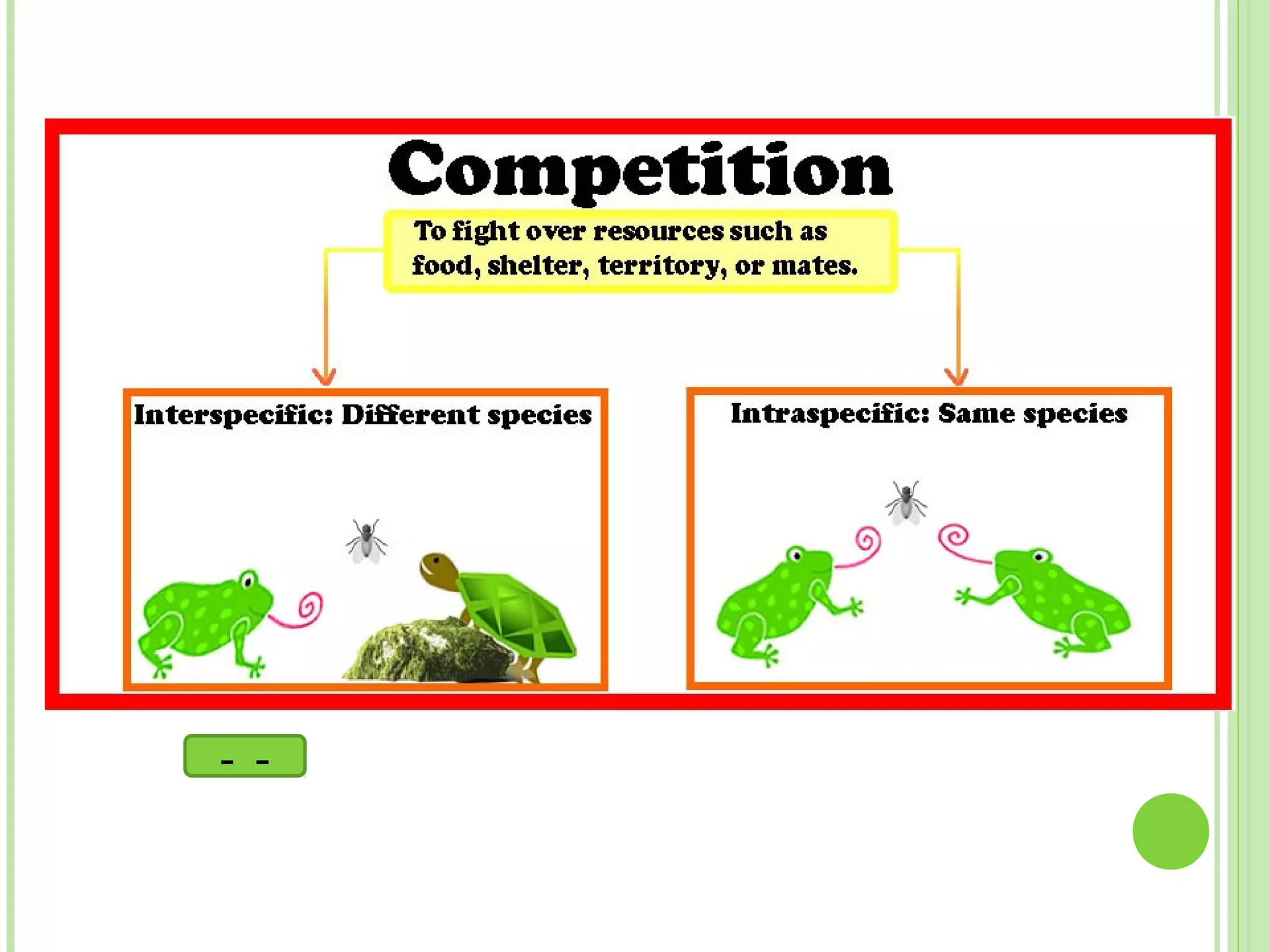
Competitive
Cooperative
-Gregarious associations
-Family associations
-Colonial societies
-Colonial forms
Competition
Commensalism
Predation
Mutualism
parasitism
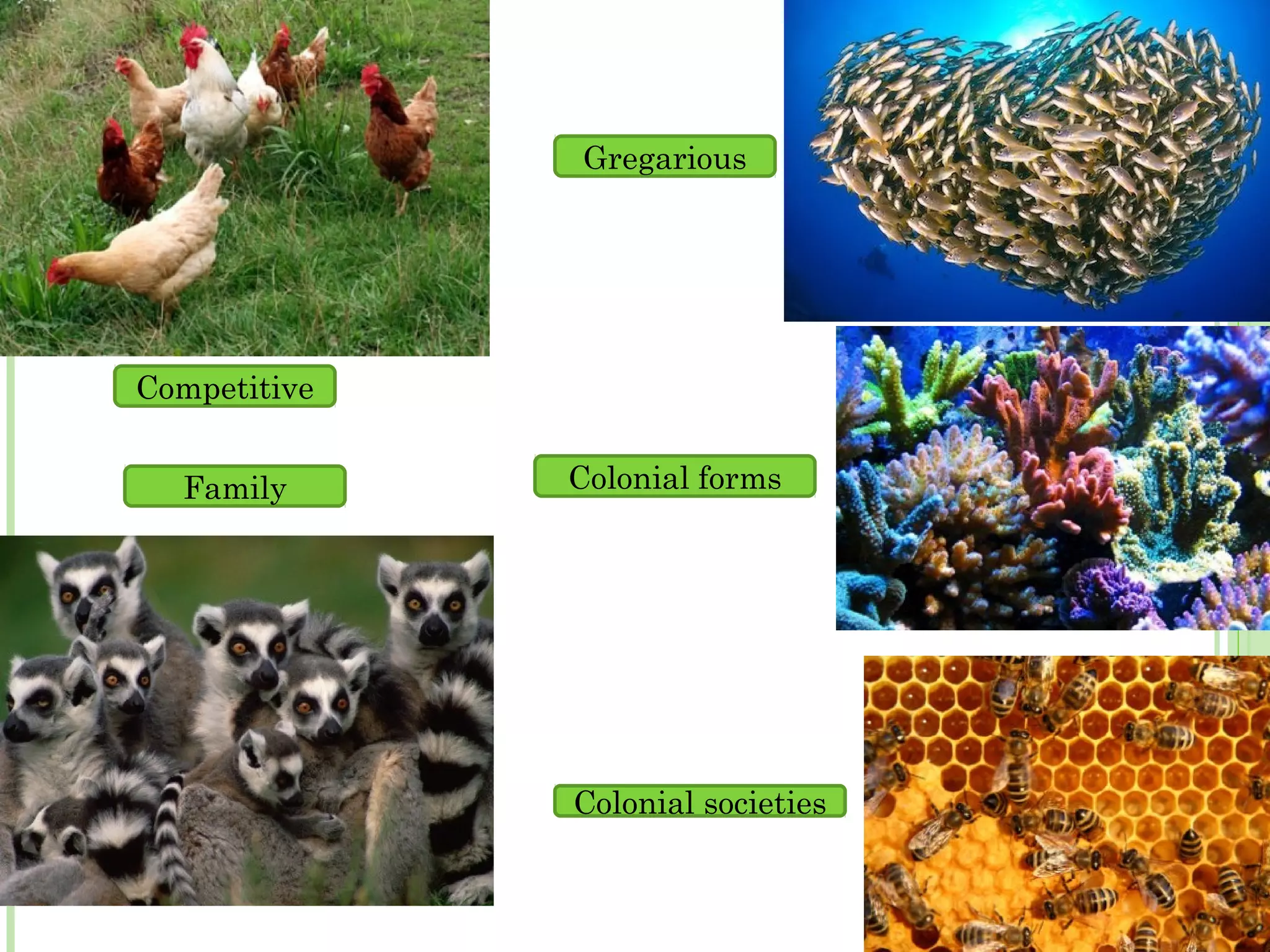
Competitive
Family
Gregarious
Colonial forms
Colonial societies
- -
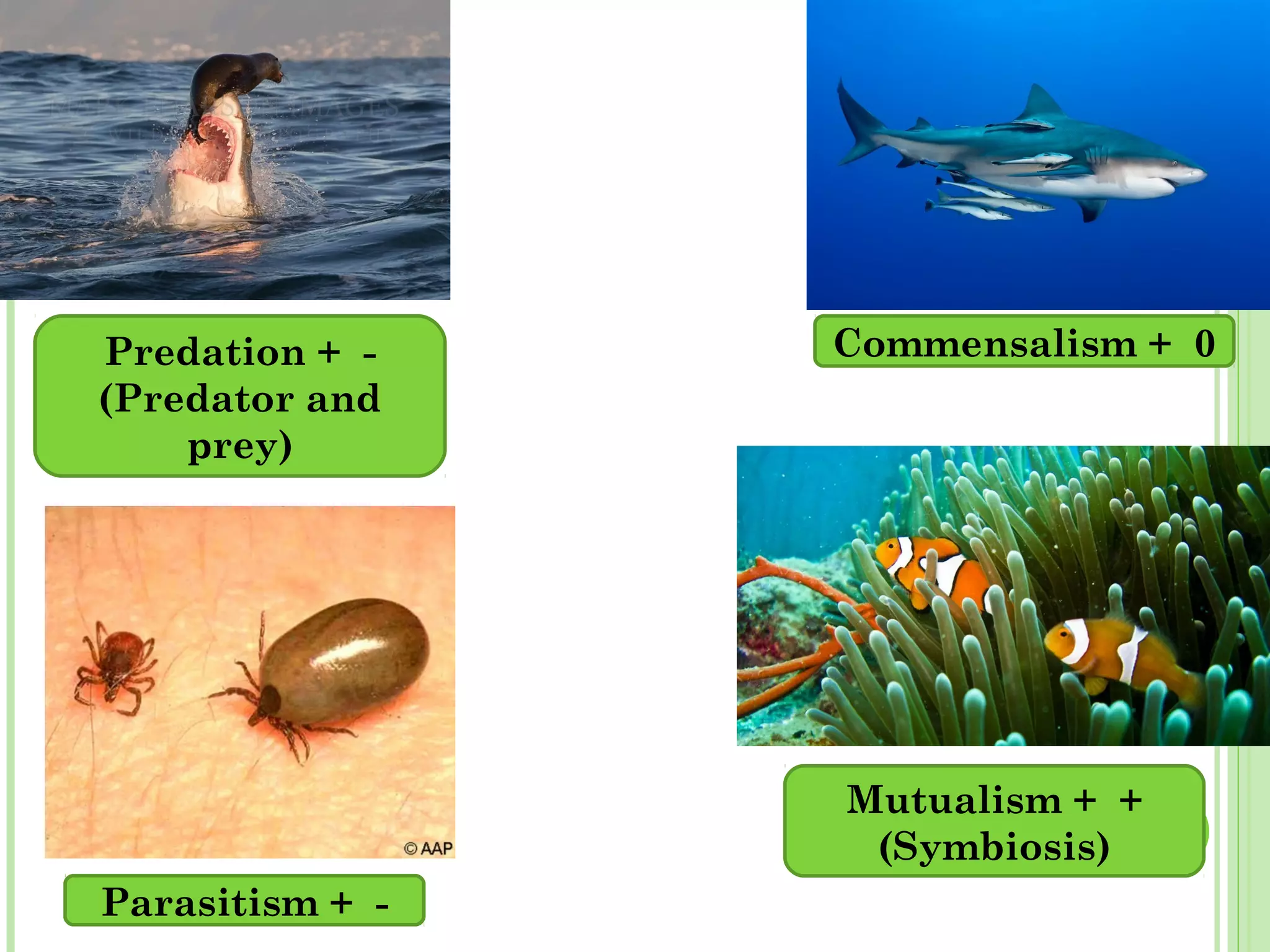
Predation + -
(Predator and
prey)
Parasitism + -
Commensalism + 0
Mutualism + +
(Symbiosis)
ACTIVITIES
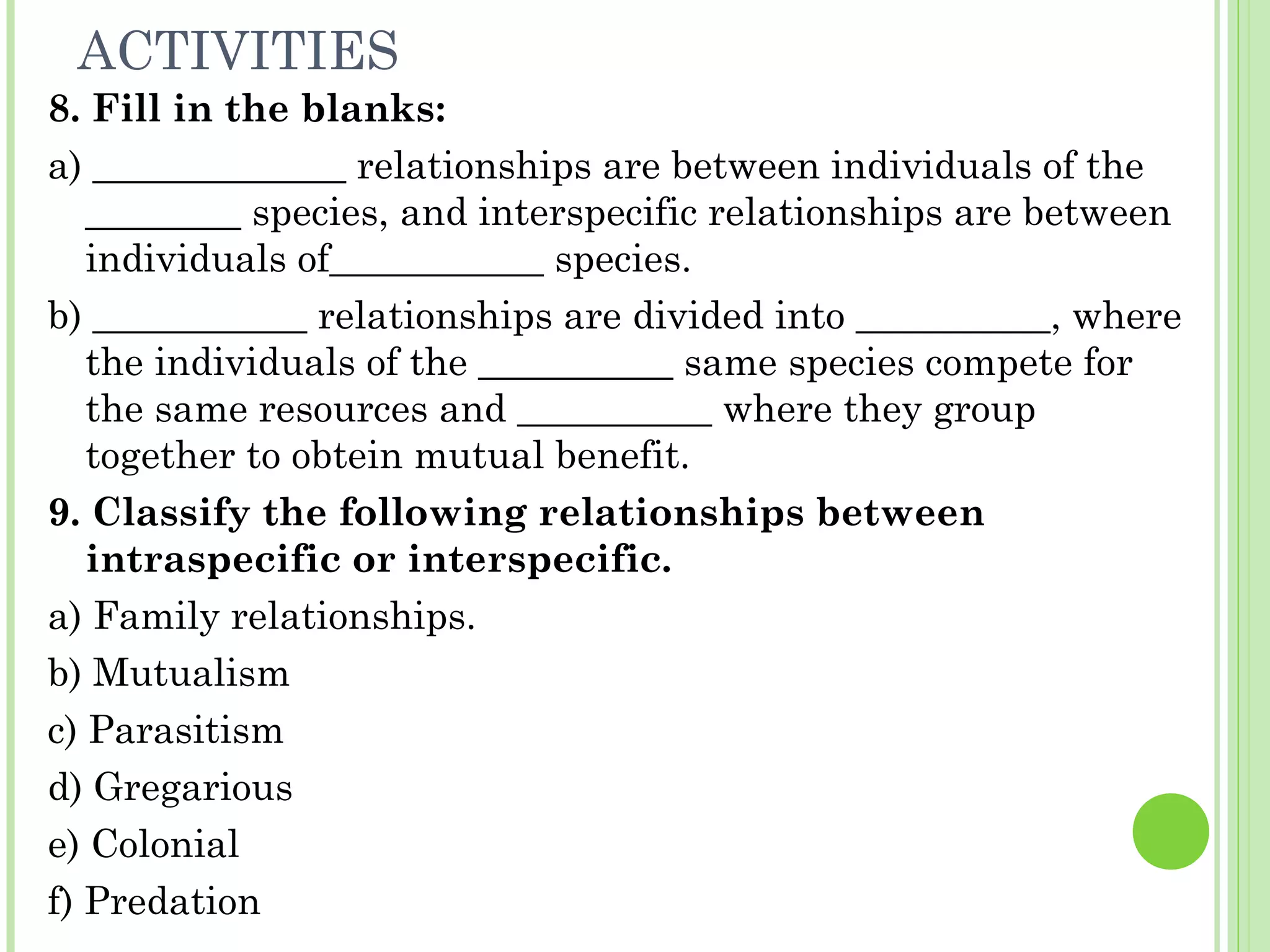
8. Fill in the blanks:
a) _____________ relationships are between individuals of the
________ species, and interspecific relationships are between
individuals of___________ species.
b) ___________ relationships are divided into __________, where
the individuals of the __________ same species compete for
the same resources and __________ where they group
together to obtein mutual benefit.
9. Classify the following relationships between
intraspecific or interspecific.
a) Family relationships.
b) Mutualism
c) Parasitism
d) Gregarious
e) Colonial
f) Predation
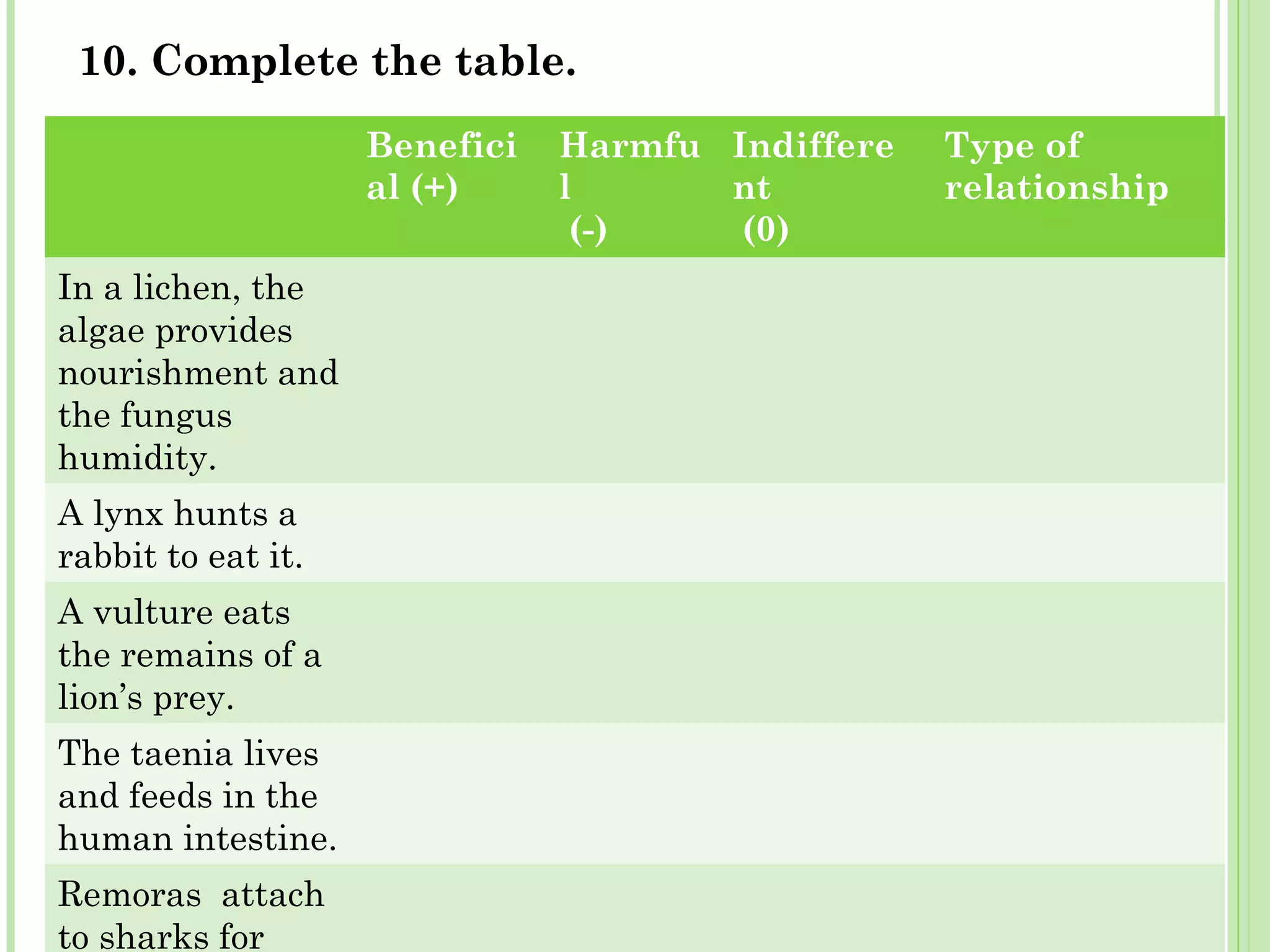
10. Complete the table.
Benefici
al (+)
Harmfu
l
(-)
Indiffere
nt
(0)
Type of
relationship
In a lichen, the
algae provides
nourishment and
the fungus
humidity.
A lynx hunts a
rabbit to eat it.
A vulture eats
the remains of a
lion’s prey.
The taenia lives
and feeds in the
human intestine.
Remoras attach
to sharks for
11. Thousands of bacteria live in the human
intestine. They constitute the gut flora.
Look for the information and explain what
type of relationship there is between people
and gut flora.
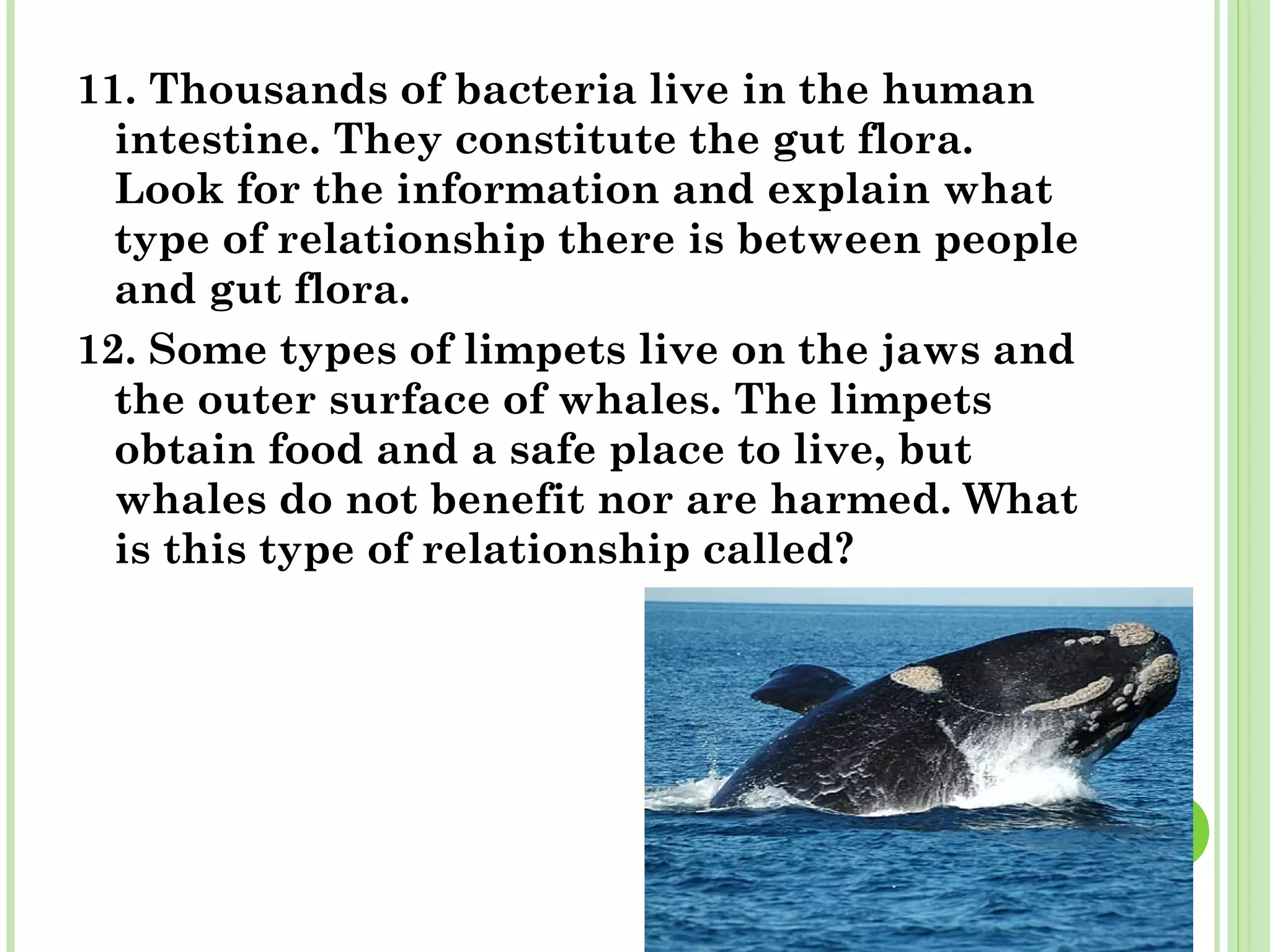
12. Some types of limpets live on the jaws and
the outer surface of whales. The limpets
obtain food and a safe place to live, but
whales do not benefit nor are harmed. What
is this type of relationship called?
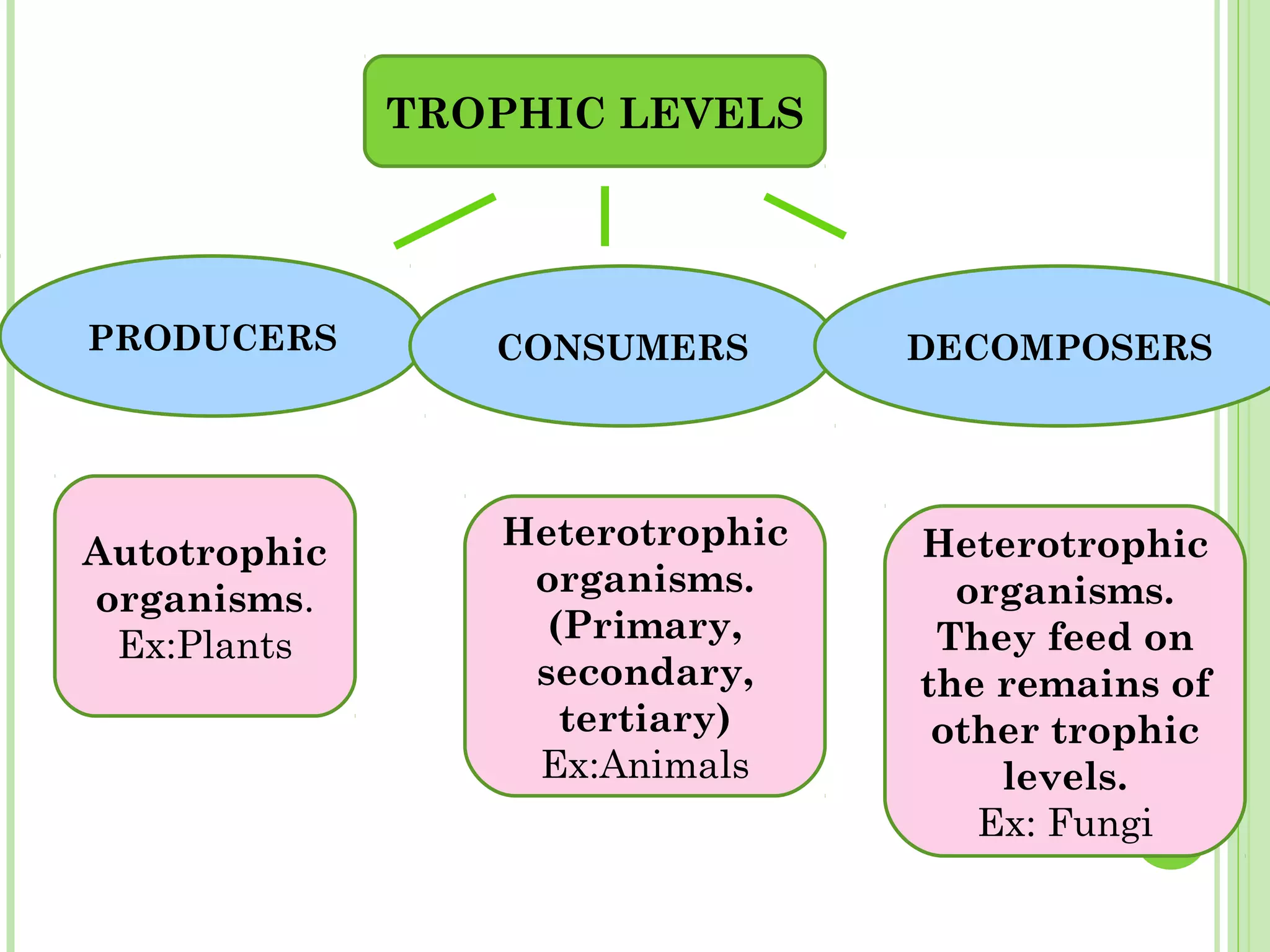
TROPHIC LEVELS
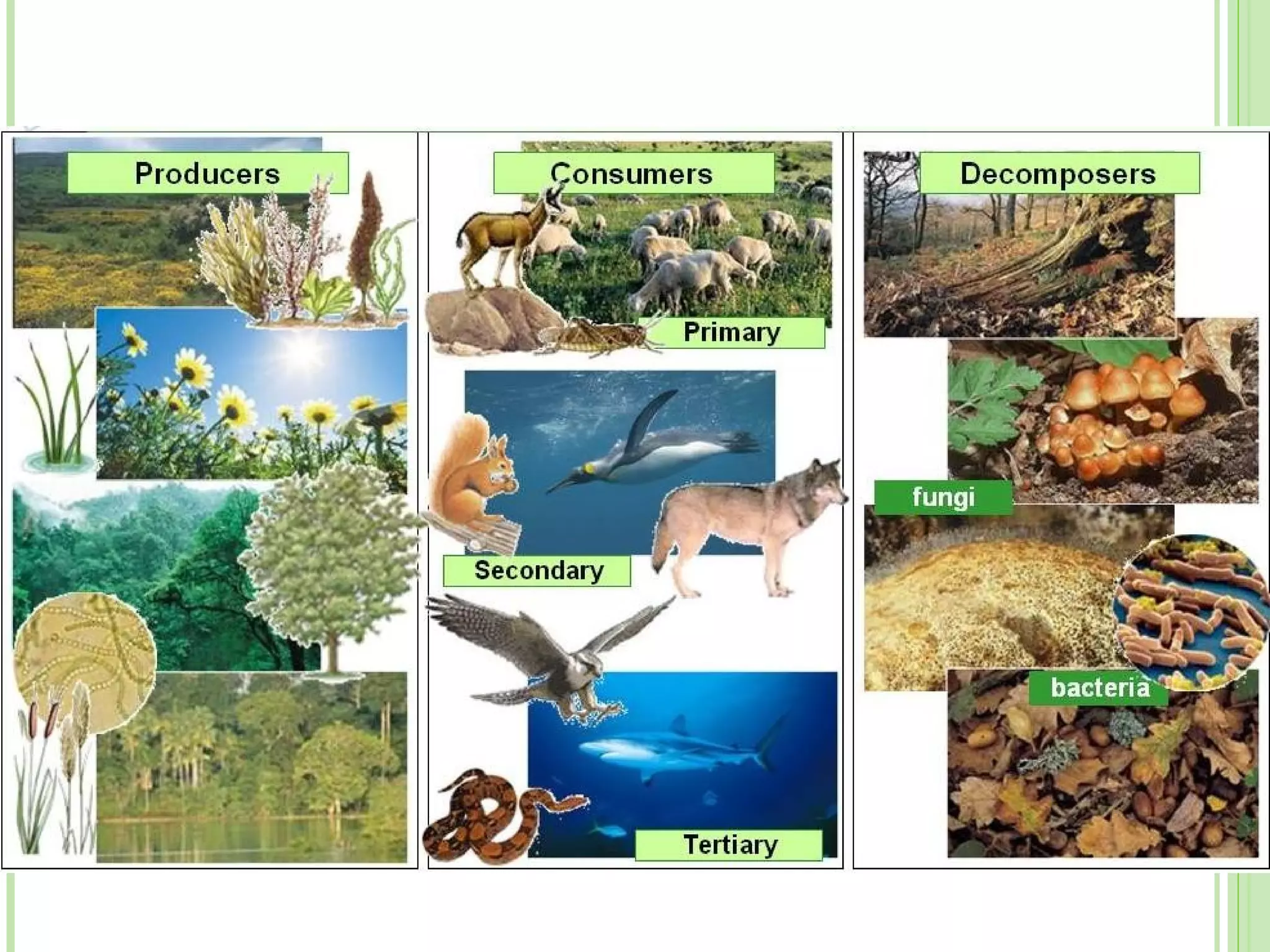
PRODUCERS CONSUMERS DECOMPOSERS
Autotrophic
organisms.
Ex:Plants
Heterotrophic
organisms.
(Primary,
secondary,
tertiary)
Ex:Animals
Heterotrophic
organisms.
They feed on
the remains of
other trophic
levels.
Ex: Fungi
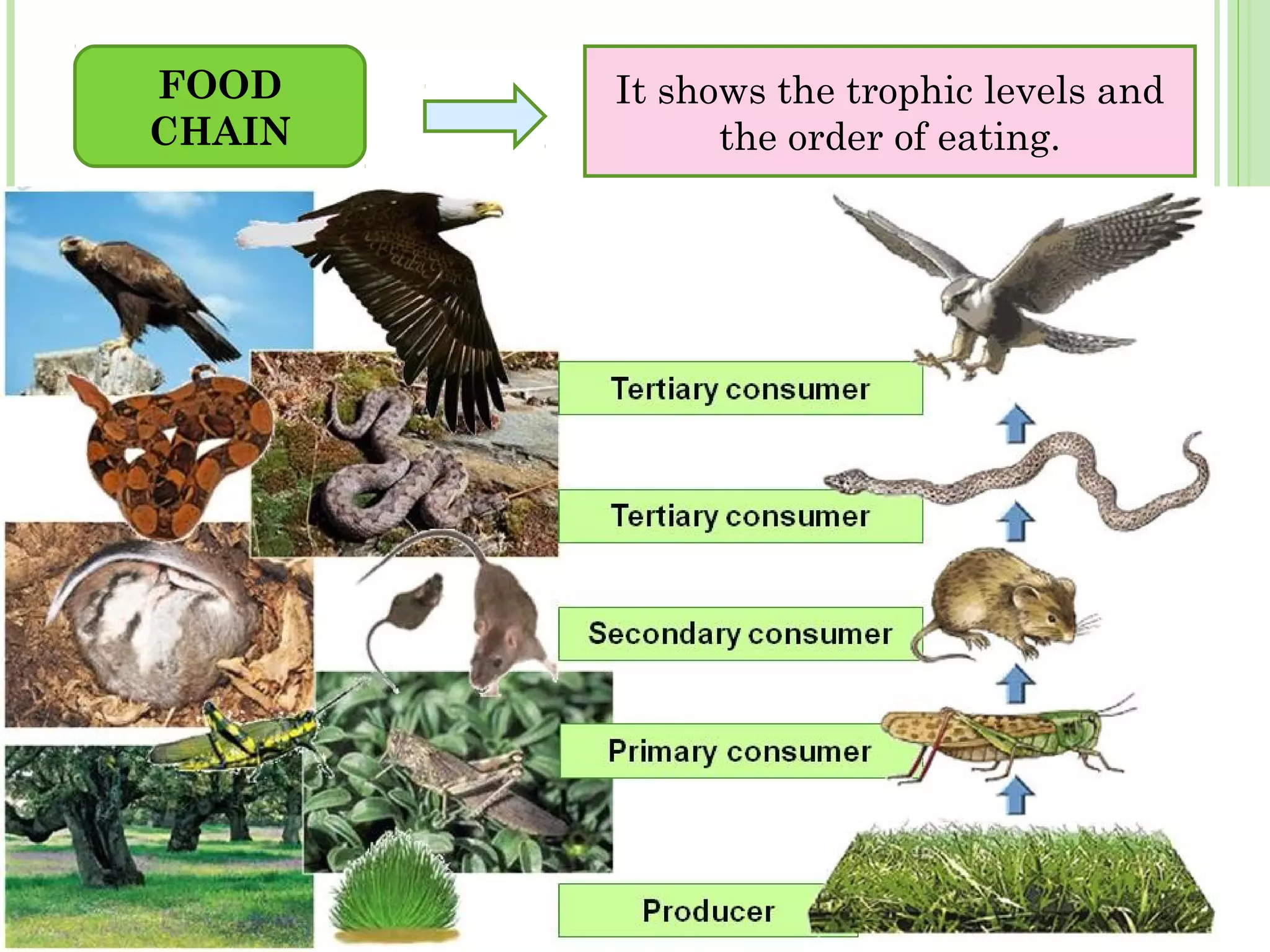
FOOD
CHAIN
It shows the trophic levels and
the order of eating.
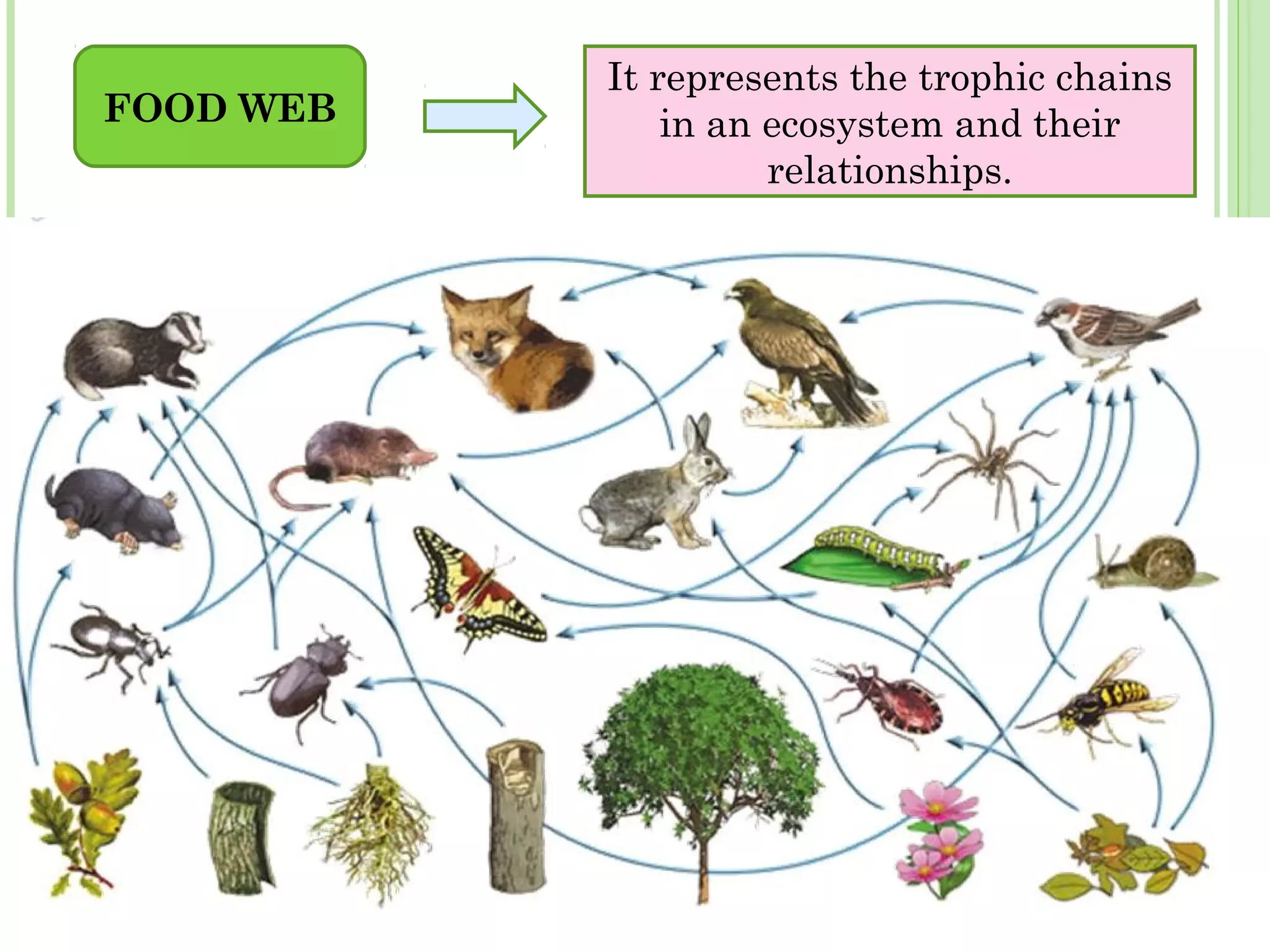
FOOD WEB
It represents the trophic chains
in an ecosystem and their
relationships.
13. Match
a) Producers 1-They feed on others levels.
b) Consumers 2- They feed on the remains.
c) Decomposers 3- They’re autotrophic.
14. What trophic level do the following
organisms belong to?
Grasshopper:
Rabbit:
Poppy:
Lynx:
Fungus:
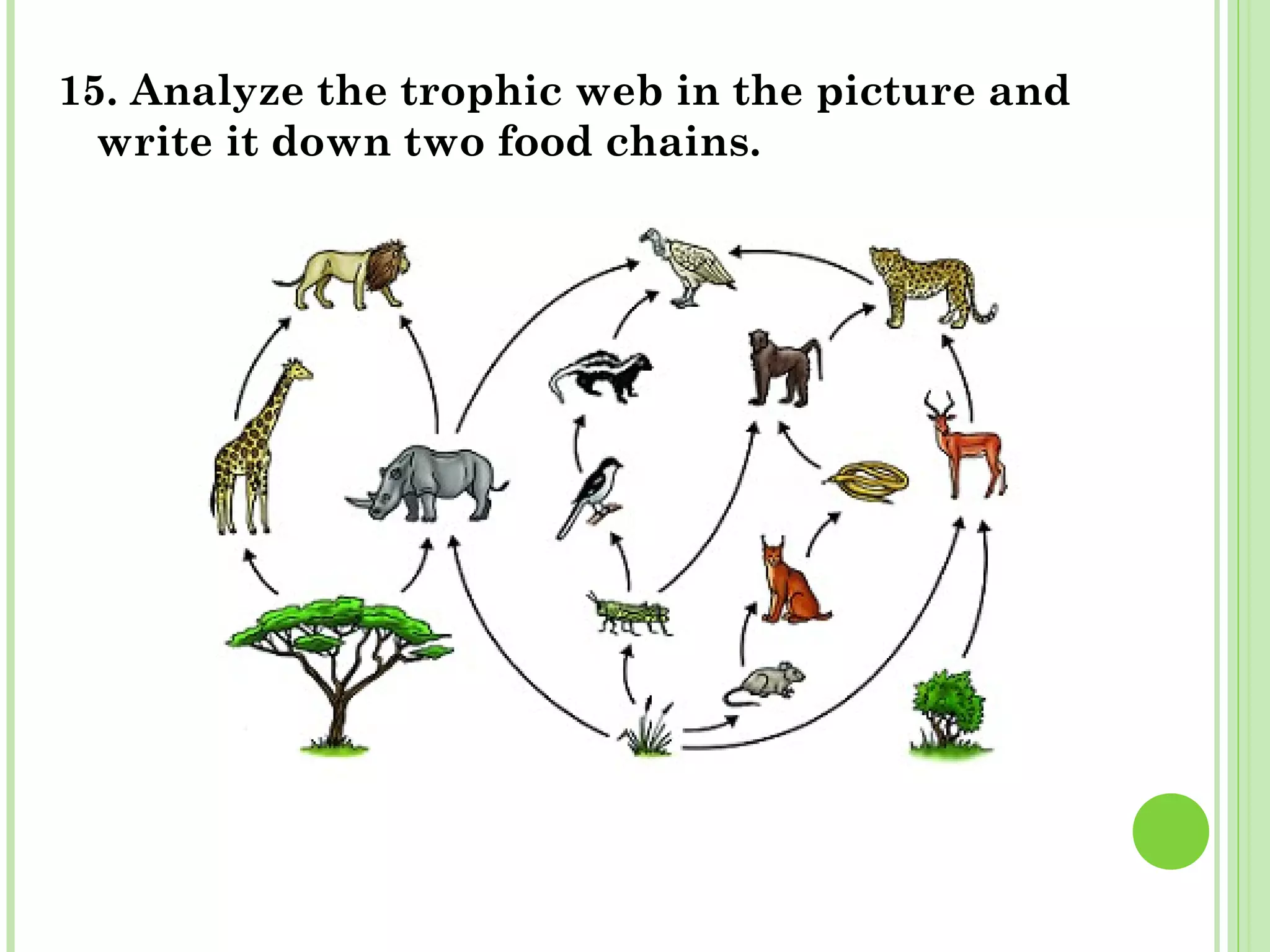
15. Analyze the trophic web in the picture and
write it down two food chains.
16. In a science fiction movie we see a future
where, after a terrible war, the vegetation of
the planet has completely disappeared and
human beings live by eating the animals that
have survived the catastrophe. Could that
situation be possible? Explain your answer.
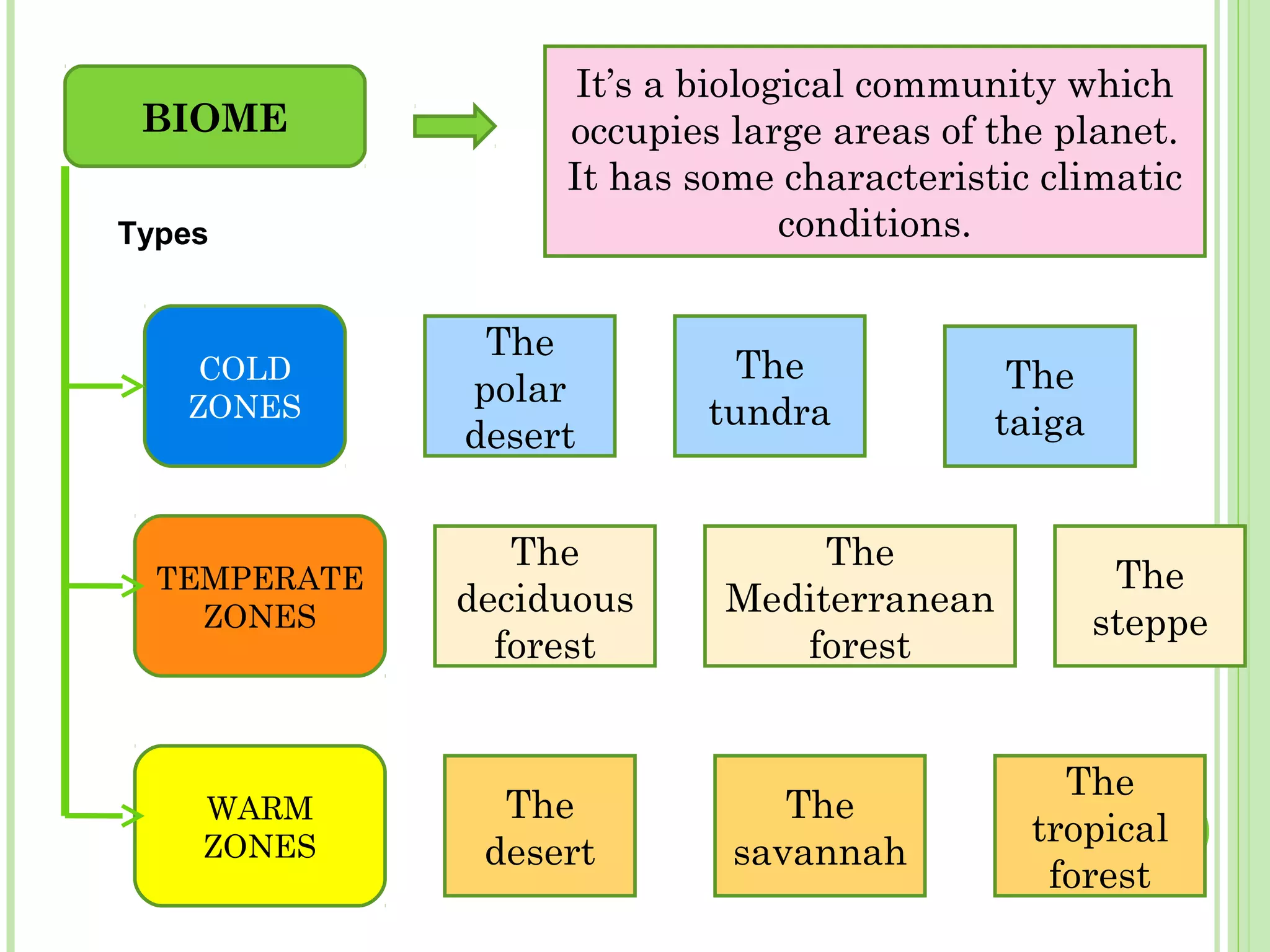
BIOME
It’s a biological community which
occupies large areas of the planet.
It has some characteristic climatic
conditions.
COLD
ZONES
TEMPERATE
ZONES
WARM
ZONES
The
polar
desert
The
tundra
The
taiga
The
deciduous
forest
The
Mediterranean
forest
The
steppe
The
desert
The
savannah
The
tropical
forest
Types
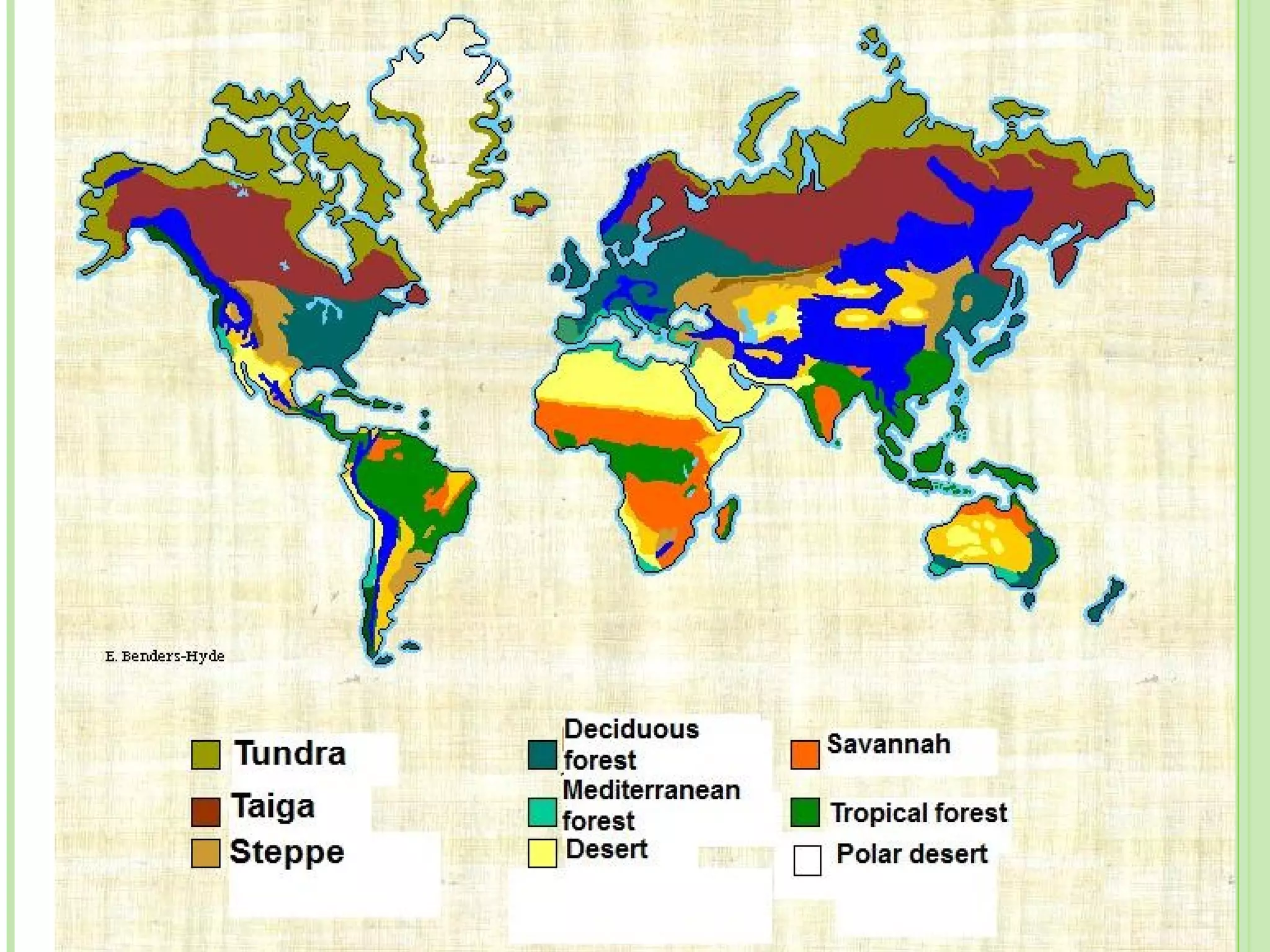
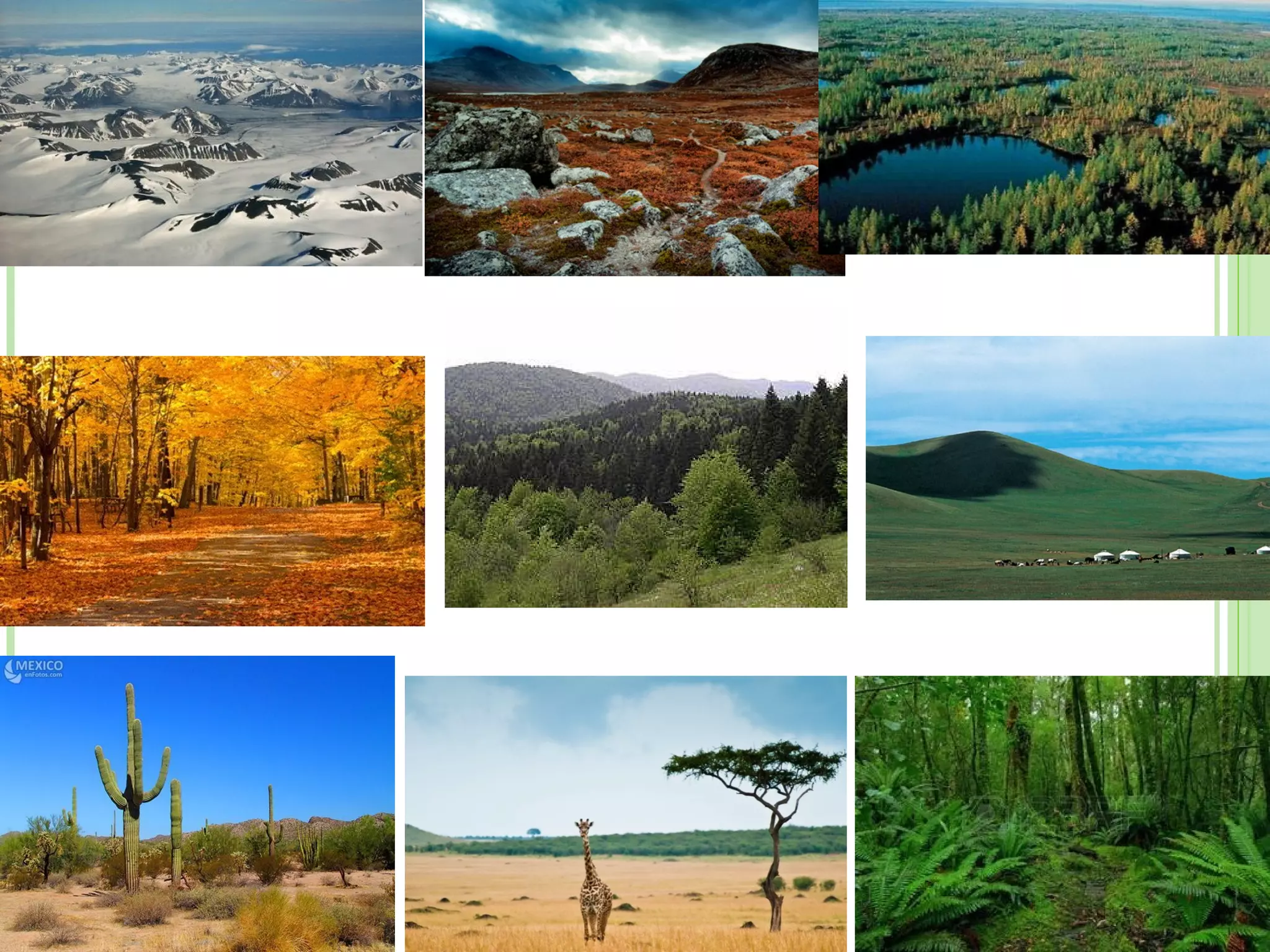
17. Write two examples of each type of biome.
18. Find Spain on a map and answer the following
questions.
a) What biomes can be found in Spain?
b) What biome is characteristic of the area where you
live?
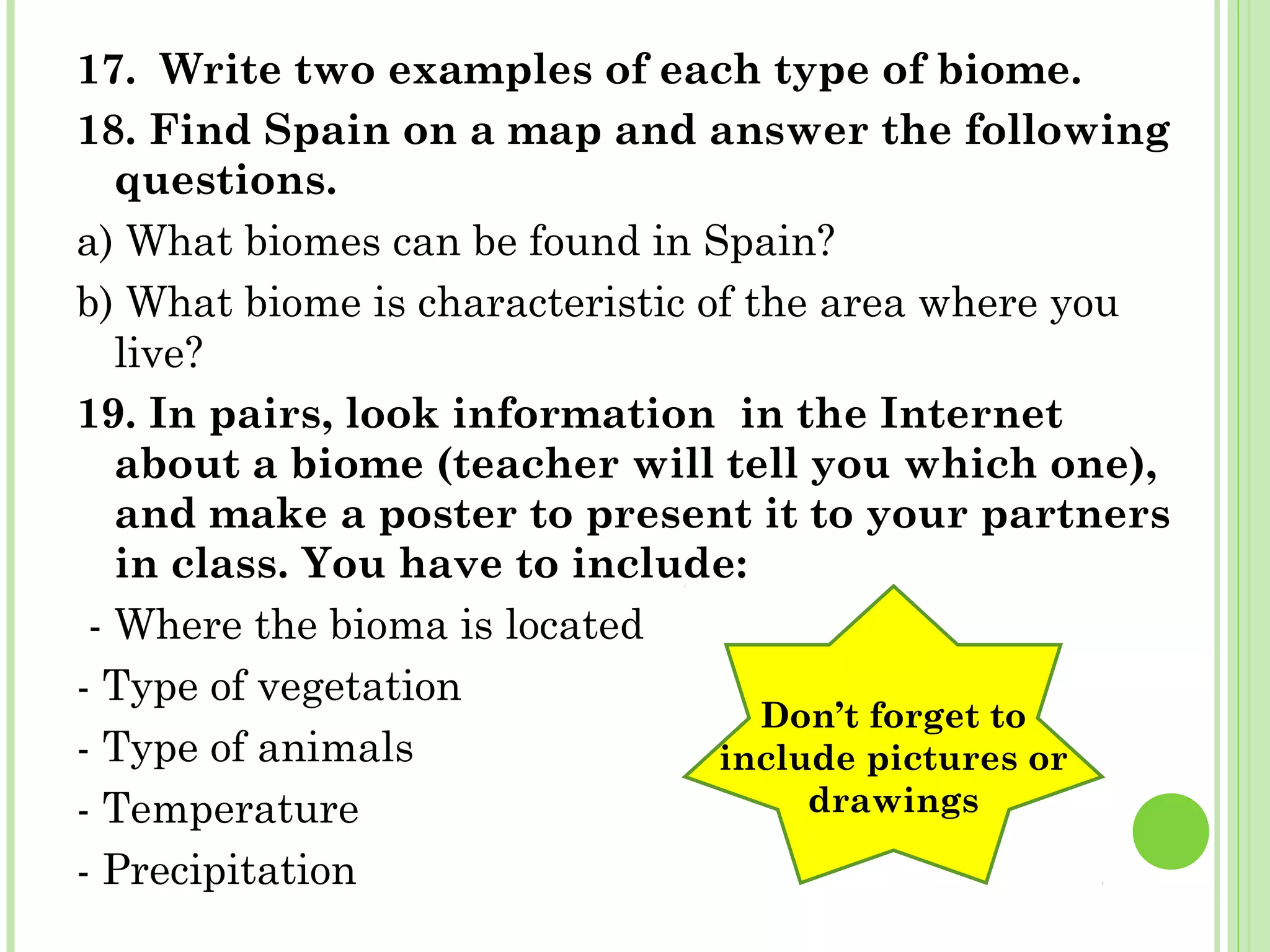
19. In pairs, look information in the Internet
about a biome (teacher will tell you which one),
and make a poster to present it to your partners
in class. You have to include:
- Where the bioma is located
- Type of vegetation
- Type of animals
- Temperature
- Precipitation
Don’t forget to
include pictures or
drawings

Unit 5 Ecosystems

  • 1.
  • 2.
    UNIT OBJECTIVES  Tolearn about ecosystems and how it works  To study how abiotic factors influence the biocenosis  To understand the relationships in the biocenosis  To learn about trophic levels, chains and webs  To learn about aquatic and terrestrial ecosystems
  • 3.
    COMPONENTS OF ANECOSYSTEM ECOSYSTEM It’s a place, the living things that inhabit it and the interactions between them. BIOTOPE BIOCENOSIS Nonliving components. Abiotic factors (Physical factors). Ex: Temperature. All the living things. Biotic factors. Population: Members of the same species.
  • 4.
  • 5.
    ACTIVITIES 1. What’s thedifference between biocenosis and biotope? 2. Write down three examples of biocenosis and three examples of biotope. 3. Complete: An ecosystem is made up of all living things called_________, the places where they live called__________ and the ____________ between them.
  • 6.
    4. Are theytrue or false? a)All the organism of an ecosystem make up the population. b)The population is made up of all the organism of the same species that inhabit a certain area. c)The biocenosis consists of all living things in the planet. d)The biotope consists of the nonliving components of the ecosystem. 5. Classify the following words in the corroct column: water, temperature, oak tree, oxygen, fox, sparrow, caterpillar, ground, rocks. BIOTIC FACTORS: ABIOTIC FACTORS:
  • 7.
    HOW ABIOTIC FACTORSAFFECTS THE BIOCENOSIS ADAPTATION It’s an adjustement in the organism’s body or behaviour to its environment. Animals and plants are influenced by Light Temperature The presence of water
  • 8.
    Light Temperature Thepresence of water
  • 9.
    ACTIVITIES 6. True orfalse? Correct them. a) The depths of the oceans contain photosynthesizing organism because a lot of sunlight can be found there. b) Many animals have to emigrate or hibernate when the heat comes. c) Desert plants develop very big leaves which protect them from losing water.
  • 10.
    7. The followingorganisms have adaptations. Which was the abiotic factor that produced them? a) Plants that accumulate water in their stems:________ b) A bear hibernating:_____________ c) A tree which loses its leaves in autumn:____________ d) The exoskeleton of insects:_____________ e) Bird migration:______________
  • 11.
    RELATIONS IN THE BIOCENOSIS INTRASPECIFIC RELATIONSHIPS INTERSPECIFIC RELATIONSHIPS Betweenmembers of the same species. Between members of different species. Competitive Cooperative -Gregarious associations -Family associations -Colonial societies -Colonial forms Competition Commensalism Predation Mutualism parasitism
  • 12.
  • 13.
  • 14.
    Predation + - (Predatorand prey) Parasitism + - Commensalism + 0 Mutualism + + (Symbiosis)
  • 15.
    ACTIVITIES 8. Fill inthe blanks: a) _____________ relationships are between individuals of the ________ species, and interspecific relationships are between individuals of___________ species. b) ___________ relationships are divided into __________, where the individuals of the __________ same species compete for the same resources and __________ where they group together to obtein mutual benefit. 9. Classify the following relationships between intraspecific or interspecific. a) Family relationships. b) Mutualism c) Parasitism d) Gregarious e) Colonial f) Predation
  • 16.
    10. Complete thetable. Benefici al (+) Harmfu l (-) Indiffere nt (0) Type of relationship In a lichen, the algae provides nourishment and the fungus humidity. A lynx hunts a rabbit to eat it. A vulture eats the remains of a lion’s prey. The taenia lives and feeds in the human intestine. Remoras attach to sharks for
  • 17.
    11. Thousands ofbacteria live in the human intestine. They constitute the gut flora. Look for the information and explain what type of relationship there is between people and gut flora. 12. Some types of limpets live on the jaws and the outer surface of whales. The limpets obtain food and a safe place to live, but whales do not benefit nor are harmed. What is this type of relationship called?
  • 18.
    TROPHIC LEVELS PRODUCERS CONSUMERSDECOMPOSERS Autotrophic organisms. Ex:Plants Heterotrophic organisms. (Primary, secondary, tertiary) Ex:Animals Heterotrophic organisms. They feed on the remains of other trophic levels. Ex: Fungi
  • 20.
    FOOD CHAIN It shows thetrophic levels and the order of eating.
  • 21.
    FOOD WEB It representsthe trophic chains in an ecosystem and their relationships.
  • 22.
    13. Match a) Producers1-They feed on others levels. b) Consumers 2- They feed on the remains. c) Decomposers 3- They’re autotrophic. 14. What trophic level do the following organisms belong to? Grasshopper: Rabbit: Poppy: Lynx: Fungus:
  • 23.
    15. Analyze thetrophic web in the picture and write it down two food chains.
  • 24.
    16. In ascience fiction movie we see a future where, after a terrible war, the vegetation of the planet has completely disappeared and human beings live by eating the animals that have survived the catastrophe. Could that situation be possible? Explain your answer.
  • 25.
    BIOME It’s a biologicalcommunity which occupies large areas of the planet. It has some characteristic climatic conditions. COLD ZONES TEMPERATE ZONES WARM ZONES The polar desert The tundra The taiga The deciduous forest The Mediterranean forest The steppe The desert The savannah The tropical forest Types
  • 28.
    17. Write twoexamples of each type of biome. 18. Find Spain on a map and answer the following questions. a) What biomes can be found in Spain? b) What biome is characteristic of the area where you live? 19. In pairs, look information in the Internet about a biome (teacher will tell you which one), and make a poster to present it to your partners in class. You have to include: - Where the bioma is located - Type of vegetation - Type of animals - Temperature - Precipitation Don’t forget to include pictures or drawings