

PURGATIVES &
LAXATIVES
• These drugs facilitate evacuation of stools from bowel.
• Laxatives: Facilitate evacuation of soft but formed stools.
• Purgatives: Facilitate evacuation of watery stools.
• Laxatives have mild action than purgatives.
• Some drugs act as laxatives in low dose and as purgatives
in higher dose.
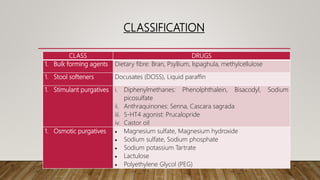
CLASSIFICATION
CLASS DRUGS
1. Bulk forming agents Dietary fibre: Bran, Psyllium, Ispaghula, methylcellulose
1. Stool softeners Docusates (DOSS), Liquid paraffin
1. Stimulant purgatives i. Diphenylmethanes: Phenolphthalein, Bisacodyl, Sodium
picosulfate
ii. Anthraquinones: Senna, Cascara sagrada
iii. 5-HT4 agonist: Prucalopride
iv. Castor oil
1. Osmotic purgatives  Magnesium sulfate, Magnesium hydroxide
 Sodium sulfate, Sodium phosphate
 Sodium potassium Tartrate
 Lactulose
 Polyethylene Glycol (PEG)
BULK PURGATIVES
DIETARY FIBRE
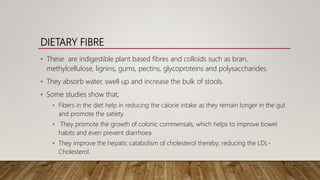
• These are indigestible plant based fibres and colloids such as bran,
methylcellulose, lignins, gums, pectins, glycoproteins and polysaccharides.
• They absorb water, swell up and increase the bulk of stools.
• Some studies show that,
• Fibers in the diet help in reducing the calorie intake as they remain longer in the gut
and promote the satiety.
• They promote the growth of colonic commensals, which helps to improve bowel
habits and even prevent diarrhoea.
• They improve the hepatic catabolism of cholesterol thereby; reducing the LDL-
Cholesterol.
• Large amount of water should be taken with bulk forming laxatives to avoid
intestinal obstruction.
• Increased intake of fibre helps in the prevention of functional constipation.
• They may cause flatulence.
• They should not be used in patients with gut ulcerations, stenosis, and
obstruction.
PSYLLIUM AND ISPAGHULA
• They are plant fibres obtained from Psyllium and ispaghula
respectively.
• They should be freshly prepared by mixing with water or cold milk
or fruit juice.
• The dose is 3–8gm OD/BD.
• They should not be swallowed dry.
METHYLCELLULOSE
• It should be taken 4–6 g/day with large amount of fluids.
STOOL SOFTENERS
• Liquid paraffin
• Docusates (DOSS)
LIQUID PARAFFIN
• It is a pharmacologically inert mineral oil that cannot be digested.
• It lubricates and softens the stools.
• It is taken in a dose of 15–30 ml OD.
• It is rarely used due to its unpalatable taste and oily consistency.
• It decreases the absorption of fat-soluble vitamins.
• It may leak out from the anus causing discomfort.
DOCUSATES (DIOCTYL SODIUM SULFOSUCCINATE:
DOSS)
• It is an anionic detergent.
• It softens the stool by lowering surface tension, emulsifying the colonic
contents and retaining the water content in to the feces.
• It is bitter in taste and causes nausea; hence, capsule formulation is
preferred.
• It is given orally in a dose of 100–400 mg/day and as enema 50–150 mg
in 50–100 ml.
• Its prolonged use should be avoided as it may cause hepatotoxicity.
STIMULANT PURGATIVES
(a) Diphenylmethanes: Phenolphthalein, Bisacodyl,
Sodium picosulfate
(b) Anthraquinones: Senna, Cascara sagrada
(c) 5-HT4 agonist: Prucalopride
(d) Castor oil
• They promote water and electrolyte accumulation in the colon and
stimulate evacuation of stool, increasing intestinal motility through
stimulation of myenteric plexuses.
• Large and regular doses can cause colonic atony and electrolyte
imbalance mainly hypokalaemia.
• They cause uterine contractions; therefore contraindicated in pregnancy.
• They are also contraindicated in subacute and chronic intestinal
obstruction.
DIPHENYLMETHANES
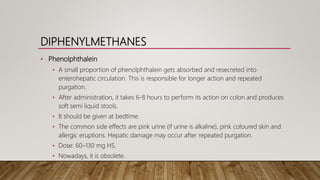
• Phenolphthalein
• A small proportion of phenolphthalein gets absorbed and resecreted into
enterohepatic circulation. This is responsible for longer action and repeated
purgation.
• After administration, it takes 6-8 hours to perform its action on colon and produces
soft semi liquid stools.
• It should be given at bedtime.
• The common side effects are pink urine (if urine is alkaline), pink coloured skin and
allergic eruptions. Hepatic damage may occur after repeated purgation.
• Dose: 60–130 mg HS.
• Nowadays, it is obsolete.
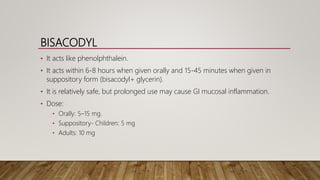
BISACODYL
• It acts like phenolphthalein.
• It acts within 6-8 hours when given orally and 15-45 minutes when given in
suppository form (bisacodyl+ glycerin).
• It is relatively safe, but prolonged use may cause GI mucosal inflammation.
• Dose:
• Orally: 5–15 mg.
• Suppository- Children: 5 mg
• Adults: 10 mg
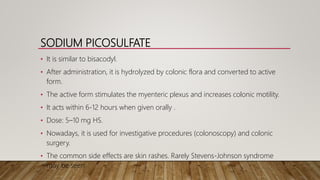
SODIUM PICOSULFATE
• It is similar to bisacodyl.
• After administration, it is hydrolyzed by colonic flora and converted to active
form.
• The active form stimulates the myenteric plexus and increases colonic motility.
• It acts within 6-12 hours when given orally .
• Dose: 5–10 mg HS.
• Nowadays, it is used for investigative procedures (colonoscopy) and colonic
surgery.
• The common side effects are skin rashes. Rarely Stevens-Johnson syndrome
may be seen.
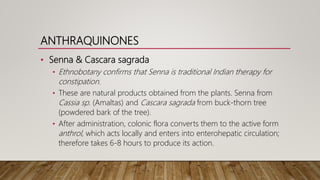
ANTHRAQUINONES
• Senna & Cascara sagrada
• Ethnobotany confirms that Senna is traditional Indian therapy for
constipation.
• These are natural products obtained from the plants. Senna from
Cassia sp. (Amaltas) and Cascara sagrada from buck-thorn tree
(powdered bark of the tree).
• After administration, colonic flora converts them to the active form
anthrol, which acts locally and enters into enterohepatic circulation;
therefore takes 6-8 hours to produce its action.
SENNA & CASCARA SAGRADA
• The common side effect is skin rashes. Prolonged used causes mucosal
pigmentation and colonic atony.
• These are contraindicated in lactating mothers as they secreted in milk.
• Dose: 10-20 mg HS.
• The WHO essential drug list includes only Senna as laxative, whereas National
essential drug list also includes Bisacodyl and isapgol along with senna.
5-HT4 AGONIST
• Prucalopride
• It is a specific 5-HT4-receptor agonist that facilitates cholinergic
neurotransmission.
• It increases oro-cecal transit and colonic transit without affecting
gastric emptying.
• It improves colonic transit and stool frequency in patients with
chronic idiopathic constipation.
• This drug is recently approved in Europe, Canada, and UK for the
treatment of chronic constipation in females.
PRUCALOPRIDE
• It is given in a dose of 2- 4 mg orally OD.
• It has low affinity for cardiac potassium channels and does not prolong Q-T interval
unlike cisapride and tegaserod.
• The common side effects are abdominal pain, headache, dizziness, and fatigue.
CASTOR OIL
• It is also a natural product, obtained from the seeds of Ricinus
communis.
• It is the powerful and one of the oldest purgatives.
• It is hydrolyzed in the small intestine to its active form ricinoleic acid,
which stimulates intestinal contractions by irritating the GI mucosa and
decreasing the intestinal absorption of water and electrolytes.
• It also acts like detergent and softens the stools by lowering surface
tension.
• Dose: Adult: 15–25 ml & Children: 5–15 ml
• It should be taken in the morning, as it takes 2-3 hours to perform
OSMOTIC PURGATIVES
• Osmotic purgatives are soluble but nonabsorbable compounds
that result in increased stool liquidity by osmotic activity.
• These drugs draw water from the lumen, distend the bowel and
stimulate peristalsis causing evacuation of watery stools within 1-3
hours.
• These are most powerful and rapid acting agents.
• The commonly used osmotic purgative are magnesium sulphate,
magnesium hydroxide, magnesium citrate, sodium phosphate and
lactulose.
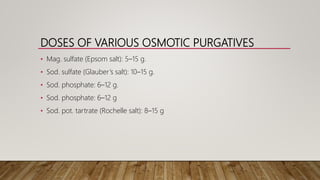
DOSES OF VARIOUS OSMOTIC PURGATIVES
• Mag. sulfate (Epsom salt): 5–15 g.
• Sod. sulfate (Glauber’s salt): 10–15 g.
• Sod. phosphate: 6–12 g.
• Sod. phosphate: 6–12 g
• Sod. pot. tartrate (Rochelle salt): 8–15 g
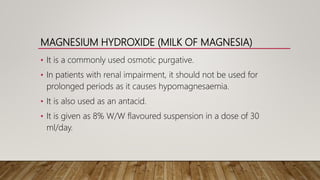
MAGNESIUM HYDROXIDE (MILK OF MAGNESIA)
• It is a commonly used osmotic purgative.
• In patients with renal impairment, it should not be used for
prolonged periods as it causes hypomagnesaemia.
• It is also used as an antacid.
• It is given as 8% W/W flavoured suspension in a dose of 30
ml/day.
LACTULOSE
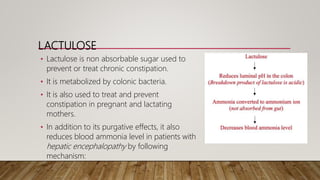
• Lactulose is non absorbable sugar used to
prevent or treat chronic constipation.
• It is metabolized by colonic bacteria.
• It is also used to treat and prevent
constipation in pregnant and lactating
mothers.
• In addition to its purgative effects, it also
reduces blood ammonia level in patients with
hepatic encephalopathy by following
mechanism:
LACTULOSE
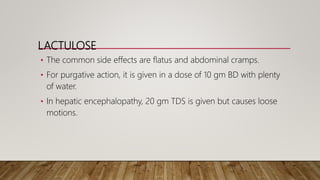
• The common side effects are flatus and abdominal cramps.
• For purgative action, it is given in a dose of 10 gm BD with plenty
of water.
• In hepatic encephalopathy, 20 gm TDS is given but causes loose
motions.
POLYETHYLENE GLYCOL
• Lavage solutions containing polyethylene glycol (PEG) are used for
complete colonic cleansing prior to surgical, radiological and
endoscopic procedures of GI tract.
• It is nonabsorbable, osmotically active sugar with sodium sulfate,
sodium chloride, sodium bicarbonate, and potassium chloride.
• It is safe for all patients, as it does not cause electrolyte imbalance.
POLYETHYLENE GLYCOL
• 2–4 liters of PEG is given over 2–4 hours with plenty of water or
juice.
• It is also used for treatment or prevention of chronic constipation
in smaller doses of 17 g mixed with lot of water or juice and
ingested daily.
• PEG does not produce significant cramps or flatus as compared to
lactulose.
ANTIDIARRHOEALS
• Diarrhoea is defined as 3 or more times passage of loose
or watery stools within 24 hour period.
• It may occur due to bacterial/viral/protozoal infections,
certain pathological conditions such as IBD, toxins, drugs,
anxiety, electrolyte imbalance, worm infestations etc.
• In developing countries, childhood (<5 year of age)
diarrhoea is the major cause of morbidity and mortality,
which is accounting approximately 1.5-2.5 million deaths
per year.
• In India, around 1000 children die every day due to
diarrhoea.
• Most of the deaths in diarrhoea occur due to
dehydration which is preventable if timely action is taken.
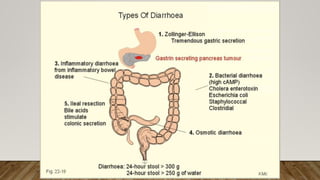
Classification
Osmotic diarrhoea
Something in the bowel is drawing water from the body into the
bowel.
Eg; Sorbitol is not absorbed by the body but draws water from the
body into the bowel, resulting in diarrhoea.
Secretory diarrhoea
Occurs when the body is releasing water into the bowel,
many infections, drugs causes secretory diarrhoea.
Exudative diarrhoea
Diarrhoea with the presence of blood and pus in the stool.
This occurs with inflammatory bowels disease (IBD), such as
crohn’s disease or ulcerative colitis etc.
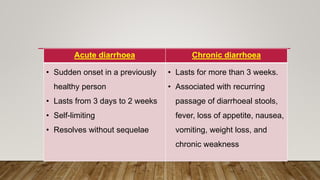
Acute diarrhoea Chronic diarrhoea
• Sudden onset in a previously
healthy person
• Lasts from 3 days to 2 weeks
• Self-limiting
• Resolves without sequelae
• Lasts for more than 3 weeks.
• Associated with recurring
passage of diarrhoeal stools,
fever, loss of appetite, nausea,
vomiting, weight loss, and
chronic weakness
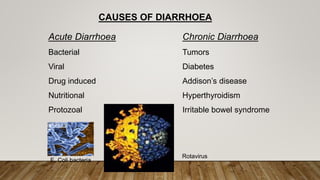
CAUSES OF DIARRHOEA
Acute Diarrhoea
Bacterial
Viral
Drug induced
Nutritional
Protozoal
Chronic Diarrhoea
Tumors
Diabetes
Addison’s disease
Hyperthyroidism
Irritable bowel syndrome
E. Coli bacteria
Rotavirus
DRUG THERAPY
i. Specific antimicrobial drugs
ii. Non specific antidiarrhoeal drugs
ORAL
REHYDRATION
THERAPY
Specific anti microbial drugs
A. Antimicrobials are of no value
Due to non infective causes such as
Irritable bowel syndrome
Colic disease
Pancreatic enzyme deficiency etc
Rota virus causes acute diarrhoea, specially in children
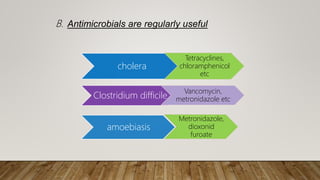
B. Antimicrobials are regularly useful
cholera
Tetracyclines,
chloramphenicol
etc
Clostridium difficile
Vancomycin,
metronidazole etc
amoebiasis
Metronidazole,
dioxonid
furoate
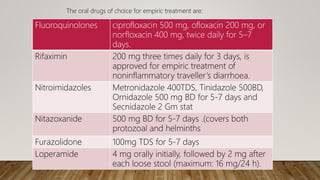
Fluoroquinolones ciprofloxacin 500 mg, ofloxacin 200 mg, or
norfloxacin 400 mg, twice daily for 5–7
days.
Rifaximin 200 mg three times daily for 3 days, is
approved for empiric treatment of
noninflammatory traveller’s diarrhoea.
Nitroimidazoles Metronidazole 400TDS, Tinidazole 500BD,
Ornidazole 500 mg BD for 5-7 days and
Secnidazole 2 Gm stat
Nitazoxanide 500 mg BD for 5-7 days .(covers both
protozoal and helminths
Furazolidone 100mg TDS for 5-7 days
Loperamide 4 mg orally initially, followed by 2 mg after
each loose stool (maximum: 16 mg/24 h).
The oral drugs of choice for empiric treatment are:
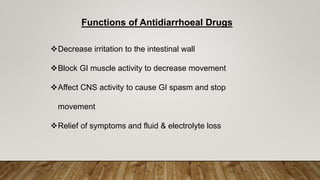
Functions of Antidiarrhoeal Drugs
Decrease irritation to the intestinal wall
Block GI muscle activity to decrease movement
Affect CNS activity to cause GI spasm and stop
movement
Relief of symptoms and fluid & electrolyte loss
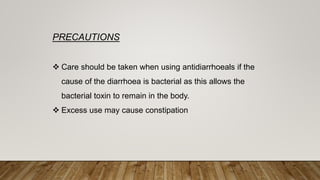
PRECAUTIONS
 Care should be taken when using antidiarrhoeals if the
cause of the diarrhoea is bacterial as this allows the
bacterial toxin to remain in the body.
 Excess use may cause constipation
Non Specific Antidiarrhoeal Drugs
Adsorbents
 Coat the walls of the GI tract
 Bind to the causative bacteria or toxin, which is then
eliminated through the stool
 Examples: bismuth subsalicylate, kaolin-pectin, activated
charcoal.
Side Effects
Increased bleeding time
Constipation, dark stools
Confusion, twitching
Hearing loss, tinnitus, metallic taste, blue gums
Anti secretory
 Agents which reduce the secretion
 Decrease intestinal muscle tone and peristalsis of GI tract
 Result: slowing the movement of faecal matter through the
GI tract
 Examples: belladonna alkaloids, atropine, sulphasalazine,
hyoscyamine
Side effects
Urinary retention, hesitancy, impotence
Headache, dizziness, confusion, anxiety, drowsiness
Dry skin, rash, flushing
Blurred vision, photophobia, increased intraocular
pressure
RACECADOTRIL
• It is a prodrug, given orally and is rapidly converted to its active form thiorphan.
• It prevents degradation of endogenous enkephalins (ENKs) by inhibiting
enkephalinase.
• Endogenous enkephalines have antisecretory action.
• It increases water absorption at colon level without decreasing the intestinal motility;
therefore does not causes constipation.
• It is indicated in acute secretary diarrhoeas for short duration only.
• The plasma t½ is 3 hr.
• The common side effects are nausea, vomiting, flatulence and drowsiness.
• Dose: Children: 1.5 mg/kg TDS for 7 days. & Adults: 100 mg TDS for 7 days.
OCTREOTIDE
• It is an analogue of somatostatin having longer plasma half life (90
minutes).
• It has potent antisecretory and antimotility action.
• It is indicated in diarrhoea associated with carcinoids, AIDS, cancer
chemotherapy, and diabetes.
• Control of diarrhoea is due to suppression of hormones which enhance
intestinal mucosal secretion.
• It is given subcutaneously in a dose of 50-100 mcg BD/TDS depending
upon severity.
Antimotility drugs
Decrease bowel motility and relieve rectal spasms
Decrease transit time through the bowel, allowing more
time for water and electrolytes to be absorbed
Examples: codeine, loperamide, diphenoxylate
Side effects
Drowsiness, sedation, dizziness, lethargy
Nausea, vomiting, anorexia, constipation
Respiratory depression
Bradycardia, palpitations, hypotension
Urinary retention
REHYDRATION
• Rehydration can be done orally (in mild to moderate dehydration)
or by intravenous route (in severe dehydration).
Oral rehydration:
• This is carried out with the help of Oral Rehydration Solution (ORS)
which is prepared by adding one liter of potable water in one
packet of oral rehydration salts .
• It is the best choice to rehydrate the patient suffering
from mild to moderate dehydration.
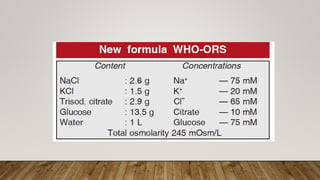
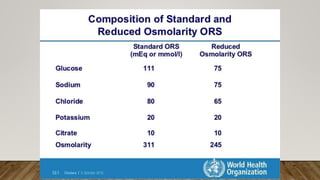
• In 2002, WHO has replaced standard (310 mOsm/L) ORS
formula by a new formula known as New formula WHO-
ORS (245 mOsm/L) which contains low Na+ and low
glucose.
ADMINISTRATION OF ORAL REHYDRATION
THERAPY (ORT)
• It restore and maintain hydration, electrolyte and pH balance until
diarrhoea ceases.
• Patients are encouraged to drink ORS at ½–1 hourly intervals.
• Initially, 5 ml/kg/hr in children then it may be left to demand.
• In a weak child who refuses to drink ORS at the desired rate, it can
be given by intra-gastric drip through Ryle’s tube with the aim of
restoring hydration within 6 hours.
NON-DIARRHOEAL USES OF ORT
(a) Post- surgical, post- burn and post-trauma
maintenance of hydration.
(b) Heat stroke.
(c) During change over from intravenous to enteral
alimentation.
USE OF ZINC IN PEDIATRIC DIARRHOEA
• Zinc along with low osmolarity ORS reduces the duration and
frequency of acute diarrhoea episodes in children below 5
years of age.
• Zinc should be supplemented for 10–14 days following the
episode of diarrhoea.
• Zinc reduces fluid secretion in the intestine by indirectly
inhibiting cAMP dependent Cl¯ transport across the mucosa
through an action on the basolateral membrane K+ channels.
• It also helps in regeneration of intestinal epithelium and
strengthens the immune response.
• Zinc is available as syrup, dispersible tablets and capsule
form.
• Dose for 0–6 month age is 10 mg/day and
• for 6 month to 5 year of age is 20 mg/day for 10-14 days.
• It reduces the recurrence of diarrhoea for the next 2–3
months.
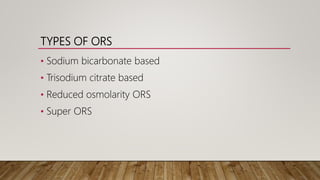
TYPES OF ORS
• Sodium bicarbonate based
• Trisodium citrate based
• Reduced osmolarity ORS
• Super ORS
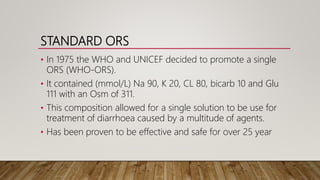
STANDARD ORS
• In 1975 the WHO and UNICEF decided to promote a single
ORS (WHO-ORS).
• It contained (mmol/L) Na 90, K 20, CL 80, bicarb 10 and Glu
111 with an Osm of 311.
• This composition allowed for a single solution to be use for
treatment of diarrhoea caused by a multitude of agents.
• Has been proven to be effective and safe for over 25 year
SODIUM BICARBONATE BASED ORS
• DISADVANTAGES
• Less stable
• Stool output not reduced
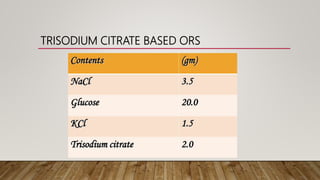
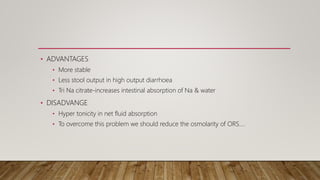
TRISODIUM CITRATE BASED ORS
• ADVANTAGES
• More stable
• Less stool output in high output diarrhoea
• Tri Na citrate-increases intestinal absorption of Na & water
• DISADVANGE
• Hyper tonicity in net fluid absorption
• To overcome this problem we should reduce the osmolarity of ORS….
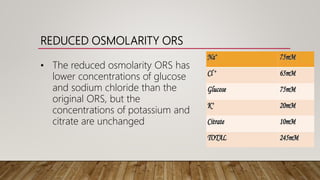
REDUCED OSMOLARITY ORS
• The reduced osmolarity ORS has
lower concentrations of glucose
and sodium chloride than the
original ORS, but the
concentrations of potassium and
citrate are unchanged
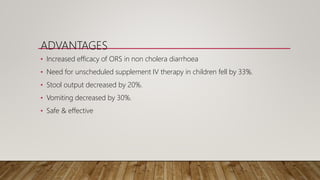
ADVANTAGES
• Increased efficacy of ORS in non cholera diarrhoea
• Need for unscheduled supplement IV therapy in children fell by 33%.
• Stool output decreased by 20%.
• Vomiting decreased by 30%.
• Safe & effective
DISADVANTAGES
• The reduced osmolarity ORS has been criticized by some for not
providing enough sodium for adults with cholera.
• Clinical trials have, however, shown reduced osmolarity ORS to be
both safe and effective for adults and children with cholera.
• Patients who received reduced-osmolarity ORS had an increased
incidence of hyponatremia (serum sodium level <130meq)
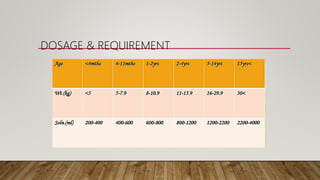
DOSAGE & REQUIREMENT
HOW TO ADMINISTER???
• Teach the mother
• <2yrs :- give 1-2 teaspoon every 2-3 minutes
• Older children :- offer frequent sips out of a cup
• Adults:- drink as much as they can
• Give the estimated amount within 4hrs
IF THE CHILD VOMITS??
• Wait for 10 minutes
• Give a teaspoonful every 2-3 minutes
• If the child wants to drink more than the estimated amount ?
NO HARM……..GIVE MORE.
HOW TO PREPARE IT ?
• Dissolve the entire contents of the packet in 1liter of
drinking water
• It should be used within 24 hours
IF ORS PACKETS ARE NOT AVAILABLE ?
• Table salt (5gm) + sugar (20gm) in 1l of drinking
water
LIMITATIONS OF ORS
• In children with abdominal ileus or signs of intestinal
obstruction ORT should be held until surgical evaluation
• 1% of infants will have carbohydrate malabsorption, were
diarrhea may be worsen by ORS or solutions with simple
sugars.
CONT..
• ORT should be discontinued and fluids replaced intravenously
when
• vomiting is protracted despite proper administration of ORS,
• signs of dehydration worsen despite giving ORT,
• the person is unable to drink due to a decreased level of
consciousness.
• ORT might also be contraindicated in people who are in
hemodynamic shock due to impaired airway protective
reflexes.
DRAWBACKS OF ORS
• Does not decrease frequency
• Does not stop diarrhoea
• Does not decrease severity
• Poor acceptance
• Poor taste
SUPER ORS
• To reduce amount & rate of purging
• To stop diarrhoea
• Additional nutritional support trial of
• Amino acid glycine or l-alanine or l-glutamine based ors
• Combining glucose polymers & aminoacids to replace glucose
• Cooked starch based ors
RESOMAL
• The original ORS (90 mmol sodium/L) and the current
standard reduced-osmolarity ORS (75 mmol sodium/L) both
contain too much sodium and too little potassium for
severely malnourished children with dehydration due to
diarrhoea.
• ReSoMal (Rehydration Solution for Malnutrition) is
recommended for such children. It contains less sodium (45
mmol/l) and more potassium (40 mmol/l) than reduced
osmolarity ORS.
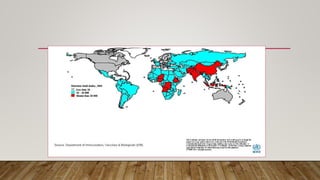
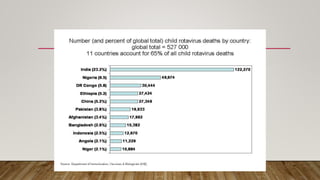
ROTAVIRUS
Rotavirus (RV) is the commonest cause of severe
diarrhoeal disease in infants and young children
globally
527 000 children die each year
Children under 5 most vulnerable
Majority in low-income countries (85%)
 Primary mode of transmission is feacal to oral
 Highly communicable and transmissible
 Close person-to-person contact and
environmental surfaces are common vectors of
transmission
 Incubation period is 1 – 3 days
Transmission
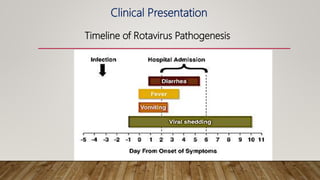
Timeline of Rotavirus Pathogenesis
Clinical Presentation
Treatment
• Therapy for rotavirus-induced diarrhoea involves
replacement of fluids and electrolytes
• Antibiotics, antisecretory drugs, antimotility
drugs, absorbents and antiemetics
• rotavirus-specific immunoglobolin. Administer
orally to decrease shedding and ameliorate
disease .
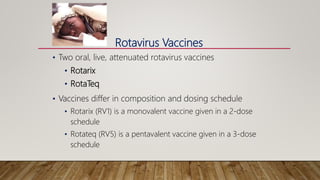
Rotavirus Vaccines
• Two oral, live, attenuated rotavirus vaccines
• Rotarix
• RotaTeq
• Vaccines differ in composition and dosing schedule
• Rotarix (RV1) is a monovalent vaccine given in a 2-dose
schedule
• Rotateq (RV5) is a pentavalent vaccine given in a 3-dose
schedule
Rotavirus Vaccines
RotaTeq Rotarix
Genetic framework Bovine Rotavirus – WC3 Human Rotavirus-89-12
Composition 5 Human, Bovine re-assortant Single Human rotavirus
Genotypes G1, 2, 3, 4 and [P8] G1 [P8]
Dosage Schedule 3 doses at 2, 4 and 6 months 2 doses at 2 and 4 months
Route oral oral
Presentation liquid Lysophilized-reconstituted
Efficacy against severe disease 85% 95%
Virus shedding Up to 13 % 17 % - 27%

Drugs for constipationa n diarrhoea

  • 1.
  • 2.
    • These drugsfacilitate evacuation of stools from bowel. • Laxatives: Facilitate evacuation of soft but formed stools. • Purgatives: Facilitate evacuation of watery stools. • Laxatives have mild action than purgatives. • Some drugs act as laxatives in low dose and as purgatives in higher dose.
  • 3.
    CLASSIFICATION CLASS DRUGS 1. Bulkforming agents Dietary fibre: Bran, Psyllium, Ispaghula, methylcellulose 1. Stool softeners Docusates (DOSS), Liquid paraffin 1. Stimulant purgatives i. Diphenylmethanes: Phenolphthalein, Bisacodyl, Sodium picosulfate ii. Anthraquinones: Senna, Cascara sagrada iii. 5-HT4 agonist: Prucalopride iv. Castor oil 1. Osmotic purgatives  Magnesium sulfate, Magnesium hydroxide  Sodium sulfate, Sodium phosphate  Sodium potassium Tartrate  Lactulose  Polyethylene Glycol (PEG)
  • 4.
  • 5.
    DIETARY FIBRE • Theseare indigestible plant based fibres and colloids such as bran, methylcellulose, lignins, gums, pectins, glycoproteins and polysaccharides. • They absorb water, swell up and increase the bulk of stools. • Some studies show that, • Fibers in the diet help in reducing the calorie intake as they remain longer in the gut and promote the satiety. • They promote the growth of colonic commensals, which helps to improve bowel habits and even prevent diarrhoea. • They improve the hepatic catabolism of cholesterol thereby; reducing the LDL- Cholesterol.
  • 6.
    • Large amountof water should be taken with bulk forming laxatives to avoid intestinal obstruction. • Increased intake of fibre helps in the prevention of functional constipation. • They may cause flatulence. • They should not be used in patients with gut ulcerations, stenosis, and obstruction.
  • 7.
    PSYLLIUM AND ISPAGHULA •They are plant fibres obtained from Psyllium and ispaghula respectively. • They should be freshly prepared by mixing with water or cold milk or fruit juice. • The dose is 3–8gm OD/BD. • They should not be swallowed dry.
  • 8.
    METHYLCELLULOSE • It shouldbe taken 4–6 g/day with large amount of fluids.
  • 9.
    STOOL SOFTENERS • Liquidparaffin • Docusates (DOSS)
  • 10.
    LIQUID PARAFFIN • Itis a pharmacologically inert mineral oil that cannot be digested. • It lubricates and softens the stools. • It is taken in a dose of 15–30 ml OD. • It is rarely used due to its unpalatable taste and oily consistency. • It decreases the absorption of fat-soluble vitamins. • It may leak out from the anus causing discomfort.
  • 11.
    DOCUSATES (DIOCTYL SODIUMSULFOSUCCINATE: DOSS) • It is an anionic detergent. • It softens the stool by lowering surface tension, emulsifying the colonic contents and retaining the water content in to the feces. • It is bitter in taste and causes nausea; hence, capsule formulation is preferred. • It is given orally in a dose of 100–400 mg/day and as enema 50–150 mg in 50–100 ml. • Its prolonged use should be avoided as it may cause hepatotoxicity.
  • 12.
    STIMULANT PURGATIVES (a) Diphenylmethanes:Phenolphthalein, Bisacodyl, Sodium picosulfate (b) Anthraquinones: Senna, Cascara sagrada (c) 5-HT4 agonist: Prucalopride (d) Castor oil
  • 13.
    • They promotewater and electrolyte accumulation in the colon and stimulate evacuation of stool, increasing intestinal motility through stimulation of myenteric plexuses. • Large and regular doses can cause colonic atony and electrolyte imbalance mainly hypokalaemia. • They cause uterine contractions; therefore contraindicated in pregnancy. • They are also contraindicated in subacute and chronic intestinal obstruction.
  • 14.
    DIPHENYLMETHANES • Phenolphthalein • Asmall proportion of phenolphthalein gets absorbed and resecreted into enterohepatic circulation. This is responsible for longer action and repeated purgation. • After administration, it takes 6-8 hours to perform its action on colon and produces soft semi liquid stools. • It should be given at bedtime. • The common side effects are pink urine (if urine is alkaline), pink coloured skin and allergic eruptions. Hepatic damage may occur after repeated purgation. • Dose: 60–130 mg HS. • Nowadays, it is obsolete.
  • 15.
    BISACODYL • It actslike phenolphthalein. • It acts within 6-8 hours when given orally and 15-45 minutes when given in suppository form (bisacodyl+ glycerin). • It is relatively safe, but prolonged use may cause GI mucosal inflammation. • Dose: • Orally: 5–15 mg. • Suppository- Children: 5 mg • Adults: 10 mg
  • 16.
    SODIUM PICOSULFATE • Itis similar to bisacodyl. • After administration, it is hydrolyzed by colonic flora and converted to active form. • The active form stimulates the myenteric plexus and increases colonic motility. • It acts within 6-12 hours when given orally . • Dose: 5–10 mg HS. • Nowadays, it is used for investigative procedures (colonoscopy) and colonic surgery. • The common side effects are skin rashes. Rarely Stevens-Johnson syndrome may be seen.
  • 17.
    ANTHRAQUINONES • Senna &Cascara sagrada • Ethnobotany confirms that Senna is traditional Indian therapy for constipation. • These are natural products obtained from the plants. Senna from Cassia sp. (Amaltas) and Cascara sagrada from buck-thorn tree (powdered bark of the tree). • After administration, colonic flora converts them to the active form anthrol, which acts locally and enters into enterohepatic circulation; therefore takes 6-8 hours to produce its action.
  • 18.
    SENNA & CASCARASAGRADA • The common side effect is skin rashes. Prolonged used causes mucosal pigmentation and colonic atony. • These are contraindicated in lactating mothers as they secreted in milk. • Dose: 10-20 mg HS. • The WHO essential drug list includes only Senna as laxative, whereas National essential drug list also includes Bisacodyl and isapgol along with senna.
  • 19.
    5-HT4 AGONIST • Prucalopride •It is a specific 5-HT4-receptor agonist that facilitates cholinergic neurotransmission. • It increases oro-cecal transit and colonic transit without affecting gastric emptying. • It improves colonic transit and stool frequency in patients with chronic idiopathic constipation. • This drug is recently approved in Europe, Canada, and UK for the treatment of chronic constipation in females.
  • 20.
    PRUCALOPRIDE • It isgiven in a dose of 2- 4 mg orally OD. • It has low affinity for cardiac potassium channels and does not prolong Q-T interval unlike cisapride and tegaserod. • The common side effects are abdominal pain, headache, dizziness, and fatigue.
  • 21.
    CASTOR OIL • Itis also a natural product, obtained from the seeds of Ricinus communis. • It is the powerful and one of the oldest purgatives. • It is hydrolyzed in the small intestine to its active form ricinoleic acid, which stimulates intestinal contractions by irritating the GI mucosa and decreasing the intestinal absorption of water and electrolytes. • It also acts like detergent and softens the stools by lowering surface tension. • Dose: Adult: 15–25 ml & Children: 5–15 ml • It should be taken in the morning, as it takes 2-3 hours to perform
  • 22.
    OSMOTIC PURGATIVES • Osmoticpurgatives are soluble but nonabsorbable compounds that result in increased stool liquidity by osmotic activity. • These drugs draw water from the lumen, distend the bowel and stimulate peristalsis causing evacuation of watery stools within 1-3 hours. • These are most powerful and rapid acting agents. • The commonly used osmotic purgative are magnesium sulphate, magnesium hydroxide, magnesium citrate, sodium phosphate and lactulose.
  • 23.
    DOSES OF VARIOUSOSMOTIC PURGATIVES • Mag. sulfate (Epsom salt): 5–15 g. • Sod. sulfate (Glauber’s salt): 10–15 g. • Sod. phosphate: 6–12 g. • Sod. phosphate: 6–12 g • Sod. pot. tartrate (Rochelle salt): 8–15 g
  • 24.
    MAGNESIUM HYDROXIDE (MILKOF MAGNESIA) • It is a commonly used osmotic purgative. • In patients with renal impairment, it should not be used for prolonged periods as it causes hypomagnesaemia. • It is also used as an antacid. • It is given as 8% W/W flavoured suspension in a dose of 30 ml/day.
  • 25.
    LACTULOSE • Lactulose isnon absorbable sugar used to prevent or treat chronic constipation. • It is metabolized by colonic bacteria. • It is also used to treat and prevent constipation in pregnant and lactating mothers. • In addition to its purgative effects, it also reduces blood ammonia level in patients with hepatic encephalopathy by following mechanism:
  • 26.
    LACTULOSE • The commonside effects are flatus and abdominal cramps. • For purgative action, it is given in a dose of 10 gm BD with plenty of water. • In hepatic encephalopathy, 20 gm TDS is given but causes loose motions.
  • 27.
    POLYETHYLENE GLYCOL • Lavagesolutions containing polyethylene glycol (PEG) are used for complete colonic cleansing prior to surgical, radiological and endoscopic procedures of GI tract. • It is nonabsorbable, osmotically active sugar with sodium sulfate, sodium chloride, sodium bicarbonate, and potassium chloride. • It is safe for all patients, as it does not cause electrolyte imbalance.
  • 28.
    POLYETHYLENE GLYCOL • 2–4liters of PEG is given over 2–4 hours with plenty of water or juice. • It is also used for treatment or prevention of chronic constipation in smaller doses of 17 g mixed with lot of water or juice and ingested daily. • PEG does not produce significant cramps or flatus as compared to lactulose.
  • 30.
  • 31.
    • Diarrhoea isdefined as 3 or more times passage of loose or watery stools within 24 hour period. • It may occur due to bacterial/viral/protozoal infections, certain pathological conditions such as IBD, toxins, drugs, anxiety, electrolyte imbalance, worm infestations etc.
  • 32.
    • In developingcountries, childhood (<5 year of age) diarrhoea is the major cause of morbidity and mortality, which is accounting approximately 1.5-2.5 million deaths per year. • In India, around 1000 children die every day due to diarrhoea. • Most of the deaths in diarrhoea occur due to dehydration which is preventable if timely action is taken.
  • 33.
    Classification Osmotic diarrhoea Something inthe bowel is drawing water from the body into the bowel. Eg; Sorbitol is not absorbed by the body but draws water from the body into the bowel, resulting in diarrhoea.
  • 34.
    Secretory diarrhoea Occurs whenthe body is releasing water into the bowel, many infections, drugs causes secretory diarrhoea. Exudative diarrhoea Diarrhoea with the presence of blood and pus in the stool. This occurs with inflammatory bowels disease (IBD), such as crohn’s disease or ulcerative colitis etc.
  • 35.
    Acute diarrhoea Chronicdiarrhoea • Sudden onset in a previously healthy person • Lasts from 3 days to 2 weeks • Self-limiting • Resolves without sequelae • Lasts for more than 3 weeks. • Associated with recurring passage of diarrhoeal stools, fever, loss of appetite, nausea, vomiting, weight loss, and chronic weakness
  • 37.
    CAUSES OF DIARRHOEA AcuteDiarrhoea Bacterial Viral Drug induced Nutritional Protozoal Chronic Diarrhoea Tumors Diabetes Addison’s disease Hyperthyroidism Irritable bowel syndrome E. Coli bacteria Rotavirus
  • 38.
    DRUG THERAPY i. Specificantimicrobial drugs ii. Non specific antidiarrhoeal drugs ORAL REHYDRATION THERAPY
  • 39.
    Specific anti microbialdrugs A. Antimicrobials are of no value Due to non infective causes such as Irritable bowel syndrome Colic disease Pancreatic enzyme deficiency etc Rota virus causes acute diarrhoea, specially in children
  • 40.
    B. Antimicrobials areregularly useful cholera Tetracyclines, chloramphenicol etc Clostridium difficile Vancomycin, metronidazole etc amoebiasis Metronidazole, dioxonid furoate
  • 41.
    Fluoroquinolones ciprofloxacin 500mg, ofloxacin 200 mg, or norfloxacin 400 mg, twice daily for 5–7 days. Rifaximin 200 mg three times daily for 3 days, is approved for empiric treatment of noninflammatory traveller’s diarrhoea. Nitroimidazoles Metronidazole 400TDS, Tinidazole 500BD, Ornidazole 500 mg BD for 5-7 days and Secnidazole 2 Gm stat Nitazoxanide 500 mg BD for 5-7 days .(covers both protozoal and helminths Furazolidone 100mg TDS for 5-7 days Loperamide 4 mg orally initially, followed by 2 mg after each loose stool (maximum: 16 mg/24 h). The oral drugs of choice for empiric treatment are:
  • 42.
    Functions of AntidiarrhoealDrugs Decrease irritation to the intestinal wall Block GI muscle activity to decrease movement Affect CNS activity to cause GI spasm and stop movement Relief of symptoms and fluid & electrolyte loss
  • 43.
    PRECAUTIONS  Care shouldbe taken when using antidiarrhoeals if the cause of the diarrhoea is bacterial as this allows the bacterial toxin to remain in the body.  Excess use may cause constipation
  • 44.
    Non Specific AntidiarrhoealDrugs Adsorbents  Coat the walls of the GI tract  Bind to the causative bacteria or toxin, which is then eliminated through the stool  Examples: bismuth subsalicylate, kaolin-pectin, activated charcoal.
  • 45.
    Side Effects Increased bleedingtime Constipation, dark stools Confusion, twitching Hearing loss, tinnitus, metallic taste, blue gums
  • 46.
    Anti secretory  Agentswhich reduce the secretion  Decrease intestinal muscle tone and peristalsis of GI tract  Result: slowing the movement of faecal matter through the GI tract  Examples: belladonna alkaloids, atropine, sulphasalazine, hyoscyamine
  • 47.
    Side effects Urinary retention,hesitancy, impotence Headache, dizziness, confusion, anxiety, drowsiness Dry skin, rash, flushing Blurred vision, photophobia, increased intraocular pressure
  • 48.
    RACECADOTRIL • It isa prodrug, given orally and is rapidly converted to its active form thiorphan. • It prevents degradation of endogenous enkephalins (ENKs) by inhibiting enkephalinase. • Endogenous enkephalines have antisecretory action. • It increases water absorption at colon level without decreasing the intestinal motility; therefore does not causes constipation. • It is indicated in acute secretary diarrhoeas for short duration only. • The plasma t½ is 3 hr. • The common side effects are nausea, vomiting, flatulence and drowsiness. • Dose: Children: 1.5 mg/kg TDS for 7 days. & Adults: 100 mg TDS for 7 days.
  • 49.
    OCTREOTIDE • It isan analogue of somatostatin having longer plasma half life (90 minutes). • It has potent antisecretory and antimotility action. • It is indicated in diarrhoea associated with carcinoids, AIDS, cancer chemotherapy, and diabetes. • Control of diarrhoea is due to suppression of hormones which enhance intestinal mucosal secretion. • It is given subcutaneously in a dose of 50-100 mcg BD/TDS depending upon severity.
  • 50.
    Antimotility drugs Decrease bowelmotility and relieve rectal spasms Decrease transit time through the bowel, allowing more time for water and electrolytes to be absorbed Examples: codeine, loperamide, diphenoxylate
  • 51.
    Side effects Drowsiness, sedation,dizziness, lethargy Nausea, vomiting, anorexia, constipation Respiratory depression Bradycardia, palpitations, hypotension Urinary retention
  • 52.
    REHYDRATION • Rehydration canbe done orally (in mild to moderate dehydration) or by intravenous route (in severe dehydration). Oral rehydration: • This is carried out with the help of Oral Rehydration Solution (ORS) which is prepared by adding one liter of potable water in one packet of oral rehydration salts .
  • 53.
    • It isthe best choice to rehydrate the patient suffering from mild to moderate dehydration. • In 2002, WHO has replaced standard (310 mOsm/L) ORS formula by a new formula known as New formula WHO- ORS (245 mOsm/L) which contains low Na+ and low glucose.
  • 56.
    ADMINISTRATION OF ORALREHYDRATION THERAPY (ORT) • It restore and maintain hydration, electrolyte and pH balance until diarrhoea ceases. • Patients are encouraged to drink ORS at ½–1 hourly intervals. • Initially, 5 ml/kg/hr in children then it may be left to demand. • In a weak child who refuses to drink ORS at the desired rate, it can be given by intra-gastric drip through Ryle’s tube with the aim of restoring hydration within 6 hours.
  • 57.
    NON-DIARRHOEAL USES OFORT (a) Post- surgical, post- burn and post-trauma maintenance of hydration. (b) Heat stroke. (c) During change over from intravenous to enteral alimentation.
  • 58.
    USE OF ZINCIN PEDIATRIC DIARRHOEA • Zinc along with low osmolarity ORS reduces the duration and frequency of acute diarrhoea episodes in children below 5 years of age. • Zinc should be supplemented for 10–14 days following the episode of diarrhoea. • Zinc reduces fluid secretion in the intestine by indirectly inhibiting cAMP dependent Cl¯ transport across the mucosa through an action on the basolateral membrane K+ channels.
  • 59.
    • It alsohelps in regeneration of intestinal epithelium and strengthens the immune response. • Zinc is available as syrup, dispersible tablets and capsule form. • Dose for 0–6 month age is 10 mg/day and • for 6 month to 5 year of age is 20 mg/day for 10-14 days. • It reduces the recurrence of diarrhoea for the next 2–3 months.
  • 60.
    TYPES OF ORS •Sodium bicarbonate based • Trisodium citrate based • Reduced osmolarity ORS • Super ORS
  • 61.
    STANDARD ORS • In1975 the WHO and UNICEF decided to promote a single ORS (WHO-ORS). • It contained (mmol/L) Na 90, K 20, CL 80, bicarb 10 and Glu 111 with an Osm of 311. • This composition allowed for a single solution to be use for treatment of diarrhoea caused by a multitude of agents. • Has been proven to be effective and safe for over 25 year
  • 62.
    SODIUM BICARBONATE BASEDORS • DISADVANTAGES • Less stable • Stool output not reduced
  • 63.
  • 64.
    • ADVANTAGES • Morestable • Less stool output in high output diarrhoea • Tri Na citrate-increases intestinal absorption of Na & water • DISADVANGE • Hyper tonicity in net fluid absorption • To overcome this problem we should reduce the osmolarity of ORS….
  • 65.
    REDUCED OSMOLARITY ORS •The reduced osmolarity ORS has lower concentrations of glucose and sodium chloride than the original ORS, but the concentrations of potassium and citrate are unchanged
  • 66.
    ADVANTAGES • Increased efficacyof ORS in non cholera diarrhoea • Need for unscheduled supplement IV therapy in children fell by 33%. • Stool output decreased by 20%. • Vomiting decreased by 30%. • Safe & effective
  • 67.
    DISADVANTAGES • The reducedosmolarity ORS has been criticized by some for not providing enough sodium for adults with cholera. • Clinical trials have, however, shown reduced osmolarity ORS to be both safe and effective for adults and children with cholera. • Patients who received reduced-osmolarity ORS had an increased incidence of hyponatremia (serum sodium level <130meq)
  • 68.
  • 69.
    HOW TO ADMINISTER??? •Teach the mother • <2yrs :- give 1-2 teaspoon every 2-3 minutes • Older children :- offer frequent sips out of a cup • Adults:- drink as much as they can • Give the estimated amount within 4hrs
  • 70.
    IF THE CHILDVOMITS?? • Wait for 10 minutes • Give a teaspoonful every 2-3 minutes • If the child wants to drink more than the estimated amount ? NO HARM……..GIVE MORE.
  • 71.
    HOW TO PREPAREIT ? • Dissolve the entire contents of the packet in 1liter of drinking water • It should be used within 24 hours
  • 72.
    IF ORS PACKETSARE NOT AVAILABLE ? • Table salt (5gm) + sugar (20gm) in 1l of drinking water
  • 73.
    LIMITATIONS OF ORS •In children with abdominal ileus or signs of intestinal obstruction ORT should be held until surgical evaluation • 1% of infants will have carbohydrate malabsorption, were diarrhea may be worsen by ORS or solutions with simple sugars.
  • 74.
    CONT.. • ORT shouldbe discontinued and fluids replaced intravenously when • vomiting is protracted despite proper administration of ORS, • signs of dehydration worsen despite giving ORT, • the person is unable to drink due to a decreased level of consciousness. • ORT might also be contraindicated in people who are in hemodynamic shock due to impaired airway protective reflexes.
  • 75.
    DRAWBACKS OF ORS •Does not decrease frequency • Does not stop diarrhoea • Does not decrease severity • Poor acceptance • Poor taste
  • 76.
    SUPER ORS • Toreduce amount & rate of purging • To stop diarrhoea • Additional nutritional support trial of • Amino acid glycine or l-alanine or l-glutamine based ors • Combining glucose polymers & aminoacids to replace glucose • Cooked starch based ors
  • 77.
    RESOMAL • The originalORS (90 mmol sodium/L) and the current standard reduced-osmolarity ORS (75 mmol sodium/L) both contain too much sodium and too little potassium for severely malnourished children with dehydration due to diarrhoea. • ReSoMal (Rehydration Solution for Malnutrition) is recommended for such children. It contains less sodium (45 mmol/l) and more potassium (40 mmol/l) than reduced osmolarity ORS.
  • 78.
    ROTAVIRUS Rotavirus (RV) isthe commonest cause of severe diarrhoeal disease in infants and young children globally 527 000 children die each year Children under 5 most vulnerable Majority in low-income countries (85%)
  • 81.
     Primary modeof transmission is feacal to oral  Highly communicable and transmissible  Close person-to-person contact and environmental surfaces are common vectors of transmission  Incubation period is 1 – 3 days Transmission
  • 82.
    Timeline of RotavirusPathogenesis Clinical Presentation
  • 83.
    Treatment • Therapy forrotavirus-induced diarrhoea involves replacement of fluids and electrolytes • Antibiotics, antisecretory drugs, antimotility drugs, absorbents and antiemetics • rotavirus-specific immunoglobolin. Administer orally to decrease shedding and ameliorate disease .
  • 84.
    Rotavirus Vaccines • Twooral, live, attenuated rotavirus vaccines • Rotarix • RotaTeq • Vaccines differ in composition and dosing schedule • Rotarix (RV1) is a monovalent vaccine given in a 2-dose schedule • Rotateq (RV5) is a pentavalent vaccine given in a 3-dose schedule
  • 85.
    Rotavirus Vaccines RotaTeq Rotarix Geneticframework Bovine Rotavirus – WC3 Human Rotavirus-89-12 Composition 5 Human, Bovine re-assortant Single Human rotavirus Genotypes G1, 2, 3, 4 and [P8] G1 [P8] Dosage Schedule 3 doses at 2, 4 and 6 months 2 doses at 2 and 4 months Route oral oral Presentation liquid Lysophilized-reconstituted Efficacy against severe disease 85% 95% Virus shedding Up to 13 % 17 % - 27%

Editor's Notes

  • #83 Before symptoms of rotavirus infection appear, feacal shedding occurs. Fever and vomiting precede diarrhoea, and hospitalization for dehydration usually occurs between days 2 and 6 after infection Fever and vomiting are usually the first symptoms, followed quickly by diarrhoea. Oftentimes the vomiting is a rate-limiting factor in attempts to provide oral rehydration. When hospitalization for dehydration does occur, it is usually 2 to 6 days into the illness, and intravenous fluid therapy is necessary.
  • #84 Deaths also result from treatment. Hypotonic solution given in a large volume can create cerebral oedema. It is important to remember that the range of sodium excretion of rotavirus diarrhoea is around 30 to 60 mL equivalents per liter. Rehydration with fluid less than one-third normal saline causes total body sodium loss. The brain cannot correct fluid imbalance as quickly by moving solute as it can by moving water; patients who have been given too much free water may develop brain oedema and die.
  • #85 Defination of attenuated vaccine, monovalent, pentavalent
  • #86 Do the rapid immunoassays detect vaccine-strain virus? Yes, the threshold for detection is on the order of 105 or 106 for the enzyme immunoassay. There is a low rate of shedding with the RV5 vaccine, while the rate of shedding is higher for the RV1 vaccine. Shedding is higher for the monovalent vaccine in part because it is better adapted to the host for replication.