BIODEGRADATION
Degradation
 Degradation is breakdown of complex organic
material into simpler one.
 Different ways of degradation:
 1. Photodegradation by natural day light
 2. Oxidation by chemical additives(Catalysts)
 3. Thermal degradation by heat
 4. Mechanical degradation by mechanical force
 5. Biodegradation by Microorganisms.
Degradation
 Three levels of degradations:
 1. Rapid degradation(day- week): HC compounds
 2. Slow breakdown(Months- years): HC polymers/
Halogenated compounds
 3. No degradation: Recalcitrant/ Xenobiotic: Plastic
Biodegradation
 “Natural and complex process of
decomposition facilitated by biochemical
reactions.”
 It is biological transformation of a complex organic
material to simpler by MOs.
 Reduced organic materials are thermodynamically
unstable and oftenly attacked by microbial
enzymes.
 Biodegradibility: Quality, representing the
susceptibility of the substrate to biological
transformation.
Types of Biodegradation
1. Primary biodegradation:
 Biochemical ways of catalysts where
transformation or alteration in chemical structure of
a compound occurs by biochemical reactions.
 Results in loss of specific property- partial
biodegradation and leaves molecule mostly intact.
 Not desirable due to toxicity issues.
 Ex. Change in toxic halogen group from Pera to
Meta position.
 Azo dye Amino benzene
Types of Biodegradation
2. Acceptable biodegradation:
 Biological conversion of toxic compounds to non
toxic by biological means.
 Removal of undesirable characteristics occurs.
 Complete removal of toxic entity occurs.
Types of Biodegradation
3. Ultimate biodegradation:
 The level of degradation where the compound is
totally utilized and results in production of CO2,
water and mineral constituents.
 Molecular cleavage is so extensive that it removes
all chemical, biological and toxic properties.
 The ultimate products are highly stable and can’t
be degraded further.
Reactions involved in
Biodegradation
 Oxidative reaction
 Reductive reaction
 Hydrolytic reaction (water)
 Conjugative reaction (Methylation, Acetylation)
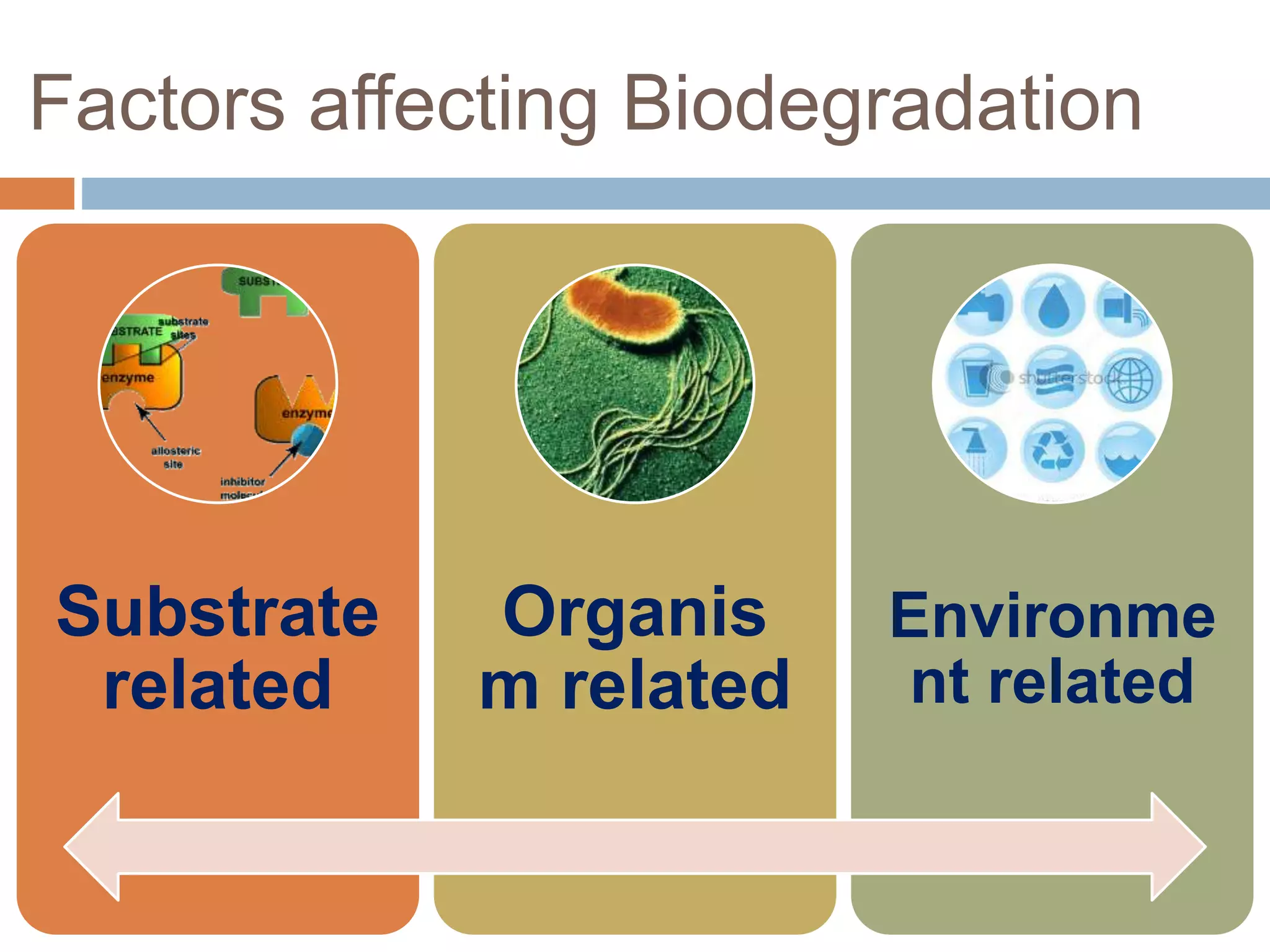
Factors affecting Biodegradation
Substrate
related
Organis
m related
Environme
nt related
Factors affecting Biodegradation
Substrate
related Nature of pollutants
Physiochemical properties
Concentration
Biodegradability
Toxicity
Chemical nature
Volatility
Polarity
Factors affecting Biodegradation
Organism
related
Population density
Composition
Intra/ Inter specific interaction
Enzyme activity
Turn over number
Adaptation
Factors affecting Biodegradation
Environment
related
Temperature
pH
Oxygen availability
Nutrient sources- C & e-
Salinity
Organisms responsible for
biodegradation
Most significant group of living organism involved in
biodegradation, responsible for 65% total metabolism
due higher growth rate and biomass.
Higher organism are also involved but not significantly,
inability to degrade complex molecule.
Microbes represent most diversified metabolism on
earth.
Microbes--------Complex material-----simpler form
Microbes utilize energy more efficiently in comparison to
higher organisms.
High rate of reproduction and mutation is the governing
factor.
Organisms responsible for
biodegradation
 Other lower organism- algae and invertebrates too
possess some of the criteria- Earthworm, but their
biodegradative potential is still unknown.
 Marine bio-degraders: Bacteria and Fungi
 Soil bio-degraders: Bacteria and Fungi
 Mutations are very often in bacteria and is very
useful for progressive adaptation towards the
biodegradation pathways.
 Not all microbe are equipped with all enzyme, so
many of them follow….COMETABOLISM
Organisms responsible for
biodegradation
Biodegradation
 Three categories of biodegradation:
I. Usable immediately II. Usable following
acclimatization III. Recalcitrant IV.
Reactions involved in
Biodegradation
 I. Usable immediately
 Simple sugars, amino acids and fatty acids- direct
utilization.
 The enzymes required for breakdown are either
constitutive or inducible.
 This requires minimum acclimatization period.
 II. Usable following the acclimatization:
 A lag phase is required for adaptation where no
degradation or very little degradation occurs.
Reactions
involved in
Biodegradation
 During lag phase induction of enzyme occurs
 Duration of acclimatization period varies from few
hrs to days or even weeks depending on
biodegradability.
 Example: lag phase of 50 days in pyrazon
degradation.
 III. Recalcitrant/ Xenobiotic:
 Naturally occurring substances such as lignin as
well as anthropogenic.

Biodegradation

  • 1.
  • 2.
    Degradation  Degradation isbreakdown of complex organic material into simpler one.  Different ways of degradation:  1. Photodegradation by natural day light  2. Oxidation by chemical additives(Catalysts)  3. Thermal degradation by heat  4. Mechanical degradation by mechanical force  5. Biodegradation by Microorganisms.
  • 3.
    Degradation  Three levelsof degradations:  1. Rapid degradation(day- week): HC compounds  2. Slow breakdown(Months- years): HC polymers/ Halogenated compounds  3. No degradation: Recalcitrant/ Xenobiotic: Plastic
  • 4.
    Biodegradation  “Natural andcomplex process of decomposition facilitated by biochemical reactions.”  It is biological transformation of a complex organic material to simpler by MOs.  Reduced organic materials are thermodynamically unstable and oftenly attacked by microbial enzymes.  Biodegradibility: Quality, representing the susceptibility of the substrate to biological transformation.
  • 5.
    Types of Biodegradation 1.Primary biodegradation:  Biochemical ways of catalysts where transformation or alteration in chemical structure of a compound occurs by biochemical reactions.  Results in loss of specific property- partial biodegradation and leaves molecule mostly intact.  Not desirable due to toxicity issues.  Ex. Change in toxic halogen group from Pera to Meta position.  Azo dye Amino benzene
  • 6.
    Types of Biodegradation 2.Acceptable biodegradation:  Biological conversion of toxic compounds to non toxic by biological means.  Removal of undesirable characteristics occurs.  Complete removal of toxic entity occurs.
  • 7.
    Types of Biodegradation 3.Ultimate biodegradation:  The level of degradation where the compound is totally utilized and results in production of CO2, water and mineral constituents.  Molecular cleavage is so extensive that it removes all chemical, biological and toxic properties.  The ultimate products are highly stable and can’t be degraded further.
  • 8.
    Reactions involved in Biodegradation Oxidative reaction  Reductive reaction  Hydrolytic reaction (water)  Conjugative reaction (Methylation, Acetylation)
  • 9.
  • 10.
    Factors affecting Biodegradation Substrate relatedNature of pollutants Physiochemical properties Concentration Biodegradability Toxicity Chemical nature Volatility Polarity
  • 11.
    Factors affecting Biodegradation Organism related Populationdensity Composition Intra/ Inter specific interaction Enzyme activity Turn over number Adaptation
  • 12.
  • 13.
    Organisms responsible for biodegradation Mostsignificant group of living organism involved in biodegradation, responsible for 65% total metabolism due higher growth rate and biomass. Higher organism are also involved but not significantly, inability to degrade complex molecule. Microbes represent most diversified metabolism on earth. Microbes--------Complex material-----simpler form Microbes utilize energy more efficiently in comparison to higher organisms. High rate of reproduction and mutation is the governing factor.
  • 14.
    Organisms responsible for biodegradation Other lower organism- algae and invertebrates too possess some of the criteria- Earthworm, but their biodegradative potential is still unknown.  Marine bio-degraders: Bacteria and Fungi  Soil bio-degraders: Bacteria and Fungi  Mutations are very often in bacteria and is very useful for progressive adaptation towards the biodegradation pathways.  Not all microbe are equipped with all enzyme, so many of them follow….COMETABOLISM
  • 15.
  • 16.
    Biodegradation  Three categoriesof biodegradation: I. Usable immediately II. Usable following acclimatization III. Recalcitrant IV.
  • 17.
    Reactions involved in Biodegradation I. Usable immediately  Simple sugars, amino acids and fatty acids- direct utilization.  The enzymes required for breakdown are either constitutive or inducible.  This requires minimum acclimatization period.  II. Usable following the acclimatization:  A lag phase is required for adaptation where no degradation or very little degradation occurs.
  • 18.
    Reactions involved in Biodegradation  Duringlag phase induction of enzyme occurs  Duration of acclimatization period varies from few hrs to days or even weeks depending on biodegradability.  Example: lag phase of 50 days in pyrazon degradation.  III. Recalcitrant/ Xenobiotic:  Naturally occurring substances such as lignin as well as anthropogenic.