Biodegradation
S. Nahidha Begum
II M.Sc Microbiology
Sacred Heart College
Introduction to Biodegradation
• Biodegradation is the breakdown of organic matter by
microorganisms, such as bacteria and fungi.
• It is generally assumed to be a natural process, which
differentiates it from composting.
What is Biodegradation?
• Biodegradation is the process by which organic substances are decomposed
by microorganisms into simpler substances such as carbondioxide, water,
and ammonia.
Types of Biodegradation
There are two main types of biodegradation:
I. Aerobic
II.Anaerobic
• Aerobic biodegradation occurs in the presence of oxygen, while
anaerobic takes place in oxygen-deprived environments.
• Each type affects the rate and byproducts of decomposition differently,
influencing environmental outcomes.
Microorganisms Involved
• A wide range of microorganisms, including bacteria, fungi,
and actinomycetes are capable of biodegrading different types
of organic compounds.
• Some common biodegradation microorganisms include
Pseudomonas, Bacillus, Arthrobacter, Rhodococcus,
Penicillium, and aspergillus.
• These microorganisms possess specialized enzymes and
metabolic pathways that allows them to utilize various organic
compounds as carbon and energy sources.
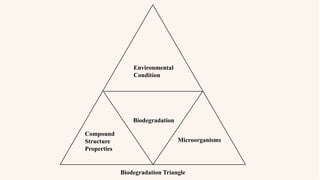
Environmental
Condition
Biodegradation
Compound
Structure
Properties
Microorganisms
Biodegradation Triangle
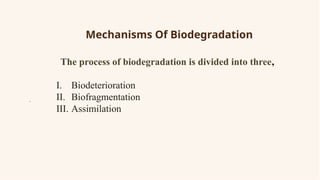
Mechanisms Of Biodegradation
.
The process of biodegradation is divided into three,
I. Biodeterioration
II. Biofragmentation
III. Assimilation
.
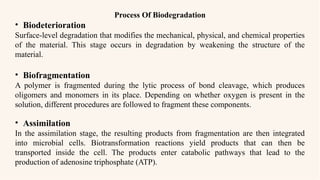
Process Of Biodegradation
• Biodeterioration
Surface-level degradation that modifies the mechanical, physical, and chemical properties
of the material. This stage occurs in degradation by weakening the structure of the
material.
• Biofragmentation
A polymer is fragmented during the lytic process of bond cleavage, which produces
oligomers and monomers in its place. Depending on whether oxygen is present in the
solution, different procedures are followed to fragment these components.
• Assimilation
In the assimilation stage, the resulting products from fragmentation are then integrated
into microbial cells. Biotransformation reactions yield products that can then be
transported inside the cell. The products enter catabolic pathways that lead to the
production of adenosine triphosphate (ATP).
Factors Affecting Biodegradation
.
Several factors can influence the rate and extent of
biodegradation, including:
• Microbial community composition and diversity.
• Availability of nutrients (carbon, nitrogen, phosphorus,
etc).
• Environmental conditions (temperature, pH, oxygen
levels, moisture content).
• Chemical structure and properties of the material.
• Presence of inhibitory substances or toxic compounds.
Biodegradable Materials
Biodegradable materials are those that can be broken down by microorganisms
into simpler, non toxic substances. Example of biodegradable materials include:
• Natural polymers (Cellulose, Starch, Chitin)
• Bioplastics (Polylactic acid, polyhydroxyalkanoates)
• Compostable materials (Paper, Cardboard, Food Waste)
• Certain types of Synthetic polymers (polyesters, Polyamides)
Human Impact on Biodegradation
• Human activities, such as pollution and excessive waste production, can
hinder biodegradation processes.
• Chemicals and synthetic materials can disrupt microbial activity, leading
to environmental degradation.
• It's crucial to minimize our impact to support natural biodegradation.
Challenges and Limitations of Biodegradation
While biodegradation is a valuable process, it also has some challenges and
limitations, such as:
• Slow degradation rates for certain materials
• Potential formation of toxic byproducts during the degradation process
• Sensitivity of microorganisms to environmental conditions and the presence of
inhibitory substances
• Regulatory and safety concerns regarding the use of genetically engineered
microorganisms in the environment.
Conclusion
• Biodegradation is a fundamental process in the natural environment
and plays a crucial role in waste management, environmental
remediation, and the development of sustainable materials.
• Understanding the mechanisms and factors that influence
biodegradation is essential for environmental challenges we face
today.
Thank
you

Biodegradation , biodegradable triangle and it's process.

  • 1.
    Biodegradation S. Nahidha Begum IIM.Sc Microbiology Sacred Heart College
  • 2.
    Introduction to Biodegradation •Biodegradation is the breakdown of organic matter by microorganisms, such as bacteria and fungi. • It is generally assumed to be a natural process, which differentiates it from composting.
  • 3.
    What is Biodegradation? •Biodegradation is the process by which organic substances are decomposed by microorganisms into simpler substances such as carbondioxide, water, and ammonia.
  • 4.
    Types of Biodegradation Thereare two main types of biodegradation: I. Aerobic II.Anaerobic • Aerobic biodegradation occurs in the presence of oxygen, while anaerobic takes place in oxygen-deprived environments. • Each type affects the rate and byproducts of decomposition differently, influencing environmental outcomes.
  • 5.
    Microorganisms Involved • Awide range of microorganisms, including bacteria, fungi, and actinomycetes are capable of biodegrading different types of organic compounds. • Some common biodegradation microorganisms include Pseudomonas, Bacillus, Arthrobacter, Rhodococcus, Penicillium, and aspergillus. • These microorganisms possess specialized enzymes and metabolic pathways that allows them to utilize various organic compounds as carbon and energy sources.
  • 6.
  • 7.
    Mechanisms Of Biodegradation . Theprocess of biodegradation is divided into three, I. Biodeterioration II. Biofragmentation III. Assimilation
  • 8.
    . Process Of Biodegradation •Biodeterioration Surface-level degradation that modifies the mechanical, physical, and chemical properties of the material. This stage occurs in degradation by weakening the structure of the material. • Biofragmentation A polymer is fragmented during the lytic process of bond cleavage, which produces oligomers and monomers in its place. Depending on whether oxygen is present in the solution, different procedures are followed to fragment these components. • Assimilation In the assimilation stage, the resulting products from fragmentation are then integrated into microbial cells. Biotransformation reactions yield products that can then be transported inside the cell. The products enter catabolic pathways that lead to the production of adenosine triphosphate (ATP).
  • 9.
    Factors Affecting Biodegradation . Severalfactors can influence the rate and extent of biodegradation, including: • Microbial community composition and diversity. • Availability of nutrients (carbon, nitrogen, phosphorus, etc). • Environmental conditions (temperature, pH, oxygen levels, moisture content). • Chemical structure and properties of the material. • Presence of inhibitory substances or toxic compounds.
  • 10.
    Biodegradable Materials Biodegradable materialsare those that can be broken down by microorganisms into simpler, non toxic substances. Example of biodegradable materials include: • Natural polymers (Cellulose, Starch, Chitin) • Bioplastics (Polylactic acid, polyhydroxyalkanoates) • Compostable materials (Paper, Cardboard, Food Waste) • Certain types of Synthetic polymers (polyesters, Polyamides)
  • 11.
    Human Impact onBiodegradation • Human activities, such as pollution and excessive waste production, can hinder biodegradation processes. • Chemicals and synthetic materials can disrupt microbial activity, leading to environmental degradation. • It's crucial to minimize our impact to support natural biodegradation.
  • 12.
    Challenges and Limitationsof Biodegradation While biodegradation is a valuable process, it also has some challenges and limitations, such as: • Slow degradation rates for certain materials • Potential formation of toxic byproducts during the degradation process • Sensitivity of microorganisms to environmental conditions and the presence of inhibitory substances • Regulatory and safety concerns regarding the use of genetically engineered microorganisms in the environment.
  • 13.
    Conclusion • Biodegradation isa fundamental process in the natural environment and plays a crucial role in waste management, environmental remediation, and the development of sustainable materials. • Understanding the mechanisms and factors that influence biodegradation is essential for environmental challenges we face today.
  • 14.