NUCLEIC ACID  Structure and Functions
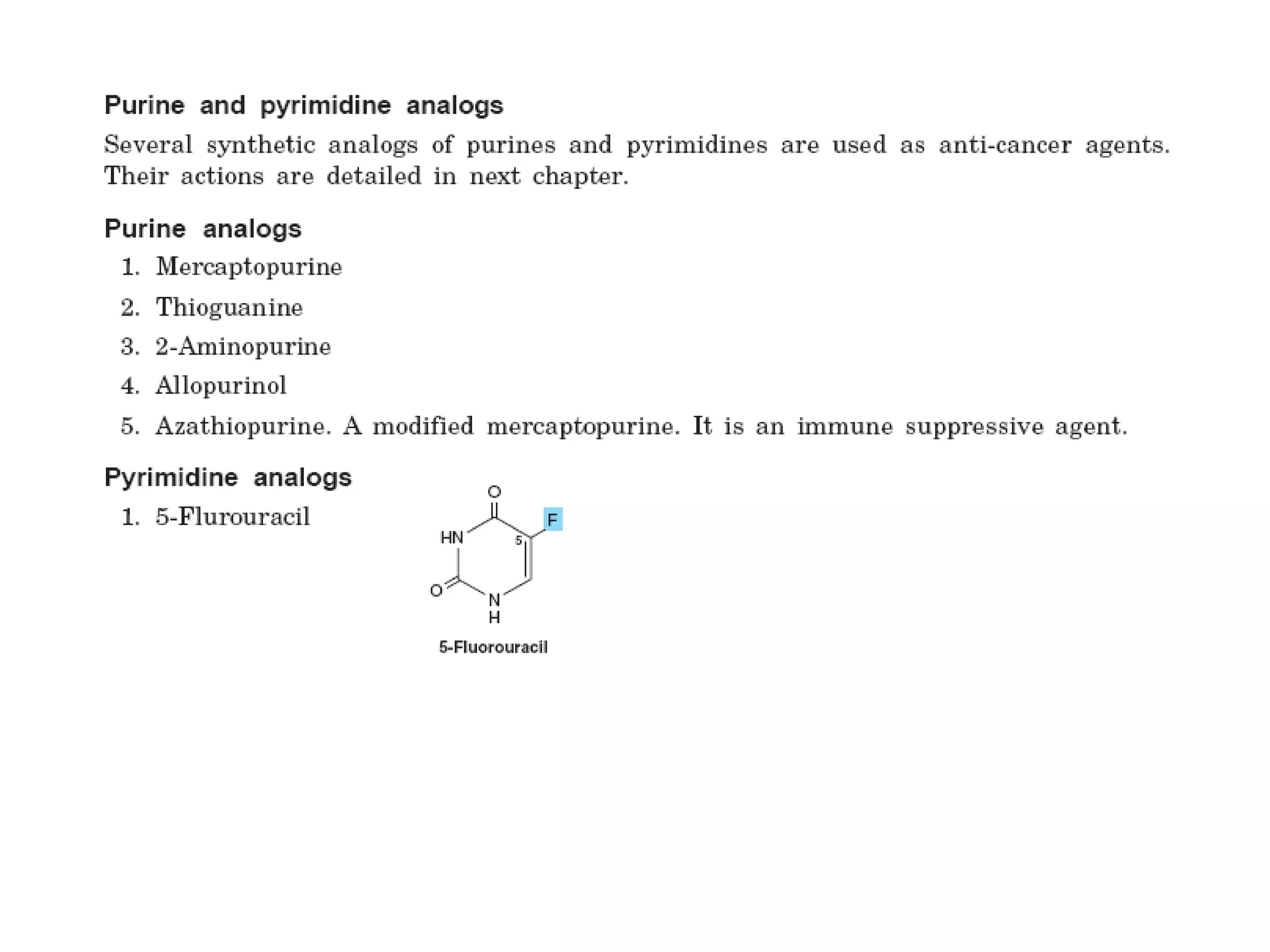
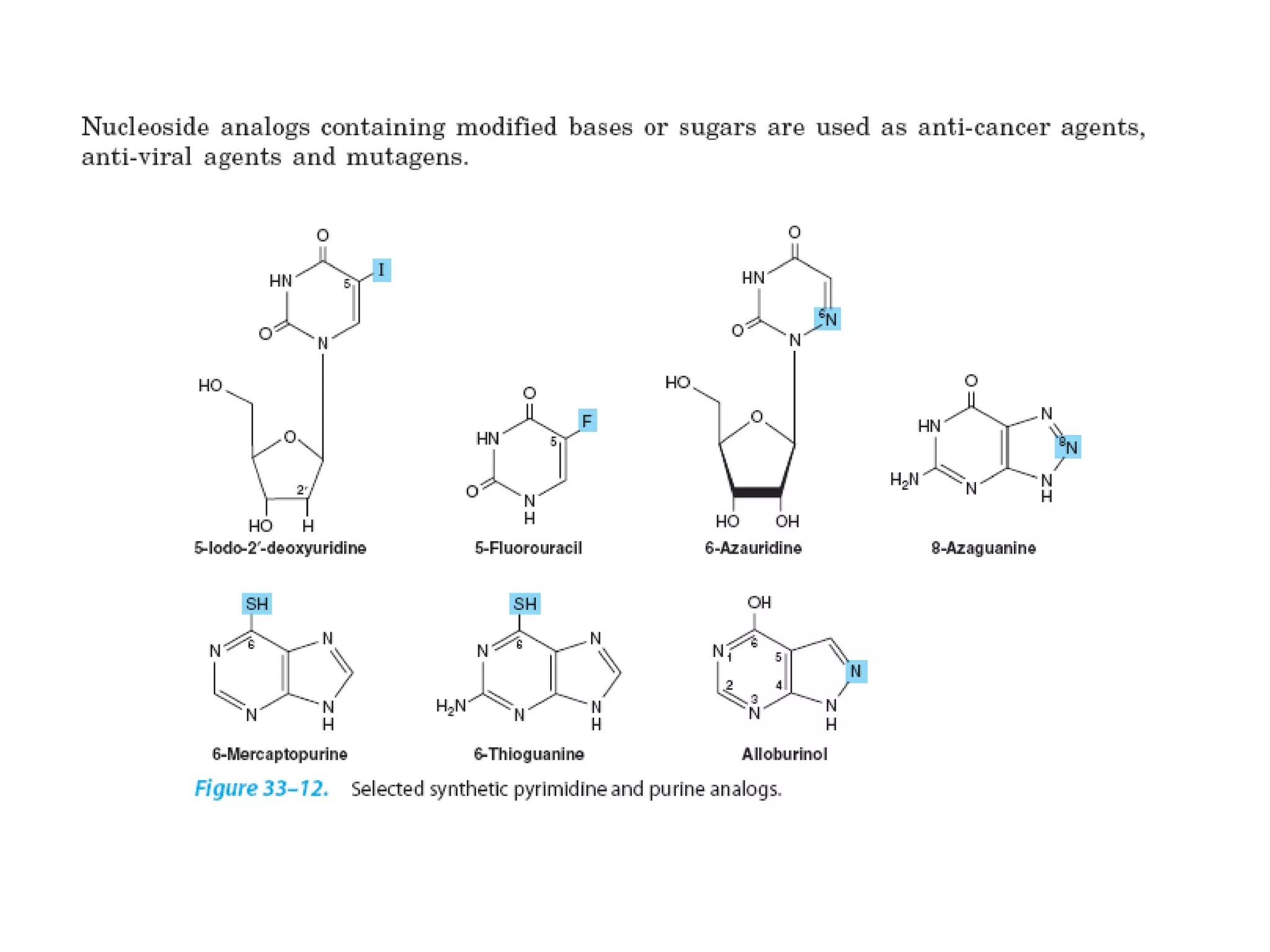
Biomedical importance Monomeric units or building blocks of nucleic acids. They form a part of many coenzymes. Donors of phosphoryl gropups (eg. ATP or GTP), of sugars (UDP- or GDP-sugars or of lipid (CDP-acylglycerol) Serve as second messengers (eg. cAMP and cGMP ) Synthetic nucleotides Synthetic purine and pyrimadine analogs containing halogens, thiols or additional  nitrogen are used for : chemotherapy of cancer and AIDS  Immunosuppressant for organ transplantation.
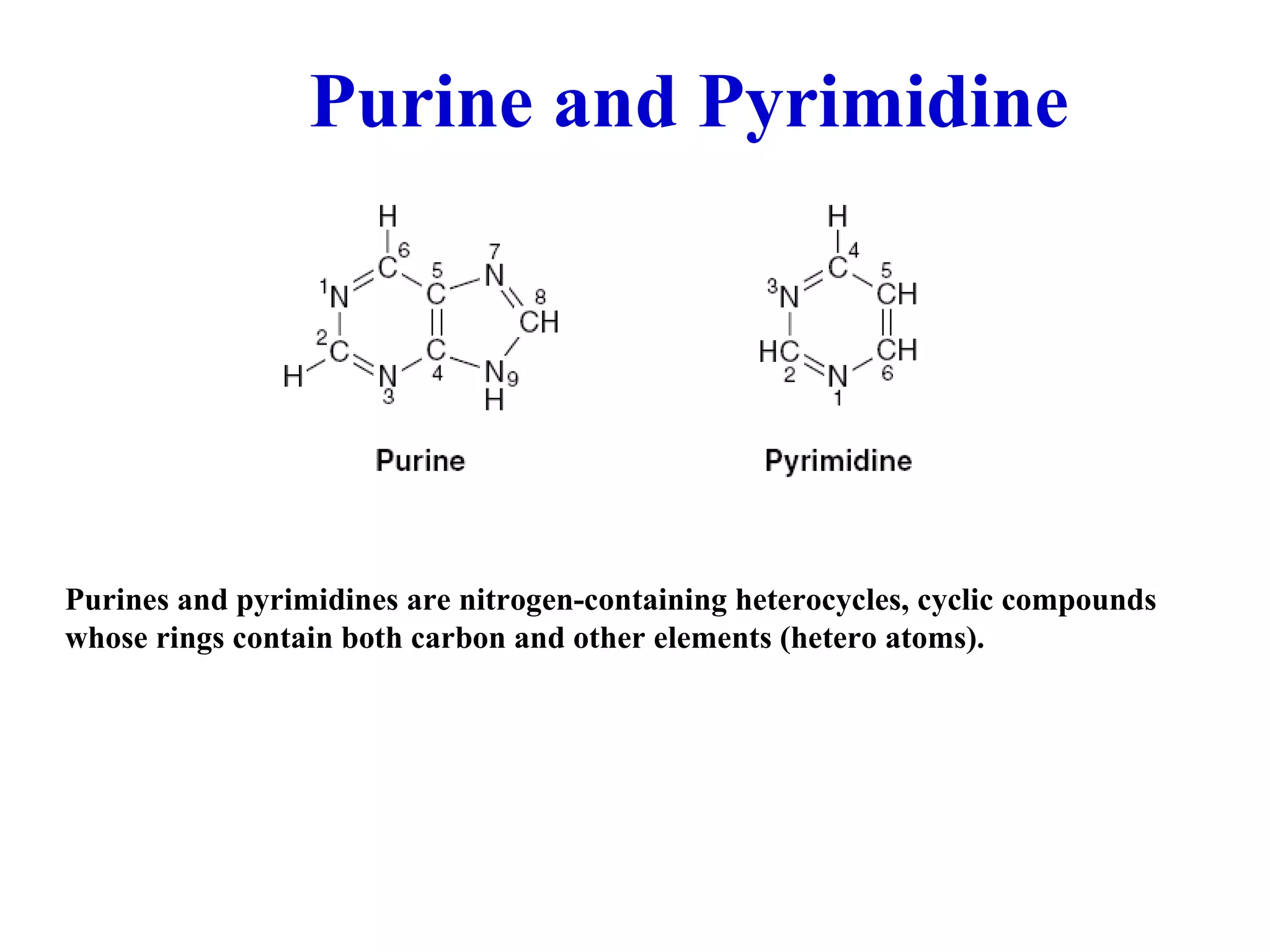
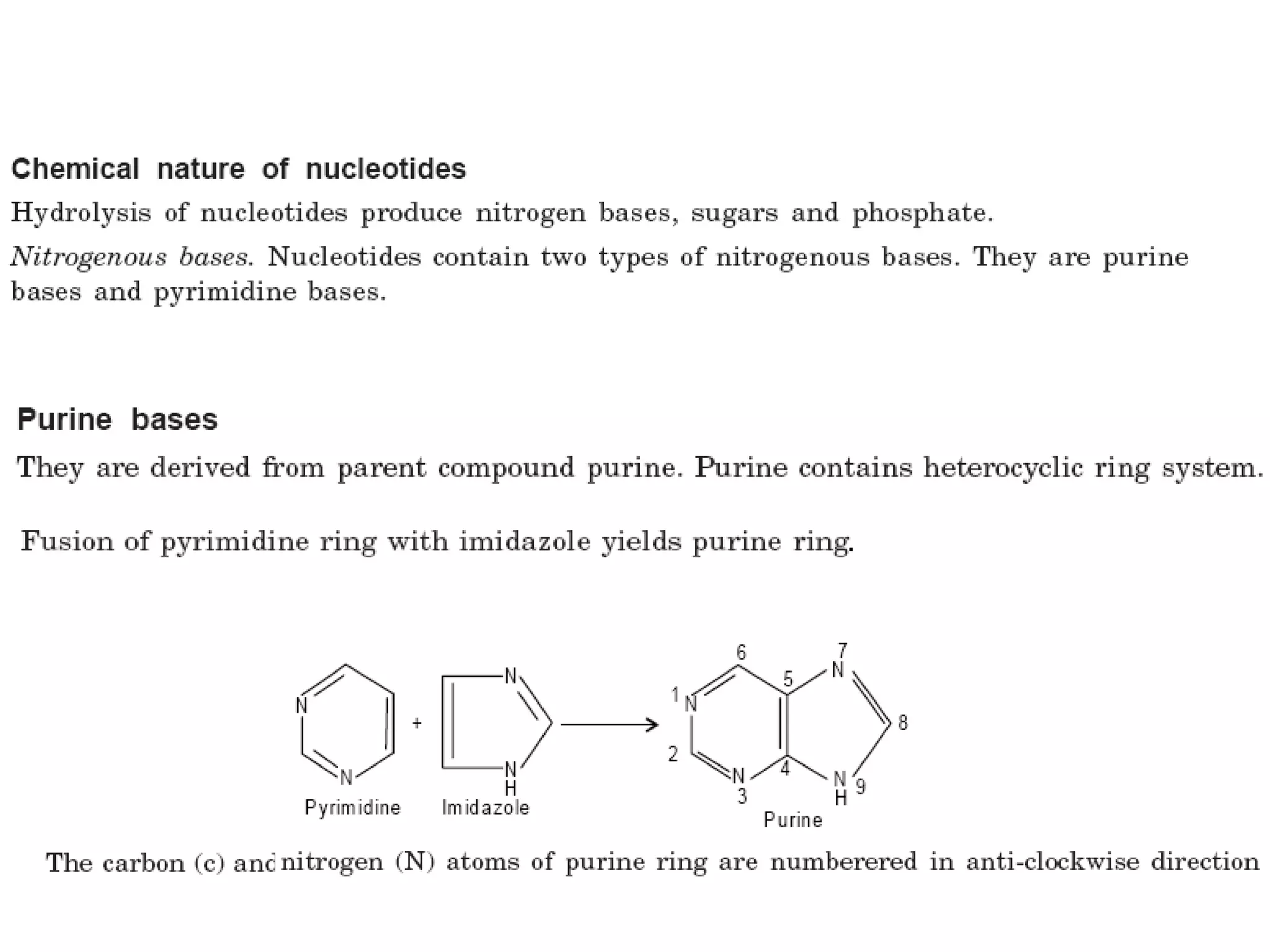
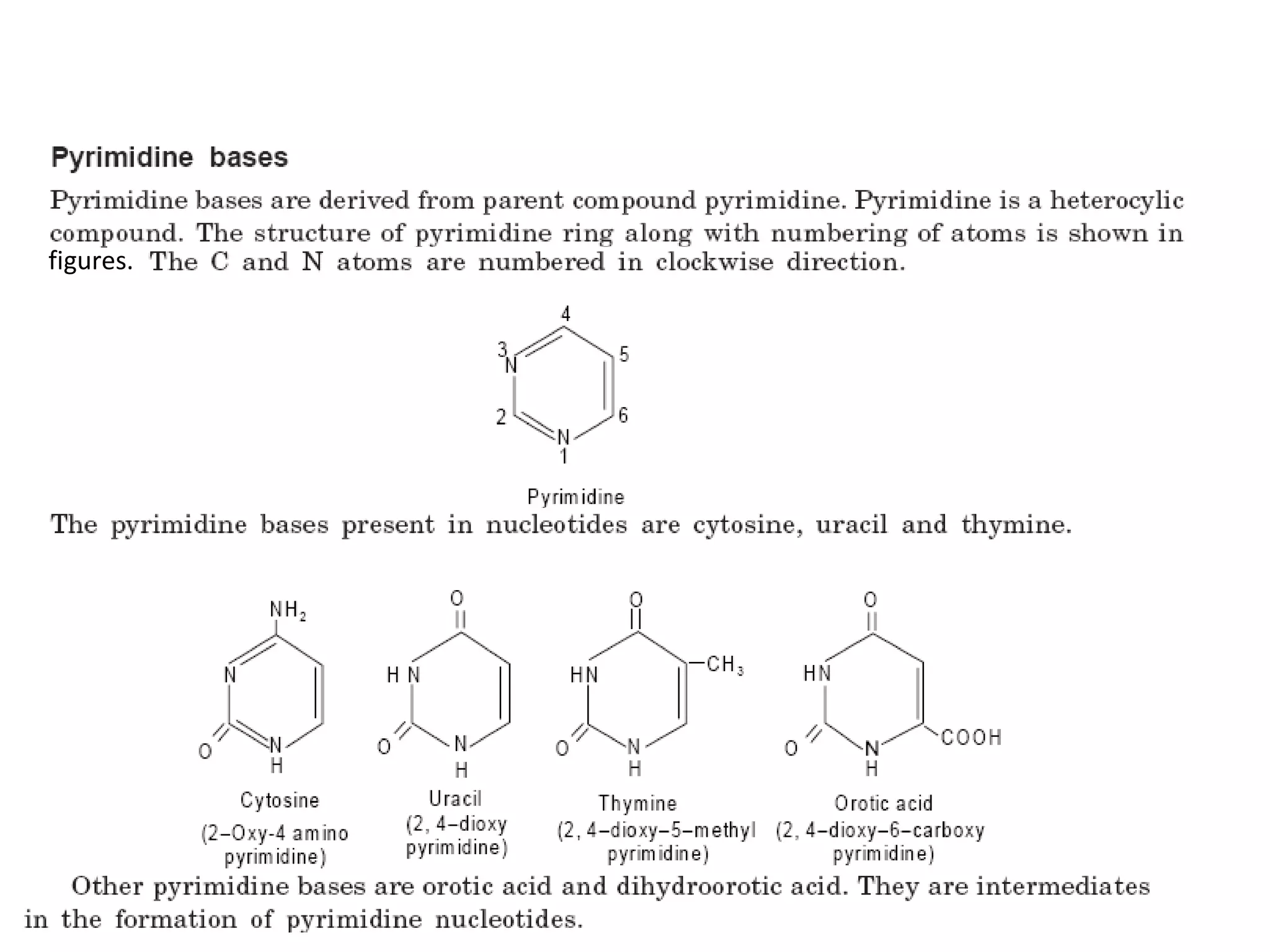
Purine and Pyrimidine  Purines and pyrimidines are nitrogen-containing heterocycles, cyclic compounds  whose rings contain both carbon and other elements (hetero atoms).
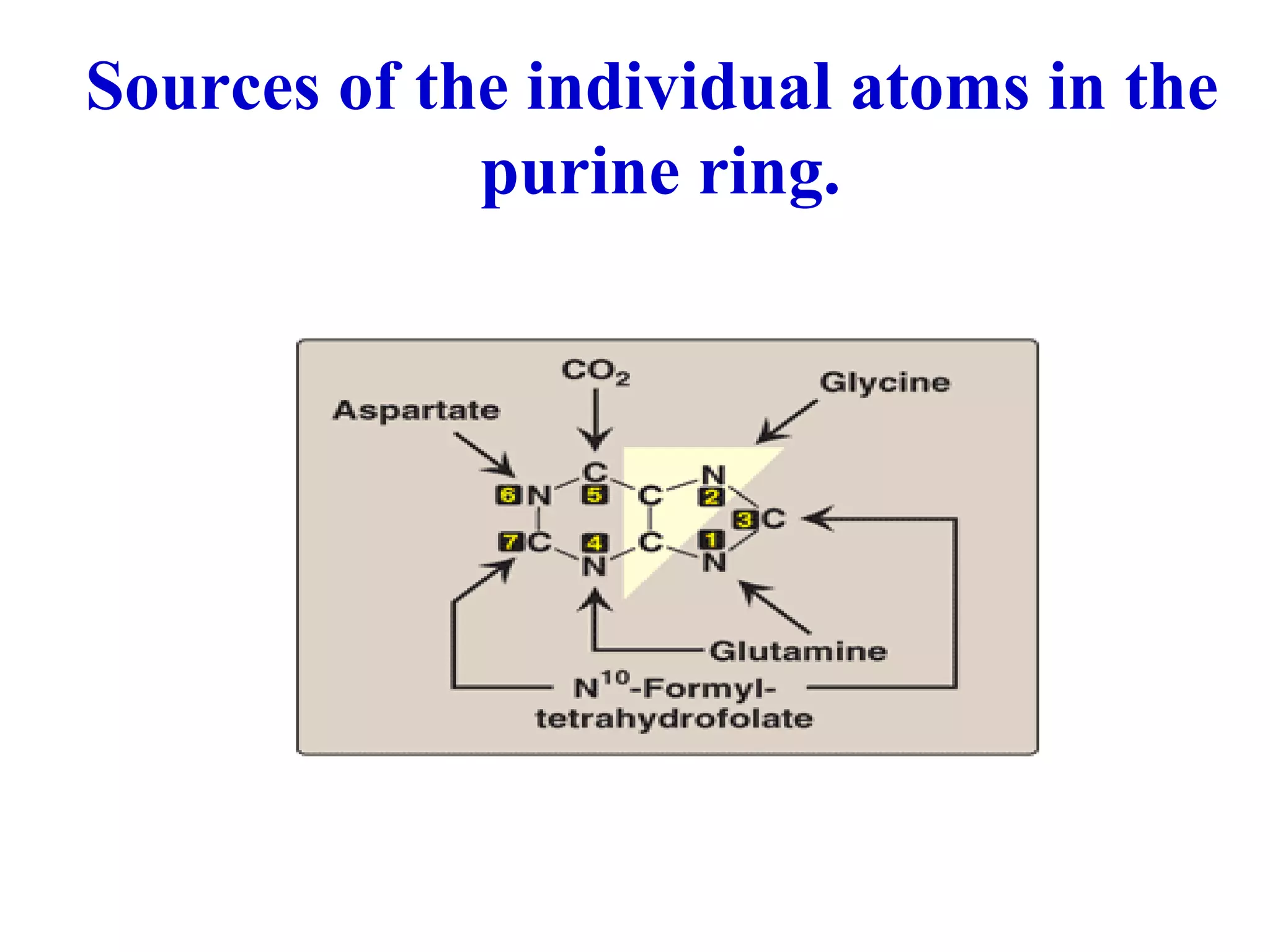
Sources of the individual atoms in the  purine ring.
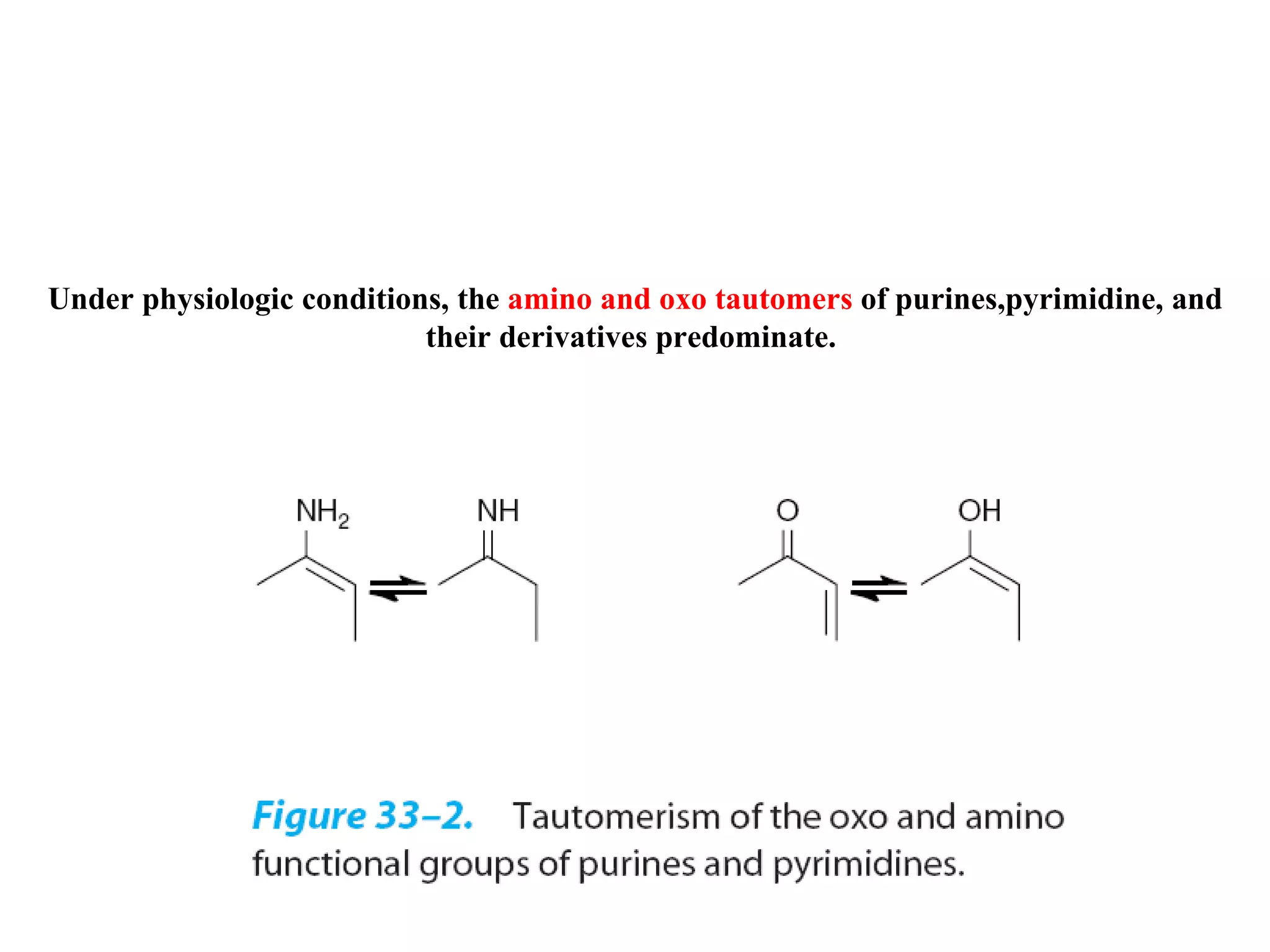
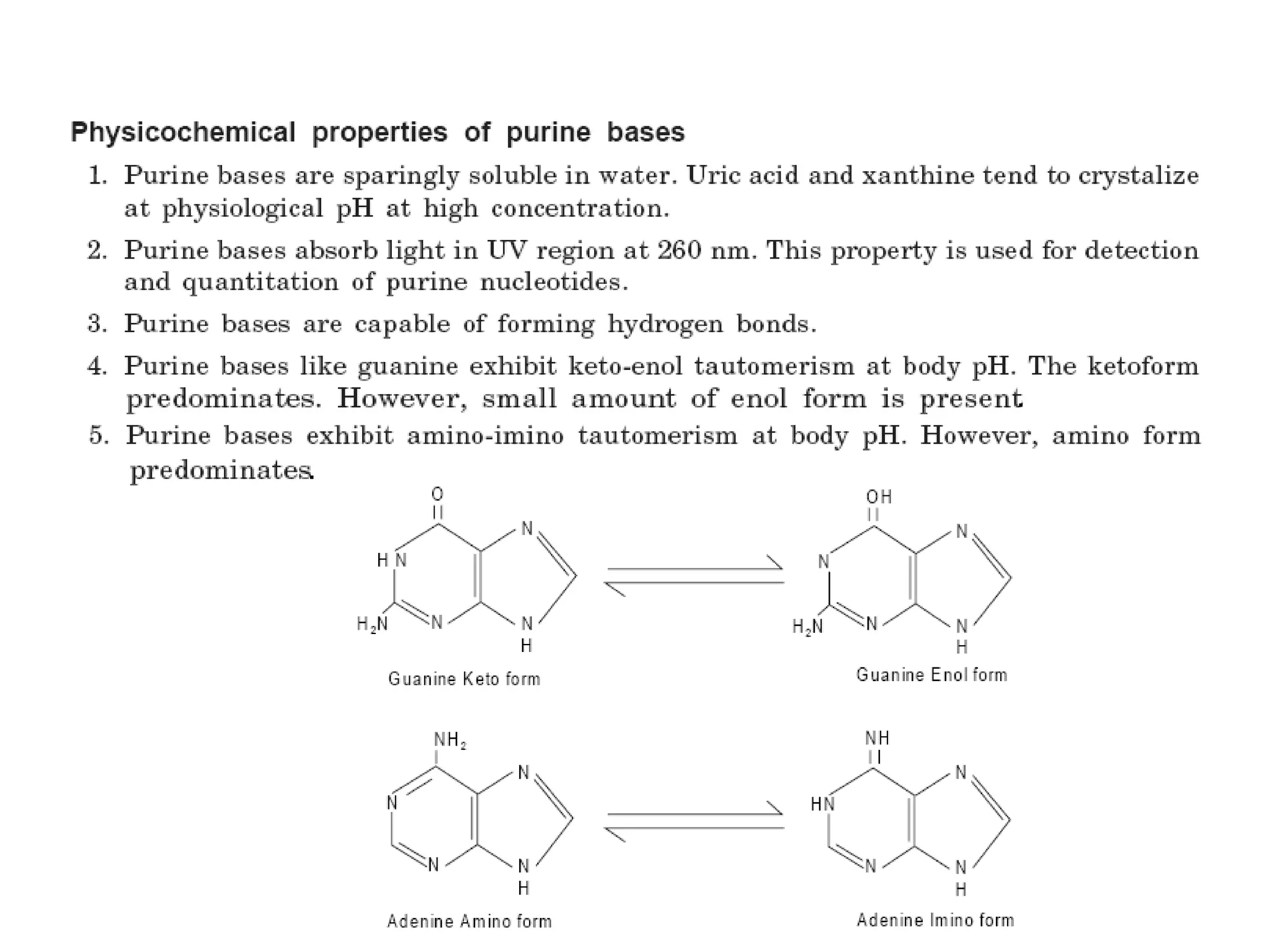
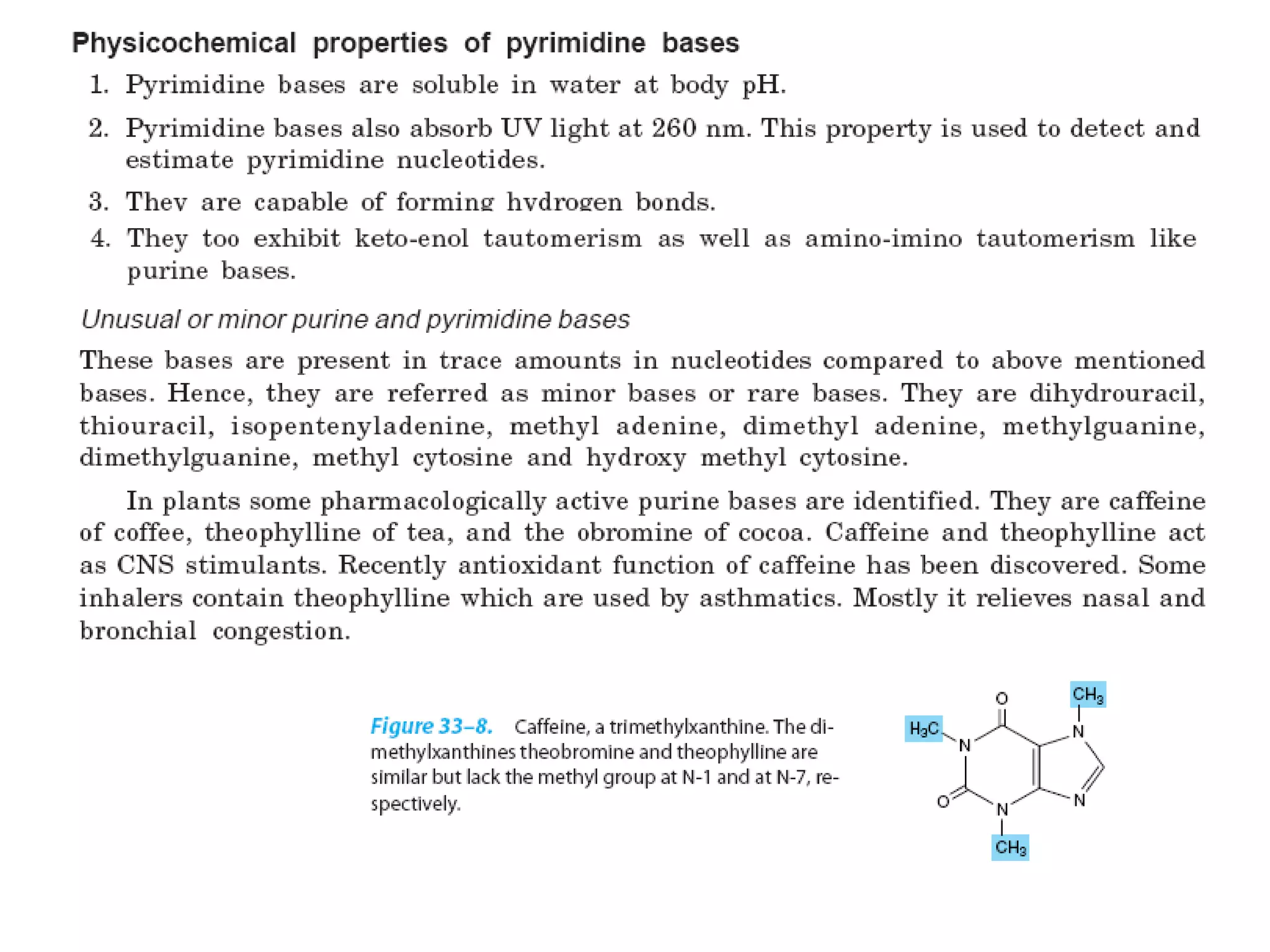
Under physiologic conditions, the  amino and oxo tautomers  of purines,pyrimidine, and their derivatives predominate.
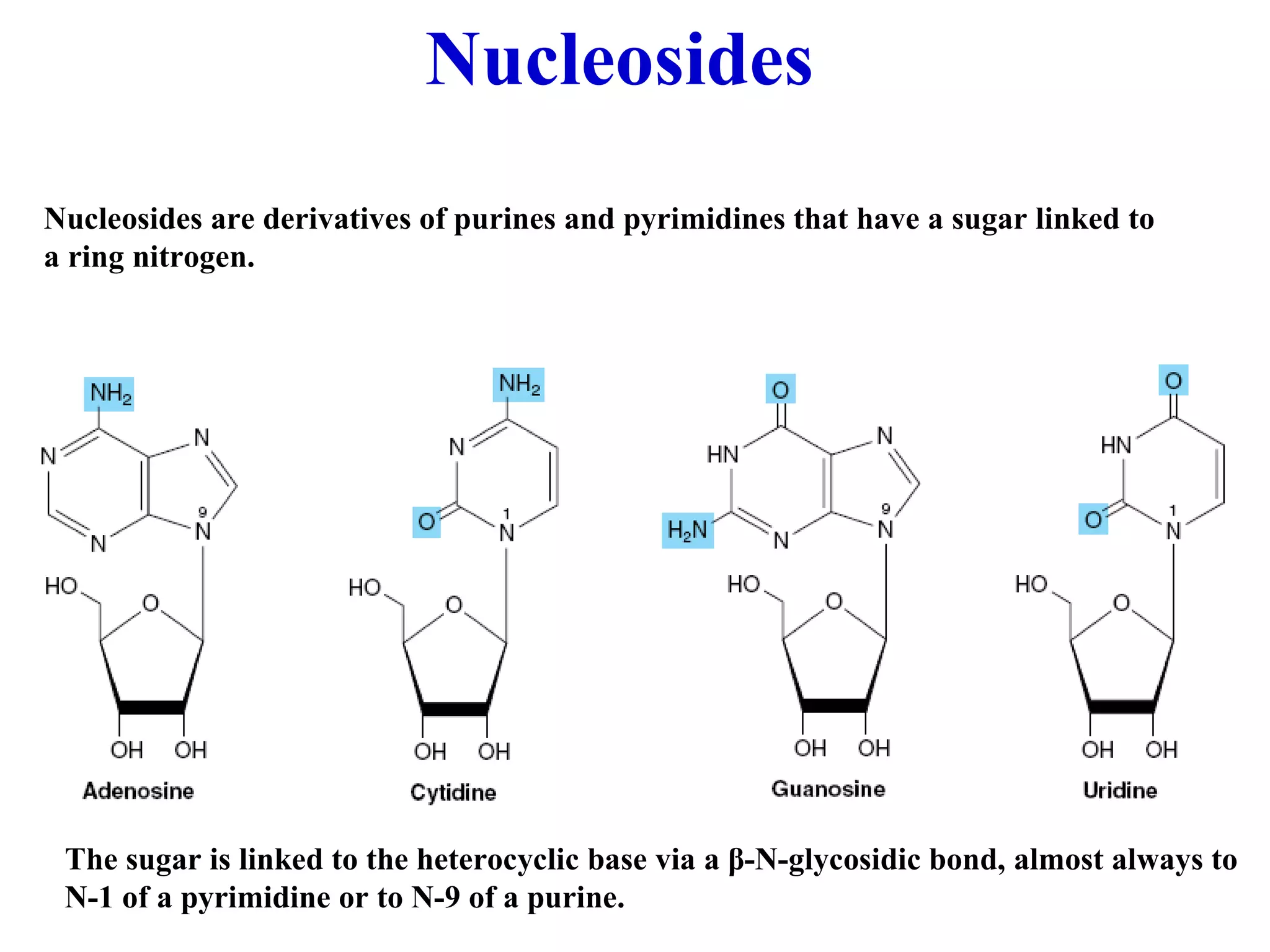
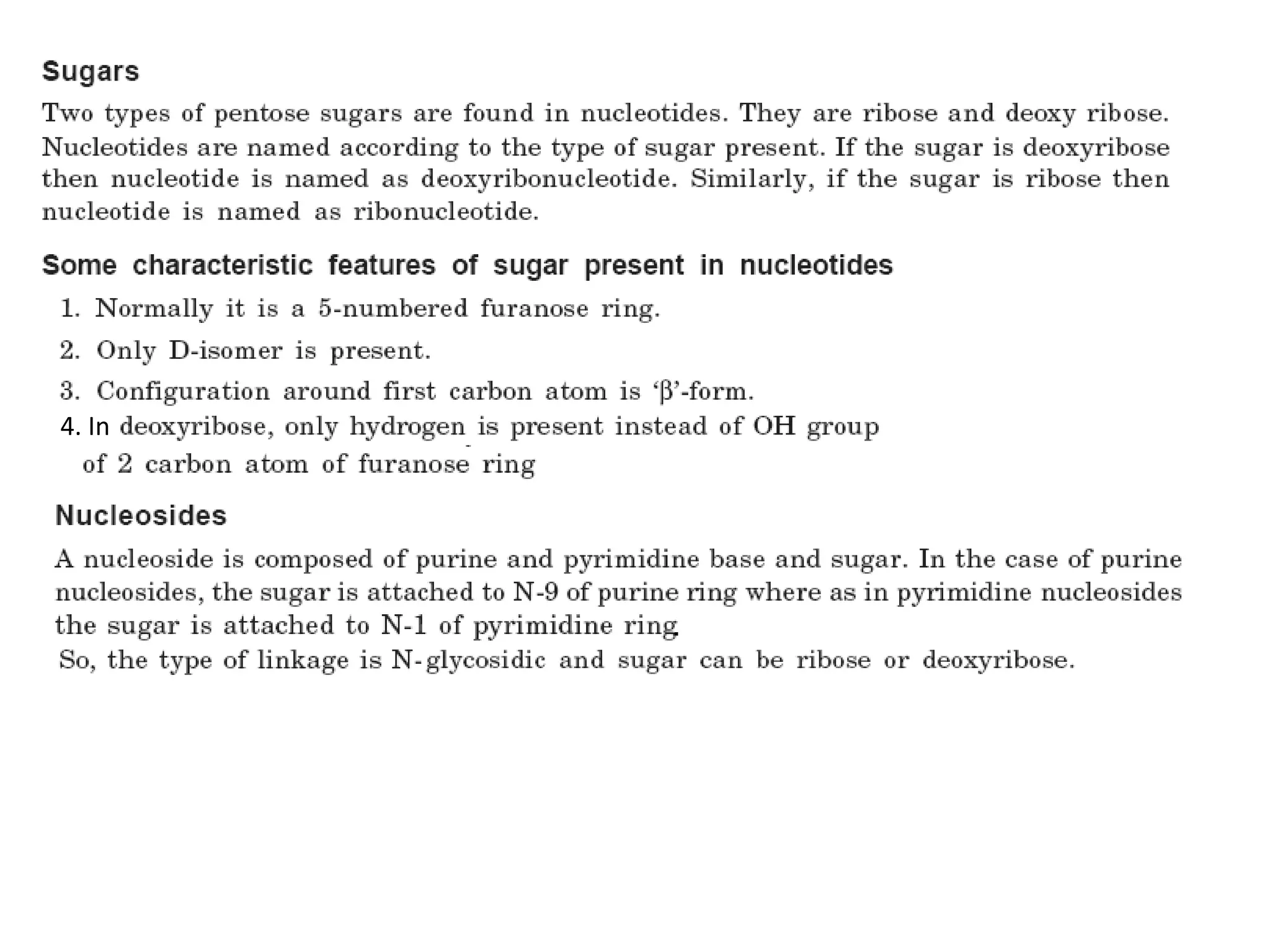
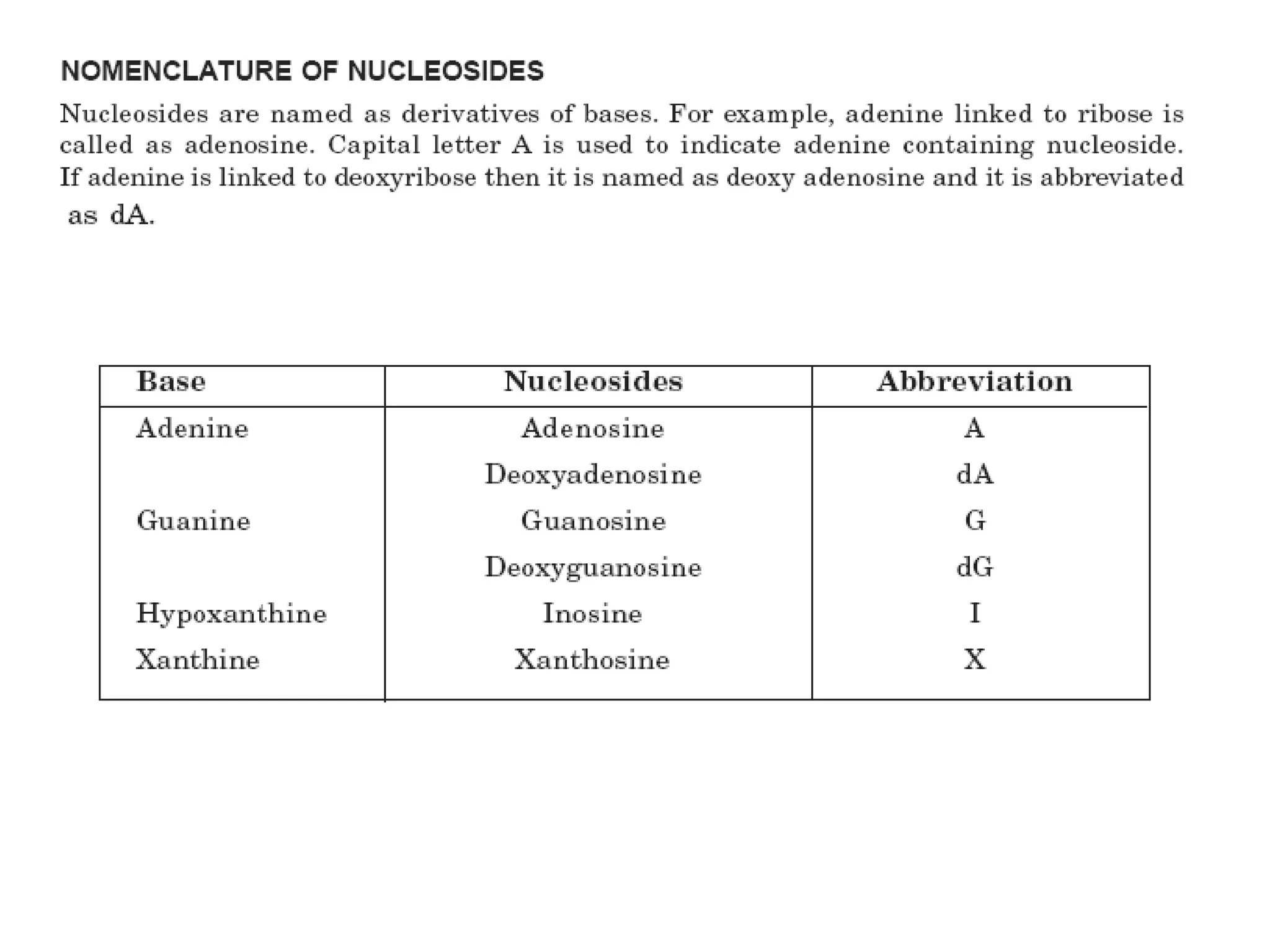
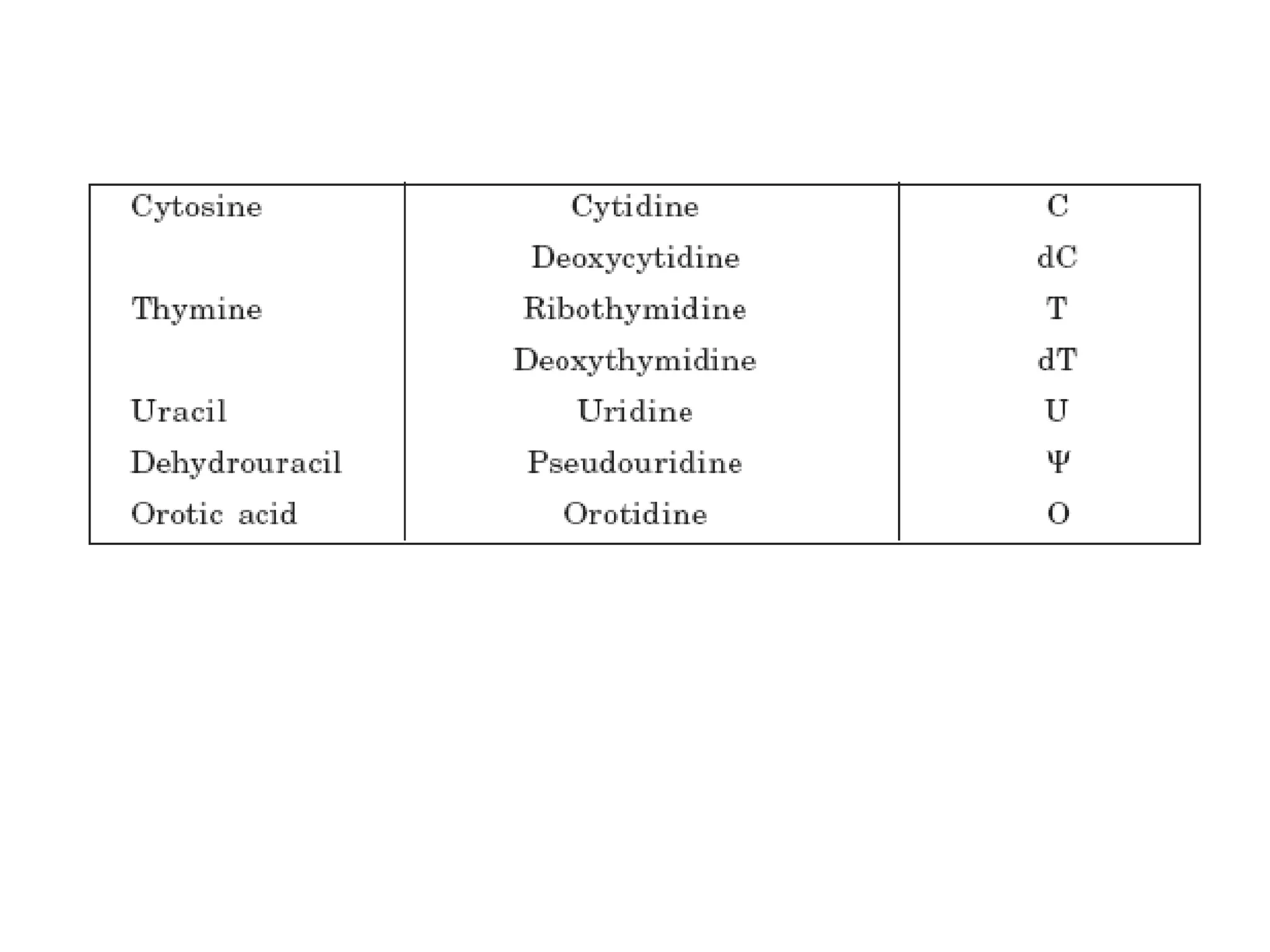
Nucleosides Nucleosides are derivatives of purines and pyrimidines that have a sugar linked to  a ring nitrogen. The sugar is linked to the heterocyclic base via a  β -N-glycosidic bond, almost always to  N-1 of a pyrimidine or to N-9 of a purine.
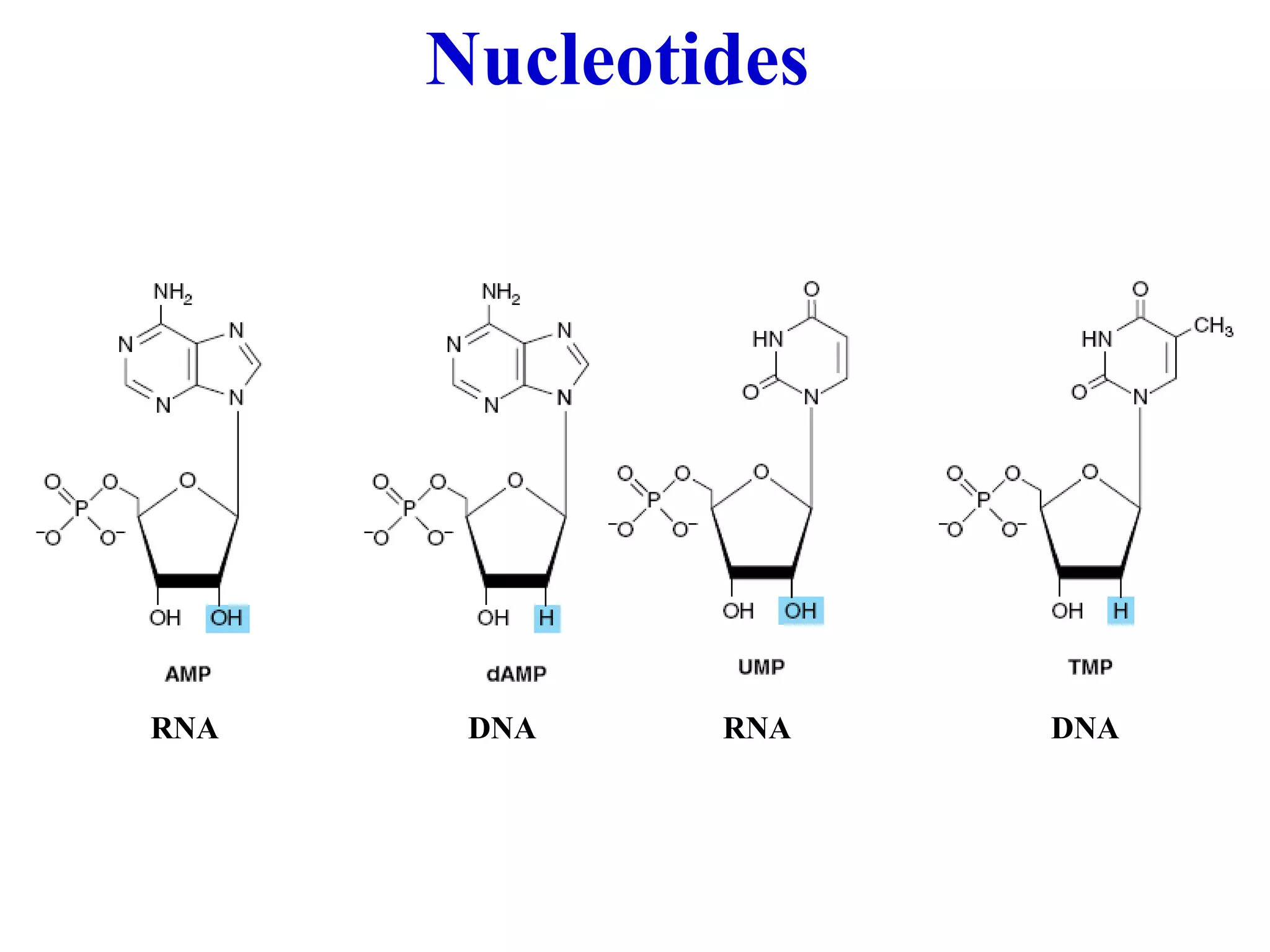
Nucleotides RNA RNA DNA DNA
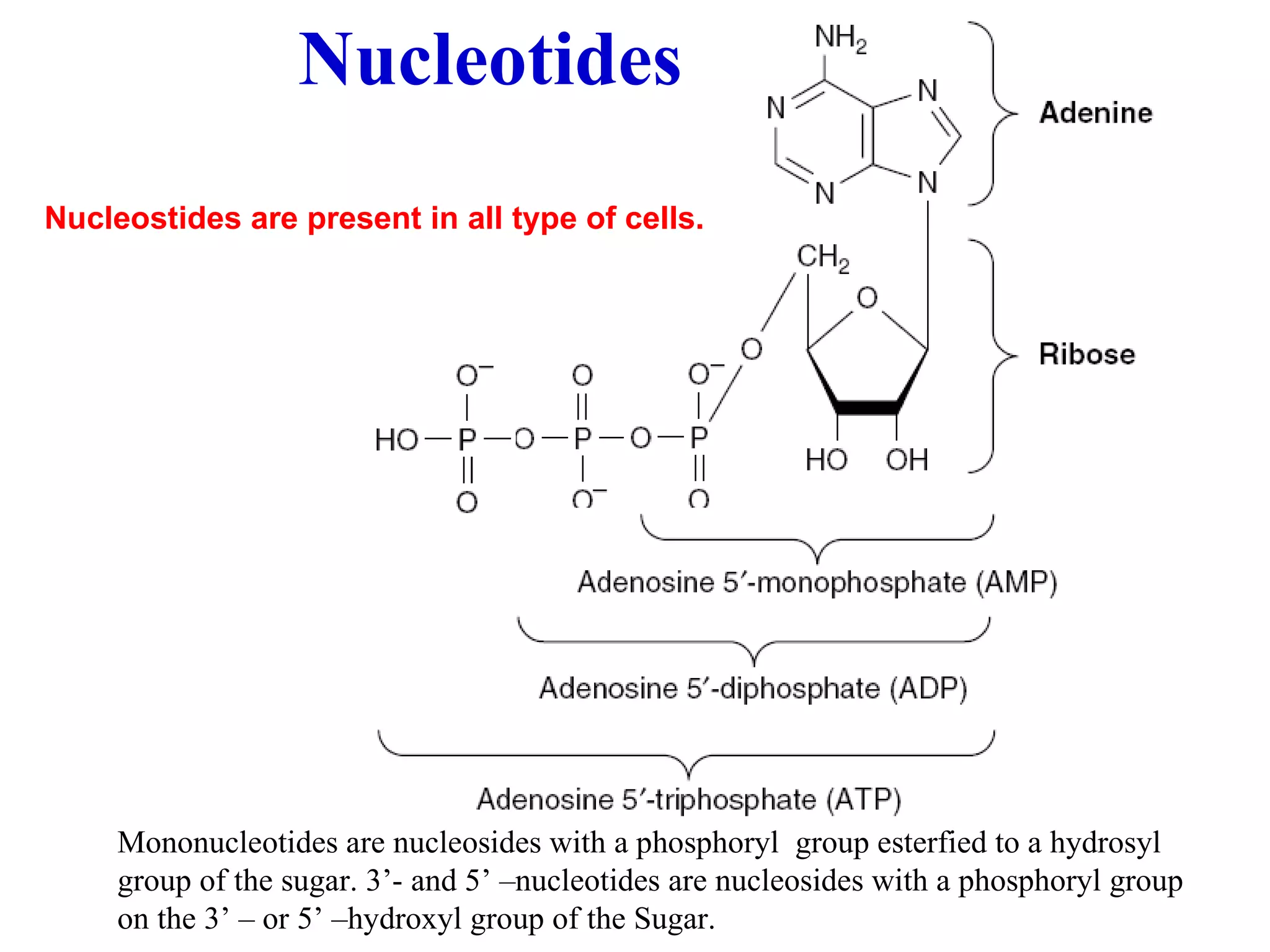
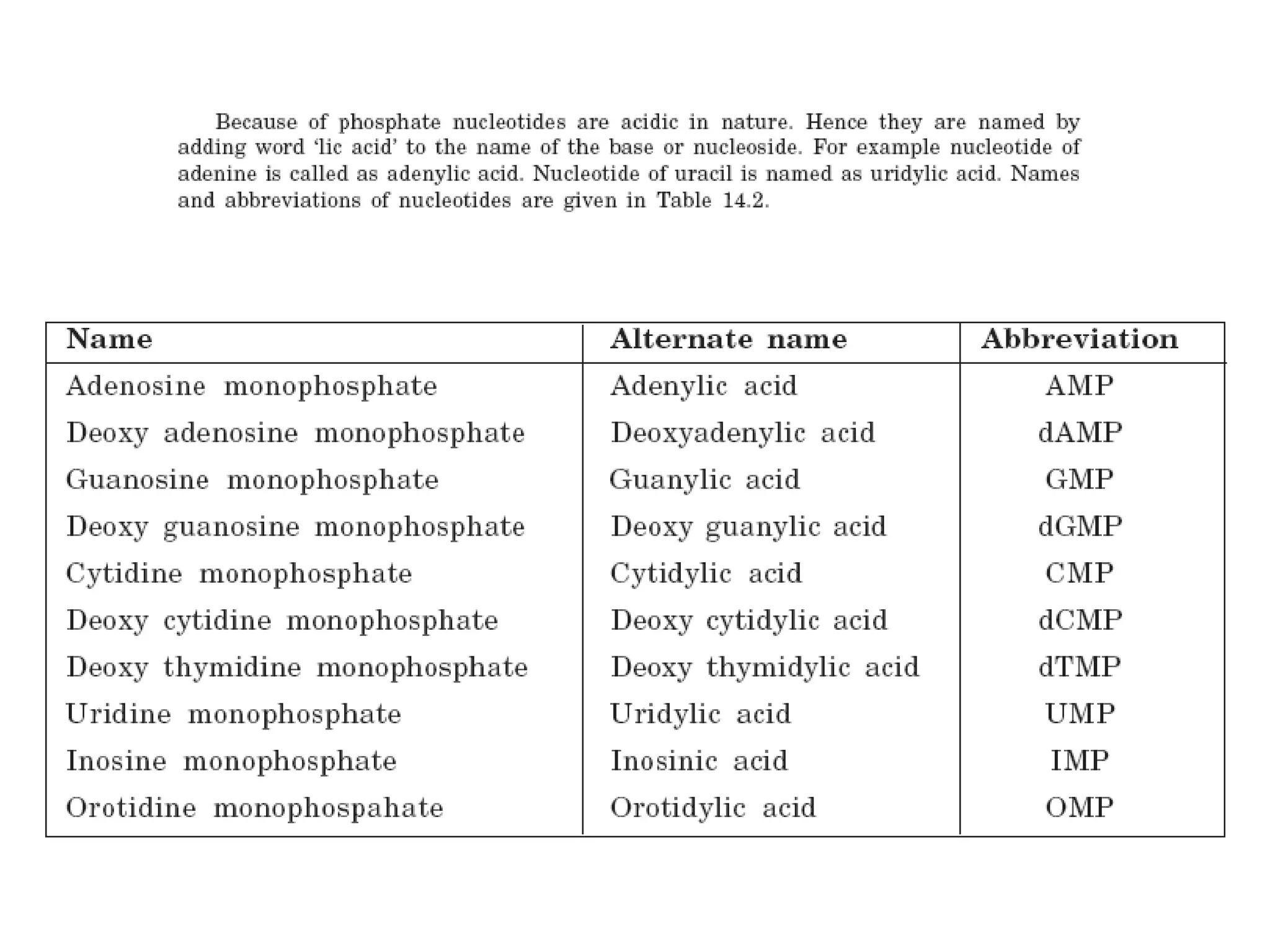
Mononucleotides are nucleosides with a phosphoryl  group esterfied to a hydrosyl  group of the sugar. 3’- and 5’ –nucleotides are nucleosides with a phosphoryl group  on the 3’ – or 5’ –hydroxyl group of the Sugar.  Nucleotides Nucleostides are present in all type of cells.
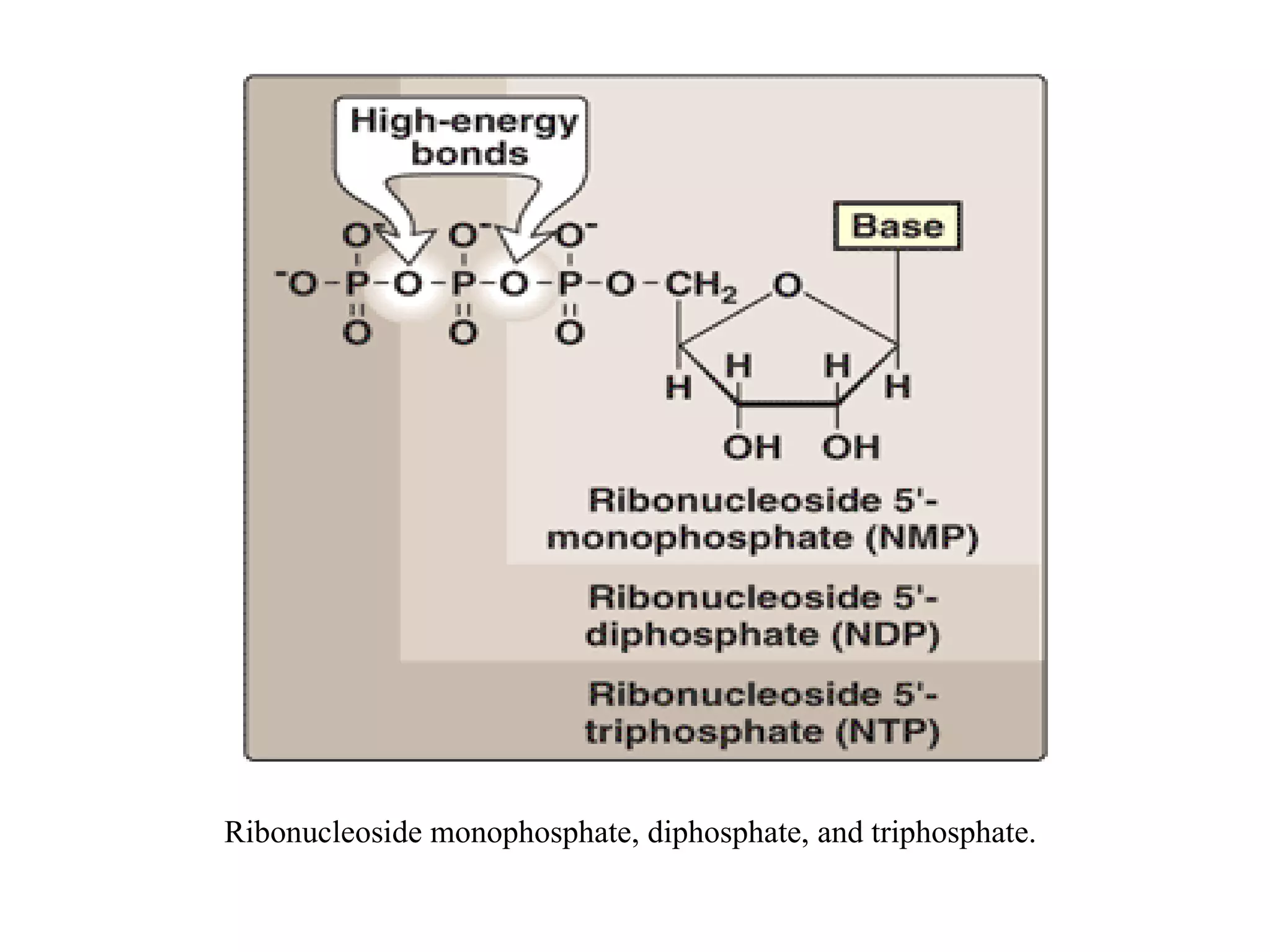
Ribonucleoside monophosphate, diphosphate, and triphosphate.
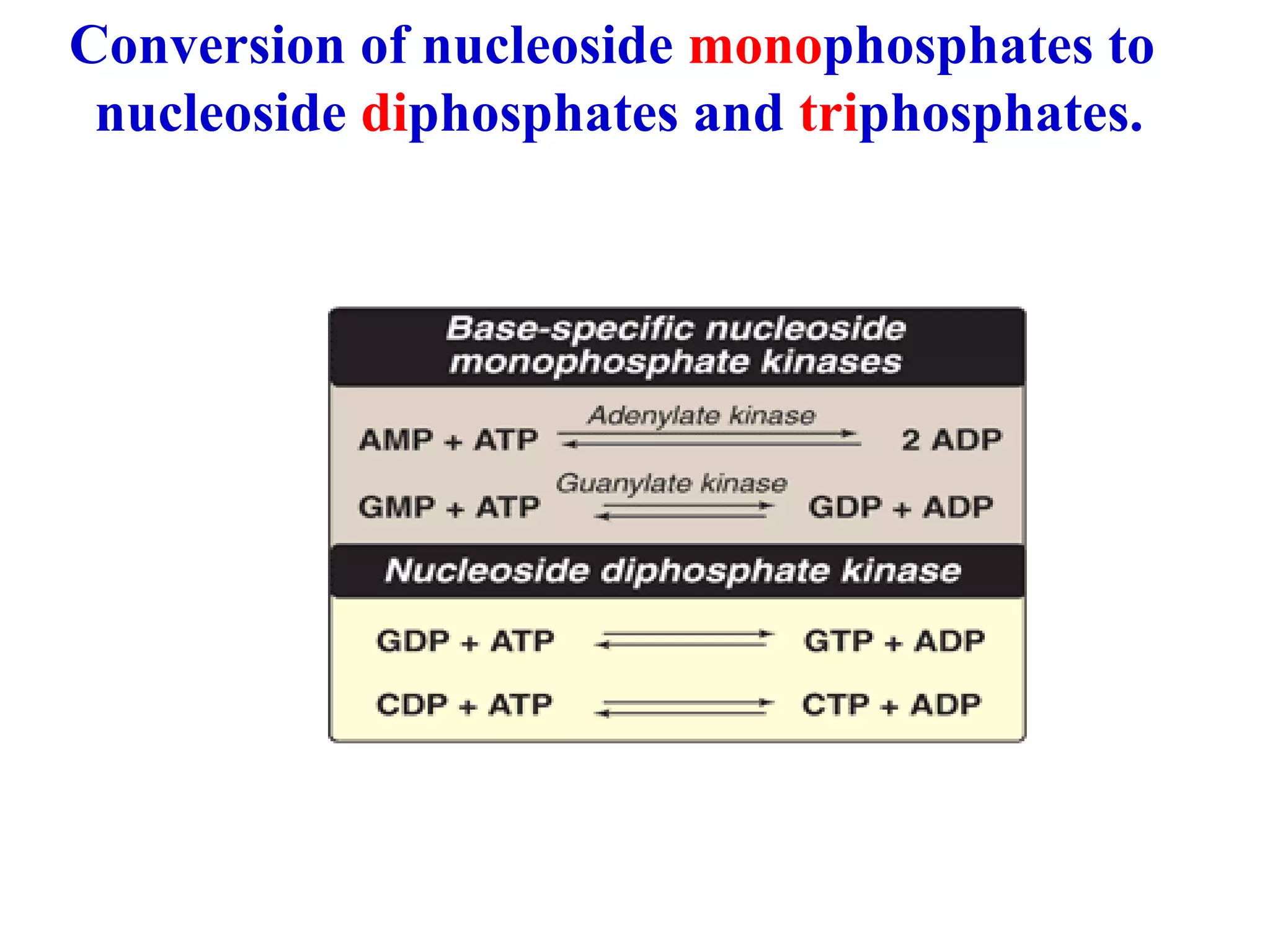
Conversion of nucleoside  mono phosphates to  nucleoside  di phosphates and  tri phosphates.
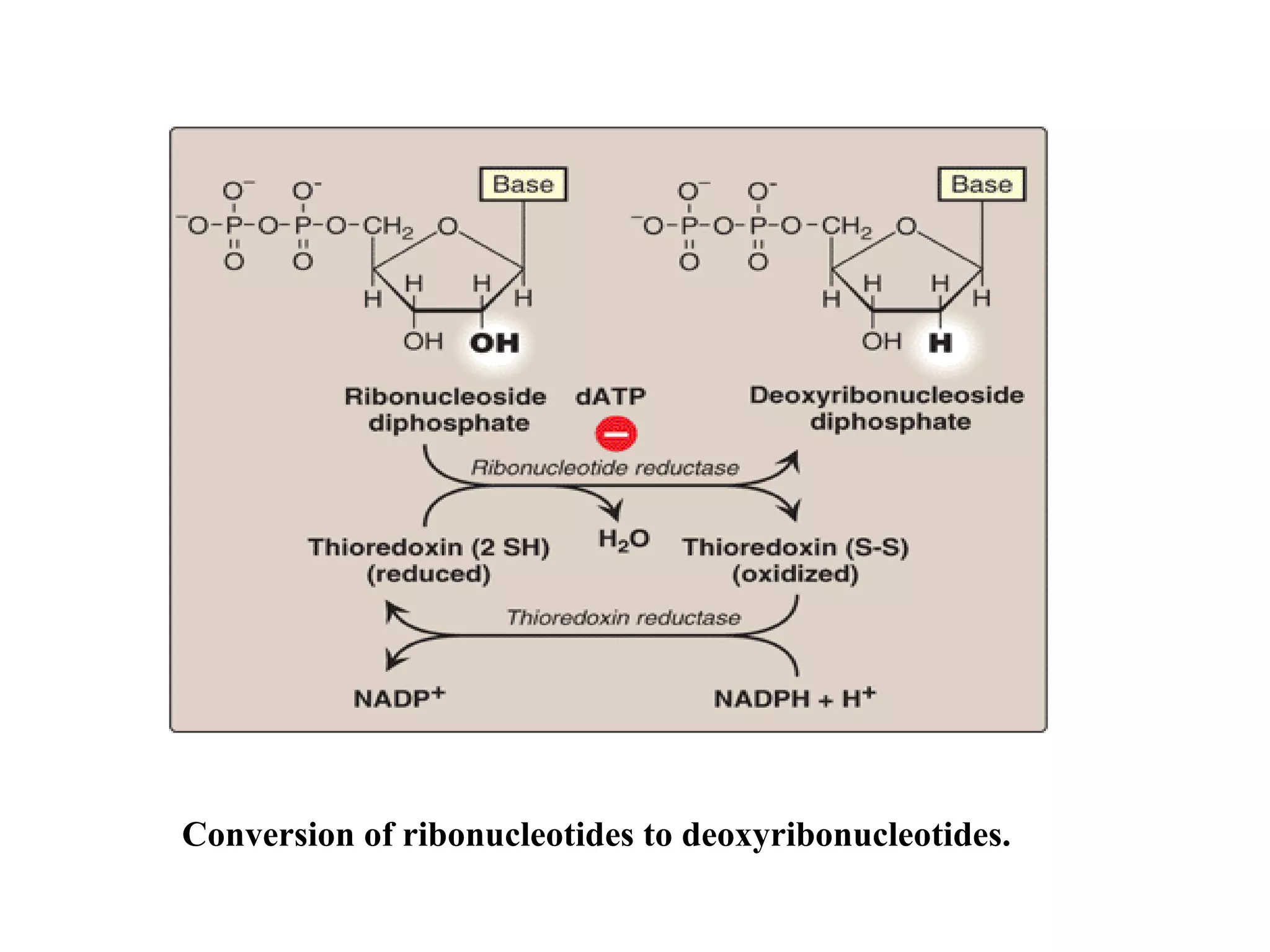
Conversion of ribonucleotides to deoxyribonucleotides.
 
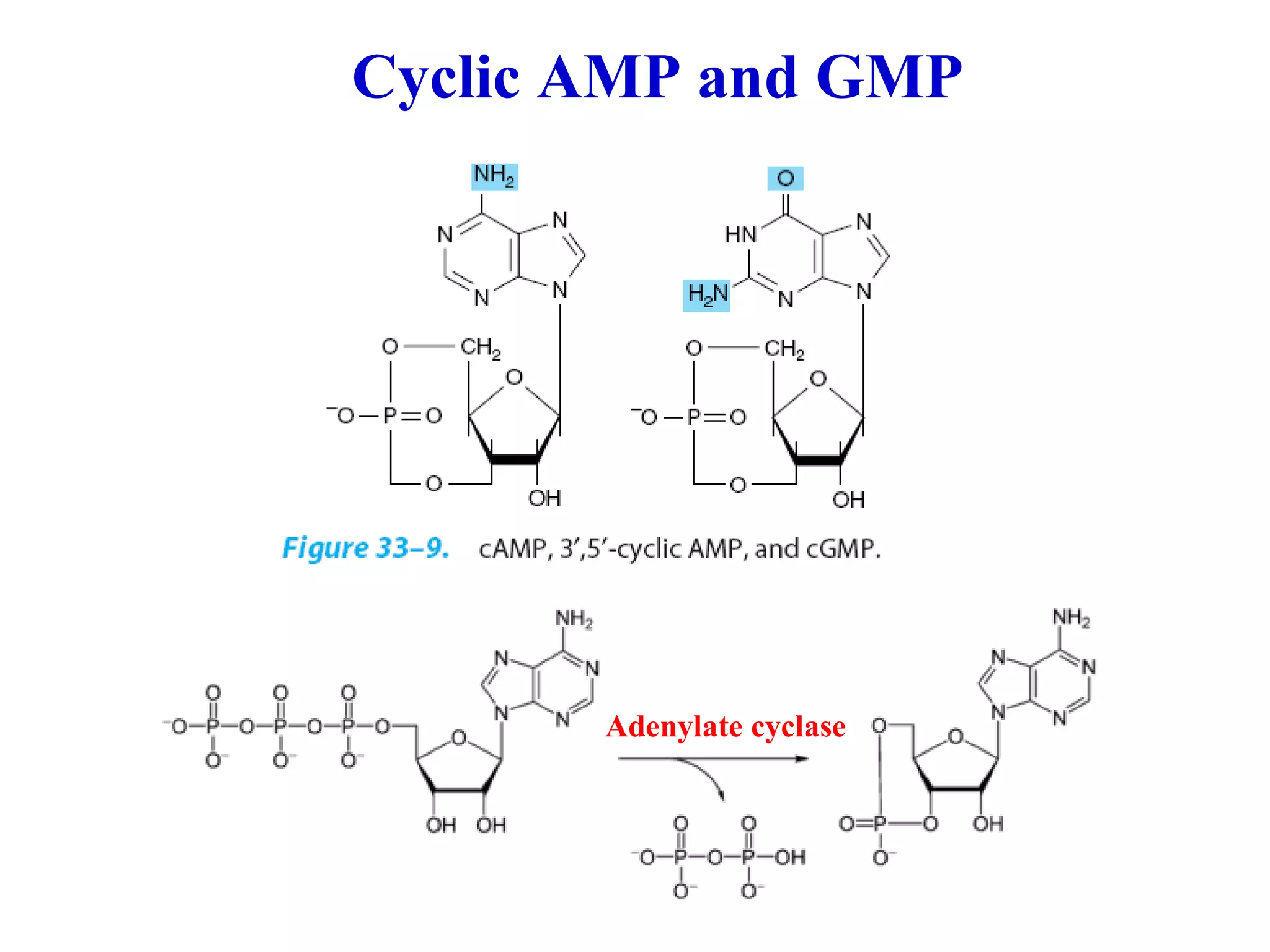
Cyclic AMP and GMP Adenylate cyclase
.
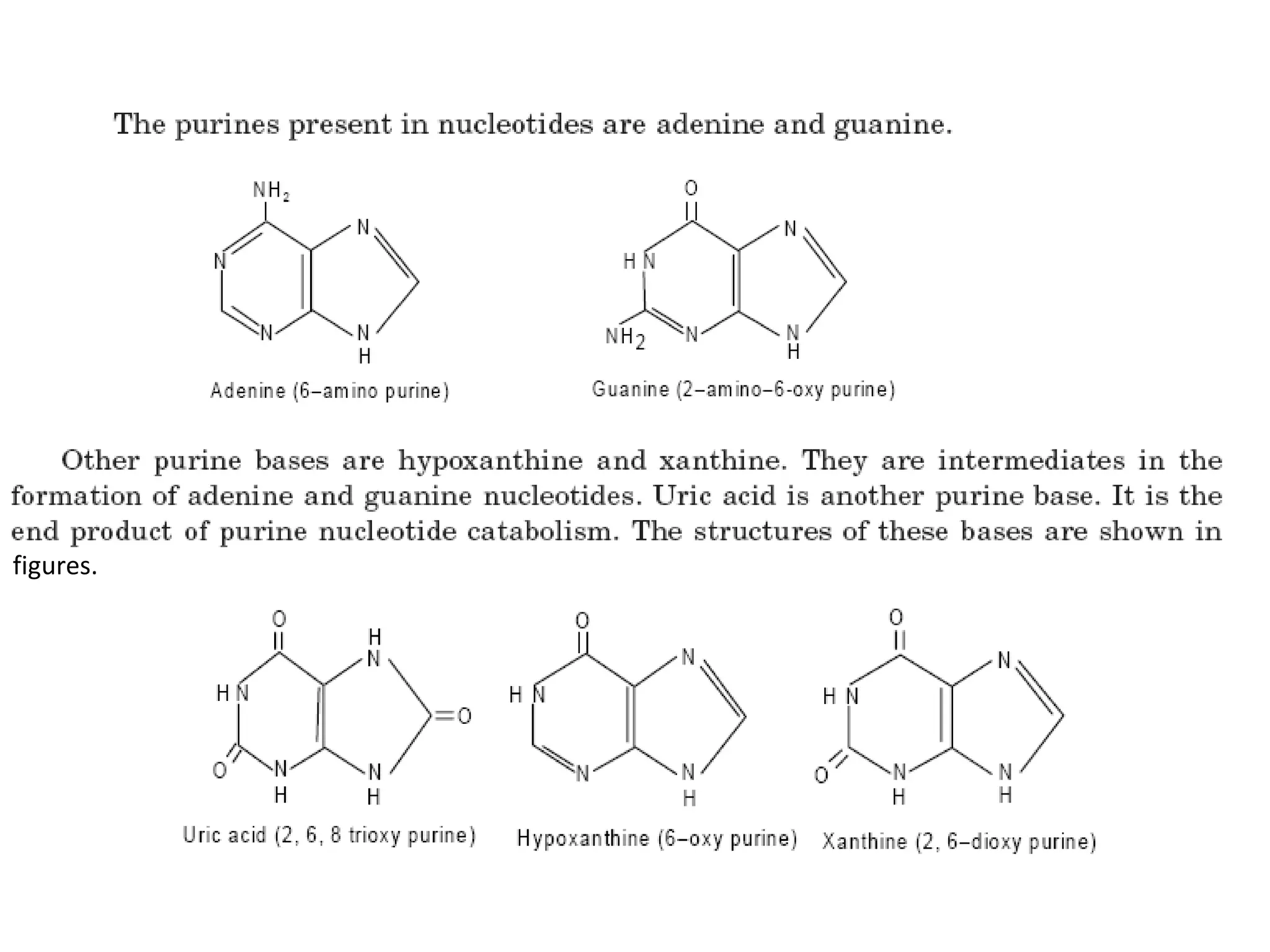
figures.
. .
figures.
 
4. In .


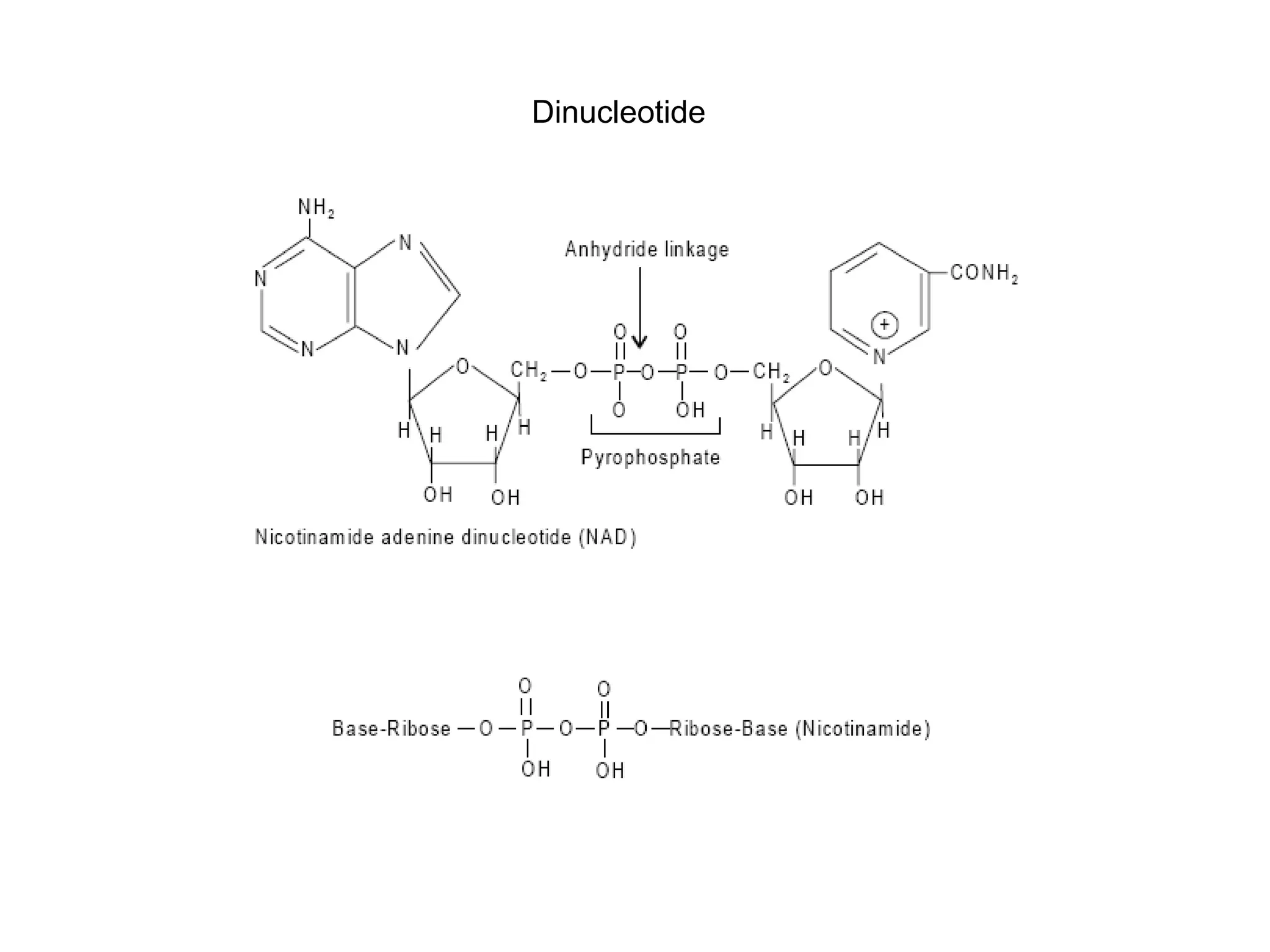
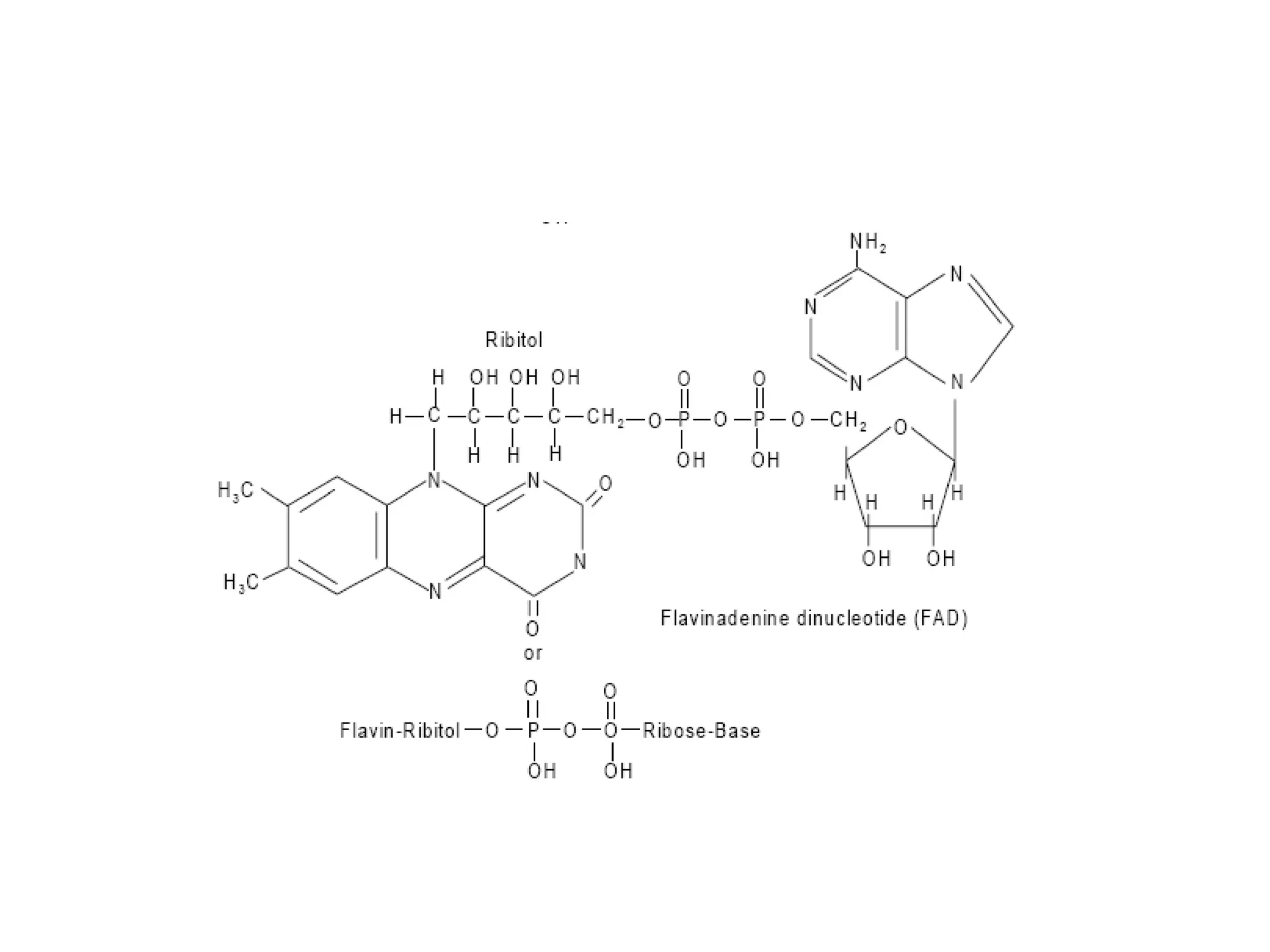
Dinucleotide
 
,


Biochem nucleotides(structure and functions) june.18.2010

  • 1.
    NUCLEIC ACID Structure and Functions
  • 2.
    Biomedical importance Monomericunits or building blocks of nucleic acids. They form a part of many coenzymes. Donors of phosphoryl gropups (eg. ATP or GTP), of sugars (UDP- or GDP-sugars or of lipid (CDP-acylglycerol) Serve as second messengers (eg. cAMP and cGMP ) Synthetic nucleotides Synthetic purine and pyrimadine analogs containing halogens, thiols or additional nitrogen are used for : chemotherapy of cancer and AIDS Immunosuppressant for organ transplantation.
  • 3.
    Purine and Pyrimidine Purines and pyrimidines are nitrogen-containing heterocycles, cyclic compounds whose rings contain both carbon and other elements (hetero atoms).
  • 4.
    Sources of theindividual atoms in the purine ring.
  • 5.
    Under physiologic conditions,the amino and oxo tautomers of purines,pyrimidine, and their derivatives predominate.
  • 6.
    Nucleosides Nucleosides arederivatives of purines and pyrimidines that have a sugar linked to a ring nitrogen. The sugar is linked to the heterocyclic base via a β -N-glycosidic bond, almost always to N-1 of a pyrimidine or to N-9 of a purine.
  • 7.
  • 8.
    Mononucleotides are nucleosideswith a phosphoryl group esterfied to a hydrosyl group of the sugar. 3’- and 5’ –nucleotides are nucleosides with a phosphoryl group on the 3’ – or 5’ –hydroxyl group of the Sugar. Nucleotides Nucleostides are present in all type of cells.
  • 9.
  • 10.
    Conversion of nucleoside mono phosphates to nucleoside di phosphates and tri phosphates.
  • 11.
    Conversion of ribonucleotidesto deoxyribonucleotides.
  • 12.
  • 13.
    Cyclic AMP andGMP Adenylate cyclase
  • 14.
  • 15.
  • 16.
  • 17.
  • 18.
  • 19.
  • 20.
  • 21.
  • 22.
  • 23.
  • 24.
  • 25.
  • 26.
  • 27.
  • 28.
  • 29.
  • 30.
  • 31.