PRESENTED TO:- PRESENTED BY:-
Dr.B.M.KUNAR RAHUL BHATT(11MN38)
DEPARTMENT OF MINING RAJNISH RANJAN(11MN39)
ENGINEERING SANJIV KUMAR MEENA(11MN41)
NITK , SURATHKAL SHANKAR DODAMANI(11MN42)
 History of Behavioral base safety
 What is behavior
 What is Attitudes
 What is behavioral base safety
 Why behavioral base safety
 Behavior base safety process
 Factors affecting the behavior base safety
 Behavioral base safety is important
 ABC model
 Conclusion
 References
 1960’s – 1st formal study – Posters = Behavior Change
Fortune 500 companies begin use of behavioral principles with
Quality, Productivity
 1970’s – Robust academic studies = Fledgling BBS
movement.
 1980’s – US Academe & Commercialization = BBS providers.
 1990’s – BBS spreads to entire English speaking world.
 2000 plus – BBS spreads to become worldwide phenomena.
 Behavior Is What a Person Does or Says.
 What Causes a Person to Take This Particular Behavior or
Course of Action Depends On Other Influencing Factors.
 Attitude and Situational Conditions Cause The Particular
Behavior.
 What Influences Behavior :-
 Motivation.
 Intelligence.
 Emotions.
 Experience.
 Attitude
 Situational Conditions
 When a Persons Attitude Changes, His or Her Behavior Will
Typically Follow. Assuming He or She Has Adequate
Knowledge of the Safe Working Conditions in the Work
Environment.
 When You Eliminate Every Other Reason for Unacceptable
Behavior, What Is Left It Attitudinal.
 If a Person Understands That His or Her Safety at Work is
Controllable in a Measurable Way, Acceptance of Safety as an
Essential Part of the Work Environment Will Be Increased.
Safe Attitudes and Behaviors Will Naturally Follow.
 Motivation changes attitude and attitude drives behavior.
 A process that creates a safety partnership between management
and employees that continually focuses people's attentions and
actions on theirs, and others, daily safety behavior.
 BBS "focuses on what people do, analyzes why they do it, and
then applies a research-supported intervention strategy to
improve what people do".
 The application of behavioral psychology to promote safe
behavior in the workplace using employee involvement.
 They collect some observations data in an organization and then
analyze to reduce injury and continuous improvement in safety.
 Injuries are going up.
 Most traditional safety programs plateau.
 To achieve zero accidents we need to change our thinking.
 96% of injuries are a result of unsafe behaviors.
 Measurement of incidents and injuries is reactive.
 Measurement of behaviors is proactive.
 Behavior modification is dealing with the root cause.
 Cultural change.
 Stop the accident cycle.
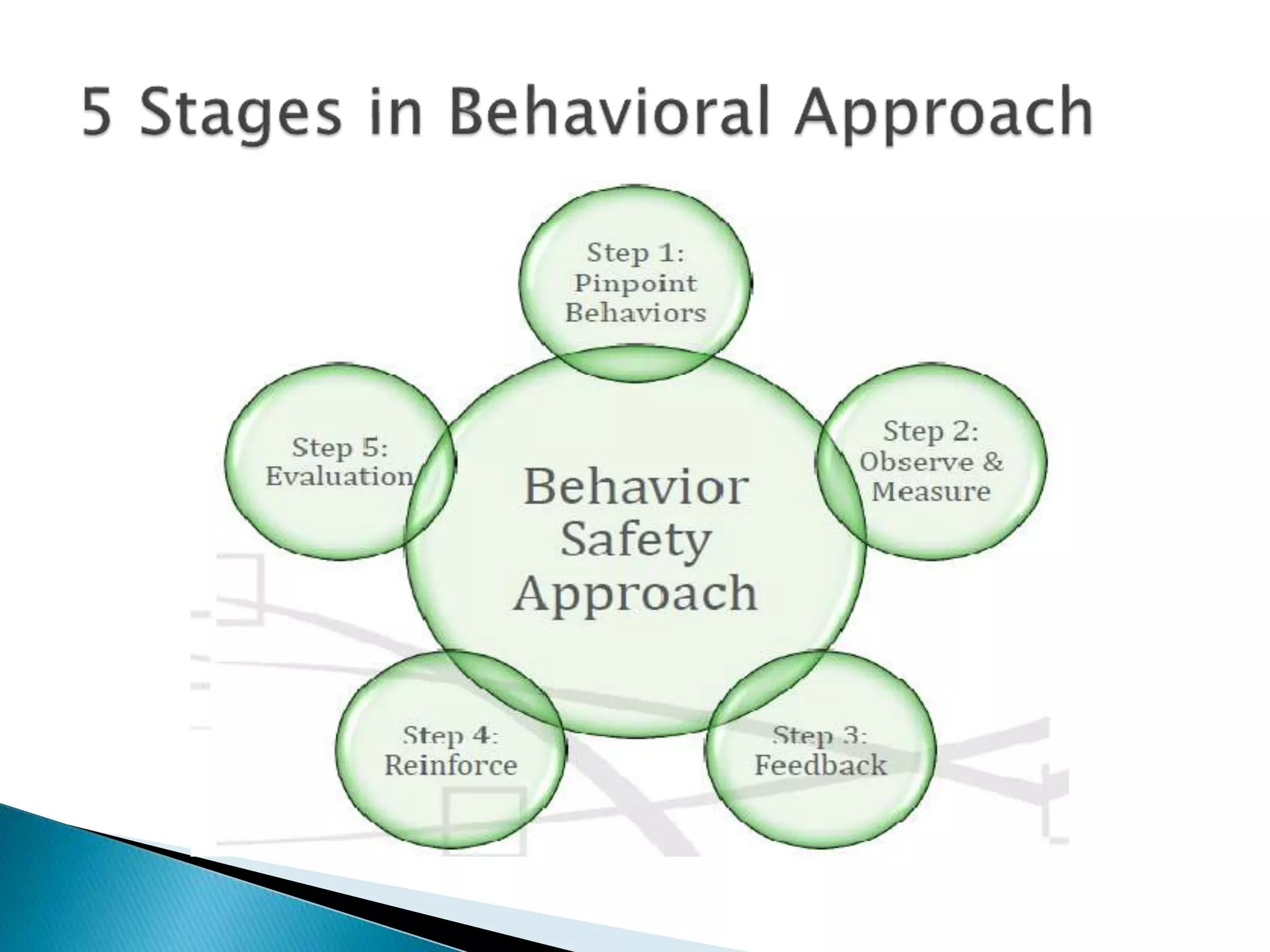
 It is a process through which work groups can identify, measure
and change their behaviors.
 This applies principles of ABC behavior model.
 Traditional behavior-based safety approaches:-
1.Identify Unsafe behaviors
2.Train workforce to observe
3.Praise safe behavior , feedback about at-risk behavior
4.Use statistics to develop interventions
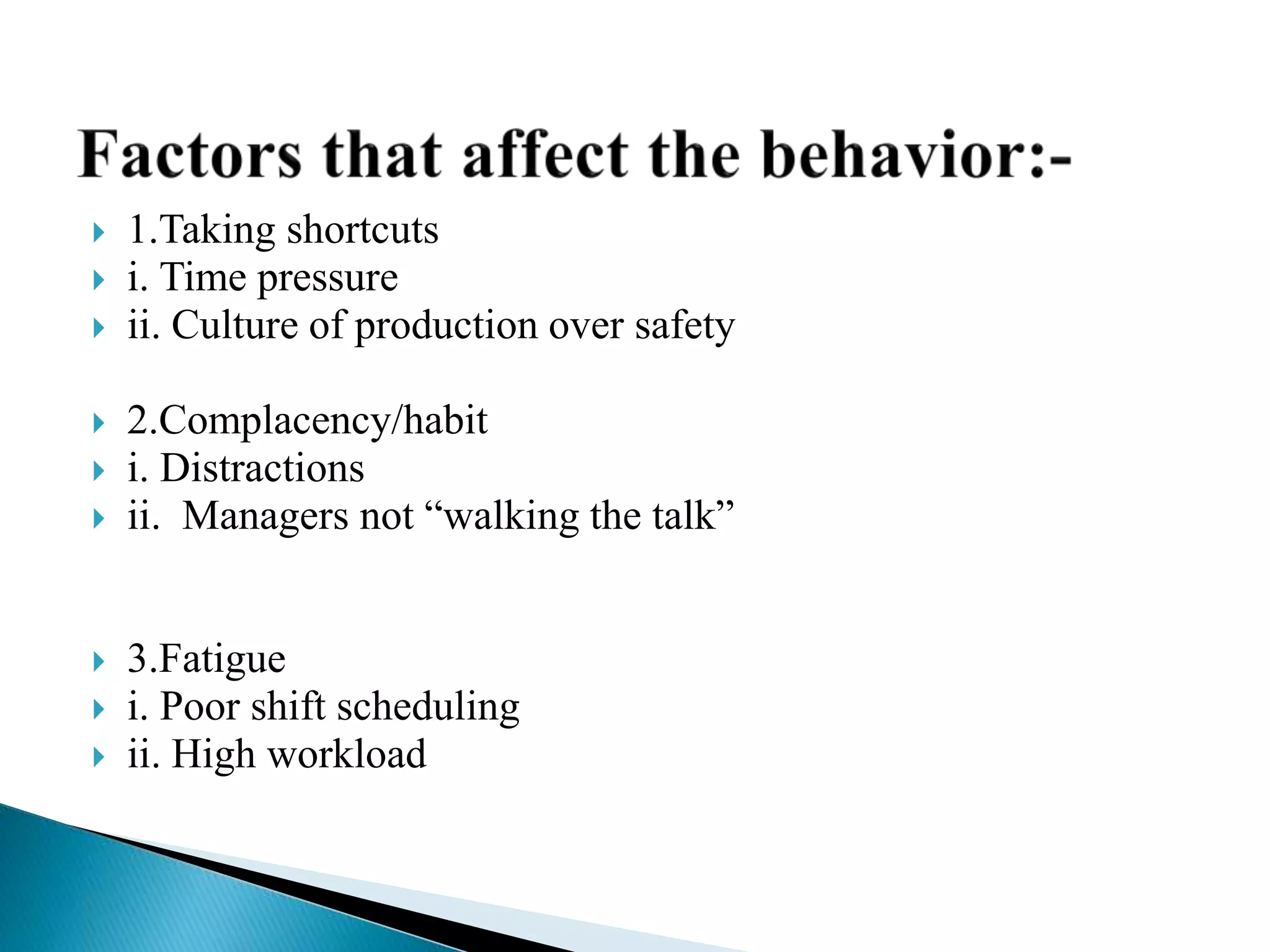
 1.Taking shortcuts
 i. Time pressure
 ii. Culture of production over safety
 2.Complacency/habit
 i. Distractions
 ii. Managers not “walking the talk”
 3.Fatigue
 i. Poor shift scheduling
 ii. High workload
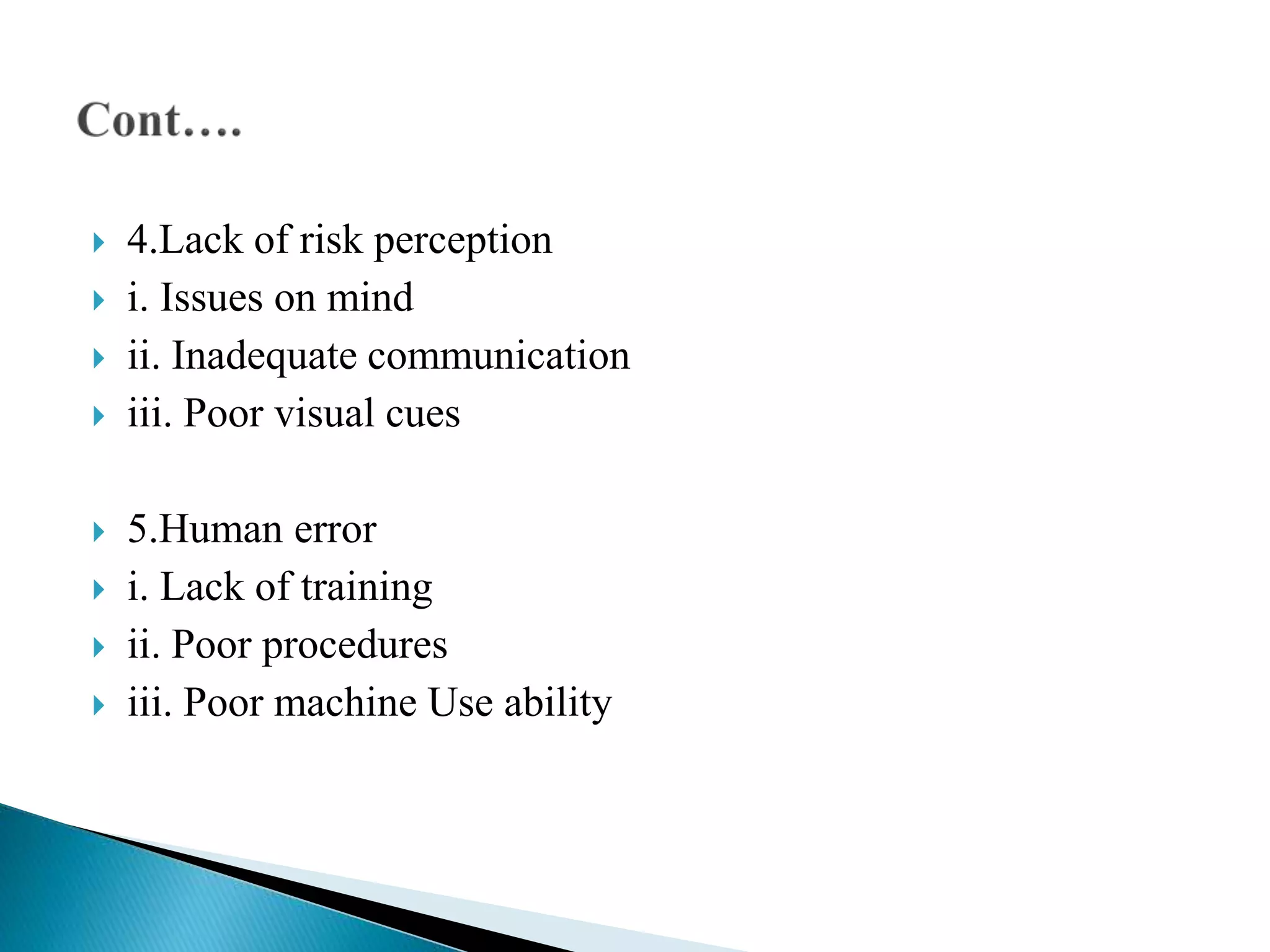
 4.Lack of risk perception
 i. Issues on mind
 ii. Inadequate communication
 iii. Poor visual cues
 5.Human error
 i. Lack of training
 ii. Poor procedures
 iii. Poor machine Use ability
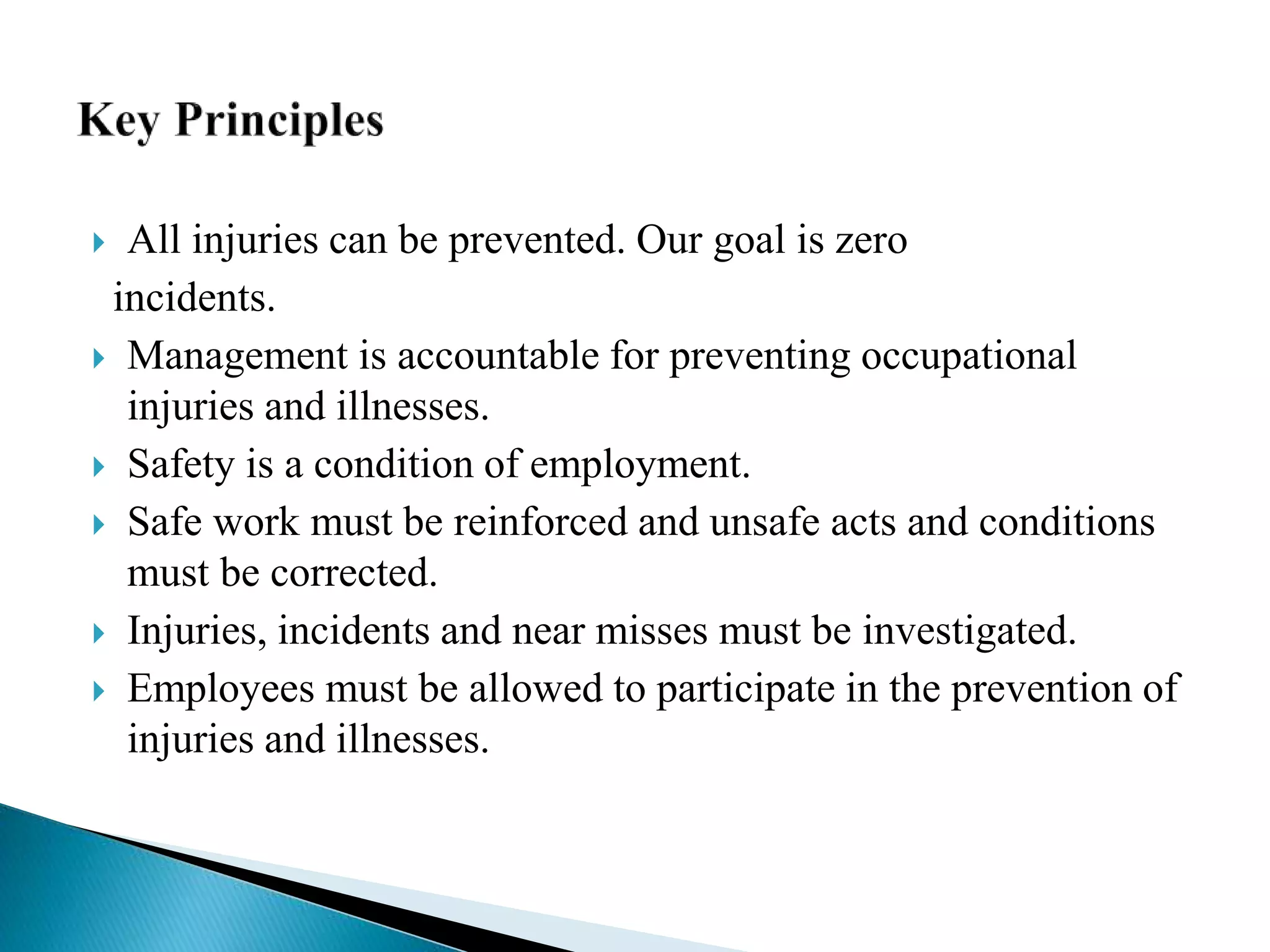
 All injuries can be prevented. Our goal is zero
incidents.
 Management is accountable for preventing occupational
injuries and illnesses.
 Safety is a condition of employment.
 Safe work must be reinforced and unsafe acts and conditions
must be corrected.
 Injuries, incidents and near misses must be investigated.
 Employees must be allowed to participate in the prevention of
injuries and illnesses.
 Improve Quality.
 Improve Absenteeism.
 Maintain a Healthier Work Force.
 Reduce Injury and Illness Rates.
 Acceptance of High-Turnover Jobs.
 Workers Feel Good About Their Work.
 Reduce Workers’ Compensation Costs.
 Elevate SAFETY to a Higher Level of Awareness.
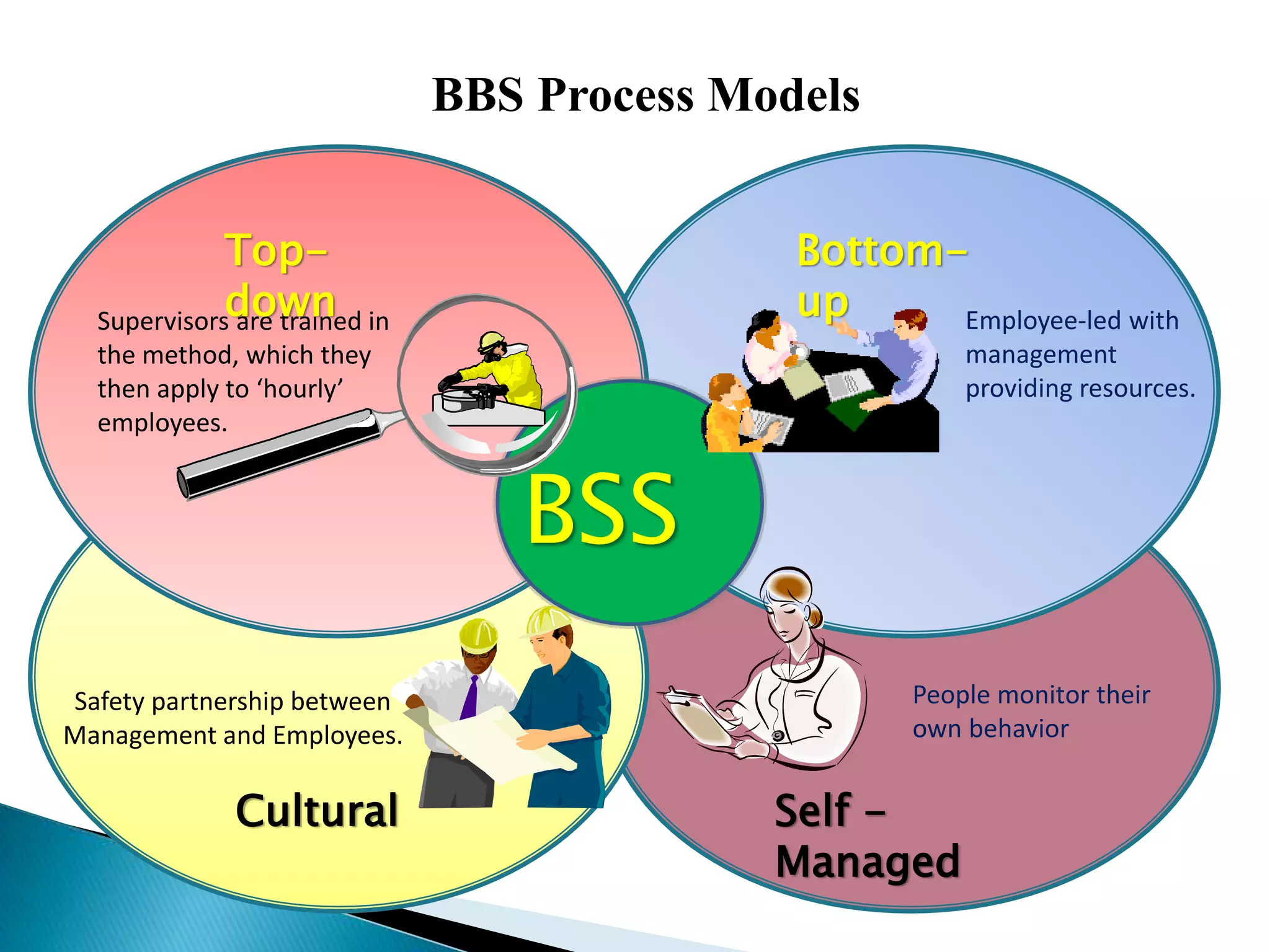
People monitor their
own behavior
Self -
Managed
Supervisors are trained in
the method, which they
then apply to ‘hourly’
employees.
BSS
Employee-led with
management
providing resources.
Safety partnership between
Management and Employees.
Top-
down
Bottom-
up
Cultural
BBS Process Models
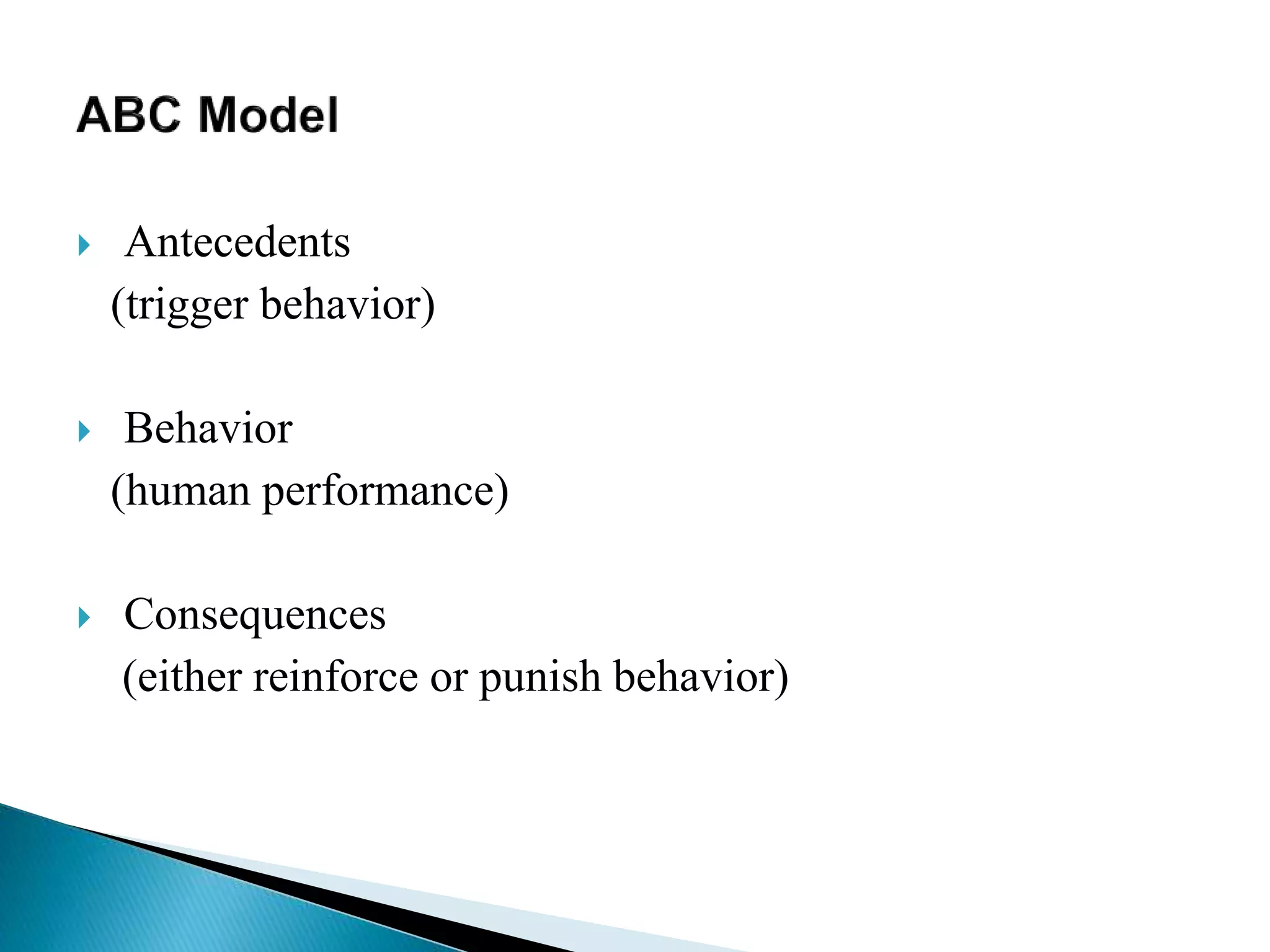
 Antecedents
(trigger behavior)
 Behavior
(human performance)
 Consequences
(either reinforce or punish behavior)
 Three Elements:-
 Activator - is a person, place, thing, coming before a behavior
that encourages you to perform that behavior.
 Activators only set the stage for behavior or performance -
they don’t control it.
 Behavior - is something you can see a person doing.
 Any directly measurable thing that a person does, including
speaking, acting, and performing physical functions.
 Consequence – Events that follow behaviors.
 Events that follow behaviors and change the probability that
they will recur in the future
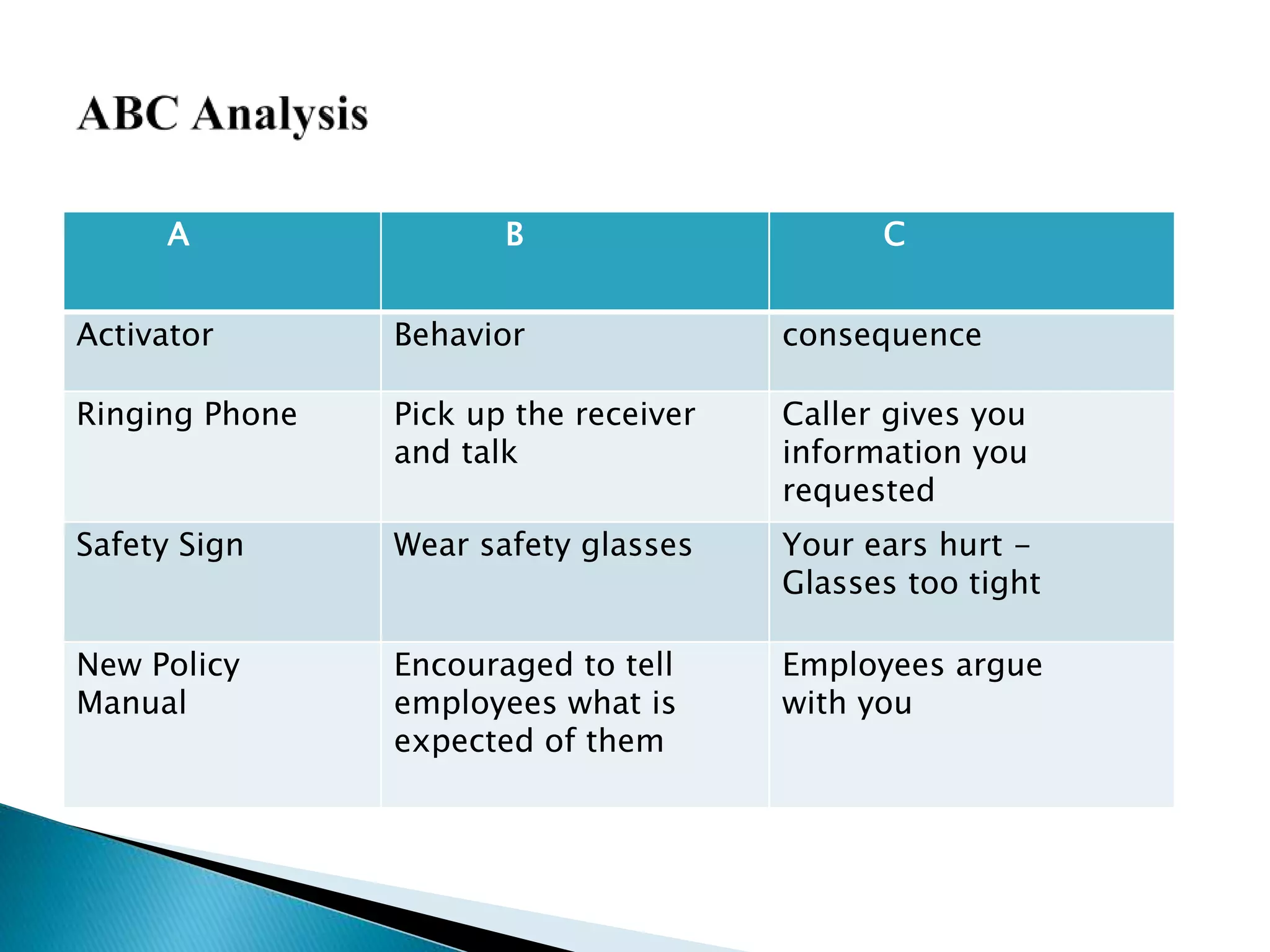
A B C
Activator Behavior consequence
Ringing Phone Pick up the receiver
and talk
Caller gives you
information you
requested
Safety Sign Wear safety glasses Your ears hurt -
Glasses too tight
New Policy
Manual
Encouraged to tell
employees what is
expected of them
Employees argue
with you
 Behavioral base safety is required to:-
 Reduce injuries & modify behavior by reinforcing safe work
practices
 Reduce costs
 Increase effective communication
 Increase safety awareness
 Increase observation skills
 Develop leadership skills
 Increase efficiency
 Increase productivity
 Increase Morale
 www.erisolutions.com date-15-03-2015
 Behavioral issues in accidents : a study by Pramod Phatak&
Govind Swaroop Pathak.
 Safety at Work(Seventh edition) by John Ridley and John
Channing page no.-393-418.
 Steps for the Behavioral Based Safety: A Case Study
Approach by Faridah Ismail and Ahmad Ezanee Hashim,
Member, IACSIT.

Behavioural base safety

  • 1.
    PRESENTED TO:- PRESENTEDBY:- Dr.B.M.KUNAR RAHUL BHATT(11MN38) DEPARTMENT OF MINING RAJNISH RANJAN(11MN39) ENGINEERING SANJIV KUMAR MEENA(11MN41) NITK , SURATHKAL SHANKAR DODAMANI(11MN42)
  • 2.
     History ofBehavioral base safety  What is behavior  What is Attitudes  What is behavioral base safety  Why behavioral base safety  Behavior base safety process  Factors affecting the behavior base safety  Behavioral base safety is important  ABC model  Conclusion  References
  • 3.
     1960’s –1st formal study – Posters = Behavior Change Fortune 500 companies begin use of behavioral principles with Quality, Productivity  1970’s – Robust academic studies = Fledgling BBS movement.  1980’s – US Academe & Commercialization = BBS providers.  1990’s – BBS spreads to entire English speaking world.  2000 plus – BBS spreads to become worldwide phenomena.
  • 4.
     Behavior IsWhat a Person Does or Says.  What Causes a Person to Take This Particular Behavior or Course of Action Depends On Other Influencing Factors.  Attitude and Situational Conditions Cause The Particular Behavior.  What Influences Behavior :-  Motivation.  Intelligence.  Emotions.  Experience.  Attitude  Situational Conditions
  • 5.
     When aPersons Attitude Changes, His or Her Behavior Will Typically Follow. Assuming He or She Has Adequate Knowledge of the Safe Working Conditions in the Work Environment.  When You Eliminate Every Other Reason for Unacceptable Behavior, What Is Left It Attitudinal.  If a Person Understands That His or Her Safety at Work is Controllable in a Measurable Way, Acceptance of Safety as an Essential Part of the Work Environment Will Be Increased. Safe Attitudes and Behaviors Will Naturally Follow.  Motivation changes attitude and attitude drives behavior.
  • 6.
     A processthat creates a safety partnership between management and employees that continually focuses people's attentions and actions on theirs, and others, daily safety behavior.  BBS "focuses on what people do, analyzes why they do it, and then applies a research-supported intervention strategy to improve what people do".  The application of behavioral psychology to promote safe behavior in the workplace using employee involvement.  They collect some observations data in an organization and then analyze to reduce injury and continuous improvement in safety.
  • 7.
     Injuries aregoing up.  Most traditional safety programs plateau.  To achieve zero accidents we need to change our thinking.  96% of injuries are a result of unsafe behaviors.  Measurement of incidents and injuries is reactive.  Measurement of behaviors is proactive.  Behavior modification is dealing with the root cause.  Cultural change.  Stop the accident cycle.
  • 8.
     It isa process through which work groups can identify, measure and change their behaviors.  This applies principles of ABC behavior model.  Traditional behavior-based safety approaches:- 1.Identify Unsafe behaviors 2.Train workforce to observe 3.Praise safe behavior , feedback about at-risk behavior 4.Use statistics to develop interventions
  • 10.
     1.Taking shortcuts i. Time pressure  ii. Culture of production over safety  2.Complacency/habit  i. Distractions  ii. Managers not “walking the talk”  3.Fatigue  i. Poor shift scheduling  ii. High workload
  • 11.
     4.Lack ofrisk perception  i. Issues on mind  ii. Inadequate communication  iii. Poor visual cues  5.Human error  i. Lack of training  ii. Poor procedures  iii. Poor machine Use ability
  • 12.
     All injuriescan be prevented. Our goal is zero incidents.  Management is accountable for preventing occupational injuries and illnesses.  Safety is a condition of employment.  Safe work must be reinforced and unsafe acts and conditions must be corrected.  Injuries, incidents and near misses must be investigated.  Employees must be allowed to participate in the prevention of injuries and illnesses.
  • 13.
     Improve Quality. Improve Absenteeism.  Maintain a Healthier Work Force.  Reduce Injury and Illness Rates.  Acceptance of High-Turnover Jobs.  Workers Feel Good About Their Work.  Reduce Workers’ Compensation Costs.  Elevate SAFETY to a Higher Level of Awareness.
  • 14.
    People monitor their ownbehavior Self - Managed Supervisors are trained in the method, which they then apply to ‘hourly’ employees. BSS Employee-led with management providing resources. Safety partnership between Management and Employees. Top- down Bottom- up Cultural BBS Process Models
  • 15.
     Antecedents (trigger behavior) Behavior (human performance)  Consequences (either reinforce or punish behavior)
  • 16.
     Three Elements:- Activator - is a person, place, thing, coming before a behavior that encourages you to perform that behavior.  Activators only set the stage for behavior or performance - they don’t control it.  Behavior - is something you can see a person doing.  Any directly measurable thing that a person does, including speaking, acting, and performing physical functions.
  • 17.
     Consequence –Events that follow behaviors.  Events that follow behaviors and change the probability that they will recur in the future
  • 18.
    A B C ActivatorBehavior consequence Ringing Phone Pick up the receiver and talk Caller gives you information you requested Safety Sign Wear safety glasses Your ears hurt - Glasses too tight New Policy Manual Encouraged to tell employees what is expected of them Employees argue with you
  • 19.
     Behavioral basesafety is required to:-  Reduce injuries & modify behavior by reinforcing safe work practices  Reduce costs  Increase effective communication  Increase safety awareness
  • 20.
     Increase observationskills  Develop leadership skills  Increase efficiency  Increase productivity  Increase Morale
  • 21.
     www.erisolutions.com date-15-03-2015 Behavioral issues in accidents : a study by Pramod Phatak& Govind Swaroop Pathak.  Safety at Work(Seventh edition) by John Ridley and John Channing page no.-393-418.  Steps for the Behavioral Based Safety: A Case Study Approach by Faridah Ismail and Ahmad Ezanee Hashim, Member, IACSIT.