Behavior:
• Any directly measurable thing that a person does, including
speaking, acting, and performing physical functions.
Definitions:
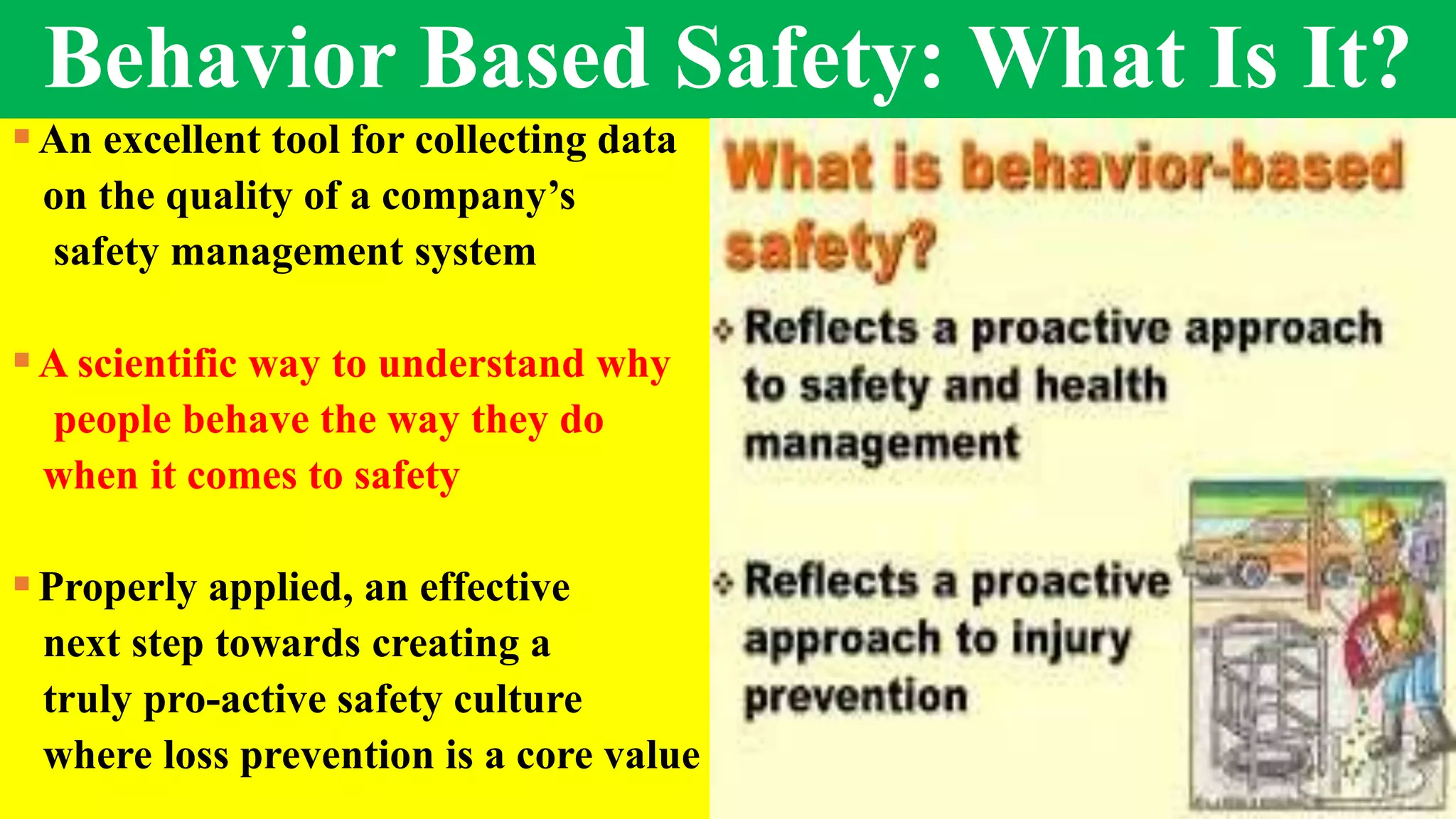
An excellent tool for collecting data
on the quality of a company’s
safety management system
A scientific way to understand why
people behave the way they do
when it comes to safety
Properly applied, an effective
next step towards creating a
truly pro-active safety culture
where loss prevention is a core value
Behavior Based Safety: What Is It?
To create a workplace safety culture
that eliminates unsafe behaviors.
What is the goal of BBS?
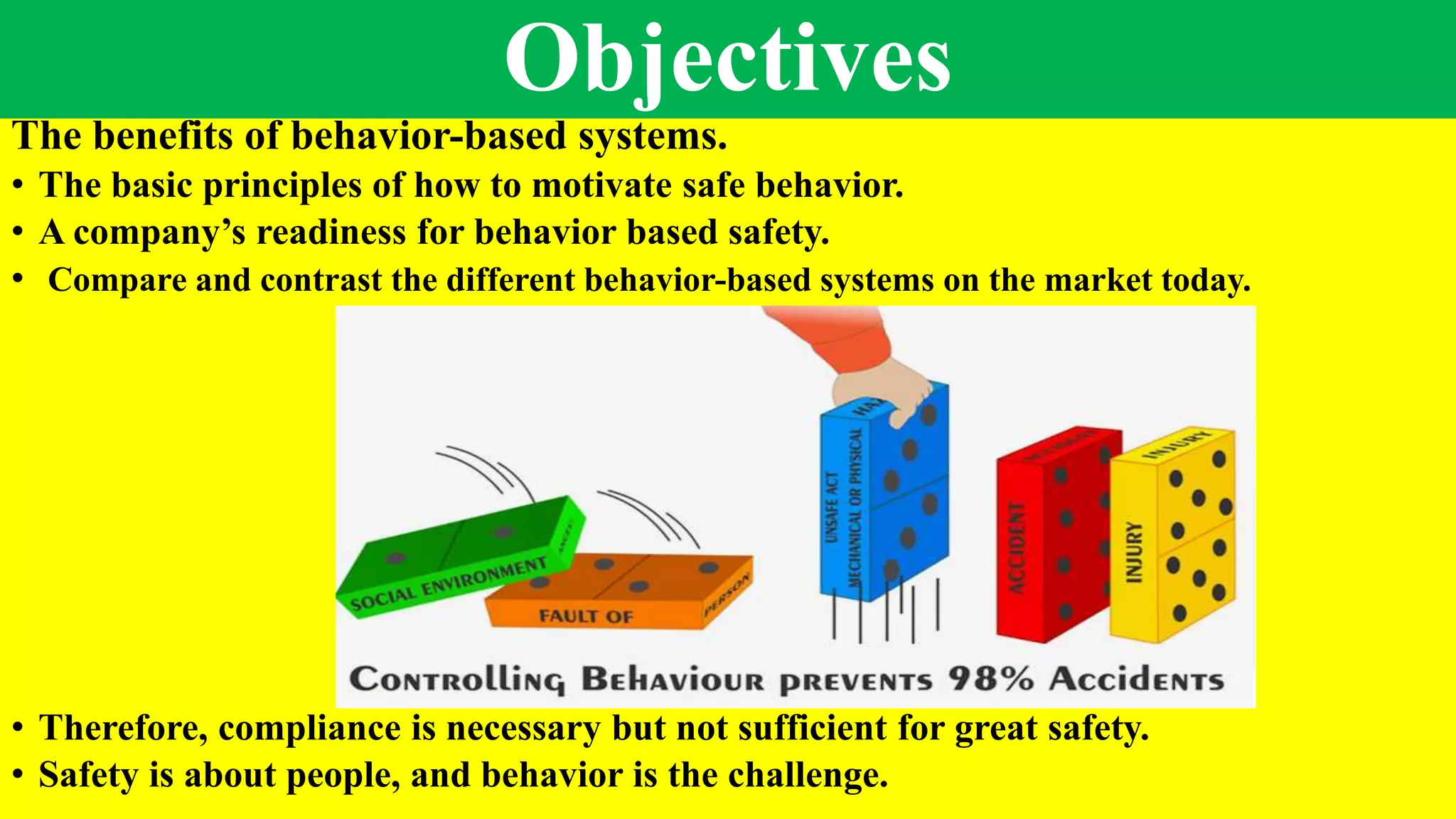
The benefits of behavior-based systems.
• The basic principles of how to motivate safe behavior.
• A company’s readiness for behavior based safety.
• Compare and contrast the different behavior-based systems on the market today.
• Therefore, compliance is necessary but not sufficient for great safety.
• Safety is about people, and behavior is the challenge.
Objectives
•Poorly Maintained Facilities
•Top-down Management Practices
•Poor Planning / Execution
•Inadequate Training
Obstacles To Success:
Leader:
 Culture that strongly
values & supports EHS
Continuous improvement
Follower:
Compliance minded
View safety as a legal
responsibility with
little or no value
Gambler:
Lack knowledge, resources, will to even achieve compliance
Manage safety with eyes closed and fingers crossed
How Do You Deal with Safety?
• Reactive Behavior
• Personal Protective Equipment
• Specific Job Risks
• Tools and Equipment
• Safe Work Practices
• Ergonomics
OBSERVATION
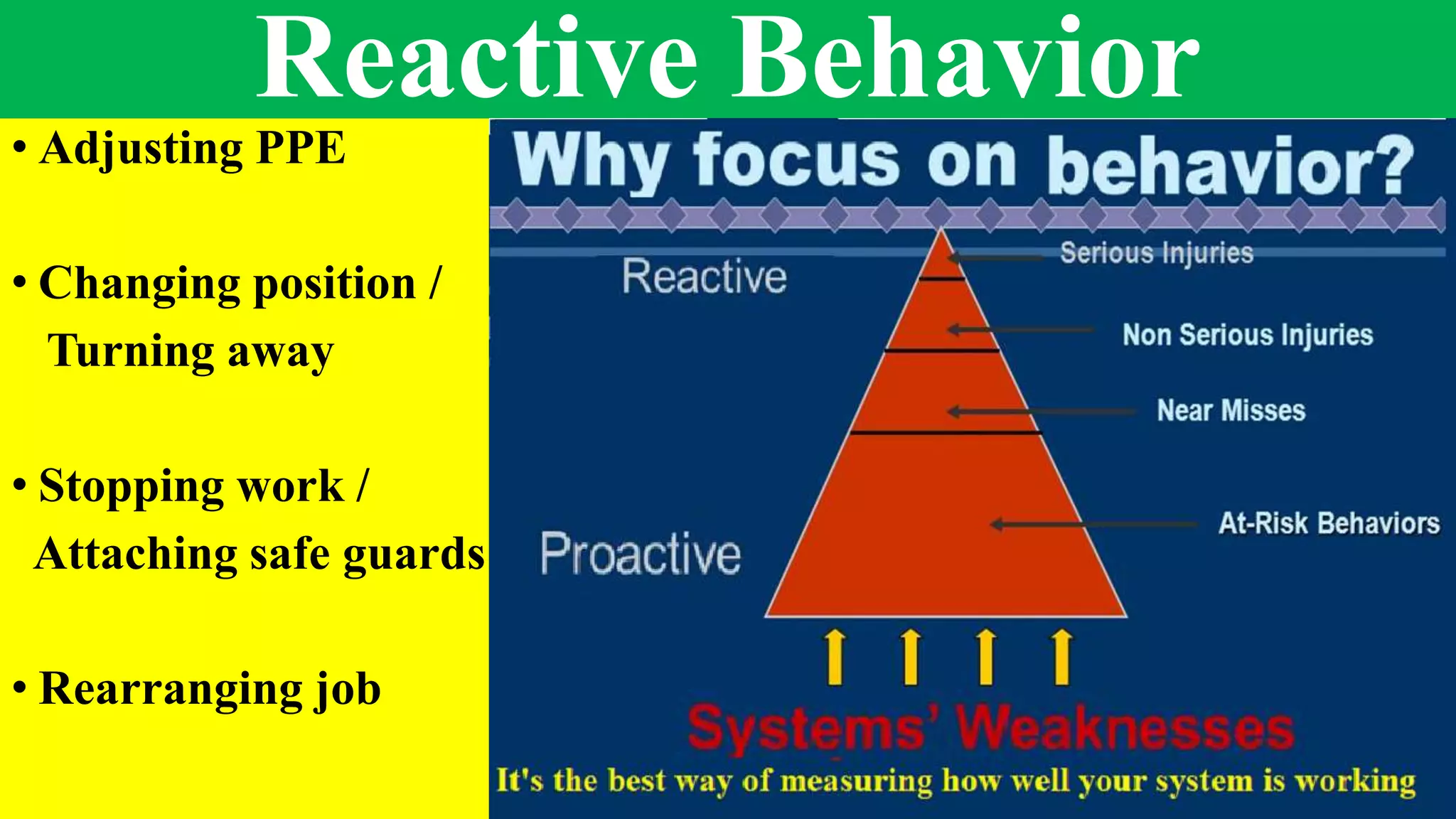
• Adjusting PPE
• Changing position /
Turning away
• Stopping work /
Attaching safe guards
• Rearranging job
Reactive Behavior
•Head gear
•Eye protection and
face shielding
•Hearing protection
•Respiratory protection
•Arm and hand covering
•Foot and leg protection
Personal Protective Equipment
• Strike against or caught
• Line of fire
• Fall, slip hazard
• Contact hot, chemical or electric
• Inhale or swallow hazardous substance
Specific Job Risks
•Wrong for the job
•Used incorrectly
•In need of repair or maintenance
•Clutter अव्यवस्था &
poor housekeeping
Tools and Equipment
•Not defined
•Not known or understood
•Ignored or done poorly
•Not compatible with task
Safe Work Practices
•Forceful exertions
•Awkward postures
•High repetition
•Long duration w/o rest
Ergonomics
Ground Rules
 Respect everyone’s contribution
 Everyone’s opinion is of value
 HSE & Senior Person will guide you
regarding HSE and you have to respect them
 Give everyone a chance to speak
 One conversation at a time and No talking over each other
 Do not discuss what someone has said with others outside the room
Ground Rules
1. No horse play (Verbal or Physical Abusing)
2. No politics talking
3. No country wise discussed
4. No religion discussed
5. No fighting
6. No harassment in any matter
7. Don’t put finger in mouth or nose front of person
8. No discussion person’s body colour
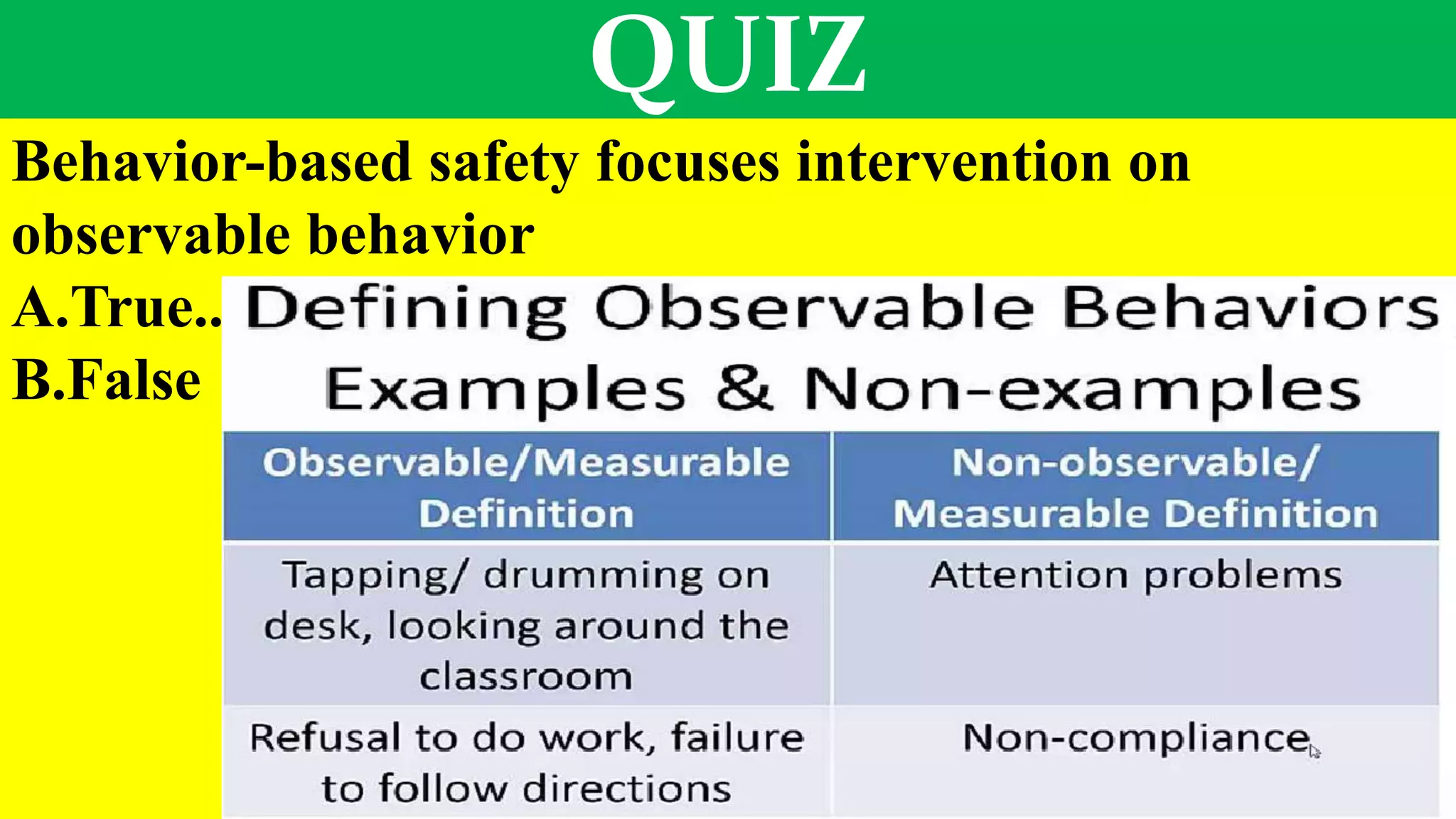
Behavior-based safety focuses intervention on
observable behavior
A.True..
B.False
QUIZ
Behavior-base safety looks for internal factors to
understand and improve behaviors.
A.True
B.False..
QUIZ
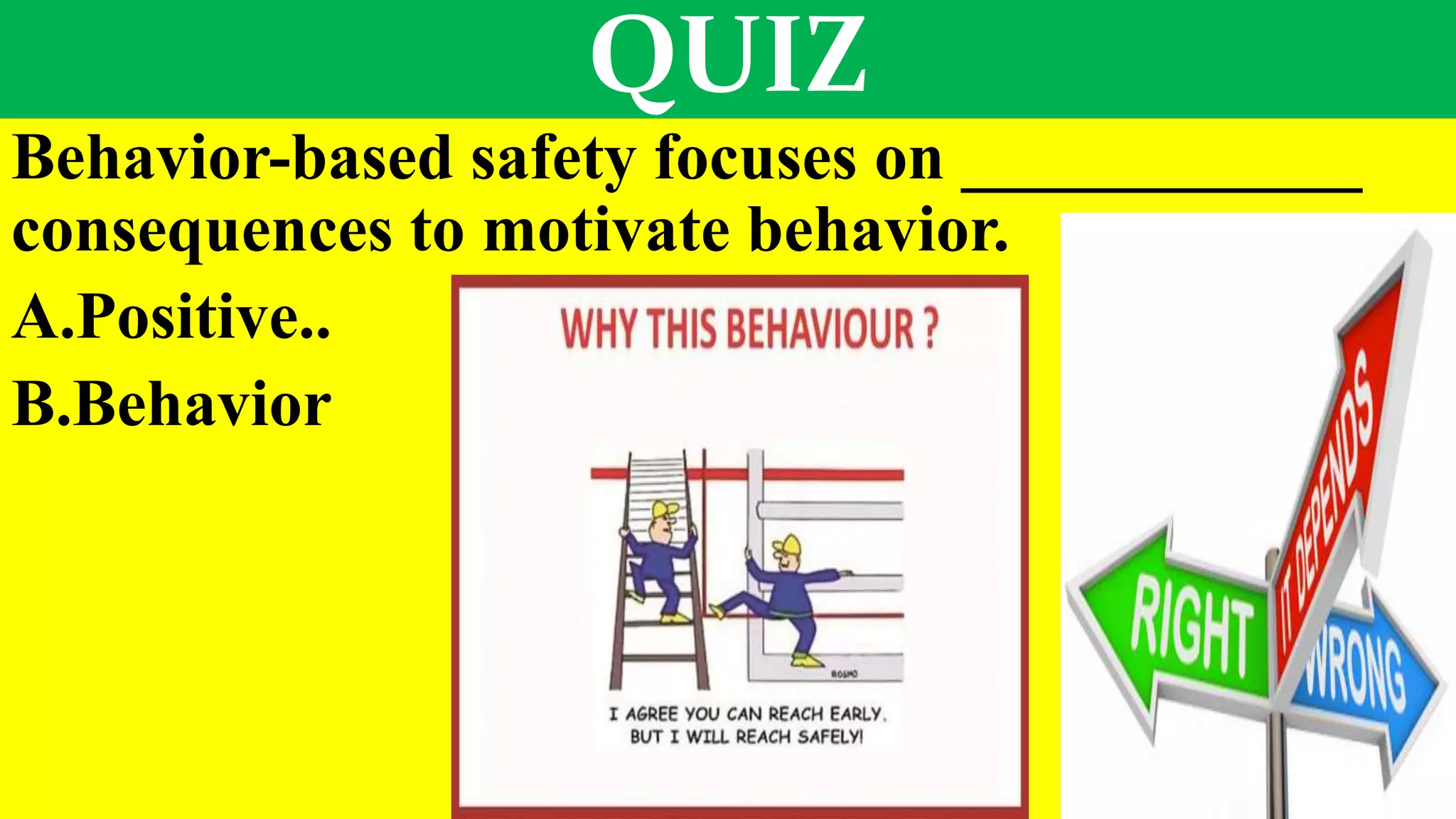
Behavior-based safety focuses on ____________
consequences to motivate behavior.
A.Positive..
B.Behavior
QUIZ
Safety in the workplace is a combination of three
measurable components:
A.Environment..
B.Accidents
C.Worker..
D.Behavior..
QUIZ
Lack of motivation often centers around
attitudinal problems.
A.True..
B.False
QUIZ
The majority of programs and processes do not
address human behaviors.
A.True..
B.False
QUIZ
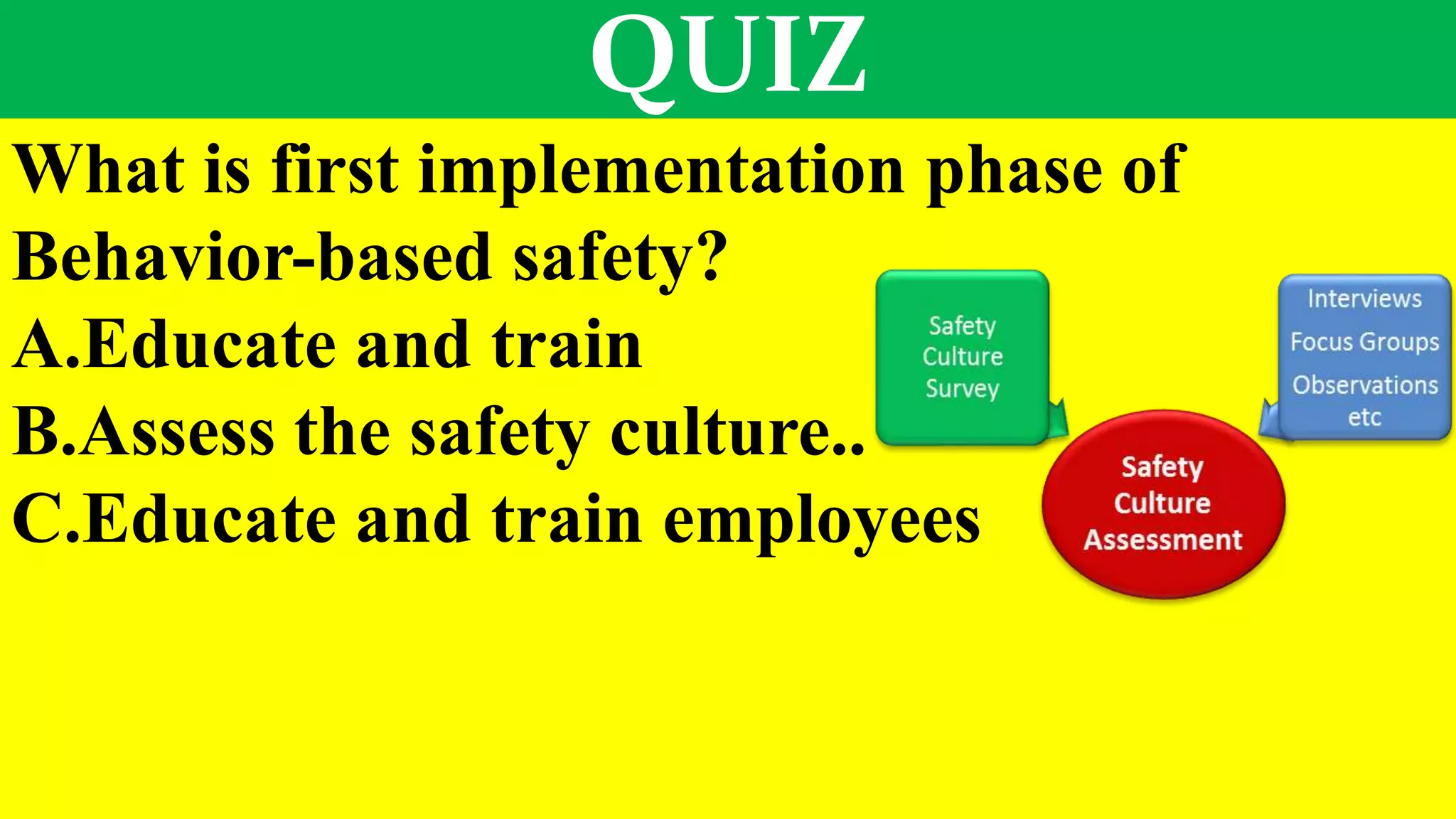
What is first implementation phase of
Behavior-based safety?
A.Educate and train
B.Assess the safety culture..
C.Educate and train employees
QUIZ
The corporate safety culture should ___________ employees
to set and achieve their own goals.
A. Empower..
B. Comply
QUIZ
In the "Do It" process, Define behaviors include
work practices, training, and equipment.
A.True..
B.False
QUIZ
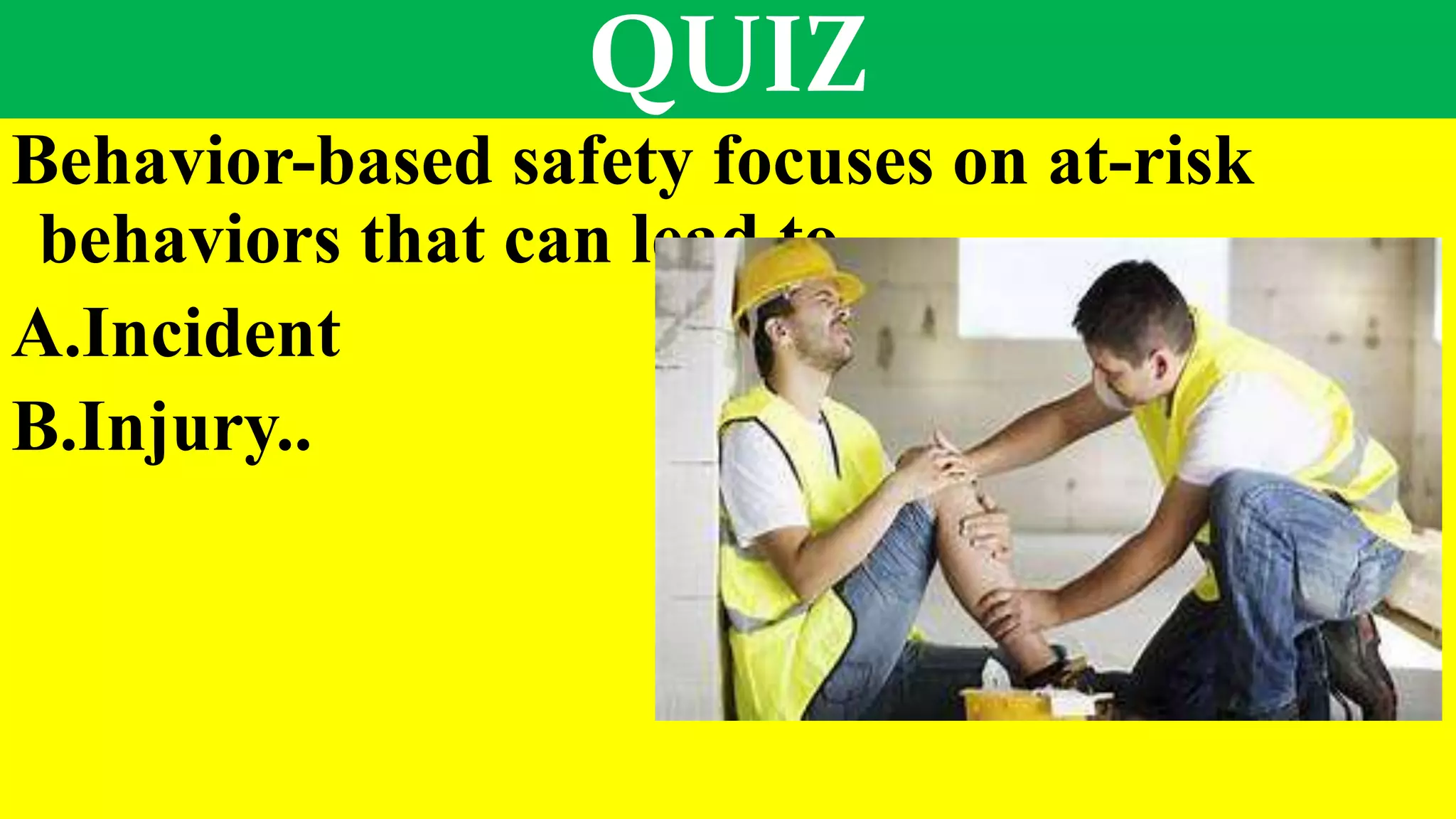
Behavior-based safety focuses on at-risk
behaviors that can lead to _
A.Incident
B.Injury..
QUIZ
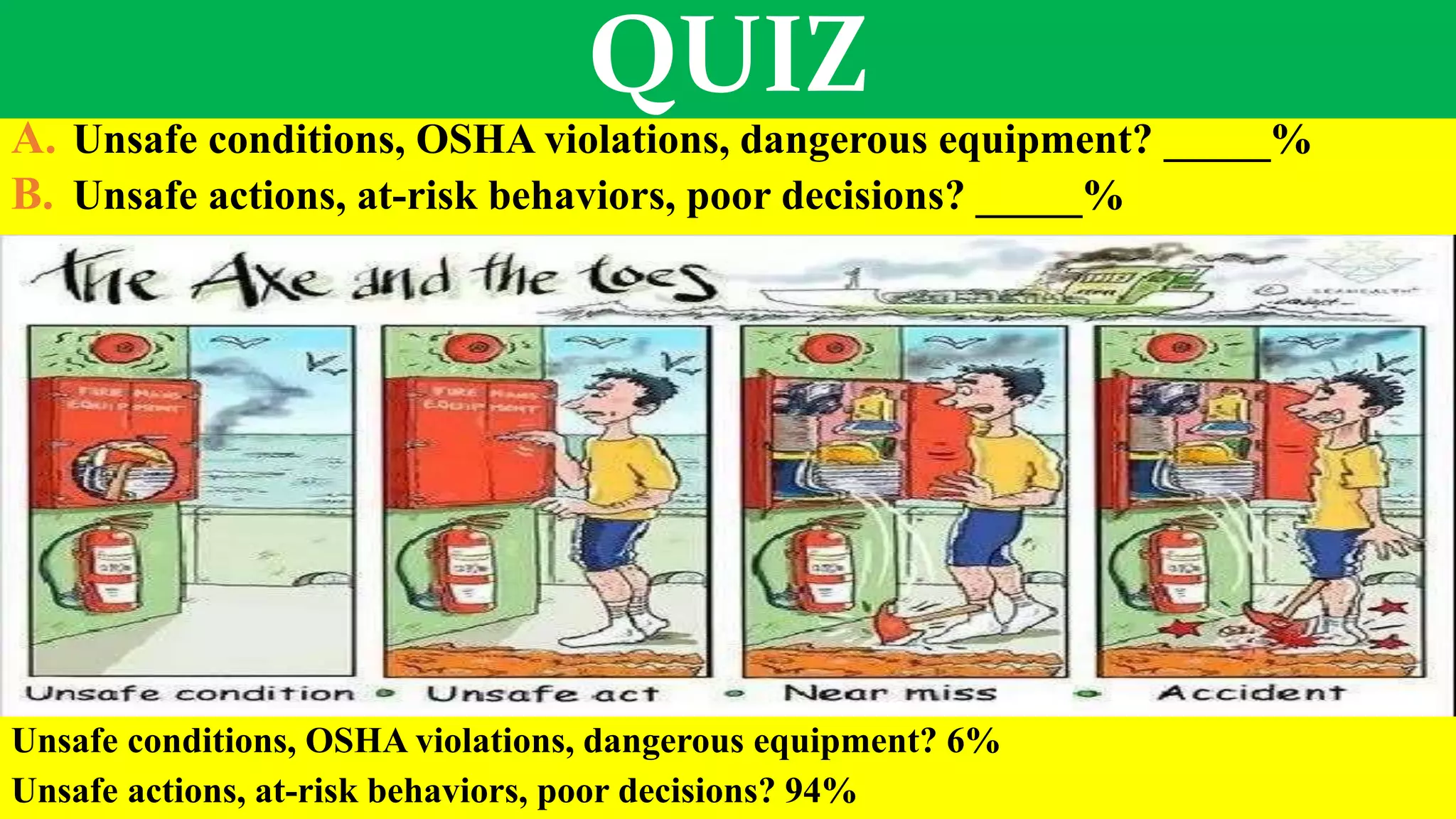
A. Unsafe conditions, OSHA violations, dangerous equipment? _____%
B. Unsafe actions, at-risk behaviors, poor decisions? _____%
Unsafe conditions, OSHA violations, dangerous equipment? 6%
Unsafe actions, at-risk behaviors, poor decisions? 94%
QUIZ
Behavior Based Safety Awareness.pptx

Behavior Based Safety Awareness.pptx

  • 3.
    Behavior: • Any directlymeasurable thing that a person does, including speaking, acting, and performing physical functions. Definitions:
  • 4.
    An excellent toolfor collecting data on the quality of a company’s safety management system A scientific way to understand why people behave the way they do when it comes to safety Properly applied, an effective next step towards creating a truly pro-active safety culture where loss prevention is a core value Behavior Based Safety: What Is It?
  • 5.
    To create aworkplace safety culture that eliminates unsafe behaviors. What is the goal of BBS?
  • 7.
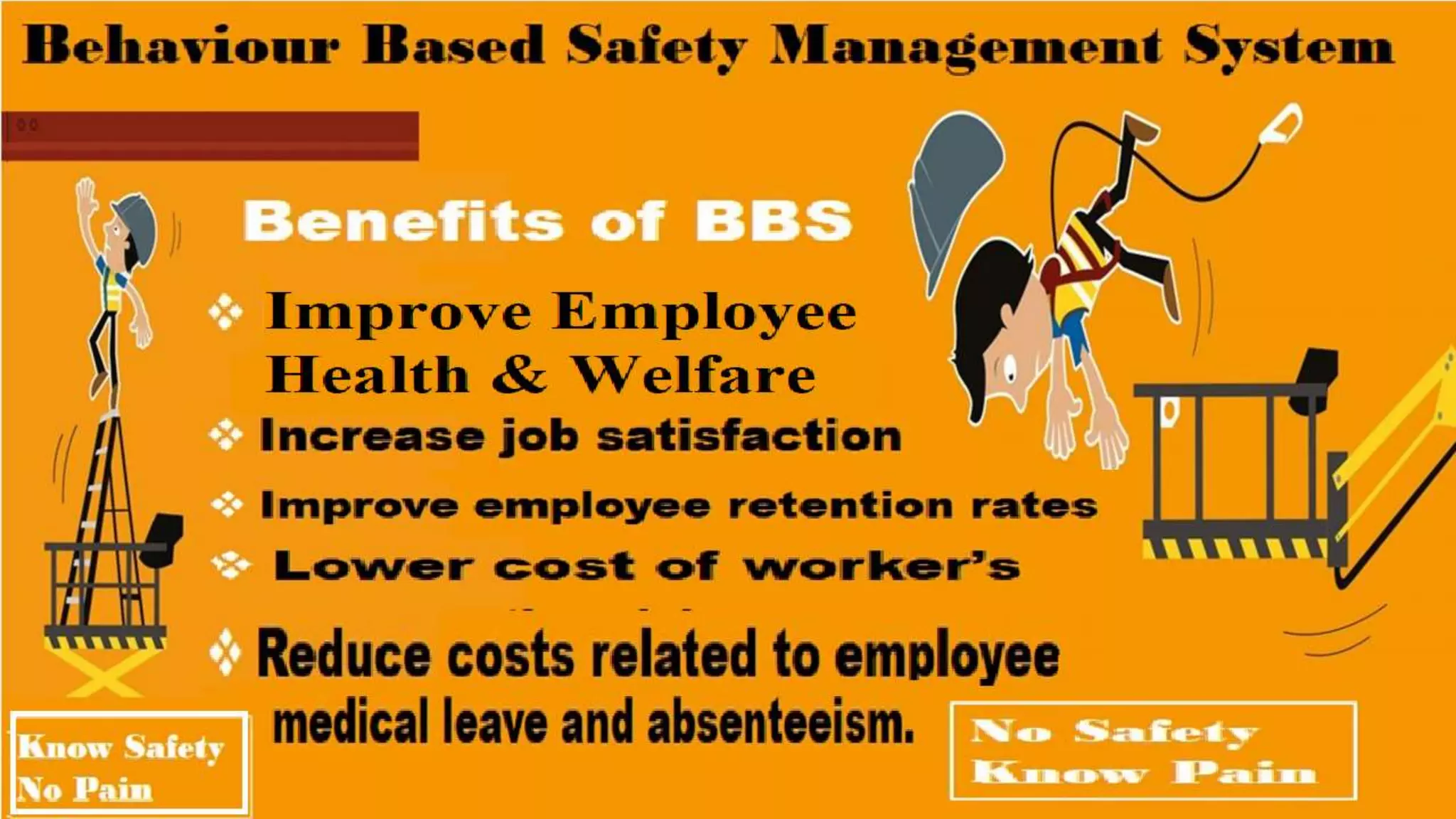
    The benefits ofbehavior-based systems. • The basic principles of how to motivate safe behavior. • A company’s readiness for behavior based safety. • Compare and contrast the different behavior-based systems on the market today. • Therefore, compliance is necessary but not sufficient for great safety. • Safety is about people, and behavior is the challenge. Objectives
  • 8.
    •Poorly Maintained Facilities •Top-downManagement Practices •Poor Planning / Execution •Inadequate Training Obstacles To Success:
  • 9.
    Leader:  Culture thatstrongly values & supports EHS Continuous improvement Follower: Compliance minded View safety as a legal responsibility with little or no value Gambler: Lack knowledge, resources, will to even achieve compliance Manage safety with eyes closed and fingers crossed How Do You Deal with Safety?
  • 10.
    • Reactive Behavior •Personal Protective Equipment • Specific Job Risks • Tools and Equipment • Safe Work Practices • Ergonomics OBSERVATION
  • 11.
    • Adjusting PPE •Changing position / Turning away • Stopping work / Attaching safe guards • Rearranging job Reactive Behavior
  • 12.
    •Head gear •Eye protectionand face shielding •Hearing protection •Respiratory protection •Arm and hand covering •Foot and leg protection Personal Protective Equipment
  • 13.
    • Strike againstor caught • Line of fire • Fall, slip hazard • Contact hot, chemical or electric • Inhale or swallow hazardous substance Specific Job Risks
  • 14.
    •Wrong for thejob •Used incorrectly •In need of repair or maintenance •Clutter अव्यवस्था & poor housekeeping Tools and Equipment
  • 15.
    •Not defined •Not knownor understood •Ignored or done poorly •Not compatible with task Safe Work Practices
  • 16.
    •Forceful exertions •Awkward postures •Highrepetition •Long duration w/o rest Ergonomics
  • 23.
    Ground Rules  Respecteveryone’s contribution  Everyone’s opinion is of value  HSE & Senior Person will guide you regarding HSE and you have to respect them  Give everyone a chance to speak  One conversation at a time and No talking over each other  Do not discuss what someone has said with others outside the room
  • 24.
    Ground Rules 1. Nohorse play (Verbal or Physical Abusing) 2. No politics talking 3. No country wise discussed 4. No religion discussed 5. No fighting 6. No harassment in any matter 7. Don’t put finger in mouth or nose front of person 8. No discussion person’s body colour
  • 26.
    Behavior-based safety focusesintervention on observable behavior A.True.. B.False QUIZ
  • 27.
    Behavior-base safety looksfor internal factors to understand and improve behaviors. A.True B.False.. QUIZ
  • 28.
    Behavior-based safety focuseson ____________ consequences to motivate behavior. A.Positive.. B.Behavior QUIZ
  • 29.
    Safety in theworkplace is a combination of three measurable components: A.Environment.. B.Accidents C.Worker.. D.Behavior.. QUIZ
  • 30.
    Lack of motivationoften centers around attitudinal problems. A.True.. B.False QUIZ
  • 31.
    The majority ofprograms and processes do not address human behaviors. A.True.. B.False QUIZ
  • 32.
    What is firstimplementation phase of Behavior-based safety? A.Educate and train B.Assess the safety culture.. C.Educate and train employees QUIZ
  • 33.
    The corporate safetyculture should ___________ employees to set and achieve their own goals. A. Empower.. B. Comply QUIZ
  • 34.
    In the "DoIt" process, Define behaviors include work practices, training, and equipment. A.True.. B.False QUIZ
  • 35.
    Behavior-based safety focuseson at-risk behaviors that can lead to _ A.Incident B.Injury.. QUIZ
  • 36.
    A. Unsafe conditions,OSHA violations, dangerous equipment? _____% B. Unsafe actions, at-risk behaviors, poor decisions? _____% Unsafe conditions, OSHA violations, dangerous equipment? 6% Unsafe actions, at-risk behaviors, poor decisions? 94% QUIZ