Electrical Technology

    Cut, Bend, and
   install electrical
       conduits
     Stephen Jones
Objectives
•   Identify the types, sizes, and application of PVC conduits
•   State the advantages and disadvantages of using PVC conduits.
•   Identify fittings and fixtures used in the installation of PVC conduits.

•   Given practical exercise, select tools and materials that conform to
    requirements.
•   Make right-angle (90 degrees) bend in PVC conduit.
•   Given materials, Connect fittings to PVC.

•   State the tools requires when working with PVC conduits.
•   Bends must be 90 degrees and without kinks.
•   Conduit must be measured, cut, and bent accurately to minimize
    waste
PVC - Polyvinyl chloride
• The third-most widely produced plastic.

• Used in construction because it is more effective
  than traditional materials such as copper, iron or
  wood in pipe and profile applications.

• It is also used in clothing and upholstery, electrical
  cable insulation, Pipes (electrical and water),
  inflatable products, and many applications in
  which it replaces rubber.
Types of PVC pipes

 Metal conduits

 Non-metal conduits

 Flexible conduits
Metal conduits
• Electrical metallic tubing (EMT), sometimes
  called thin-wall, is commonly used instead of
  galvanized rigid conduit (GRC), as it is less
  costly and lighter than GRC.
• More common in commercial and industrial
  buildings than in residential applications. EMT
  is generally made of coated steel, though it
  may be aluminum.
Electrical metallic tubing
Non-metal conduits

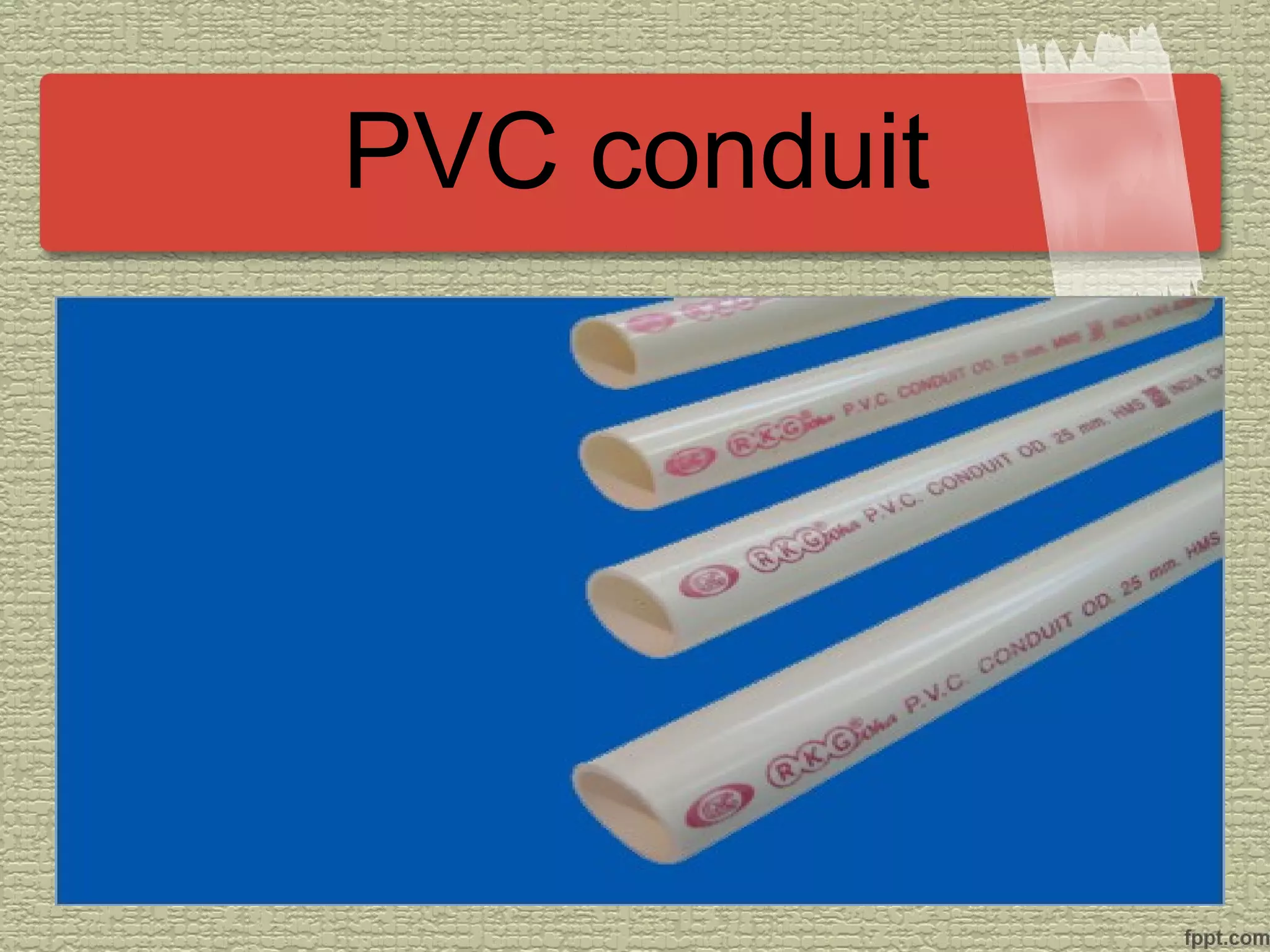
• PVC conduit

• Rigid Nonmetallic Conduit (RNMC)

• Electrical Nonmetallic Tubing (ENT)
Non-metal Conduits
• PVC conduit is the lightest in weight 
  compared to other conduit materials, and 
  usually lower in cost than other forms of 
  conduit. The plastic material resists 
  moisture and many corrosive substances.

• PVC conduit may be heated and bent in 
  the field. 
PVC conduit
Flexible conduits

• Flexible conduits are used to connect to 
  motors or other devices where isolation 
  from vibration is useful, or where an 
  excess number of fittings would be 
  needed to use rigid connections. Electrical 
  codes may restrict the length of a run of 
  some types of flexible conduit.
Flexible conduits
• Flexible Metallic Conduit (FMC) – used in 
  dry places.

• Liquidtight Flexible Metal Conduit (LFMC) 
  – water resistant.

• Liquidtight Flexible Nonmetallic
  Conduit (LFNC) - flame-resistant,
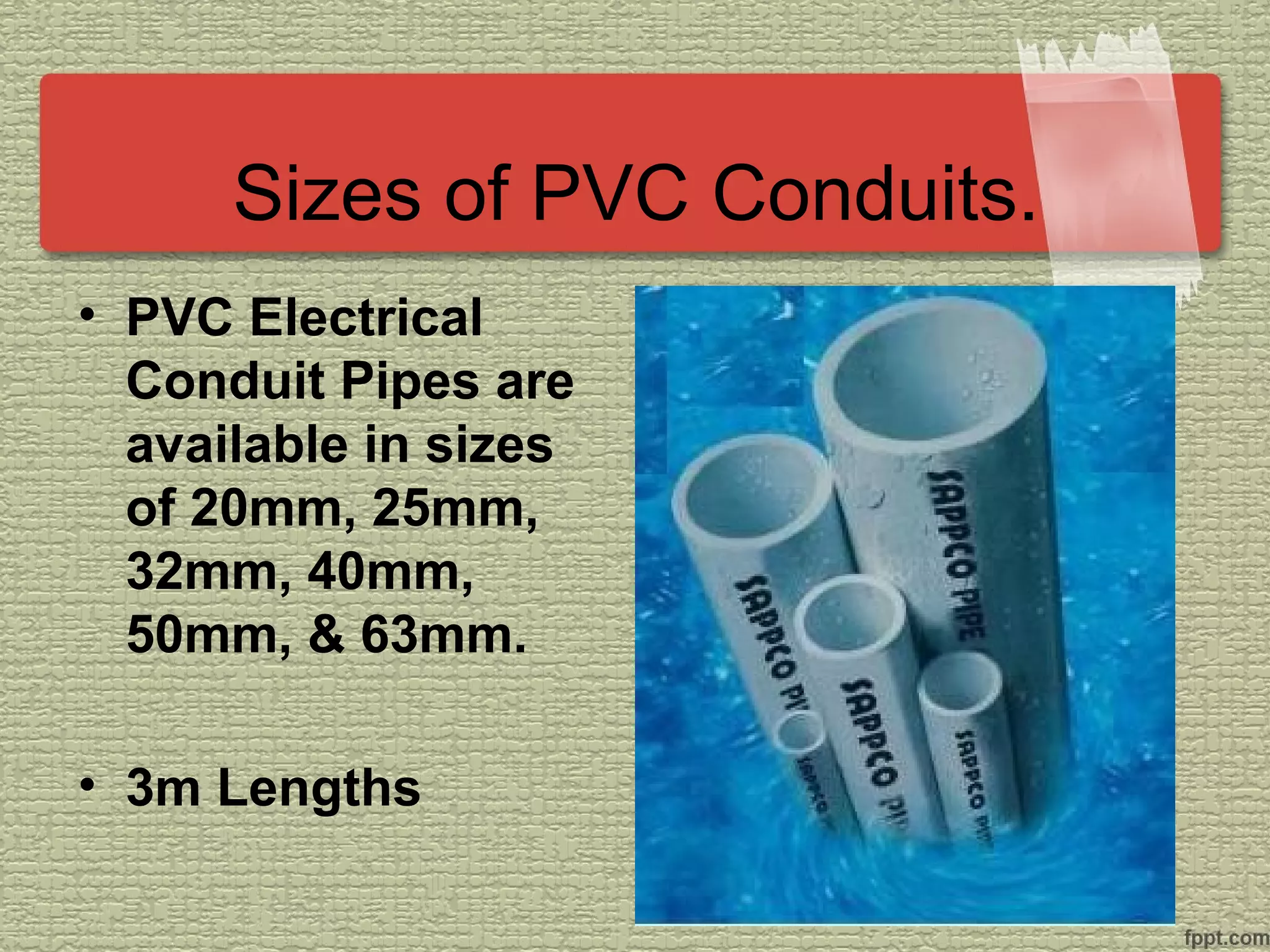
Sizes of PVC Conduits.
• PVC Electrical
  Conduit Pipes are
  available in sizes
  of 20mm, 25mm,
  32mm, 40mm,
  50mm, & 63mm.

• 3m Lengths
Advantages of using PVC
           Conduits.
• Light in weight
• Easy to saw cut and clean.
• Easy to bend.
• Minimal condensation due to low thermal
  conductivity in wall of conduit.
• Cheap
• Excellent electrical and fire resistant
  properties
Disadvantages of using PVC
           Conduits.
• If insufficient adhesive is used the joints may not be
  waterproof.

• PVC expands about 5 times as much as steel and this
  expansion must be allowed for.

• PVC does not offer the same level of mechanical
  protection as steel.

• A separate Circuit Protective Conductor must be run
  inside the conduit.
Fittings and fixtures used in the
   installation of PVC conduits.
                     Saddles
• The saddle, is the device used for fixing
  conduit, they provide a very secure method
  of fixing for conduits.
Saddles


Plain Saddle      Space bar Saddle
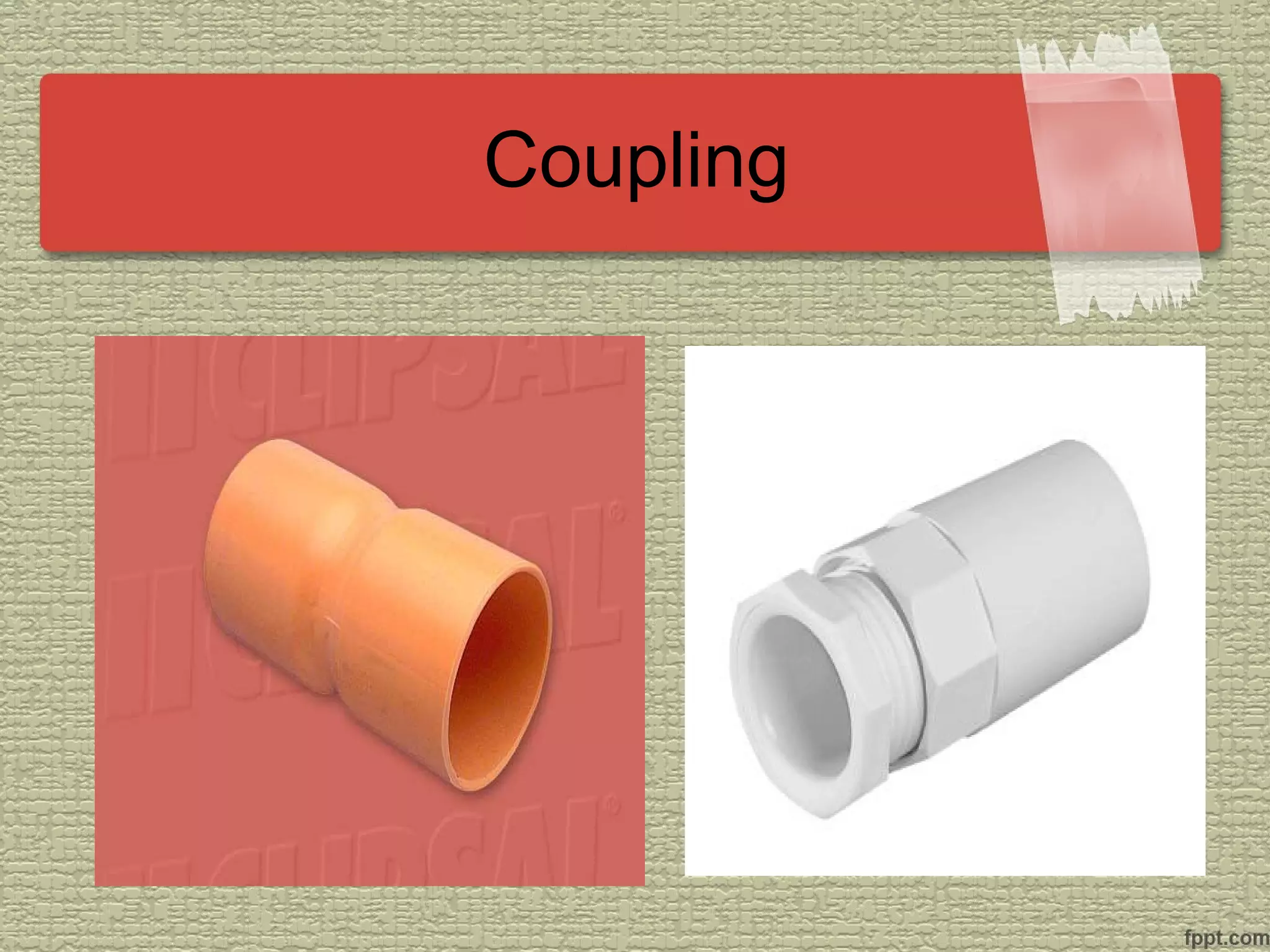
Coupling
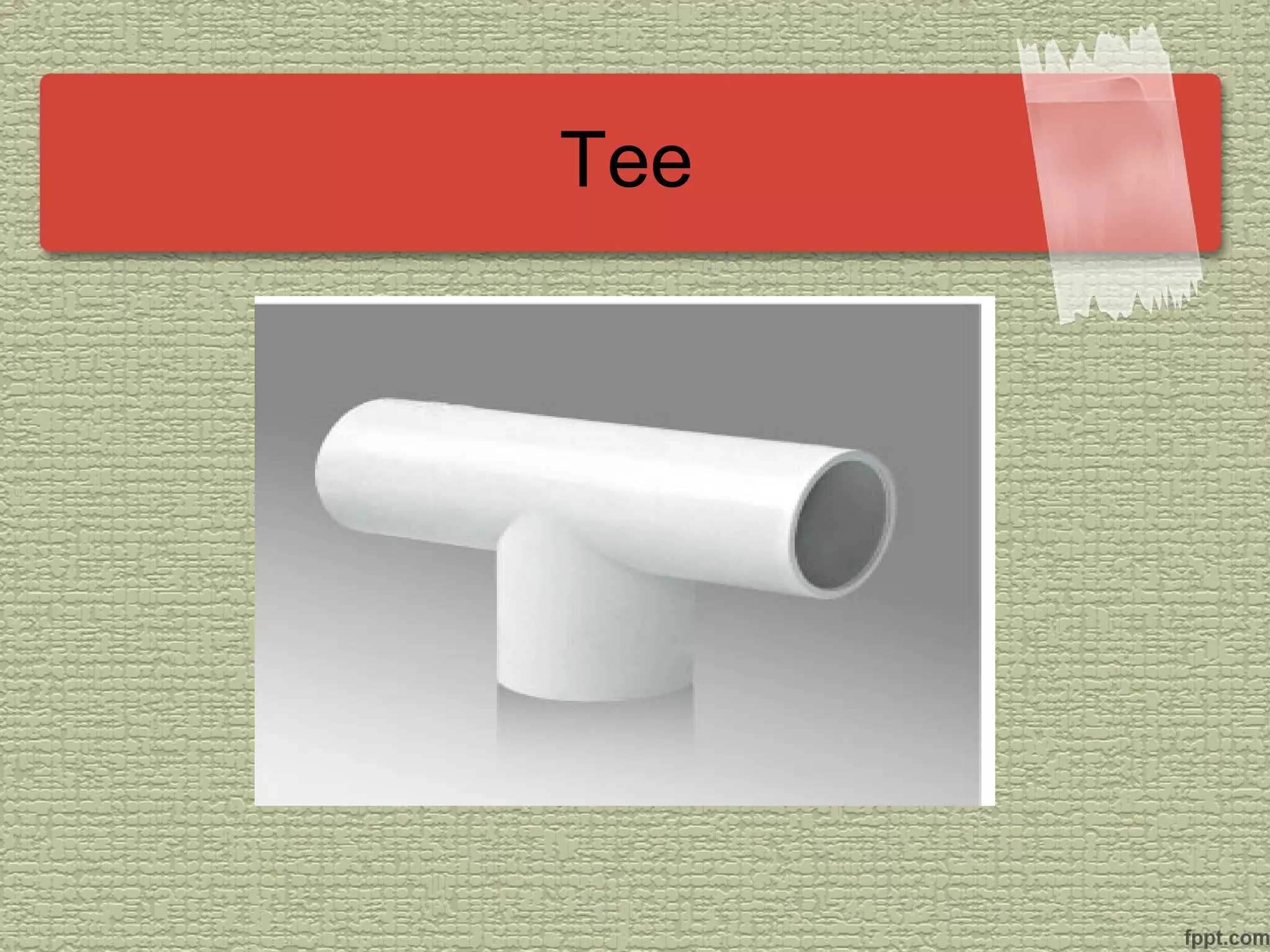
Tee
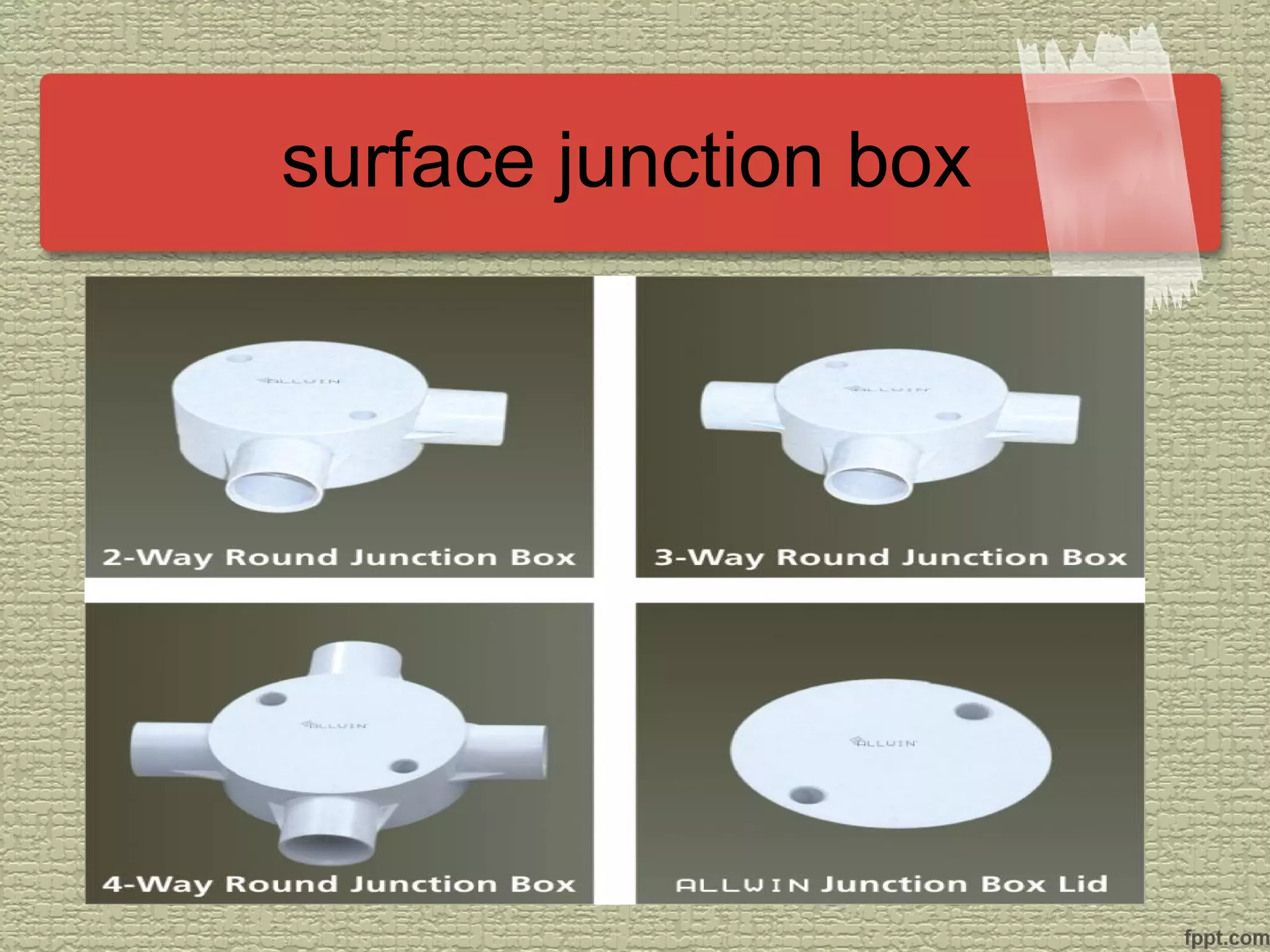
surface junction box
Tools used when working with
         PVC Conduits
• Measuring tape

• Junior saw

• Spring bender
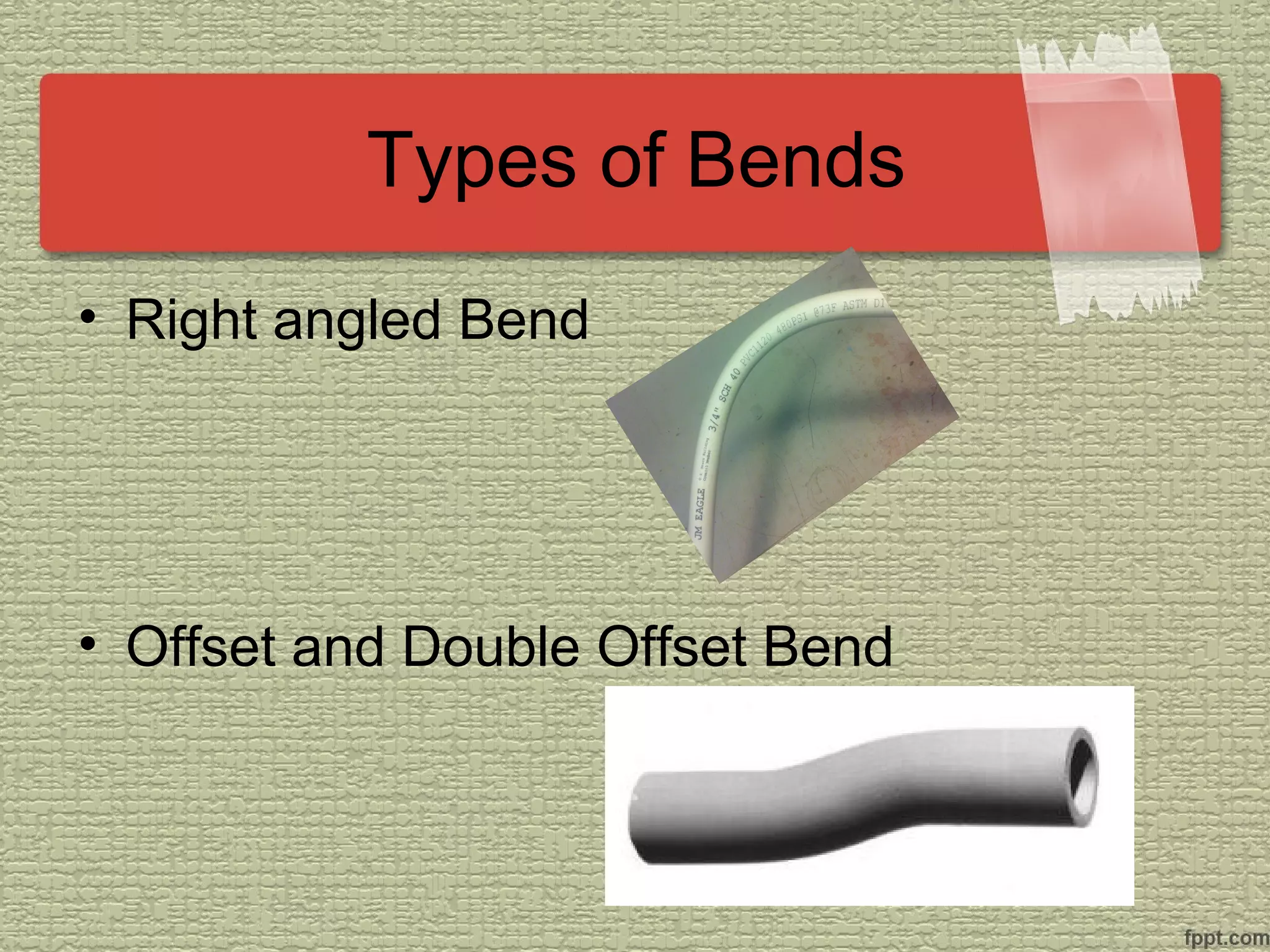
Types of Bends
• Right angled Bend


• Offset and Double Offset Bend
Cut bend and install PVC electrical conduits

Cut bend and install PVC electrical conduits

  • 1.
    Electrical Technology Cut, Bend, and install electrical conduits Stephen Jones
  • 2.
    Objectives • Identify the types, sizes, and application of PVC conduits • State the advantages and disadvantages of using PVC conduits. • Identify fittings and fixtures used in the installation of PVC conduits. • Given practical exercise, select tools and materials that conform to requirements. • Make right-angle (90 degrees) bend in PVC conduit. • Given materials, Connect fittings to PVC. • State the tools requires when working with PVC conduits. • Bends must be 90 degrees and without kinks. • Conduit must be measured, cut, and bent accurately to minimize waste
  • 3.
    PVC - Polyvinylchloride • The third-most widely produced plastic. • Used in construction because it is more effective than traditional materials such as copper, iron or wood in pipe and profile applications. • It is also used in clothing and upholstery, electrical cable insulation, Pipes (electrical and water), inflatable products, and many applications in which it replaces rubber.
  • 4.
    Types of PVCpipes  Metal conduits  Non-metal conduits  Flexible conduits
  • 5.
    Metal conduits • Electricalmetallic tubing (EMT), sometimes called thin-wall, is commonly used instead of galvanized rigid conduit (GRC), as it is less costly and lighter than GRC. • More common in commercial and industrial buildings than in residential applications. EMT is generally made of coated steel, though it may be aluminum.
  • 6.
  • 7.
    Non-metal conduits • PVC conduit •Rigid Nonmetallic Conduit (RNMC) • Electrical Nonmetallic Tubing (ENT)
  • 8.
    Non-metal Conduits • PVC conduit is the lightest in weight  compared to other conduit materials, and  usually lower in cost than other forms of  conduit. The plastic material resists  moisture and many corrosive substances. • PVC conduit may be heated and bent in  the field. 
  • 9.
  • 10.
    Flexible conduits • Flexible conduits are used to connect to  motors or other devices where isolation  from vibration is useful, or where an  excess number of fittings would be  needed to use rigid connections. Electrical  codes may restrict the length of a run of  some types of flexible conduit.
  • 11.
    Flexible conduits • Flexible MetallicConduit (FMC) – used in  dry places. • Liquidtight Flexible Metal Conduit (LFMC)  – water resistant. • Liquidtight Flexible Nonmetallic Conduit (LFNC) - flame-resistant,
  • 12.
    Sizes of PVC Conduits. • PVC Electrical Conduit Pipes are available in sizes of 20mm, 25mm, 32mm, 40mm, 50mm, & 63mm. • 3m Lengths
  • 13.
    Advantages of usingPVC Conduits. • Light in weight • Easy to saw cut and clean. • Easy to bend. • Minimal condensation due to low thermal conductivity in wall of conduit. • Cheap • Excellent electrical and fire resistant properties
  • 14.
    Disadvantages of usingPVC Conduits. • If insufficient adhesive is used the joints may not be waterproof. • PVC expands about 5 times as much as steel and this expansion must be allowed for. • PVC does not offer the same level of mechanical protection as steel. • A separate Circuit Protective Conductor must be run inside the conduit.
  • 15.
    Fittings and fixturesused in the installation of PVC conduits. Saddles • The saddle, is the device used for fixing conduit, they provide a very secure method of fixing for conduits.
  • 16.
    Saddles Plain Saddle Space bar Saddle
  • 17.
  • 18.
  • 19.
  • 20.
    Tools used whenworking with PVC Conduits • Measuring tape • Junior saw • Spring bender
  • 21.
    Types of Bends •Right angled Bend • Offset and Double Offset Bend