ASPIRATION PNEUMONIA
Lionel A Mandell, Michael Niederman
NEJM 380;7 FEB 14, 2019
DR ANKIT GAJJAR
INTRODUCTION
• Aspiration pneumonia is an infection caused
by specific microorganisms
• Chemical pneumonitis – an inflamatory
reaction to irritative gastric contents
• Aspiration pneumonia – 5-15% of CAP
• Large volume aspiration of Colonized
oropharyngeal & Upper GI contents is must
Lionel A Mandell, Michael Niederman
NEJM 380;7 FEB 14, 2019
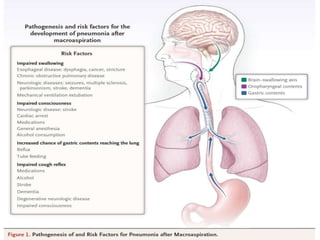
Microbiologic & Pathogenic concept
• Role of lung microbiome
• Concept of Immigration & elimination
• Any illness lead to change in lung microbiota
(dysbiosis)
Lionel A Mandell, Michael Niederman
NEJM 380;7 FEB 14, 2019
Microbiologic & Pathogenic concept
• Previously, anaerobes were more common
than aerobes
• But nowadays, aerobes are more common in
both CAP & HAP, anaerobes are recovered less
frequently
Lionel A Mandell, Michael Niederman
NEJM 380;7 FEB 14, 2019
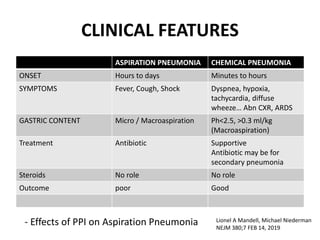
CLINICAL FEATURES
ASPIRATION PNEUMONIA CHEMICAL PNEUMONIA
ONSET Hours to days Minutes to hours
SYMPTOMS Fever, Cough, Shock Dyspnea, hypoxia,
tachycardia, diffuse
wheeze… Abn CXR, ARDS
GASTRIC CONTENT Micro / Macroaspiration Ph<2.5, >0.3 ml/kg
(Macroaspiration)
Treatment Antibiotic Supportive
Antibiotic may be for
secondary pneumonia
Steroids No role No role
Outcome poor Good
- Effects of PPI on Aspiration Pneumonia Lionel A Mandell, Michael Niederman
NEJM 380;7 FEB 14, 2019
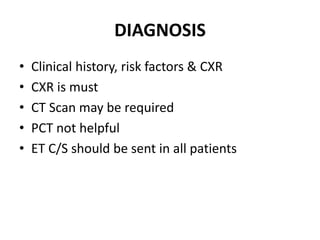
DIAGNOSIS
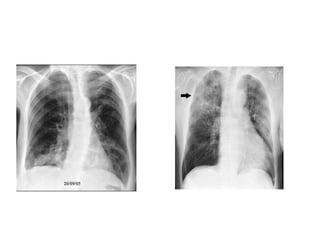
• Clinical history, risk factors & CXR
• CXR is must
• CT Scan may be required
• PCT not helpful
• ET C/S should be sent in all patients
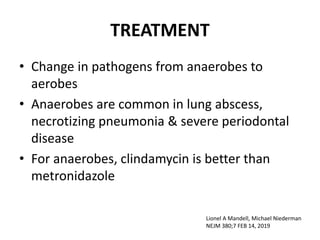
TREATMENT
• Change in pathogens from anaerobes to
aerobes
• Anaerobes are common in lung abscess,
necrotizing pneumonia & severe periodontal
disease
• For anaerobes, clindamycin is better than
metronidazole
Lionel A Mandell, Michael Niederman
NEJM 380;7 FEB 14, 2019
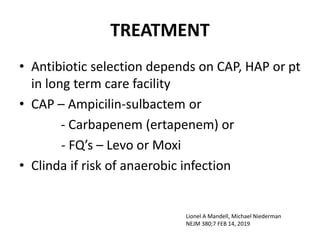
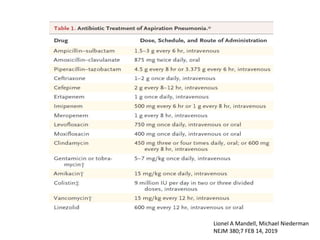
TREATMENT
• Antibiotic selection depends on CAP, HAP or pt
in long term care facility
• CAP – Ampicilin-sulbactem or
- Carbapenem (ertapenem) or
- FQ’s – Levo or Moxi
• Clinda if risk of anaerobic infection
Lionel A Mandell, Michael Niederman
NEJM 380;7 FEB 14, 2019
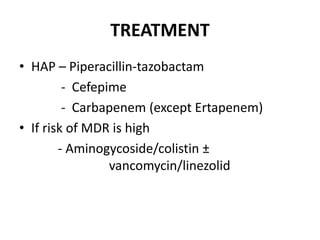
TREATMENT
• HAP – Piperacillin-tazobactam
- Cefepime
- Carbapenem (except Ertapenem)
• If risk of MDR is high
- Aminogycoside/colistin ±
vancomycin/linezolid
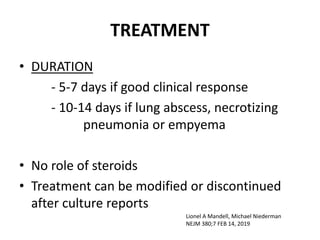
TREATMENT
• DURATION
- 5-7 days if good clinical response
- 10-14 days if lung abscess, necrotizing
pneumonia or empyema
• No role of steroids
• Treatment can be modified or discontinued
after culture reports
Lionel A Mandell, Michael Niederman
NEJM 380;7 FEB 14, 2019
TREATMENT
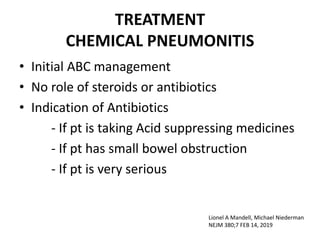
CHEMICAL PNEUMONITIS
• Initial ABC management
• No role of steroids or antibiotics
• Indication of Antibiotics
- If pt is taking Acid suppressing medicines
- If pt has small bowel obstruction
- If pt is very serious
Lionel A Mandell, Michael Niederman
NEJM 380;7 FEB 14, 2019
Lionel A Mandell, Michael Niederman
NEJM 380;7 FEB 14, 2019
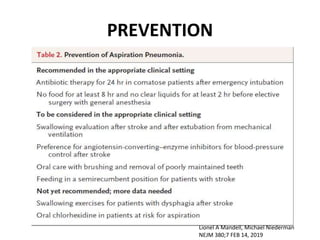
PREVENTION
Lionel A Mandell, Michael Niederman
NEJM 380;7 FEB 14, 2019
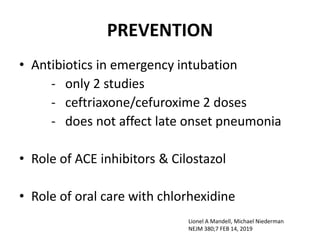
PREVENTION
• Antibiotics in emergency intubation
- only 2 studies
- ceftriaxone/cefuroxime 2 doses
- does not affect late onset pneumonia
• Role of ACE inhibitors & Cilostazol
• Role of oral care with chlorhexidine
Lionel A Mandell, Michael Niederman
NEJM 380;7 FEB 14, 2019
PREVENTION
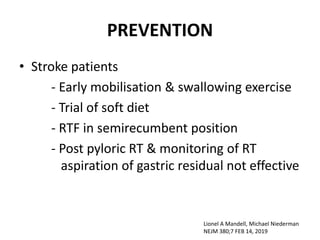
• Stroke patients
- Early mobilisation & swallowing exercise
- Trial of soft diet
- RTF in semirecumbent position
- Post pyloric RT & monitoring of RT
aspiration of gastric residual not effective
Lionel A Mandell, Michael Niederman
NEJM 380;7 FEB 14, 2019
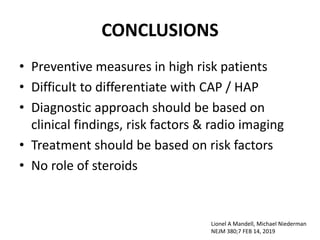
CONCLUSIONS
• Preventive measures in high risk patients
• Difficult to differentiate with CAP / HAP
• Diagnostic approach should be based on
clinical findings, risk factors & radio imaging
• Treatment should be based on risk factors
• No role of steroids
Lionel A Mandell, Michael Niederman
NEJM 380;7 FEB 14, 2019
THANK YOU

Aspiration pneumonia

  • 1.
    ASPIRATION PNEUMONIA Lionel AMandell, Michael Niederman NEJM 380;7 FEB 14, 2019 DR ANKIT GAJJAR
  • 2.
    INTRODUCTION • Aspiration pneumoniais an infection caused by specific microorganisms • Chemical pneumonitis – an inflamatory reaction to irritative gastric contents • Aspiration pneumonia – 5-15% of CAP • Large volume aspiration of Colonized oropharyngeal & Upper GI contents is must Lionel A Mandell, Michael Niederman NEJM 380;7 FEB 14, 2019
  • 3.
    Microbiologic & Pathogenicconcept • Role of lung microbiome • Concept of Immigration & elimination • Any illness lead to change in lung microbiota (dysbiosis) Lionel A Mandell, Michael Niederman NEJM 380;7 FEB 14, 2019
  • 4.
    Microbiologic & Pathogenicconcept • Previously, anaerobes were more common than aerobes • But nowadays, aerobes are more common in both CAP & HAP, anaerobes are recovered less frequently Lionel A Mandell, Michael Niederman NEJM 380;7 FEB 14, 2019
  • 6.
    CLINICAL FEATURES ASPIRATION PNEUMONIACHEMICAL PNEUMONIA ONSET Hours to days Minutes to hours SYMPTOMS Fever, Cough, Shock Dyspnea, hypoxia, tachycardia, diffuse wheeze… Abn CXR, ARDS GASTRIC CONTENT Micro / Macroaspiration Ph<2.5, >0.3 ml/kg (Macroaspiration) Treatment Antibiotic Supportive Antibiotic may be for secondary pneumonia Steroids No role No role Outcome poor Good - Effects of PPI on Aspiration Pneumonia Lionel A Mandell, Michael Niederman NEJM 380;7 FEB 14, 2019
  • 7.
    DIAGNOSIS • Clinical history,risk factors & CXR • CXR is must • CT Scan may be required • PCT not helpful • ET C/S should be sent in all patients
  • 9.
    TREATMENT • Change inpathogens from anaerobes to aerobes • Anaerobes are common in lung abscess, necrotizing pneumonia & severe periodontal disease • For anaerobes, clindamycin is better than metronidazole Lionel A Mandell, Michael Niederman NEJM 380;7 FEB 14, 2019
  • 10.
    TREATMENT • Antibiotic selectiondepends on CAP, HAP or pt in long term care facility • CAP – Ampicilin-sulbactem or - Carbapenem (ertapenem) or - FQ’s – Levo or Moxi • Clinda if risk of anaerobic infection Lionel A Mandell, Michael Niederman NEJM 380;7 FEB 14, 2019
  • 11.
    TREATMENT • HAP –Piperacillin-tazobactam - Cefepime - Carbapenem (except Ertapenem) • If risk of MDR is high - Aminogycoside/colistin ± vancomycin/linezolid
  • 12.
    TREATMENT • DURATION - 5-7days if good clinical response - 10-14 days if lung abscess, necrotizing pneumonia or empyema • No role of steroids • Treatment can be modified or discontinued after culture reports Lionel A Mandell, Michael Niederman NEJM 380;7 FEB 14, 2019
  • 13.
    TREATMENT CHEMICAL PNEUMONITIS • InitialABC management • No role of steroids or antibiotics • Indication of Antibiotics - If pt is taking Acid suppressing medicines - If pt has small bowel obstruction - If pt is very serious Lionel A Mandell, Michael Niederman NEJM 380;7 FEB 14, 2019
  • 14.
    Lionel A Mandell,Michael Niederman NEJM 380;7 FEB 14, 2019
  • 15.
    PREVENTION Lionel A Mandell,Michael Niederman NEJM 380;7 FEB 14, 2019
  • 16.
    PREVENTION • Antibiotics inemergency intubation - only 2 studies - ceftriaxone/cefuroxime 2 doses - does not affect late onset pneumonia • Role of ACE inhibitors & Cilostazol • Role of oral care with chlorhexidine Lionel A Mandell, Michael Niederman NEJM 380;7 FEB 14, 2019
  • 17.
    PREVENTION • Stroke patients -Early mobilisation & swallowing exercise - Trial of soft diet - RTF in semirecumbent position - Post pyloric RT & monitoring of RT aspiration of gastric residual not effective Lionel A Mandell, Michael Niederman NEJM 380;7 FEB 14, 2019
  • 18.
    CONCLUSIONS • Preventive measuresin high risk patients • Difficult to differentiate with CAP / HAP • Diagnostic approach should be based on clinical findings, risk factors & radio imaging • Treatment should be based on risk factors • No role of steroids Lionel A Mandell, Michael Niederman NEJM 380;7 FEB 14, 2019
  • 19.