
VENTILATION IN ACUTE HEART
FAILURE
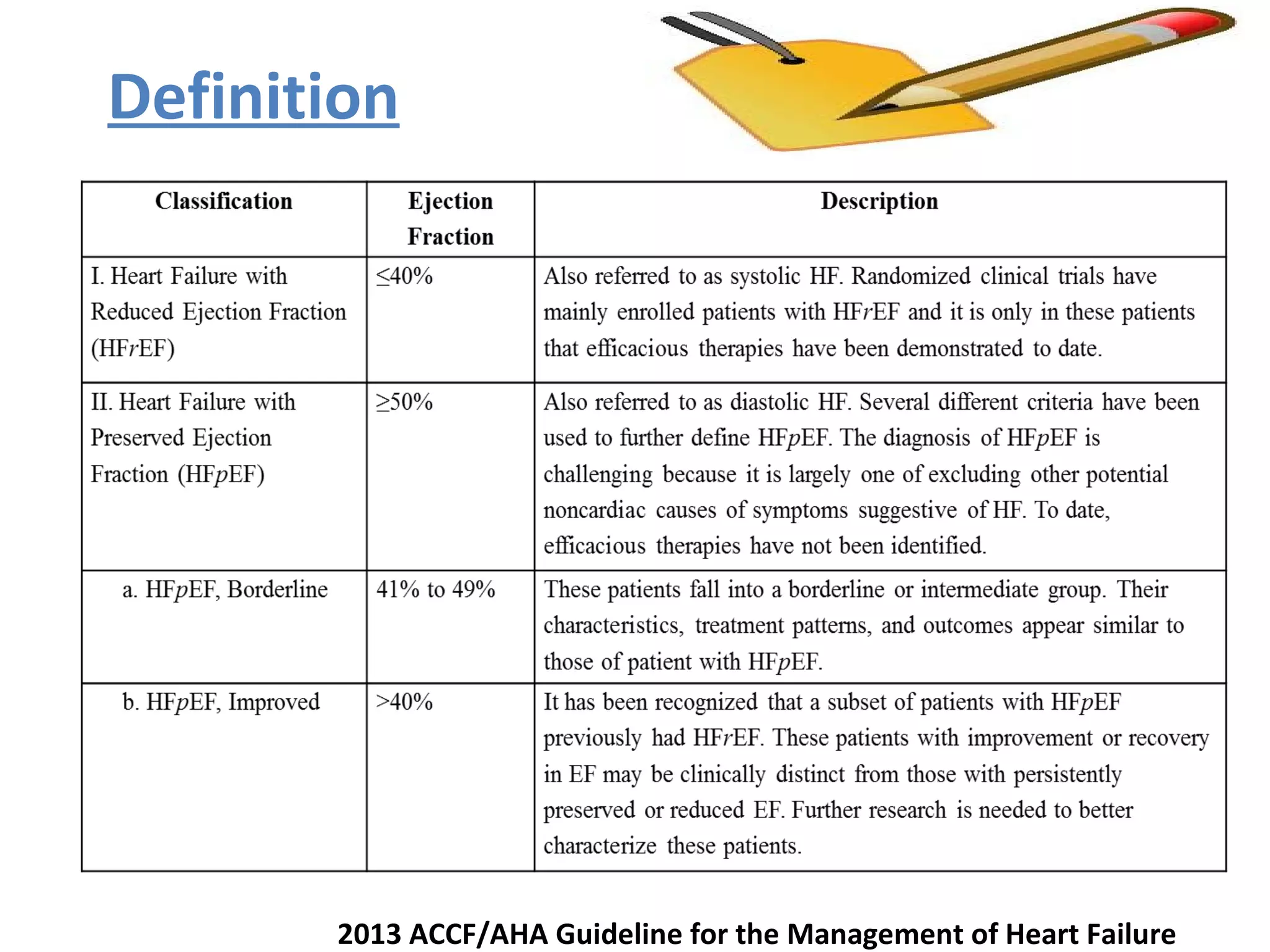
Definition
2013 ACCF/AHA Guideline for the Management of Heart Failure
Classification of Heart Failure
2013 ACCF/AHA Guideline for the Management of Heart Failure
Diagnostic Criteria
Eur J of Heart Failure 2012; 14; 803-869
Eur Heart Journal 2012; 33; 1787-1847
Symptoms & Signs
Eur J of Heart Failure 2012; 14; 803-869
Eur Heart Journal 2012; 33; 1787-1847
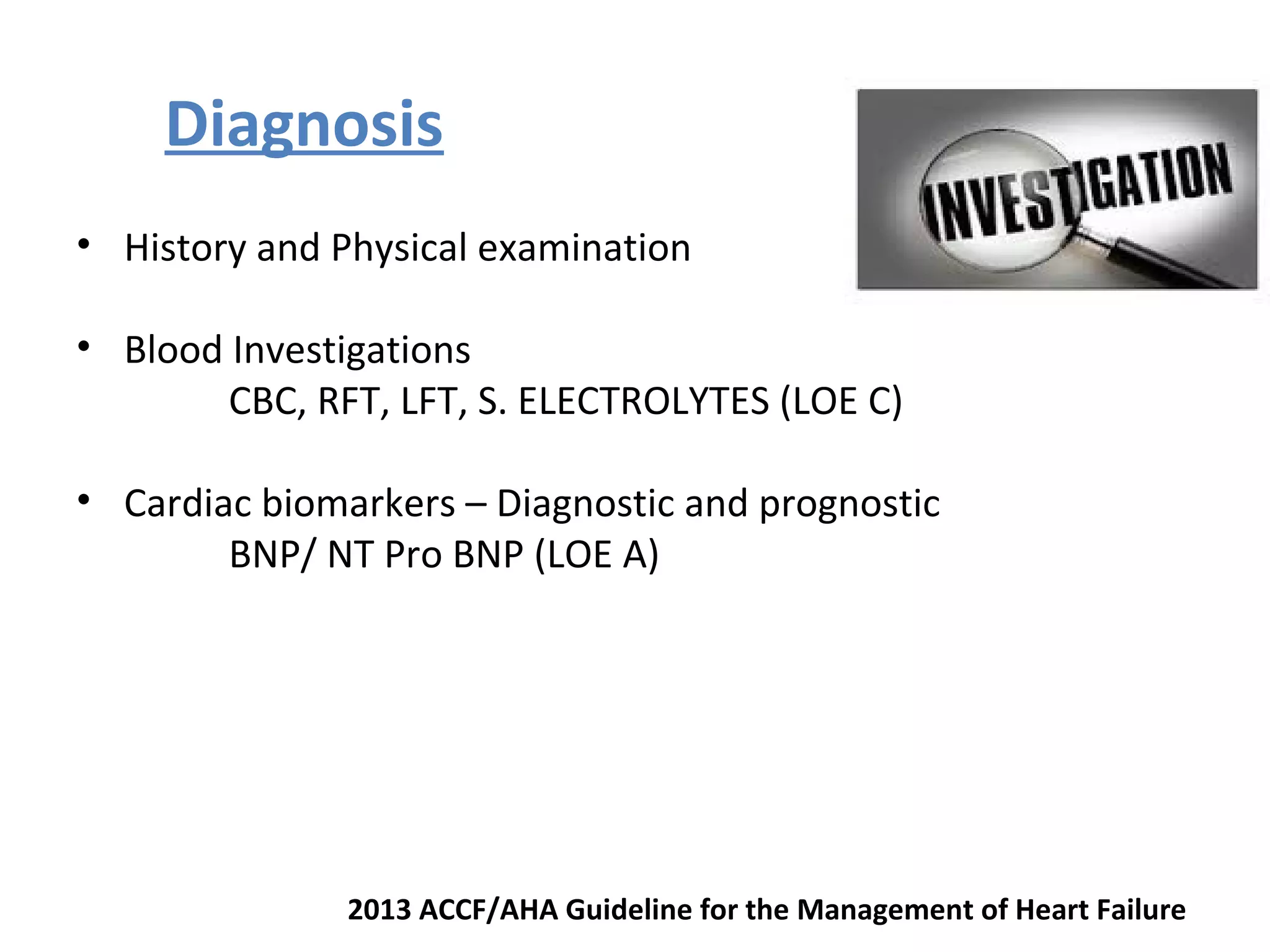
Diagnosis
• History and Physical examination
• Blood Investigations
CBC, RFT, LFT, S. ELECTROLYTES (LOE C)
• Cardiac biomarkers – Diagnostic and prognostic
BNP/ NT Pro BNP (LOE A)
2013 ACCF/AHA Guideline for the Management of Heart Failure
Non Invasive Cardiac Imaging
2013 ACCF/AHA Guideline for the Management of Heart Failure
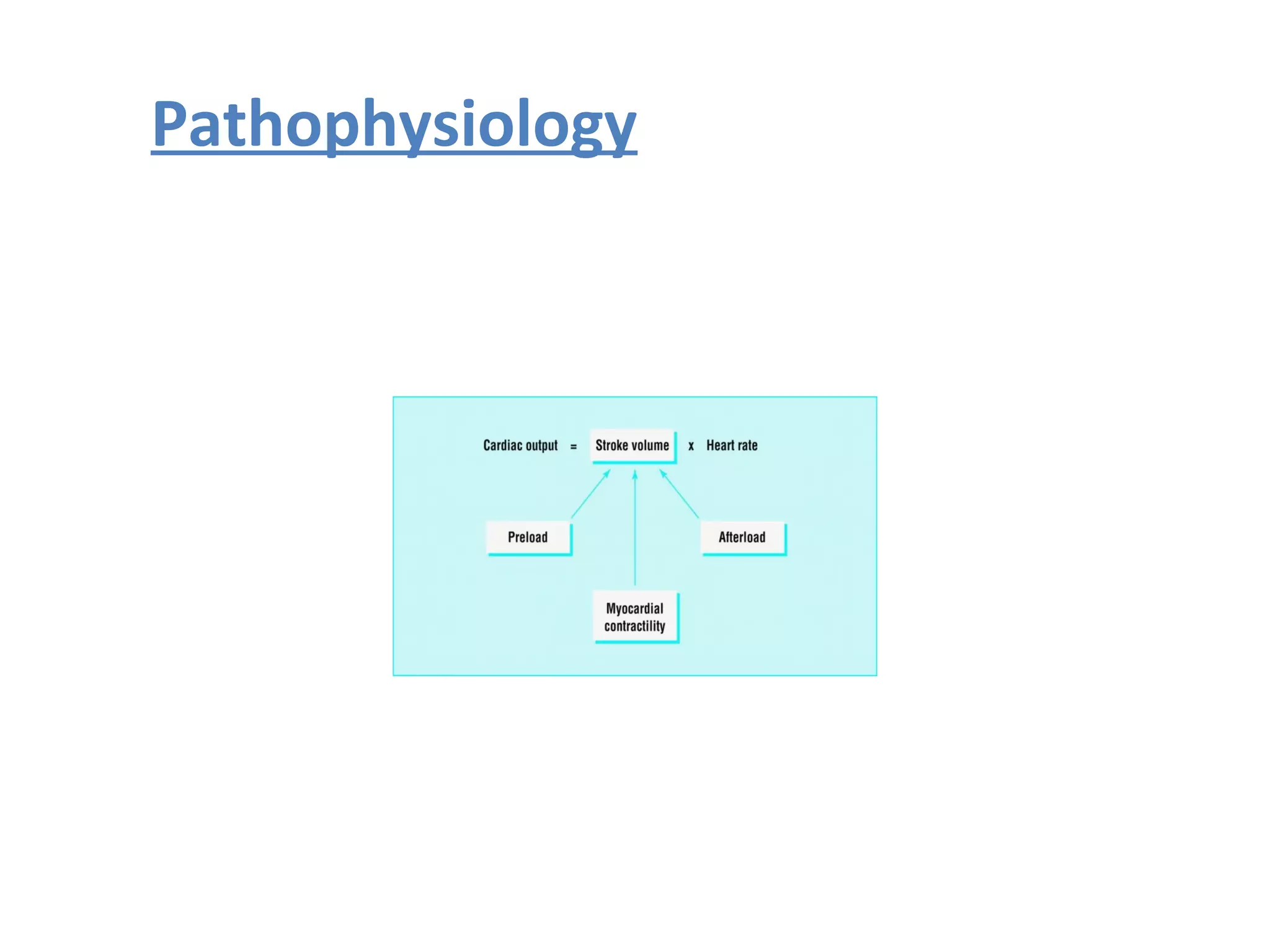
Pathophysiology
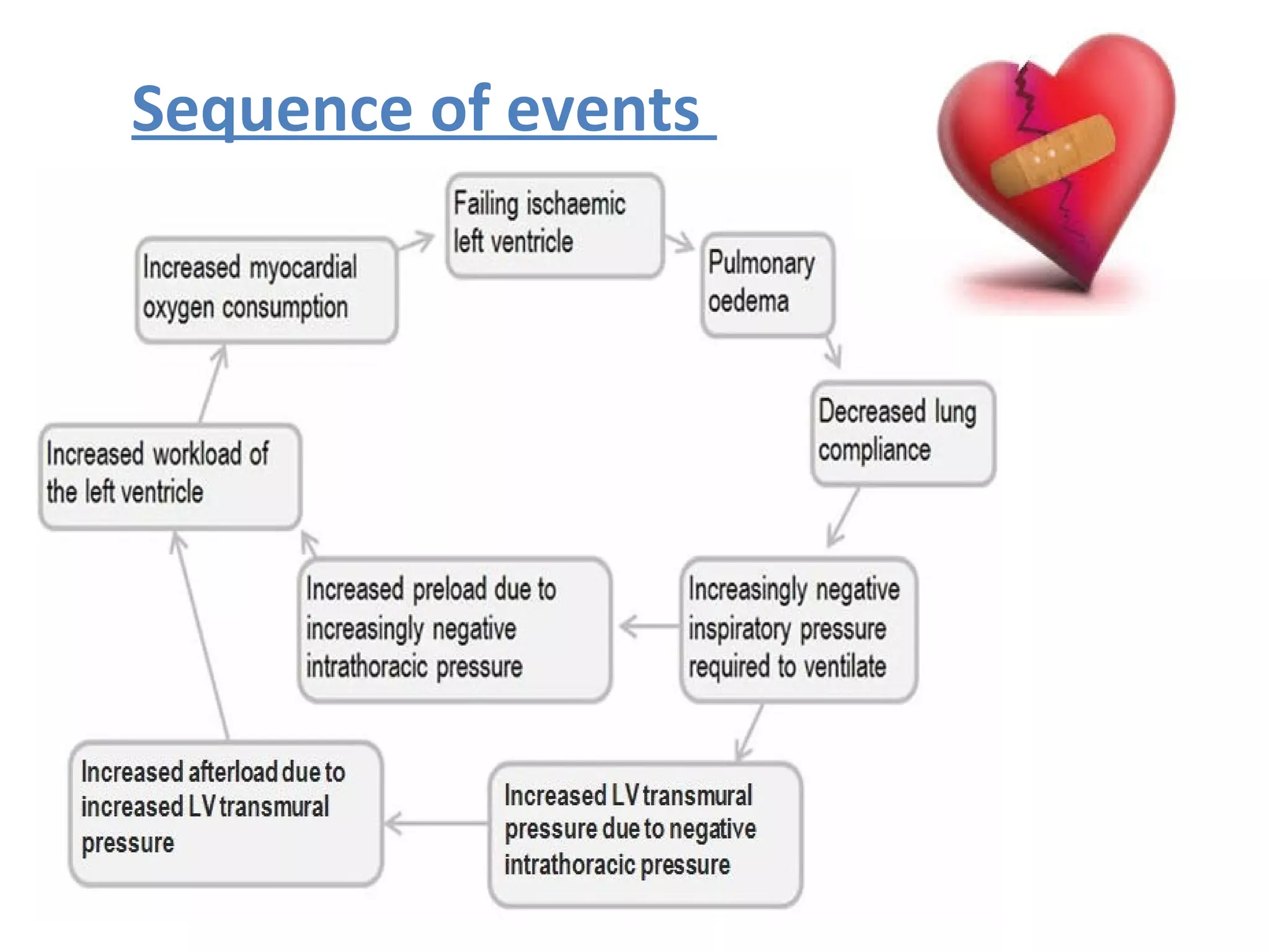
Sequence of events
GOALS OF TREATMENT
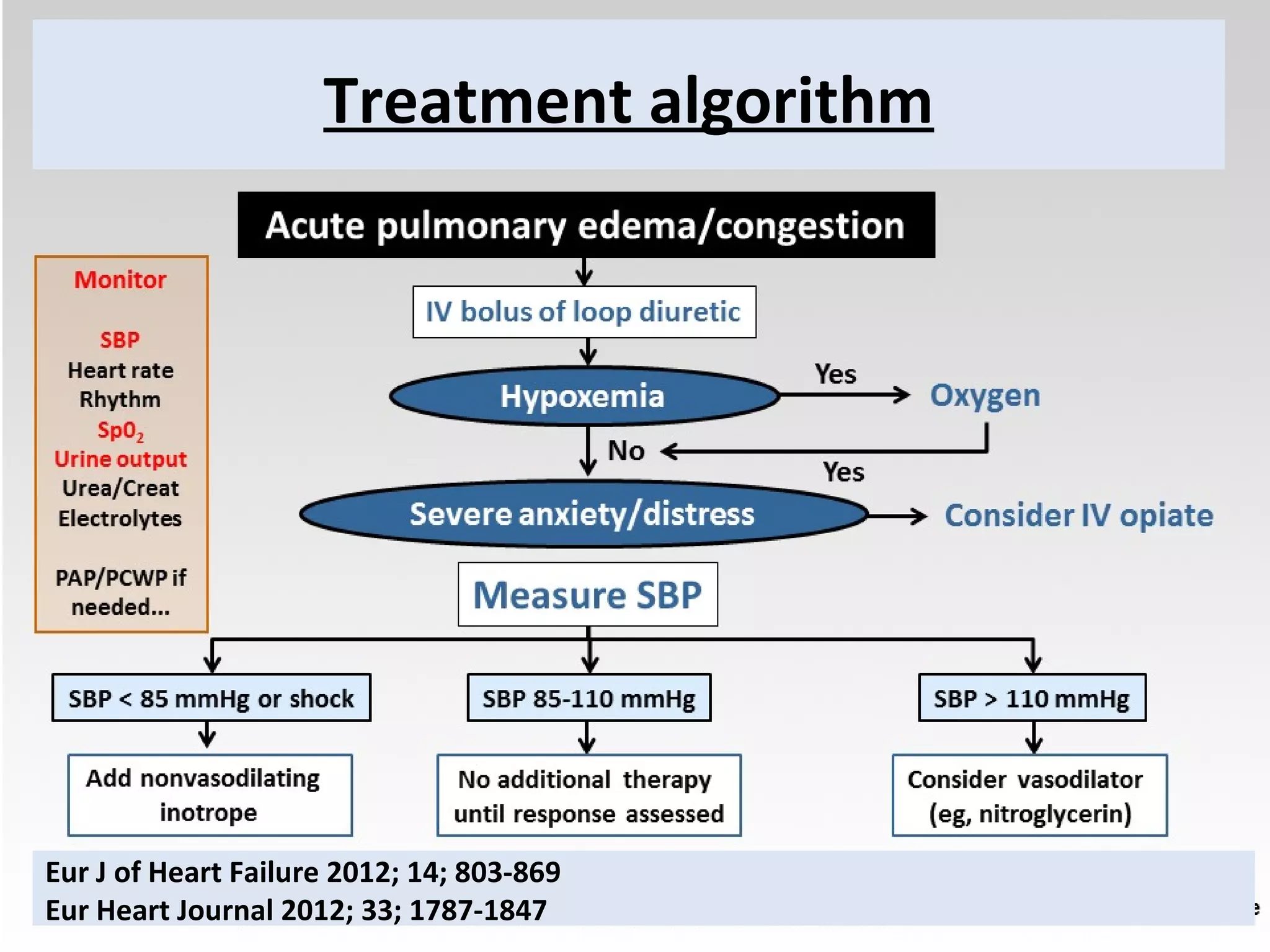
Treatment algorithm
Eur J of Heart Failure 2012; 14; 803-869
Eur Heart Journal 2012; 33; 1787-1847
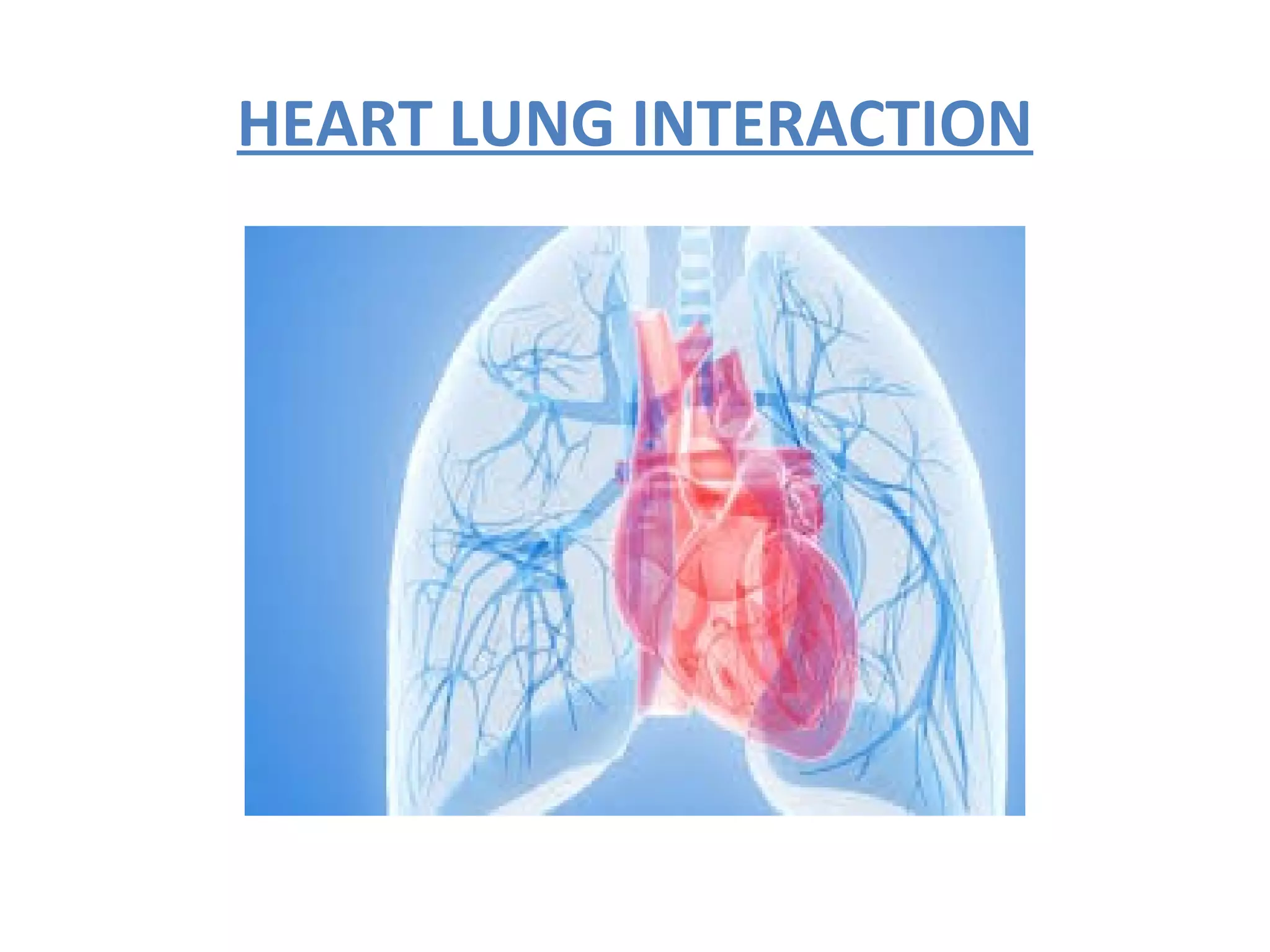
HEART LUNG INTERACTION
Fink.. Textbook of criti care; 5th
Edition; 536-537
Fink.. Textbook of criti care; 5th
Edition; 536-537
ITP
NIV
FRC
RV
preload
LV
afterload PaO2
WOB
CARDIAC PERFORMANCE
PULMONARY CONGESTION
↓ Negative Pleural Pressure
↓ Resp. Muscle O2 Demand
Effects of NIV
Indications
• CPAP/NIV are recommended in addition to standard medical
treatment in cases of cardiogenic pulmonary edema (Level 1)*
• CPAP/NIV are equally effective in cardiogenic pulmonary edema
(Level I)*
• Preferable in associated hypercapnic respiratory failure (Level 2)
• CPAP or PS + PEEP has been shown improvement in arterial
blood gases, respiratory frequency and reduction in
endotracheal intubation rate
•NIV guideline ;ISCCM; 2013
•*Sean P et al CMAJ 2011; 183; E 195-214
Indications
• CPAP vs BIPAP - both to be equally effective in the treatment
of acute cardiogenic pulmonary edema*
• CPAP/BIPPA does not increase rate of myocardial infarction**
*Chadda K et al CCM 2002; 30: 2457-2461
*Bellone A et al CCM 2004; 32: 1860-1865
•**Mehta S et al ICM 2005; 31; 757-9
Contraindications
•Inability to protect airway
•Comatose, confused, agitated, bulbar weakness
•Hemodynamic instability
•Inability to fix interface
•Non co-operative patient
•Severe GI symptoms
•Severe hypoxia
•Copious secretions
•No proven indications
•Lack of trained persons
•NIV guideline ;ISCCM; 2013
Initial settings
EPAP
•Same as PEEP / CPAP
•Needed for proper trigger, prevent atelectasis, reduce
mechanical dead space
•Start with 4-5cm, watch patient & ventilator, trigger
•Gradually increase by 1-2cm
•Increase IPAP also by same value, maintain driving pressure
IPAP
•Not same as PS, IPAP is PAP, IPAP minus EPAP is PS
•In ICU ventilator PS plus PEEP is PAP
•Start with 8-10cm, gradually increase till target TV
Other Settings
•Rise time
•Ramp
•Trigger
•Alarms
•Ti min & max
•Explain to patient
Monitoring during NIV
•Look at patient, ventilator, interface, bed side monitor, ABG
•patient – Comfort, conscious level
•Chest expansion
•Accessory muscles
•Synchrony
•Interfaces – leak, tightness
•Trigger, volume delivered, cycling
•HR, RR, SpO2, BP
•ABG – pCO2, pH, pO2
at base line, 1-2hrs after, then based on response
Complications
• Delay in intubation and worsening of prognosis
• Major desaturation and cardiac arrest
• Aspiration – 5%
• Hypotension
• Pneumothorax - if pressure >25 in bulla & # ribs
• Severe hypotension – In patients with hypovolemia and right
heart involvement
Invasive Ventilation
• Patient is not improoving for next 2-3 hours
• Worsening hypoxia
• Worsening Shock
• Worsening WOB
• Contraindication for NIV
Invasive Ventilation
- Different modes of ventilator (VCV, PCV, IRV etc)*
No difference in Cardiac Output if Tidal Volume and PEEP
are at same level
- No difference between total or partial ventilatory mode*
- Usually PEEP is high (same as EPAP/CPAP)
- Lung protective ventilation**
“There is increasing and convincing evidence that the
use of lower tidal volumes during mechanical ventilation of
patients without ARDS prevents against ventilator-induced lung
injury”
**Arya Serpa et al Curr Opin Crit Care 2015; 21; 65-73
*Fink.. Textbook of criti care; 5th
Edition; 536-537
Effect of weaning on CV
Spontaneous breathing
decreases intrathoracic
pressure
Reduced trans-mural
pressure increases
LV afterload
LV Failure
Increased
Oxygen extraction
Venous
desaturation
Hypoxia
Pulmonary
hypertension
RV Failure
Anesthesiology 1988; 69:171–179
AJRCCM 1998;158:1763–1769.
Chest 2001; 120:375S–395S
Weaning
• Extubation to NIV is preferable with other cardiac support like
Dobutamine
• NIV can be recommended in patients after extubation who
have a high risk of developing respiratory failure and
reintubation (age>65 yrs, APACHE II>12at the time of
extubation, cardiac failure at the time of intubation
(Level I)(reduce extubation failure but reintubation rate was
nonsignificant)
Ferer M et al Am. J.Resp.Crit. Care Med 2006; 173:164-170
NIV & Weaning
Effective
when used
prophylactically
in selected
patients
post-extubation;
COPD
Elderly
High APACHE
APE as cause
Sampath S,
ESICM abstract 2007
NIV better NIV worse
Jiang-1999
Nava-2005
Ferrer-2006
AA El Solh- 2006
NIV in Chronic Heart
Failure
• CPAP in chronic heart failure*
- Improve LV function
- Alleviate symptoms of CHF
- Improve oxygenation
- Reduce sleep related breathing disorder**
• Incidence of Obstructive and Central sleep apnea are high in patients
with chronic heart failure ***
• CPAP vs Adaptive Servo Ventilation - ?? Both are equal
*Sunil Nadar et al Int J Cardiology 2005; 99; 171-185
**Arzt M et al Chest 2005; 127; 794-802
***Owen D at el Canadian J Cardiology 2015 31: 898-908
***Tadamitsu et al J Cardiac Failure 2014: 20: 152-152
• For more information on HEART LUNG
INTERACTION please visit…
www.heart_lung.org

Ventilation in acute heart failure

  • 1.
    VENTILATION IN ACUTEHEART FAILURE
  • 2.
    Definition 2013 ACCF/AHA Guidelinefor the Management of Heart Failure
  • 3.
    Classification of HeartFailure 2013 ACCF/AHA Guideline for the Management of Heart Failure
  • 5.
    Diagnostic Criteria Eur Jof Heart Failure 2012; 14; 803-869 Eur Heart Journal 2012; 33; 1787-1847
  • 6.
    Symptoms & Signs EurJ of Heart Failure 2012; 14; 803-869 Eur Heart Journal 2012; 33; 1787-1847
  • 7.
    Diagnosis • History andPhysical examination • Blood Investigations CBC, RFT, LFT, S. ELECTROLYTES (LOE C) • Cardiac biomarkers – Diagnostic and prognostic BNP/ NT Pro BNP (LOE A) 2013 ACCF/AHA Guideline for the Management of Heart Failure
  • 8.
    Non Invasive CardiacImaging 2013 ACCF/AHA Guideline for the Management of Heart Failure
  • 9.
  • 10.
  • 11.
  • 12.
    Treatment algorithm Eur Jof Heart Failure 2012; 14; 803-869 Eur Heart Journal 2012; 33; 1787-1847
  • 13.
  • 14.
    Fink.. Textbook ofcriti care; 5th Edition; 536-537
  • 15.
    Fink.. Textbook ofcriti care; 5th Edition; 536-537
  • 16.
    ITP NIV FRC RV preload LV afterload PaO2 WOB CARDIAC PERFORMANCE PULMONARYCONGESTION ↓ Negative Pleural Pressure ↓ Resp. Muscle O2 Demand Effects of NIV
  • 17.
    Indications • CPAP/NIV arerecommended in addition to standard medical treatment in cases of cardiogenic pulmonary edema (Level 1)* • CPAP/NIV are equally effective in cardiogenic pulmonary edema (Level I)* • Preferable in associated hypercapnic respiratory failure (Level 2) • CPAP or PS + PEEP has been shown improvement in arterial blood gases, respiratory frequency and reduction in endotracheal intubation rate •NIV guideline ;ISCCM; 2013 •*Sean P et al CMAJ 2011; 183; E 195-214
  • 18.
    Indications • CPAP vsBIPAP - both to be equally effective in the treatment of acute cardiogenic pulmonary edema* • CPAP/BIPPA does not increase rate of myocardial infarction** *Chadda K et al CCM 2002; 30: 2457-2461 *Bellone A et al CCM 2004; 32: 1860-1865 •**Mehta S et al ICM 2005; 31; 757-9
  • 19.
    Contraindications •Inability to protectairway •Comatose, confused, agitated, bulbar weakness •Hemodynamic instability •Inability to fix interface •Non co-operative patient •Severe GI symptoms •Severe hypoxia •Copious secretions •No proven indications •Lack of trained persons •NIV guideline ;ISCCM; 2013
  • 20.
    Initial settings EPAP •Same asPEEP / CPAP •Needed for proper trigger, prevent atelectasis, reduce mechanical dead space •Start with 4-5cm, watch patient & ventilator, trigger •Gradually increase by 1-2cm •Increase IPAP also by same value, maintain driving pressure IPAP •Not same as PS, IPAP is PAP, IPAP minus EPAP is PS •In ICU ventilator PS plus PEEP is PAP •Start with 8-10cm, gradually increase till target TV
  • 21.
  • 22.
    Monitoring during NIV •Lookat patient, ventilator, interface, bed side monitor, ABG •patient – Comfort, conscious level •Chest expansion •Accessory muscles •Synchrony •Interfaces – leak, tightness •Trigger, volume delivered, cycling •HR, RR, SpO2, BP •ABG – pCO2, pH, pO2 at base line, 1-2hrs after, then based on response
  • 23.
    Complications • Delay inintubation and worsening of prognosis • Major desaturation and cardiac arrest • Aspiration – 5% • Hypotension • Pneumothorax - if pressure >25 in bulla & # ribs • Severe hypotension – In patients with hypovolemia and right heart involvement
  • 24.
    Invasive Ventilation • Patientis not improoving for next 2-3 hours • Worsening hypoxia • Worsening Shock • Worsening WOB • Contraindication for NIV
  • 25.
    Invasive Ventilation - Differentmodes of ventilator (VCV, PCV, IRV etc)* No difference in Cardiac Output if Tidal Volume and PEEP are at same level - No difference between total or partial ventilatory mode* - Usually PEEP is high (same as EPAP/CPAP) - Lung protective ventilation** “There is increasing and convincing evidence that the use of lower tidal volumes during mechanical ventilation of patients without ARDS prevents against ventilator-induced lung injury” **Arya Serpa et al Curr Opin Crit Care 2015; 21; 65-73 *Fink.. Textbook of criti care; 5th Edition; 536-537
  • 26.
    Effect of weaningon CV Spontaneous breathing decreases intrathoracic pressure Reduced trans-mural pressure increases LV afterload LV Failure Increased Oxygen extraction Venous desaturation Hypoxia Pulmonary hypertension RV Failure Anesthesiology 1988; 69:171–179 AJRCCM 1998;158:1763–1769. Chest 2001; 120:375S–395S
  • 27.
    Weaning • Extubation toNIV is preferable with other cardiac support like Dobutamine • NIV can be recommended in patients after extubation who have a high risk of developing respiratory failure and reintubation (age>65 yrs, APACHE II>12at the time of extubation, cardiac failure at the time of intubation (Level I)(reduce extubation failure but reintubation rate was nonsignificant) Ferer M et al Am. J.Resp.Crit. Care Med 2006; 173:164-170
  • 28.
    NIV & Weaning Effective whenused prophylactically in selected patients post-extubation; COPD Elderly High APACHE APE as cause Sampath S, ESICM abstract 2007 NIV better NIV worse Jiang-1999 Nava-2005 Ferrer-2006 AA El Solh- 2006
  • 29.
    NIV in ChronicHeart Failure • CPAP in chronic heart failure* - Improve LV function - Alleviate symptoms of CHF - Improve oxygenation - Reduce sleep related breathing disorder** • Incidence of Obstructive and Central sleep apnea are high in patients with chronic heart failure *** • CPAP vs Adaptive Servo Ventilation - ?? Both are equal *Sunil Nadar et al Int J Cardiology 2005; 99; 171-185 **Arzt M et al Chest 2005; 127; 794-802 ***Owen D at el Canadian J Cardiology 2015 31: 898-908 ***Tadamitsu et al J Cardiac Failure 2014: 20: 152-152
  • 30.
    • For moreinformation on HEART LUNG INTERACTION please visit… www.heart_lung.org