
Basic Principle of Gene Expression &
methods of Gene Transfer
Presented To:-
Dr. Vikram kumar Yadav
AIB
Presented by:-
Atul Chauhan
M.Sc 3rd semester
It is the process by which information from a
gene is used in the synthesis of a functional
gene product.
These products are often proteins, but in non-
protein coding genes such as rRNA genes or
tRNA genes, the product is a functional RNA.
 What is Gene Expression?
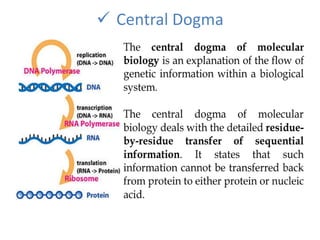
 Central Dogma
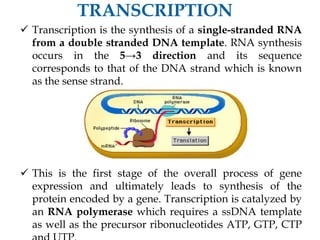
 Transcription is the synthesis of a single-stranded RNA
from a double stranded DNA template. RNA synthesis
occurs in the 5→3 direction and its sequence
corresponds to that of the DNA strand which is known
as the sense strand.
 This is the first stage of the overall process of gene
expression and ultimately leads to synthesis of the
protein encoded by a gene. Transcription is catalyzed by
an RNA polymerase which requires a ssDNA template
as well as the precursor ribonucleotides ATP, GTP, CTP
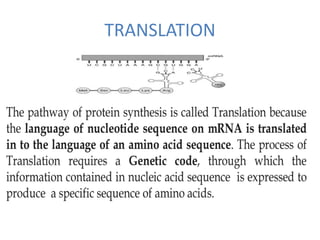
TRANSLATION
Viral based vectors
Viral vectors are a tool commonly used by
molecular biologists to deliver genetic material
into cells.
This process can be performed inside a living
organism (in vivo) or in cell culture (in vitro).
Viruses have evolved specialized molecular
mechanisms to efficiently transport their
genomes inside the cells they infect.
Delivery of genes by a virus is termed
transduction and the infected cells are described
as transduced.
Key properties of a viral vector
 Safety - deletion of a part of the viral genome critical for
viral replication.
 Low toxicity - The viral vector should have a minimal
effect on the physiology of the cell it infects.
 Stability - Some viruses are genetically unstable and can
rapidly rearrange their genomes. This is detrimental to
and is avoided in their design.
 Cell type specificity - Most viral vectors are engineered to
infect as wide a range of cell types as possible.
 Identification - Viral vectors are often given certain genes
that help identify which cells took up the viral genes.
These genes are called Markers, a common marker is
antibiotic resistance to a certain antibiotic.
Types of viral vectors
• Retroviruses
• Lentiviruses
• Adenoviruses
• Adeno-associated viruses
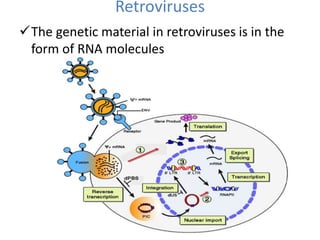
Retroviruses
The genetic material in retroviruses is in the
form of RNA molecules
 Single stranded.
 Has two copies of the genome, which resemble eukaryotic
mRNAs.
 The viral genome is reverse transcribed by reverse
transcriptase into a DNA double-strand copy inside the host
cells.
Features of RV vector
 Contains gene for replication, expression and packaging (ψ
sequences).
 Gene of interest may inserted in the nonessential coding
region or it may replace some essential gene (gag).
 Genomes are used as vectors, generally as shuttle vectors
Lentiviruses
It act as a vector for in vivo gene delivery.
Long term gene expression.
They are more complicated than retroviruses,
containing an 9 virulence proteins.
Out of it 6 genes (tat, rev, vpr, vpu, nef and
vif.) will be removing without altering gene
transfer ability
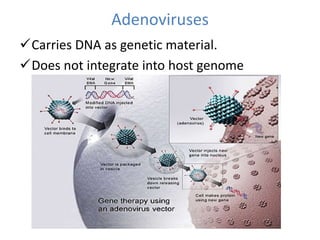
Adenoviruses
Carries DNA as genetic material.
Does not integrate into host genome
Adeno-associated virus (AAV)
 Adeno-associated virus (AAV) is a small virus which
infects humans and some other primate species.
 Carries DNA as genetic material.
 AAV is not currently known to cause disease and
consequently the virus causes a very mild immune
response.
 AAV can infect both dividing and non-dividing cells and
may incorporate its genome into that of the host cell.
 These features make AAV a very attractive candidate
for creating viral vectors for gene therapy
Non-viral methods
• Present certain advantages over viral methods,
• - Simpler
• - Low host immunogenicity.
• Involves
• - Electroporation
• - Gene Gun
• - Oligonucleotides
• - Lipoplexes
Electroporation
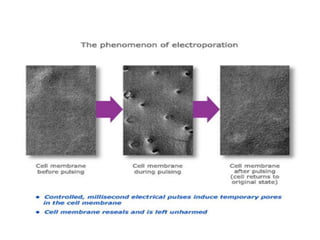
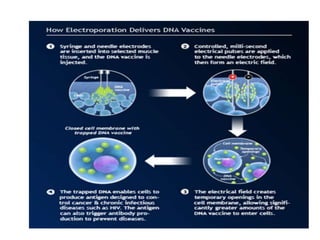
A method that uses short pulses of high voltage
to carry DNA across the cell membrane.
This shock is thought to cause temporary
formation of pores in the cell membrane,
allowing DNA molecules to pass through.
Electroporation is generally efficient and works
across a broad range of cell types.
However, a high rate of cell death following
electroporation has limited its use, including
clinical applications.
Gene Gun/ particle bombardment
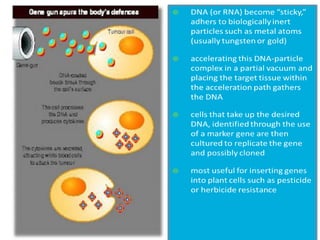
Another physical method.
In this technique, DNA is coated with gold
particles and loaded into a device which
generates a force to achieve penetration of
DNA/gold into the cells.
Oligonucleotides
To inactivate the genes involved in the disease
process.
Use antisense specific to the target gene to
disrupt the transcription of the faulty gene.
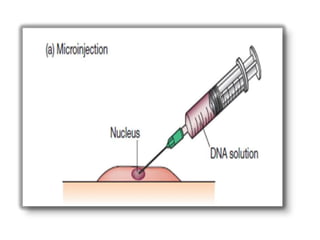
Microinjection
The microinjection is the process of
transferring the desirable DNA into the living
cell ,through the use of glass micropipette
Glass micropipette is usually of 0.5 to 5
micrometer , easily penetrates into the cell
membrane and nuclear envelope.
The desired gene is then injected into the sub
cellular compartment and needle is removed
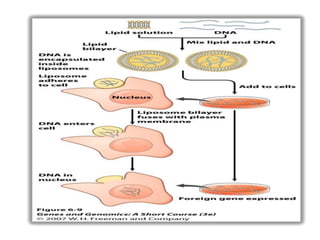
Liposome mediated gene transfer
Liposomes are spheres of lipids which can be
used to transport molecules into the cells.
 These are artificial vesicles that can act as
delivery agents for exogenous materials including
transgenes.
Promote transport after fusing with the cell
membrane.
Cationic lipids are those having a positive charge
are used for the transfer of nucleic acid.
APPLICATION
Clinical gene transfer applications
Vaccine Development
Production of transgenic animals
Treatment of Cancer, AIDS
Gene Discovery
Gene Therapy
THANKYOU

Basic principle of gene expression & methods of

  • 1.
    Basic Principle ofGene Expression & methods of Gene Transfer Presented To:- Dr. Vikram kumar Yadav AIB Presented by:- Atul Chauhan M.Sc 3rd semester
  • 2.
    It is theprocess by which information from a gene is used in the synthesis of a functional gene product. These products are often proteins, but in non- protein coding genes such as rRNA genes or tRNA genes, the product is a functional RNA.  What is Gene Expression?
  • 3.
  • 4.
     Transcription isthe synthesis of a single-stranded RNA from a double stranded DNA template. RNA synthesis occurs in the 5→3 direction and its sequence corresponds to that of the DNA strand which is known as the sense strand.  This is the first stage of the overall process of gene expression and ultimately leads to synthesis of the protein encoded by a gene. Transcription is catalyzed by an RNA polymerase which requires a ssDNA template as well as the precursor ribonucleotides ATP, GTP, CTP
  • 6.
  • 7.
    Viral based vectors Viralvectors are a tool commonly used by molecular biologists to deliver genetic material into cells. This process can be performed inside a living organism (in vivo) or in cell culture (in vitro). Viruses have evolved specialized molecular mechanisms to efficiently transport their genomes inside the cells they infect. Delivery of genes by a virus is termed transduction and the infected cells are described as transduced.
  • 8.
    Key properties ofa viral vector  Safety - deletion of a part of the viral genome critical for viral replication.  Low toxicity - The viral vector should have a minimal effect on the physiology of the cell it infects.  Stability - Some viruses are genetically unstable and can rapidly rearrange their genomes. This is detrimental to and is avoided in their design.  Cell type specificity - Most viral vectors are engineered to infect as wide a range of cell types as possible.  Identification - Viral vectors are often given certain genes that help identify which cells took up the viral genes. These genes are called Markers, a common marker is antibiotic resistance to a certain antibiotic.
  • 9.
    Types of viralvectors • Retroviruses • Lentiviruses • Adenoviruses • Adeno-associated viruses
  • 10.
    Retroviruses The genetic materialin retroviruses is in the form of RNA molecules
  • 11.
     Single stranded. Has two copies of the genome, which resemble eukaryotic mRNAs.  The viral genome is reverse transcribed by reverse transcriptase into a DNA double-strand copy inside the host cells. Features of RV vector  Contains gene for replication, expression and packaging (ψ sequences).  Gene of interest may inserted in the nonessential coding region or it may replace some essential gene (gag).  Genomes are used as vectors, generally as shuttle vectors
  • 12.
  • 13.
    It act asa vector for in vivo gene delivery. Long term gene expression. They are more complicated than retroviruses, containing an 9 virulence proteins. Out of it 6 genes (tat, rev, vpr, vpu, nef and vif.) will be removing without altering gene transfer ability
  • 14.
    Adenoviruses Carries DNA asgenetic material. Does not integrate into host genome
  • 15.
    Adeno-associated virus (AAV) Adeno-associated virus (AAV) is a small virus which infects humans and some other primate species.  Carries DNA as genetic material.  AAV is not currently known to cause disease and consequently the virus causes a very mild immune response.  AAV can infect both dividing and non-dividing cells and may incorporate its genome into that of the host cell.  These features make AAV a very attractive candidate for creating viral vectors for gene therapy
  • 16.
    Non-viral methods • Presentcertain advantages over viral methods, • - Simpler • - Low host immunogenicity. • Involves • - Electroporation • - Gene Gun • - Oligonucleotides • - Lipoplexes
  • 17.
    Electroporation A method thatuses short pulses of high voltage to carry DNA across the cell membrane. This shock is thought to cause temporary formation of pores in the cell membrane, allowing DNA molecules to pass through. Electroporation is generally efficient and works across a broad range of cell types. However, a high rate of cell death following electroporation has limited its use, including clinical applications.
  • 20.
    Gene Gun/ particlebombardment Another physical method. In this technique, DNA is coated with gold particles and loaded into a device which generates a force to achieve penetration of DNA/gold into the cells.
  • 22.
    Oligonucleotides To inactivate thegenes involved in the disease process. Use antisense specific to the target gene to disrupt the transcription of the faulty gene.
  • 23.
    Microinjection The microinjection isthe process of transferring the desirable DNA into the living cell ,through the use of glass micropipette Glass micropipette is usually of 0.5 to 5 micrometer , easily penetrates into the cell membrane and nuclear envelope. The desired gene is then injected into the sub cellular compartment and needle is removed
  • 25.
    Liposome mediated genetransfer Liposomes are spheres of lipids which can be used to transport molecules into the cells.  These are artificial vesicles that can act as delivery agents for exogenous materials including transgenes. Promote transport after fusing with the cell membrane. Cationic lipids are those having a positive charge are used for the transfer of nucleic acid.
  • 27.
    APPLICATION Clinical gene transferapplications Vaccine Development Production of transgenic animals Treatment of Cancer, AIDS Gene Discovery Gene Therapy
  • 28.