BY- Sunanda Arya
MSc. Microbiology
*
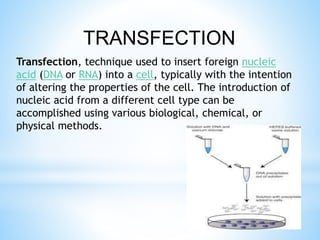
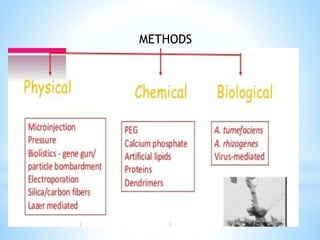
Transfection, technique used to insert foreign nucleic
acid (DNA or RNA) into a cell, typically with the intention
of altering the properties of the cell. The introduction of
nucleic acid from a different cell type can be
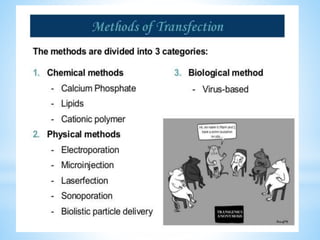
accomplished using various biological, chemical, or
physical methods.
TRANSFECTION
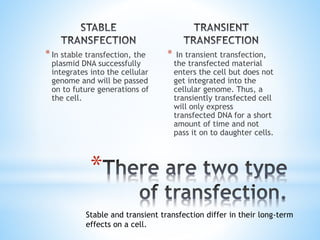
*In stable transfection, the
plasmid DNA successfully
integrates into the cellular
genome and will be passed
on to future generations of
the cell.
* In transient transfection,
the transfected material
enters the cell but does not
get integrated into the
cellular genome. Thus, a
transiently transfected cell
will only express
transfected DNA for a short
amount of time and not
pass it on to daughter cells.
*
Stable and transient transfection differ in their long-term
effects on a cell.
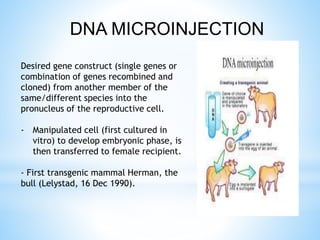
Desired gene construct (single genes or
combination of genes recombined and
cloned) from another member of the
same/different species into the
pronucleus of the reproductive cell.
- Manipulated cell (first cultured in
vitro) to develop embryonic phase, is
then transferred to female recipient.
- First transgenic mammal Herman, the
bull (Lelystad, 16 Dec 1990).
DNA MICROINJECTION
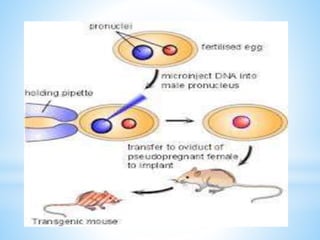
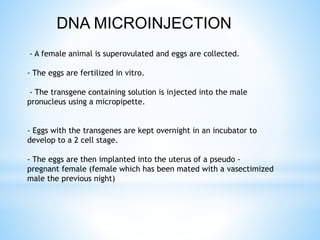
- A female animal is superovulated and eggs are collected.
- The eggs are fertilized in vitro.
- The transgene containing solution is injected into the male
pronucleus using a micropipette.
- Eggs with the transgenes are kept overnight in an incubator to
develop to a 2 cell stage.
- The eggs are then implanted into the uterus of a pseudo -
pregnant female (female which has been mated with a vasectimized
male the previous night)
DNA MICROINJECTION
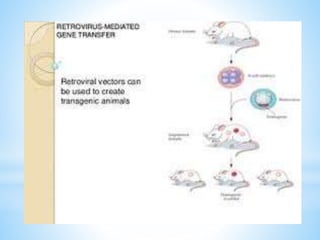
This gene transfer is mediated by means of a carrier or vector,
generally a virus or a plasmid.
Retroviruses are commonly used as vectors. The killed virus is
replication defective.
The virus gene is replaced with trans-gene. The trans-gene is
delivered to the host cell by transfection (gene therapy).
This can be used to transfect a wide range of cells such as embryonic
cells.
The result is a chimera, an organism consisting of tissues or parts of
diverse genetic constitution. Retro viral vectors that infects the cells
of an early stage embryo prior to implantation into a receptive
female.
A retrovirus is a virus that carries its genetic material in the form of
RNA rather than DNA.
RETROVIRUS- MEDIATED GENE TRANSFER
Immediately following infection, the retrovirus produces a DNA
copy of its RNA genome using its reverse transcriptase.
Completion of this process requires that the host cell undergoes
the S phase of the cell cycle.
Therefore, retroviruses effectively transduce only mitotically
active cells. The DNA copy of the viral genome, or provirus,
integrates randomly into the host cell genome, usually without
deletions or rearrangements.
Because integration is not by way of homologous recombination,
this method is not used effectively for site-directed mutagenesis
PROCESS
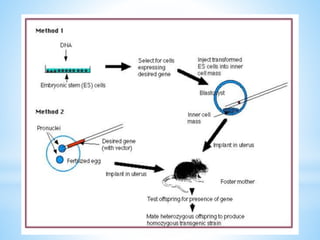
EMBRYONIC STEM CELL – MEDIATED GENE TRANSFER
It is the introduction of DNA into embryonic stem cells (ES cells).
- ES cells can differentiate into all types of cells when introduced to
another embryo.
- DNA introduced into ES cells may integrate randomly, just like in
pronuclear micro-injection.
- If the introduced DNA is similar in sequence to part of the animal
genome, it may undergo "homologous recombination" and integrate as a
single copy at a specific site, ES cells will colonize a host embryo and
often contribute to the germ line.
- This results in the production of some sperm carrying the extra DNA.
When these transgenic sperms fertilize a normal egg, a transgenic animal
will be produced with the same foreign DNA in every cell.
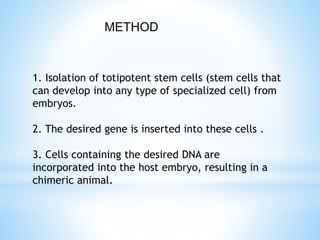
1. Isolation of totipotent stem cells (stem cells that
can develop into any type of specialized cell) from
embryos.
2. The desired gene is inserted into these cells .
3. Cells containing the desired DNA are
incorporated into the host embryo, resulting in a
chimeric animal.
METHOD
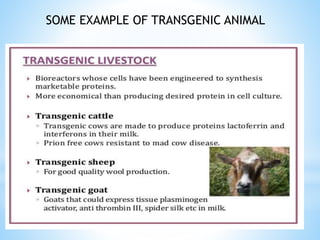
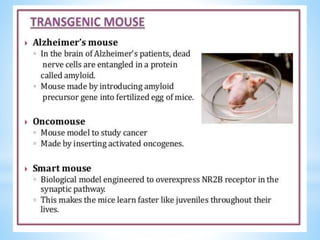
SOME EXAMPLE OF TRANSGENIC ANIMAL
*
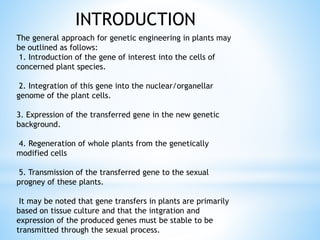
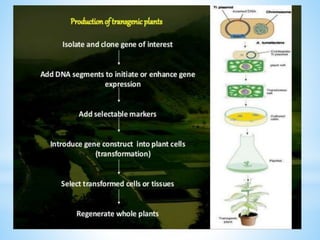
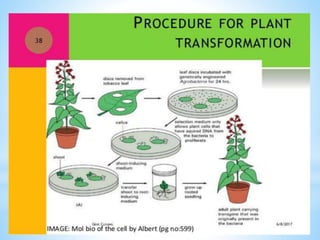
The general approach for genetic engineering in plants may
be outlined as follows:
1. Introduction of the gene of interest into the cells of
concerned plant species.
2. Integration of this gene into the nuclear/organellar
genome of the plant cells.
3. Expression of the transferred gene in the new genetic
background.
4. Regeneration of whole plants from the genetically
modified cells
5. Transmission of the transferred gene to the sexual
progney of these plants.
It may be noted that gene transfers in plants are primarily
based on tissue culture and that the intgration and
expression of the produced genes must be stable to be
transmitted through the sexual process.
INTRODUCTION
METHODS
LIPOSOMES MEDIATED GENE TRANSFER
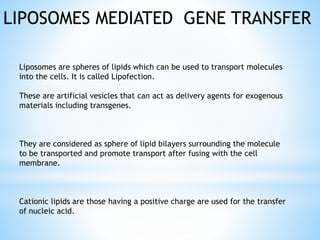
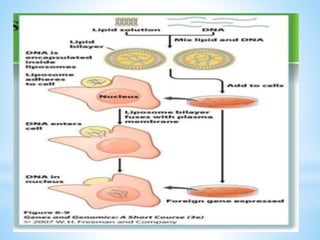
Liposomes are spheres of lipids which can be used to transport molecules
into the cells. It is called Lipofection.
These are artificial vesicles that can act as delivery agents for exogenous
materials including transgenes.
They are considered as sphere of lipid bilayers surrounding the molecule
to be transported and promote transport after fusing with the cell
membrane.
Cationic lipids are those having a positive charge are used for the transfer
of nucleic acid.
These liposomes are able to interact with the negatively charged cell
membrane more readily than uncharged liposomes, with the fusion
between cationic liposome and the cell surface resulting in the delivery
of the DNA directly across the plasma membrane.
Cationic liposomes can be produced from a number of cationic lipids,
e.g. DOTAP and DOTMA These are commercially available lipids that are
sold as an in vitro-transfecting agent, as lipofection.
Liposomes for use as gene transfer vehicles are prepared by adding an
appropriate mix of bilayer constituents to an aqueous solution of DNA
molecules.
The liposomes are then ready to be added to target cells. Gemline
transgenesis is possible with liposome mediated gene transfer and ES
cells have been successfully transfusied by liposomes also.
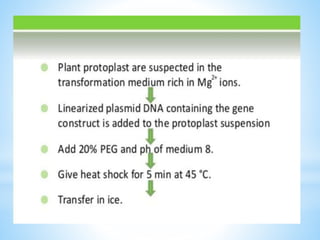
POLYETHYLENE GLYCOL MEDIATED GENE TRANSFER
This method is utilized for protoplast only. Polyethylene glycol
stimulates endocytosis and therefore DNA uptake occurs.
Protoplasts are kept in the solution containing PEG.
Calcium chloride is added and sucrose and glucose acts as
osmotic buffering agent.
After exposure of the protoplast to exogenous DNA in presence
of PEG and other chemicals, PEG is allowed to get removed.
Intact surviving protoplasts are then cultured to form cells
with walls and colonies in turn.
After several passages in selectable medium frequency of
transformation is calculated.
PEG based vehicles were less toxic and more resistant to
nonspecific protein adsorption making them an attractive
alternative for non-viral gene delivery.
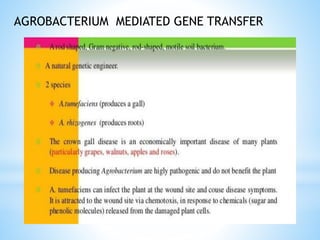
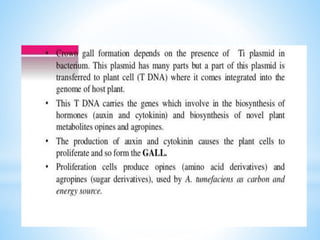
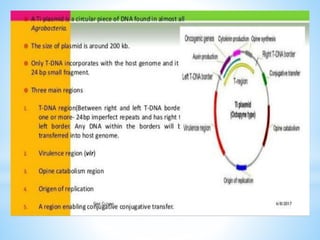
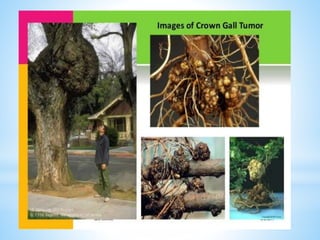
AGROBACTERIUM MEDIATED GENE TRANSFER
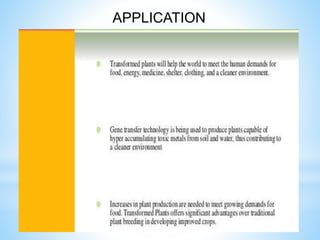
APPLICATION
REFERENCES
-www. Slideshare.com
-molecular biology of cell by Albert
-Introduction in plant biotechnolgy by H.S. Chawala
-www. Sciencedirect.com

Transfection in animals & plants

  • 1.
    BY- Sunanda Arya MSc.Microbiology *
  • 2.
    Transfection, technique usedto insert foreign nucleic acid (DNA or RNA) into a cell, typically with the intention of altering the properties of the cell. The introduction of nucleic acid from a different cell type can be accomplished using various biological, chemical, or physical methods. TRANSFECTION
  • 3.
    *In stable transfection,the plasmid DNA successfully integrates into the cellular genome and will be passed on to future generations of the cell. * In transient transfection, the transfected material enters the cell but does not get integrated into the cellular genome. Thus, a transiently transfected cell will only express transfected DNA for a short amount of time and not pass it on to daughter cells. * Stable and transient transfection differ in their long-term effects on a cell.
  • 6.
    Desired gene construct(single genes or combination of genes recombined and cloned) from another member of the same/different species into the pronucleus of the reproductive cell. - Manipulated cell (first cultured in vitro) to develop embryonic phase, is then transferred to female recipient. - First transgenic mammal Herman, the bull (Lelystad, 16 Dec 1990). DNA MICROINJECTION
  • 8.
    - A femaleanimal is superovulated and eggs are collected. - The eggs are fertilized in vitro. - The transgene containing solution is injected into the male pronucleus using a micropipette. - Eggs with the transgenes are kept overnight in an incubator to develop to a 2 cell stage. - The eggs are then implanted into the uterus of a pseudo - pregnant female (female which has been mated with a vasectimized male the previous night) DNA MICROINJECTION
  • 9.
    This gene transferis mediated by means of a carrier or vector, generally a virus or a plasmid. Retroviruses are commonly used as vectors. The killed virus is replication defective. The virus gene is replaced with trans-gene. The trans-gene is delivered to the host cell by transfection (gene therapy). This can be used to transfect a wide range of cells such as embryonic cells. The result is a chimera, an organism consisting of tissues or parts of diverse genetic constitution. Retro viral vectors that infects the cells of an early stage embryo prior to implantation into a receptive female. A retrovirus is a virus that carries its genetic material in the form of RNA rather than DNA. RETROVIRUS- MEDIATED GENE TRANSFER
  • 11.
    Immediately following infection,the retrovirus produces a DNA copy of its RNA genome using its reverse transcriptase. Completion of this process requires that the host cell undergoes the S phase of the cell cycle. Therefore, retroviruses effectively transduce only mitotically active cells. The DNA copy of the viral genome, or provirus, integrates randomly into the host cell genome, usually without deletions or rearrangements. Because integration is not by way of homologous recombination, this method is not used effectively for site-directed mutagenesis PROCESS
  • 12.
    EMBRYONIC STEM CELL– MEDIATED GENE TRANSFER It is the introduction of DNA into embryonic stem cells (ES cells). - ES cells can differentiate into all types of cells when introduced to another embryo. - DNA introduced into ES cells may integrate randomly, just like in pronuclear micro-injection. - If the introduced DNA is similar in sequence to part of the animal genome, it may undergo "homologous recombination" and integrate as a single copy at a specific site, ES cells will colonize a host embryo and often contribute to the germ line. - This results in the production of some sperm carrying the extra DNA. When these transgenic sperms fertilize a normal egg, a transgenic animal will be produced with the same foreign DNA in every cell.
  • 14.
    1. Isolation oftotipotent stem cells (stem cells that can develop into any type of specialized cell) from embryos. 2. The desired gene is inserted into these cells . 3. Cells containing the desired DNA are incorporated into the host embryo, resulting in a chimeric animal. METHOD
  • 15.
    SOME EXAMPLE OFTRANSGENIC ANIMAL
  • 18.
  • 19.
    The general approachfor genetic engineering in plants may be outlined as follows: 1. Introduction of the gene of interest into the cells of concerned plant species. 2. Integration of this gene into the nuclear/organellar genome of the plant cells. 3. Expression of the transferred gene in the new genetic background. 4. Regeneration of whole plants from the genetically modified cells 5. Transmission of the transferred gene to the sexual progney of these plants. It may be noted that gene transfers in plants are primarily based on tissue culture and that the intgration and expression of the produced genes must be stable to be transmitted through the sexual process. INTRODUCTION
  • 22.
  • 23.
    LIPOSOMES MEDIATED GENETRANSFER Liposomes are spheres of lipids which can be used to transport molecules into the cells. It is called Lipofection. These are artificial vesicles that can act as delivery agents for exogenous materials including transgenes. They are considered as sphere of lipid bilayers surrounding the molecule to be transported and promote transport after fusing with the cell membrane. Cationic lipids are those having a positive charge are used for the transfer of nucleic acid.
  • 24.
    These liposomes areable to interact with the negatively charged cell membrane more readily than uncharged liposomes, with the fusion between cationic liposome and the cell surface resulting in the delivery of the DNA directly across the plasma membrane. Cationic liposomes can be produced from a number of cationic lipids, e.g. DOTAP and DOTMA These are commercially available lipids that are sold as an in vitro-transfecting agent, as lipofection. Liposomes for use as gene transfer vehicles are prepared by adding an appropriate mix of bilayer constituents to an aqueous solution of DNA molecules. The liposomes are then ready to be added to target cells. Gemline transgenesis is possible with liposome mediated gene transfer and ES cells have been successfully transfusied by liposomes also.
  • 26.
    POLYETHYLENE GLYCOL MEDIATEDGENE TRANSFER This method is utilized for protoplast only. Polyethylene glycol stimulates endocytosis and therefore DNA uptake occurs. Protoplasts are kept in the solution containing PEG. Calcium chloride is added and sucrose and glucose acts as osmotic buffering agent. After exposure of the protoplast to exogenous DNA in presence of PEG and other chemicals, PEG is allowed to get removed.
  • 27.
    Intact surviving protoplastsare then cultured to form cells with walls and colonies in turn. After several passages in selectable medium frequency of transformation is calculated. PEG based vehicles were less toxic and more resistant to nonspecific protein adsorption making them an attractive alternative for non-viral gene delivery.
  • 29.
  • 33.
  • 34.
    REFERENCES -www. Slideshare.com -molecular biologyof cell by Albert -Introduction in plant biotechnolgy by H.S. Chawala -www. Sciencedirect.com