BASIC CONCEPT
OF HAZARDS
1/14/2020
1
INTRODUCTION
A hazard is a situation that poses a level of
threat to life, health, property or environment.
Most hazards are dormant or potential, with
only a theoretical risk of harm; however, once a
hazard becomes “active,” it can create an
emergency. A hazardous situation that has come
to pass is called an incident. Hazard and
possibility interact together to create risk
(Stefanik, 2013)
1/14/2020
2
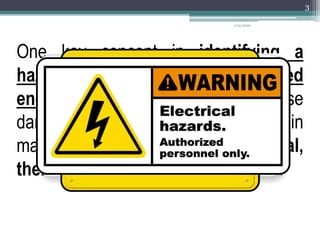
One key concept in identifying a
hazard is the presence of stored
energy that, when released, can cause
damage. Stored energy can occur in
many forms: chemical, mechanical,
thermal, radioactive, electrical, etc.
1/14/2020
3
Another class of hazard does not involve
released of stored energy; rather it
involves the presence of hazardous
situations. Examples include confined
or limited egress spaces, oxygen-
depleted atmospheres, awkward
positions, repetitive motions, low-
hanging or proptruding objects, etc.
1/14/2020
4
Hazard may be categorized into natural or
anthropogenic hazards. Climate and
weather- related hazards, such as typhoons
and droughts, as well as geophysical
hazards, like earthquakes, volcanic
eruptions and tsunamis, are natural
hazards. Anthropogenic or man- made
hazards include deforestation, mining, and
climate change (Center for Environmental
Geomatics. 2005)
1/14/2020
5
According to the Disaster Risk
Reduction Management manual, a
hazard is any phenomenon that has the
potential to cause disruption or
damage to human and their
environment. It also refers to an event or
occurrence that has the potential for
causing injury to life, property, and
environment.
1/14/2020
6
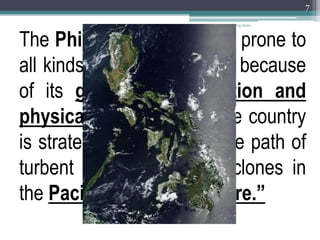
The Philippine islands are prone to
all kinds of natural hazards because
of its geographical location and
physical environment. The country
is strategically located in the path of
turbent and destructive cyclones in
the Pacific and “Ring of Fire.”
1/14/2020
7
Identification of hazard risks is the first
step in performing a risk assessment.
The three modes of hazards are the
following:
1. Dormant
2. Armed
3. Active
1/14/2020
8
DORMANT
This situation presents a potential
hazard, but no people, property, or
environment is currently affected. For
instance, a hillside may be unstable,
with the potential for a landslide, but
there is nothing below or on the hillside
that could be affected.
1/14/2020
9
ARMED
It refers to people, property, or
environment are in potential harm’s way.
ACTIVE
A Harmful incident involving the hazard
has actually occurred. Often this is
referred to not as an “active hazard” but
as an accident, emergency, incident, or
disaster.
1/14/2020
10
THANK YOU!
1/14/2020
11

Basic Concept of Hazard

  • 1.
  • 2.
    INTRODUCTION A hazard isa situation that poses a level of threat to life, health, property or environment. Most hazards are dormant or potential, with only a theoretical risk of harm; however, once a hazard becomes “active,” it can create an emergency. A hazardous situation that has come to pass is called an incident. Hazard and possibility interact together to create risk (Stefanik, 2013) 1/14/2020 2
  • 3.
    One key conceptin identifying a hazard is the presence of stored energy that, when released, can cause damage. Stored energy can occur in many forms: chemical, mechanical, thermal, radioactive, electrical, etc. 1/14/2020 3
  • 4.
    Another class ofhazard does not involve released of stored energy; rather it involves the presence of hazardous situations. Examples include confined or limited egress spaces, oxygen- depleted atmospheres, awkward positions, repetitive motions, low- hanging or proptruding objects, etc. 1/14/2020 4
  • 5.
    Hazard may becategorized into natural or anthropogenic hazards. Climate and weather- related hazards, such as typhoons and droughts, as well as geophysical hazards, like earthquakes, volcanic eruptions and tsunamis, are natural hazards. Anthropogenic or man- made hazards include deforestation, mining, and climate change (Center for Environmental Geomatics. 2005) 1/14/2020 5
  • 6.
    According to theDisaster Risk Reduction Management manual, a hazard is any phenomenon that has the potential to cause disruption or damage to human and their environment. It also refers to an event or occurrence that has the potential for causing injury to life, property, and environment. 1/14/2020 6
  • 7.
    The Philippine islandsare prone to all kinds of natural hazards because of its geographical location and physical environment. The country is strategically located in the path of turbent and destructive cyclones in the Pacific and “Ring of Fire.” 1/14/2020 7
  • 8.
    Identification of hazardrisks is the first step in performing a risk assessment. The three modes of hazards are the following: 1. Dormant 2. Armed 3. Active 1/14/2020 8
  • 9.
    DORMANT This situation presentsa potential hazard, but no people, property, or environment is currently affected. For instance, a hillside may be unstable, with the potential for a landslide, but there is nothing below or on the hillside that could be affected. 1/14/2020 9
  • 10.
    ARMED It refers topeople, property, or environment are in potential harm’s way. ACTIVE A Harmful incident involving the hazard has actually occurred. Often this is referred to not as an “active hazard” but as an accident, emergency, incident, or disaster. 1/14/2020 10
  • 11.

Editor's Notes

  • #4 By its nature, a hazard involves something that could potentially be harmful to a person’s life, health, property, or the environment.
  • #5 The unit aims to discuss the basic concept of hazard.