#4 Occur when a slope changes from a stable to an unstable condition.
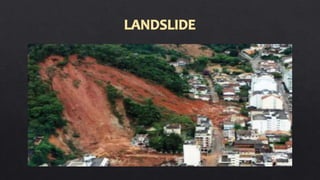
A landslide is defined as the movement of a mass of rock, debris, or earth down a slope due to gravity. The materials may move by falling, toppling, sliding, spreading, or flowing.
#5 Occur when a slope changes from a stable to an unstable condition.
A landslide is defined as the movement of a mass of rock, debris, or earth down a slope due to gravity. The materials may move by falling, toppling, sliding, spreading, or flowing.
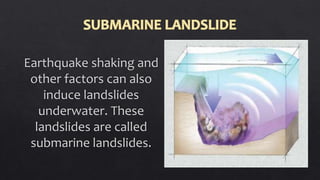
#8 Submarine landslides sometimes cause tsunamis that damage coastal areas.
Landslides can move slowly, (millimeters per year) or can move quickly and disastrously, as is the case with debris flows
Debris flows can travel down a hillside at speeds up to 200 miles per hour (more commonly, 30–50 miles per hour), depending on the slope angle, water content, volume of debris, and type of debris in the flow.
#11 Acting to destabilize the slope
After a wildfire
By snow melt, glaciers melting, or heavy rains
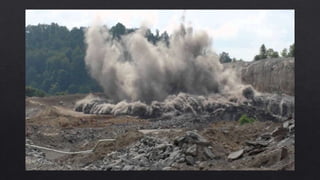
#12 Blasting (what miners usually do)
Removal of deep-rooted vegetation such as kaingin farming system
Agricultural or forestry activities (logging)
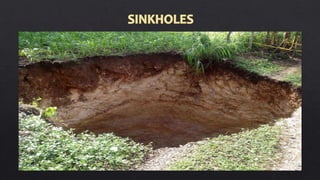
#27 A common emotion in many novels is wishing that the ground would open up and swallow the person whole. While it makes for great literary drama, it can be terrifying the same happens in real life.
rocks that can be naturally be dissolved by groundwater circulating through them
Because the land usually stays intact for a while until underground spaces jus get too big
If there is not enough support for the land above the spaces
#28 They start developing long time before it actually appears
#34 4. The ground near the edge can easily give way