Basic Concept of
Disaster and Disaster
isk
What Are Disasters?
 The term “disaster” originated
from the French word desastre,
which is a combination of the
words “des” meaning bad and
“aster” meaning star.
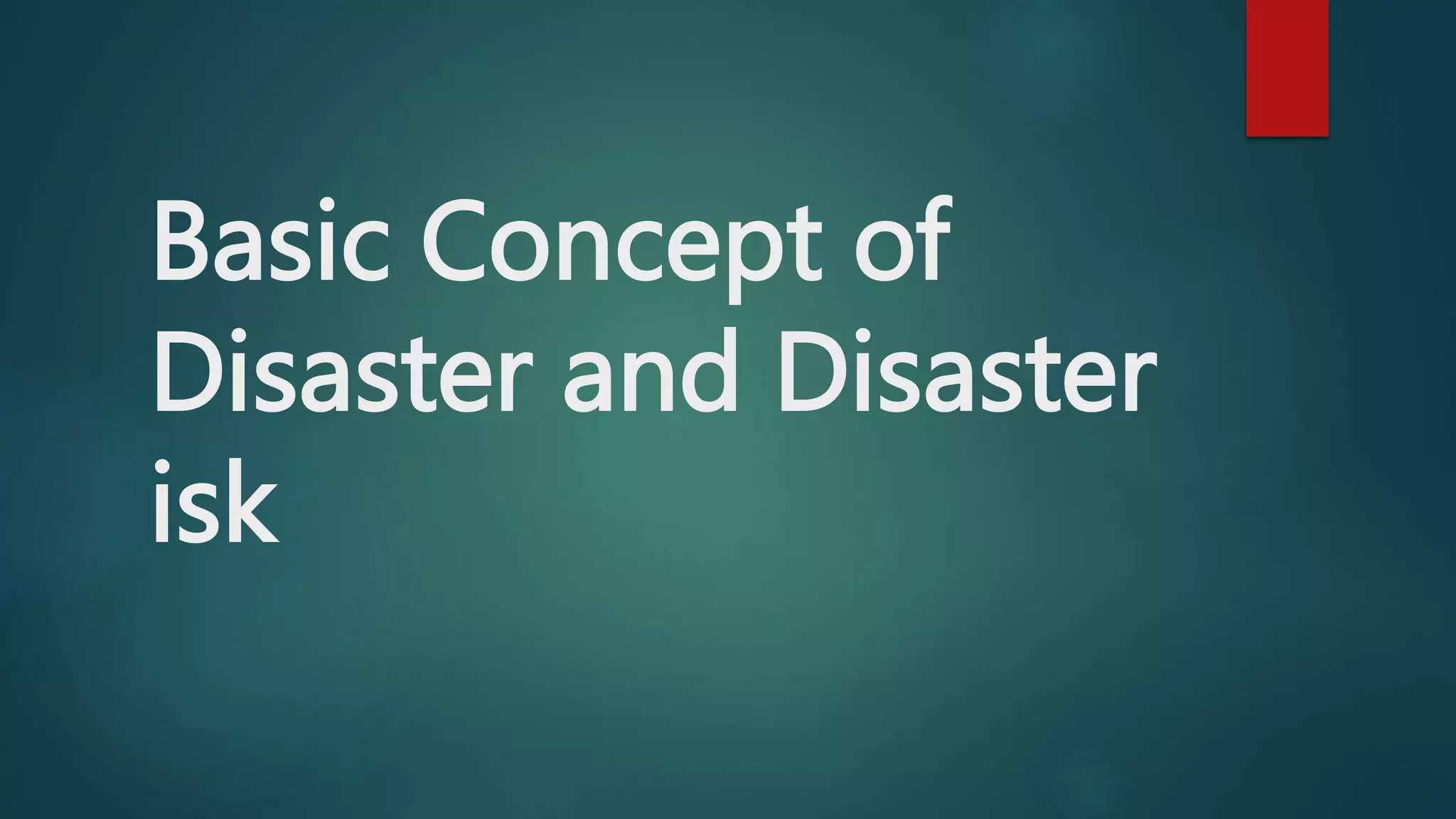
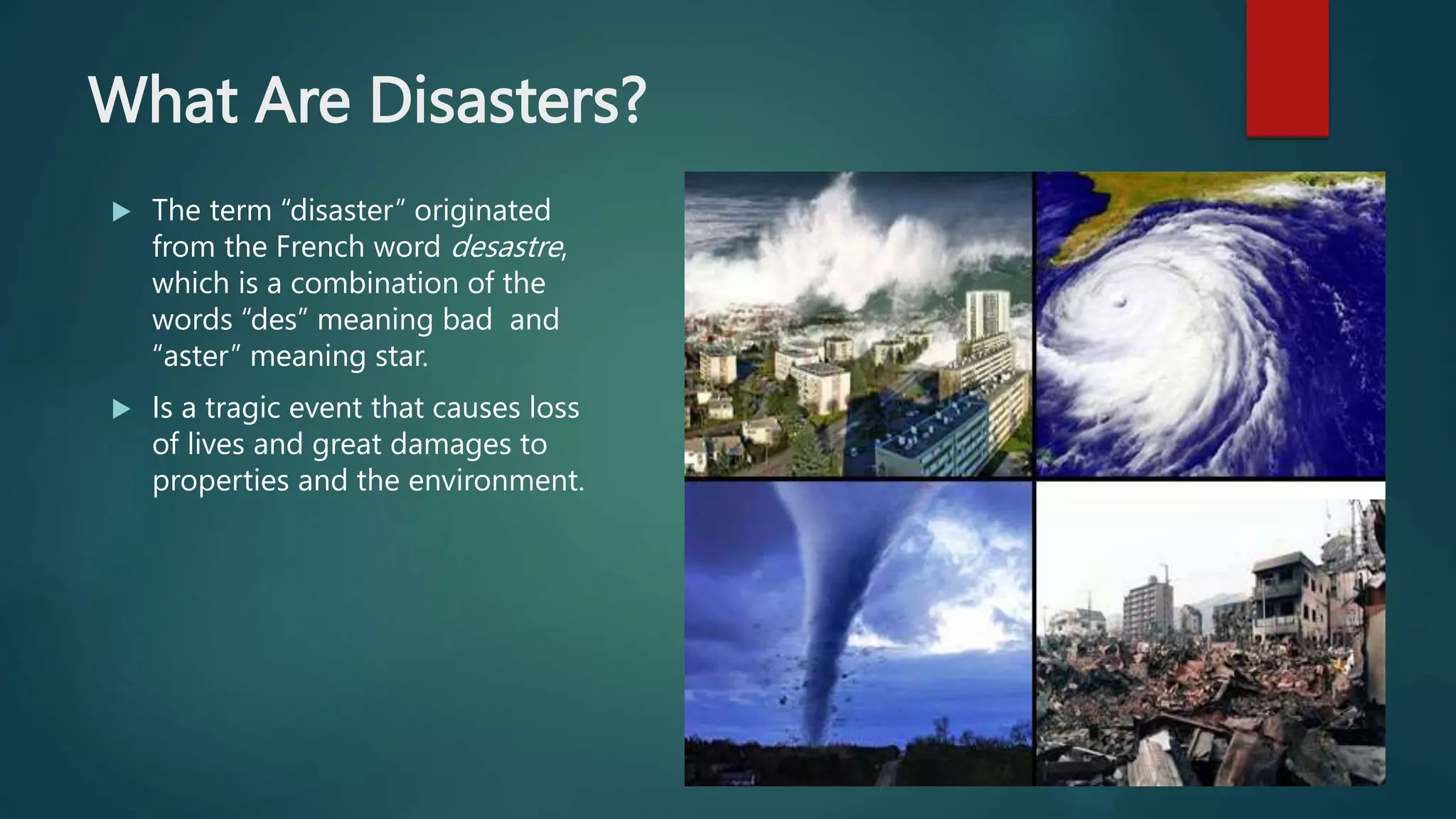
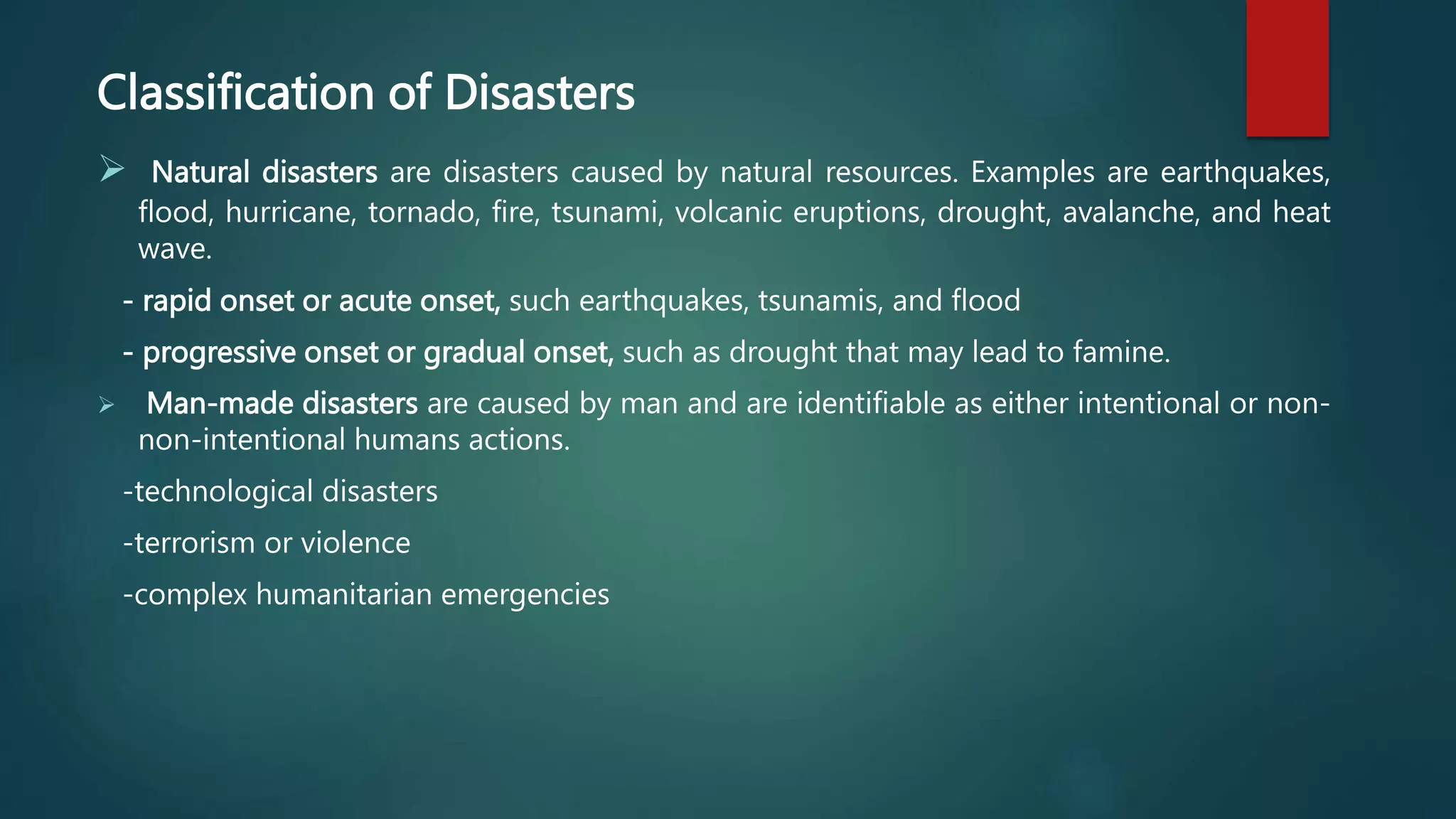
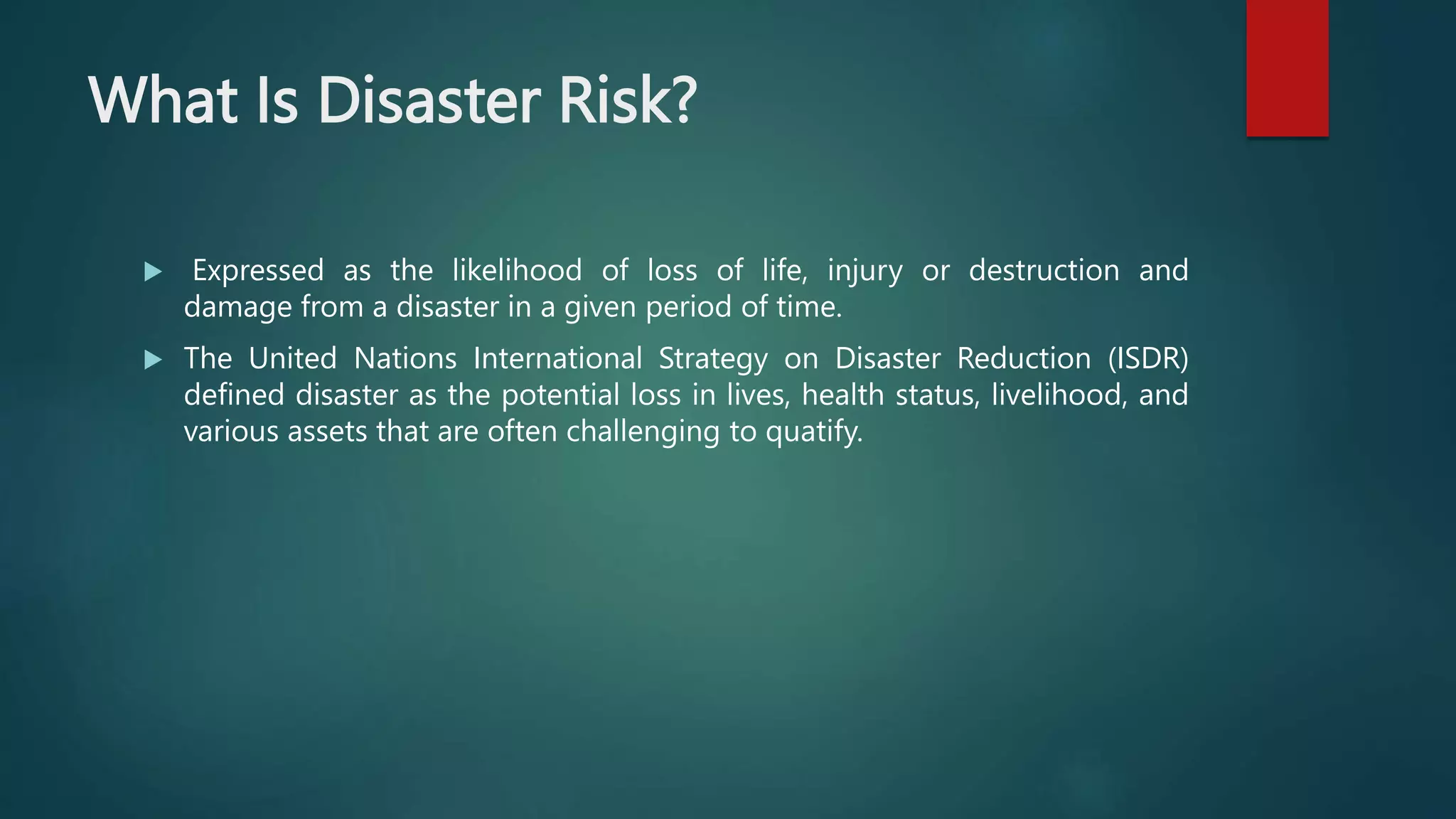
 Is a tragic event that causes loss
of lives and great damages to
properties and the environment.
Classification of Disasters
 Natural disasters are disasters caused by natural resources. Examples are earthquakes,
flood, hurricane, tornado, fire, tsunami, volcanic eruptions, drought, avalanche, and heat
wave.
- rapid onset or acute onset, such earthquakes, tsunamis, and flood
- progressive onset or gradual onset, such as drought that may lead to famine.
 Man-made disasters are caused by man and are identifiable as either intentional or non-
non-intentional humans actions.
-technological disasters
-terrorism or violence
-complex humanitarian emergencies
What Is Disaster Risk?
 Expressed as the likelihood of loss of life, injury or destruction and
damage from a disaster in a given period of time.
 The United Nations International Strategy on Disaster Reduction (ISDR)
defined disaster as the potential loss in lives, health status, livelihood, and
various assets that are often challenging to quatify.
Two Caregories of Disaster Risk
 Intensive Risks- pertains to the exposure of a large number of people in a specific
geographic area to extreme events that can further lead to catastrophic disaster impacts
involving high- mortality rate and asset loss.
 Extensive Risks- more on the exposure of dispersed populations to various hazards of
low or moderate intensity
Impacts of Disaster
The impact of disaster are identified as:
 Direct losses
 Indirect losses
 Intangible losses
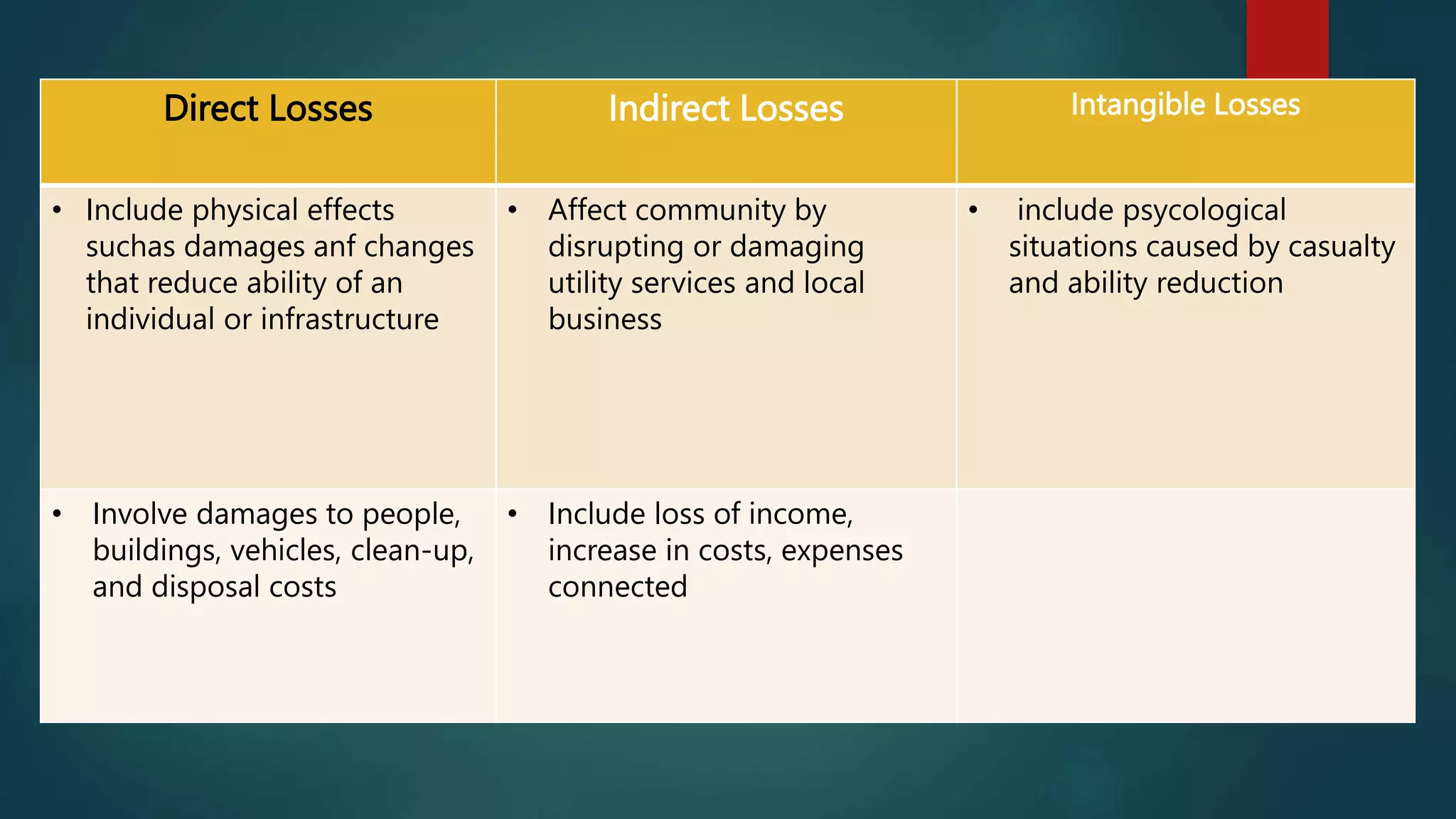
Direct Losses Indirect Losses Intangible Losses
• Include physical effects
suchas damages anf changes
that reduce ability of an
individual or infrastructure
• Affect community by
disrupting or damaging
utility services and local
business
• include psycological
situations caused by casualty
and ability reduction
• Involve damages to people,
buildings, vehicles, clean-up,
and disposal costs
• Include loss of income,
increase in costs, expenses
connected
Social Impacts
 Housing- Destruction may be
brought by floods and
earthquakes and may lead to
homelessness. This can be have
a long-term impact on society.
Hence, the source of income of
the affected families will be
impared.
 Health- Health care
infrastructures are
vulnerable to hazards. When
equipment is damaged,
hospitals cannot
accomodate those who are
affected by calamities.
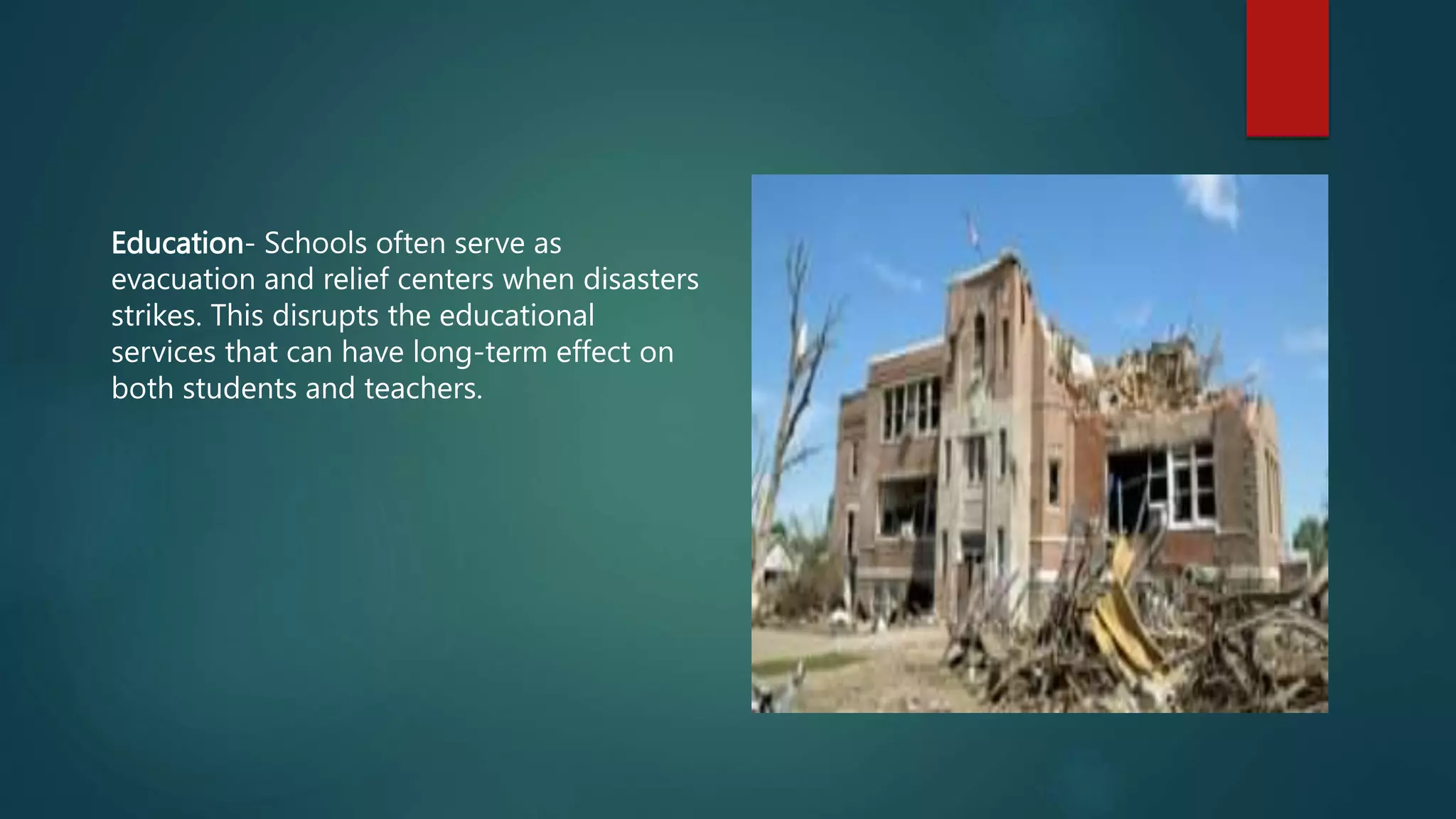
Education- Schools often serve as
evacuation and relief centers when disasters
strikes. This disrupts the educational
services that can have long-term effect on
both students and teachers.
Economic Impacts
 Natural disasters tend to have stronger impact on countries with major
debt and poverty problems.
 Funds are used for reconstruction, repair, rehabilitation, and medical aid.
 Negatively impact on economic growth and may lead to a decline in the
capacity to import and export goods.
 Cause a spike of unemployment in the country.
Environmental Impacts
The following are just several negative
environment impacts of disasters:
 Flooding can cause tress and root crops to be submerged.
 Drought damages ecosystems by reducing water supply that is essential
for living organisms to survive.
 Earthquakes can lead to environmental degradation.
 A tsunami can cause long-term negative effects in the population of
species in the region, and consequences on the livelihood of fishermen,
housing, and infrastructure.

Basic Concept of Disaster and Disaster Risk.pptx

  • 1.
    Basic Concept of Disasterand Disaster isk
  • 2.
    What Are Disasters? The term “disaster” originated from the French word desastre, which is a combination of the words “des” meaning bad and “aster” meaning star.  Is a tragic event that causes loss of lives and great damages to properties and the environment.
  • 3.
    Classification of Disasters Natural disasters are disasters caused by natural resources. Examples are earthquakes, flood, hurricane, tornado, fire, tsunami, volcanic eruptions, drought, avalanche, and heat wave. - rapid onset or acute onset, such earthquakes, tsunamis, and flood - progressive onset or gradual onset, such as drought that may lead to famine.  Man-made disasters are caused by man and are identifiable as either intentional or non- non-intentional humans actions. -technological disasters -terrorism or violence -complex humanitarian emergencies
  • 4.
    What Is DisasterRisk?  Expressed as the likelihood of loss of life, injury or destruction and damage from a disaster in a given period of time.  The United Nations International Strategy on Disaster Reduction (ISDR) defined disaster as the potential loss in lives, health status, livelihood, and various assets that are often challenging to quatify.
  • 5.
    Two Caregories ofDisaster Risk  Intensive Risks- pertains to the exposure of a large number of people in a specific geographic area to extreme events that can further lead to catastrophic disaster impacts involving high- mortality rate and asset loss.  Extensive Risks- more on the exposure of dispersed populations to various hazards of low or moderate intensity
  • 6.
    Impacts of Disaster Theimpact of disaster are identified as:  Direct losses  Indirect losses  Intangible losses
  • 7.
    Direct Losses IndirectLosses Intangible Losses • Include physical effects suchas damages anf changes that reduce ability of an individual or infrastructure • Affect community by disrupting or damaging utility services and local business • include psycological situations caused by casualty and ability reduction • Involve damages to people, buildings, vehicles, clean-up, and disposal costs • Include loss of income, increase in costs, expenses connected
  • 8.
    Social Impacts  Housing-Destruction may be brought by floods and earthquakes and may lead to homelessness. This can be have a long-term impact on society. Hence, the source of income of the affected families will be impared.
  • 9.
     Health- Healthcare infrastructures are vulnerable to hazards. When equipment is damaged, hospitals cannot accomodate those who are affected by calamities.
  • 10.
    Education- Schools oftenserve as evacuation and relief centers when disasters strikes. This disrupts the educational services that can have long-term effect on both students and teachers.
  • 11.
    Economic Impacts  Naturaldisasters tend to have stronger impact on countries with major debt and poverty problems.  Funds are used for reconstruction, repair, rehabilitation, and medical aid.  Negatively impact on economic growth and may lead to a decline in the capacity to import and export goods.  Cause a spike of unemployment in the country.
  • 12.
    Environmental Impacts The followingare just several negative environment impacts of disasters:  Flooding can cause tress and root crops to be submerged.  Drought damages ecosystems by reducing water supply that is essential for living organisms to survive.  Earthquakes can lead to environmental degradation.  A tsunami can cause long-term negative effects in the population of species in the region, and consequences on the livelihood of fishermen, housing, and infrastructure.