Storm Surges
Physical Science
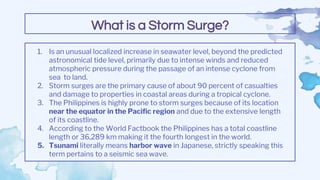
1. Is an unusual localized increase in seawater level, beyond the predicted
astronomical tide level, primarily due to intense winds and reduced
atmospheric pressure during the passage of an intense cyclone from
sea to land.
2. Storm surges are the primary cause of about 90 percent of casualties
and damage to properties in coastal areas during a tropical cyclone.
3. The Philippines is highly prone to storm surges because of its location
near the equator in the Pacific region and due to the extensive length
of its coastline.
4. According to the World Factbook the Philippines has a total coastline
length or 36,289 km making it the fourth longest in the world.
5. Tsunami literally means harbor wave in Japanese, strictly speaking this
term pertains to a seismic sea wave.
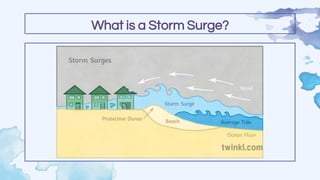
What is a Storm Surge?
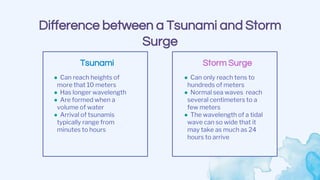
Difference between a Tsunami and Storm
Surge
● Can reach heights of
more that 10 meters
● Has longer wavelength
● Are formed when a
volume of water
● Arrival of tsunamis
typically range from
minutes to hours
● Can only reach tens to
hundreds of meters
● Normal sea waves reach
several centimeters to a
few meters
● The wavelength of a tidal
wave can so wide that it
may take as much as 24
hours to arrive
Tsunami Storm Surge
Factors that
influence The
Build-up of Water
Level during a
Storm Surge
01
During a tropical cyclone storm surge level is also influenced by
atmospheric pressure. A lower atmospheric pressure results in a
higher storm surge level. Lowered atmospheric level and wind speed
are the major causes of storm surge formation.
1. Storm Intensity
A storm surge is mainly wind driven storm intensity which is related to
the wind speed of a storm, influences the amount of surge produced.
2. Pressure Effect
3. Size
A tropical cyclone with a larger diameter will form a higher surge
because the wind brought about by larger tropical cyclones push on a
larger surface area of the ocean and affects this area for longer
period of time.
The amount if surge formed is affected by the angle by which the
tropical cyclone hits the coastline.
4. Storm Forward Speed
A tropical cyclone travelling with a higher velocity will produce a
higher surge along an open coast. A slow moving tropical cyclone also
causes more destruction because a greater amount of rainfall is
dumped over the area which causes more flooding inland.
5. Angle of Approach to coast
6. Effects of the Earth’s Rotation
There is a tendency for ocean currents to be deflected as a result of
the earth's rotation. This is called the Coriolis effect.
7. Rainfall Effect
Water levels can rise quickly in estuaries because large volumes of
accumulated rainwater from watersheds in higher elevation areas,
which are drained by rivers, encounter waters driven by the tropical
cyclone from the open ocean.
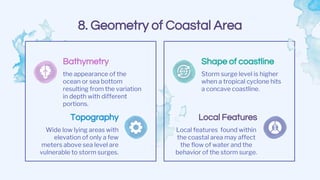
8. Geometry of Coastal Area
Shape of coastline
Storm surge level is higher
when a tropical cyclone hits
a concave coastline.
Bathymetry
the appearance of the
ocean or sea bottom
resulting from the variation
in depth with different
portions.
Local Features
Local features found within
the coastal area may affect
the flow of water and the
behavior of the storm surge.
Topography
Wide low lying areas with
elevation of only a few
meters above sea level are
vulnerable to storm surges.
9. Timing
As with the occurrence of a lot of other natural phenomena, timing
plays as an important role. When the formation of a storm surge
during a tropical cyclone coincides with high astronomical tide
resulting the surge is higher.
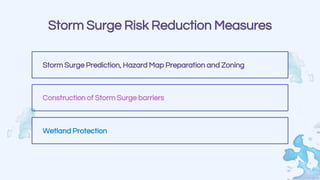
Storm Surge Risk Reduction Measures
Storm Surge Prediction, Hazard Map Preparation and Zoning
Construction of Storm Surge barriers
Wetland Protection
1. Check your house and land for any potential dangers related to flooding.
Identify any vulnerability and repair it.
2. Sandbags are a valuable tool to prevent water from entering your home.
This approach requires specific instructions from your local emergency
officials.
3. Learn how to turn off the gas and electricity in your house. You may be
instructed by local authorities to shut these off.
4. If you live in an area that is subject to flooding, do not store your
important documents in the basement. Keep them at a higher level,
protected from flood damage.
5. Ensure that your family has an emergency kit and plan.
6. Ensure your emergency kit is portable, in a back-pack or suitcase with
wheels.
Preparing for a Storm Surge
1. Check supplies including medications, radio,
flashlight and batteries.
2. You may have to evacuate. Keep your
emergency kit close at hand.
3. Make sure the basement windows are closed.
4. Fuel your car. If evacuation becomes necessary,
it will be hard to stop for gas.
If a Storm Surge is forecast
1. Stay inside where you are protected from the water.
It's best to be on the downwind side of the house,
away from windows.
2. Monitor the storm's progress and listen for warnings
or instructions from local officials.
3. Before driving anywhere, listen carefully to rescue
officials who will be coordinating evacuation plans.
4. Do not drive through flood waters.
5. Be aware of risks such as hypothermia from cold water
or drowning from running water.
During a Storm Surge
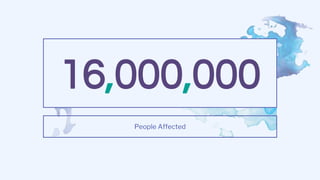
16,000,000
People Affected
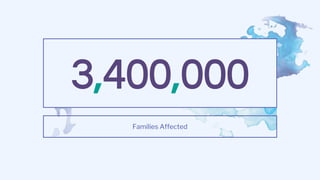
3,400,000
Families Affected
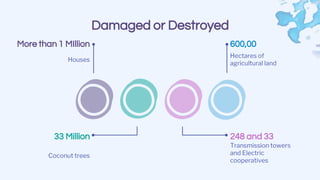
Houses
Transmission towers
and Electric
cooperatives
33 Million
Coconut trees
248 and 33
More than 1 MIllion 600,00
Hectares of
agricultural land
Damaged or Destroyed
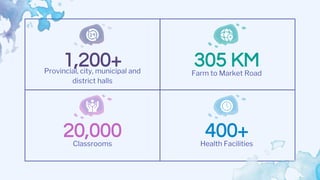
1,200+
Provincial, city, municipal and
district halls
305 KM
Farm to Market Road
20,000
Classrooms
400+
Health Facilities
THANK
YOU

Storm Surge

  • 1.
  • 2.
    1. Is anunusual localized increase in seawater level, beyond the predicted astronomical tide level, primarily due to intense winds and reduced atmospheric pressure during the passage of an intense cyclone from sea to land. 2. Storm surges are the primary cause of about 90 percent of casualties and damage to properties in coastal areas during a tropical cyclone. 3. The Philippines is highly prone to storm surges because of its location near the equator in the Pacific region and due to the extensive length of its coastline. 4. According to the World Factbook the Philippines has a total coastline length or 36,289 km making it the fourth longest in the world. 5. Tsunami literally means harbor wave in Japanese, strictly speaking this term pertains to a seismic sea wave. What is a Storm Surge?
  • 3.
    What is aStorm Surge?
  • 4.
    Difference between aTsunami and Storm Surge ● Can reach heights of more that 10 meters ● Has longer wavelength ● Are formed when a volume of water ● Arrival of tsunamis typically range from minutes to hours ● Can only reach tens to hundreds of meters ● Normal sea waves reach several centimeters to a few meters ● The wavelength of a tidal wave can so wide that it may take as much as 24 hours to arrive Tsunami Storm Surge
  • 5.
    Factors that influence The Build-upof Water Level during a Storm Surge 01
  • 6.
    During a tropicalcyclone storm surge level is also influenced by atmospheric pressure. A lower atmospheric pressure results in a higher storm surge level. Lowered atmospheric level and wind speed are the major causes of storm surge formation. 1. Storm Intensity A storm surge is mainly wind driven storm intensity which is related to the wind speed of a storm, influences the amount of surge produced. 2. Pressure Effect 3. Size A tropical cyclone with a larger diameter will form a higher surge because the wind brought about by larger tropical cyclones push on a larger surface area of the ocean and affects this area for longer period of time.
  • 7.
    The amount ifsurge formed is affected by the angle by which the tropical cyclone hits the coastline. 4. Storm Forward Speed A tropical cyclone travelling with a higher velocity will produce a higher surge along an open coast. A slow moving tropical cyclone also causes more destruction because a greater amount of rainfall is dumped over the area which causes more flooding inland. 5. Angle of Approach to coast 6. Effects of the Earth’s Rotation There is a tendency for ocean currents to be deflected as a result of the earth's rotation. This is called the Coriolis effect.
  • 8.
    7. Rainfall Effect Waterlevels can rise quickly in estuaries because large volumes of accumulated rainwater from watersheds in higher elevation areas, which are drained by rivers, encounter waters driven by the tropical cyclone from the open ocean.
  • 9.
    8. Geometry ofCoastal Area Shape of coastline Storm surge level is higher when a tropical cyclone hits a concave coastline. Bathymetry the appearance of the ocean or sea bottom resulting from the variation in depth with different portions. Local Features Local features found within the coastal area may affect the flow of water and the behavior of the storm surge. Topography Wide low lying areas with elevation of only a few meters above sea level are vulnerable to storm surges.
  • 10.
    9. Timing As withthe occurrence of a lot of other natural phenomena, timing plays as an important role. When the formation of a storm surge during a tropical cyclone coincides with high astronomical tide resulting the surge is higher.
  • 11.
    Storm Surge RiskReduction Measures Storm Surge Prediction, Hazard Map Preparation and Zoning Construction of Storm Surge barriers Wetland Protection
  • 12.
    1. Check yourhouse and land for any potential dangers related to flooding. Identify any vulnerability and repair it. 2. Sandbags are a valuable tool to prevent water from entering your home. This approach requires specific instructions from your local emergency officials. 3. Learn how to turn off the gas and electricity in your house. You may be instructed by local authorities to shut these off. 4. If you live in an area that is subject to flooding, do not store your important documents in the basement. Keep them at a higher level, protected from flood damage. 5. Ensure that your family has an emergency kit and plan. 6. Ensure your emergency kit is portable, in a back-pack or suitcase with wheels. Preparing for a Storm Surge
  • 13.
    1. Check suppliesincluding medications, radio, flashlight and batteries. 2. You may have to evacuate. Keep your emergency kit close at hand. 3. Make sure the basement windows are closed. 4. Fuel your car. If evacuation becomes necessary, it will be hard to stop for gas. If a Storm Surge is forecast
  • 14.
    1. Stay insidewhere you are protected from the water. It's best to be on the downwind side of the house, away from windows. 2. Monitor the storm's progress and listen for warnings or instructions from local officials. 3. Before driving anywhere, listen carefully to rescue officials who will be coordinating evacuation plans. 4. Do not drive through flood waters. 5. Be aware of risks such as hypothermia from cold water or drowning from running water. During a Storm Surge
  • 16.
  • 17.
  • 18.
    Houses Transmission towers and Electric cooperatives 33Million Coconut trees 248 and 33 More than 1 MIllion 600,00 Hectares of agricultural land Damaged or Destroyed
  • 19.
    1,200+ Provincial, city, municipaland district halls 305 KM Farm to Market Road 20,000 Classrooms 400+ Health Facilities
  • 20.